REVIEW · SIEM REAP
2days Explore Angkor wat Small Tour & Big Tour + Banteay Srei (Private tour)
Book on Viator →Operated by SiemReap Perfect Driver · Bookable on Viator
Two days can change how you see Khmer art. This private 2-day Angkor plan in Siem Reap bundles the big must-sees with enough breathing room to set your pace. You get a flexible itinerary feel, plus a practical route that moves from the grand Angkor Thom core out toward calmer ruins and finally Banteay Srei.
I especially like that the setup is built for comfort: air-con private vehicle, hotel pickup/drop-off, and included cold mineral water and towels. The other big win for me is the human touch from top-notch drivers—names like Mr. Heng, Kim Sun (often shown as KimSun), and Frank come up in past service notes, with clear English and a calm, safety-first attitude.
One thing to consider: temple entrance fees are not included, so you’ll still pay for the sites separately. Also, it’s a “see a lot” schedule, so if you want super slow museum-style time at each stop, you’ll need to use that flexible pace wisely.
In This Review
- Key highlights you’ll actually feel on this tour
- Price and logistics: what you pay for (and what you don’t)
- Day 1 in Angkor Thom: South Gate to Banteay Kdei
- Angkor Thom South Gate: the ocean’s drama, in stone
- Bayon Temple: 49 towers and smiling four faces
- Baphuon, then Phimeanakas: Hindu temple layers in the royal center
- The Terraces: Elephants for power, Leper King for a darker note
- Chau Say Tevoda and Thommanon: small, dedicated, and close together
- Takeo: pyramid scale without the long slog
- Ta Prohm: the jungle temple that made the movies famous
- Banteay Kdei: a quieter maze to close the day
- Day 2: Preah Khan, water temples, then Banteay Srei’s pink sandstone glow
- Preah Khan: a huge monastic complex built by Jayavarman VII
- Neak Pean: a small island temple and the horse statue Balaha
- Ta Som and Eastern Mebon: tree-on-gate charm and temple-mountain scale
- Pre Rup: a Hindu funeral-linked viewpoint temple
- Banteay Srei: the pink sandstone finale
- The driver makes or breaks the day: comfort, waiting, and clear English
- Temple tickets: how to plan so you’re not stuck outside
- Who this private tour fits best (and who should choose another plan)
- Should you book this 2-day Angkor Thom + Banteay Srei tour?
- FAQ
- FAQ
- How long is the tour?
- Is hotel pickup and drop-off included?
- Do I need to pay for temple entrance fees separately?
- What’s included in the comfort package?
- Is the tour private or shared?
- Do I need my own tickets, or does the tour provide mobile ticketing?
- Is there an English-speaking driver?
- What temples are covered during the two days?
- Can I cancel for a full refund?
Key highlights you’ll actually feel on this tour
- Private, just your group: no sharing your day with strangers who move at a different speed.
- Hotel pickup and drop-off included: less hassle in Siem Reap after a long travel day.
- English-speaking driver + tour information: helpful timing and site guidance so you don’t waste time guessing.
- Cold mineral water and towels included: small thing, big difference when you’re walking in the temple grounds.
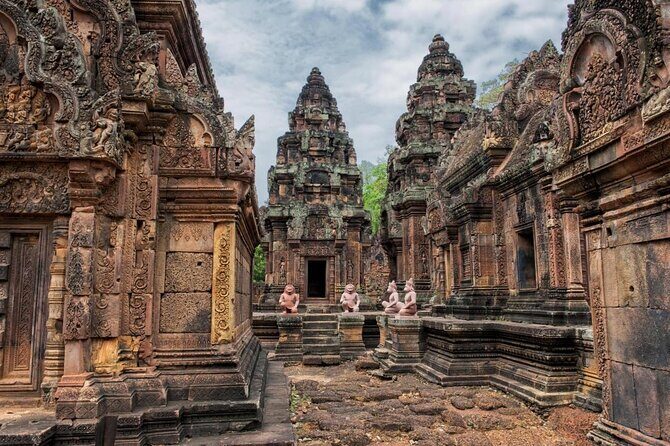
- Two-day mix that covers different styles: Angkor Thom faces and towers, jungle ruins, then the pink sandstone of Banteay Srei.
Price and logistics: what you pay for (and what you don’t)
This tour costs $159 for roughly two days, and a big chunk of what you’re buying is the ride and the human help. You’re getting pickup and drop-off to your hotel, a private air-con vehicle, an English-speaking driver, parking included, and tour info to keep the day from turning into a map-reading contest.
What’s not included is the temple entrance fee. That’s not unusual for Angkor tours, but it matters for value: your total trip cost will be higher once you add the site tickets. You’ll want to plan for that in advance so the day stays smooth.
I also like that “mobile ticket” is listed as part of the experience. In practice, that usually means less paper hassle and a simpler check-in rhythm. Just remember: that doesn’t replace the actual temple admission fees, since those are listed separately as not included.
You can also read our reviews of more private tours in Siem Reap
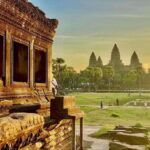
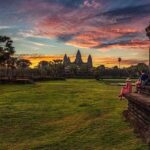
Day 1 in Angkor Thom: South Gate to Banteay Kdei
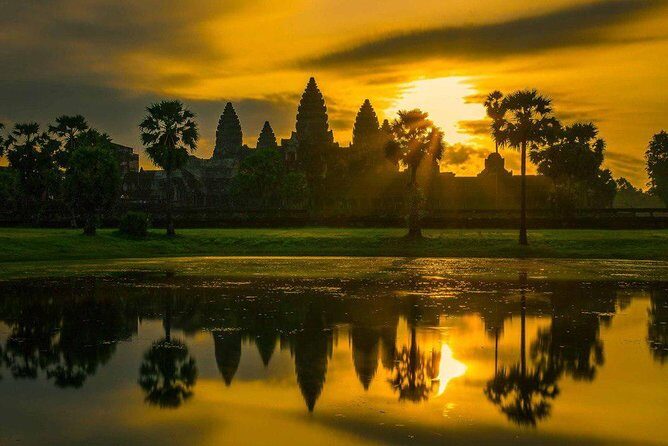
Day 1 is all about the Angkor Thom zone, starting with the South Gate. Expect a strong opener, then a steady run through the royal-city center: gates, towers, terraces, and a couple of calmer Brahmanism temples before you hit the jungle mood.
Angkor Thom South Gate: the ocean’s drama, in stone
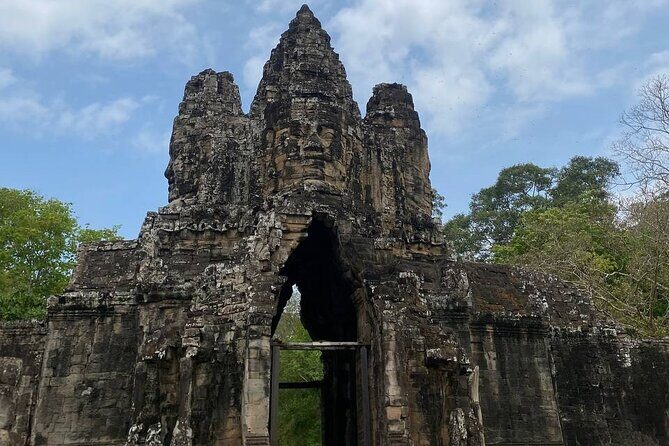
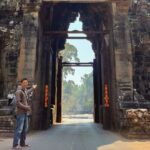
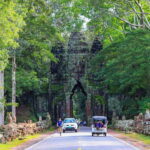
Your first stop is Angkor Thom South Gate (about 20 minutes). The decoration focuses on the churning of the ocean of milk, which is the kind of myth scene you only really appreciate when you’re close enough to read the carvings.
This is a good “warm-up” site. You’re not doing a long hike here, but you’re immediately in Khmer storytelling mode—use that time to get your bearings fast before the faces and towers begin.
Bayon Temple: 49 towers and smiling four faces
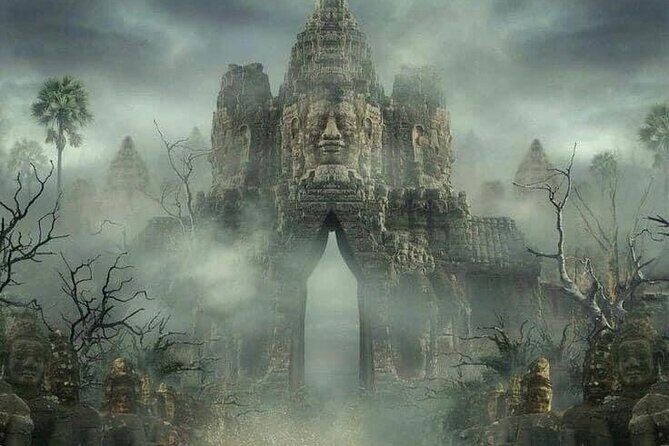
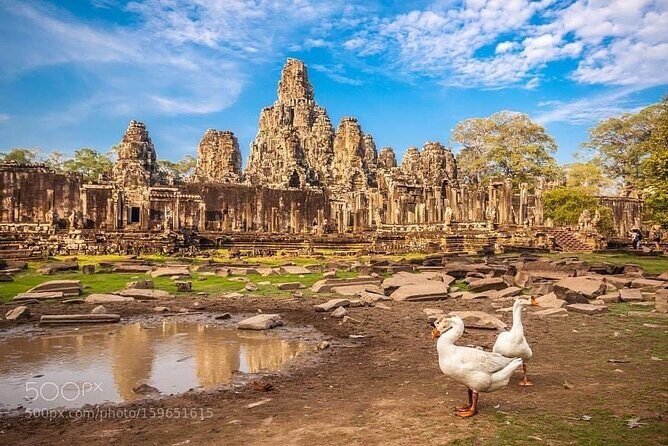
Next is Bayon Temple (about 1 hour), inside the ancient city of Angkor Thom by the South Gate. The standout is the 49 tower complex, known for the smiling four faces. This is one of those places where your attention keeps flipping: one tower face, then another, then the scale hits you again.
A solid driver makes this smoother. With an English-speaking guide, you can spend your time looking instead of wandering and then doubling back.
Baphuon, then Phimeanakas: Hindu temple layers in the royal center
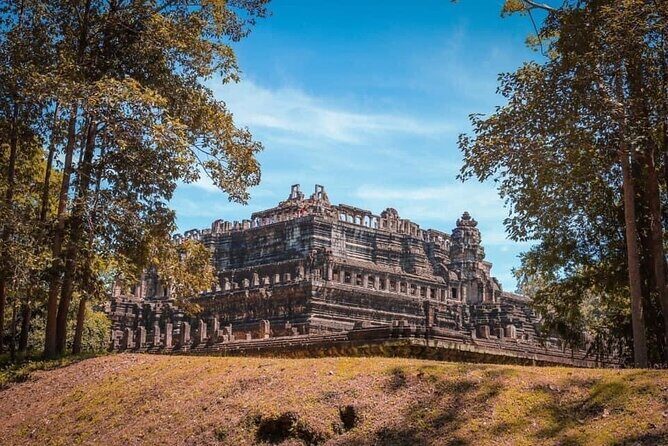
After Bayon, you’ll go to Baphuon Temple (about 30 minutes). It’s described as a Hindu temple built before Angkor Wat in the 11th century, with a big reclining Buddha added in the 16th century. It also connects into the Royal Enclosure Wall area.
Then comes Phimeanakas (about 20 minutes), a pyramid Hindu temple built in the 10th century at the center of the old royal palace area. If you like seeing how sites relate to each other—core structures, then enclosure walls—this pairing helps.
You can also read our reviews of more tours and experiences in Siem Reap
The Terraces: Elephants for power, Leper King for a darker note
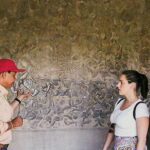
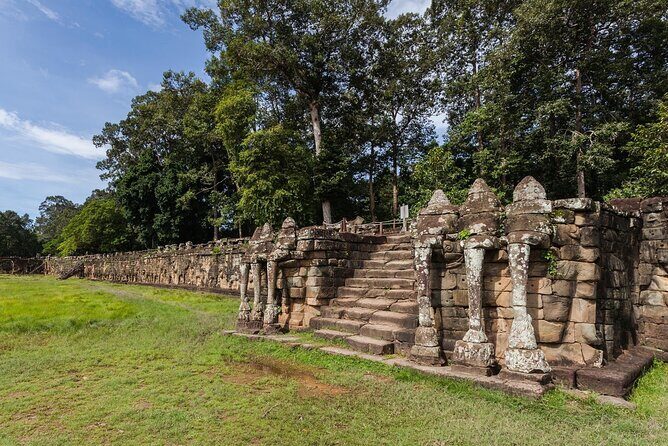
You’ll visit Terrace of the Elephants (about 15 minutes). It’s a platform linked to kings watching victorious returning army, with elephant carvings on the wall.
Right after, Terrace of the Leper King (about 15 minutes) gives you a nearby contrast. It’s another platform on the north side of the Terrace of Elephants, and it’s known as a notable adjacent viewpoint. Even without long explanations, these terrace stops help you understand the Angkor city as something lived-in—ceremonial viewing places, not just photo stops.
Chau Say Tevoda and Thommanon: small, dedicated, and close together
Then you’ll hit two temples about 500 meters east of Victory Gate: Chau Say Tevoda (about 20 minutes) and Thommanon (about 20 minutes). Both are described as Brahmanism-dedicated temples built in the late 11th and early 12th centuries by King Suryavarman II.
This is a nice pacing change. You’re in the same zone, close by, but the feel can shift—more space to slow down and look at the details without needing long transit breaks.
Takeo: pyramid scale without the long slog
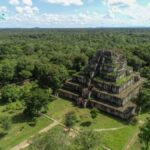
Takeo is next (about 15 minutes), described as a pyramid of five levels with a total height of 40m. The first two levels form base courtyards, then the last three rise proportionally.
Even with a short visit window, this kind of structure helps your brain “map” what you’re seeing. It’s a scale reference point, which makes later temples easier to interpret.
Ta Prohm: the jungle temple that made the movies famous
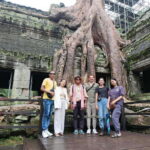
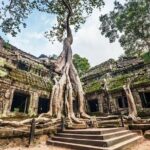
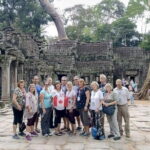
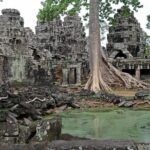
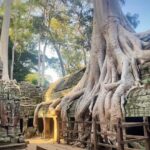
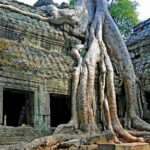
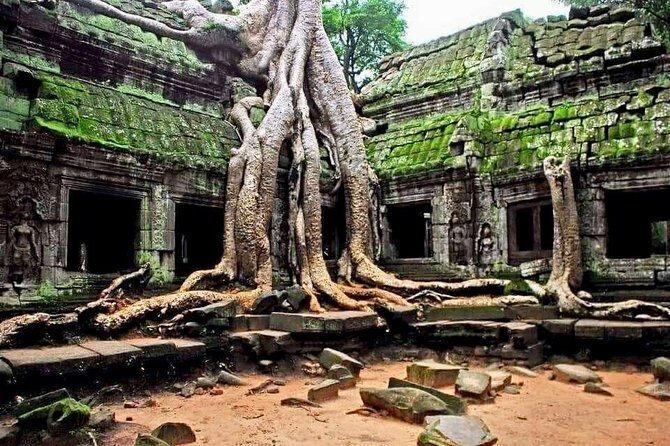
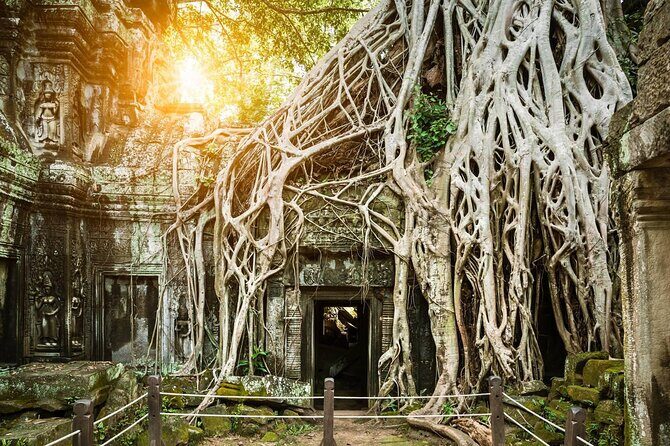
After Takeo, you’ll go to Ta Prohm (about 1 hour). It’s called a jungle temple and is famous for being used in the Tomb Raider movie. If you’ve seen the film, you’ll recognize the vibe; if you haven’t, you’ll still understand why it became iconic—this is a temple that looks like it’s been wrestling with nature for a long time.
Spend real time here. One good driver habit is moving you along efficiently between sites while still giving you enough minutes to experience the place, not just tick it off.
Banteay Kdei: a quieter maze to close the day
Your last Day 1 stop is Banteay Kdei (about 30 minutes). It’s described as peaceful and quiet, with a name meaning Citadel of Chambers. The ruins are said to form a maze of chambers that’s a delight to explore.
That’s a great ending note. After the face towers and the cinematic jungle temple, Banteay Kdei feels more like an open-ended wander—good for winding down your day while still feeling like you saw something distinctive.
Day 2: Preah Khan, water temples, then Banteay Srei’s pink sandstone glow
Day 2 shifts away from the tight core feel and spreads across big monastic ruins, water symbolism, and different Hindu temple styles. It’s also where the tour hits the “Ladies Temple” finish.
Preah Khan: a huge monastic complex built by Jayavarman VII
Start at Preah Khan (about 1 hour). It’s described as built by King Jayavarman VII, dedicated to his father, and it functioned as a Buddhist monastery and school with over 1,000 monks.
This stop is valuable for the way it changes the story. Instead of only royal power and city space, you see Angkor as a place of education and religious life.
Neak Pean: a small island temple and the horse statue Balaha
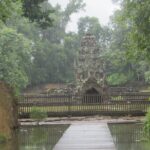
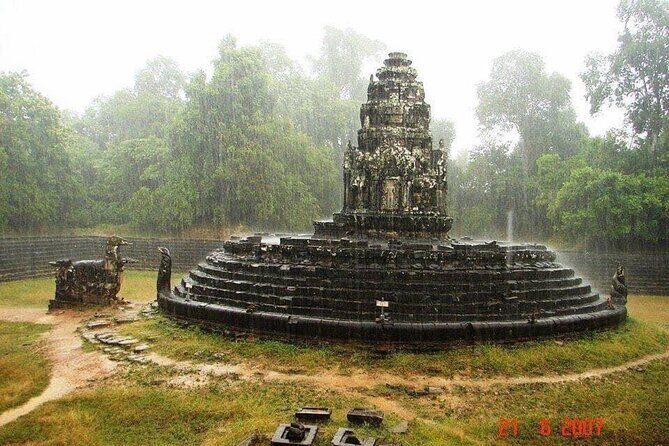
Next is Neak Pean (about 40 minutes). It’s described as a small island temple in the middle of the last Barray, with a statue of a horse named Balaha, said to save drowning sailors.
Even though it’s a shorter stop, this is a memorable change of pace. You’re moving from massive complexes to something more intimate, tied to a specific rescue legend.
Ta Som and Eastern Mebon: tree-on-gate charm and temple-mountain scale
Then you’ll visit Ta Som (about 45 minutes), described as small but classic, with a huge tree growing from the top of the eastern gopura.
After that is Eastern Mebon (about 45 minutes): a large temple-mountain ruin rising three levels and crowned by five towers.
This combination is a smart “contrast duo.” One stop shows nature taking over a built structure, and the next shows the classic temple-mountain idea with towers on top.
Pre Rup: a Hindu funeral-linked viewpoint temple
Pre Rup (about 1 hour) is next. It’s described as constructed in the late 10th century, dedicated to Hindu gods, and connected to the belief that funerals were conducted at the temple on the most distant part of the grand circuit road.
Even if you’re not there for the belief system, it gives the temple a purpose beyond sightseeing. You’ll likely look at the structure differently once you know why people associated it with ceremonies.
Banteay Srei: the pink sandstone finale
Finally, you reach Banteay Srei (about 1 hour), also called the Ladies Temple. It’s described as built from pink sandstone in the second half of the 10th century by Hindu King Rajendravarman II, dedicated to the trinity gods in Hindu tradition, mainly Shiva.
This is the reason a lot of people love ending their Angkor loop here: it feels like a crafted finish, not just another stop in the circuit.
The driver makes or breaks the day: comfort, waiting, and clear English
A good driver-led tour is more than transport. It’s timing, positioning, and the little moments that stop a temple day from feeling stressful.
In service notes, Kim Sun and others are praised for proactive planning and road safety, including cases where families traveled with a toddler and felt safe and well looked after. That matters because temple hopping is long-day work.
There’s also a specific style of service mentioned: drivers like Frank reportedly have perfect English and wait patiently, often with ice-cold drinks after guiding guests to the convenient entrance to each temple. That’s not flashy, but it’s practical. You’ll spend more energy on the temples and less on logistics.
One useful detail from those notes: Kim Sun’s WhatsApp number is listed as +8559350315. If you prefer messaging for timing checks, that’s the kind of direct contact that can reduce day-of stress.
Temple tickets: how to plan so you’re not stuck outside
Temple entrance fees are not included, and that’s the only missing piece you must account for. The tour does include things that help the day move smoothly—like pickup/drop-off, parking, and mobile ticketing for the tour itself—but the temple admissions are still your responsibility.
Here’s the practical way to handle it:
- Plan your budget to add temple fees on top of the $159 tour price.
- Keep a little flexibility in your schedule in case ticket lines or purchase timing takes extra minutes.
- Wear comfortable shoes, because most stops assume you’ll walk through temple grounds and uneven paths.
If you want a smooth experience, treat tickets as part of the plan, not an afterthought.
Who this private tour fits best (and who should choose another plan)
This tour is ideal if you want a private vehicle and English-speaking guidance across two dense temple days. It’s also a good fit for first-timers who want an organized route that hits big Angkor Thom names, includes the jungle-famous Ta Prohm, and ends with Banteay Srei.
It’s also a strong pick for families or mixed-age groups because the day is supported by a driver, with comfort items included like cold mineral water and towels. If you like having some control over your pace, this setup gives you room to slow down at the right moments.
One caution: the itinerary listed here focuses on Angkor Thom and nearby temples plus Banteay Srei, and it does not list Angkor Wat as a scheduled stop. If your top priority is Angkor Wat itself, you might want to compare plans and make sure it’s included in your ideal day.
Should you book this 2-day Angkor Thom + Banteay Srei tour?
Book it if you want a well-paced, private Angkor experience with hotel pickup, air-con comfort, English-speaking guidance, and a two-day arc that moves from major faces and towers to jungle ruins and ends with pink sandstone at Banteay Srei. At $159, it’s also a value-minded option because the package covers the transport and core service, not just a “driver and good luck” situation.
Don’t book it if you’re trying to do Angkor Wat as your main centerpiece, or if you hate paying extra once you arrive. This plan is fantastic for temple variety, but you still need to budget for admission fees and be ready for a full, active two days.
FAQ
FAQ
How long is the tour?
The tour runs for about 2 days, covering stops across Day 1 and Day 2.
Is hotel pickup and drop-off included?
Yes. Pickup and drop-off to your hotel are included.
Do I need to pay for temple entrance fees separately?
Yes. Temple entrance fees are not included in the tour price.
What’s included in the comfort package?
You get cold mineral water and a towel, along with an air-con private vehicle.
Is the tour private or shared?
It’s private. Only your group participates.
Do I need my own tickets, or does the tour provide mobile ticketing?
A mobile ticket is listed as included, but temple entrance fees are still not included.
Is there an English-speaking driver?
Yes, the tour includes an English-speaking driver.
What temples are covered during the two days?
Day 1 covers Angkor Thom South Gate, Bayon, Baphuon, Phimeanakas, Terrace of the Elephants, Terrace of the Leper King, Chau Say Tevoda, Thommanon, Takeo, Ta Prohm, and Banteay Kdei. Day 2 covers Preah Khan, Neak Pean, Ta Som, Eastern Mebon, Pre Rup, and Banteay Srei.
Can I cancel for a full refund?
Yes. Cancellation is free up to 24 hours in advance for a full refund.
If you tell me your travel dates and group size (and whether you’re aiming for Angkor Wat too), I can help you judge if this route matches your priorities.