REVIEW · SIEM REAP
Siem Reap: 2-Day Temple Highlights Sunrise and Sunset Option
Book on GetYourGuide →Operated by Journey Cambodia · Bookable on GetYourGuide
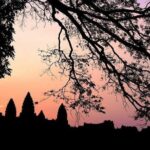
Sunrise at Angkor Wat is a wake-up call.
This 2-day temple highlight tour is built around timing and contrast: you’ll start in near-darkness, then shift to high-atmosphere jungle ruins and carved temple mountains. I love how the itinerary mixes “big-name” Angkor sights with quieter temple stops like Pre Rup, Neak Pean, and Preah Khan. I also like that you get licensed English guidance to connect the stones to Khmer history and religion, instead of just checking boxes.
On day two, the day plan stays practical even when the temples get packed.
I love that you get an early torch-access sunrise entry at Angkor Wat, plus breakfast time right after, when the mood changes from dramatic to human. The drive between sites is handled in air-conditioned transport, with bottled water and cool towels to help you survive the heat without feeling like you’re just melting in a crowd.
One drawback to think about: you still need to budget for temple entry fees (about $62 per person for a 2- or 3-day pass), and the days involve a lot of walking plus an early start.
Also, it’s not wheelchair accessible, and you’ll need to follow the dress rules (covered shoulders and knees; shorts aren’t allowed).
Key highlights worth your attention
- Sunrise at Angkor Wat with torch and an eastern-side approach for a quieter, darker-entry feel
- Pre Rup + Banteay Srei: the temple-mountain experience and some of the finest carved relief work in Cambodia
- Neak Pean and Preah Khan: Buddhist island calm, then tree roots and crumbling stone atmosphere
- Ta Prohm’s “jungle” vibe plus the story of when Henri Mouhot drew attention to the site
- Angkor Thom’s Bayon faces and the Terrace of the Leper King and Elephants for big symbolism and photo ops
- Heat management: AC transfers, complimentary bottled water, and cool towels after stops
In This Review
- Two days in Siem Reap that actually feel timed, not rushed
- Day 1: Pre Rup, Banteay Srei, Neak Pean, Preah Khan, and a sunset wind-down
- Day 2: Angkor Wat at sunrise, then Ta Prohm, Ta Nei, and Angkor Thom’s faces
- Why the guide makes this tour worth the money
- Torch, heat, and getting your best angles
- Price and entry fees: where the real cost shows up
- Comfort details that prevent temple fatigue
- Who should book this 2-day Angkor highlights tour
- Should you book it
- FAQ
- How long is the tour?
- What’s included in the price?
- Are temple entry fees included?
- Does the itinerary include sunrise at Angkor Wat?
- Do I need to bring anything for sunrise?
- What should I wear?
- Is there a sunset option besides rice fields?
- Are meals included?
- Is this tour wheelchair accessible?
Two days in Siem Reap that actually feel timed, not rushed
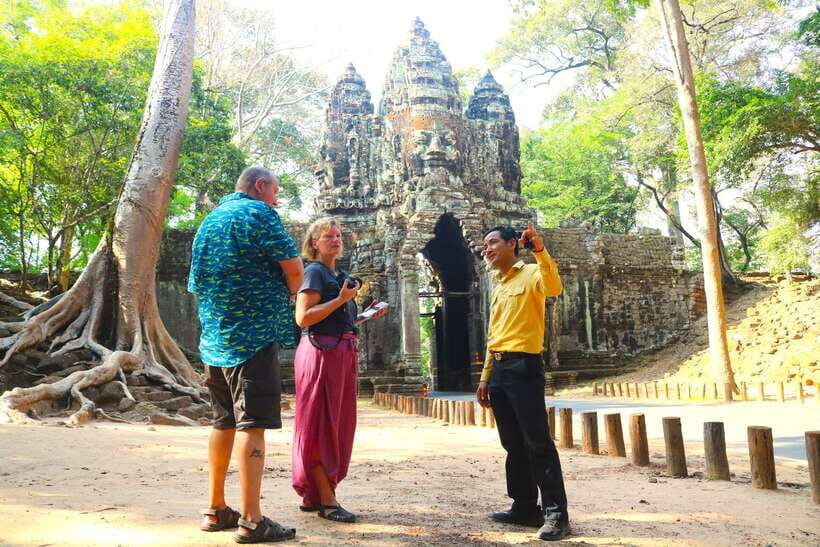
Angkor is famous for being huge. The trick is not just seeing temples, but hitting them when the light and the crowds work in your favor. This tour leans hard into that idea. You get pre-dawn departure for sunrise at Angkor Wat, then a second day built to keep you moving through major clusters without skipping the “less obvious” stops.
You’ll also get a licensed English guide, which changes the experience fast. The same stone carvings can turn from decoration into a readable story when someone explains what you’re looking at—Hindu and Buddhist symbolism, royal patronage, how the Khmer Empire viewed sacred space, and why certain layouts matter.
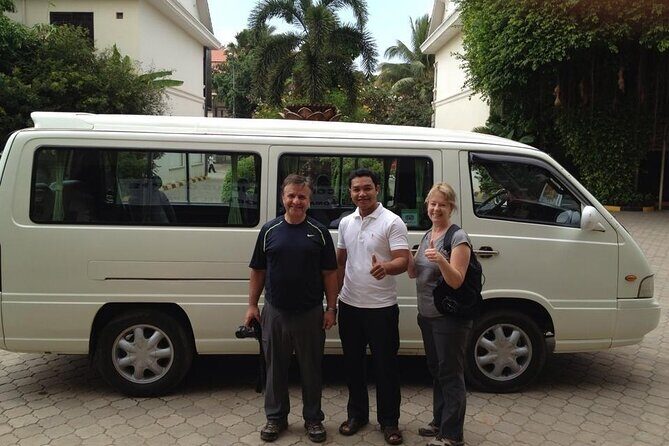
Finally, there’s a practical comfort layer that helps the whole plan work: air-conditioned round-trip hotel transfers, plus complimentary bottled water and cool towels. In Siem Reap, that matters more than it sounds.
Day 1: Pre Rup, Banteay Srei, Neak Pean, Preah Khan, and a sunset wind-down
Day one is a smart way to ease you into Angkor without burning your whole energy on the most crowded zone. You start with a Hindu temple that works like an intro course in Khmer temple design: Pre Rup.
At Pre Rup, you’ll see a temple mountain made from brick, laterite, and sandstone. This site was built as the state temple of Khmer king Rajendravarman and dedicated in 961 or early 962. Even if you’re not a temple-architecture nerd, it’s an important stop because it gives you a sense of how Angkor-era builders shaped sacred geography—platforms, stairs, and the idea that the temple is a climb toward a higher realm.
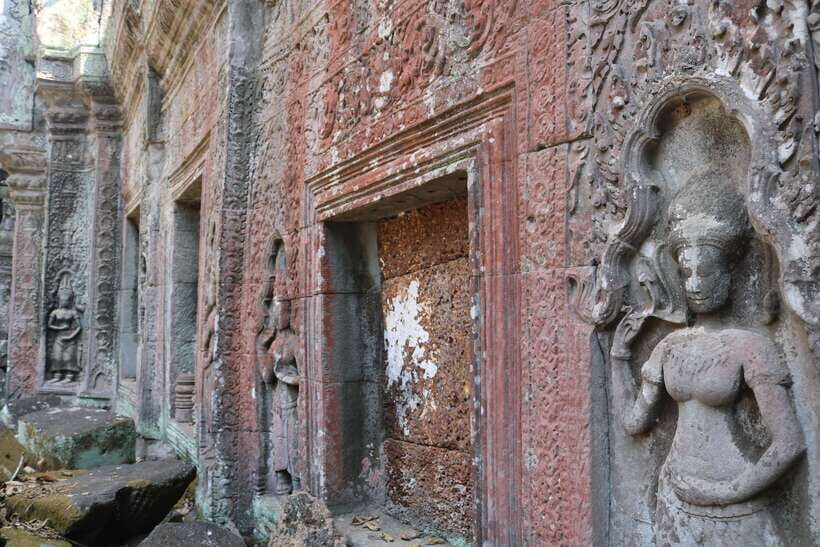
Next comes Banteay Srei. This is a smaller sandstone temple, but it’s famous for intricate reliefs and the feeling that every surface is working overtime. It’s also notable for modern history: access only reopened in the late 1990s after the Khmer Rouge left the area. That time gap affects the way people experience Banteay Srei today—there’s a stronger sense of it being preserved and protected, not just “another stop.”
Then you’ll head to Neak Pean, where the mood shifts. This is an artificial island with a Buddhist temple on a circular island in Jayatataka Baray. Instead of pushing through a dense complex, you get a calmer, reflective setting that makes the next stop feel even more intense.
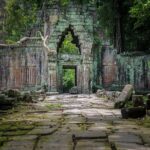
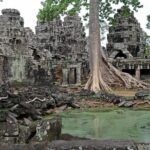
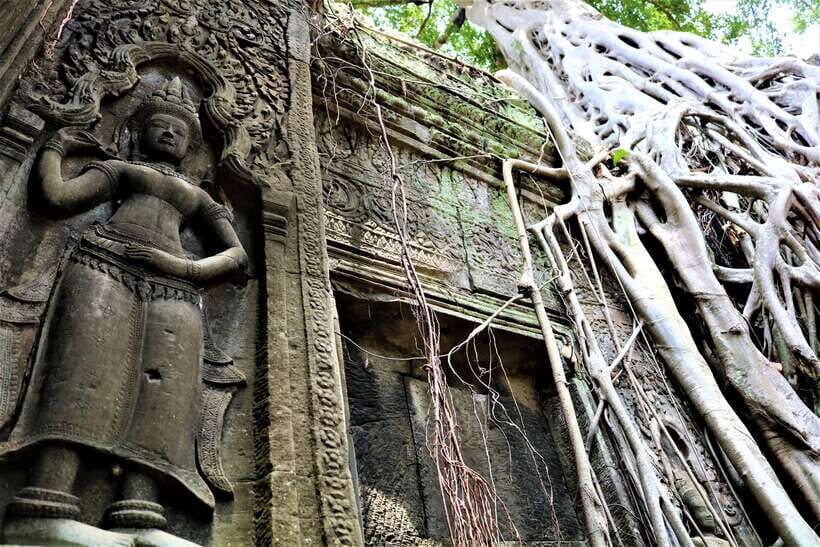
Preah Khan follows, and it’s a strong emotional contrast to the earlier sites. It’s a ruined temple with an atmosphere built from tree roots and crumbling stone structures. The tour frames it as a commissioned work connected to Jayavaraman VII, built in honor of his father, and the site is currently being restored by the World Monument Fund. In some areas, restoration work leaves it in surprisingly good condition—so you’ll notice both the “old ruin magic” and the careful effort to stabilize and bring elements back to view.
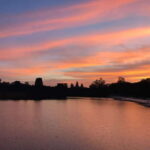
You end day one with a sunset wind-down in Siem Reap’s rice fields. For the private option, you get a rice field sunset drink included. This part isn’t about more temples—it’s about resetting your senses. After hours of stone, heat, and walking, the open horizon gives your brain something easier to process.
You can also read our reviews of more evening experiences in Siem Reap
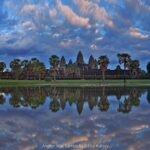
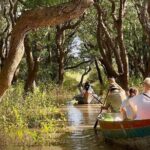
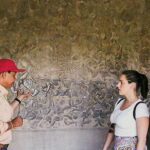
Day 2: Angkor Wat at sunrise, then Ta Prohm, Ta Nei, and Angkor Thom’s faces
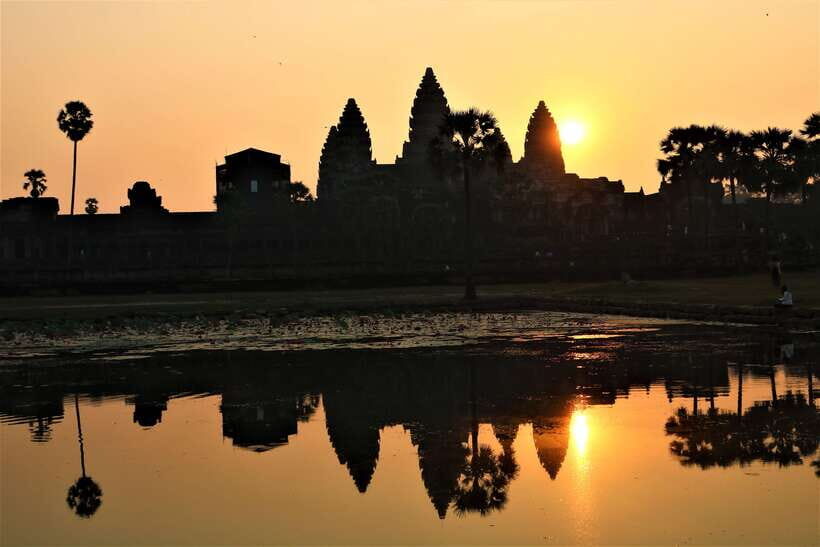
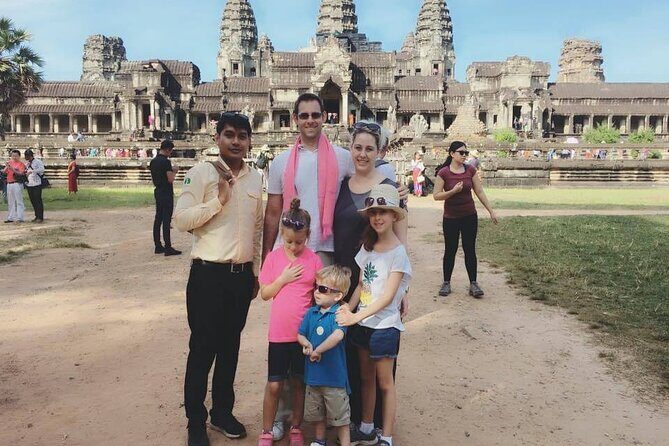
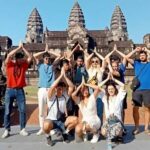
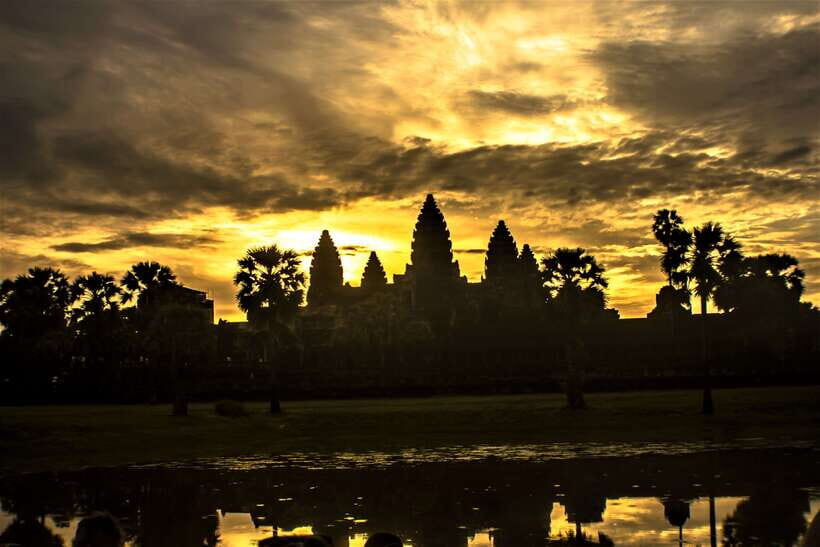
Day two starts with pre-dawn timing because Angkor Wat sunrise is the headliner for a reason. Your departure is early, and you’ll get a chance to enter Angkor Wat in darkness. The tour specifically asks you to bring a torch, and it also mentions entering from the little-visited eastern side. Practically, that means you should plan to arrive feeling ready to move quickly and carefully—dark stone steps are not the time to be fumbling with gear.
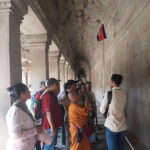
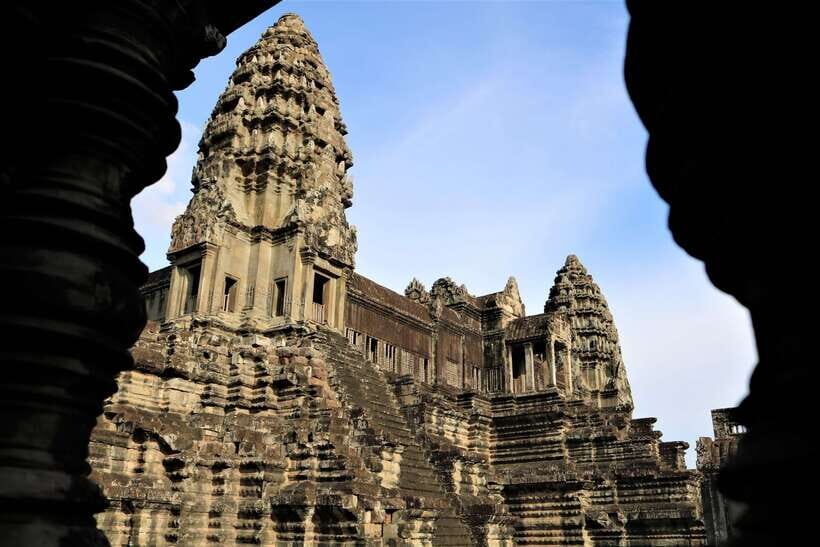
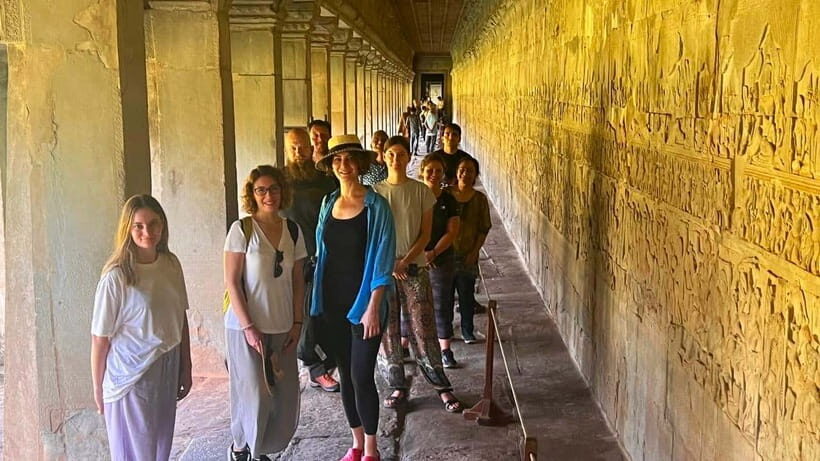
Once inside, you’ll follow cloistered corridors with long stretches of bas-relief carvings. The tour notes it as the longest stretch of bas-relief carvings in the world. Even if you can’t read every figure, the scale hits you. It’s one of those “your eyes keep zooming in and still can’t cover it all” moments.
After the sunrise temple time, the schedule includes breakfast outside Angkor Wat. Since meals aren’t listed as included, plan on paying for your own food there, but know the tour will build in the time so you’re not trying to manage hunger while everyone else is moving.
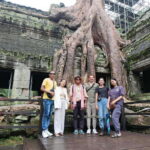
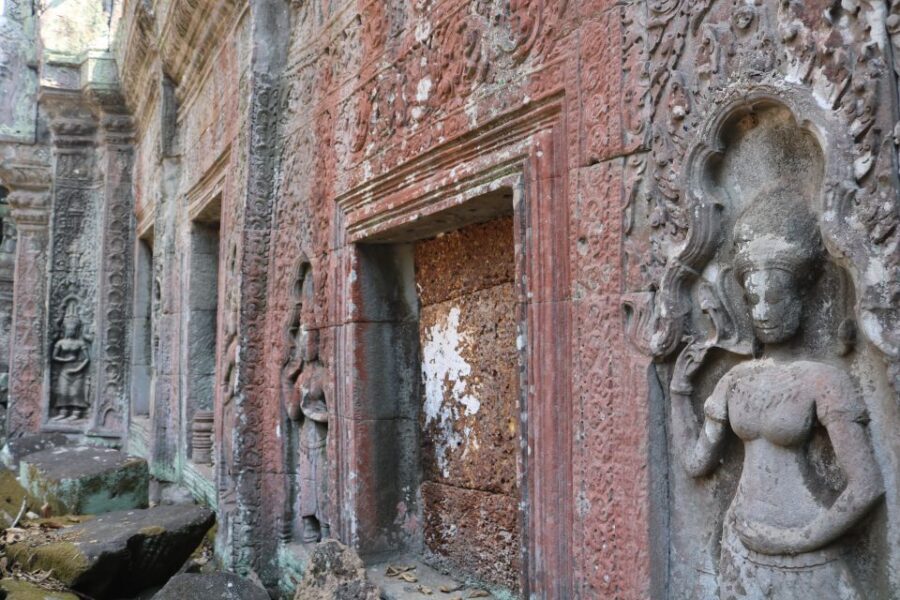
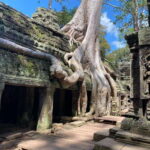
Then the route shifts to jungle and drama with Ta Prohm. This is one of the most atmospheric Angkor temples in the area. It was once home to 2,740 monks, and today it still looks much like it did when French explorer Henri Mouhot drew attention to the site in the early 1850s. The practical takeaway: Ta Prohm rewards slower looking. You’ll want to pause for roots, stones, doorways, and the way light filters through.
Next up is Ta Nei, a late 12th-century stone temple. It’s a quieter contrast to Ta Prohm and a useful stop when you’re tired of the same visual intensity. You’ll be able to shift from “wow roots” to “focus on form” for a bit.
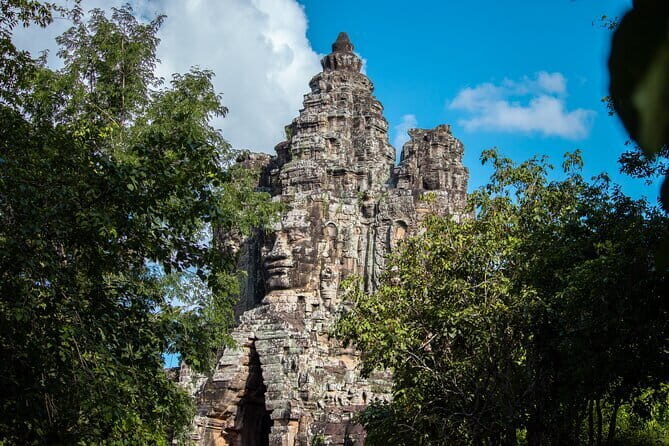
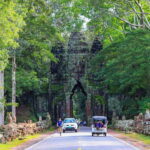
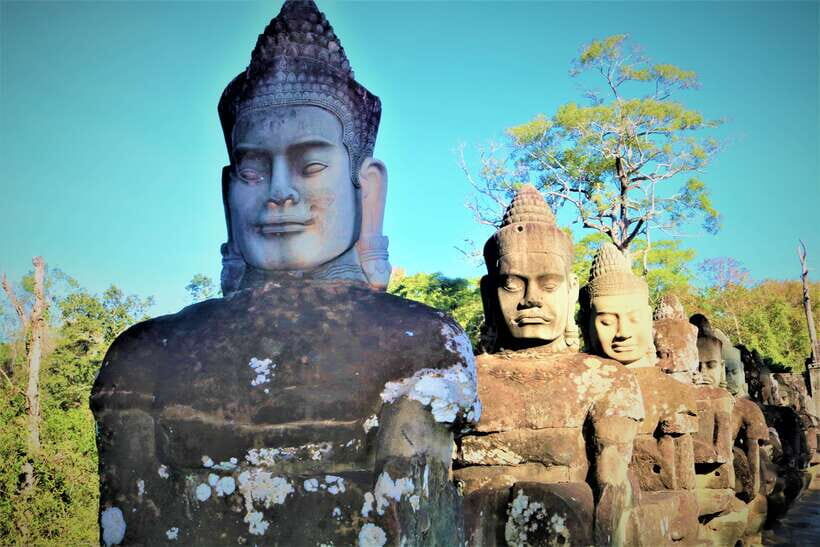
After Ta Nei, you move into Angkor Thom. The tour includes the Southern Gate, flanked by 54 stone figures on each side—gods to the left and demons to the right. That kind of symbolism is part of why Angkor feels like more than monuments. It’s a place that was designed to teach.
At Bayon, the central towers are covered with more than 200 enormous faces. From a distance, it’s striking. Up close, it’s almost disorienting in the best way, because your brain keeps searching for order in the eyes and expressions.
Finally, you’ll visit the Terrace of the Leper King and the Terrace of Elephants. These are the kinds of spots where the carvings and layouts matter. If you’re the type who loves stories, this is where your guide’s explanations can turn the terraces into something you can actually picture as you walk.
Why the guide makes this tour worth the money
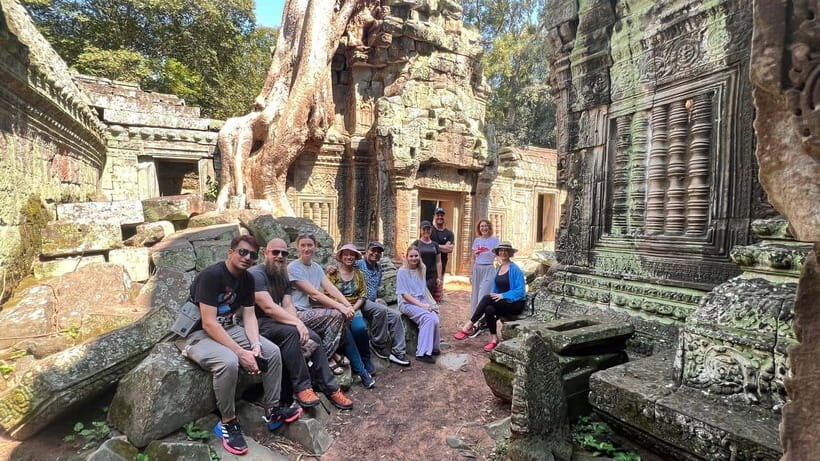
If you’ve only ever toured Angkor with a map and a prayer, you’ll feel the difference here. The tour is built around a licensed English guide who explains Khmer history and religion—so you get context for what you’re seeing.
Guides also help with the stuff that feels small until you’re stuck in it: photo timing, where to stand, how to read major structures fast, and how to keep a group moving without stepping on everyone’s experience. In the field, guides like Sak and Chhay have been praised for strong pacing and for answering questions with real engagement. Others like Bun and Pi are noted for telling stories that connect spiritual ideas to visible details—so the temples stop feeling like empty shells.
You’ll also notice how some guides handle logistics and group comfort. A recurring theme in past groups is that guides actively help with photos, keep the pace manageable in hot weather, and work with the driver to manage breaks and hydration. If you get a guide who uses maps, pictures, or audiovisual aids during transfers, it can help you get your bearings faster once you’re actually at the stone.
There’s also the “human” factor. Some guides keep the mood light with jokes and humor while still covering the serious parts of Khmer religious history. That balance matters because you’ll spend two days in a place that can feel overwhelming if you only take in the visuals.
Torch, heat, and getting your best angles
This tour is very clear about the moments that can make or break your experience.
Bring a torch for sunrise entry at Angkor Wat. It’s not optional wording—it’s part of the plan for entering in darkness. If you forget it, you’ll lose time, get flustered, and probably feel stressed in a moment that should feel awe-filled.
Dress smart for temples and sunlight. Covered shoulders and knees are required, and shorts aren’t allowed. Comfortable walking shoes matter because you’re climbing, walking long corridors, and spending time standing still for sunrise and photos.
Then there’s heat. Even in the dry season, the day can feel like a full-time job. The tour includes air-conditioned vehicle transfers, plus bottled water and cool towels after stops. That doesn’t remove the heat, but it keeps you from paying for the tour later with exhaustion headaches and crankiness.
For photography, the tour plan is aimed at sunrise and key temple photo zones. Some guides have been praised for securing great sunrise spots and for being patient with group photos. If you’re traveling with a phone-only camera, this is still helpful because you’ll get direction on where to stand and what angle tends to show the best faces, symmetry, and stair lines.
Price and entry fees: where the real cost shows up
The price is listed as $46 per person for a 2-day experience, and that includes hotel pickup and drop-off, transportation by air-conditioned vehicle, a licensed English-speaking guide, bottled water, and cool towels. It also includes either a rice field sunset drink (private option) or sunset at Bakheng Temple (small group option).
But temples have their own price tag: entry fees aren’t included. The tour notes $62.00 per person for a 2- or 3-day pass. For value math, that means your total budget is less about the $46 and more about the combined effect of:
- what temples you’re visiting across two days,
- how efficiently you’re moving between clusters, and
- the quality of interpretation you’re getting from the guide.
Where this becomes a good deal is in the mix. You’re not just doing Angkor Wat and calling it a trip. You also hit Pre Rup, Banteay Srei, Neak Pean, Preah Khan, Ta Nei, Ta Prohm, plus Angkor Thom highlights like Bayon and the terraces. If you tried to do this solo, you’d spend far more time sorting logistics and timing, especially around sunrise.
So yes, watch the entry fee. But once you add it in, you’re paying mostly for a trained guide, smooth AC transport, and a route that’s designed to keep you from wasting half-days.
You can also read our reviews of more tours and experiences in Siem Reap
Comfort details that prevent temple fatigue
This is one of those tours where small comfort additions make a real difference.
You’ll have:
- bottled water during the day,
- cool towels to refresh you after temple visits,
- air-conditioned transport for drives between sites,
- hotel pickup and drop-off across Siem Reap City.
In hot weather, towels can be the difference between continuing happily and turning cranky. Multiple guide-and-driver teams have been praised specifically for staying on top of hydration and handing out towels right when people need them.
The other comfort factor is pacing. Two days of Angkor can be exhausting, even with a good route. Past groups mention that guides keep the pacing manageable and that the plan feels organized and relaxed rather than chaotic. If your guide is attentive, it also helps with the “small moments” like adjusting where you stop for photos without slowing the entire day to a crawl.
Who should book this 2-day Angkor highlights tour
This tour is a great fit if you want a guided route through major temples plus a few “lesser-known but worth it” stops. It’s especially strong for people who care about context—Hindu and Buddhist symbolism, Khmer royal history, and what the design of a temple was meant to do.
You’ll likely love it if:
- you’re excited about sunrise at Angkor Wat and want to do it before the biggest crush,
- you don’t just want names on a list but actual meaning behind carvings and terraces,
- you prefer small group energy over giant bus chaos.
It’s less suitable if:
- you have mobility impairments (the tour notes it’s not wheelchair accessible),
- you’re traveling with children under 8,
- you dislike early mornings or long walking days,
- you don’t want to follow temple dress rules (no shorts).
Also keep your expectations realistic: Angkor takes effort. This is a “see a lot, learn a lot” plan, not a sit-and-stroll sightseeing day.
Should you book it
I’d book it if you want the efficient 2-day Angkor experience with good timing and real interpretation. Sunrise at Angkor Wat plus a full second day through Ta Prohm, Angkor Thom, and Bayon is a high-impact combo, and the guide-plus-AC-plus-towel approach makes it feel doable even in heat.
I’d think twice if you’re on a tight budget and the $62 entry pass is a hard hit. I’d also plan carefully if you hate early starts or you need a tour that’s easier on mobility.
If you do book, the biggest smart move is simple: pack the torch, wear the right clothes for temples, bring insect repellent, and wear shoes you can walk in for hours. Then let the guide do the heavy lifting of turning stone into story.
FAQ
How long is the tour?
This experience runs for 2 days.
What’s included in the price?
Hotel pickup and drop-off, air-conditioned transportation, a licensed English-speaking guide, bottled water, and cool towels are included. Depending on your option, you may also get a rice field sunset drink (private option) or sunset at Bakheng Temple (small group option).
Are temple entry fees included?
No. Temple entry fees are not included, and the tour lists about $62 per person for a 2- or 3-day pass.
Does the itinerary include sunrise at Angkor Wat?
Yes. Day 2 includes pre-dawn departure for sunrise at Angkor Wat, and you enter in darkness from the eastern side.
Do I need to bring anything for sunrise?
Yes. The tour asks you to bring a torch for the sunrise portion at Angkor Wat.
What should I wear?
Plan for respectful temple clothing: covered shoulders and knees. Shorts aren’t allowed, so choose light, breathable long pants or a longer skirt. Comfortable walking shoes are recommended.
Is there a sunset option besides rice fields?
Yes. For the small group option, the tour includes sunset at Bakheng Temple. For the private option, it includes a rice field sunset drink.
Are meals included?
Meals are not included. The schedule includes a breakfast time outside Angkor Wat, but you should expect to pay for food yourself.
Is this tour wheelchair accessible?
No. It is not wheelchair accessible, and it’s not suitable for people with mobility impairments.