REVIEW · SIEM REAP
Guided Private Tuk Tuk Tour Angkor Wat and Small Circle and Five Extras
Book on Viator →Operated by Angkor-Travel Tours · Bookable on Viator
Two Angkor Wat visits in one day is the hook. This private tour runs from 6:30am so you hit Angkor Wat at its calmest, first through the East Gate in the best morning light. I also like that your temples are guide-led stop by stop, so you get meaning behind the carvings instead of just moving from one photo spot to the next.
The main trade-off is time and effort. It is an 11 to 13 hour day with a 3.5 km walk in Angkor Thom and some steep steps, plus the big Angkor Ticket (and lunch) is not included.
In This Review
- Key things that make this private tuk tuk day work
- Why the 6:30am start pays off at Angkor Wat
- Tour vehicle and how the day is paced with a guide
- Angkor Wat, first entrance: East Gate in morning light
- The warm-up temples: Prasat Kravan and Prasat Bat Chum
- Srah Srang: the reservoir with animal sculptures
- Banteay Kdei and Ta Prohm: the labyrinth and the roots
- Ta Nei, Ta Keo, and Spean Thma: the off-path stops that feel like adventure
- Chau Say Tevoda, Thommanon, and Mangalartha: smaller temples, bigger detail
- Angkor Thom: Victory Gate, East Gate, and the 3.5 km hike along the walls
- South Gate and Wat Thmey: iconic faces, then a serious human stop
- Lunch and breaks: what you need to plan for
- Price and value: what $59 buys and what costs extra
- Who this tour suits best (and who might want a lighter day)
- Quick practical tips to make the day easier
- Should you book this private tuk tuk Angkor Wat and Small Circle day?
- FAQ
- What time does this tour start?
- Is pickup available, and where does the tour begin?
- Does the price include the Angkor Ticket?
- Is lunch included?
- How long is the tour?
- Is this tour private?
- Can I cancel for a full refund?
Key things that make this private tuk tuk day work
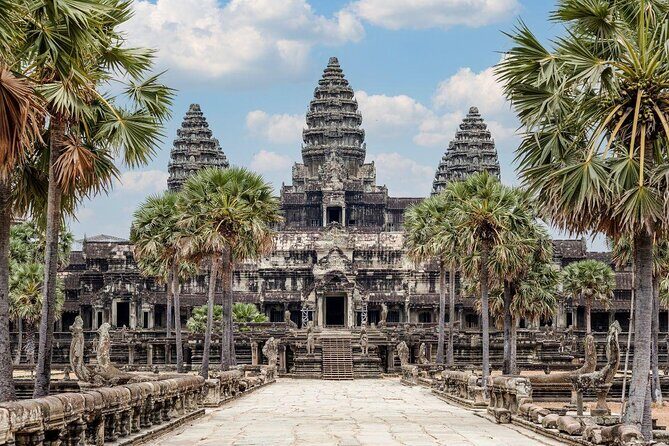
- Angkor Wat twice, including late afternoon pond reflections
- East Gate entry for quieter morning views (and easier photos)
- An English-speaking guide at every temple stop, driver waiting in the car park
- Five extras that take you off the most obvious circuit
- A real walk in Angkor Thom (3.5 km), not just a quick drive-by
- Wat Thmey / Killing Fields added near the end of the day
Why the 6:30am start pays off at Angkor Wat
This is not a lazy “see what you can” tour. The day is built around timing, and that timing is the whole point. You start early enough to reach Angkor Wat while the air is cooler and the crowds are lighter, then you return again near the end when the light turns kinder for photos.
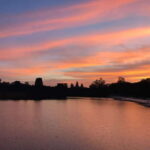
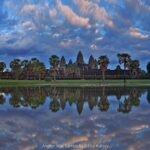
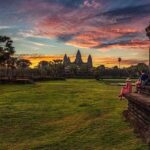
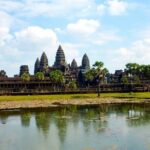
The first Angkor Wat visit is planned from the East Gate, which changes the feeling of the complex. The famous west side is where most people head first, so the East Gate approach helps you get the monument vibe before the busiest flows hit. Later, when you go back again, you get a second chance to enjoy the dramatic symmetry of the towers reflected in the ponds and moats—exactly the kind of late-day lighting people hope for, but rarely get twice in one visit.
One practical tip: plan your morning as a comfort challenge. Wear breathable clothes and shoes that handle temple stone. If you have a hat and sunscreen, bring them. The tour moves fast, and you will spend plenty of time outdoors.
You can also read our reviews of more guided tours in Siem Reap
Tour vehicle and how the day is paced with a guide
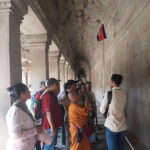
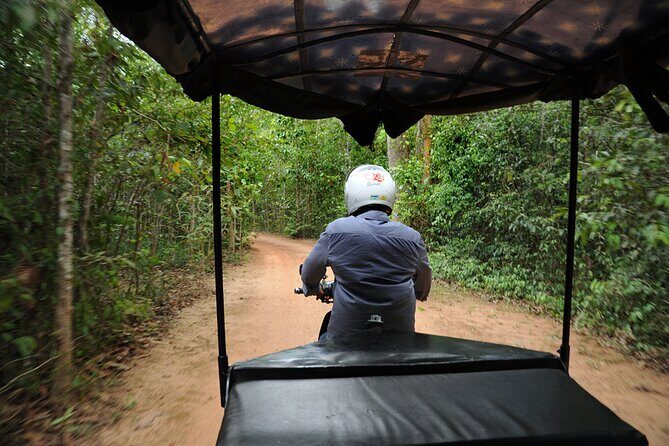
You are in a private setting with a driver and a licensed English-speaking Angkor guide. The guide leads you through each site, while the driver waits at its car park—so you are not losing time doing long transfers on foot.
The pacing is “full day but structured.” Many people struggle on Angkor tours because they bounce between places with little context. Here, every temple stop is guided, including the smaller carvings you might otherwise skip. That matters, because a tiny temple like Prasat Kravan becomes more memorable when someone points out what you are looking at.
For you, the value is clarity. For example, you are not just told that Ta Prohm is famous—you are also given a reason for the drama (the huge strangler figs growing around the structures). On days like this, that kind of explanation turns a site from a quick snapshot into something you actually remember.
Angkor Wat, first entrance: East Gate in morning light
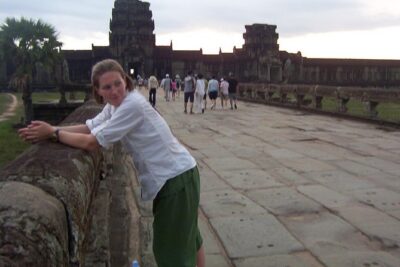
You start at Angkor Wat for about two hours, beginning at a less crowded entry point on the eastern side. This is the first big visual payoff: you get a clean, bright view when the temple towers and surrounding structures still look crisp.
Two hours sounds generous, but in Angkor terms it is just right for a guided circuit—time to see key angles, understand the layout, and still have a chance to linger where the guide tells you the carvings matter. Also, because you are going early, you are less likely to feel like you are squeezing through crowds for every photo.
What to watch for: the ground can be uneven around viewpoints. Take your time on stairs and terraces. If you rush here, you miss the details that make Angkor Wat feel like more than a postcard.
The warm-up temples: Prasat Kravan and Prasat Bat Chum
After Angkor Wat, you move to two smaller temples that act like a story bridge between the massive main complex and the less obvious stops later.
Prasat Kravan takes about 20 minutes. It has five towers lined up, and what makes it worth the stop is the brick carving work. When you compare it to the more common stone carving you see across Angkor, Prasat Kravan feels like an intentional contrast—same culture, different materials and textures.
Then comes Prasat Bat Chum, also around 20 minutes. The key point here is size is not the goal; meaning is. The large inscriptions on the structures point to Buddhism’s route into Angkor during a later period. If you like when a guide connects art, religion, and time periods, this stop is the kind that sticks.
How these fit your day: they break up the giant-temple intensity so your brain has room to reset. Without them, a Small Circle-style day can feel like a nonstop line of stone. With them, it feels like a guided sequence.
Srah Srang: the reservoir with animal sculptures
Next you pause at Srah Srang for about 10 minutes. This is a terrace area around a man-made basin, and what you will notice is that it is described as a deepened artificial basin rather than a baray reservoir. In plain terms: you are looking at a smaller, more refined water feature tied to the temple landscape.
You also get the animal sculptures that make this stop feel like a break from the heavy temple stone. Even if you only spend ten minutes, it is a useful visual reset—water, texture, carvings—before the jungle-heavy portion of the circuit.
Photo-wise: this is a stop where a quick slow walk helps. You can find angles where the structure lines look clean, without fighting people for space.
You can also read our reviews of more private tours in Siem Reap
Banteay Kdei and Ta Prohm: the labyrinth and the roots
You then visit Banteay Kdei for about 45 minutes. This temple is often described as the smaller sister of Ta Prohm, but it is still large. The layout can feel labyrinth-like, yet you will not be left to figure it out alone because the guide keeps you on track.
That guidance is a big deal here. Banteay Kdei has enough confusing corridors that a self-walk can turn into wasted time. A guided route helps you enjoy the structure without losing the plot.
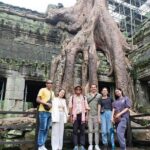
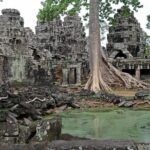
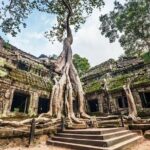
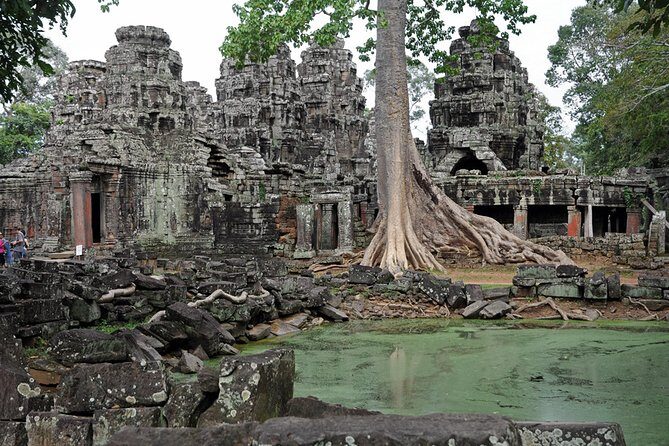
After Banteay Kdei, you move to Ta Prohm for about 1 hour 15 minutes. This is the world-famous jungle temple with huge strangler figs wrapped around the architecture. Plan to take your time. The guide-led pace matters because Ta Prohm has many angles: doorways, roots, and the way light filters through leaves.
A practical note: Ta Prohm can feel humid and shaded at times. If you bring a light layer, it helps if you go from sun into shade quickly during the day.
Ta Nei, Ta Keo, and Spean Thma: the off-path stops that feel like adventure
This is where the tour earns its “extras” reputation by pushing beyond the easiest-to-find sites.
Ta Nei takes about 30 minutes. It is still hidden in the jungle and reaches by gravel roads, which is exactly why many people miss it. The ruins are set up for that Indiana Jones feeling—less crowded and more atmospheric—so you can slow down and actually look.
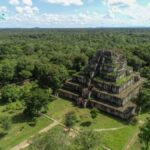
Then you hit Ta Keo for about 40 minutes. This one is a former state temple, built as a stepped pyramid. The upper platform involves extra steep stairs, so if you have knee trouble, take it slowly and use the rhythm of the steps. The guide will help you focus on the right parts of the climb so you are not just struggling uphill for the sake of it.
Next is Spean Thma, a short photo stop of about 5 minutes. It is a stone bridge from the late Angkor period, built using carved stones taken from earlier temples. Even with five minutes, it is a useful break in pace, and the quick explanation helps you understand why stones look reused.
Chau Say Tevoda, Thommanon, and Mangalartha: smaller temples, bigger detail
You continue with several medium-to-small temples, each adding a different style flavor to your day.
Chau Say Tevoda (about 20 minutes) is described as charming with an impressive processional route and pediment carvings showing mythological themes. This is the kind of temple where the decorative work rewards attention. If you like story scenes in carvings, this one hits.
Thommanon follows (about 15 minutes) as the sister temple of Chau Say Tevoda, sharing the Angkor Wat period tower style. It gives you a chance to compare how similar design choices express themselves across sites.
Then you visit Mangalartha (about 15 minutes). It is a small temple on a steep tiered platform and considered among the last stone temples built in Angkor. It is also rarely visited, which is your advantage here: fewer people means you can appreciate the proportions and carve details without constant interruptions.
Angkor Thom: Victory Gate, East Gate, and the 3.5 km hike along the walls
The tour transitions into Angkor Thom, the medieval city. This is not only about walking into temples; it is about moving through the city’s layout.
You start with the Victory Gate (about 20 minutes). It is the second eastern gate and one of the best-preserved city gates. You climb the wall for a view toward the southern giant face of the gate. This climb is short but memorable, because you feel the scale of the city defenses.
Then you move along the medieval walls to the lonesome East Gate area (about 20 minutes). Because there is no road leading directly there, it feels like a quiet corner of the complex. It is a nice change from the busy main entrances.
Now comes the 3.5 km hike portion of the day. The emphasis is on “lonesome sites” in the city walls area, including a stop at Prasat Chrung (about 20 minutes). Prasat Chrung consists of four temples on the city walls, and you visit the southeastern one, said to be the best preserved. The hike is not random wandering; it is a guided route aimed at places that most circuits miss.
This is the part where your fitness matters. You do not need to be an athlete, but you should be comfortable walking long stone distances in heat and sun.
South Gate and Wat Thmey: iconic faces, then a serious human stop
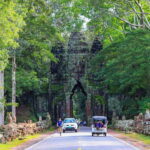
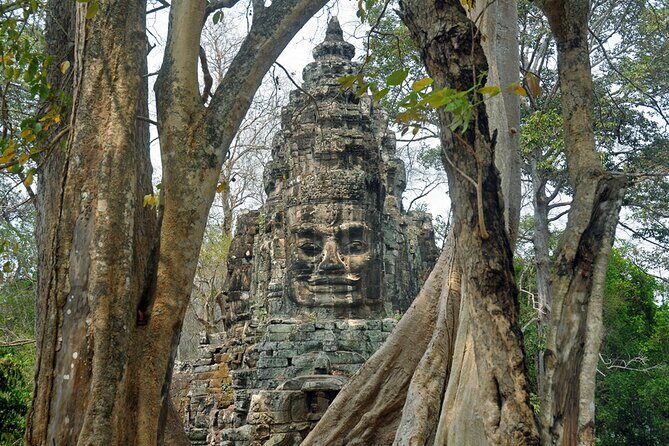
After the hike and the quieter gates, the tour finishes the Angkor Thom loop at Angkor Thom South Gate (about 15 minutes). This is the iconic face tower with railings formed by rows of giant statues showing demons and gods. It is one of the most visually powerful moments of the day, and you will feel it even if you only spend a short time there.
Then you move to Wat Thmey (Killing Fields) for about 10 minutes. This part is different from the temple circuit. Wat Thmey includes a small memorial stupa for victims of the Khmer Rouge and photo boards showing people who were killed there. There is also a large prayer hall on the open grounds.
For many people, this is a grounding moment. After spending the whole day with stone empires and artistic detail, Wat Thmey brings you back to the human reality of Cambodia’s past. It is brief, but it changes the tone of the visit.
Lunch and breaks: what you need to plan for
Lunch is not included. Your main break is at Srah Srang, where several restaurants are available. That is practical because you are already in an area where you can eat without losing time traveling far.
If you prefer a different lunch spot, the driver can drop you somewhere else—if you agree to pay for extra kilometres. That option can work well if you have specific food preferences, but it also means you should confirm the distance and cost before you assume it will be free.
If you want a smooth day: bring a small bottle of water and maybe a snack for the gaps between stops. You will be outdoors a lot, and hunger late in the morning can slow you down more than you expect.
Price and value: what $59 buys and what costs extra
The tour price is $59 per person, and it is private with a driver, private transport, and an English-speaking Angkor guide. For an all-day program that includes multiple sites, that is a fair price—especially because the guide is with you through every temple stop rather than leaving you to wander.
Two major items are not included:
- Angkor Ticket: a one-day ticket is listed at $37 per person, valid for temples.
- Lunch: also not included.
So the real daily cost often becomes the tour price plus your ticket plus lunch. If you are comparing options, look at how many temple entrances you will use. This day covers a lot of sites, so a one-day ticket can make sense if you are not planning additional Angkor days. If you already bought a multi-day ticket, double-check your validity so you do not pay twice.
Who this tour suits best (and who might want a lighter day)
This tour fits best if you want:
- The classic Angkor highlights, but with more control over crowds thanks to early timing
- A guide-led approach that explains what you are seeing at smaller temples too
- Off-the-path stops like Ta Nei and a meaningful walk inside Angkor Thom
It might feel like too much if you:
- Have trouble with steep stairs (Ta Keo) or long walking days
- Want a slower pace with big sit-down breaks
- Do not plan to handle outdoor heat and sun before noon
If you are traveling solo, the private format is a strong advantage because you are not stuck with a group’s pace or interests. If you travel with a partner, you still get the benefit of private guidance without the rigid schedule of a large group.
Quick practical tips to make the day easier
- Start the day ready for sun: hat, sunscreen, and comfortable shoes.
- Bring a small day bag you can manage on stairs.
- Use the guide’s timing: if they suggest a viewpoint, it is usually for a reason (often light and crowd patterns).
- Expect plenty of outdoor time, then pack patience for a long but rewarding day.
Should you book this private tuk tuk Angkor Wat and Small Circle day?
If your priority is seeing Angkor Wat with better light and fewer headaches—then returning again for the pond reflections—this tour’s structure makes sense. You also get a guided run through both major and lesser-visited temples, plus that 3.5 km Angkor Thom walk that turns the day from sightseeing into a real experience.
Book it if you can handle an intense schedule and you are buying the Angkor Ticket and planning lunch separately. Skip it for a more relaxed visit if you want fewer sites, less walking, or you are not feeling good on steep steps.
FAQ
What time does this tour start?
It starts at 6:30am.
Is pickup available, and where does the tour begin?
Pickup is offered. The meeting point is listed as Jeep Tour Siem Reap Angkor9V44+36X, Little Pub St, Krong Siem Reap, Cambodia.
Does the price include the Angkor Ticket?
No. The Angkor Ticket is not included. A one-day ticket is listed at $37 per person and is required for each temple.
Is lunch included?
Lunch is not included. There is a break at Srah Srang where restaurants are available.
How long is the tour?
The duration is listed as 11 to 13 hours (approx.).
Is this tour private?
Yes. It is a private tour/activity, meaning only your group participates.
Can I cancel for a full refund?
The policy states free cancellation, with a full refund if you cancel up to 24 hours in advance of the experience’s start time.