REVIEW · SIEM REAP
Angkor Wat Private Day Tour from Siem Reap
Book on Viator →Operated by Green Era Travel · Bookable on Viator
Angkor feels personal with a good guide. This private day tour focuses on the big icons of the Angkor Archaeological Park, with enough explanation to make the carvings and symbols click. You’ll also get the contrast that makes the site famous: stone built to last, and temple walls slowly reclaimed by roots at Ta Prohm.
I really like the way this tour blends top sights with clear context, especially when guides like San, Perth, and Nak connect what you’re seeing to Khmer beliefs and everyday life. I also love the practical touches: hotel pickup and drop-off, cold bottled water, and an easy pace that helps in the heat when you’re walking and climbing.
One thing to plan for: it’s a long, active day. Expect steps, uneven stone, and plenty of sun, so you’ll want good shoes and to keep your energy up between stops.
In This Review
- Key highlights worth your attention
- A private Angkor day that moves with you
- Getting started in Siem Reap: pickup, timing, and the heat plan
- Stop 1: Siem Reap orientation and entering the Angkor zone
- Stop 2: Angkor Wat and the long bas relief story
- Stop 3: Angkor Thom South Gate and the city-scale walls
- Stop 4: Bayon Temple and the 200 smiling faces
- Stop 5: Terrace of the Elephants and the Leper King terrace
- Stop 6: Ta Prohm and the jungle-taking-over contrast
- The real value: a guide who turns carvings into meaning
- Transportation and comfort: tuk tuk fun, air-conditioned wrap-up
- What’s included, what’s not, and how to budget smart
- What to wear and how to prepare for comfort
- Who this private Angkor Wat day tour is best for
- Should you book this Angkor Wat private day tour?
- FAQ
- How long is the Angkor Wat private day tour?
- What time does pickup happen in Siem Reap?
- What does the $49 per person price include?
- What tickets are required?
- Is the tour private?
- What vehicle do we ride in?
- Is food included?
- What should I wear?
- Is the tour suitable for children?
- Can I cancel and get a full refund?
Key highlights worth your attention
- Private attention that helps you read temple carvings instead of just photographing them
- Tuk-tuk or minivan comfort matched to group size, with cold water on hand
- Angkor Wat’s bas relief scale, including the world’s longest continuous story carvings
- Angkor Thom’s scale, including the giant walls and the Bayon’s 200 smiling faces
- Ta Prohm’s tree-root drama, plus the on-site explanation of how it was preserved
A private Angkor day that moves with you
Angkor Wat is the obvious draw. But the real payoff is when the day isn’t just a checklist. On this private tour, you get a guide who can slow you down at the spots that matter, and speed you through the parts you don’t need. That makes a difference when you’re dealing with long distances, crowds, and a site that’s both spiritual and architectural.
At $49 per person, the tour itself isn’t just paying for transport. You’re paying for interpretation: how Hindu and later Buddhist ideas show up in the layout, the iconography, and the way the temple is arranged for movement and viewing. Add that to the fact that you’re in your own group, not squeezed into a large herd, and the value starts to make sense fast.
You do still need to budget for the required Angkor National Park ticket ($37 per person), and temple admissions are not included at the stops. So your total outing is more like tour + required admission, not just the $49. Still, when you compare it to group tours that don’t take time to explain anything, the private setup often feels like better money.
You can also read our reviews of more private tours in Siem Reap
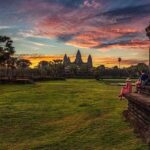
Getting started in Siem Reap: pickup, timing, and the heat plan

Your day begins with hotel pickup at 8:00 AM. That’s a great time to start because you’ll beat the strongest heat and give yourself time to enjoy Angkor Wat without feeling rushed. You’ll roll out toward the UNESCO-listed park, with your guide setting the stage for what you’re about to see.
This is also the moment where you can set expectations with your guide. If you want more time for photos at Angkor Wat, or you’d rather focus on sculpture details at Bayon, it helps to say so early. Private tours work best when you steer them slightly.
Along the way, you’ll be supported with practical basics. You get cold bottled water during the tour, and your guide keeps the day organized so you’re not waiting around for long stretches. In Siem Reap’s sun, that matters more than people think.
Stop 1: Siem Reap orientation and entering the Angkor zone

The first stop is essentially your launch point into the temples: starting from Siem Reap and getting your bearings. You’ll spend about an hour here before the main temple hits, and it’s a useful window to settle in and start learning what you’re about to see.
This isn’t just downtime. A short orientation helps you understand temple logic—where you’re walking, why certain areas feel more sacred or symbolic, and what themes to watch for. If you’ve ever visited a site where the guide says little and you’re just looking at stone, you’ll know how frustrating that can feel at Angkor. Starting with context makes later stops far easier to “read.”
Stop 2: Angkor Wat and the long bas relief story

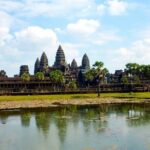
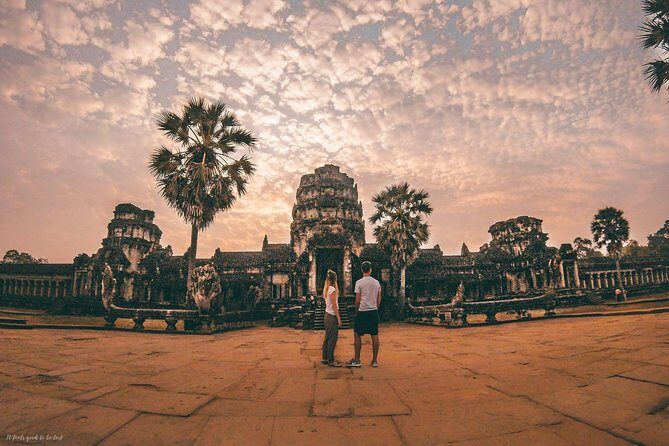
Angkor Wat takes the spotlight for good reason. Built between 1113 and 1150 AD and dedicated to Vishnu, it’s the best preserved of the major temples. You’ll spend about two hours here, which is enough time to see the big structure and still take a careful look at carvings without turning your brain into mush.
Here’s what I think is most worth your attention at Angkor Wat:
- The temple’s overall symmetry and layout. It’s not random. The design channels movement and sightlines.
- The sculpture work. This is where your guide’s job becomes valuable.
- The world’s longest continuous bas relief at Angkor Wat, highlighted as a signature feature. Long storytelling carvings like this are easier to appreciate when someone points out what’s being shown and how scenes flow across the walls.
The common mistake is trying to look at everything at once. With a private guide, you can focus on the few areas that give you the full picture: how the carvings relate to belief, what motifs repeat, and how the temple’s scale communicates power and devotion.
One drawback: Angkor Wat is popular. Even with a private group, you’ll still feel that it’s one of the main destinations. The solution is simple—ask your guide to show you the best places to stand for photos and details, and plan on shifting your viewing angles so you’re not staring into the sun or fighting crowds at every step.
Stop 3: Angkor Thom South Gate and the city-scale walls
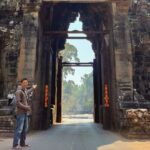
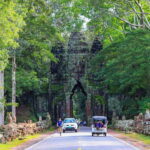
Next comes Angkor Thom South Gate, part of the larger Angkor Thom complex. You’ll spend around 50 minutes here.
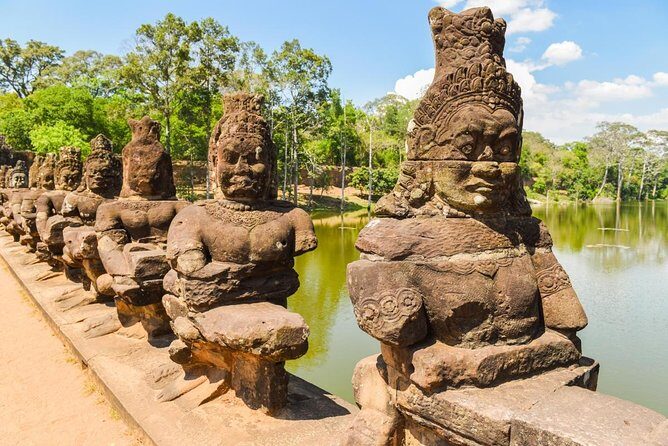
The South Gate is striking because of sheer scale. The information you’ll get during the stop calls out that the walls are enormous—about 6 meters wide, 8 meters high, and stretching 13 kilometers in length. When you hear numbers like that while standing there, the site stops being a postcard and starts feeling like a real city edge.
This stop is great for two reasons:
- It shows the defensive and political side of Angkor Thom, not just the sacred temple vibe.
- It sets up the next big stop, Bayon, because you can feel the transition from outer city walls into the heart of the complex.
Drawback to consider: Gates and walls can feel less “mystical” than the temples that follow, especially if you’re tired. If you’re heat-sensitive, tell your guide early so you can keep water breaks and photo stops efficient.
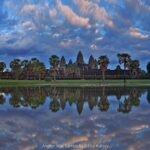
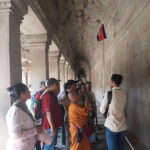

Stop 4: Bayon Temple and the 200 smiling faces
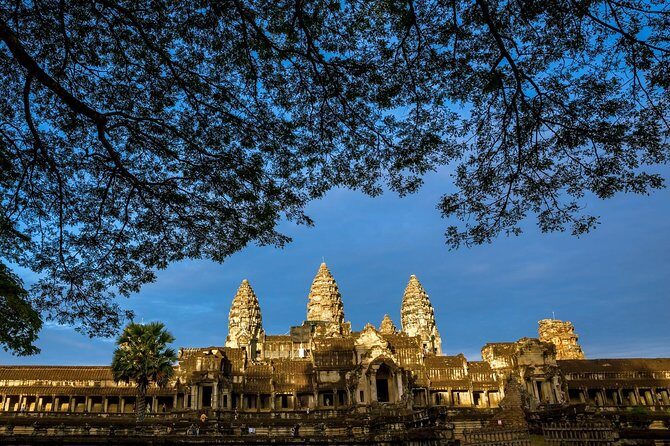
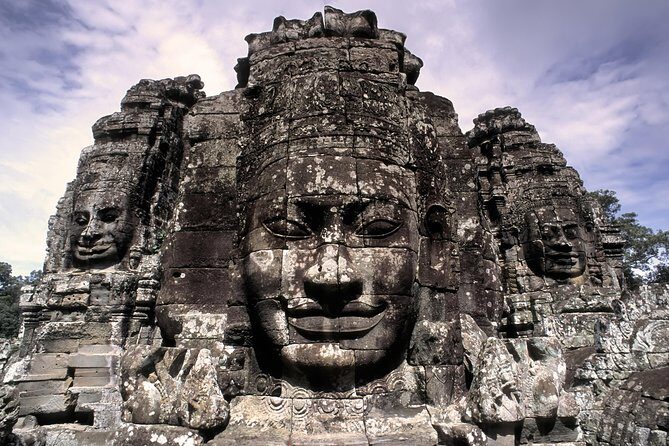
Bayon Temple is next, about 45 minutes. This is the stop that many people remember most clearly: the temple mountain in the center of Angkor Thom, defined by the famous 200 smiling faces.
A good guide makes this part click. Instead of just saying “look at the faces,” they’ll explain how the expressions and placements relate to the symbolic world of the Khmer empire. You’re seeing portrait-like stone faces arranged across towers, creating the feeling that the temple is watching you from many angles at once.
This is also where you’ll see how Bayon fits into the overall Angkor story. Angkor Wat is about grandeur and preservation. Bayon feels more intimate in its repetition—faces everywhere, attention on human-like presence, and a constant visual rhythm.
Practical note: This is a temple with lots going on visually. Give yourself time to slow down and stand in a couple of spots to see how the faces line up. If you rush, you’ll miss the effect that makes Bayon special.
Stop 5: Terrace of the Elephants and the Leper King terrace
You’ll continue to the Terrace of the Elephants and then to the Terrace of the Leper King, named for a famous sculpture often called the Leper King. You’ll have about 45 minutes for this section.
This stop works well if you like sculpture detail. The Elephants terrace earns its name from the animal depictions, and it’s the kind of carving that rewards looking down at the texture, not just scanning from far away.
The Leper King area is memorable because of how the figure is presented in stone. Even if you don’t know every story behind it, the terrace gives you a sense that these temples weren’t built only for grand ceremonies. They also served as stages where art and narrative were built into everyday viewing routes.
Consideration: This section is still active. It’s not a sit-down break. If you’re wearing less-than-ideal shoes, this stop can turn into a sore-foot workout. Good walking shoes are a must.
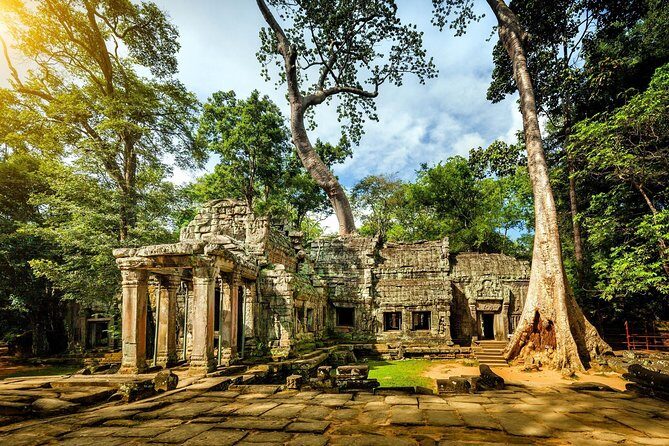
Stop 6: Ta Prohm and the jungle-taking-over contrast
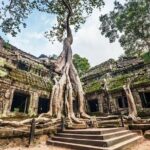
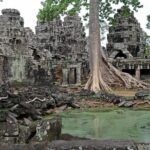
Finally, you get to Ta Prohm, about one hour. If Angkor Wat is the stone that holds steady, Ta Prohm is the reminder that nature doesn’t care about our plans.
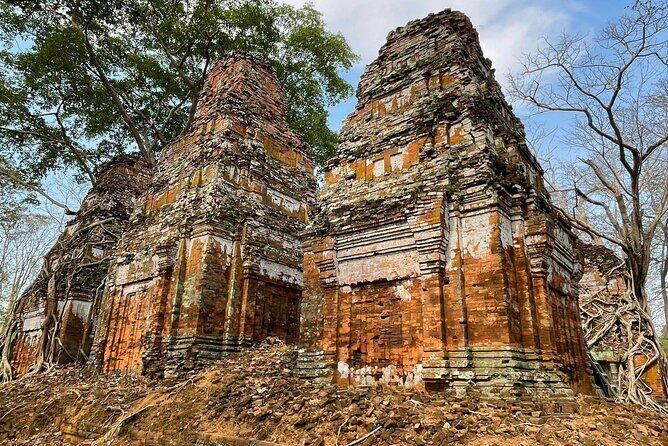
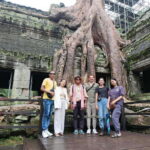
This is the temple where roots and ruins tangle together in a way that feels almost cinematic. You’ll see how the site is famous for tree roots covering structures and shaping the look of the place. And you’ll also get an explanation of how French archaeologists handled the site’s preservation, with the idea that it was left to show the destructive power of nature rather than cleaned into something perfectly tidy.
That contrast is the point. Ta Prohm is often the stop that makes people say, I get why this place has a reputation. It doesn’t feel like a museum object. It feels like a living argument between time and stone.
Practical note: Ta Prohm’s setting can be shaded in places, but you’re still in a temple ruin with uneven surfaces. Take it slow when you step around roots and rubble.
The real value: a guide who turns carvings into meaning
Angkor can overwhelm you if you treat it like a photo mission. The private nature of this tour helps because your guide can focus on the iconography and motifs that show up across Angkor Wat, Ta Prohm, and Bayon.
In the stories from experienced guides in the area, you’ll find names like Choud, San, Sammy, Sorphea, Nak, Dy, and Pot showing up as guides people praise for making explanations clear and organized. A consistent theme in those experiences is this: you spend less time guessing what you’re looking at, and more time understanding why the stone is shaped that way.
If you care about learning, this kind of guide is the difference between seeing temples and actually seeing a civilization’s ideas translated into architecture. If you don’t care about details, it still helps—because a good guide knows when to talk less and let you breathe.
Transportation and comfort: tuk tuk fun, air-conditioned wrap-up
Transport is handled to match your group size. You’ll ride in a tuk tuk for smaller groups (1–2 people) and a minivan if your group is larger (3 people plus). Either way, the point is to keep the day moving without fatigue from long transfers on foot.
The included cold bottled water is a simple thing that matters a lot. Also, you’ll have a debrief on the way back to your accommodation in an air-conditioned private vehicle. That means you don’t finish the day feeling like you’ve just escaped a sauna.
This is a big deal in Siem Reap. Temperatures can wear you down before your legs give out. Cooling breaks are part of the experience, not an afterthought.
What’s included, what’s not, and how to budget smart
Included:
- Hotel pickup and drop-off
- Transportation by tuk tuk (1–2 pax) or minivan (3 pax more)
- Experienced English-speaking guide
- Cold bottled water
Not included:
- Angkor National Park ticket ($37 per person, required)
- Foods and drinks
- Gratuities and other personal expenses
- Temple admissions at the listed stops
So how do you make this a good value day?
Think of the $49 as paying for the private guide and transport, plus the day being tailored to your pace. Then treat the $37 admission as the price of entry to the real show. When you do that, you’re less likely to feel surprised at the counter and more likely to feel like you got what you paid for.
Also, the tour uses a mobile ticket, which usually makes entry smoother once you’re at the gates.
What to wear and how to prepare for comfort
This is one of those tours where your outfit affects the experience. The dress requirement is clear: pants or knee-length skirts/dresses are permitted. I’d also add the obvious travel logic—bring breathable layers. Temple visits aren’t a place to dress fancy.
For shoes, you’ll want good walking shoes. There are steps, uneven stone, and lots of standing. If you show up in thin sandals, you’ll end the day with sore ankles and a bad attitude.
Physical readiness: the tour asks for moderate physical fitness. That means you should be comfortable with walking and stairs, not that you need to be an athlete.
If you’re traveling with a child, the child must be accompanied by an adult.
Who this private Angkor Wat day tour is best for
This tour is a strong fit if you:
- Want private pacing and a guide who can explain what you’re seeing
- Have limited time in Siem Reap and need a focused route through the key sites
- Prefer one group to yourself over long pauses waiting on strangers
- Like the mix of styles: grand stone at Angkor Wat, city walls at Angkor Thom, and jungle chaos at Ta Prohm
It’s also a smart choice if you care about photos, because a guide can help you find better angles instead of just pointing and hoping.
If you hate walking or you want a slow, lounge-by-the-pool day, this won’t match your vibe. It’s active by design.
Should you book this Angkor Wat private day tour?
Book it if you want Angkor Wat and its nearby highlights with real interpretation, not just a van ride and a map. The value is strongest when you appreciate context—iconography, motifs, and why each temple is arranged the way it is.
Skip or reconsider if you:
- Have very limited mobility or can’t handle steps and uneven surfaces
- Are unwilling to pay additional entry costs on top of the $49 tour price
- Want a fully unstructured day with no guide direction
For most people, this hits the sweet spot: classic Angkor icons, a private setup, and the kind of guide-led storytelling that makes the whole place feel less like stone blocks and more like a message written in carvings.
FAQ
How long is the Angkor Wat private day tour?
It runs about 6 to 7 hours.
What time does pickup happen in Siem Reap?
Pickup is at 8:00 AM from your hotel.
What does the $49 per person price include?
It includes hotel pickup and drop-off, transportation (tuk tuk or minivan depending on group size), an English-speaking guide, and cold bottled water.
What tickets are required?
You need the Angkor National Park ticket ($37 per person, required). Temple admissions at the stops are listed as not included.
Is the tour private?
Yes. It’s a private experience with only your group participating.
What vehicle do we ride in?
For 1–2 people, it’s tuk tuk. For 3 people or more, it’s a minivan.
Is food included?
No. Foods and drinks are not included.
What should I wear?
You must wear pants or knee-length skirts/dresses. Bring good walking shoes for the steps and walking.
Is the tour suitable for children?
Children must be accompanied by an adult.
Can I cancel and get a full refund?
Yes. You can cancel up to 24 hours in advance for a full refund. If you cancel less than 24 hours before the start time, the amount paid is not refunded.