REVIEW · SIEM REAP
2 Days Exclusive Temple Highlights with Sunset and Sunrise Tour
Book on Viator →Operated by Journey Cambodia · Bookable on Viator
Angkor in two days needs smart timing. This tour is built around the light—sunrise at Angkor Wat and sunset later—so you see the temples when the crowds are thinner and the stones look their best. You also move through the greater Angkor area in a tight rhythm, guided by an English-speaker who explains what you’re actually looking at.
I love the English-speaking guide who connects each ruin to who built it and why. I also love the practical comforts: bottled water and cool towels, plus enough stops that you’re not scrambling for relief in the heat.
One consideration: the $49 price is only the tour. You’ll still pay the temple pass (USD 62 per person) directly at the sites, and meals are on your own.
In This Review
- Key highlights I’d circle before you book
- Two-day Angkor rhythm: how sunrise and sunset shape the whole trip
- Day 1 stops: Pre Rup, Banteay Srei, Neak Pean, Preah Khan, and rice-field sunset
- Pre Rup Temple (about 1 hour)
- Banteay Srei (about 2 hours)
- Neak Pean (about 1 hour)
- Preah Khan (about 2 hours)
- Rice-field sunset at Baitang Siem Reap (about 2 hours, admission included)
- Day 2 sunrise at Angkor Wat and the jungle-to-capital arc
- Angkor Wat at sunrise (about 3 hours, torch recommended)
- Ta Prohm (about 2 hours)
- Ta Nei (about 1 hour)
- Angkor Thom and Bayon area (about 1.5 hours)
- Angkor Thom South Gate (about 30 minutes)
- Sunset choice: Bakheng Mountain or rice fields
- How the guide improves every temple (and how you’ll feel less lost)
- Comfort and heat management: AC van, water, towels, and bathroom breaks
- Price math: what your $49 covers, what’s extra, and where value comes from
- What to wear and bring: torch for sunrise, scarf for shoulders, shoes for stairs
- Dress code for temple entry
- Torch for Angkor Wat sunrise
- Walking shoes
- Who this 2-day Angkor tour fits best
- Should you book this tour?
- FAQ
- Do I need to buy the temple pass for this tour?
- Is hotel pickup and drop-off included?
- Do I need to bring a torch for sunrise at Angkor Wat?
- What is the required dress code?
- Are meals included?
- Can I cancel for free?
Key highlights I’d circle before you book
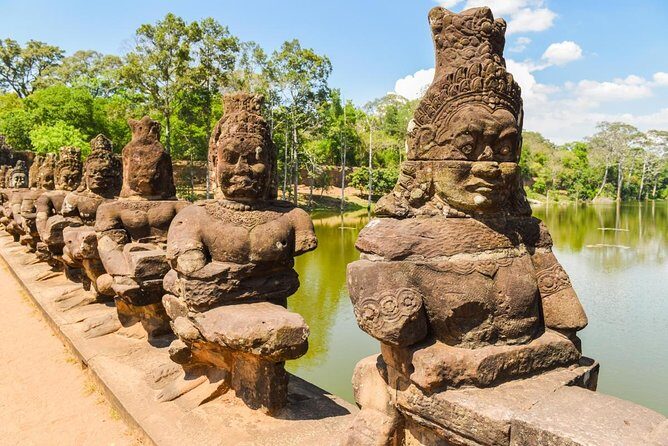
- Pre-dawn sunrise timing at Angkor Wat (bring a torch) from the eastern side
- Day 1’s temple mix: Pre Rup, Banteay Srei, Neak Pean, Preah Khan, then rice-field sunset at Baitang Siem Reap
- Ta Prohm at prime hours in the jungle setting where monks once lived
- AC vehicle + bottled water + cool towels, which makes a huge difference in Siem Reap heat
- Guide-led pacing that aims to hit the big sites without turning it into a rushed stamp run
Two-day Angkor rhythm: how sunrise and sunset shape the whole trip
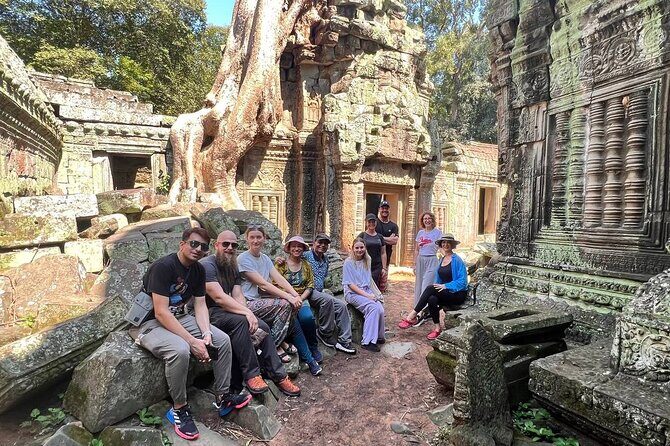
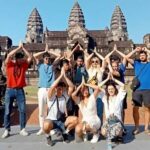
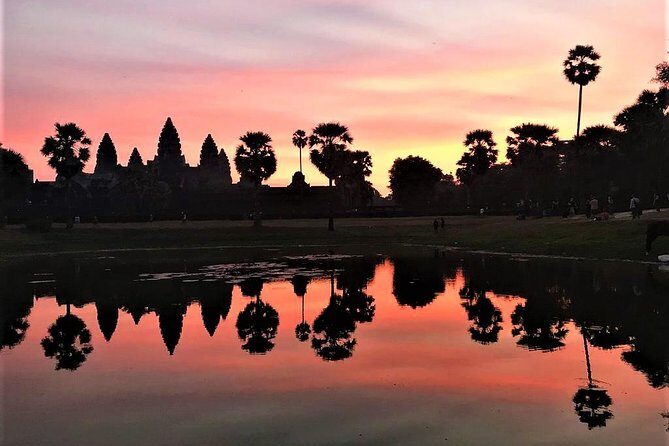
If you only remember one thing about Angkor, make it this: timing is everything. This 2-day tour is designed around that reality. The schedule targets early hours for Angkor Wat sunrise, then builds toward atmospheric sunset time on the other day. That matters because you’re not just chasing photos. You’re seeing architecture when shadows define the carvings, and when the crowds are more manageable.
Day 1 leans toward a classic “greatest hits” plus contrast. You start with Pre Rup, then shift into intricate sandstone at Banteay Srei, then move through Buddhist and mixed sites like Neak Pean and Preah Khan. Day 2 gets the headliner and keeps the pace moving: sunrise at Angkor Wat, then the jungle drama of Ta Prohm, and finally the big-city feel of Angkor Thom and its gates and terraces.
The tour also gives you something many self-guided days don’t: interpretation plus logistics. Your guide helps you understand what you’re seeing so the temples don’t blur together after the third gate. At the same time, they’re handling route timing—so you’re not trying to solve transport, parking, and admission confusion at 4:30 a.m.
You can also read our reviews of more evening experiences in Siem Reap
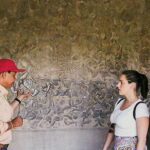
Day 1 stops: Pre Rup, Banteay Srei, Neak Pean, Preah Khan, and rice-field sunset
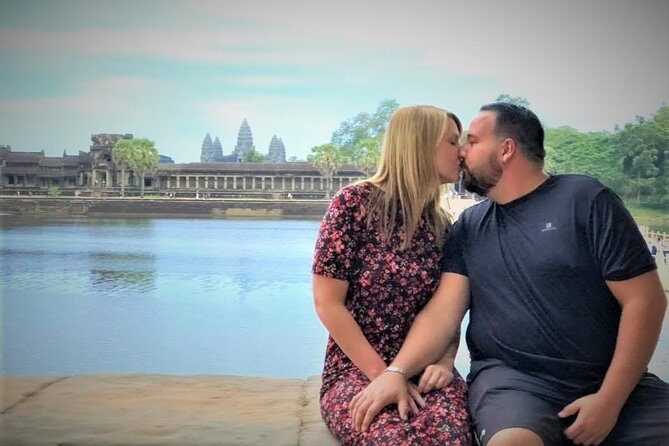
Day 1 is where you start building an Angkor “eye.” You go from state-temple grandeur to expert carving to quieter, more reflective corners of the complex.
Pre Rup Temple (about 1 hour)
Pre Rup is a Hindu temple with a history tied to Khmer royalty. It was built as the state temple of Khmer king Rajendravarman and dedicated in 961 or early 962. What I like about starting here is the shape: it’s a temple mountain made of brick, laterite, and sandstone. That combination gives you texture, and your guide can point out the layers so the place feels less like random ruins and more like a designed monument.
Practical note: one hour sounds short, but for this stop it’s usually enough if you’re also listening. If you want extra time to wander on your own, this is the kind of site where it pays to pause and look closely.
Banteay Srei (about 2 hours)
Banteay Srei is the stop that can change how you see the rest of Angkor. It’s famous for intricate carvings and for being well preserved, and it’s a smaller sandstone structure compared to the bigger Angkor icons. The result is that your “what am I looking at” questions get answered fast—especially if your guide explains the relief scenes and how the artists worked.
This is also a good place for slow looking. You’ll feel the difference between broad, massive temple design and fine, detailed ornamentation.
Neak Pean (about 1 hour)
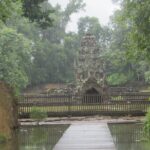
Neak Pean is an artificial island with a Buddhist temple. That’s an important contrast after the Hindu focus earlier in the day. It’s a reminder that the Angkor world wasn’t one religion, one style, or one era—it’s a changing set of beliefs across time.
If you’re the kind of person who likes a breather between big ruins, Neak Pean can give you that. Your guide can help you understand why this kind of structure would matter spiritually.
You can also read our reviews of more tours and experiences in Siem Reap
Preah Khan (about 2 hours)
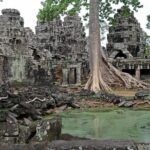
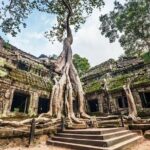
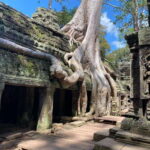
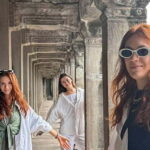
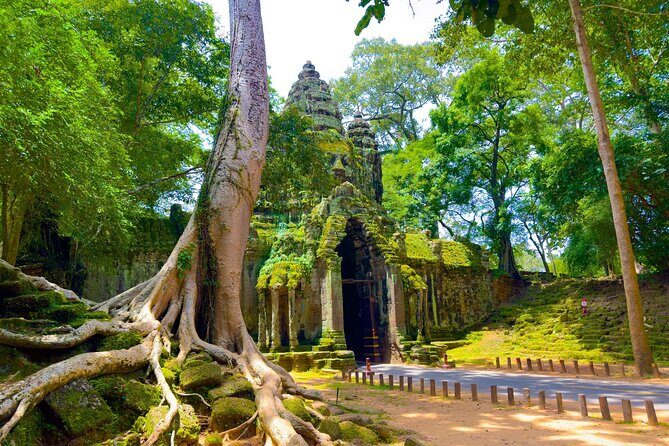
Preah Khan is ruined, but it’s also highly atmospheric. Think crumbling stone mixed with tree roots. This stop can be a highlight because it feels alive even after centuries—nature and architecture tangled together in a way that photographs well but also rewards careful attention.
Two hours here is a smart allocation. You need time to walk the paths, catch the view angles, and still sit for a moment in the shade while your guide explains what you’re seeing.
Rice-field sunset at Baitang Siem Reap (about 2 hours, admission included)
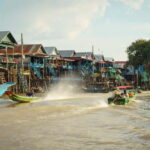
Day 1 ends with a calmer scene: rice fields at sunset. The Baitang Siem Reap setting gives you that “pause button” after a long day of stone and jungle. You’re likely to sip something cold, relax, and enjoy a lighter, countryside-feeling finish rather than jumping straight from temple to another temple.
This part is especially nice if you’re traveling with kids or anyone who gets temple fatigue fast. It breaks the pattern, and it turns the end of day into a memory instead of a chore.
Day 2 sunrise at Angkor Wat and the jungle-to-capital arc
Day 2 is the big one. It starts pre-dawn, and it ends with the feeling that you’ve seen the administrative heart of a huge empire.
Angkor Wat at sunrise (about 3 hours, torch recommended)
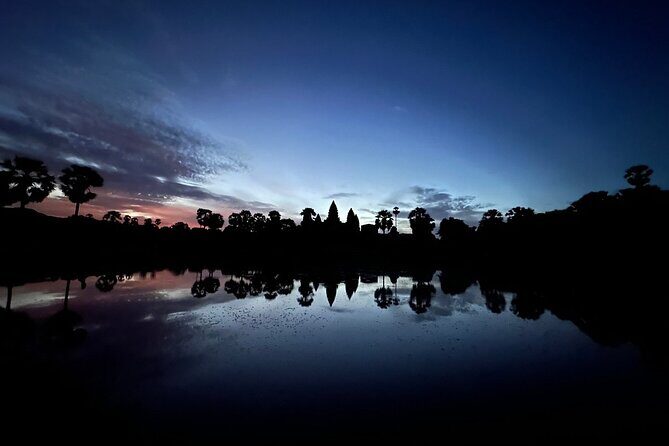
You’re picked up early enough to be there for sunrise outside Angkor Wat. The tour has you enter from the eastern side, from the little-visited entry point, and you’ll be in darkness first. The listing specifically asks you to bring a torch, and that’s not optional advice. A flashlight keeps your timing smooth, your steps sure, and your morning calm.
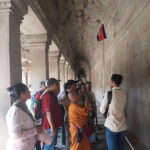
Once you’re inside, the guide’s job becomes turning the experience into something you understand. Angkor Wat in the early light is dramatic, but the real value is the explanation: what to notice in corridors, how the spaces feel, and why the temple’s layout matters.
This is also the best chance on the entire trip to take photos without fighting the worst crowds. Even if you’re not obsessive about pictures, the atmosphere at this hour sticks with you.
Ta Prohm (about 2 hours)
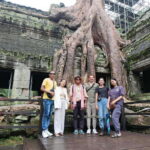
After sunrise, you head to Ta Prohm, which is one of Angkor’s most atmospheric temples. It’s jungle-enveloped and closely tied to daily monastic life—once home to 2,740 monks. That detail is powerful because it changes the way you read the ruins. You’re no longer seeing only “trees and stones.” You’re seeing a place that held real people’s routines.
Two hours is enough to walk the main zones, follow the lines of the walls, and still have time to just stare at the famous tree-root moments.
Ta Nei (about 1 hour)
Ta Nei is a late 12th-century stone temple. It’s not always the first name on everyone’s list, which is exactly why it works here. After Ta Prohm’s intense jungle drama, Ta Nei offers a different texture and pacing—more of a “look and learn” stop than a wow-at-every-step stop.
If you like variety, this is your reward.
Angkor Thom and Bayon area (about 1.5 hours)
Angkor Thom is where the trip starts to feel grand in a city-sense. This was the Khmer Empire’s glistening capital city. Your guide helps you take a moment to consider the scale before you head into the city center, where Bayon sits.
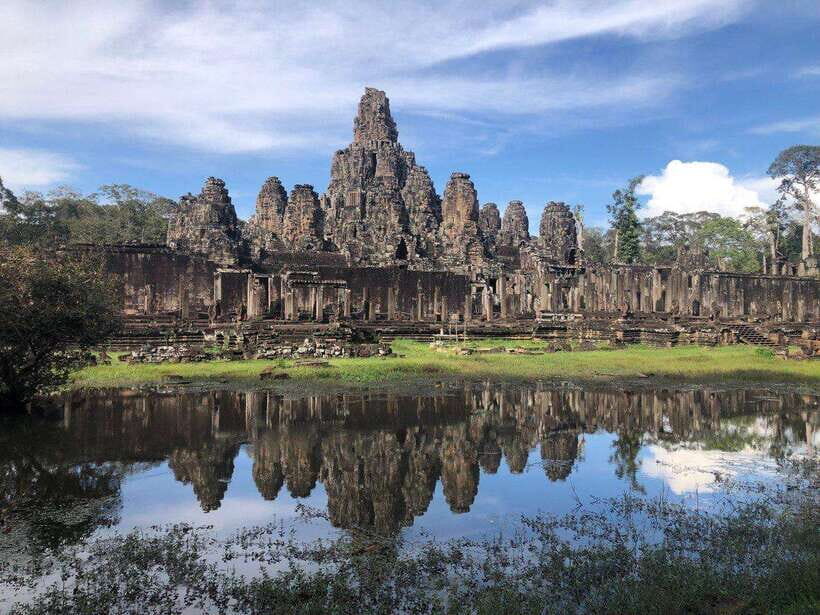
At Bayon, the atmosphere shifts from “temple in nature” to “temple as civic statement.” You’ll also pass and/or pause around major highlights like the Terrace of the Elephant and the Terrace of the Leper King.
These terrace stops matter because they’re storytelling in stone. Even if you’re only catching sections, your guide can point out the key visual themes so you leave with a mental map.
Angkor Thom South Gate (about 30 minutes)
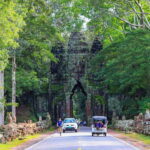
You wrap with Angkor Thom South Gate. Short? Yes. But this kind of ending makes sense: it closes the circuit and gives you that last “big picture” angle without eating your whole remaining energy.
Sunset choice: Bakheng Mountain or rice fields
This tour works in two flavors depending on your option.
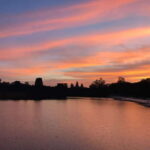
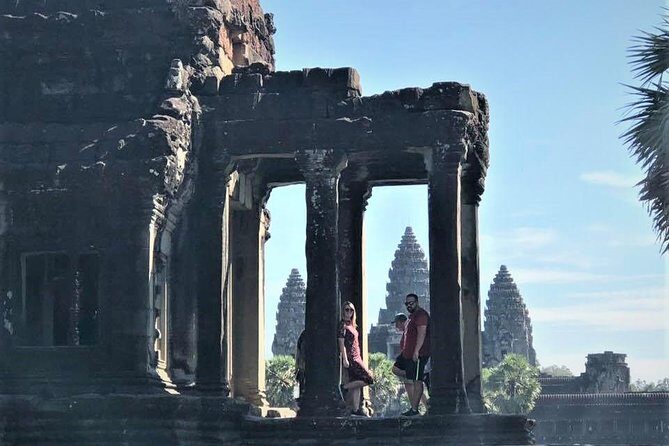
If you choose the small-group style, sunset is at Bakheng Mountain. Bakheng is a popular sunset spot, and the value is timing: being there for the golden hour with a guide who knows where to position you.
If you choose the private option, you end day one with rice-field sunset at Baitang Siem Reap. That’s a different vibe: more open space, more quiet, and less “everybody cram for the same view.” It also pairs well with day one’s smaller, detailed temples because the countryside setting feels like closure rather than another stop.
Neither option is “better” in every way. Pick based on your mood:
- Want the classic temple-sunset scene: go for Bakheng.
- Want calm, scenic decompression: rice fields fit better.
How the guide improves every temple (and how you’ll feel less lost)
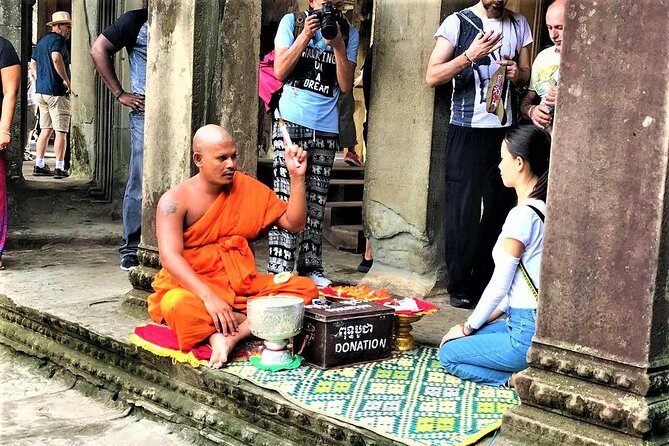
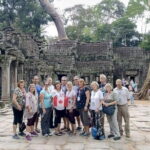
A good Angkor day is equal parts temples and translation. This tour leans hard on the guide. The result, from what you can see in the overall feedback, is that English-speaking guides like Nang, Saruon Pal, Chhay, Sokpee, and Pal Saruon are repeatedly praised for history explanations, friendly service, and photo help.
What that means for you in practice:
- You’re not just walking from gate to gate. You’re learning what to notice while you’re there.
- You get help with timing so you spend more minutes looking and fewer minutes guessing.
- You’re more likely to get that “we saw everything important” feeling, especially if it’s your first time in the Angkor area.
A small note on pace: a couple of people found the day to be busy at times, and that pre-explanations can make it feel like the group is slightly ahead of your own attention. The way to handle that is simple: if you care about certain carvings or angles, tell your guide when you want a little extra time. A lot of the experience is built around timing, but your input helps balance group flow with your personal photo and walking style.
Comfort and heat management: AC van, water, towels, and bathroom breaks
Angkor days are physical. Even with great temples, you’re still walking uneven ground, climbing stairs, and sitting in the morning sun. This tour helps because it includes a comfortable air-conditioned vehicle, bottled water, and cool towels.
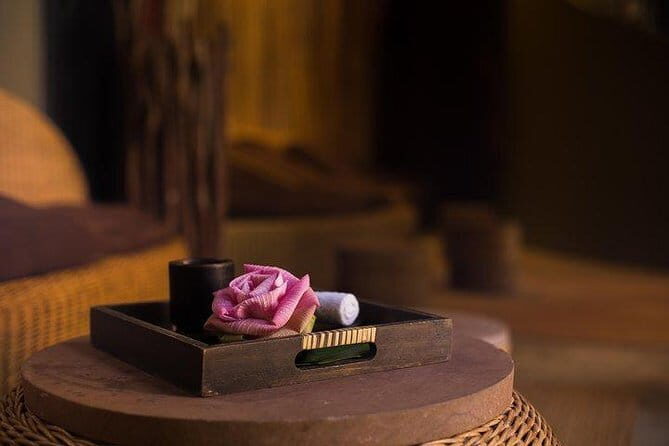
The cool towel detail is underrated. In the middle of the day, that small reset makes a big difference in how you feel for the next stop. It’s also a comfort cue that the team is thinking about the practical side—not just the sightseeing side.
You also get regular breaks, and that includes moments where you can use restroom facilities. That’s not glamorous, but it’s the difference between a day that feels manageable and one that feels like constant problem-solving.
Price math: what your $49 covers, what’s extra, and where value comes from
Let’s talk numbers plainly. The tour price is $49 per person. But the temple pass is not included, and you pay USD 62 per person directly at the sites. That alone pushes your core total to about $111 before you think about meals.
Meals aren’t included either, so you’ll choose where and what to eat each day. That said, the tour builds in stops where you can refuel—so you’re not trying to find lunch at the edge of a temple zone with no plan.
So is $49 a good value? For many people, yes, because you’re buying:
- an English-speaking guide (interpretation),
- an organized route (less time wasted),
- AC transport and comfort extras (water and cool towels),
- and the sunrise logistics (this is the part that’s hardest to DIY well).
If you were planning to spend money on separate guides, private transport, and tickets anyway, the math usually starts to make sense quickly. If you’re truly budget-only and confident navigating admissions and sunrise timing alone, you could DIY parts. But for a first Angkor trip, paying for the structure often feels like paying for less stress.
What to wear and bring: torch for sunrise, scarf for shoulders, shoes for stairs
This tour comes with a few non-negotiables that are easy to fix in advance.
Dress code for temple entry
You need a respectful dress code: cover your shoulders and knees. The guide advice also says shoulders must be covered with a scarf, and it warns that entry can be refused if you don’t meet the requirement. That applies to both men and women.
If you’re the type who packs light, bring a thin scarf that can double as sun protection. It’s small, cheap, and it prevents awkward last-minute shopping right outside a temple gate.
Torch for Angkor Wat sunrise
For sunrise at Angkor Wat, the tour asks you to bring a torch. Pre-dawn darkness is no time to discover you forgot a flashlight. Pack a small torch or use your phone flashlight, but keep your routine simple and reliable.
Walking shoes
Comfortable walking shoes are recommended. You’re on uneven surfaces, stairs, and temple steps. A basic supportive shoe beats a stylish one you regret within an hour.
Who this 2-day Angkor tour fits best
This is a strong fit if:
- It’s your first time in the Angkor area and you want a guided “see the key sites” plan.
- You want sunrise at Angkor Wat without spending hours figuring out timing and entry logistics.
- You prefer an active day with interpretation, not a slow museum-style pace.
- Your group appreciates comfort in heat: AC vehicle, water, and cool towels keep the day from turning into misery.
It may feel like a lot if:
- You hate early starts. Day 2 begins before sunrise.
- You dislike packed itineraries. The day is busy and the energy runs high.
- You’re looking for lots of long, unplanned wandering with zero structure. This is structured around hitting major temples efficiently.
Should you book this tour?
If you want an efficient 2-day Angkor introduction that hits sunrise at Angkor Wat, covers major temples across Hindu and Buddhist settings, and keeps comfort real with AC, water, and cool towels, I’d say it’s worth booking. The guide element is the real multiplier. You’re not just collecting stamps—you’re learning what you’re looking at as you go.
My practical call: book it if you want the big moments with less stress and you’re okay with paying the temple pass separately. Pass or consider a different plan if you can’t handle an early morning and you’re hoping for a relaxed, slow-paced day with lots of free time.
FAQ
Do I need to buy the temple pass for this tour?
Yes. The temple pass is not included in the tour price. You must pay USD 62 per person directly at the sites on the day of your activity.
Is hotel pickup and drop-off included?
Hotel pickup and drop-off is included if you select the option for hotel transfers.
Do I need to bring a torch for sunrise at Angkor Wat?
Yes. The sunrise portion includes an entry in darkness, and the tour asks you to bring a torch.
What is the required dress code?
You need respectful clothing that covers shoulders and knees. Knees and shoulders must be covered for both men and women, and shoulders should be covered with a scarf.
Are meals included?
Meals and drinks are not included. Food is available at your own choice during the day.
Can I cancel for free?
Yes. You can cancel for a full refund if you cancel at least 24 hours in advance. If you cancel less than 24 hours before the experience starts, the amount paid is not refunded.