REVIEW · SIEM REAP
2-Day Angkor Wat With Small, Big Circuit and Banteay Srei Tour
Book on Viator →Operated by Happy Angkor Tour · Bookable on Viator
Angkor Wat hits harder with time. This private 2-day plan spreads the temples over two full days, so you’re not stuck temple-rushing. I especially love the Small Circuit first approach—it makes the complex feel less chaotic—and the way a licensed guide ties carvings, symbols, and Khmer beliefs together while you walk.
One heads-up: it’s a lot of steps and early mornings. You’ll start at 8:00am one day and 5:00am the next, then climb Phnom Bakheng for sunset viewing (optional), so pack good shoes and expect some stairwork.
In This Review
- Key things I’d zero in on before booking
- Small Circuit first, so Angkor doesn’t feel like a blur
- Day 1: Angkor Wat early, then Angkor Thom highlights and the Phnom Bakheng climb
- Day 2 sunrise at Angkor Wat, then the Big Circuit temple trail
- Banteay Srei plus Banteay Samre and Banteay Kdei: a pink-sandstone finish
- Timing, comfort, and how the guide changes everything
- Price and pass costs: does $158.50 feel worth it?
- Who should book this, and who might prefer something else?
- Should you book this 2-day Angkor Wat + Banteay Srei tour?
- FAQ
- What is included in the tour price?
- Is the Angkor temple pass included?
- Do I need to pay for meals?
- What time does the sunrise day start?
- How does the temple route work across the two days?
- Are hotel transfers included?
- Is this a private tour?
- What comfort support should I expect during the day?
- Can I cancel for a refund?
Key things I’d zero in on before booking
- Small + Big Circuits in two days: less rushing, more time to actually look.
- Sunrise at Angkor Wat: an early start that’s built into the schedule.
- A licensed English guide: stories that make the stonework easier to understand.
- Comfort included: air-con vehicle plus cool water and cool wet towels between stops.
- Banteay Srei at the end: pink sandstone and a quieter-feeling finish.
- One-group private setup: you’re not squeezed into a big bus day.
Small Circuit first, so Angkor doesn’t feel like a blur
A lot of Angkor tours try to cram everything into one long day. This one does the smart thing: you get the Small Circuit first, then the Big Circuit the next day. That split matters because the Angkor site is huge, and your brain needs a little time to connect the dots between temples, artwork, and the royal layout of Angkor Thom.
On day one, you’re seeing iconic names, yes—but you’re also moving through a sequence that lets you notice patterns. You’ll go from temple to temple with a guide who can point out what to look for: the style of the architecture, the religious purpose behind the structures, and why certain areas connect to older royal precincts.
The payoff: when you return on day two for sunrise and more territory, the temples start to feel less like random photo stops and more like one story written in stone.
You can also read our reviews of more tours and experiences in Siem Reap
Day 1: Angkor Wat early, then Angkor Thom highlights and the Phnom Bakheng climb
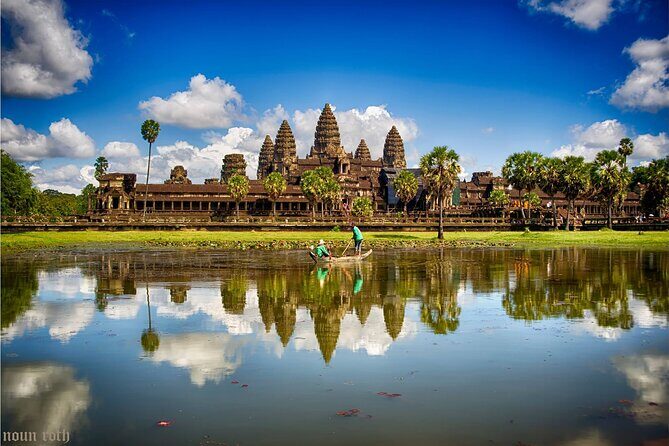
Your day starts with hotel pickup around 8:00am. You’ll head in with time to buy your temple pass along the way, then begin with Angkor Wat itself. This first visit is a helpful warm-up because you’ll see the layout, the main courtyards, and the scale without the pressure of a super early wake-up.
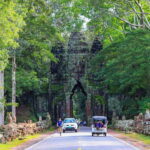
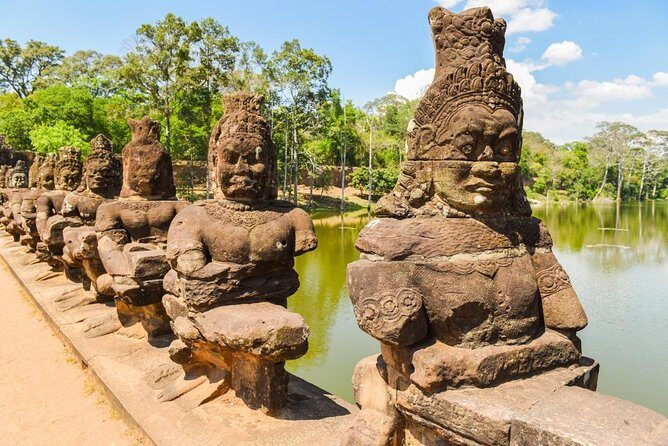
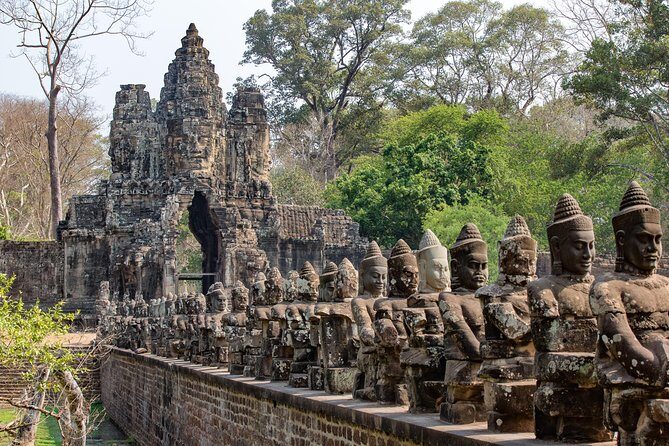
From there, the route shifts toward the core of Angkor Thom. You’ll stop at the Victory Gate (east side), then move into Bayon Temple, known for its 49 towers and four carved faces on each tower—so you’re looking at 196 faces of Avalokiteshvara. That detail is exactly the kind of thing that feels clearer when someone explains it while you’re standing there.
Next comes a cluster of royal-area temples and terraces: Baphuon (including the reclining Buddha behind it), Phimeanakas and the old royal enclosure wall, then the Terrace of the Elephants and Terrace of the Leper King. These are short stops, but they’re worth it because the carvings and reliefs are where Angkor shows you daily life and power, not just gods.
Finally, you reach Phnom Bakheng. You’ll climb up for the chance of sunset views, but you can skip the wait if you prefer to keep the day moving. One practical note: there’s mention of limited numbers allowed for sunset viewing, so arriving and managing timing is part of the plan.
Day 2 sunrise at Angkor Wat, then the Big Circuit temple trail
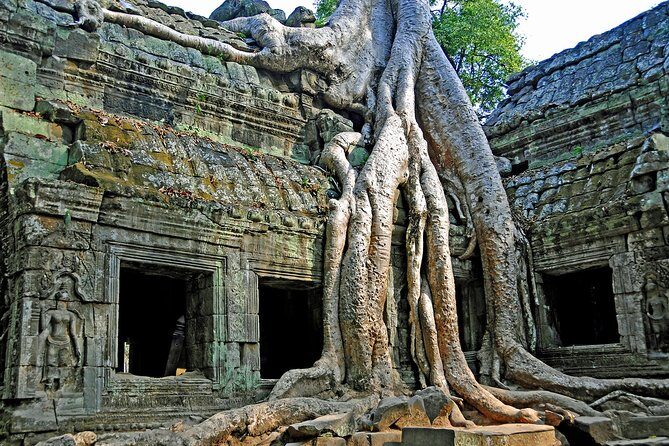
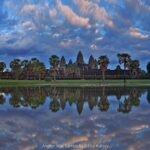
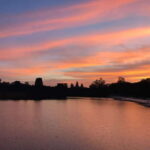
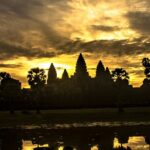
The big day starts very early: pickup around 5:00am, then straight to Angkor Wat for sunrise. If you’ve ever wondered why people plan Angkor around the clock, this is the reason. Sunrise gives you softer light for photos and an atmosphere that feels calmer before the crowds thicken.
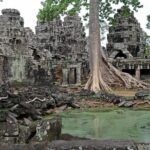
After sunrise, breakfast follows, and you continue into the Big Circuit. You’ll visit Preah Khan, built by King Jayavarman VII in dedication to his father. It’s one of those places where you can feel the monastic scale, and having a guide helps you spot how the space shifts from one function to another.
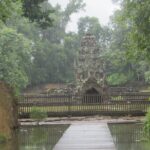
Then comes Neak Pean, a smaller temple on an island in the middle of the last baray. This is the kind of stop where you slow down, because it’s not just a big landmark—it’s a quieter pocket that makes the circuit feel like a journey, not a checklist.
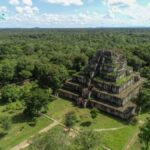
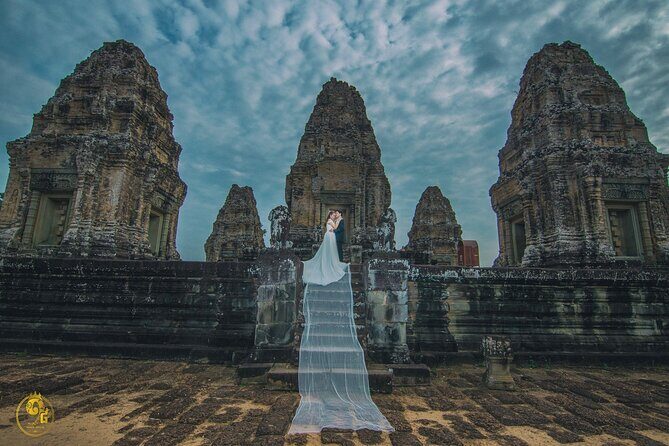
From there, you’ll hit Ta Som and Eastern Mebon, a temple-mountain ruin with three levels and five towers. Next is Pre Rup, constructed in the late 10th century and dedicated to Hindu gods. It’s also tied to Khmer beliefs around funeral rites, which adds meaning when you’re standing in front of a structure that’s built for ritual and view points.
This day ends up being more spread out walking, so it helps that you have an air-conditioned vehicle between stops. You’re not stuck figuring out logistics while you’re hot, sweaty, and tired.
Banteay Srei plus Banteay Samre and Banteay Kdei: a pink-sandstone finish
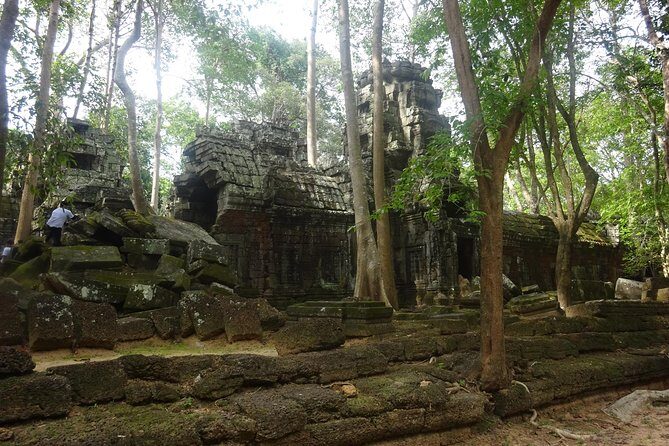
After lunch, the tour heads to Banteay Srei, often called the Ladies Temple. This one is a standout because it’s built from pink sandstone, and it feels more delicate and detailed than the bigger stone massifs you’ve already seen. It was built in the half of the 10th century by King Rajendravarman II for the Hindu trinity gods, which is the kind of context that makes the ornamentation feel intentional instead of random.
Then you continue to two more temples that complement the style shift:
- Banteay Samre (12th century), which is said to follow an architectural model similar to Angkor Wat.
- Banteay Kdei (12th century), a Buddhist temple with structures compared to Ta Prohm and Bayon in feel.
If you like variety—big ceremonial spaces one day and more refined detail the next—this ending sequence works. It also gives your feet a slightly different kind of relief: the temples here are still walk-and-climb places, but the atmosphere tends to be less about massive crowds and more about careful looking.
Timing, comfort, and how the guide changes everything
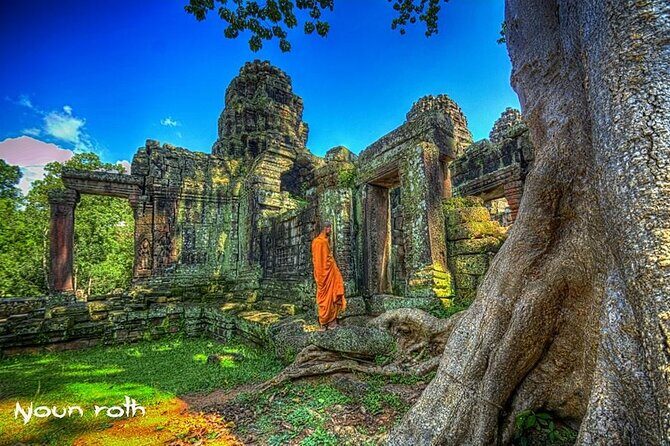
Angkor is physically demanding, but comfort here isn’t an afterthought. The tour includes hotel transfers and an air-conditioned vehicle, plus cool water and cool wet towels between temple stops. That sounds basic until you’re out in the heat with stone stairs everywhere. Those little resets help you keep your energy for the next viewpoint instead of dragging.
Your private guide is also a big deal. Many guides on this circuit are praised for clear English and for explaining what you’re seeing while you’re still at the exact spot—so you don’t leave with 40 photos and zero context. Names that come up often include Jimmy, Chay, Vanna, Chandra, and Thean, and the common thread is practical guidance: when to slow down, where to position for photos, and how to understand the religious layers behind the architecture.
One more timing win: the schedule includes options like skipping the Phnom Bakheng sunset wait if you want. That flexibility is gold because everyone’s tolerance for late-day heat and crowds is different.
Price and pass costs: does $158.50 feel worth it?
The tour price is $158.50 per person. What makes it easier to justify is that you’re not paying extra for the big essentials: pickup and drop-off from your hotel, a private air-conditioned vehicle with a driver, a licensed English guide, and those comfort perks (cool water and cool wet towels).
The main extra cost is the temple pass: $62.00 per person for Angkor + all temples. Meals are not included. Lunch is listed as about $5.00 per person and depends on the menu.
So your “real” baseline budget is roughly $220+ per person, assuming you get the standard pass and one lunch. For two full days, two circuits, sunrise timing, Banteay Srei, and private transport, it’s fairly solid value—especially if you want the guide explanation part rather than just snapping photos and moving on.
Who should book this, and who might prefer something else?
This is a great fit if you:
- Care about history and religion in context, not just big postcard sights.
- Want a plan that’s structured enough to handle the logistics, but spaced enough to feel human.
- Prefer private guiding so you can ask questions and adjust pace.
It may feel tough if you:
- Have mobility limits, because the day includes temple stairs and a climb at Phnom Bakheng.
- Hate very early starts, because sunrise day begins around 5:00am.
If you’re traveling as a couple, friends, or a small family, the private setup is especially nice. You’re not fighting for space or trying to keep up with a group pace that doesn’t match yours.
Should you book this 2-day Angkor Wat + Banteay Srei tour?
Yes—if your goal is more than seeing the main monuments. This tour earns its value by splitting the circuits over two days, building in the sunrise moment, and ending with Banteay Srei so the trip doesn’t feel like a sprint that stops the moment you’re tired.
Book it when you want: a guide who can connect symbolism to stone, comfort between stops, and a route that helps Angkor click in your mind. Skip it if you only want the most famous shots and you’re comfortable figuring out timing and temple passes on your own.
FAQ
What is included in the tour price?
You get a licensed English-speaking guide, hotel pickup and drop-off, a private air-conditioned vehicle with driver, cool water and cool wet towels, and a mobile ticket.
Is the Angkor temple pass included?
No. The Angkor + all temples pass is listed separately at $62.00 per person.
Do I need to pay for meals?
Lunch is not included. Lunch is listed as about $5.00 per person, depending on the menu.
What time does the sunrise day start?
Pickup for sunrise is around 5:00am, with the sunrise at Angkor Wat as the early highlight.
How does the temple route work across the two days?
You’ll cover major sites on the Small Circuit on the first day, then visit additional temples on the Big Circuit on the second day, finishing with Banteay Srei.
Are hotel transfers included?
Yes. The tour includes pickup from your hotel or guest house and drops you back at the end.
Is this a private tour?
Yes. It’s described as a private tour/activity, meaning only your group participates.
What comfort support should I expect during the day?
You’ll have an air-conditioned vehicle and cool water plus cool wet towels between temple visits.
Can I cancel for a refund?
Yes. Free cancellation is offered if you cancel at least 24 hours before the experience start time for a full refund.