Twilight looks different when you’re pedaling. This 4-hour Siem Reap ride takes you off the usual temple loop and into everyday Cambodia, with market stops, farm visits, and plenty of friendly wave-and-hello moments along the road. I especially liked the mix of real local stops (not just photo stops) and the way your guide helps you connect the dots between what you see and how people live day to day. The one thing to keep in mind is that the tour depends on good weather, so if skies turn ugly, the day may change.
A standout here is the human touch. Your guide is Phoeun Phoeut, often called Thom, and he brings an easy, warm energy to the ride—clear explanations, smooth pacing, and a knack for making the route feel personal instead of like a checklist. At the same time, it’s still a bike tour, so comfort on a mountain bike matters, even though the route is designed for most people to join.
In This Review
- Quick highlights
- How a Twilight Bike Ride Changes Siem Reap
- Meeting Up and Rolling Out with Pickup
- Widow Corner Market: A Local Stop With Meaning
- Family Mushroom Farm: Learning How Food Grows
- Wat Po Banteaychey: Carvings, Gardens, and a Calm Pause
- Lotus Farm at Twilight: Snacks, Drinks, and Agri Lessons
- The Real Value of $39: What You Get for Your Money
- The Ride Experience: Pacing, Interaction, and Small Bike Tips
- Who This Tour Is Perfect For (and Who Might Skip It)
- Book It or Pass It: My Take
- FAQ
- What time does the tour start?
- How long is the bike tour?
- How much does the tour cost?
- What’s included in the tour price?
- Is pickup available?
- How big is the group?
- Is the tour ticket mobile?
- What are the main stops?
Quick highlights
- Thom (Phoeun Phoeut), the kind of guide who makes small details click
- A twilight lotus-farm finish with snacks and cool drinks
- Local markets and farm visits that show how food is grown and sold
- Mountain bike + helmet included, with a guide riding and talking the whole way
- Small group size (max 12), which keeps things calm and easy
- Community donations built into the experience
How a Twilight Bike Ride Changes Siem Reap
Siem Reap’s countryside is the part of Cambodia that often gets skipped when the day gets packed with big-ticket sights. This tour flips that script. Starting in mid-afternoon and running toward sunset means the light softens, the roads feel calmer, and the whole day carries a relaxed rhythm. You’re not just moving from one attraction to another—you’re actually traveling through the places locals move through.
What I like is that the ride is anchored in daily life: small shopping areas, working farms, and a Buddhist site you can visit without turning it into a rush-job. On the road, you’ll likely get waved at from houses and roadside spots, including kids calling out hellos. Those moments sound minor, but they’re part of what makes the experience feel honest. This isn’t a staged parade; it’s the real street-level Cambodia you see when you’re traveling slowly enough to notice.
You can also read our reviews of more tours and experiences in Siem Reap.
Meeting Up and Rolling Out with Pickup
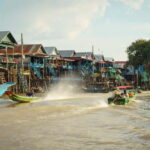
You meet at 3:00 pm, at the tour shop area, then you start riding out together. Pickup is offered, which helps a lot because you’re starting right before the day shifts toward evening. You’ll also get a mountain bike and helmet as part of the deal, so you’re not scrambling to rent gear on your own.
The tour is small, capped at 12 people. That matters more than you’d think. In a bigger group, you spend time waiting or trying to hear over motion. Here, you get a better flow—your guide can keep an eye on everyone, and the pauses at each stop feel purposeful instead of crowded.
You also get a mobile ticket. That means fewer paper hassles and less time spent figuring out where to be once you arrive.
Widow Corner Market: A Local Stop With Meaning
Your first stop is Widow Corner Market (45 minutes), a small local market in Siem Reap. The name is tied to the area’s community story—what it suggests about how the spot came to be and why people use it. You’re not treated like you’re there for trivia; you’re there to see how a neighborhood market functions as part of everyday life.
This is one of those stops that can be easy to misunderstand if you’re in temple mode. Markets aren’t about monuments. They’re about routine—buying, selling, and catching up. Even if you don’t speak Khmer, you can still read the scene through actions: what’s offered, how people move, and how the market fits into the larger neighborhood.
A practical note: markets can be busy in the way everyday places are busy, not the tourist kind. You’ll want to keep your bike handling smooth so you don’t feel awkward when you pause. Also, give yourself time to look slowly. If you treat it like a quick photo sprint, you’ll miss what makes it worth the stop.
Family Mushroom Farm: Learning How Food Grows
Next up is the Family Mushroom Farm (45 minutes) in Chreav village. This stop is about sustainable agriculture through a mushroom farm, including how different mushroom types are cultivated for local markets, restaurants, and households. It’s a good reminder that Cambodia’s food system isn’t abstract—it’s built by families doing practical, repeatable work.
What you’ll likely enjoy here is the hands-on feel of agriculture explained in plain terms. Even when you don’t get technical details, you can grasp the core idea: mushrooms are grown purposefully, harvested, and then moved into local eating life. That makes the earlier market stop feel connected. Instead of thinking about food as something that appears at a restaurant, you see the steps that make it happen.
The only drawback to watch for is comfort. Farm stops can mean uneven ground near working areas, and you might spend time standing while your guide explains things. Wear shoes that handle dirt and small bumps, and be ready for the humidity that comes with late afternoon in this region.
Wat Po Banteaychey: Carvings, Gardens, and a Calm Pause
Your third stop is Wat Po Banteaychey (30 minutes), a Buddhist center known for intricate carvings and impressive architecture. Here, you’ll have time to explore the surrounding gardens and take a guided visit to learn more about the site.
This is a nice counterbalance to the earlier practical stops. Markets and farms are about work and commerce. A temple visit shifts your mental pace. You get a moment to slow down, look closely at details, and see how religious life shapes the look and feel of a place.
Because the time is about half an hour, keep your expectations realistic. You won’t become an expert on every corner of the building. Instead, treat it as a focused taste: look for the carvings, take in the garden space, and listen to what your guide points out so you leave with understanding, not just photos.
Also, if you want this stop to feel respectful and smooth, dress appropriately for a religious site. Bring your best manners and your easiest pace—this kind of place is more enjoyable when you’re not rushing through it.
Lotus Farm at Twilight: Snacks, Drinks, and Agri Lessons
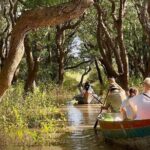
The tour’s big emotional finish is the Lotus Farm Siem Reap stop (1 hour). You’re there for twilight, plus snacks and drinks. The centerpiece is the lotus blooming scene, and you’ll also learn more about Cambodian agriculture and local living through interactive exhibits and demonstrations.
This part is smart. After cycling through villages and stopping at working places, you end somewhere that turns the day’s theme into something you can sit with. The cool drinks help too, especially if the afternoon has been warm. And yes, alcoholic beverages are included, so this can feel like a low-key sunset celebration rather than just an activity.
What makes it feel special is the mix of calm and information. You get the visual of lotus blossoms and the practical explanation behind how local farming supports daily life. It’s a peaceful ending that doesn’t ignore the rural theme—it wraps it up.
If you’re the type who loves sunset colors and still wants context for what you’re seeing, this stop will land well. If you’re sensitive to standing still, bring your patience. The farm segment is longer than the temple and market time, so you’ll want to enjoy the slow pace.
The Real Value of $39: What You Get for Your Money
At $39 per person for about 4 hours, this is one of those deals that makes sense on paper and in real life. You’re not just paying for a bike ride. You’re paying for several things bundled together:
- a mountain bike and helmet
- an English-speaking guide riding with you
- snacks and bottled water
- alcoholic beverages at the lotus-farm stop
- community donations connected to the experience
When you price those items separately, the tour starts to look like good value—especially in Siem Reap, where getting the bike and having a guide for countryside roads can add up quickly.
The small group size is also part of the value. Less waiting, more time at each stop, and a more human pace. And the community donations are meaningful because your day isn’t only about your photos. The tour is set up to give back, not just consume sights.
The Ride Experience: Pacing, Interaction, and Small Bike Tips
The route runs out to the southern city and then through villages, with long stretches where you’re riding past homes and farmland. Along the way, you’ll interact with locals—hand waving is part of the texture of the trip. You may notice kids calling hello from houses because the sight of a group rolling by with bikes is still something people notice and remember.
You’ll also get glimpses of rural activity tied to the area’s livelihoods, including duck farms and vegetable farms. Even if you don’t stop at every plot, you’ll see enough to understand that the countryside is not a postcard. It’s a working area that feeds people and supports families.
A few practical tips so the ride stays fun:
- Wear comfortable shoes and keep your feet ready for uneven ground when you dismount.
- Bring sunglasses and a light layer if you get cool near sunset.
- Keep a steady grip and take your time at stops; rushing bike handling steals the joy.
And because the tour requires good weather, it helps to choose a day when the forecast looks stable. Rain can change road conditions fast.
Who This Tour Is Perfect For (and Who Might Skip It)
This tour is ideal if you want to see Siem Reap beyond the temple walls. If you’re curious about how everyday life runs—markets, farms, and how agricultural work connects to what you eat—this gives you that missing context.
It also fits well if you like active travel that still feels relaxed. You’re riding for the main part of the experience, but you’re not just biking in circles. Every segment ties to a real place and a real livelihood.
I’d steer some people away if you want a strictly low-movement day or you don’t feel comfortable on a bike, even with a helmet and guide support. It’s still a countryside ride, and the charm depends on being present while you travel.
Book It or Pass It: My Take
I think you should book this tour if you want an authentic countryside experience that ends with a calm twilight finish. The biggest reason is the guide. With Thom (Phoeun Phoeut) leading, the day doesn’t feel random. It feels connected: you see markets, learn how farms work, then watch lotus blooms as the day softens.
You should also consider it if you value value-per-hour. The $39 price covers bike gear, guide time, snacks, water, and sunset drinks, plus community donations. That’s a lot bundled into one easy, small-group format.
If you’re only interested in temples or you’re not into biking at all, then skip it. But if you want the countryside side of Siem Reap with a human pace and a proper sunset landing, this is a strong pick.
FAQ
What time does the tour start?
The tour starts at 3:00 pm.
How long is the bike tour?
It runs for about 4 hours.
How much does the tour cost?
The price is $39.00 per person.
What’s included in the tour price?
It includes snacks, bottled water, alcoholic beverages, a mountain bike with a helmet, an English-speaking guide, and community donations.
Is pickup available?
Pickup is offered.
How big is the group?
The maximum group size is 12 travelers.
Is the tour ticket mobile?
Yes, you’ll receive a mobile ticket.
What are the main stops?
The tour includes Widow Corner Market, a Family Mushroom Farm, Wat Po Banteaychey, and a Lotus Farm Siem Reap stop for twilight drinks.