REVIEW · CAMBODIA
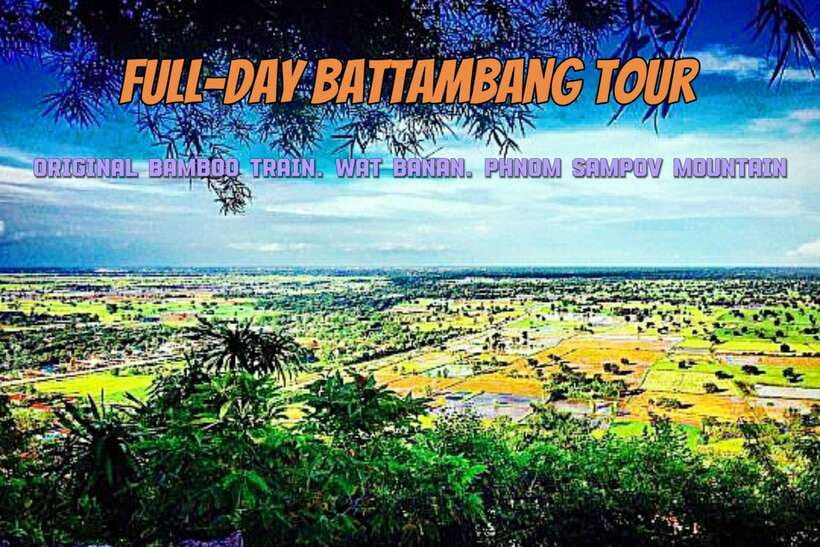
Full-day: Original bamboo train, Wat Banan, Phnom Sampov
Book on GetYourGuide →Operated by David Local Family Battambang Trip · Bookable on GetYourGuide
Battambang feels closer than you expect. I love the bamboo train ride outside town and the climb to Wat Banan on Phnom Sampov. The day is long, and you’ll want solid shoes plus some extra cash for fees.
This tour mixes big-view moments with smaller, human-scale stops: a hanging bridge over the Sangke River, village culture, and quiet time around temple ruins. You’ll also get the heavy history of the Killing Cave, then shift gears to Bat Cave sunset—though the alcohol rules are strict, so follow your guide’s instructions.
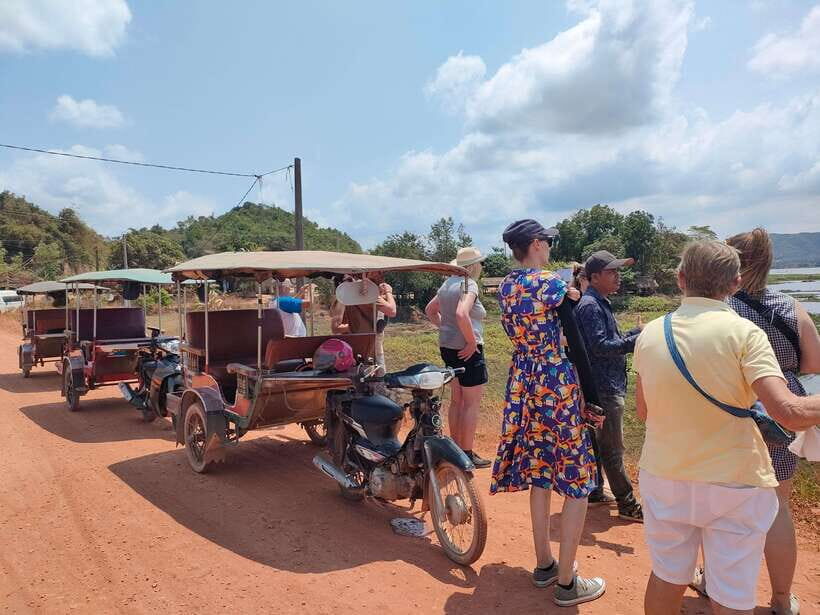
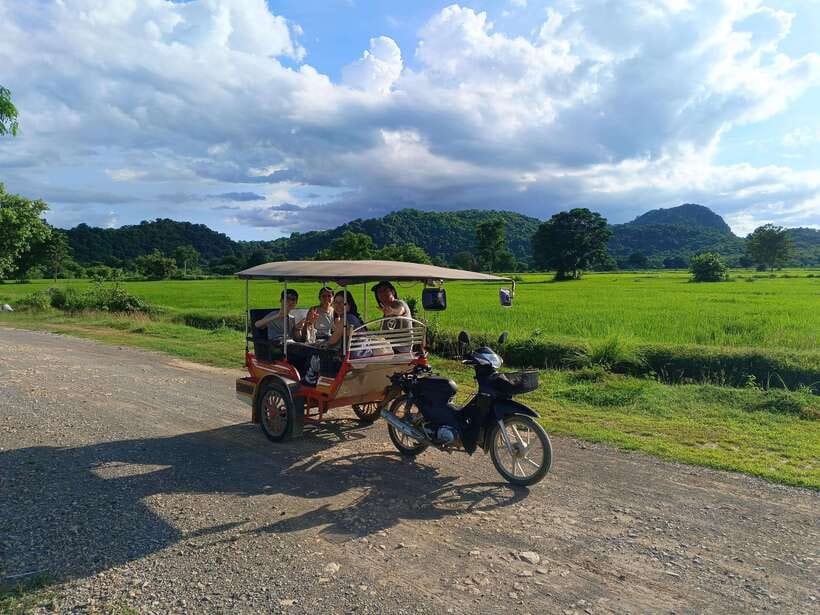
Because it’s a private trip with an English-speaking guide, the pace feels thoughtful instead of rushed. Still, this is not a sit-and-watch day: there’s walking, there are stairs, and you’ll be transferring by tuk-tuk all day.
In This Review
- Key things I’d plan around
- Your day’s rhythm in Battambang Province
- City stops that set the mood: provincial hall, shrine, and town landmarks
- The hanging bridge and river crossing: quick photos, real atmosphere
- Buddhism stops and village culture: seeing daily faith, not just monuments
- Bamboo Train to Our Solar Village: fun, bumpy, and usually worth the $5
- Wat Banan climb and Phnom Sampov views: where the effort pays off
- Killing Cave at Phnom Sampov: the sobering history stop
- Bat Cave sunset: dramatic, memorable, and timed well
- Price and logistics: $15 is the anchor, not the total
- What it’s like with the guide: history, flexibility, and real conversations
- Who should book this day and who should skip it
- Should you book the Bamboo Train, Wat Banan, and Phnom Sampov tour?
Key things I’d plan around
- Bamboo train ride for an easy “wow” moment outside Battambang
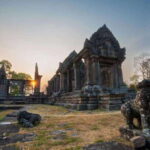
- Wat Banan: ancient stairs up to temple views and fruit bats below
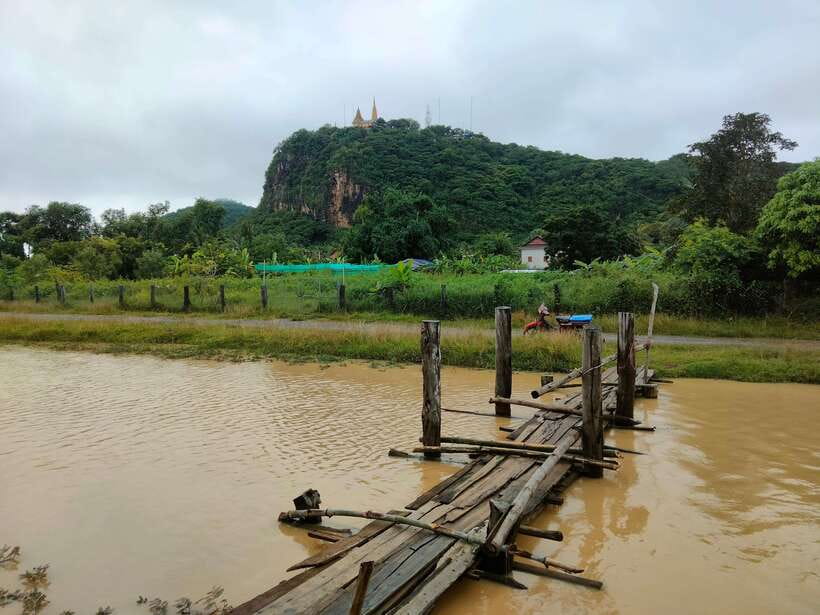
- Hanging bridge over the Sangke River for quick photos with real scale
- Phnom Sampov viewpoints over rice fields, farming, and countryside life
- Killing Cave history that’s sobering, paired with Bat Cave sunset later
- A small private group feel, with guides who share Cambodian history and daily culture
Your day’s rhythm in Battambang Province
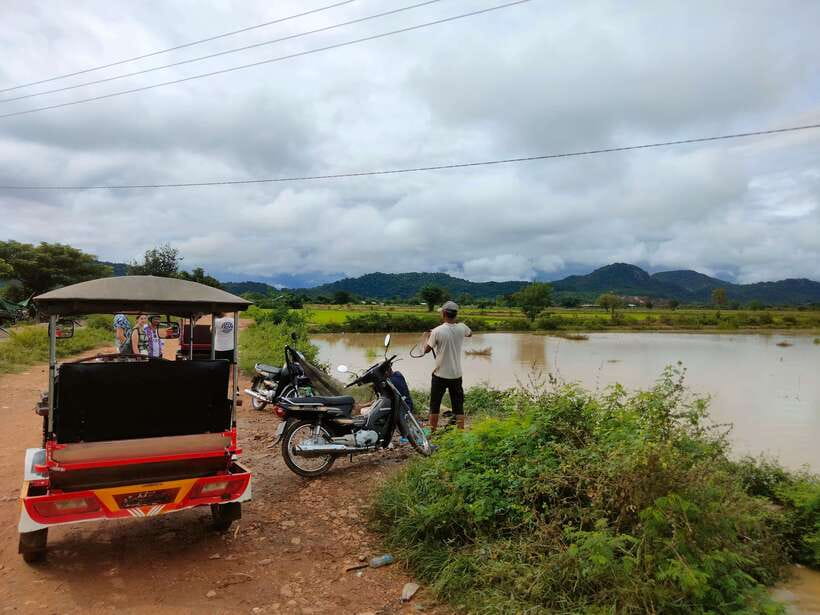
This is a true full-day circuit (about 10 hours) built around short tuk-tuk transfers and steady, manageable stops. Expect early city sights, then a big chunk of countryside and religious sites, and finally caves near the end.
What makes it work is the pacing. You’re not stuck in one place for too long, but you also don’t feel like you’re speed-running. The itinerary is varied enough that even mid-afternoon, it doesn’t turn into one long museum walk.
One practical note: since you’re moving all day, the included cold towel and unlimited bottled water help more than you might think in Battambang heat.
You can also read our reviews of more tours and experiences in Cambodia.

City stops that set the mood: provincial hall, shrine, and town landmarks
You start in Krong Battambang and get picked up where you’re staying in town. The first stops lean local, not just postcard stuff.
You’ll visit the Battambang Provincial Hall, which gives you a sense of the region’s official and colonial-era presence. Then you go on to a shrine stop, Lok Ta Dambong Kra Nhoung, which is the kind of place that helps you understand how everyday faith shows up in daily life.
These city moments don’t take over the day. They’re more like orientation—so when you later see temples and caves, you’ll understand the cultural logic behind them.
The hanging bridge and river crossing: quick photos, real atmosphere
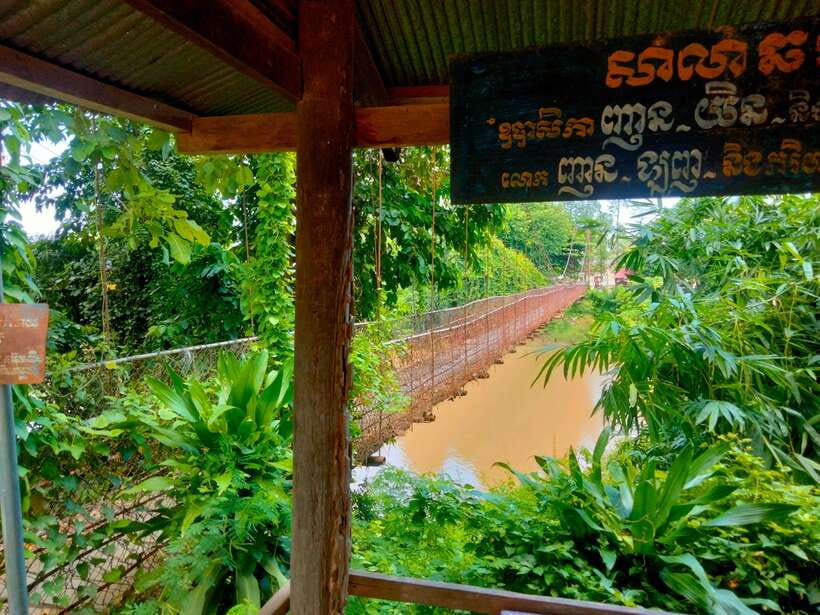
The hanging bridge is one of the easiest “photo wins” on the route, and it’s also more meaningful than a random viewpoint. It spans the Sangke River, so it’s not just a structure—it’s part of how people move through the landscape.
I like it because it’s active. You’re up, you’re moving, and the river below gives depth. It also works well if your legs are tired from walking earlier, because the stop feels like a short break that still adds something.
Plan to take your camera out early here. The light can change fast, and the bridge angle makes for good shots before the afternoon glare hits.
Buddhism stops and village culture: seeing daily faith, not just monuments
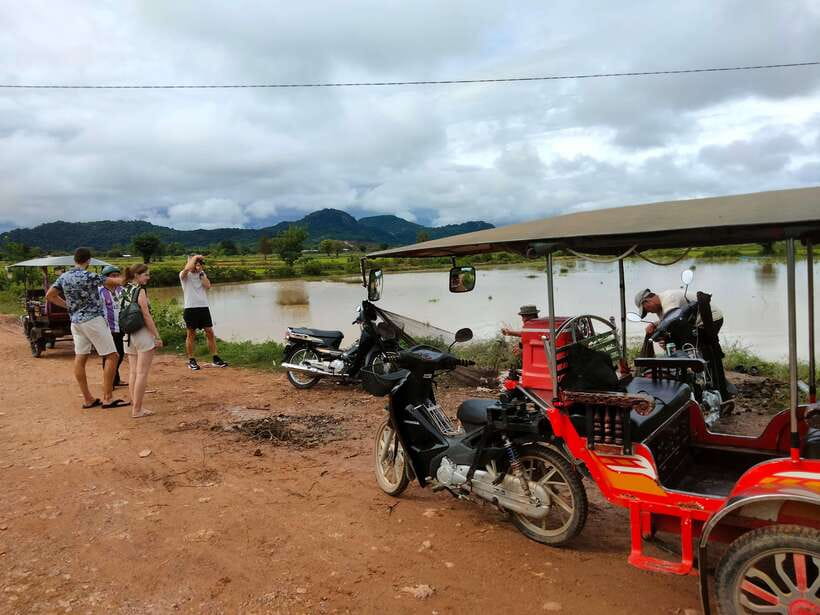
After the first countryside stretch, you’ll head through stops tied to religion and community life.
One key stop is Kampon Pile Pagoda, where you learn about Buddhism. Even if you’re not a deep scholar, these visits help you read what you’re seeing: shrines, carvings, and the way temples sit inside real neighborhoods.
You’ll also visit a Madrasah tahfiz AL Bashir, which adds a different layer to the region’s religious identity. It’s a good reminder that Cambodia is not one single story; it’s several stories living side by side.
Then come the village experiences. You may visit Cham and Javanese ethnicity villages, and you can taste local snacks. You might also see locals who bake bamboo sticky rice, which is a very Khmer way of using ingredients and craft together.
This part of the day is where the tour feels human. You’re not only looking at heritage—you’re watching food traditions, listening to cultural explanations, and observing daily rhythm.
A small detail that matters: this segment often includes time to meet people and ask questions. If your travel style is talk-with-the-guide, this is one of the best sections.
Bamboo Train to Our Solar Village: fun, bumpy, and usually worth the $5
The bamboo train ride is the headline, and for most people, it delivers the kind of memory you can’t replicate. You’ll ride for about an hour, and you’ll see the countryside—fields, trees, and stretches of everyday Khmer rural life.
Here’s the practical truth: the tour rate is $15, but the bamboo train fee is $5 per person, so don’t be surprised when you pay that extra on the day. Also, one traveler flagged that a tip for the bamboo train driver may be expected, so if you want a smooth, no-stress experience, budget a little cash beyond the stated fees.
The ride itself is usually what you’ll remember: the wobble, the sound, the sense of motion, and the way the scenery opens up as you leave town. One review made the point that the bamboo train is okay but not a must, which I take seriously—if you hate novelty rides, you might enjoy the countryside more than the train.
Still, in a full Battambang day like this, it’s a high-value slot. You get an hour of unique local transport plus big scenery in a way you can’t easily DIY without time and planning.


Wat Banan climb and Phnom Sampov views: where the effort pays off

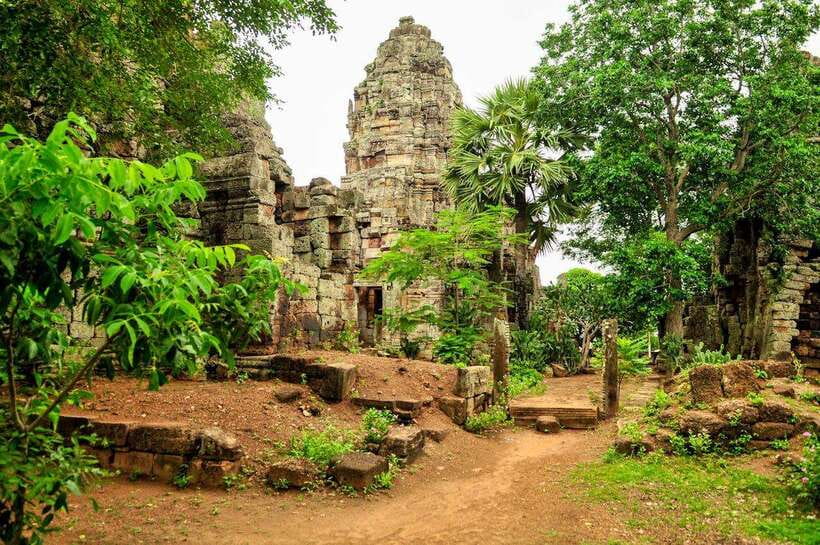
In the afternoon, you’ll focus on Wat Banan on Phnom Sampov. This is not a casual temple stop. You climb up ancient stairs to reach the temple and the top viewpoints.
I love this section because it’s physical, but rewarding. You’re not just photographing from the bottom. You earn the view, and you get a better sense of how the mountain sits over Battambang’s agricultural plain.
You’ll also likely see fruit bats hanging from trees during the temple area time. That’s a great “Battambang extra” because it connects the two cave experiences later in the day: bats as part of the local environment, not just a ticketed attraction.
A key consideration: this tour is listed as not suitable for people with mobility impairments and wheelchair users, and it’s also not suitable for pregnant women. The stairs at Wat Banan are the main reason.
Killing Cave at Phnom Sampov: the sobering history stop
Then the route moves into the Killing Cave (Sampov Mountain). This is where the mood turns serious.
You’ll see the victims’ skulls and learn more about the Khmer Rouge. This isn’t entertainment. It’s an educational stop that can hit you emotionally, especially if you’re sensitive to war-history content.
I suggest you go with a calm mindset. Don’t pack this part right after lunch if you know you get overwhelmed. Take your time, read slowly, and use the quiet minutes to ground yourself.
Also, the tour notes that getting up to Killing Cave can involve an optional ride, while walking is free. Even if you plan to walk, bring comfortable shoes because your feet will matter on uneven ground.
Bat Cave sunset: dramatic, memorable, and timed well
Later, you’ll head to Bat Cave for sunset. This is the tour’s emotional contrast: history earlier, then a visual show as bats come out and the light shifts.
In the info you’ll enjoy the sunset while sipping a cold beer, but the tour’s rules say alcohol is not allowed. So treat that beer mention as part of the atmosphere, not a guaranteed drink. Follow what your guide says and stick to the listed rules.
The Bat Cave stop is one of those times when the earlier walking actually makes sense. You’re positioned for sunset, and you’re there long enough to feel the atmosphere rather than rushing through.
One review mentioned a more secret or less touristy bat cave setting with more bats. That’s not something you should count on, but it’s a good reminder that your guide choices can affect the feel of this moment.
Price and logistics: $15 is the anchor, not the total
On paper, the price is $15 per person for a full day: hotel pickup and drop-off (in Krong Battambang), tuk-tuk transport, an English live guide, unlimited mineral water and cold towels, and entrance fees listed for Bat Cave and Killing Cave. You also get snacks to taste local food.
What’s not included is where you should pay attention:
- Bamboo train fee is $5 per person (per the info)
- Meals are not included
- Personal expenses are not included
Wat Banan costs can be a gray area depending on how the operator handles entrance on the day. One traveler specifically called out a Wat Banan entrance payment. Since your tour guide is the person collecting or showing you the right places, I’d still carry cash for small site fees and any last-minute extras.
Add cash for comfort too: you’ll want to buy water or small snacks if you’re picky about meals. The tour includes water and some snack tasting, but it’s still wise to carry a little buffer.
For value, here’s what you’re really buying: time. Battambang’s countryside stops take coordination, and this itinerary bundles a lot of meaningful sights into one day with someone managing the driving.
What it’s like with the guide: history, flexibility, and real conversations
A big strength is the way guides explain context without turning everything into a lecture.
Guides named in recent bookings, like Kim and David Panha, are described as attentive and focused on Cambodian history and culture, with a strong habit of checking that you’re comfortable. I like that approach because this route includes physically demanding bits. If your guide keeps adjusting pace and priorities, the day feels better.
You may also notice flexibility around meals and preferences. That matters because a 10-hour day can feel different based on what you’re most curious about: caves, village life, temples, or photos.
If you’re the kind of traveler who likes asking one more question at each stop, this tour’s format is a good fit.
Who should book this day and who should skip it
This is a strong match if you want:
- A full-day Battambang experience with both city and countryside
- A chance to do something unique like the bamboo train ride
- History plus nature in one outing (even if the history part is heavy)
- An English guide who talks through culture and Cambodia’s past
You should skip it (or consider a different plan) if:
- You have limited mobility or need wheelchair-friendly routes
- You’re pregnant or uncomfortable with long walking and stairs
- You dislike war-history sites, since Killing Cave includes explicit remnants
Also, keep your expectations realistic about time. It’s a busy day, not a slow wander.
Should you book the Bamboo Train, Wat Banan, and Phnom Sampov tour?
Yes, if you’re okay with a packed, active day and you want the full Battambang story—from bridge and villages to caves and sunset bats. It’s good value for $15 because the transportation and guided routing save you time, and the bamboo train adds a genuinely different experience.
I’d book it with two small preparations: bring comfortable shoes and bring extra cash for the bamboo train fee (plus possible small site costs). If stairs and long walking would be tough for you, choose a more gentle route instead.