REVIEW · SIEM REAP
Angkor Wat Sunrise or Sunset Tour with Guide from Siem Reap
Book on Viator →Operated by Angkor Wat Travel Tour · Bookable on Viator
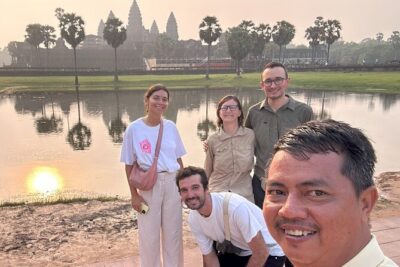
Waking up at 4:30 makes Angkor feel unreal. This is a small-group tour that lines up the best-known moments of the Angkor Wat complex and the wider circuit, with an English guide to connect what you’re seeing to Cambodia’s past. I like the maximum of 13 guests and the way the guide’s storytelling turns stone ruins into something you can follow.
The included basics are also a smart plus: air-conditioned transport plus cold water and cold towels on a long day. The main drawback to plan around is that the Angkor Wat admission ticket is not included, and you should budget for that upfront.
In This Review
- Key things that make this tour worth your time
- Sunrise or Sunset at Angkor: what you’re really paying for
- Small-group size (up to 13) and why it matters at Angkor
- Pickup timing and the 4:15–4:40am sunrise reality
- Angkor Wat stop: the “main stage” with Terrace of the Elephants
- Angkor Thom’s South Gate plus Bayon and Baphuon towers
- Ta Prohm: the jungle temple with tree roots on the stones
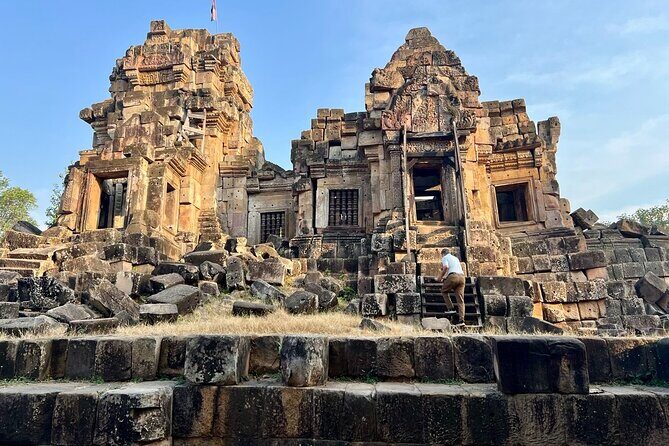
- Banteay Kdei: King Jayavarman VII’s late-12th-century temple
- The full 8-hour structure: how it feels in practice
- Guides: the difference between seeing Angkor and understanding it
- Price and value: $18 tour fee plus the $37 Angkor ticket
- Who should book this Angkor Wat sunrise/sunset tour
- FAQ
- How early do you pick up for the sunrise option?
- Is the Angkor Wat entrance fee included in the $18 price?
- What does the $37 Angkor Wat ticket cover?
- What’s included in the tour price?
- How long is the tour?
- What group size should I expect?
- Does the tour offer hotel pickup and drop-off?
- Can children join this tour?
- Should you book this Angkor Wat sunrise or sunset tour?
Key things that make this tour worth your time
- Sunrise timing (pickup between 4:15–4:40am for sunrise) helps you beat the worst crowds and catch softer light.
- Max 13 guests keeps photo stops workable and lets the guide steer you to less-busy angles.
- English guide with humor and context, including Khmer history and temple meaning as you walk.
- Four major stops in one outing: Angkor Wat, Bayon/Baphuon (Angkor Thom), Ta Prohm, and Banteay Kdei.
- On-the-ground comfort with cold water and cold towels during the day.
- Small logistics help like mobile tickets and pickup offered from your area.
Sunrise or Sunset at Angkor: what you’re really paying for
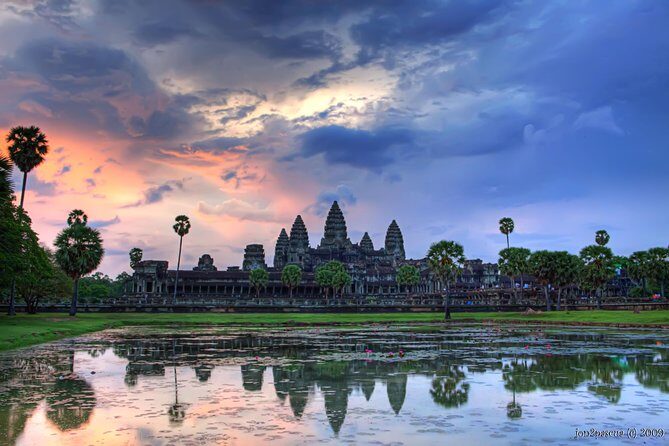
Angkor Wat is one of those places where timing matters as much as the site itself. Doing it at sunrise is a different experience than most day trips: the light is gentler, the air is cooler, and the first moments feel more intentional than chaotic. A sunset option can also work well if you want to skip the extremely early start and still see the temples in dramatic light.
This tour’s value isn’t just that it visits famous temples. It’s that it packages the day into a tight, guided route so you’re not guessing where to go or how long to stay. Your guide helps you understand what you’re looking at, and the small-group size helps you actually benefit from that guidance.
You can also read our reviews of more guided tours in Siem Reap
Small-group size (up to 13) and why it matters at Angkor
Angkor can feel like a maze when you’re on your own—big gates, long corridors, and constant photo traffic. With a group capped at 13, you can keep moving without losing the chance to pause where the view, carvings, or faces come into focus.
This is also where guide personality shows. In the reviews tied to this operator, guides like Mr. T, Indiana Jones (Chanthy), David, and Sen show up again and again for a reason: they balance explanations with real pacing. People also mention the guide timing stops so you get photo opportunities without being stuck in the thickest lines the whole time.
Practical takeaway for you: if you’re the type who wants a plan but also wants breathing room to look, this group size is a strong match.
Pickup timing and the 4:15–4:40am sunrise reality
If you pick the sunrise format, your pickup is scheduled between 4:15 and 4:40am from your hotel area (the tour asks for your hotel name and address). That’s early, but it’s exactly what you need for sunrise viewing.
The tour uses an air-conditioned vehicle, which helps on the ride there and keeps you from arriving already wiped out. They also provide cold water and a cold towel at stops, which is a big deal in Cambodia’s heat once you move away from sunrise.
What I suggest you bring for a sunrise start:
- A light layer for early morning, since mornings can feel cool before the sun climbs.
- Shoes you can walk in for hours. Even with a route, you’ll cover ground.
- A small flashlight or phone light can help if you’re moving before daylight, especially if you want to be ready at the viewing spots.
Angkor Wat stop: the “main stage” with Terrace of the Elephants
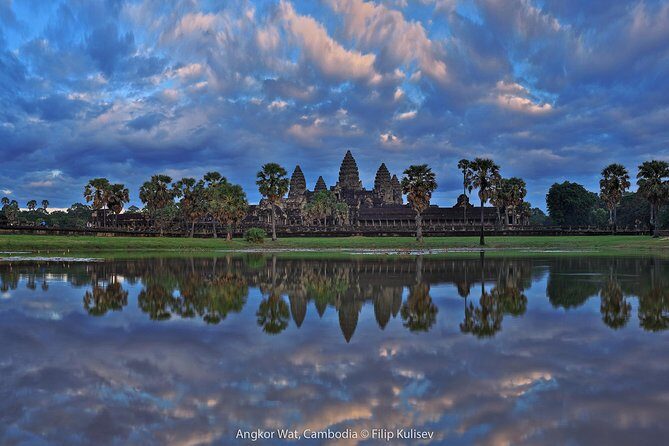
Angkor Wat is the reason most people come to Siem Reap. This tour gives you a focused chunk of time there (about 3 hours during the sunrise circuit), with the important add-ons that make it more than just posing at the iconic view.
One of the standout elements included in the tour overview is the Terrace of the Elephants. It’s the kind of place where carvings reward patience. You also get the sense of how the complex is laid out: courtyards, gateways, and the way the site funnels you toward key viewpoints.
One thing to plan around: the entrance ticket for Angkor Wat is not included. The operator states the Angkor Wat ticket is $37 per person, and that it covers temple admission. So for you, the workflow is simple:
- Book the tour.
- Buy/arrange the Angkor ticket separately.
- Bring proof of ticket access (mobile ticket is referenced).
A tip based on on-the-ground advice you’ll often hear for Angkor: if you can, purchase the ticket ahead of time so you don’t lose your early-morning rhythm to queues.
Angkor Thom’s South Gate plus Bayon and Baphuon towers
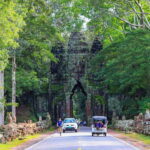
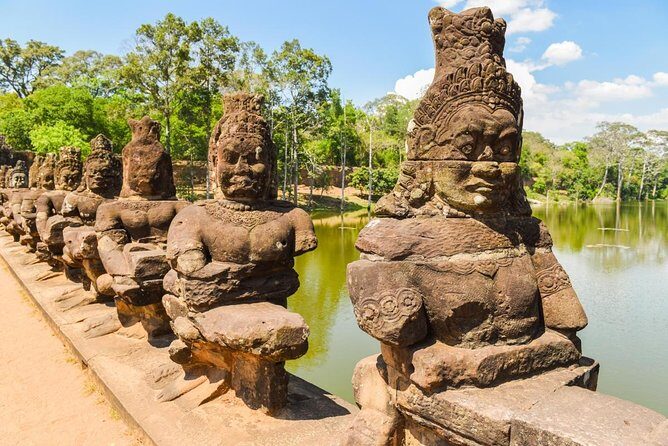
After Angkor Wat, the tour heads toward Angkor Thom and specifically the South Gate, where the route sets you up for the next big visual moment: Bayon and Baphuon temples.
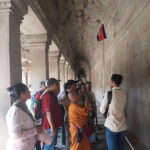
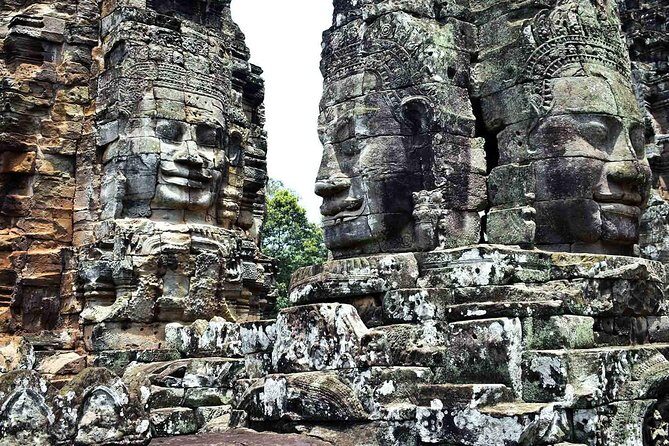
This stop runs about 2 hours, and it includes the Bayon experience. Bayon is famous for the 54 towers rising above the complex. The faces can look different as you walk around—part of the power is that you’re not seeing it from just one angle. With a guide, you’re more likely to understand what those carvings and symbols are meant to communicate, and you’ll also get tips on where to stand for photos that don’t feel like a crowd stampede.
One more thing I like about this design: it gives you a shift in texture. Angkor Wat often feels formal and symmetrical. Bayon feels more immediate, with the tower faces and the dense feeling of the Angkor Thom circuit.
You can also read our reviews of more evening experiences in Siem Reap



Ta Prohm: the jungle temple with tree roots on the stones
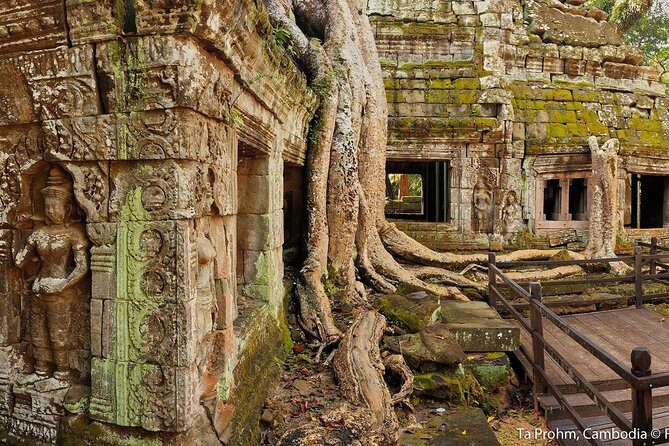
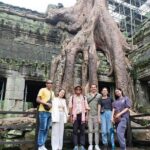
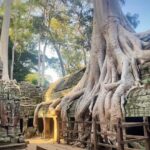
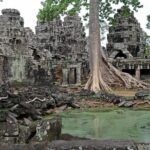
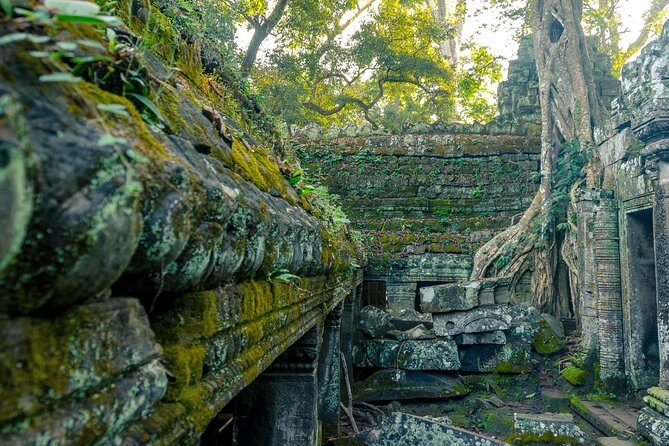
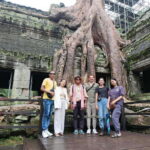
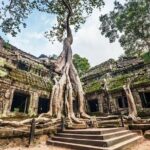
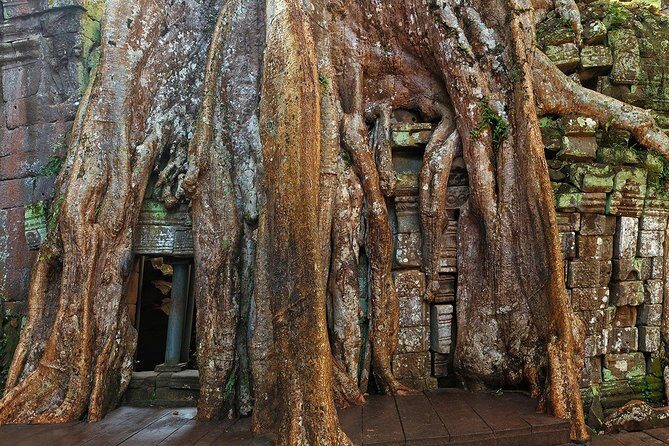
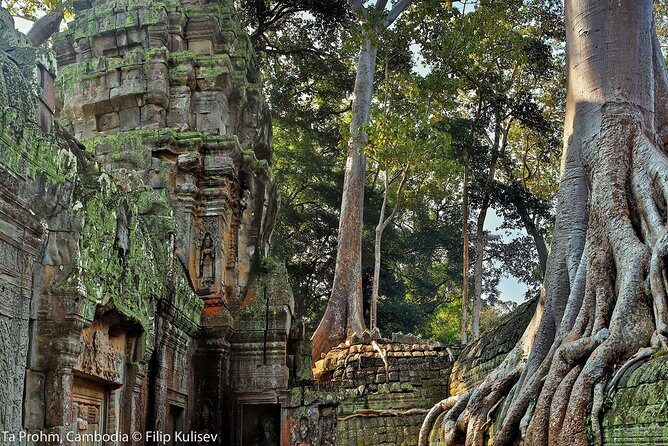
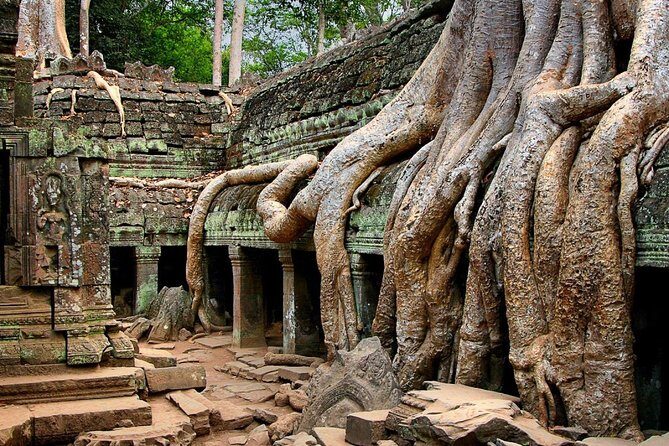
Next up is Ta Prohm, often called the jungle or tree temple. The description points to what makes this stop unforgettable: the gigantic roots that wrap around the ruins.
You’ll have about 2 hours here. That time matters, because Ta Prohm is one of those places where you naturally want to slow down. The light, the way roots frame doorways, and the contrast between stonework and living growth all pull you in different directions.
A practical caution: Ta Prohm is walk-heavy. Even when you’re moving as a group, expect uneven ground and plenty of steps. The guide’s role here isn’t just history—it’s also managing movement so you’re not rushing past the best angles.
Banteay Kdei: King Jayavarman VII’s late-12th-century temple
The tour wraps with Banteay Kdei for about 1 hour. This is a nice palate-cleanser after Ta Prohm because it’s generally easier to process: you get time to appreciate the temple’s structure and age without the same level of visual overwhelm.
The tour highlights that it was built by King Jayavarman VII during the late 12th century. Even if you’re not a temple-history person, the guide explanation helps you see Banteay Kdei as part of a bigger story rather than just another ruin stop.
If you’re worried that the day will feel rushed, this final stop helps. It’s shorter, so you don’t feel like you need to sprint to see everything before the tour ends.
The full 8-hour structure: how it feels in practice
The total duration is listed at about 8 hours. The time breakdown you can expect is roughly:
- Angkor Wat: about 3 hours
- Bayon/Baphuon area: about 2 hours
- Ta Prohm: about 2 hours
- Banteay Kdei: about 1 hour
That structure is built for a first-timer. You get the top names without spending your whole day trapped in one temple area. It’s also built for photo sanity: many guides know how to place short pauses so you’re not constantly “on,” and the cold water and cold towels help you reset between legs.
If you need a reality check on energy: this isn’t a sit-and-stare tour. Reviews mention enough walking that you should drink water and move at a steady pace. If you’re used to museums and gentle strolling, you’ll want to take shoes seriously and plan for a full-body morning.
Guides: the difference between seeing Angkor and understanding it
A big theme in the reviews for this operator is guide delivery. Names that come up repeatedly include Mr. T, Indiana Jones (Chanthy), David, Sen, Chanthy, and Sen Prourng (along with others). What they share in common is a mix of:
- Temple explanations you can follow in plain language
- Humor that keeps long walks from dragging
- Storytelling tied to Khmer history and what the carvings and layouts are meant to do
Some reviewers also mention the guide helping with photo timing—knowing when to move so your group gets chances for quieter angles. That’s hard to replicate on your own, especially when crowds surge quickly.
For you, the best way to use that: ask the guide small questions as you go. Even a quick, practical question like what to look for on a tower or why a ruin looks the way it does can totally change how you experience the site.
Price and value: $18 tour fee plus the $37 Angkor ticket
The headline tour price is $18 per person, which is notably low for what’s included. But remember: the Angkor Wat entrance fee is not included. The operator states the Angkor ticket is $37 per person and covers temple admission.
So your practical budget for the big temple access is about $55 per person, before any personal extras like snacks or lunch. That total is still often good value compared with tours that fold temple access into a higher overall package.
What you’re getting for the $18:
- Air-conditioned vehicle
- English tour guide
- Cold water and cold towel
- Pickup offered, plus the overall small-group organization
- A mobile ticket approach and group discount option (when applicable)
Also consider value beyond cost: the guide helps you avoid common first-timer mistakes, like spending too long in the wrong area or not knowing what you’re looking at once you get inside. That saves time and frustration, which is worth something on its own at Angkor.
Who should book this Angkor Wat sunrise/sunset tour
This tour is a great fit if:
- You’re on a first trip to Siem Reap and want the major sites handled in one morning or one day
- You like having a guide explain what you’re seeing, instead of relying on signage alone
- You want small-group pacing (up to 13) rather than a giant bus shuffle
- You plan to enjoy photos but also want time to actually look
It may not be the best match if:
- You hate early mornings. Sunrise starts between 4:15 and 4:40am.
- You want a totally free-form day with no schedule at all.
- You’re very limited on walking. This route involves steady walking across multiple sites.
If you’re comfortable with a long morning, this is one of the most sensible ways to structure your Angkor visit.
FAQ
How early do you pick up for the sunrise option?
For sunrise, pickup is scheduled between 4:15 and 4:40am from your hotel area.
Is the Angkor Wat entrance fee included in the $18 price?
No. The Angkor Wat entrance fee is not included. The ticket is $37 per person.
What does the $37 Angkor Wat ticket cover?
The operator states the $37 ticket covers all temple admission.
What’s included in the tour price?
Included are an air-conditioned vehicle, an English tour guide, and cold water and a cold towel.
How long is the tour?
The duration is listed as about 8 hours.
What group size should I expect?
The tour has a maximum of 13 travelers.
Does the tour offer hotel pickup and drop-off?
Pickup is offered, and the activity ends back at the meeting point.
Can children join this tour?
Yes, children must be accompanied by an adult.
Should you book this Angkor Wat sunrise or sunset tour?
Yes, if you want the efficient, guided way to see Angkor’s headline temples without turning your day into a navigation project. The small-group size, the cold-water comfort, and the guide-led context are the big wins, especially for first-timers.
If sunrise sounds like your kind of travel, go for it and plan for the early alarm. If you’d rather sleep in, the sunset option keeps the same route logic but swaps the timing for later light.
The one thing you should do before you go is budget for the separate Angkor Wat ticket. Once you handle that, this tour is a straightforward, value-rich way to experience Angkor Wat’s magic and the surrounding temples in one organized day.