REVIEW · SIEM REAP
Highlight of Angkor Complex 2 Days Private Tour
Book on Viator →Operated by About Cambodia Travel & Tours · Bookable on Viator
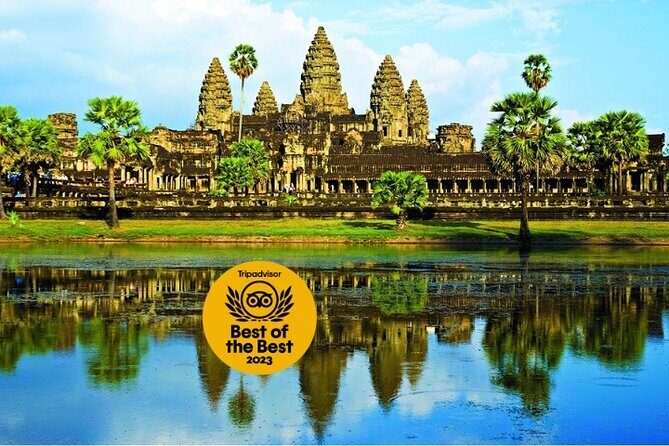
Angkor in two days needs a plan. This private tour strings together the big hitters and the off-radar stops, with a guide to make the Khmer stories actually make sense. I love the mix of famous temples and lesser-known ruins like Ta Nei, and I like having a private group setup with comfortable transfers and clear timing so you spend less time herding yourself.
One thing to plan for: entrance fees aren’t included, and you’ll need the Angkor Pass before you start temple visits. Also budget for lunch and tipping, because those parts are on you.
In This Review
- Key highlights at a glance
- Why this two-day private Angkor tour is a smart use of your time
- A quick reality check on effort
- Price and value: what $149.46 covers (and what you’ll add)
- Day 1: Angkor Thom, terraces, Ta Prohm, Angkor Wat, and Ta Nei
- South Gate of Angkor Thom: restored faces and the main entry
- Bayon Temple: towers, faces, and a royal timeline
- Angkor Thom: Buddhist cosmology in 3D
- Baphuon and Phimeanakas: royal power on a stacked base
- Terrace of the Elephants and the Terrace of the Leper King: procession drama
- Ta Prohm: jungle as part of the temple
- Angkor Wat: the best-preserved masterpiece
- Ta Nei: the quieter finish in the jungle
- Day 2: Banteay Srei, restored contrast, Preah Khan, and a market break
- Banteay Srei: Khmer art in fine detail
- Banteay Samre: anastylosis and the reality of maintenance
- Pre Rup: bold architecture and balance
- Eastern Mebon: stone elephants and religious scenes
- Neak Pean: the pond that feels like old luxury
- Preah Khan: another major 12th-century story
- Banteay Prei: for people who want more than the main circuit
- Om Pich steamed toddy palm cake area and Preah Dak Market: snack and souvenirs
- Guide support, comfort, and the small things that make a difference
- Who should book this private Angkor complex tour
- Should you book this 2-day private Angkor tour?
- FAQ
- What is included in the tour price?
- Are entrance fees included for Angkor temples?
- Is this a private tour or a shared group tour?
- What about meals during the two days?
- Do I need to tip the guide and driver?
- Can I cancel for free?
Key highlights at a glance
- Private group routing across two days, so you’re not squeezed into constant crowd flow
- Angkor Thom to Angkor Wat on Day 1, then a second circuit that keeps variety strong
- Ta Prohm and Ta Nei bring the jungle vibe: one iconic, one harder to find
- Terrace stops with big symbolism, including the Terrace of the Leper King
- A guide-led story of Khmer kings and Buddhist-era imagery (not just photo stops)
- Flexible add-ons on request, such as a land mine museum stop
Why this two-day private Angkor tour is a smart use of your time
Angkor is huge. Even if you love temples, you don’t want to burn your days playing logistics roulette. This is set up as a private tour for your own group, with hotel pickup and drop-off in Siem Reap, plus transfers in a comfortable vehicle. That matters because temple days aren’t just about walking. They’re about getting to the right gate, at the right time, in the right order—before the heat, crowds, and fatigue start stacking up.
What I like most is that the itinerary doesn’t only hit the most famous stops. It also includes places that are less obvious on a first-timer map. On Day 1, you get Ta Prohm (the “kingdom of the trees” temple people talk about), then Angkor Wat, then a detour to Ta Nei, which is described as being hard to find and less popular. On Day 2, you start with Banteay Srei and keep going through a sequence that mixes restored and less restored sights. It gives you a fuller sense of what Angkor looked like, not just what sells best on postcards.
You can also read our reviews of more private tours in Siem Reap
A quick reality check on effort
This is not a couch-and-cocktails day trip. You’re visiting many sites across two long blocks. You’ll do plenty of walking on uneven ground and through wide temple complexes. Wear grippy shoes and bring a good hat—then let your guide handle the pacing.
Price and value: what $149.46 covers (and what you’ll add)
The tour price is $149.46 per person for roughly two days, and it’s commonly booked about 45 days in advance. That “book ahead” timing is usually a good sign for private tours—popular enough that you don’t want to leave it to chance.
Here’s what you get that you can’t easily DIY without effort:
- Hotel pickup and drop-off (so you’re not arranging your own van and driver)
- Professional English-speaking licensed guide
- Private transfers in a comfortable vehicle for the day’s route
- Water and cool fresh tissue during the trip
What you’ll likely add on your own:
- The Angkor Pass (entrance fee) for the temple circuit
- Meals (lunch options range from about $3–$10 per dish at local restaurants)
- Tipping for the guide and driver
For most people, the value comes from the guide and route planning. With Angkor, a good guide can turn your time into a story you can remember. Without that, it’s just a lot of stone.
Day 1: Angkor Thom, terraces, Ta Prohm, Angkor Wat, and Ta Nei
Day 1 is the “big centerpiece” day. You start at the south side of Angkor Thom, move through the heart of the complex, then swing to Ta Prohm and Angkor Wat. The final stop is Ta Nei, which is the kind of place you notice more when you’ve already seen the famous stuff and your eye starts working better.
South Gate of Angkor Thom: restored faces and the main entry
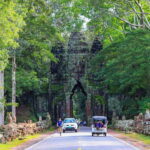
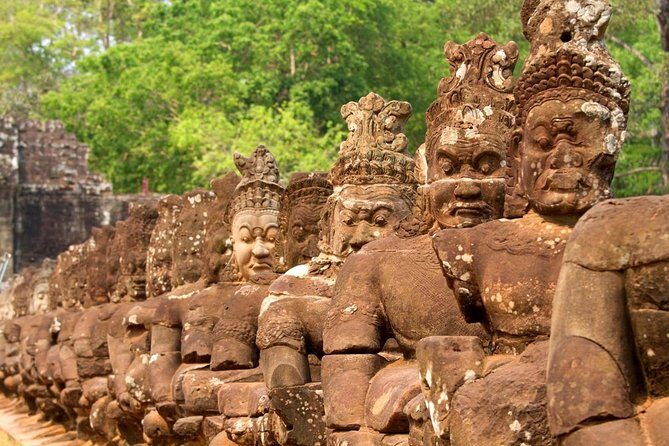
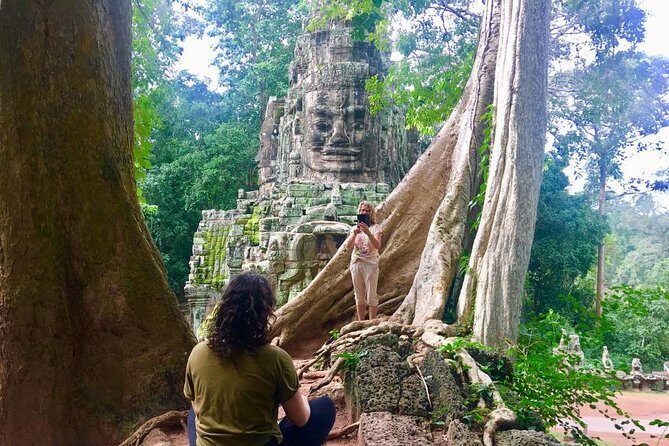
Your first stop is the Angkor Thom South Gate. This gate is popular because it has been fully restored and many of the decorative heads remain in place. It also sits on the main road into Angkor Thom from Angkor Wat, so it’s a natural “first wow” moment before you get into the temple maze.
Practical note: this is often where photos start. The advantage of going early with a guide is that you can get your orientation fast and then move into the meaning behind the sights rather than just chasing angles.
You can also read our reviews of more tours and experiences in Siem Reap
Bayon Temple: towers, faces, and a royal timeline
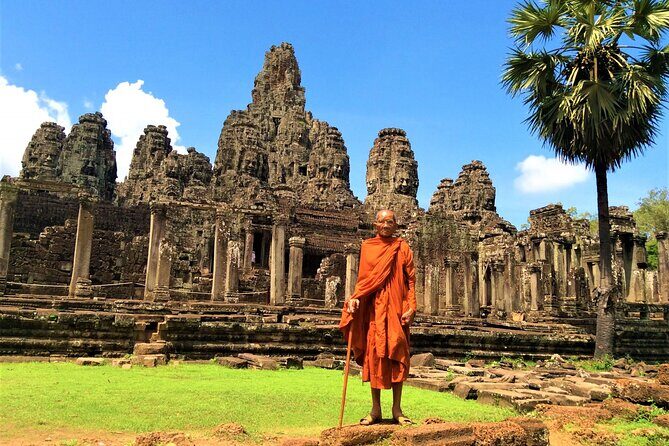
Next is Bayon Temple, about an hour. Bayon was built nearly 100 years after Angkor Wat, and it sits at the center of the royal city. That timing difference is one of the keys to understanding Angkor: you’re not looking at one single era, you’re seeing a sequence of Khmer priorities, styles, and religious imagery layered over time.
You’ll likely spend time on the core structures and the visual language that Bayon is known for. Expect it to feel busy in a good way—this is where the complex starts to feel alive.
Angkor Thom: Buddhist cosmology in 3D
Then you move into Angkor Thom itself for about 30 minutes. The description emphasizes Angkor Thom as a large-scale materialization of Buddhist cosmology, done on a national scale. In plain terms: this is where the Khmer temple design isn’t just pretty. It’s meant to represent how they understood the universe and the spiritual order.
If you want something to “click,” this stop is often where it happens—especially with a guide explaining how the carvings and layout connect.
Baphuon and Phimeanakas: royal power on a stacked base
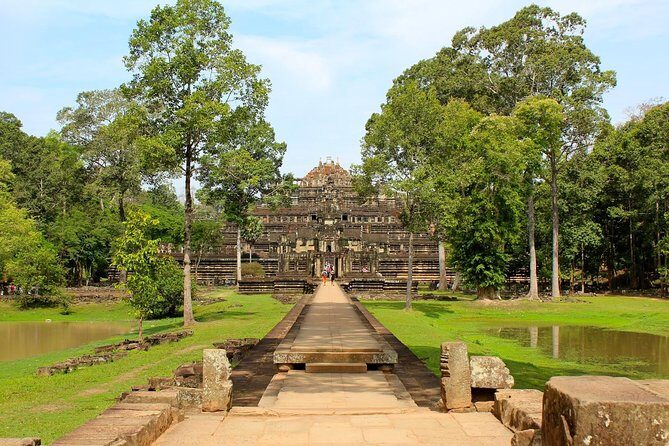
You then hit Baphuon Temple (around 45 minutes). Baphuon is noted for its rectangular sandstone base with five levels, which is unusual compared to progressively smaller tiers. That architectural difference makes it worth paying attention to, even if you’ve seen other temples.
After that comes Phimeanakas (about 30 minutes), near the center of the Royal Palace enclosure. The temple likely had a golden pinnacle originally, and historical accounts describe it as a Tower of the Sky. Even if gold isn’t glowing today, the placement tells you why kings cared about visibility, symbolism, and divine connection.
Terrace of the Elephants and the Terrace of the Leper King: procession drama
Two terraces follow, and they’re a big reason Day 1 feels like more than a highlight reel.
- Terrace of the Elephants (about 45 minutes): the carvings describe elephants being ridden by servants and princes, moving as quietly as if it were a promenade. The longer idea here is that the terrace is about movement, ceremony, and hierarchy—temple power with stagecraft.
- Terrace of the Leper King (about 30 minutes): this terrace carries dramatic bas-reliefs on both interior and exterior sides, tied to Jayavarman VII’s reign. The key for you is to look at the action in the carvings, not just the faces and textures.
These terraces are where a guide really helps. Without context, you can miss that the story is told in scenes, not single moments.
Ta Prohm: jungle as part of the temple
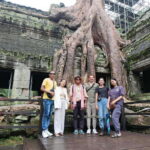
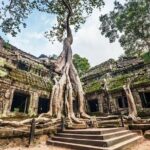
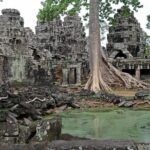
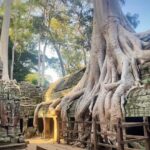
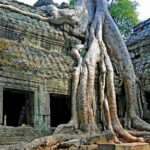
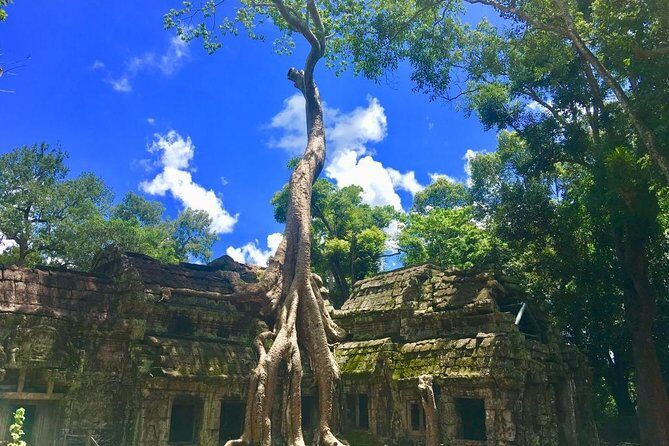
Then it’s Ta Prohm Temple for about 1 hour 30 minutes. Ta Prohm is described as the kingdom of the trees and left largely untouched by archaeologists except for clearing visitor paths and strengthening structures to slow deterioration.
This is one of those experiences where the temple feels less like a museum object and more like an ongoing negotiation between stone and roots. The practical payoff: because the ruins are integrated with nature, you often get more “depth” in your photos and fewer identical crowd moments than at some other major sites.
Angkor Wat: the best-preserved masterpiece
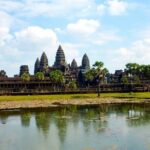
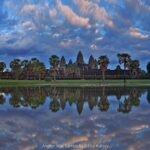
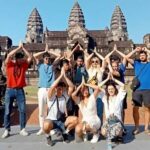
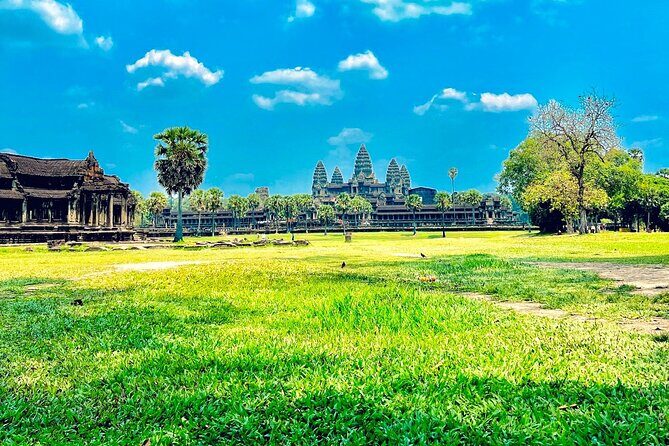
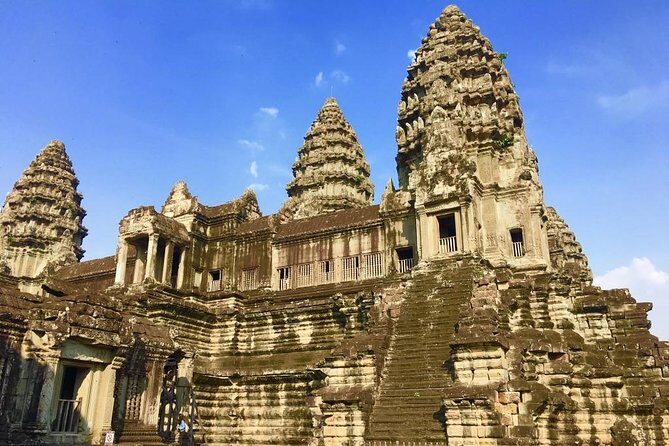
After Ta Prohm, you reach Angkor Wat—about 3 hours. Angkor Wat is the largest monument in the Angkor group and is described as the best preserved. The emphasis is on composition, balance, proportions, reliefs, and sculpture quality.
This is a temple you’ll feel in your feet: the scale can be dizzying, and the time estimate matters. Three hours lets you slow down enough to understand why people keep coming back here for return visits and sunrise posts.
Ta Nei: the quieter finish in the jungle
Finally, you end at Ta Nei Temple (around 45 minutes). It’s deep in the jungle area and described as roughly 200 meters west of East Baray. It can be hard to find and is not a popular tourist destination.
That’s the point. After a full day of major sites, Ta Nei gives you a different sensation: fewer crowds, more stone-and-green mood, and a sense that Angkor wasn’t built as a single showpiece. If you’re the type who likes discovering what’s less obvious, this stop is a bonus.
Day 2: Banteay Srei, restored contrast, Preah Khan, and a market break
Day 2 is built for variety. You start with Banteay Srei, then move through a mix of restoration quality and temple styles, ending with a market-type stop and souvenir time.
Banteay Srei: Khmer art in fine detail
Banteay Srei takes about 1 hour 20 minutes. French archaeologists described it as a precious jewel and a jewel in Khmer art. Even without getting technical, you can expect the carvings and craftsmanship to be a big part of why people love it.
If Day 1 felt monumental, Day 2 gives you more intimate detail to study. Bring patience for close-looking.
Banteay Samre: anastylosis and the reality of maintenance
Next is Banteay Samre (about 45 minutes). It’s described as one of the most complete complexes due to restoration using anastylosis. At the same time, the lack of maintenance over the past 20 years is evident.
So you get a useful contrast: some parts look carefully put together, while other areas remind you that preservation isn’t automatic. This is one reason Angkor feels like a living heritage site rather than a frozen set.
Pre Rup: bold architecture and balance
Then Pre Rup (about 50 minutes). The design is described for boldness and for giving the temple fine balance, scale, and proportion. It’s noted as being almost identical in style to the East Mebon, though built several years later.
If you like comparing styles, this is a strong stop because it connects temples through design choices. Even if you don’t have an art history degree, you can still see the logic in the shapes.
Eastern Mebon: stone elephants and religious scenes
Your next stop is Eastern Mebon (around 30 minutes). The sculptures are described as varied and exceptional, including two-meter-high free-standing stone elephants at corners of the first and second tiers. There are also religious scenes featuring Indra.
This is another “look closely” temple. Watch how the sculpture placement supports the temple’s structure and how the figures help guide your eye.
Neak Pean: the pond that feels like old luxury
Then you reach Neak Pean (around 45 minutes). Neak Pean is described as a large square man-made pond—70 meters (230 feet) per side—bordered by steps, with surrounding elements. The description emphasizes the dream of olden days of luxury and beauty.
This stop is a good break from dense temple wall carvings. It gives you a calmer center point where you can step back, look, and reset before the final stretch.
Preah Khan: another major 12th-century story
Next is Preah Khan (about 1 hour). It’s located about 2 kilometers north-east of Angkor Thom on the Grand Circuit. Built in the second half of the 12th century in AD 1191 by King Jaya-varman VII, it’s described as dedicated to his father.
Expect a bigger temple feel here—more walking, more space to take in the plan, and more chances for carvings to reward your attention. If Day 2 is starting to feel long, this is where a guide’s pacing matters most.
Banteay Prei: for people who want more than the main circuit
Then comes Banteay Prei (around 45 minutes). It’s described as rarely visited, near another small temple called Prasat Prei. It’s a minor temple, mainly of interest for those who want an in-depth look at Angkor beyond the most famous hits.
If you love detailed archaeology vibes, this fits. If you only care about the most photographed sites, you may find it quieter and less dramatic.
Om Pich steamed toddy palm cake area and Preah Dak Market: snack and souvenirs
For the last stop, you head to Om Pich steamed Toddy Palm Cake in Prashdak Village area, and you also get time at Preah Dak Market, described as popular for souvenirs like objects and arts.
This is the practical wrap-up. You’ve spent two days in heat and stone—now you get a chance to browse for Cambodian keepsakes and (if you choose) pick up something sweet to keep your energy from crashing.
Guide support, comfort, and the small things that make a difference
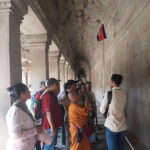
This tour is private, which means you’re not stuck waiting for the slowest group. The itinerary is structured with estimated time at each stop, and your licensed English-speaking guide helps connect what you’re seeing to Khmer history and religious imagery. The value isn’t that you get facts. It’s that you understand why those facts matter while you’re still standing in front of the carvings.
Comfort details are included:
- Hotel pickup and drop-off
- Private transfers by comfortable vehicle
- Drink water and cool fresh tissue for the trip
Those sound basic, but in Angkor heat they’re the difference between a great day and a miserable one.
A useful flexibility note: one guide name that shows up with this kind of routing is Mr. Sara, described as providing thorough coverage and being flexible enough to include a land mine museum stop when requested. If that topic matters to you, ask early in the planning conversation so your schedule stays smooth.
Who should book this private Angkor complex tour
Book it if you:
- Want two days that feel organized, not rushed
- Like hearing stories that connect temples across reigns and styles
- Prefer private routing (so your group sets the pace)
- Don’t mind stepping beyond the most famous photos, especially at quieter spots like Ta Nei and Banteay Prei
Consider a different style tour if you:
- Want only the top 3–5 most famous Angkor sights and nothing else
- Hate walking on uneven temple ground
- Don’t want to handle the Angkor Pass purchase process
This is best for couples, small families, and friends who want a guided experience that still feels personal.
Should you book this 2-day private Angkor tour?
Yes, if you’re going to Angkor only once, this kind of private two-day approach is a strong value. The route balances major monuments with less popular temples, and the guide support plus comfortable transfers help you get more from every hour. Just go in knowing you’ll budget for the Angkor Pass, lunch, and tipping—those costs are normal for Angkor, but they’re not included.
If you want your trip to feel like you learned something while you were still in the ruins, this itinerary is built for that.
FAQ
What is included in the tour price?
The tour includes hotel pickup and drop-off, a professional English-speaking licensed guide, private transfers by comfortable vehicle during the itinerary, and water plus cool fresh tissue throughout the trip.
Are entrance fees included for Angkor temples?
No. Entrance fees are not included. You’ll need the Angkor Pass to cover the temples on the itinerary, and your guide will assist you with purchasing it at the entrance of Angkor Park before you start.
Is this a private tour or a shared group tour?
It’s a private tour. Only your group participates.
What about meals during the two days?
Meals are not included. Lunches are available at local restaurants with vegetarian and non-vegetarian options. Prices are typically around $3–$10 per dish.
Do I need to tip the guide and driver?
Tipping is not included, so you should plan to tip your guide and driver.
Can I cancel for free?
Yes, free cancellation is offered. You can cancel up to 24 hours in advance for a full refund, based on local time.