REVIEW · SIEM REAP
2-Days Tour (The Best Historical of Khmer Empire)
Book on Viator →Operated by Hidden Angkor Tour · Bookable on Viator
Stone temples and smart stops in two days.
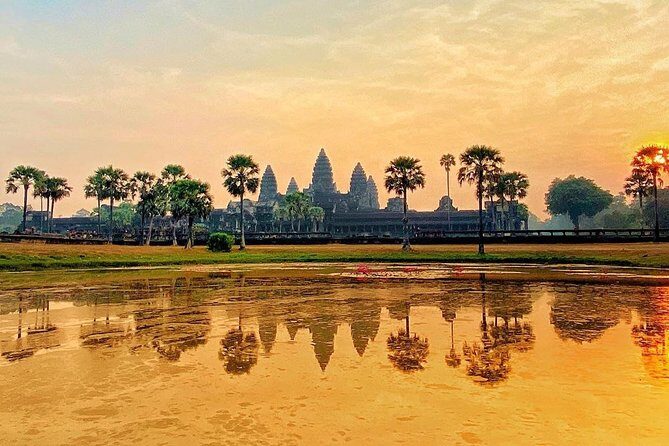
This 2-day private tour is a practical way to see a big chunk of the Khmer Empire story, without feeling like you’re sprinting. You’ll move from the royal heart of Angkor Thom to sunset at Pre Rup, then hit Angkor Wat and a calmer set of earlier capital sites, plus a real-life Siem Reap break at Psar Chaa and Artisans Angkor.
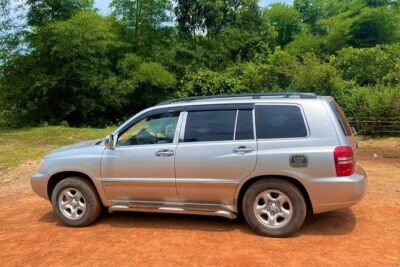
I love the way the day is handled with a local-style driver and guide, and you can ask for changes to fit your pace. I also like the comfort touches, including cool waters and wet towels in the car, and even the high-comfort feel some groups got in a Lexus SUV with ice-cold towels.
One thing to plan for: the Angkor pass is not included, and you’ll also need to follow temple dress code rules and do some walking.
In This Review
- Key things I’d circle on your planning list
- The value of a private Khmer Empire tour from Siem Reap
- Price and logistics: what’s included, what’s not, and how to budget
- Day 1: Angkor Thom’s royal loop and Banteay Srei’s delicate carving
- Bayon Temple and the faces that define Angkor Thom
- Baphuon and the Shiva link before Angkor Wat
- Terrace of the Elephants: long wall, small details
- Terrace of the Leper King: myth meets architecture
- Preah Palilay and Phimeanakas: calmer towers and the royal center
- Lunch break, then Banteay Srei’s fine stonework
- Banteay Samre and then Pre Rup for the sunset view
- Day 2: Angkor Wat’s big scale, Ta Prohm’s jungle vibe, then Roluos and Hariharalaya
- Angkor Wat: the morning must-do
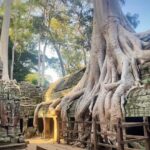
- Ta Prohm: the tree-in-temple effect
- Bakong: Roluos group and the first temple mountain
- Lolei and its island-temple baray setting
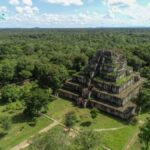
- Preah Ko: early Khmer capital Hariharalaya
- Psar Chaa Old Market and Artisans Angkor: a human break from stone
- Comfort, guide style, and small details that make a big difference
- What I’d expect on the comfort side
- Dress code: don’t wing it
- Sun and weather: pack for it even when it looks cloudy
- Walking and routes
- Photos, stories, and guide names worth looking for
- Should you book this Siem Reap 2-day Khmer Empire tour?
- FAQ
- How much does the 2-day Khmer Empire tour cost?
- What’s included in the tour price?
- Is the Angkor Archaeological Site entrance pass included?
- Is lunch included?
- Is pickup from my hotel included?
- Do I need to pay admission fees at each temple?
- Will I have time for sunset?
- Is the tour private?
- Is there a dress code?
- What are the cancellation rules?
Key things I’d circle on your planning list
- Private pickup and a driver-guide team that can tailor the route for your group
- Sunset time at Pre Rup as an optional closer-to-golden-hour moment
- Angkor Thom + Angkor Wat + early-capital sites across two full days
- Comfort included: air-conditioned vehicle, cool waters, and wet towels
- Beyond temples with Psar Chaa (Old Market) and Artisans Angkor
- Small frictions are real: lunch is on your own, and the Angkor pass is extra
The value of a private Khmer Empire tour from Siem Reap
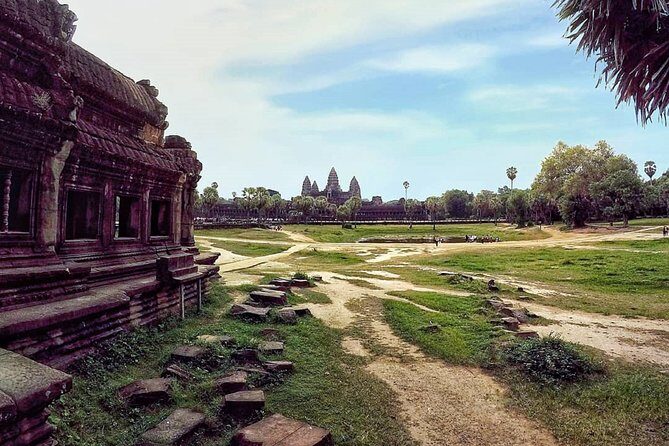
Siem Reap temple days can turn into chaos fast. This format keeps things organized: you’re picked up, you ride in an air-conditioned vehicle, and you get an English-speaking guide who works as your translator-plus-storyteller. You’re also not stuck with a rigid group pace, because this is a full private basis.
At $145 per person, you’re paying for the full-day logistics: licensed English-speaking guide, professional driver, and the comfort kit (cool waters and cool wet towels). You still control a few big choices yourself, like when you want the optional sunset and where you pause for photos.
If you’re the type who wants to understand what you’re seeing—not just check off a temple—this route is built for that. It strings together big visual landmarks and then fills in the in-between details that make Khmer architecture feel like a system instead of scattered ruins.
You can also read our reviews of more historical tours in Siem Reap
Price and logistics: what’s included, what’s not, and how to budget
Here’s the clean breakdown. Included in the $145: transportation in an air-conditioned vehicle, professional driver, license English-speaking guide, cool waters and cool wet towels, plus applicable taxes and service charges.
Not included: meals (lunch is excluded), personal spending, tips/gratuities, and the Angkor entrance pass to the Angkor Archaeological Site. Each temple stop lists admission ticket not included, so you’ll still need the Angkor pass to access the sites in the Angkor area.
So the budgeting tip is simple: treat $145 as the tour-and-guide cost, then add the Angkor pass based on how many days you want the access. The pass covers entry to all sights in and around Angkor, and it needs to be visible. Kids under 12 are free of charge.
One more practical note: the tour runs on good weather. If weather turns bad, you’ll be offered a different date or a full refund, so don’t schedule something important right after.
Day 1: Angkor Thom’s royal loop and Banteay Srei’s delicate carving
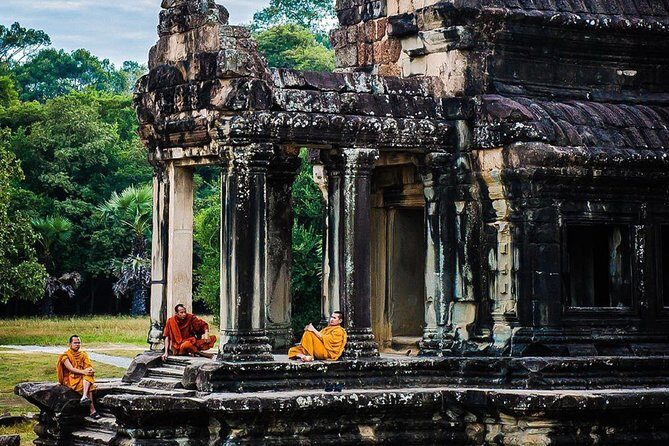
Day 1 starts at Angkor Thom’s core. The sequence matters because it takes you through the big, recognizable faces first, then down into the surrounding terraces and towers where the story becomes more symbolic and detailed.
Bayon Temple and the faces that define Angkor Thom
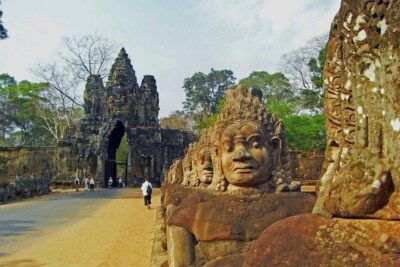
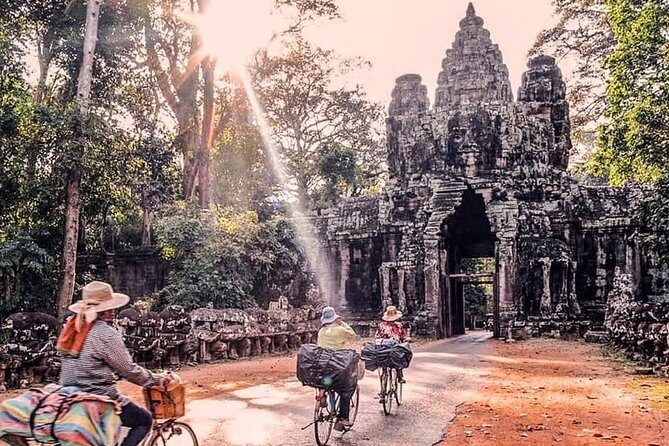
Bayon is your morning anchor. You’ll visit Angkor Thom and then head to Bayon Temple, famous for giant stone faces and 37 standing towers. In a short visit, that kind of repetition does something useful: it helps you spot how Khmer builders used design to create presence, not just decoration.
Plan for photos here, but also look for how the carvings repeat across structures. That repetition is part of why Bayon became such an iconic image of classic Khmer art.
Baphuon and the Shiva link before Angkor Wat
Next up is Baphuon Temple, described as a three-tier temple mountain built as the state temple of Udayadityavarman II dedicated to the Hindu God Shiva. You’ll also hear it’s near Bayon and built before Angkor Wat, which is a helpful way to frame the complex as a timeline, not a random set of ruins.
If you want a quick comparison day, Baphuon is a good “how did it evolve?” stop.
You can also read our reviews of more tours and experiences in Siem Reap
Terrace of the Elephants: long wall, small details
The Elephant Terrace spans the heart of Angkor Thom with a long wall carved with elephants and garudas. The terrace is listed as about 300 meters long and roughly 2.5 meters tall at points, which makes the scale feel real when you’re standing there.
This is one of those places where your guide’s pace matters. Too fast and you miss the rhythm of the carved animals. Just slow enough and you start seeing how the Khmer aesthetic uses movement.
Terrace of the Leper King: myth meets architecture
Then comes the Terrace of the Leper King, a double terrace wall with deeply carved nagas, demons, and other mythological beings. It’s named for the figure sitting on top (the Leper King), so it’s architecture with a legend attached—not just a scenic backdrop.
If you like symbolism, this is a satisfying stop. If you only want the biggest “wow,” it still works because the carvings are dense and readable once you know what you’re looking at.
Preah Palilay and Phimeanakas: calmer towers and the royal center
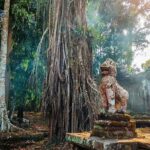
After that, you’ll head to Preah Palilay, a sandstone and laterite tower in a shaded forest setting, noted for Buddhist-themed carvings. It’s shorter time-wise, but it’s a nice shift away from the busiest zones.
Then you’ll visit Phimeanakas, described as a pyramid Hindu temple built in the 10th century and located at the center of the old Royal Palace of Angkor Thom. This stop helps you understand Angkor Thom as a royal plan: center, enclosure, and ceremonial space.
Lunch break, then Banteay Srei’s fine stonework
After the morning circuit, lunch is excluded, so you’ll eat on your own during the break. I like that you still get a real break here, since the next two temples involve close-up carving that rewards time.
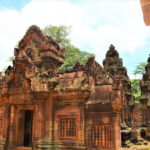
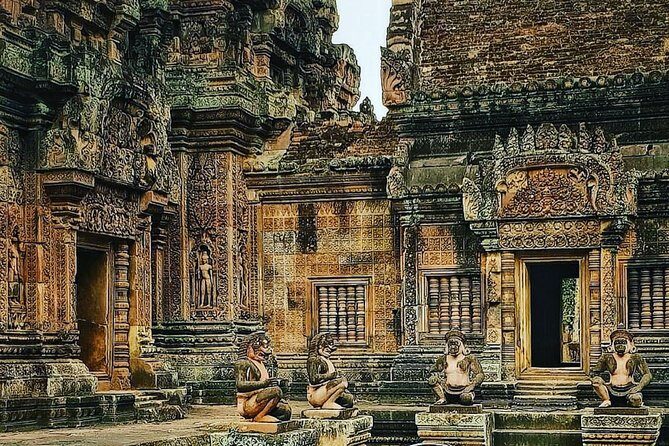
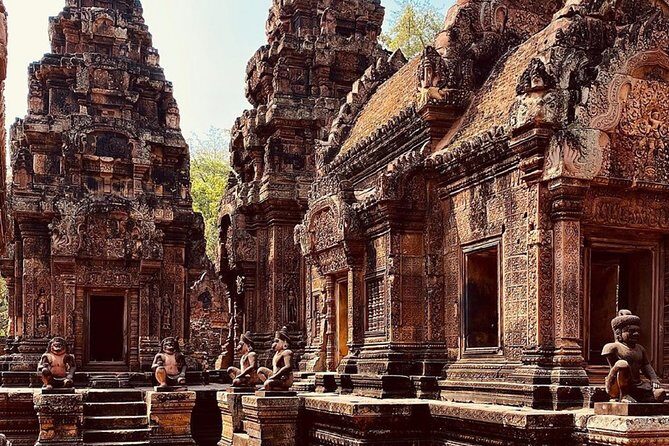
Banteay Srei (Afternoon) is where the route leans into detail. The name translates to citadel of women, and the modern nickname is tied to the delicate beauty of its carvings. The visit is longer than some of the surrounding stops, which makes sense if you want to actually take in the artwork instead of rushing through.
Banteay Samre and then Pre Rup for the sunset view
Banteay Samre follows, described as a large flat temple with Angkor Wat-style architecture and artistry, plus a naming legend. After that comes Pre Rup, listed as an optional sunset stop.
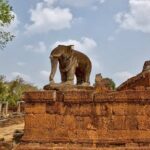
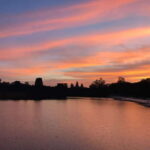
Pre Rup is called architecturally and artistically superior, with carved false doors on the upper level, and it’s also a strong spot for views over the surrounding countryside at sunset. If you’re debating whether to do sunset, this is one of the few times the extra timing usually feels worth it, because the view is part of the experience—not just another photo moment.
Day 2: Angkor Wat’s big scale, Ta Prohm’s jungle vibe, then Roluos and Hariharalaya
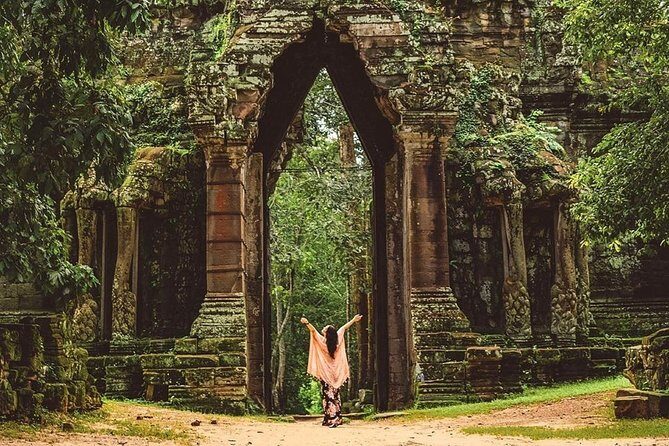
Day 2 balances the headline sites with earlier capital areas. That mix is a big reason a two-day plan can feel complete instead of repetitive.
Angkor Wat: the morning must-do
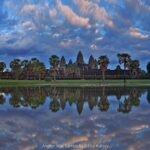
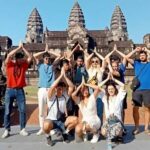
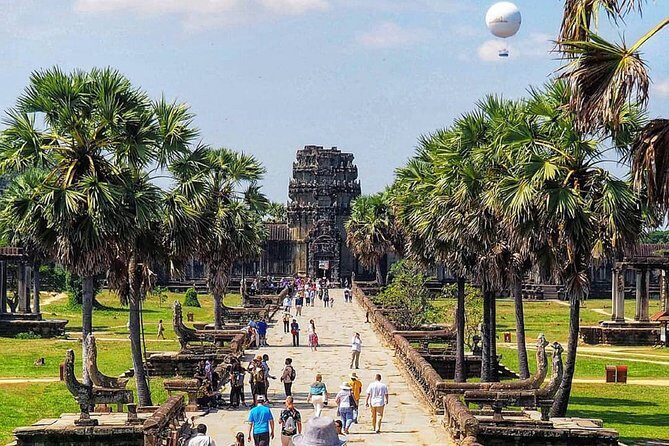
Angkor Wat is first on Day 2, and it’s easy to see why. The description emphasizes its scale, its decorative detail, and that it survives as one of the great temple-city ruins. With two hours allotted, you’ll have time to walk, pause, and notice structure lines instead of just staring up.
If you only do one “first-time Angkor” experience, Angkor Wat is the one that sets the reference point for everything else you’ll see.
Ta Prohm: the tree-in-temple effect
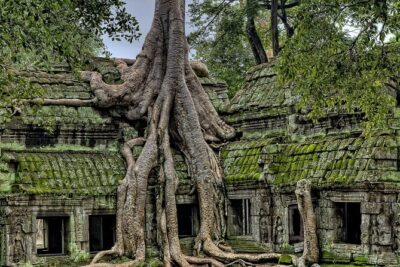
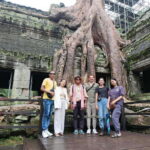
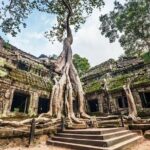
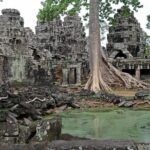
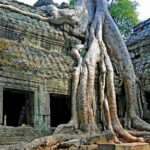
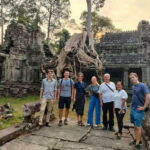
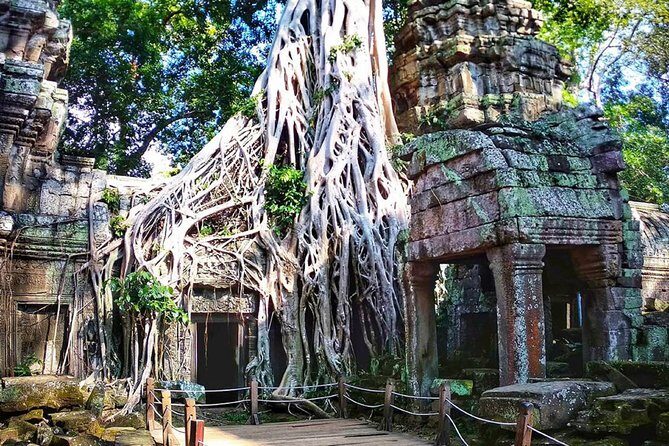
Ta Prohm is next. It’s described as a quiet, sprawling monastic complex that’s only partially cleared of jungle overgrowth, and it’s one of the best “tree-in-temple” photo opportunities in the Angkor complex.
The key practical value: Ta Prohm is easier to photograph than it looks, because the composition already has framed edges created by trees and temple blocks. Your guide can help you time your walking so you’re not stuck in the busiest photo angles for too long.
Bakong: Roluos group and the first temple mountain
Then you’ll visit Bakong, labeled as the most impressive member of the Roluos Group and sitting at the center of the first Angkorian capital. It’s described as the first temple mountain of sandstone constructed by rulers of that first Angkorian capital.
This is where your “temples as city planning” idea gets stronger. You’re not just seeing later masterworks—you’re seeing an early capital pattern.
Lolei and its island-temple baray setting
Lolei comes next. It’s described as ruins of an island-temple built in the middle of a now-dry baray called Indratataka, and it’s noted as the first large-scale baray constructed by a Khmer king. The temple itself is a smaller Hindu temple built in the 9th century.
Even if you’re not chasing dates, the dry baray setting is useful: it changes the perspective so you see how water features shaped temple locations.
Preah Ko: early Khmer capital Hariharalaya
Preah Ko is tied to the early Khmer capital of Hariharalaya. It’s one of the first major temples of the empire, described through that geographic connection.
This stop helps you connect where you are on the map of Khmer priorities: early centers, major temples, and how later fame grew out of these earlier nodes.
Psar Chaa Old Market and Artisans Angkor: a human break from stone
After the Roluos area, you’ll head to Psar Chaa, also called Old Market. It’s described as offering a deep selection of souvenirs and curios, with vendors across the market.
This is a good place to reset your brain after temple focus. I also like that it’s not just shopping for the sake of shopping; it gives you an easy way to pick up small items without turning the rest of your day into a bargain hunt.
Then comes Artisans Angkor, an NGO described as a training ground for unschooled rural youth to learn handicraft production skills. The practical value here is that you’re not only buying a souvenir, you’re supporting the skills-building that helps people earn a living through their craft.
If you want your trip to include one more layer of Cambodia beyond temple walls, this is the easiest add-on on the whole schedule.
Comfort, guide style, and small details that make a big difference
A day like this works because of the boring stuff done well: timing, transport, and the little supports that keep you comfortable.
What I’d expect on the comfort side
Your tour includes an air-conditioned vehicle plus cool waters and cool wet towels. In at least a few past experiences, that comfort came with a high-end feel too, like being picked up in a Lexus SUV and getting ice-cold towels through the day. That’s not guaranteed every time in your mind, but it tells you the company cares about comfort and temperature management.
Dress code: don’t wing it
This matters. Some temples and palaces, including Baphuon, uphold a strict dress code. You’ll want clothes that cover shoulders and fall below the knees.
If you forget, you might lose time at the gate fixing it. I’d rather you bring light, breathable long pants and a shirt that covers your shoulders so you can keep moving.
Sun and weather: pack for it even when it looks cloudy
You’re advised to bring sunglasses, a hat or cap, and sunscreen with a high SPF factor. Even when it’s cloudy, sunrays still hit hard at these sites.
Also note the tour includes guidance around electronics: natural elements can damage devices, so wrap and protect your camera and phone during temple stops in the sun and humidity.
Walking and routes
Some walking is required. The good part is that the operator says they’ll take the most comfortable ways from the entrance of the sight to the sight itself. Still, you should plan for temple ground that isn’t always smooth.
Photos, stories, and guide names worth looking for
One of the most praised parts of this tour is the guide. People describe the experience as story-driven and question-friendly, not just a route with facts.
Specific examples from past guide impressions include Mr. Veasna, praised as passionate and knowledgeable, with explanations and answers that made the sites feel connected. Another guide, Vutha, was described as easygoing with humor and good photographic assistance. Vandy was mentioned alongside Vutha as friendly and helpful.
There’s also Sophea Kas, who was highly recommended for making the journey feel meaningful and well-paced.
You can’t always choose a guide when you book, but you can choose the tour format: a licensed English-speaking guide and a private setup is exactly what makes that kind of explanation possible.
Should you book this Siem Reap 2-day Khmer Empire tour?
Book it if you want a structured two-day Angkor plan with real guidance, not just transportation. This is especially good for first-timers who want the main names (Angkor Wat and Ta Prohm) plus the surrounding story loop (Angkor Thom, Pre Rup sunset, and earlier capital sites like Bakong and Preah Ko at Hariharalaya). It also fits families, since customization is built into the private format.
I’d skip or at least rethink if you hate extra planning costs. The Angkor pass is not included, lunch is on your own, and you’ll face dress code rules at some temples. Also, if you’re fragile with sun and walking, bring protection and expect uneven temple ground.
If you like your sightseeing with context and comfortable pacing, this two-day Khmer Empire tour is a strong value at $145, especially because it includes the guide and comfort basics, and it still leaves you time to breathe at Psar Chaa and Artisans Angkor.
FAQ
How much does the 2-day Khmer Empire tour cost?
The price is $145.00 per person.
What’s included in the tour price?
Transportation by air-conditioned vehicle with a professional driver, a license English-speaking guide, cool waters and cool wet towels, and all applicable taxes and service charges.
Is the Angkor Archaeological Site entrance pass included?
No. The entrance pass is not included. You purchase it at the main gate into Angkor, and it gives access to all sights in and around Angkor. Children under 12 are free.
Is lunch included?
No. Lunch is excluded during this days tour, and you arrange it on your own.
Is pickup from my hotel included?
Pickup is offered. Return transfers apply only for customers staying in and inside Siem Reap.
Do I need to pay admission fees at each temple?
Admission tickets are not included at the listed stops. You’ll use the Angkor entrance pass you purchase for site entry.
Will I have time for sunset?
Sunset at Pre Rup is optional, so you can choose to do it during that part of the day.
Is the tour private?
Yes. It is operated on a full private basis, with only your group participating.
Is there a dress code?
Yes. Some temples and palaces have strict dress code requirements, including Baphuon. You need clothes that cover shoulders and fall below the knees.
What are the cancellation rules?
You can cancel for a full refund if you cancel up to 24 hours in advance of the experience start time. If you cancel within 24 hours, the amount paid will not be refunded. The experience requires good weather; if canceled due to poor weather, you’ll be offered a different date or a full refund.