REVIEW · SIEM REAP
3-Day Tour (The Historical of Khmer Empire)
Book on Viator →Operated by Hidden Angkor Tour · Bookable on Viator
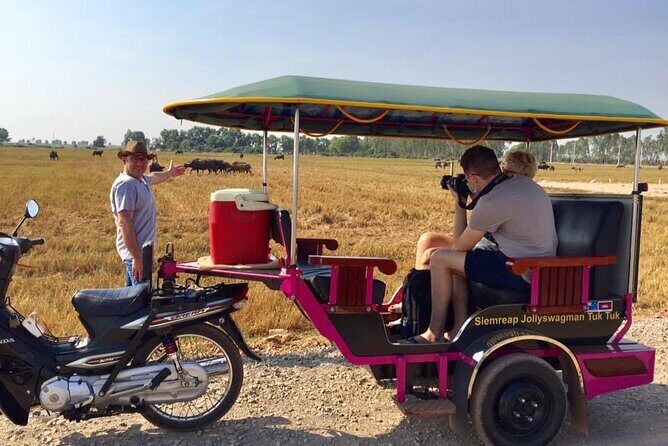
Three days, one Khmer obsession. This private circuit lets you hit major Angkor and beyond without wrestling mass crowds, with an air-conditioned driver and a professional English-speaking guide. I like the private setup because you can move at a calmer pace and pause when the light is right. I also like the fully customizable feel, so your guide can shape the flow around your group. One drawback to plan for: the Angkor entrance pass and meals are not included, so your final budget will be higher than the tour price alone.
Expect full days running roughly 8:00am to 5:00pm, plus temple time that adds up fast in the heat. In the past, guides like Mr. Veasna (with drivers such as Mr. Sophan, Vandy, or Vutha) have been praised for on-time pickup and practical, family-friendly pacing. Just remember the dress code is real—cover shoulders and knees—and some temple rules are strict.
In This Review
- Key things to clock before you go
- Private Khmer Empire days: what you really gain
- Angkor pass and the one big cost to budget
- Day 1 inside Angkor Thom, then Banteay Srei and Banteay Samre
- Day 1 watch-outs
- Day 2: Angkor Wat, Ta Prohm, and the Roluos-era capital sites
- Day 2 watch-outs
- Day 3: Koh Ker’s remote capital and Beng Mealea’s jungle maze
- Day 3 watch-outs
- Timing, heat, and a photo strategy that won’t tire you out
- Dress code and temple rules that can stop you at the door
- Value check: what you’re paying for beyond the temple list
- Who this Khmer Empire tour is best for
- Should you book this 3-day Khmer Empire circuit?
- FAQ
- Is the Angkor Archaeological Site entrance pass included?
- How long is the tour each day?
- Are meals included in the price?
- What’s included in the tour price?
- Do I need to follow a dress code?
- Is this tour private or shared?
- Do you pick up from my hotel in Siem Reap?
- Are mobile tickets used?
- What if weather is bad?
- Is there free cancellation?
Key things to clock before you go
- Private means only your group: you’re not bouncing between other parties, so you can get your bearings faster.
- Angkor pass is separate: your guide handles the route, but you’ll buy the entry pass at the main gate.
- The itinerary mixes icons and detours: Angkor Wat and Ta Prohm sit next to Koh Ker and Beng Mealea for a wider Khmer feel.
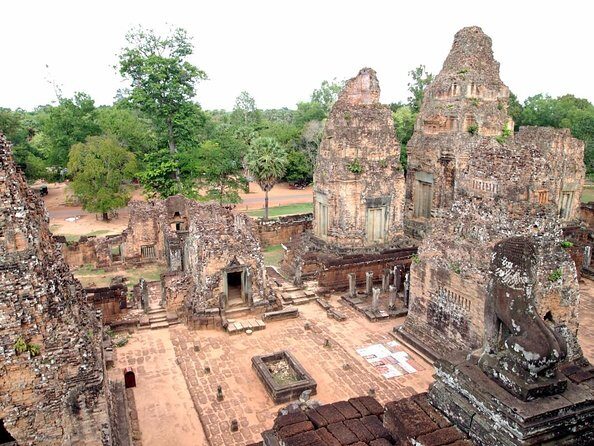
- You’ll likely do one or two sunset moments: Pre Rup is listed as an optional sunset stop.
- Comfort perks are included: cool water and cool wet towels help when the day runs long.
- Electronics need protection: natural elements can damage devices, so wrap your gear.
Private Khmer Empire days: what you really gain
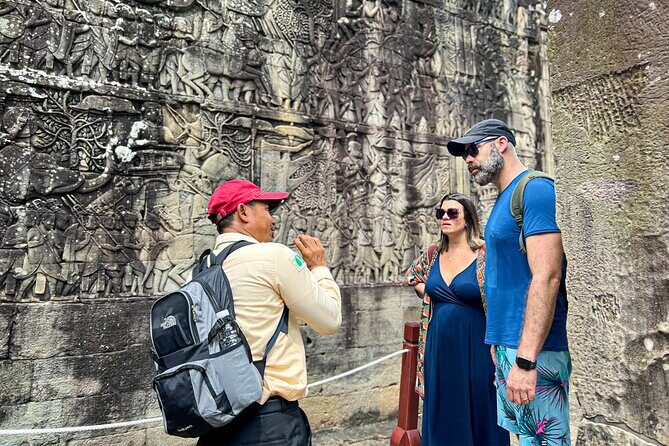
What makes this tour worth your attention isn’t just the temple list. It’s the way you get there: a dedicated English-speaking guide plus a driver, working full private for your group. That matters in Siem Reap because the popular sights can turn into photo line marathons. Here, you spend less time waiting and more time actually looking.
I also like that the tour is described as fully customization. That doesn’t mean chaos—it means your guide can adjust the order, timing, and photo stops to fit your energy level. In practice, that’s the difference between seeing temples and feeling like you understand them.
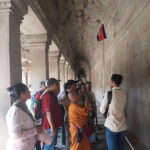
From the experiences shared by past clients, the service focus lands on the fundamentals: on-time pickup, smooth logistics, and guides who explain what you’re seeing in plain language. Names that show up repeatedly include Mr. Veasna as the standout guide, with drivers such as Mr. Sophan, Vandy, and Vutha praised for getting people where they need to be without drama.
You can also read our reviews of more historical tours in Siem Reap
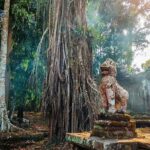
Angkor pass and the one big cost to budget
The tour price is $250.50 per person, but the Angkor Archaeological Site entrance pass is not included. That’s the main “gotcha” for first-timers, because the pass is required to enter the temple zone sights.
Here’s what you need to know:
- You buy the pass at the main gate.
- The pass gives access to sights in and around Angkor.
- Fees are charged in US dollars.
- The pass should be visible at all times.
- Children under 12 are free of charge.
This means your true trip cost is the tour price plus your pass (for the number of days you choose) plus meals. If you want value, plan the pass early and don’t wait until the last minute at the gate.
Day 1 inside Angkor Thom, then Banteay Srei and Banteay Samre
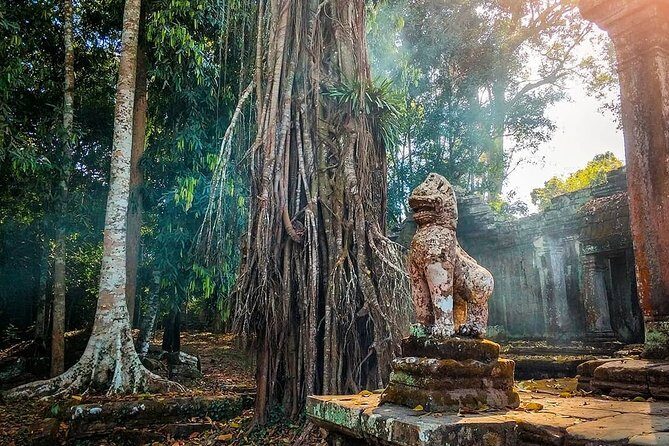
Day 1 is built around Angkor Thom’s core monuments, then adds two quieter, carving-forward temples that people often miss when they only chase the headline names.
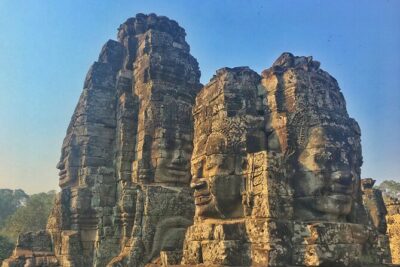
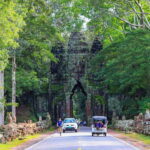
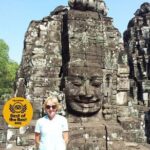
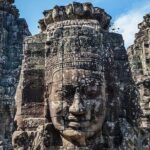
Bayon (Angkor Thom) starts the day with the famous stone faces. This is where Khmer art becomes instantly recognizable—tower after tower filled with carved expressions. The time here is about an hour, which is enough to walk key sections without feeling rushed.
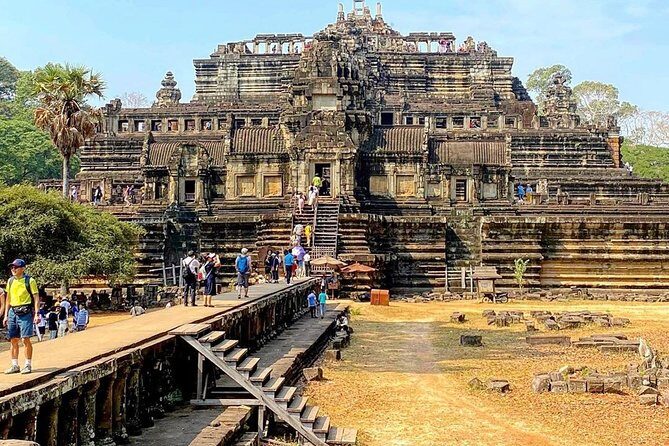
Next comes Baphuon, a three-tier temple mountain built as a state temple dedicated to Shiva. Even if you don’t catch every religious reference, the architecture gives you a strong sense of how these cities were designed—almost like a visual statement in stone.
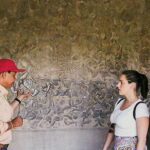
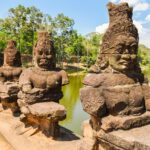
Then you’ll move to Terrace of the Elephants: a long terrace wall with carved elephants and garudas, stretching across the heart of Angkor Thom. It’s a great “slow down and look” stop. The carvings reward close attention, and the scale makes your photos feel more like documents than snapshots.
After that, Terrace of the Leper King brings you into deeply carved storytelling walls—nagas, demons, and myth figures—named for the figure positioned above. It’s dramatic, but the best part is how it helps you read the site as a narrative, not just a pile of ruins.
From there you head to Preah Palilay, set in a shaded forest setting, where the carvings lean Buddhist. This is a nice shift in mood after the bigger, busier stone surfaces.
After lunch on your own (lunch is excluded from the tour price), Day 1 finishes with Banteay Srei and Banteay Samre:
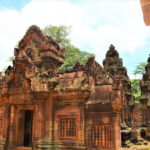
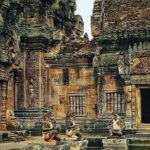
- Banteay Srei (often called the citadel of women) is famous for delicate carvings and a refined feel.
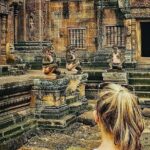
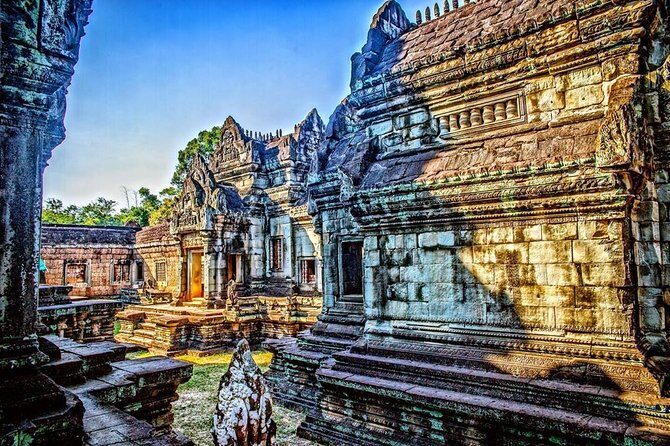
- Banteay Samre has an Angkor Wat-style look and sits flatter and broader, giving you a different perspective on Khmer design.
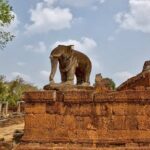
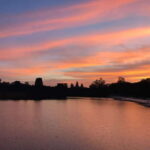
Pre Rup is listed as an optional sunset add-on. If the sky cooperates, the upper levels and the false doors are a strong reason to stay later.
Day 1 watch-outs
The biggest practical issue isn’t the walking—it’s the pace. You’ll be outside for long stretches, and some temple zones have strict dress rules. Bring light clothes that cover shoulders and fall below the knees, and you’ll avoid the awkward moment where an entrance officer says no.
Day 2: Angkor Wat, Ta Prohm, and the Roluos-era capital sites
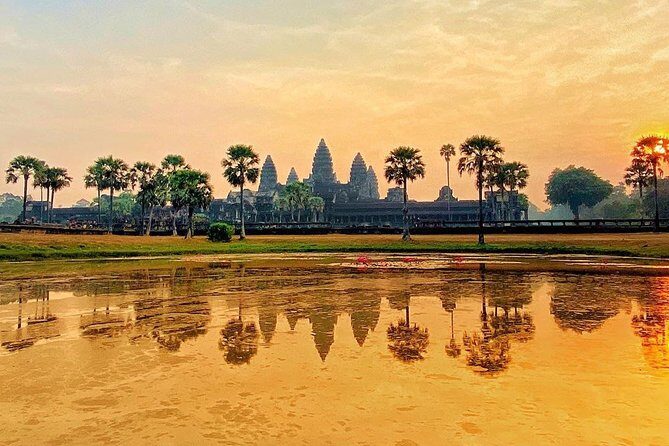
Day 2 focuses on the biggest headliners plus a couple of classic “less crowded but meaningful” stops that help you understand how Khmer power spread across time.
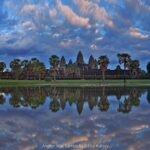
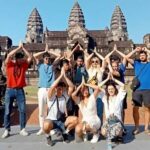
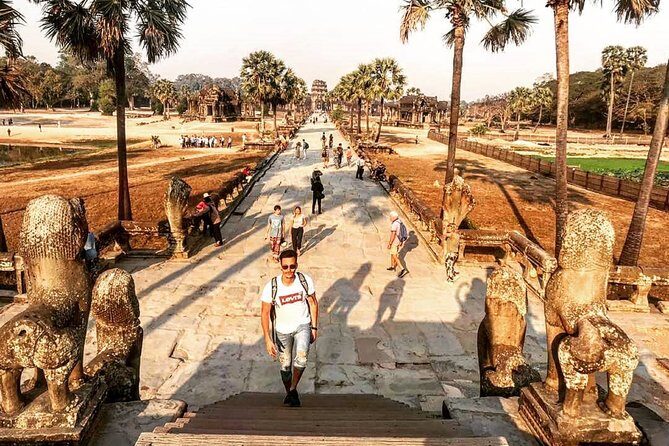
First up is Angkor Wat, with about two hours allotted. It’s the kind of place where even if you’ve seen photos, the real surprise is how cleanly the site’s geometry guides you. You get enough time to read details instead of just snapping from the doorway.
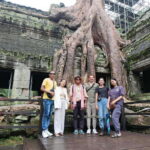
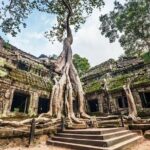
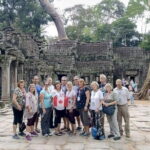
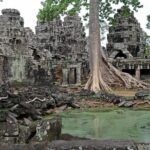
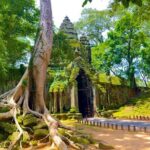
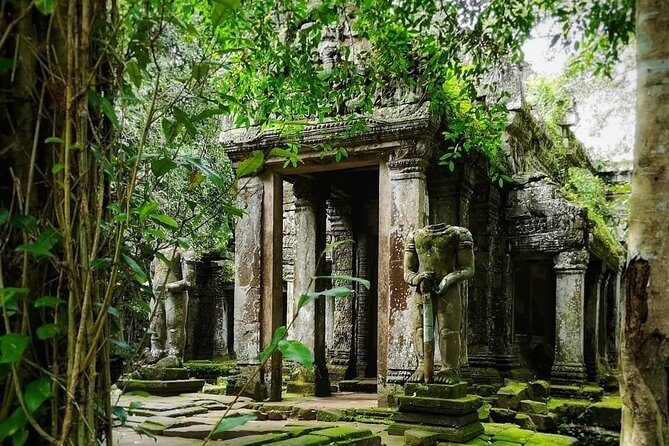
Then comes Ta Prohm, the famous tree-in-temple location. The itinerary gives about an hour and a half here. This is where people want photos, and you should too—but don’t only chase the classic frame. The way the roots and stone interact makes it feel less like a museum and more like a living landscape.
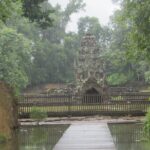
A stop at Ta Nei follows, described as a jungle temple with classic Jayavarman VII artistry. You’ll also have a chance to spot apsara and lintel carvings, depending on what’s visible on the day.
After lunch on your own, Day 2 shifts into the Roluos area:
- Bakong is the most impressive member of the Roluos Group and sits at the center of the first Angkorian capital.
- Lolei is an island-temple in a now-dry baray area.
- Preah Ko (Sacred Bull) is one of the first major temples of the empire at Hariharalaya.
Then you end with Psar Chaa (Old Market) for around two hours. This is a helpful finish if you want to buy small items, compare prices, or just understand what you’re returning home with. It’s also a good break after long temple walking.
You can also read our reviews of more tours and experiences in Siem Reap
Day 2 watch-outs
Angkor Wat and Ta Prohm can tempt you to over-plan your photos. My practical advice: pick a few must-shots early, then let your guide point out carvings and structural details you might miss. That’s where the “what am I looking at?” understanding really kicks in.
Day 3: Koh Ker’s remote capital and Beng Mealea’s jungle maze
Day 3 pushes farther out, which is exactly what makes it feel like more than just repeat days inside the main Angkor zone.
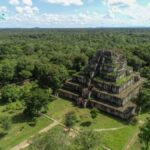
You start with Koh Ker, around 113 km from Siem Reap. It’s described as a period of internal strife where Koh Ker became the temporary capital under King Jayavarman IV. This context matters because Koh Ker feels different from the main Angkor circuit. It’s less about the biggest crowds and more about the sense of a kingdom in motion.
The itinerary gives about two hours. That’s a good amount of time to see the main temple areas without turning it into a sprint.
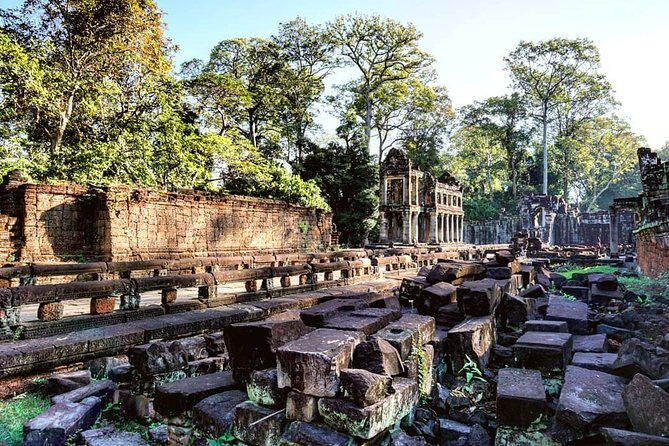
In the afternoon you go to Beng Mealea, about 60 km from Siem Reap. It’s a Hindu temple that sits in a jungle setting, with the temple covered by vegetation across roughly a one-square-kilometer area. The key feel here is that it’s not cleaned up to be “easy.” It’s more raw, more tangled, and more atmospheric—especially if you like wandering and finding your own angles.
Pre Rup is again listed as an optional sunset stop. If you’re making one “stay late” choice, this is the one to consider, because Pre Rup is also flagged earlier as architecturally and artistically superior, with false doors and countryside views.
Day 3 watch-outs
Longer-distance temple days mean more time in the car. If your group includes kids or older travelers, you’ll want a relaxed mindset and a willingness to accept fewer stops with more meaningful moments—this itinerary fits that style.
Timing, heat, and a photo strategy that won’t tire you out
Every day runs roughly 8:00am to 5:00pm, and the stops stack in a way that keeps you moving. That can be great because you see more, but it also means you’ll feel the temperature if you don’t plan.
Good news: the included extras are genuinely useful. You get cool water and a cool wet towel, which is a simple but effective combo for midday comfort.
Also, protect your gear. The experience information specifically warns that natural elements can damage electronic equipment. If you’re bringing a phone or camera, wrap it and keep it sheltered.
My practical approach for photos on multi-temple days:
- Do your “must shots” first when you’re freshest.
- After that, take fewer photos but pay attention to carvings and layouts.
- Ask your guide to point out details, not just the best-looking wall.
If you do that, you leave with images that actually match what you learned that day.
Dress code and temple rules that can stop you at the door
This is one of the most important sections for planning, because the tour includes temples and palaces with strict dress expectations.
The dress code is simple:
- Wear light clothes that cover shoulders and knees.
It also notes that some sites—such as Baphuon—have strict rules. You may be refused entry if you wear shirts with obscene or disrespectful prints, or if you wear brightly colored clothing. That’s the kind of rule that can turn an otherwise smooth day into a waiting game.
If you’re traveling with kids, plan for their clothing too. It’s easy to think they can “just follow along,” but if they’re not covered properly, the whole family gets stuck at the same decision point.
Value check: what you’re paying for beyond the temple list
At $250.50 per person, this tour isn’t positioned as the cheapest way to see Angkor. It is priced like a private, guided service that tries to remove friction.
What you get for the base price:
- A full day professional English-speaking guide
- Air-conditioned transportation with a professional driver
- All applicable taxes and service charges
- Cool water and cool wet towel
- A private operation with only your group
- Mobile ticket
- Pickup offered (with return transfers for guests staying in and inside Siem Reap)
- Group discounts
What costs extra:
- The Angkor entrance pass
- Meals (including lunch, since lunch is excluded)
- Personal expenses like drinks and shopping
So the value comes from time saved and effort reduced. With a knowledgeable guide—people have singled out Mr. Veasna for being both accommodating and helpful for mixed-age groups—you’re not just following a map. You’re getting context, and that makes the temples stick in your head.
If you’re the type who wants to wander on your own, you could do this cheaper. But if you want a planned circuit with reliable pickup, AC comfort, and explanations, this is a fair price.
Who this Khmer Empire tour is best for
This is a strong match for:
- Couples who want private pacing and less crowd stress
- Families with a range of ages, since guides have handled groups that include children and adults together
- First-timers who want the top sites and also want Koh Ker and Beng Mealea for a broader story
- Photo-focused travelers who want better timing and guidance on where to stand
It might be less ideal if:
- You hate long days outdoors and prefer short half-day outings
- Your budget can’t stretch for both the Angkor pass and meals
- You want fully unguided freedom. This is private and customizable, but it’s still guided structure.
Should you book this 3-day Khmer Empire circuit?
If you want the big-name temples and you want to go beyond them, this itinerary shape is smart. You get Angkor Wat and Ta Prohm on Day 2, the Angkor Thom storytelling on Day 1, then the road-out experience of Koh Ker and Beng Mealea on Day 3. That mix keeps the trip from feeling repetitive.
Book it if you value:
- Private guide attention and calm logistics
- A structured plan that still allows customization
- Comfortable transport and practical included extras
Don’t book it if:
- You don’t want to manage the Angkor pass or budget for meals
- You’re not prepared for strict dress rules
In short: if you’re aiming for a well-run, history-connected Khmer Empire experience without the chaos, this 3-day private tour is a solid bet.
FAQ
Is the Angkor Archaeological Site entrance pass included?
No. The entrance pass is not included. You purchase the pass at the main gate, in US dollars, and it should be visible at all times.
How long is the tour each day?
Each day runs approximately from 8:00am to 5:00pm, with multiple temple stops scheduled during that window.
Are meals included in the price?
Meals are not included. Lunch is excluded and you pay on your own.
What’s included in the tour price?
You get a full day tour with a professional English-speaking guide, transportation by air-conditioned vehicle, applicable taxes and service charges, and cool water plus a cool wet towel.
Do I need to follow a dress code?
Yes. You should wear light clothes that cover shoulders and knees. Some temples have strict dress requirements.
Is this tour private or shared?
It’s fully private. Only your group participates.
Do you pick up from my hotel in Siem Reap?
Pickup is offered. Return transfers are inclusive only for customers staying in and inside Siem Reap.
Are mobile tickets used?
Yes, the tour includes a mobile ticket.
What if weather is bad?
The experience requires good weather. If it’s canceled due to poor weather, you’ll be offered a different date or a full refund.
Is there free cancellation?
Yes. You can cancel up to 24 hours in advance for a full refund. Cancellation with less than 24 hours before the start time isn’t refunded, based on local time.