REVIEW · SIEM REAP
Siem Reap: Banteay Srei and Grand Circuit Heritage Tour
Book on GetYourGuide →Operated by Journey Cambodia · Bookable on GetYourGuide
Your best day in Angkor might be the quieter one. This Banteay Srei and Grand Circuit Heritage Tour skips the biggest crowds and focuses on temples with standout craftsmanship, calmer vibes, and plenty of time to look closely. Two things I really like are the small-group feel (so your guide can answer your questions) and the way the route builds toward sunset at Pre Rup. One drawback to plan for: entrance fees aren’t included, and your long day is hot, dusty, and very walk-focused.
What makes this day work is the pacing and the contrast between sites. You start with Pre Rup (a Hindu temple mountain with major brick-and-laterite character), then hit Banteay Srei for its famed sandstone carvings, and later you switch gears to the atmospheric mix of water, roots, and crumbling stone at Neak Pean and Preah Khan.
In This Review
- Key points to know before you go
- The Grand Circuit feel: why this route beats a temple marathon
- Pre Rup first thing: the temple mountain that sets the tone
- Banteay Srei: why this smaller temple draws the biggest attention
- Neak Pean and Jayatataka Baray: water symbolism with an easy-to-miss vibe
- Preah Khan: ruined, restored, and full of tree-root energy
- Lunch and the heat-management strategy that makes the day survivable
- How the sunset at Pre Rup changes your whole day
- Price and logistics: paying $18 smartly, then budgeting the pass
- Who this tour fits best (and who should skip it)
- What to bring and wear (so you don’t think about it all day)
- Should you book the Banteay Srei and Grand Circuit Heritage Tour?
- FAQ
- How long is the Siem Reap Banteay Srei and Grand Circuit Heritage Tour?
- Which temples do you visit on this day tour?
- Is hotel pickup and drop-off included?
- What’s included in the tour price?
- What entrance fees should I expect to pay?
- Are there any clothing rules?
- Is the tour suitable for kids or wheelchair users?
Key points to know before you go
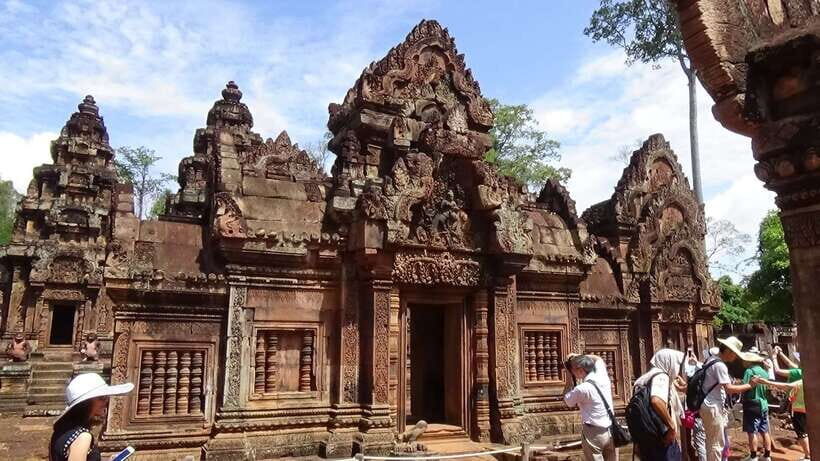
- Banteay Srei’s sandstone carvings are the headliner, and they’re unusually detailed for a smaller temple.
- Pre Rup at sunset is timed into the day so you can end with broad sky views instead of rushing out early.
- Small-group attention means more guidance on what you’re looking at (and where to stand for photos).
- Comfort features matter: air-conditioned van plus bottled water and cool towels during the day.
- Your guide may use visuals (old photos/videos on a tablet are common), which helps make the stories stick.
- Bring sun and bugs control since shorts aren’t allowed and the day is outdoors.
The Grand Circuit feel: why this route beats a temple marathon
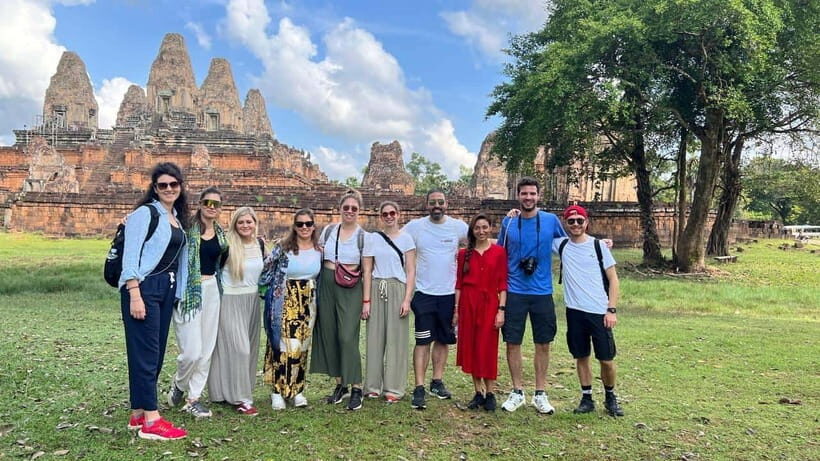
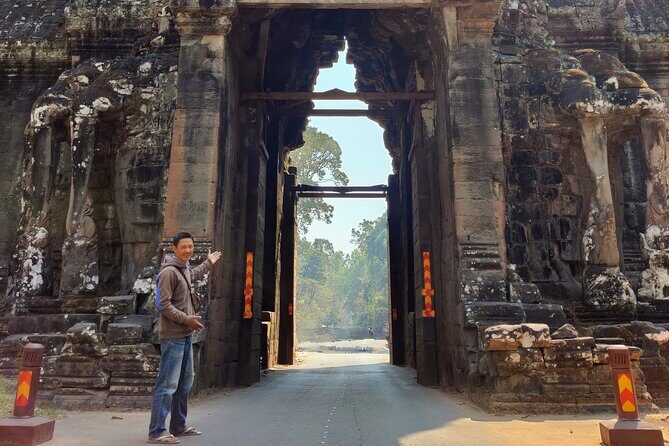
Siem Reap’s Angkor experience can split into two kinds of days: the famous, crowded rush, or the slower, more rewarding circuit day. This tour leans hard into the second option. Instead of only stacking the headline monuments, you get a route that mixes major sites with temples that are less packed and easier to appreciate.
The value isn’t just “cheaper than other tours.” It’s that you’re paying for real interpretation and transport across multiple temple zones. With hotel pickup and drop-off, plus a comfortable air-conditioned vehicle, you’re not wasting your limited vacation hours figuring out roads or timing.
You also get a helpful rhythm: you’re out early, you’re moving between sites with short drives, and you’re not stuck in one place too long. That matters because Angkor temples aren’t just stairs and stones—they’re information heavy. A good day needs time to look, not just time to arrive.
You can also read our reviews of more historical tours in Siem Reap
Pre Rup first thing: the temple mountain that sets the tone
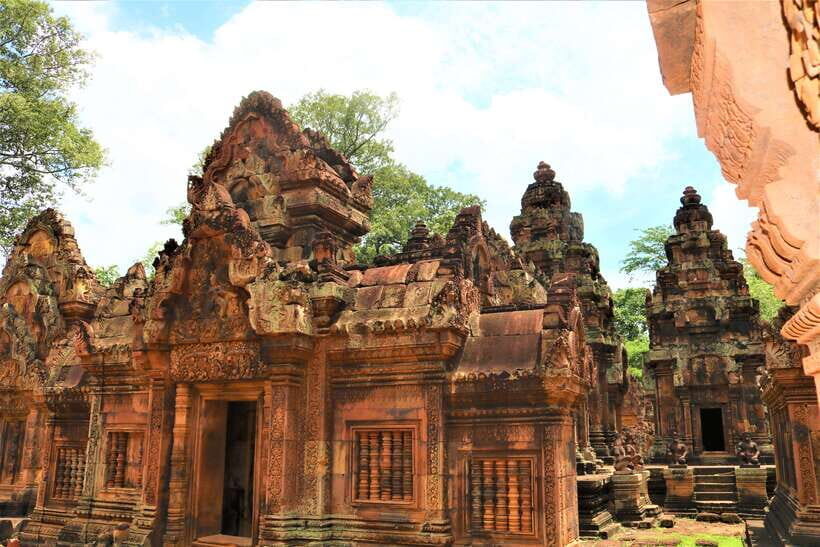
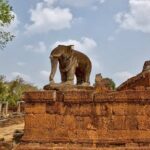
Your day starts around 8:00 am with pickup from your Siem Reap hotel area, then a drive toward Pre Rup. This isn’t just an opening photo stop. You’ll spend about 1.5 hours here by the end of the tour, but the first temple story the day builds from is Pre Rup’s identity: a Hindu temple mountain associated with King Rajendravarman and dedicated in 961 or early 962.
Pre Rup is built with a mix of brick, laterite, and sandstone, which gives it a different texture and color than many temples that feel more “uniform” at a glance. Even before the sunset time slot, the structure helps you start thinking about how Khmer temple design works: layered rises, directional symbolism, and stonework meant to reward slow viewing.
Practical tip: Pre Rup is exposed. If you forget your hat, you’ll pay for it later. Bring what the tour suggests—sunglasses, a sun hat, and insect repellent—and wear outdoor clothing that you’re comfortable in for a long day.
Banteay Srei: why this smaller temple draws the biggest attention
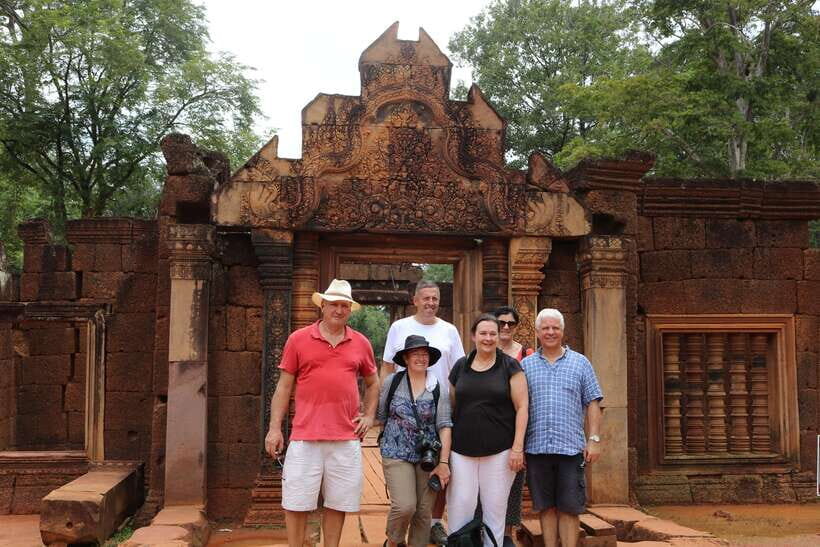
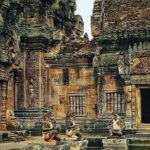
If there’s one stop that most people talk about in a “this is why we came” way, it’s Banteay Srei. This is the smaller sandstone temple on your route, and it’s often considered among Cambodia’s finest for carving quality.
What I like about Banteay Srei as a travel choice is that it doesn’t feel like a consolation prize. It feels focused. The detailed reliefs are crisp enough that, with a good guide and decent light, you can actually start making out the scenes rather than just admiring the general idea of “ornament.”
There’s also a real-world layer to understand: Banteay Srei has been accessible only since the late 1990s, when the Khmer Rouge left the area. That fact changes how you might view the experience. You’re not just seeing old stone—you’re visiting a place that had a long interruption in modern access.
Time-wise, expect about 1 hour on site, including guided walkthrough time and photo opportunities. With that pacing, you can do what’s worth doing: stop walking long enough to notice repeating motifs and the way the reliefs sit on the sandstone surface.
Neak Pean and Jayatataka Baray: water symbolism with an easy-to-miss vibe
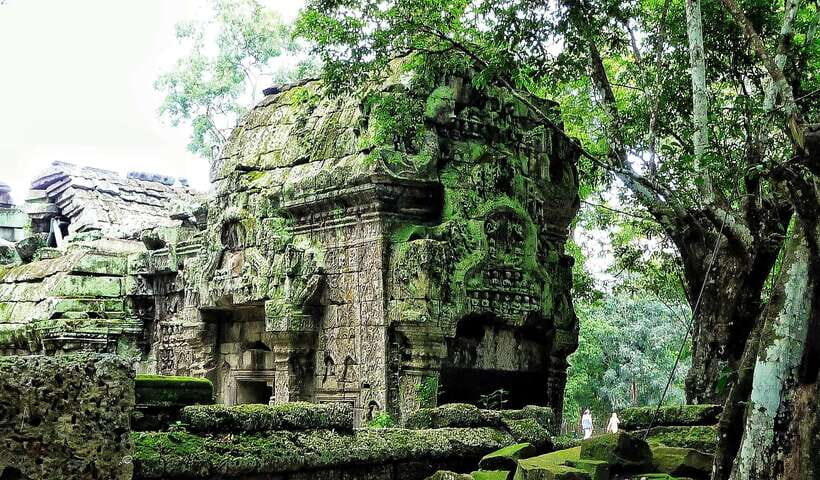
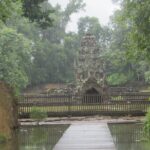
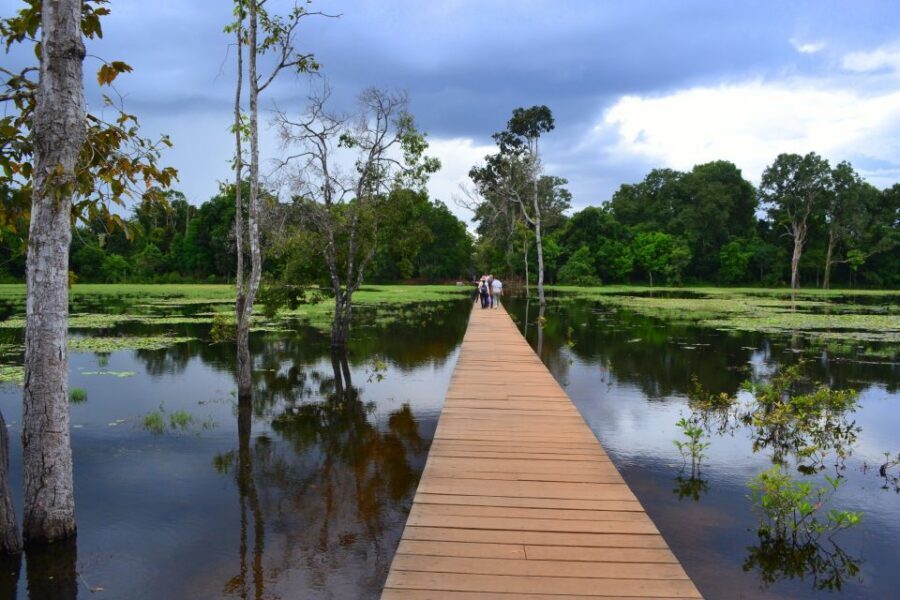
After Banteay Srei, the route turns toward Neak Pean. This stop is built on an artificial island concept, with a Buddhist temple on a circular island in Jayatataka Baray. It’s the kind of site that can feel quiet at first—and then click when you realize what you’re looking at.
Neak Pean is about mood as much as it is about architecture. You’ll get about 1 hour here, with a guided visit plus time to wander and take photos. If you’re the type who likes temple design details, keep an eye out for how the water setting changes the way the temple reads at different angles.
Also, this is where the tour’s “lessons for your eyes” approach helps. When your guide explains the switch from Hindu context at earlier stops to Buddhist context here, it’s easier to see temples as part of a living cultural evolution rather than separate museum pieces.
Preah Khan: ruined, restored, and full of tree-root energy
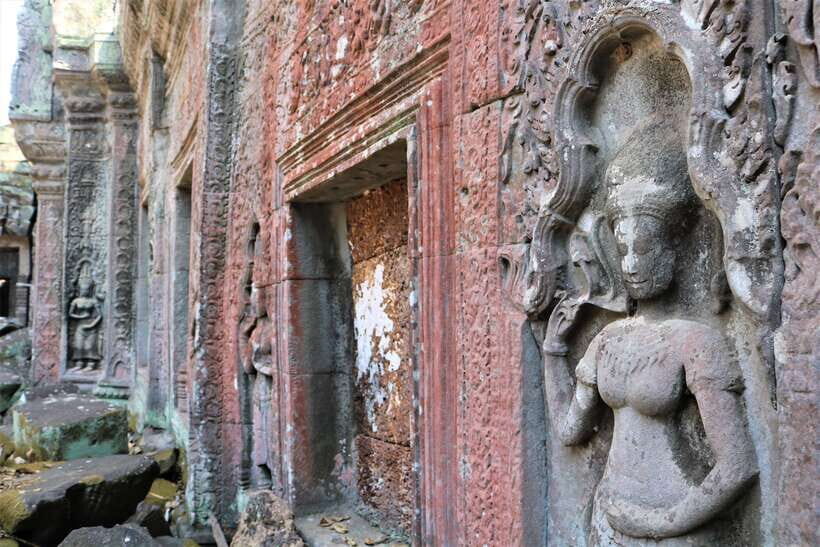
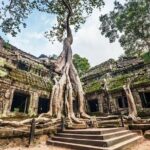
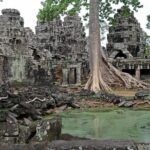
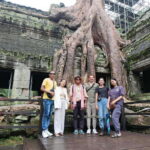
Then comes Preah Khan, and it’s a totally different kind of temple experience. This one is described as a ruined but highly atmospheric mix: tree roots and crumbling stone structures. That atmosphere isn’t just aesthetic. It’s a reminder of time, recovery, and how nature reclaims stone in Cambodia.
Preah Khan was commissioned by Jayavaraman VII, honoring his father—another reason your guide’s explanations can matter here. The site’s story helps you connect the temple’s purpose to why it looks the way it does today.
There’s also a restoration angle worth knowing: World Monument Fund work means you can see places in remarkably good condition. That gives you a helpful contrast in the same site—some areas feel more stabilized, while others show the raw “ruin and roots” character that made Preah Khan famous.
You’ll spend about 1 hour here, plus guided sightseeing and walking. Practical note: bring comfortable shoes. The “walk” time is real, and surfaces can be uneven.
Lunch and the heat-management strategy that makes the day survivable
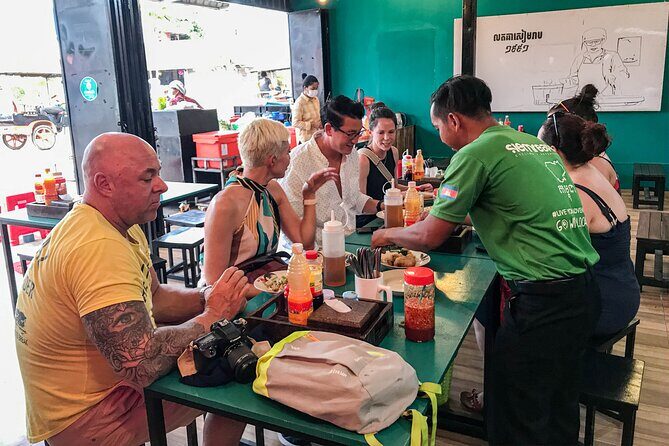
A full 9-hour temple day can either feel smooth or drag. Here, it helps that the tour includes time for a proper break. You’ll stop at a local restaurant for lunch with beer, coffee, and tea options included, plus a full 1 hour there.
This matters for two reasons. First, you’re out in sun and humidity, so the meal is part fuel and part recovery. Second, a midday reset prevents the classic mistake: rushing the afternoon temples because your energy crashed.
One more small but important comfort detail you should expect: the tour includes complimentary bottled water and a cool towel during the day. In practice, that kind of refresh isn’t a gimmick. It can be the difference between “I’m glad I came” and “I need to lie down.”
How the sunset at Pre Rup changes your whole day
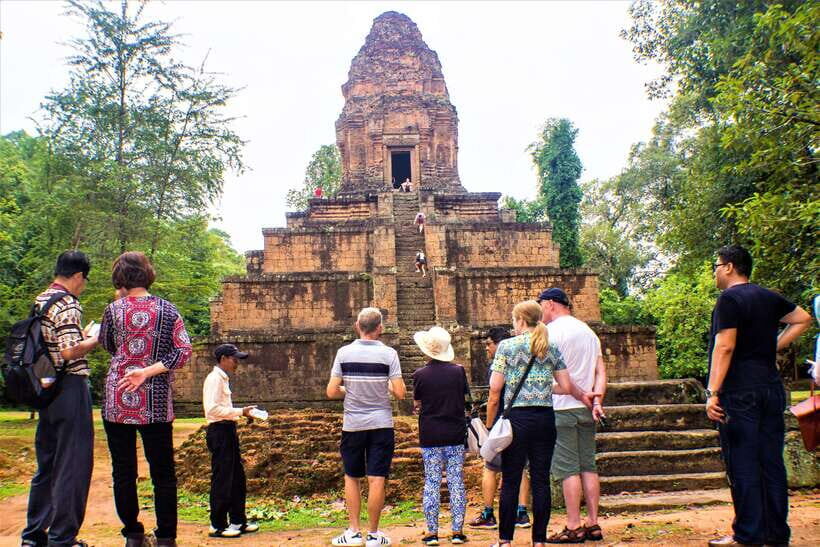
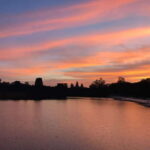
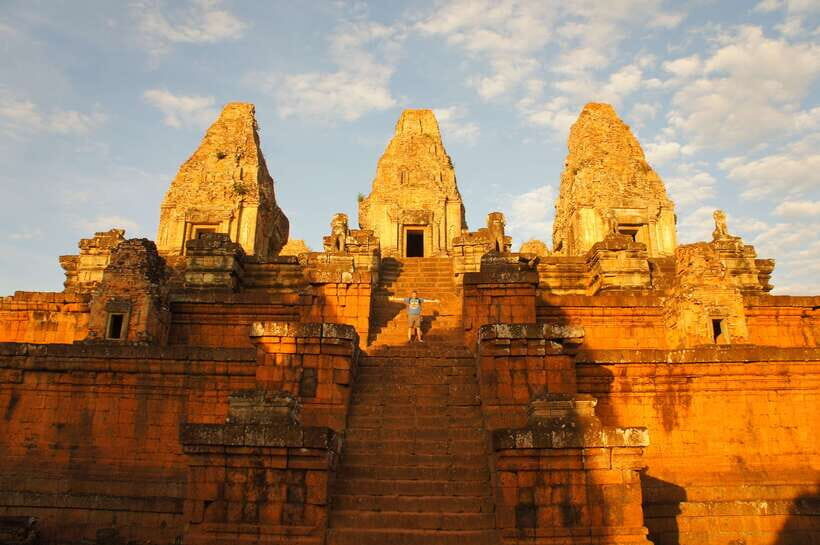
The last temple stop is Pre Rup, timed for sunset. That’s not just a nice extra. It’s a smart way to end because Pre Rup’s open setting gives you those sweeping views when the light shifts.
The tour includes sweeping sunset views from the atmospheric setting here. Even if clouds roll in, the moment still tends to feel special because the day’s earlier temples taught you the “how to look” part, and sunset changes the visual reward.
That said, be realistic: weather can affect the exact timing. In rain-season conditions, the sunset plan might shorten so you don’t lose time to discomfort or delays. If you’re planning photos, you’ll still get chances earlier in the day, but sunset is the payoff stop.
Price and logistics: paying $18 smartly, then budgeting the pass
Let’s talk value clearly. The tour price is $18 per person, which is genuinely low for a full-day, guided, air-conditioned temple circuit. The catch is temple access.
Temple entrance fees aren’t included. You’ll need to budget about $37 per person for the Angkor Pass/temple access on the day of your activity. So your practical total is closer to $55 per person once the pass is added.
Is it still a good deal? In most cases, yes, because the tour bundles together:
- an English-speaking guide who can explain what you’re seeing,
- an AC van with multiple temple transfers,
- and comfort basics like water and cool towels.
This kind of day is also cheaper than trying to stitch together everything yourself with tuk-tuk/driver time plus guide services plus entrance fees. If you like the idea of learning temple meaning while also keeping your feet on a schedule, this price makes sense.
Logistics detail that helps: pickup time depends on your hotel location, and you’re informed one day before the tour starts. That reduces stress the day of.
Who this tour fits best (and who should skip it)
This tour is ideal for people who want temples for more than one day, but it can also work as a second temple day after you’ve done the big names. If you already visited Angkor Wat and Ta Prohm, this route gives you a different feel—less crowd pressure and more carving/architecture focus.
It’s also a good fit if you enjoy guided storytelling. Several guides on this circuit commonly use visual aids like tablets with photos/videos to help you connect the carvings and temple layout to Cambodian mythology and history. If you like asking questions, this small-group style tends to let you do that without feeling like you’re holding up a line.
Not a fit if:
- you’re traveling with children under 8,
- you use a wheelchair,
- or you want to wear shorts (the tour does not allow them).
What to bring and wear (so you don’t think about it all day)
This is an outdoor temple day. The suggested packing list is simple and it works:
- Sunglasses
- Sun hat
- Insect repellent
- Outdoor clothing
Wear something that keeps you cool but also follows the shorts rule. I’d also add: plan for walking between photo stops and for uneven ground at ancient sites. If your shoes are fine for city sidewalks only, you’ll feel it.
Should you book the Banteay Srei and Grand Circuit Heritage Tour?
Book it if you want better temple quality per hour instead of just stacking the most famous ruins. This tour has a clear “why” built into its order: you get major temple design context early, you hit Banteay Srei for some of the most impressive carving work, and you end with Pre Rup sunset for the big sky payoff.
Skip it if you’re only looking for one ultra-famous temple day and you don’t care about interpretation. Also skip it if you’re not comfortable with a long outdoor schedule and a strict clothing rule (no shorts).
If you’ve got two or more temple days in Siem Reap, this is one of the most logical ways to spend one of them. You’ll come away with a sense that Angkor isn’t just a single monument—it’s a whole system of temple design, belief, and craft, with Banteay Srei as your highlight stop.
FAQ
How long is the Siem Reap Banteay Srei and Grand Circuit Heritage Tour?
The tour duration is 9 hours.
Which temples do you visit on this day tour?
You visit Preah Khan, Neak Pean, Banteay Srei, and Pre Rup (with sunset).
Is hotel pickup and drop-off included?
Yes. Hotel pickup and drop-off are included for hotels in Siem Reap city, and the exact pickup time depends on your hotel location. You’ll be informed one day before the tour.
What’s included in the tour price?
The tour includes an English-speaking guide, air-conditioned transportation, bottled water and cool towels, and the guided sightseeing with the included sunset viewing.
What entrance fees should I expect to pay?
Temple entrance fees are not included, and the Angkor Pass/temple access surcharge is listed as $37 per person payable on the day of your activity.
Are there any clothing rules?
Yes. Shorts are not allowed.
Is the tour suitable for kids or wheelchair users?
It is not suitable for children under 8 years old, and it’s not suitable for wheelchair users.