REVIEW · SIEM REAP
2-Day ‘Angkor & Village’ Tour
Book on Viator →Operated by Asia Voyage Tour · Bookable on Viator
Angkor can feel overwhelming fast. This two-day private tour keeps the order sensible, with an English-speaking guide, door-to-door pickup, and a top-quality air-conditioned vehicle so you’re not baking between temples. I like the smooth logistics and the fact that you get both the big names and some of the more detailed temples without needing to figure everything out alone.
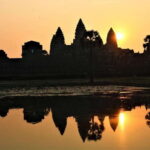
My favorite part is the sunrise revisit to Angkor Wat on Day 2, which gives you a totally different feel than the daytime visit. I also really value the village time at Tonle Sap, including the motorised boat fee and the kind of practical extras that matter on a long day, like bottled water and cold towels.
One drawback to plan for: you’ll climb stairs and walk uneven temple ground. This isn’t the best choice if you have limited mobility or can’t handle a lot of walking, and a reviewer-style warning is real—some parts can be challenging.
In This Review
- Key highlights you’ll feel on the trip
- Door-to-door comfort in an air-conditioned vehicle
- Angkor passes: the one extra cost you can’t skip
- Day 1: Angkor Thom classics and the late-day power moves
- Bayon Temple: faces first, then meaning
- Baphuon: the temple mountain energy
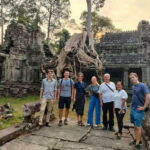
- Ta Prohm: the temple with tree roots
- Terrace of the Elephants: palace boundary theater
- Angkor Wat after lunch: size that still surprises
- Phnom Bakheng: viewpoint time, more effort
- Day 2 sunrise at Angkor Wat plus the “ladies temple” details
- Angkor Wat at sunrise: same place, new brain
- Banteay Srei: the best kind of precision
- Banteay Samre: a calmer companion
- Pre Rup: sunset-ish vibes even without promising sunset
- Kompong Phluk by boat, or the Preah Khan alternative
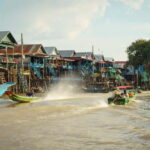
- Kompong Phluk: villages on stilts and fishing rhythms
- Swap option: Preah Khan area instead of the village
- Why the guides like Mr. Choup and Seng matter
- Fitness, heat, and timing: the real-world stuff
- Value check: how $130 adds up (and what to budget too)
- Who this tour suits best
- Should you book this Angkor & Village tour?
- FAQ
- What time does the tour start?
- Is hotel pickup and drop-off included?
- Is the tour private?
- Is an English-speaking guide included?
- Do I need to buy Angkor passes separately?
- Are meals included?
- Is the boat ride fee included for Kompong Phluk?
- Is the vehicle air-conditioned?
- Is this tour suitable for young children?
Key highlights you’ll feel on the trip
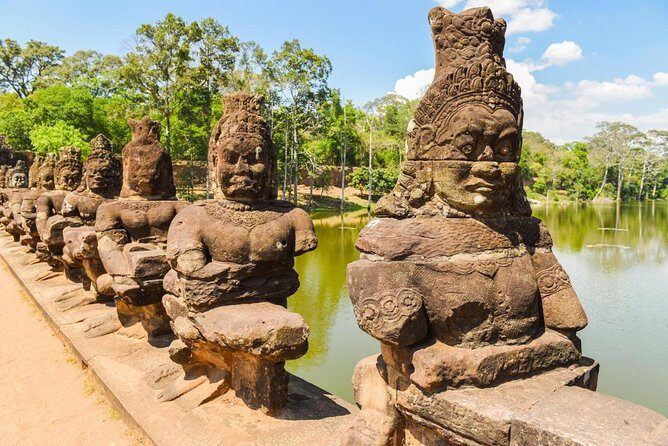
- Air-conditioned door-to-door transport: You start at 8:30am and get picked up and dropped back at your hotel.
- Sunrise at Angkor Wat: Day 2 brings early timing so you see the temple in a different light.
- A strong mix of temples: Angkor Thom classics plus detailed stops like Banteay Srei.
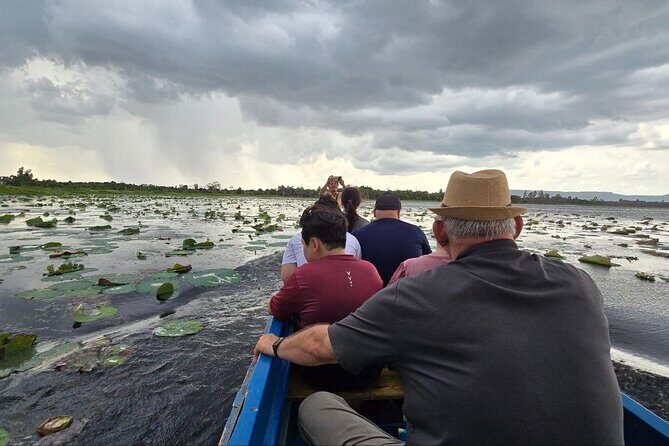
- Kompong Phluk on a boat: Motorised boat time is included, with village life on stilts.
- Guide-led storytelling: English-speaking guidance helps the carvings and layouts click.
- Optional swap if you prefer: You can choose Kompong Phluk or an alternative temple circuit (Preah Khan area).
Door-to-door comfort in an air-conditioned vehicle
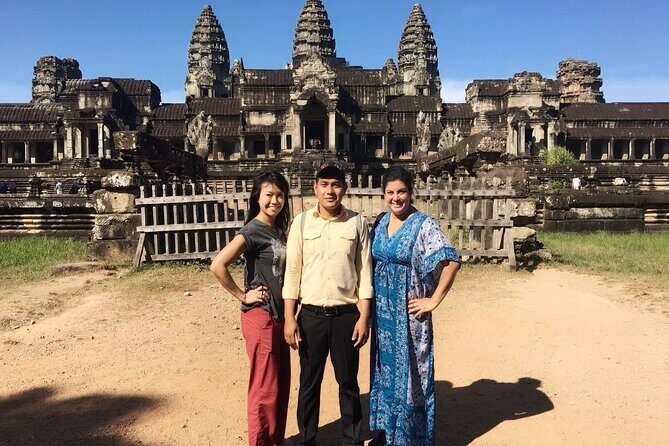
The day starts with a pickup at 8:30am from your hotel, and that matters more than it sounds. Angkor traffic and temple distances can eat time, and this tour is built to keep you moving while still giving you breaks between stops.
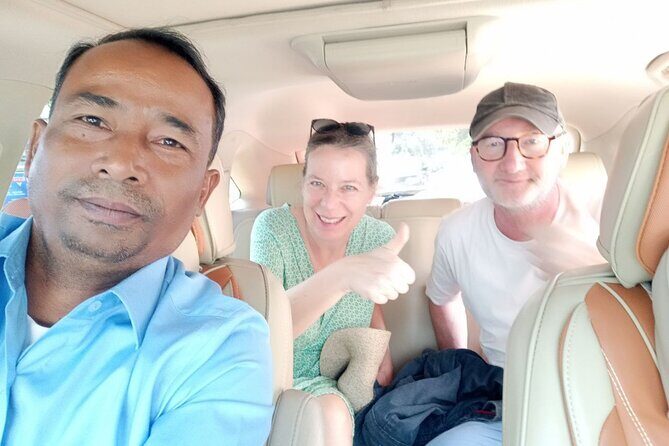
Your transport is a top-quality air-conditioned vehicle for pickup, drop-offs, and day-long touring. Along the way, you get bottled water and cold towels—small things that help when you’re sweating through temple afternoons. It’s also a private setup, meaning it’s only your group, so you’re not trying to keep pace with strangers who have totally different walking speeds.
You can also read our reviews of more tours and experiences in Siem Reap
Angkor passes: the one extra cost you can’t skip
Your tour price covers guiding and touring, but not the temple passes. Plan for Angkor passes at USD 67 per person for 2 days (and you’ll buy them at the Angkor Enterprise ticket office). Even if your tour is tightly timed, you still need to secure the entry system that matches your visit length.
Here’s the practical value: buying passes separately lets you match the exact number of days you need. Still, it also means you should factor in this extra expense early, not at the last minute with tired legs and a tight schedule. If you’re budgeting, treat temple passes as part of the real trip cost.
Also note: the itinerary includes lots of temple stops where admission is listed as not included. In practice, that means you’re relying on the pass for all those entry points.
Day 1: Angkor Thom classics and the late-day power moves
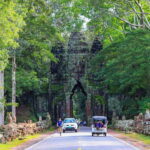
Day 1 is where the big “Angkor greatest hits” start to stack up, beginning at Angkor Archaeological Park where you handle your pass. From there, you move into Angkor Thom, the walled core where the layout feels like a maze that somehow makes sense once you’re guided through it.
Bayon Temple: faces first, then meaning
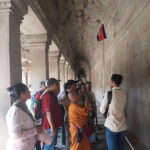
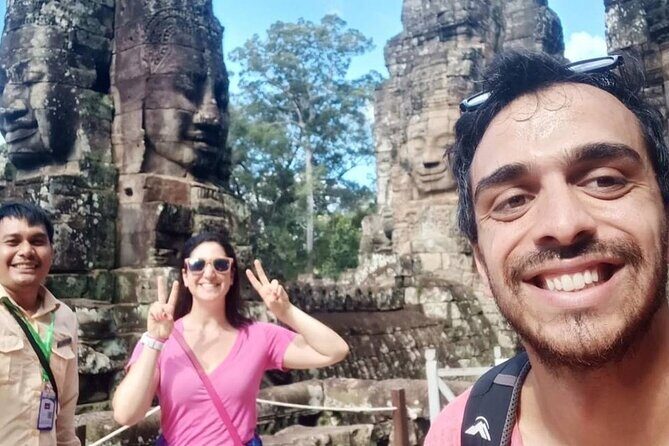
Bayon Temple is the emotional center of Angkor Thom for many people—especially because it’s so visually distinct. It’s a richly decorated Khmer temple tied to the state temple of King Jayavarman VII. Expect a lot of looking up, because the famous faces and carved details are what make Bayon feel like more than just stone.
A practical tip: give your guide room to explain what you’re seeing before you chase every photo angle. When the carvings and purpose click, you end up enjoying the temple longer instead of just rushing through it.
Baphuon: the temple mountain energy
Baphuon sits in Angkor Thom, northwest of Bayon. It’s a three-tiered temple mountain built in the mid-11th century, associated with Udayadityavarman and dedicated to Shiva. This stop tends to feel more “structure-focused” than Bayon, so it’s a good contrast if you like both storytelling and architecture.
Ta Prohm: the temple with tree roots
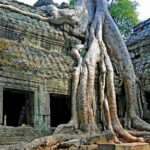
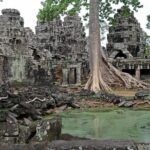
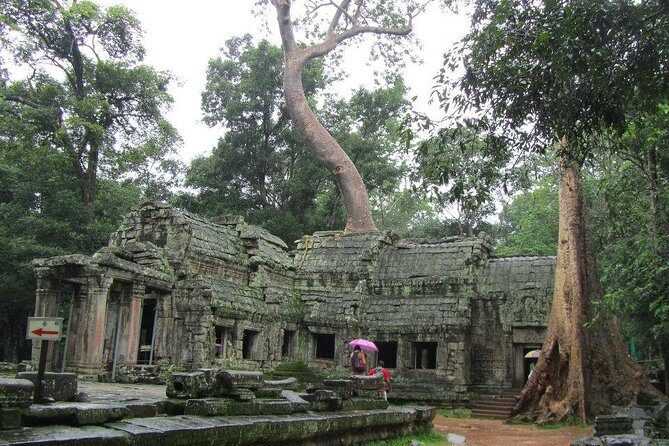
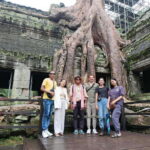
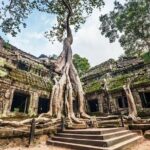
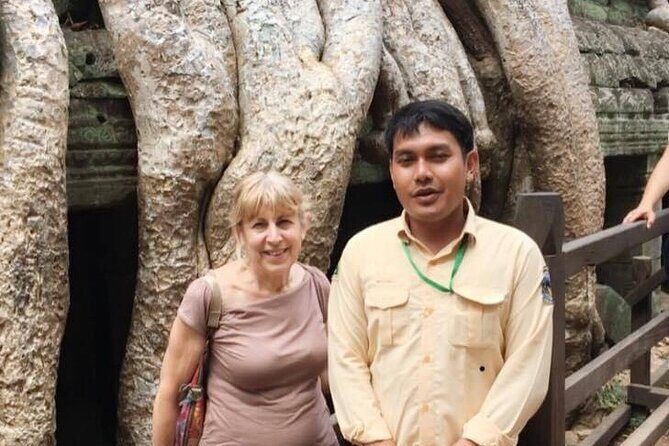
Ta Prohm is one of those places where the visuals have become famous for a reason. It’s built in the Bayon style (late 12th to early 13th centuries) and is called Rajavihara originally. The big draw here is watching how nature and stone share space—so yes, plan time to slow down.
Terrace of the Elephants: palace boundary theater
The Terrace of the Elephants and the related Royal Terraces form the boundary of the Royal Palace grounds, facing the parade areas. It’s not only about seeing carvings; it’s about imagining the daily choreography of power—processions, parades, and ceremonial movement.
This is a shorter stop, about 30 minutes, but it can be a highlight if your guide connects it to how the palace layout worked.
Angkor Wat after lunch: size that still surprises
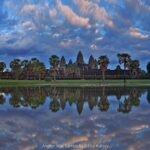
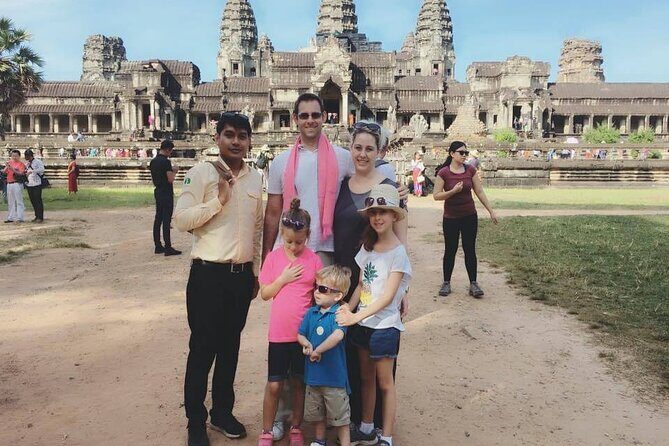
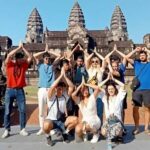
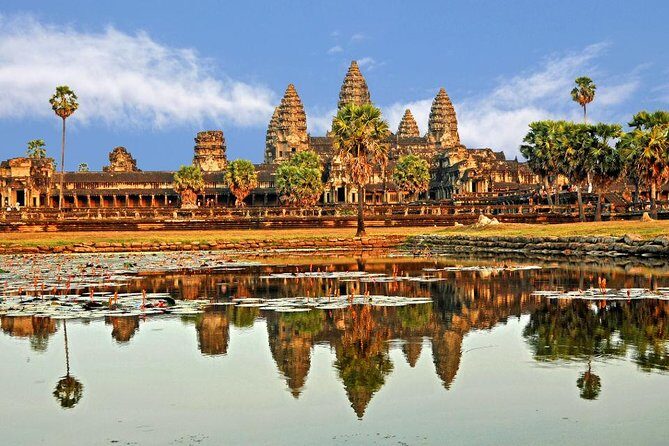
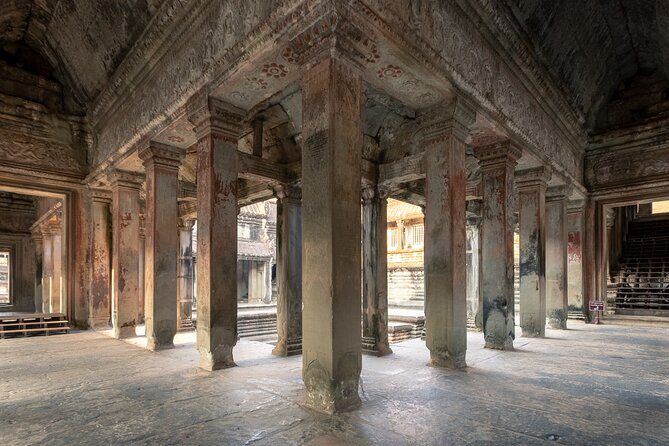
After lunch, you head to Angkor Wat, the main attraction of the day. It’s the largest religious monument in the world on a large site and was originally constructed as a Hindu temple dedicated to Vishnu. Even if you’ve seen pictures, standing in the real space gives you a different sense of scale.
One thing I like about the way this tour places Angkor Wat: you’re not arriving only at sunrise. You see it in a more relaxed daytime rhythm first, then you get the early-morning revisit on Day 2 for a totally different vibe.
Phnom Bakheng: viewpoint time, more effort
The day finishes with Phnom Bakheng, a Hindu and Buddhist temple mountain dedicated to Shiva, built at the end of the 9th century. This is a climb-up style experience because it sits atop a hill, and it’s also one of the places where you feel the physical effort more than the flat, courtyard temples.
If you’re the sort of traveler who likes viewpoints and panoramic temple views, this is a strong end to Day 1. If you’re tired from stair-climbing earlier, you’ll want to pace yourself and let your guide set the tempo.
Day 2 sunrise at Angkor Wat plus the “ladies temple” details
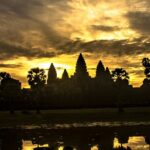
Day 2 starts with revisiting Angkor Wat with the goal of sunrise. You then return to your hotel so breakfast is possible before the rest of the day’s temple circuit. That return-to-hotel reset is underrated. It helps you recharge rather than trying to do sunrise and then keep your eyes focused until night.
Angkor Wat at sunrise: same place, new brain
Seeing Angkor Wat twice is the clever part of this itinerary. First you visit in daylight on Day 1, then again for sunrise when the light changes the mood and shadows. You’re not just collecting temples—you’re collecting different ways of seeing the same masterpiece.
If you’re tired of rushed sightseeing, this structure is a relief. You’re not sprinting through one visit window and hoping for the best.
Banteay Srei: the best kind of precision
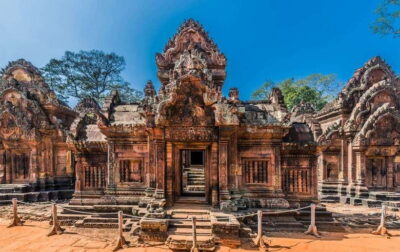
Next comes Banteay Srei, often called the ladies temple. It’s a 10th-century Cambodian temple dedicated to Shiva, with a reputation for delicate, detailed carving. It sits near Phnom Dei hill, about 25 km northeast of the main temple group.
In a two-day plan, Banteay Srei is a smart use of time because the details reward the slower pace you get when you’re not just chasing the most famous silhouettes.
Banteay Samre: a calmer companion
Banteay Samre is located 400 meters east of the East Baray and built in the early 12th century during the reign of Suryavarman II and Yasovarman II. It’s a Hindu temple in the Angkor Wat style. If Day 1 felt like visual overload, this stop can feel like a more measured follow-up.
Pre Rup: sunset-ish vibes even without promising sunset
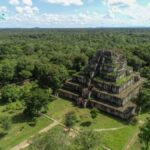
Pre Rup is a Hindu temple mountain dedicated to Khmer king Rajendravarman (built in 961 or early 962). It’s built from brick, laterite, and sandstone, which can make the color and texture feel different from other temple stones.
You’ll spend around an hour here. It’s enough time to appreciate the structure and keep moving without killing your day.
Kompong Phluk by boat, or the Preah Khan alternative
The last major part of Day 2 is the Tonle Sap village experience, and this is where the trip shifts from temples to everyday life.
Kompong Phluk: villages on stilts and fishing rhythms
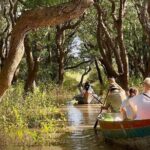
You visit Kompong Phluk, a collection of villages largely built on stilts on the Tonle Sap. The name translates roughly as Harbor of the Tusks. The community depends heavily on fishing, and the wet season (May to October) changes daily life because that’s when fishing is central.
You’ll also have a boat component, and the tour includes the fee for the motorised boat. That’s important because a lot of “village” visits end up overpriced once you add transport separately. Here, the boat cost is part of what you’ve already paid.
Swap option: Preah Khan area instead of the village
If you’d rather trade boat time for more temple time, you can choose an alternative circuit: Preah Khan, Neak Poan, Ta Som, and East Mebon. The tour returns to Siem Reap town about 5:00pm.
This option helps if you don’t want to mix temples with open-water time, or if you’re just more motivated by stone than by stilt-house life. The trade-off is you miss the specific village rhythm that Kompong Phluk offers.
Why the guides like Mr. Choup and Seng matter
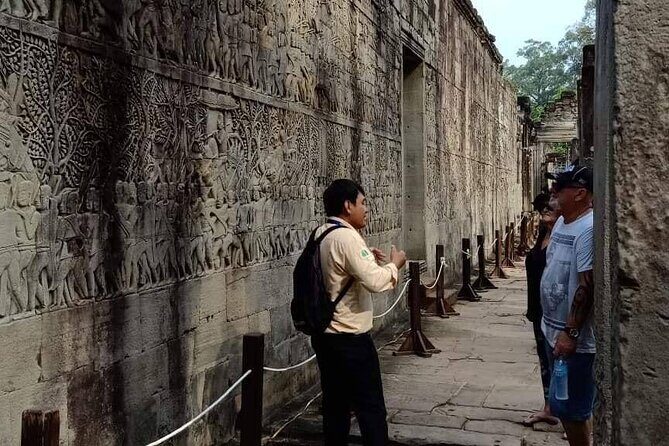
On an Angkor tour, your guide can turn a checklist into something you actually remember. The best part of this experience is that you get an English-speaking guide with enough structure to connect what you see across the two days.
I’ve seen it up close through guide-centered experiences like this: when someone explains the role of Bayon in Jayavarman VII’s capital, or points out why Ta Prohm’s form feels different from other temples, you stop treating carvings like decorations and start treating them like information.
Two names stand out from people who’ve done this style of tour: Mr. Choup and Seng. People praise them for making sure the day feels enjoyable, and that’s exactly what you want. A good guide doesn’t just talk. They help you pace, decide what to prioritize when you’re tired, and keep the route flowing.
My advice: ask your guide what to look for at each stop before you wander on your own. You’ll get better photos, and you’ll feel smarter about what you’re seeing.
Fitness, heat, and timing: the real-world stuff
This tour isn’t built for slow, flat walking. It includes climbing and stair sections at multiple temples, and there’s even a clear note that it’s not suitable for people with less than average fitness or who can’t walk normally.
So I’d plan like this:
- Wear shoes that handle uneven stone and steps.
- Expect you’ll sweat, especially around the midday hours.
- Use the cold towels and water breaks instead of trying to power through everything.
Start time is 8:30am, so you’ll want to be ready early. Day 2 also involves sunrise timing and then a return to your hotel for breakfast, which helps you manage energy rather than pushing from dawn to late night.
Value check: how $130 adds up (and what to budget too)
At USD 130 for the tour itself, what you’re really buying is the package of convenience plus an English guide. Your transport is air-conditioned, pickup and drop-offs happen at your accommodation, and you have built-in extras like bottled water and cold towels.
What you should budget separately:
- Temple passes: USD 67 per person for 2 days (plus the pass rules about buying through the Angkor Enterprise ticket office).
- Meals: not included.
- Soft drinks and alcohol: not included.
Boat time is included in the sense that the motorised boat fee is covered. That can be a real deal-maker for village visits, where the boat ride is often the part you end up paying for anyway.
If you’re traveling as a pair or small group, the “private tour” setup can make this feel more cost-efficient than you’d expect. You’re paying for time saved: no hunting for tickets and guides, no re-routing because you missed the entrance window, no guessing about what order makes sense.
Who this tour suits best
This is a great fit if you:
- Want a structured two-day Angkor plan with an English guide.
- Appreciate comfort between sites (air-conditioned vehicle, cold towels, bottled water).
- Want both temples and a Tonle Sap village visit.
- Like the idea of seeing Angkor Wat at sunrise and again in daytime lighting.
You might want to consider something else if:
- You’re not comfortable with lots of walking and climbing stairs.
- You prefer a totally relaxed pace with fewer stops.
- You’re trying to keep total costs ultra-low, because temple passes and meals add to the final total.
Should you book this Angkor & Village tour?
I’d book this if you want a well-paced route with real guide help and you’re physically ready for stairs and uneven stone. The tour’s strength is the combination: Angkor’s major temples plus the detail-focused Banteay Srei, and then real-life Cambodia at Kompong Phluk by boat.
Before you commit, do two things: confirm you’re okay with the walking/climbing level, and budget for temple passes and meals. If you handle those two pieces, this is one of the smoother ways to experience Angkor in just two days.
FAQ
What time does the tour start?
The start time is 8:30am.
Is hotel pickup and drop-off included?
Yes. Hotel pickups and drop-offs are included, using an air-conditioned vehicle.
Is the tour private?
Yes. It’s a private tour/activity, meaning only your group participates.
Is an English-speaking guide included?
Yes. A professional English-speaking guide is included.
Do I need to buy Angkor passes separately?
Yes. Temple passes are not included. The tour lists USD 67 for a 2-day pass per person, purchased at the Angkor Enterprise ticket office.
Are meals included?
No. Meals are not included (soft drinks and alcohol are also not included).
Is the boat ride fee included for Kompong Phluk?
Yes. The tour includes the fee for the motorised boat.
Is the vehicle air-conditioned?
Yes. The tour uses an air-conditioned vehicle for pickups, drop-offs, and touring.
Is this tour suitable for young children?
It’s not available for children under 3 years old.