REVIEW · SIEM REAP
Angkor Wat Sunrise & Small Circuit Tour
Book on Viator →Operated by Angkor Doors · Bookable on Viator
Sunrise at Angkor Wat has a serious wow factor. This tour strings together a pre-dawn pickup, Angkor Wat at sunrise, and then the classic small circuit temples in one long but satisfying day. I like that it’s built around smart timing (you’re placed early for the light show) and I like the storytelling from an English-speaking guide who helps you connect what you’re seeing to Khmer-era history and modern Siem Reap. One possible drawback: the big entrance cost is not included, so you’ll need to budget for the One Day Angkor Pass on top of the tour price.
The schedule is fast, and it starts early—around 4:30 a.m.—so plan on a long day with some walking and temple stairs. Because you get an A/C vehicle and bottled water included, you’re not doing this in a heat-bake. Just come prepared with the right clothing, since shoulders and knees must be covered to enter the temples.
In This Review
- Key things I’d prioritize on this Angkor Wat sunrise small circuit
- 4:30 a.m. pickup: why the early start is the point
- Angkor Wat sunrise: what you’ll actually experience
- Ta Prohm: Tomb Raider fame, but with real Khmer context
- Banteay Kdei: a quieter stop that gives you perspective
- Ta Keo: short visit, big idea of Khmer temple design
- Angkor Thom: the ancient city finale with multiple named stops
- Transportation and comfort: what’s included (and why it helps)
- Price and value: $59 plus the Angkor Pass reality check
- Clothing, tickets, and small logistics that can make or break your day
- Who this Angkor Wat sunrise small circuit tour fits best
- Should you book it? My take
- FAQ
- What time does the Angkor Wat sunrise tour start?
- Is pickup from my hotel included?
- Is the entrance fee included in the price?
- How much is the Angkor Pass?
- What temples are visited on this tour?
- Is food included?
- What’s included in the tour package?
- What should I wear to enter the temples?
- What is the cancellation policy?
Key things I’d prioritize on this Angkor Wat sunrise small circuit
- Pre-dawn pickup for sunrise positioning: You’re collected before sunrise so you can get to Angkor Wat when it matters most.
- One-day circuit that hits the hits: Ta Prohm, Banteay Kdei, Ta Keo, and Angkor Thom keep your time efficient.
- Private setup with an English-speaking guide: You don’t have to guess your way around; you get context as you go.
- Guide tips for crowd flow and photo spots: Feedback highlights that guides help you find good viewing angles and make picture time easier.
- A/C car and cold water included: The “temples all day” part is easier when you’re not baking on the road.
4:30 a.m. pickup: why the early start is the point
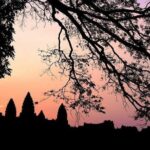
This is not a late-morning temple crawl. You start around 4:30 a.m., picked up before sunrise and transferred directly toward Angkor Wat. That early timing is the whole game: you’re aiming for the moment the sky clears and the towers start to glow, before the site gets packed.
The “small circuit” concept works best when you do the hardest-to-plan item first. Angkor Wat at sunrise can turn into chaos if you arrive late or wander without a plan. With this kind of start, you can spend the morning watching and listening instead of fighting traffic and crowds.
One more practical note: you’ll be up before your hotel breakfast routine. If you’re the type who hates waking up early, this tour still can work—just pack a small breakfast you can eat on the way. The tour doesn’t include food, so don’t count on finding a meal that fits your schedule without planning.
You can also read our reviews of more tours and experiences in Siem Reap
Angkor Wat sunrise: what you’ll actually experience
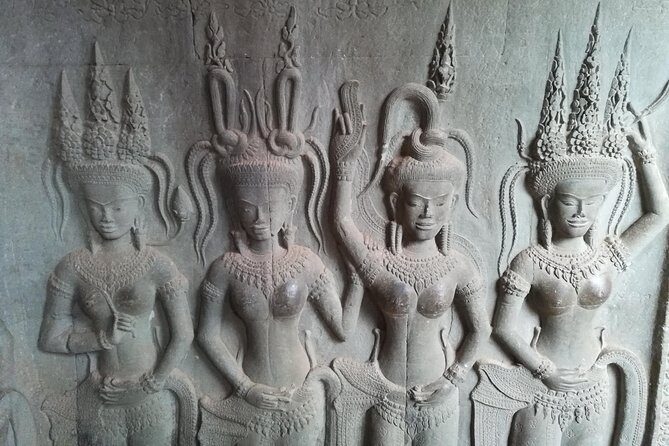
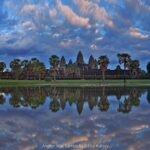
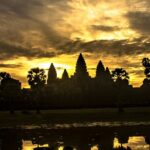
Angkor Wat is UNESCO-listed, and on this tour it’s treated like the main event. After pickup, you head in and take your spot for sunrise over the towers. This part is about timing and atmosphere more than speed. Even if you’ve seen photos, sunrise changes the feel—contrast, shadows, and the way the temple silhouette reads in the early light.
What I like about this setup is that you’re not just dropped off with a map. The guide component matters here. People often miss the “why” of what they’re looking at—how Khmer temple design shapes sightlines and how the site’s layout tells you where to focus your attention as the light shifts.
Also, there’s a real benefit to traveling with your own group rather than getting swallowed by a big herd. This tour is described as private in the sense that only your group participates. Practically, that usually means fewer surprises and easier photo stops when the guide is guiding your movement.
Admission note: the Angkor Wat sunrise visit still needs your One Day Angkor Pass, since entrance fees are not included.
Ta Prohm: Tomb Raider fame, but with real Khmer context
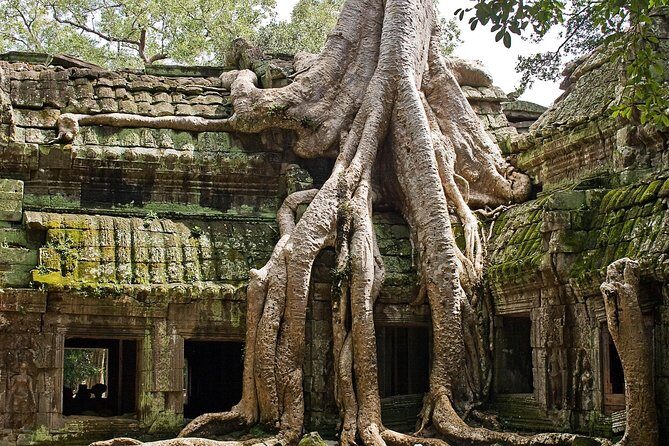
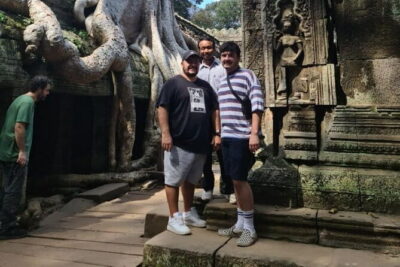
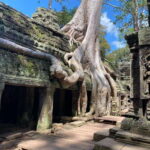
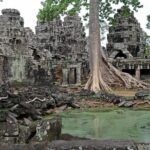
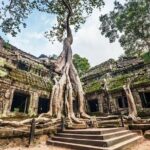
After sunrise, the day keeps moving. Next up is Ta Prohm, the temple famous from Tomb Raider-style visuals—roots, stone, and an almost cinematic feel.
Here’s the smart way to experience Ta Prohm: slow down where the temple’s shapes and distortions become part of the story. The guide’s job is to help you notice more than the obvious “cool ruins” view. You’ll get history and cultural context so it stops being only a movie location and becomes a temple you can read.
Ta Prohm is popular for a reason, which means you’ll be walking in a place where other people also want the same photo angles. A good guide helps here, and feedback for this tour points to guides helping you avoid the busiest bits and recommend where to stand for better shots. That’s not just convenience—it can be the difference between enjoying the temple and getting stuck behind a wall of camera phones.
Entrance fees are again not included, so your pass budget stays central.
Banteay Kdei: a quieter stop that gives you perspective
Then you move to Banteay Kdei. This temple doesn’t get the same pop-culture attention as Ta Prohm, but it’s a strong follow-up because it broadens what you understand about the area.
When your day includes both wildly famous and less-famous temples, you get a better sense of how varied Angkor-era architecture can be. Banteay Kdei helps you notice patterns—styles, stonework, and how space feels inside and around religious structures.
A practical advantage: this stop can feel like a breather in a day that otherwise starts with an early alarm. You still have to walk and pay attention, but the pacing often feels less “everyone rushes to the exact same spot” than at the headline temples.
Again, entrance fees are not included, so this is one more reason to keep that One Day Angkor Pass ready in your plans.
Ta Keo: short visit, big idea of Khmer temple design
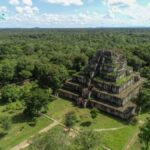
Next is Ta Keo, a Lord Shiva’s temple built in the mid-10th century AD. Your time here is shorter—about 30 minutes—but the point is to hit another distinct piece of the Angkor jigsaw.
Even in a half hour, Ta Keo can work if you go with intention. Look at what dominates the structure, how the temple’s verticality reads in the light, and how the layout helps explain why Khmer temples were designed to guide people upward—spiritually and physically.
This is also one of those stops where a guide’s background helps. If you understand the religious framing (it’s a Shiva temple), you’ll recognize that you’re not just looking at ruins; you’re seeing a place built for worship and symbolism.
Entrance fees still apply via your pass.


Angkor Thom: the ancient city finale with multiple named stops
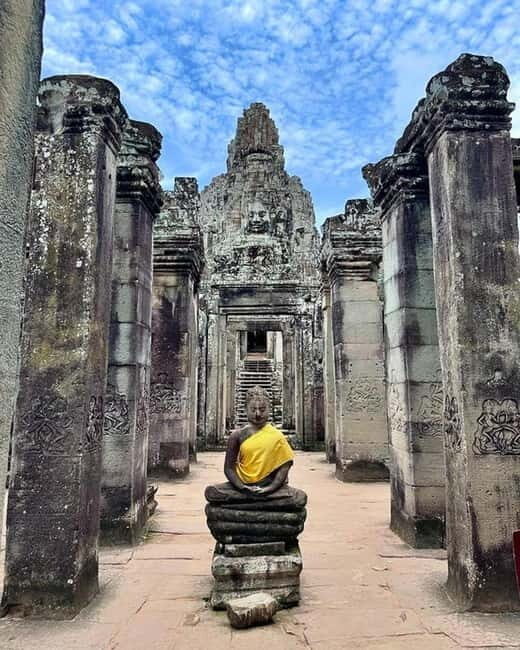
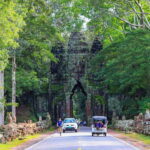
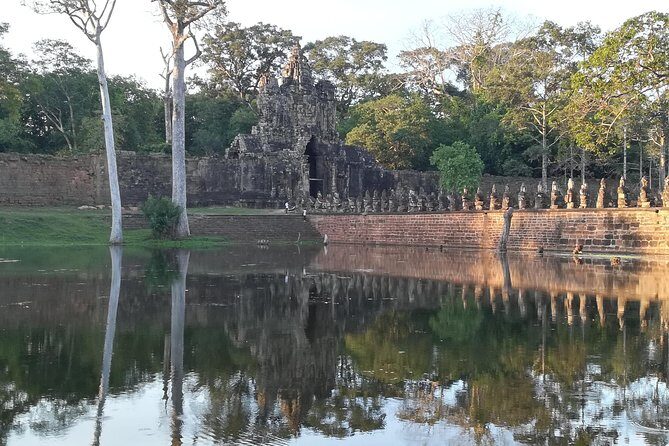
After Ta Keo, you head to Angkor Thom, the ancient city. You enter via Victory Gate, and then the tour includes time for major sights such as Bayon and Baphuon.
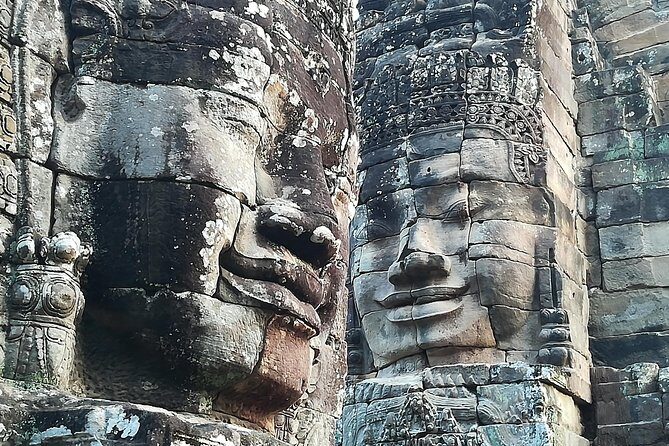
This is where the circuit earns its name. Angkor Thom is a bigger “world” than individual temples. Bayon, with its famous faces, is the centerpiece many people come for. Baphuon adds variety and helps you understand how different areas of the city relate to each other.
There are also optional stops you may include along the way: Spean Thmor, Thommanon, and Chay Say Thevoda. These optional pieces matter because they let the guide adjust based on your group and the day’s flow. If you’re the type who loves variety, those extras can be a nice way to go beyond the most obvious hits.
One practical consideration: this is a lot packed into a single morning-to-afternoon stretch. If you’re sensitive to fatigue, you’ll want to pace your own pace. Use the A/C ride breaks when you get them, drink water, and don’t force every photo. The point of a sunrise plus small circuit day is that the big moments stack—so let yourself enjoy the major temple parts without turning it into an obstacle course.
Transportation and comfort: what’s included (and why it helps)
Included with your tour:
- English-speaking tour guide
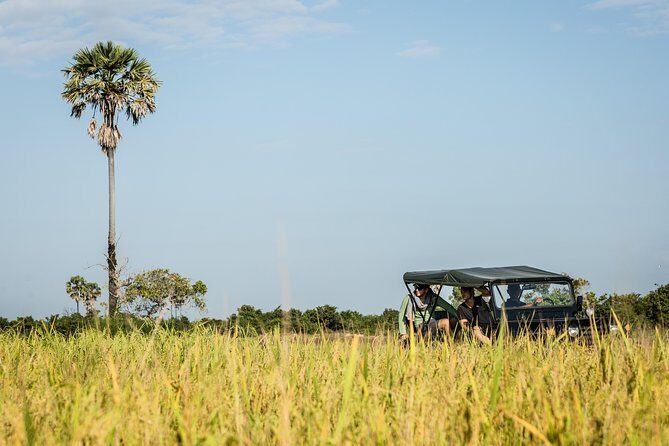
- Transportation in an A/C car or minivan/minibus
- Bottles of cold drinking water
This matters more than it sounds. Angkor is a “heat + time” challenge. Starting before 4:30 a.m., then spending many hours moving between temple zones, means you’re more tired than you expect. Cold water and real air-conditioning on transfers can noticeably improve your day.
Also, this tour is positioned as private for your group. That tends to mean less waiting around and fewer schedule bottlenecks. It’s still a fixed structure, but it’s usually smoother than a shared tour where you’re constantly negotiating for the slowest pace in the group.
Price and value: $59 plus the Angkor Pass reality check
The tour price is $59 per person. The cost includes your guide, transportation, and cold water. That’s a fair baseline for a long day that covers multiple major temples.
The part you can’t ignore is that entrance fees are not included. You need the One Day Angkor Pass priced at $37 per person. So your all-in temple access is roughly $96 before you add personal extras like snacks or souvenirs.
Is it worth it? For most people, yes—because the day includes sunrise at Angkor Wat and multiple other temples, plus guided context and transportation. The biggest reason this feels like good value is the “time saved” factor. You’re not wasting hours figuring out how to structure the day around sunrise, and you’re not relying on guesswork for where to spend your limited hours.
If you’re already confident navigating temples on your own and you don’t care about storytelling, you might choose a cheaper self-guided route. But if you want the day shaped for sunrise and you’d rather spend your attention on what you’re seeing instead of planning, this package makes sense.
Clothing, tickets, and small logistics that can make or break your day
A couple of practical rules are non-negotiable:
- Dress code: you need clothes that cover your shoulders and knees. If you don’t, you won’t be permitted inside temples.
- Entrance ticket: entrance fees require the One Day Angkor Pass.
- Food and drinks: not included, so plan for water (which you do get) and consider a snack for the early hours.
Also, the tour uses a mobile ticket concept, so have your phone ready and charged. Sunrise mornings are exactly when low battery becomes a problem.
Timing matters too. The schedule is long enough that you’ll want to be ready for the rhythm: early wake-up, sunrise focus, then successive temple blocks with transfers in between.
Who this Angkor Wat sunrise small circuit tour fits best
This is a great match if:
- you want one efficient day that hits the core Angkor sights
- you value a guide who explains what you’re seeing (including cultural context)
- you like early starts when there’s a payoff, like sunrise
It might be less ideal if:
- you hate waking up before dawn
- you’re trying to keep costs minimal and don’t want to pay for guided transportation
- you’re not comfortable with temple dress code requirements (shoulders and knees)
Families can work too, since the tour is built around vehicle transfers and guided stops. One note from feedback: accommodation for an infant came up as a positive point, suggesting the team can be flexible with real-life situations.
Should you book it? My take
If your goal is Angkor Wat sunrise plus a strong slice of the small circuit in a single day, I’d book this. The value comes from the structure: early pickup, a sunrise-centered start, and a guided route that covers Ta Prohm, Banteay Kdei, Ta Keo, and Angkor Thom without making you piece the plan together yourself.
Just go in knowing the tradeoffs: it’s early, it’s active, and you’ll pay separately for the One Day Angkor Pass. If those points don’t scare you, this is a smart way to see a lot of Angkor while keeping the experience organized and guided.
FAQ
What time does the Angkor Wat sunrise tour start?
The tour starts at 4:30 a.m. for pickup in Siem Reap, so you’ll be leaving early in the morning.
Is pickup from my hotel included?
Yes. Pickup is offered, and transportation is included as part of the tour.
Is the entrance fee included in the price?
No. The entrance fee is not included. You’ll need the One Day Angkor Pass.
How much is the Angkor Pass?
The One Day Angkor Pass is listed at $37 per person.
What temples are visited on this tour?
You’ll visit Angkor Wat, Ta Prohm, Banteay Kdei, Ta Keo, and Angkor Thom (with named stops like Victory Gate, Bayon, and Baphuon).
Is food included?
No. Foods and drinks are not included, so plan for snacks if you need them, especially because the day begins so early.
What’s included in the tour package?
Included items are an English-speaking tour guide, A/C transportation, and bottled cold drinking water.
What should I wear to enter the temples?
You need clothing that covers shoulders and knees, or you won’t be permitted to go inside the temples.
What is the cancellation policy?
You can cancel for free up to 24 hours in advance for a full refund. Canceling less than 24 hours before the start time is not refunded.