REVIEW · SIEM REAP
Private One Day Tour with Sunrise at Angkor Wat
Book on GetYourGuide →Operated by Private Siem Reap Tour Guide & Transport · Bookable on GetYourGuide
Sunrise in Cambodia feels different. This private one-day plan gets you to Angkor Wat before the crowds, so the first light hits the temple the way it was meant to be seen—slowly, dramatically, and with space to breathe. I like that it’s built around a local rhythm, not a herd mentality: you’re guided through the carvings, then you roll to the big Angkor highlights without big-group noise.
Two things I really like: first, the private guide part. You get an English-speaking licensed guide who can explain what you’re looking at, point out strong photo angles, and even help you get better shots fast (with examples like Phanit, Mr. Tong, and Chansip mentioned in past experiences). Second, the way this day is organized around the must-see moments—South Gate, Bayon’s faces, and Ta Prohm’s roots—so you get depth without getting stuck all day.
One drawback to consider: it’s a long early morning and a lot of walking and stairs. If clouds steal the sun (it can happen), you’ll still see plenty of temples, but the sunrise payoff might be less “wow” and more “let’s make reflections work.”
In This Review
- Key highlights that make this one-day sunrise plan worth it
- The 4:30AM pickup: how to make sunrise feel worth it
- Angkor Wat at first light: galleries, carvings, and a guide who puts it together
- Angkor Thom via the South Gate: Deva and Asura, then Bayon’s face wall
- Baphuon, the causeway, and the Reclining Buddha puzzle (rebuilt in 2011)
- PhimeanAkas viewpoints: steps, shade, and a break from the crowds
- Terrace of the Elephants and Leper King: sculpture with a story you can follow
- Ta Prohm with Tomb Raider energy: Spung roots, moss, and slow photography time
- Private logistics that matter: skipping lines and staying flexible
- What you really pay for: value of $135 for up to 2 people
- What to pack for a temple day starting before sunrise
- Who should book this sunrise tour, and who should skip it
- Should you book this Private One Day Tour with Sunrise at Angkor Wat?
- FAQ
- What time is hotel pickup?
- How long is the tour?
- Is sunrise over Angkor Wat included?
- Are temple tickets included?
- Is lunch included?
- Do you skip the ticket line?
- Is this tour private?
- What language is the guide?
- Is it wheelchair accessible?
- Can I cancel for a full refund?
- Are pets allowed?
Key highlights that make this one-day sunrise plan worth it
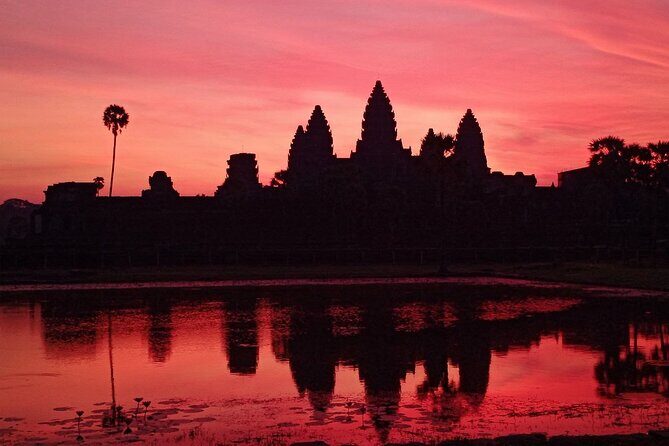
- Early pickup at 4:30AM so you’re in place for the light over Angkor Wat, not arriving after everyone else.
- Skip-the-line via a separate entrance, which means less waiting and more time actually looking.
- Angkor Thom’s 23m-high South Gate with Deva and Asura holding the Naga—big story, clear visual details.
- Bayon’s 216 stone faces paired with your guide’s photo-angle tips so you’re not guessing.
- The Reclining Buddha rebuilt in 2011 after a long war disruption, turning restoration into a real part of the visit.
- Ta Prohm’s Spung tree roots and moss-covered stone—that movie-famous look, but with on-the-ground context.
The 4:30AM pickup: how to make sunrise feel worth it
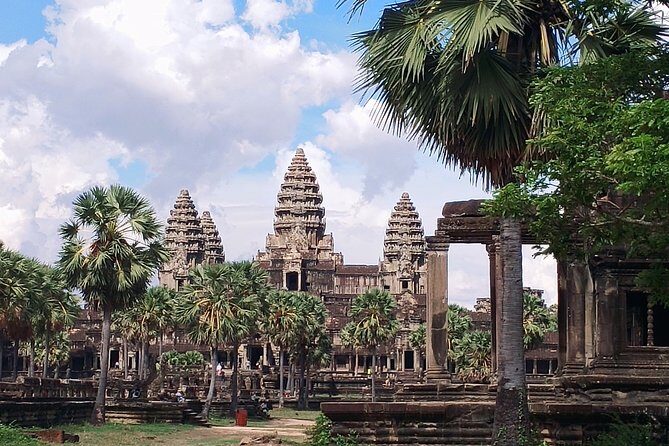
This is the kind of day where timing is the whole deal. Pickup starts from your Siem Reap hotel area at 4:30AM, then you transfer toward Angkor Wat—fast enough that you’re not wasting the early hours in transit, slow enough to stay calm.
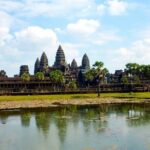
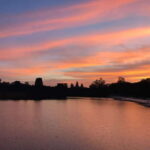
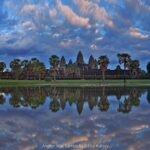
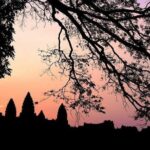
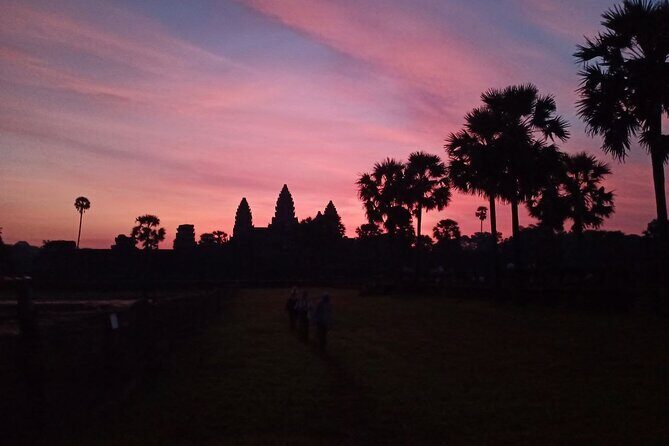
The reward comes right away. As the morning dark lifts, you watch the temple silhouette change shape as light spreads across the spires. It’s not just a photo moment. It sets the mood for the rest of the day, because Angkor Wat reads differently in dawn light: carvings and structure look sharper, and you can actually take your time before the heat and crowds show up.
Practical tip: sunrise means you should treat this like a small expedition. You’ll be outside early, so plan around comfort—hat, sunscreen, and mosquito repellent are on the sensible list for a reason. Cold water is included, which helps when you’re moving before breakfast.
You can also read our reviews of more private tours in Siem Reap
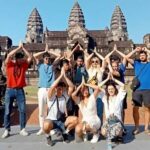
Angkor Wat at first light: galleries, carvings, and a guide who puts it together
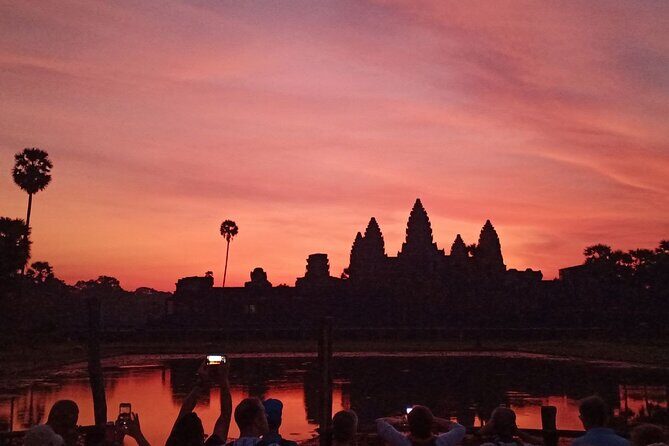
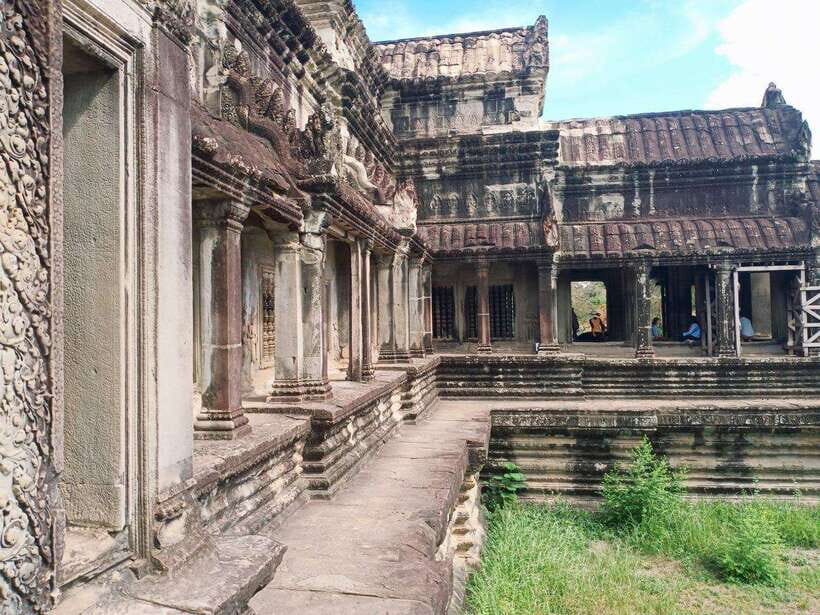
At Angkor Wat, the day starts with a dedicated sunrise window (about 4 hours at this first stop). Once the light has done its job, you shift into the inner parts of the temple and let the guide connect what you see to what it means.
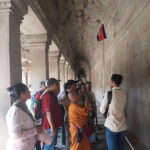
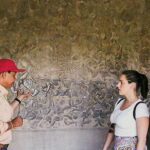
What makes this section valuable isn’t just the scale—it’s the walk-through of history and stories behind the intricate carvings. That’s the part people miss when they rush or rely only on basic explanations. Here, you’re guided through the galleries so details aren’t random decorations. You get a sense of what you’re looking at and why the temple’s artwork is arranged the way it is.
Photo value is built in, too. While Angkor Wat is happening, you also get chances for photos during the day’s scheduled stops. And if you’re the type who wants crisp, low-stress shots, a private guide matters because they can help you find the best spot without fighting a crowd.
Clouds can happen. One experience shared that when sunrise didn’t fully show because of weather, the guide still made the time productive by showing how to create mirrored effects using puddles. That’s a reminder: sunrise is the headline, but your guide can help you still leave with standout images and stories.
Angkor Thom via the South Gate: Deva and Asura, then Bayon’s face wall
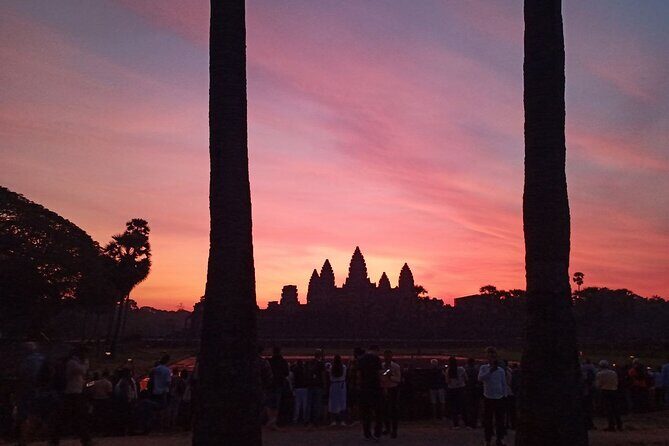
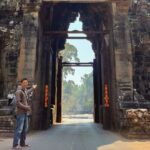
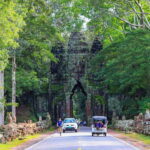
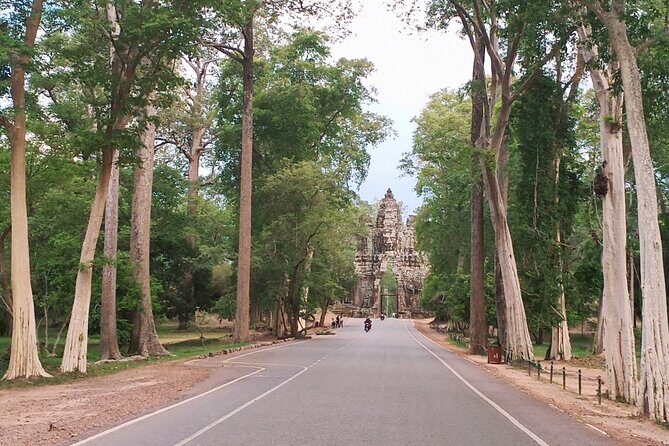
After Angkor Wat, you head toward Angkor Thom through the South Gate. This gate is hard to miss: it’s about 23 meters high, with four giant faces that watch you enter.
What I like about this stop is that it’s not just a dramatic entrance shot. Your guide points out the two rows of Deva and Asura (God and Demon) holding the body of Naga. It’s a perfect example of how a small detail-packed explanation changes your whole read of a place. The gate becomes a story you can see, not just an impressive structure you pass through.
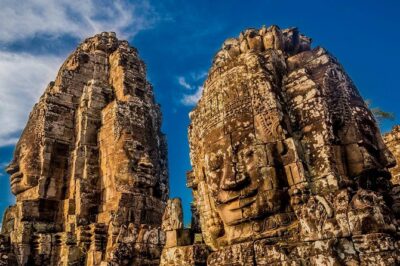
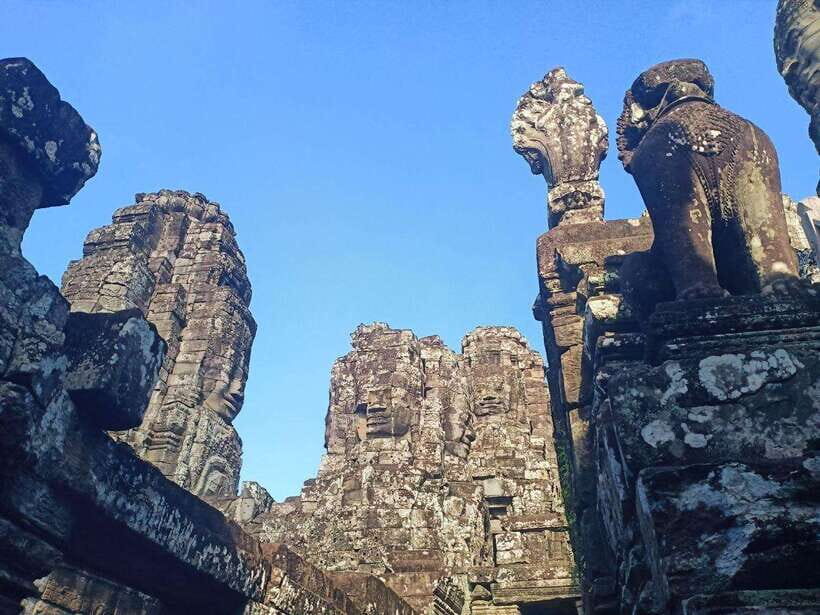
From there, it’s Bayon Temple. This is one of Angkor’s most memorable “pause and look up” experiences. Bayon’s 216 enigmatic faces are the main event, and they do their job even if you’re not a hardcore art person. The key is staying alert—faces turn, lighting shifts, and your brain keeps trying to figure out what each expression means. Your guide helps you with best angles for photography, which saves time and frustration.
At Bayon, you’re also given time to walk and explore with the guide’s explanations of the carved wall galleries. That pacing matters because Bayon is the kind of site where your attention can drift if you don’t know what you’re meant to look for.
Baphuon, the causeway, and the Reclining Buddha puzzle (rebuilt in 2011)
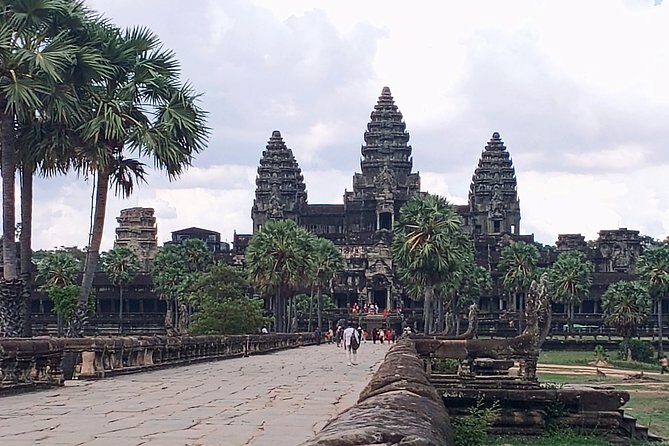
Next comes Baphuon, with a shorter stop and guided walking so you can get oriented and still keep moving through the complex. Then you’ll continue with additional photo stops—short, efficient moments meant to keep the day fluid rather than turning it into a series of long waits.
The highlight in this stretch is a big one: a long causeway and an impressive Reclining Buddha. What makes this visit extra interesting is the restoration story. This Buddha was a jigsaw puzzle for decades and was only put back together in 2011, after 37 years of disruption caused by war. You’re not just seeing an artifact—you’re seeing how the past survived, changed, and got rebuilt.
This is one of the “quiet learning” parts of the day. If you like the human side of heritage—how something is repaired and interpreted—this section lands well. If you prefer only the most photographed areas, you might find it slower than the big face-watching stops, but it gives the day a deeper backbone.
PhimeanAkas viewpoints: steps, shade, and a break from the crowds
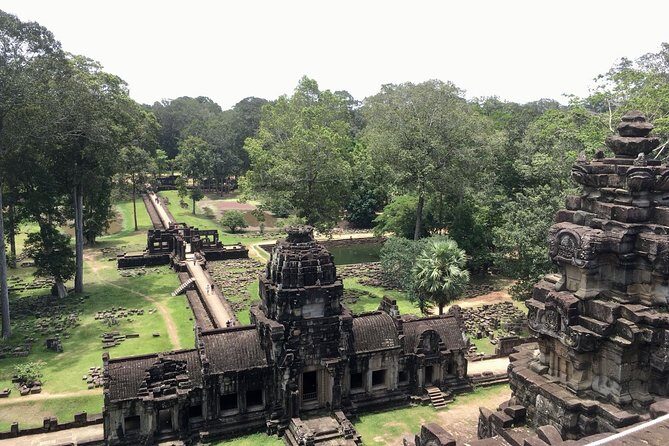
After the Buddha area, you’ll visit PhimeanAkas, described as hiding in shaded jungle and offering a view if you’re willing to conquer the steep steps.
This is the part of the day where you feel the physical side of temple touring. If you’re okay with stairs and uneven surfaces, you’ll likely enjoy reaching a higher vantage and taking a breather from the main monumental walls.
The upside here is that PhimeanAkas gives you a different angle on the site—less “stand and stare at one façade” and more “get your bearings and see the complex in your mind.” Even if you don’t want a workout, you can treat the climb as optional effort: your guide will keep you moving, but you control your pace.
You can also read our reviews of more tours and experiences in Siem Reap

Terrace of the Elephants and Leper King: sculpture with a story you can follow
From the higher viewpoint, the day heads to the Terrace of the Elephants and the Leper King. These are the kind of stops that reward attention. Even if you’ve seen photos online, being in the place works differently once you have a guide explaining what to notice.
The terrace-style areas also help break up the day. You’re still exploring, but the walking feels a bit more “temple courtyard plus carvings” rather than constant upward face-staring. It’s a nice transition before the most cinematic stop of the day—Ta Prohm.
Ta Prohm with Tomb Raider energy: Spung roots, moss, and slow photography time
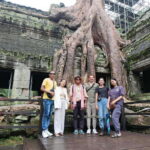
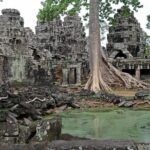
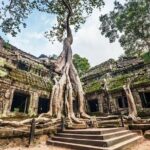
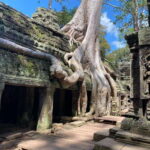
Then comes Ta Prohm, famous in modern pop culture because it appeared in Tomb Raider. But the best part is that today the real star is the relationship between Spung tree roots and ancient stones covered in moss.
This is where you’ll feel the shift from “ancient architecture museum” to “living, messy nature meets carved stone.” Roots clamber over the temple structure, and the moss softens edges that would otherwise look too sharp and too perfect. It’s a visual that looks staged in movies, but up close it feels organic and slightly wild.
Ta Prohm gets about 1 hour in the day, plus photo stops as you enter and move around. That timing is useful because it gives you room for the slow looking that Ta Prohm demands. You’re not just grabbing a single angle and leaving. You can look up, step back, and find compositions where the roots create frames around the carvings.
If you’re a photography person, this is your chance to switch gears. Wide shots work, but so do details—roots, moss, stone textures, and that layered look where you can’t tell what grew first.
Private logistics that matter: skipping lines and staying flexible
A key detail here is private transport in an air-conditioned vehicle and a private group setup. The practical value is simple: you don’t lose your day to waiting. You’re picked up from your hotel lobby, driven between sites, and dropped back after the temples.
Another big value: skip-the-line through a separate entrance. Even a “short wait” adds up when you’re starting at 4:30AM. Less waiting means more time at the best moments—sunrise light, face-gazing at Bayon, and the best root angles at Ta Prohm.
I also like that the day includes cold waters and that the guide is English-speaking. Plus there’s travel insurance included, which removes one headache from an early-morning plan.
What you really pay for: value of $135 for up to 2 people
The price is $135 per group for up to 2 people, for a full day. That’s not the cheapest way to see Angkor, but it’s also not trying to pretend you’re getting street-level prices for premium attention.
Here’s the value math that matters:
- If you’re two people, you’re effectively paying about half per person compared to a per-person rate.
- You’re getting a licensed professional guide and licensed driver, plus private air-conditioned transport, parking, toll roads, and cold water.
- You’re also getting skip-the-line, which is the sort of benefit you feel immediately rather than later.
What’s not included:
- Temple ticket
- Meals (lunch)
So the day’s total cost depends on those two items, but the big picture stays clear: you’re paying to save time, keep the visit coherent, and get interpretation as you walk—not just a transportation service.
What to pack for a temple day starting before sunrise
This is a long morning and a hot, bright afternoon later. Here’s what the tour data suggests bringing, and why it matters:
- Hat, sunglasses, sunscreen: sunrise and later sun can be brutal when you’re already tired.
- Mosquito repellent: evenings and jungle edges can mean more bites than you expect.
- Hand sanitizer: helpful when you’re on the move between stops.
- Power bank and charger: you’ll be shooting a lot at sunrise and Bayon.
- Camera or phone: the day is photo-forward, and your guide may help with composition.
- Some cash: useful for small needs that aren’t included.
- Dress that covers knees and shoulders: you’ll be moving through sacred areas, and this keeps you comfortable.
- Shoes or flip-flops are fine: plus note you may face steep steps at viewpoints.
Also remember: pets aren’t allowed, so plan accordingly if you’re traveling with animals.
Who should book this sunrise tour, and who should skip it
This works especially well if:
- You want a private, English-speaking guide who can explain carvings, faces, and stone stories while you walk.
- You care about photography angles and not just “see the temple, move on.”
- You’d rather avoid big-group pacing and audio-guide distractions.
It may not be the best fit if:
- You need a more step-free experience. The plan includes walking and steep steps at PhimeanAkas, and it’s not suitable for visually impaired people based on the tour info.
- You’re traveling with a pet.
If your top goal is simply to tick off temples with minimal explanation, you might not feel full value. But if you want context and a smoother day flow, this private format is exactly where it shines.
Should you book this Private One Day Tour with Sunrise at Angkor Wat?
I’d book it if your travel style matches these priorities: early access, skip-the-line time savings, and guided interpretation through Angkor Wat, Angkor Thom’s South Gate and Bayon, the Buddha/terrace areas, and finally Ta Prohm’s roots.
Skip it if you’re not a fan of very early starts, or if you need a route that avoids stairs. Also double-check that you’re fine handling things not included—especially the temple ticket and choosing your lunch plan.
If you can handle the dawn start, this is one of those days that stays coherent. You’re not wandering. You’re moving through a set of major scenes with enough explanation to make the stones feel like more than photos.
FAQ
What time is hotel pickup?
Pickup starts at 4:30AM.
How long is the tour?
It’s a 1-day tour. Angkor Wat is the longest stop (around 4 hours), with shorter guided visits at the other temples.
Is sunrise over Angkor Wat included?
Yes. The plan includes watching sunrise at Angkor Wat.
Are temple tickets included?
No. Temple ticket is not included.
Is lunch included?
No. Meals (lunch) are not included.
Do you skip the ticket line?
Yes. There’s skip-the-line through a separate entrance.
Is this tour private?
Yes. It’s a private tour with a private group setup (priced for a group up to 2).
What language is the guide?
The live guide is English.
Is it wheelchair accessible?
Yes, it’s listed as wheelchair accessible, but it is not suitable for visually impaired people.
Can I cancel for a full refund?
Yes. You can cancel up to 24 hours in advance for a full refund.
Are pets allowed?
No. Pets are not allowed.