REVIEW · PHNOM PENH
Cooking Class in Phnom Penh
Book on Viator →Operated by Phnom Penh Spice Cooking Class · Bookable on Viator
Dinner plans in Phnom Penh can be more than a meal. This class teaches you Khmer cooking step by step, starting with fresh local ingredients and finishing with the food you make. I especially like the hands-on cooking focus and the spice-and-paste technique you learn with your own hands.
You’ll also get a short talk after cooking that connects the flavors to core Cambodian staples like rice, fish, and herbs. One thing to consider: it runs as an evening activity starting at 5:00 PM, so you’ll want your day schedule to wrap up earlier.
In This Review
- Key Things I’d Mark on Your Map Before You Go
- Phnom Penh Spice Cooking Class: What You’re Really Paying For
- 5:00 PM Meet-Up at Phnom Penh Spice: Coconut Water, Fruit, and Spice Basics
- Cutting Spices and Pounding to Paste (5:15–6:45): The Skills You’ll Actually Remember
- Cambodian-Style BBQ and Dessert (7:00–7:15): From Stove to Sizzle
- 7:30 PM Slide Presentation on Cambodian Food: Why It Matters After You Cook
- Dinner Time at 8:00 PM: What’s Included and How to Plan Your Evening
- Small Group Energy: Learning Faster Without Feeling Rushed
- Who Should Book This Khmer Cooking Class in Phnom Penh
- Should You Book Phnom Penh Spice Cooking Class?
- FAQ
- What time does the class start in Phnom Penh?
- How long is the cooking class?
- Where is the meeting point?
- What’s included when you have dinner?
- How big is the group?
- Is there free cancellation?
Key Things I’d Mark on Your Map Before You Go
- Coconut water and seasonal fruit welcome to set the tone right away
- Spice pounding to paste (not just chopping veggies and watching)
- BBQ in Cambodian style plus dessert all within the 3-hour flow
- A slide presentation on Khmer food basics after you eat what you made
- Small group size (max 8) for a more personal pace
- Mobile ticket for easier check-in
Phnom Penh Spice Cooking Class: What You’re Really Paying For
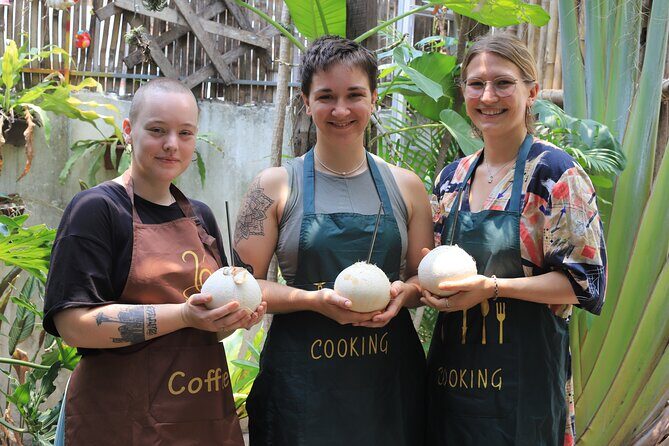
At $31 per person for about 3 hours, you’re not just buying ingredients. You’re buying the chance to learn the logic behind Khmer flavors: how spice mixes become paste, how that paste turns into seasoned dishes, and how grilling and steaming fit into a real meal.
This is also a practical value type of experience. Your evening includes the food you prepare, plus drinks at dinner time (water, soft drink, and one or two beer). That matters in a city where “a cooking class” can sometimes mean you watch more than you cook. Here, the schedule is built around active steps: pounding, seasoning, steaming, BBQ, and dessert.
Group size is capped at 8 travelers, which usually helps with hands-on attention. If you like asking questions while the instructor is right in front of you, that small cap is a good sign.
You can also read our reviews of more cooking classes in Phnom Penh

5:00 PM Meet-Up at Phnom Penh Spice: Coconut Water, Fruit, and Spice Basics
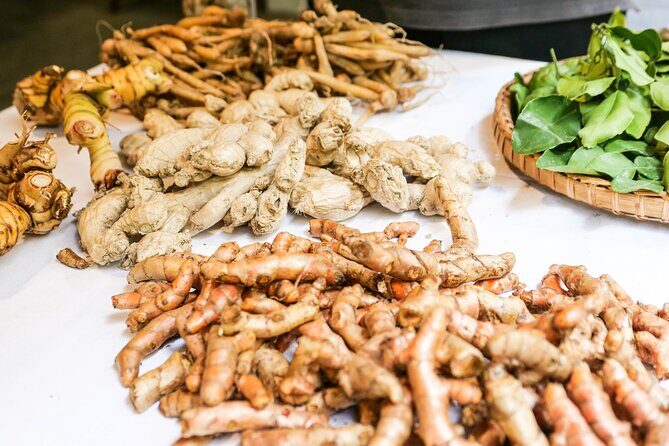
The class starts at 5:00 PM at Phnom Penh Spice Cooking Class, 111, St 1MC, Phnom Penh. You meet up there and get a welcome that’s simple but smart: refreshing coconut water and seasonal fruit.
Then you get your first taste of what makes Khmer cooking different—spices and how they’re used. Even before the cutting begins, the timing works. You’re not hungry and rushed. You’re ready to learn, and the spices make more sense once you’re about to handle them.
One small practical note: because this begins in the early evening, it’s easiest if you plan dinner later (or skip earlier plans). You’ll end up eating what you cook.
Cutting Spices and Pounding to Paste (5:15–6:45): The Skills You’ll Actually Remember
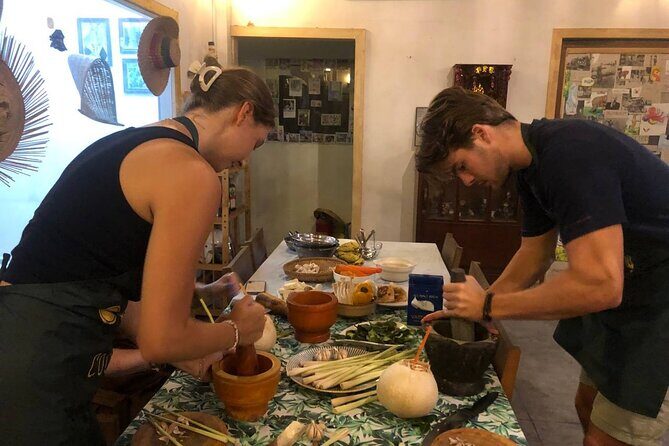
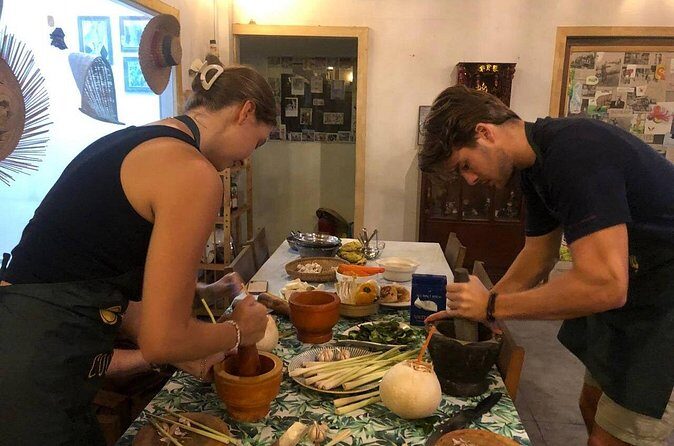
At 5:15 PM, you move into prep mode: cutting spices and pounding them to the paste stage. This is the heart of the class, and it’s also the part that turns cooking from guesswork into technique.
From there, at 5:30 PM you start seasoning the spice paste, mixing it with vegetables and meat. That sequence matters. You’re learning how the paste isn’t just flavor on its own. It becomes a base that clings, balances, and carries taste into the dish.
By 6:45 PM, you put it in steaming. That shift is useful to understand: in Khmer cooking, steaming helps keep flavors clean and ingredients tender without drying them out. You’re watching the cooking method happen rather than just being told what to do.
If you’re the type who likes to cook at home later, this is the segment that pays off most. Once you understand paste-making and seasoning, you can adapt the idea to whatever ingredients you find locally.
Cambodian-Style BBQ and Dessert (7:00–7:15): From Stove to Sizzle
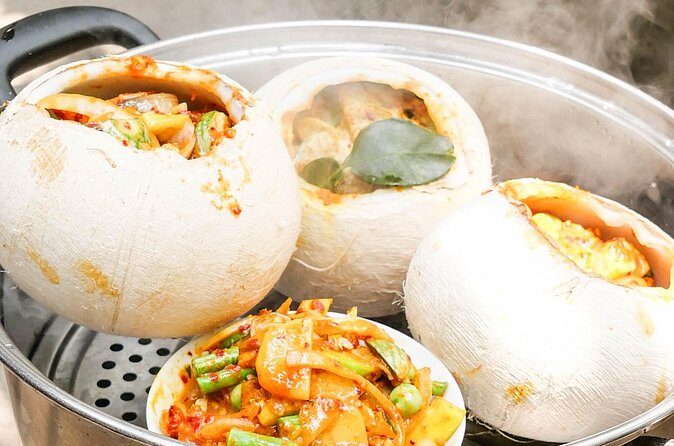
At 7:00 PM, the class moves to making BBQ in Cambodian style. That’s a fun pivot, because grilling changes the aroma and texture in a way steaming can’t. It also keeps the evening from feeling like one long kitchen task.
Then, at 7:15 PM, dessert happens. You’re not ending the class with a sad afterthought. The schedule suggests dessert is a real part of the arc, coming right before the educational slide and the shared meal.
A practical consideration: the itinerary includes dishes built with meat (and Cambodian food basics often include fish). If you avoid meat or fish, you should think about whether the class format will work for you. The provided details don’t mention special substitutions, so it’s smart to ask your question in advance when you book.
7:30 PM Slide Presentation on Cambodian Food: Why It Matters After You Cook
At 7:30 PM, you get a slide presentation about Cambodian food. This is the segment that turns a cooking class into something you can carry around in your head.
The talk covers key ideas that shape the dishes you just made, including:
- the importance of rice
- the role of fish
- and the function of herbs and spices
- plus how neighboring influences helped shape what you see on plates today
This is more than trivia. When you understand what staples and flavors are doing in Cambodian cooking, you can order and taste with more confidence later. Instead of eating and hoping, you start recognizing patterns: what’s likely to be in a dish, what type of balance the chef is aiming for, and why something tastes layered rather than one-note.
If you enjoy food culture as much as food technique, don’t skip this part. It’s timed after cooking, so it feels like the missing explanation.



Dinner Time at 8:00 PM: What’s Included and How to Plan Your Evening
Dinner time begins at 8:00 PM. You eat what you helped make, which is usually the best kind of meal payoff: less guessing, more satisfaction.
Included drinks are clearly listed: water, soft drink, and one or two beer. That’s a nice touch for budgeting your evening. You won’t have to figure out how to add a drink on top of the class price.
The activity ends back at the meeting point. So you’re not scrambling across town afterward. In a city where you may be learning routes as you go, that simplicity is underrated.
Small Group Energy: Learning Faster Without Feeling Rushed
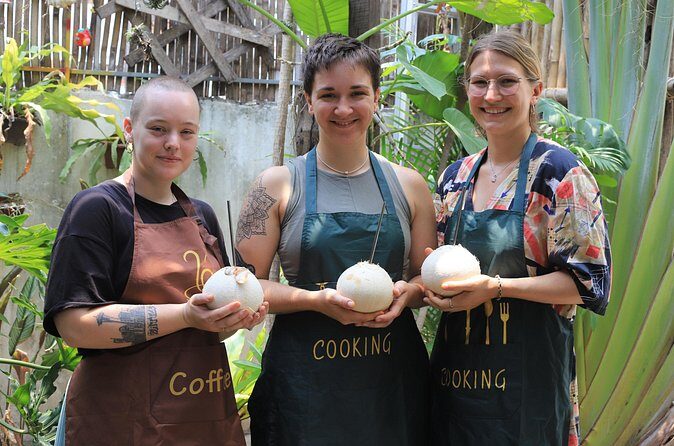
With a maximum of 8 travelers, the experience tends to move in a way that feels more personal. The pacing in the itinerary supports this: there are multiple hands-on steps, and the schedule is tight enough that large groups can become a bottleneck.
Also, the class format is structured like a real workflow: welcome → spice prep → paste/seasoning → steaming → BBQ and dessert → presentation → meal. That sequence helps you learn without chaos, and it likely explains why the class gets strong praise for hosting and education.
If you’re someone who asks lots of questions, small groups help you not get brushed aside while the next step is happening.
Who Should Book This Khmer Cooking Class in Phnom Penh
This works best if you want:
- a practical, hands-on cooking lesson (not a sit-and-watch demo)
- an evening plan that combines technique with culture
- a small-group setting where you can learn at a normal pace
It’s a good fit for food lovers who already like Cambodian cuisine or are curious to understand it beyond restaurant dishes. It’s also a solid choice if you want a memorable activity that’s still easy to fit into a day of sightseeing, because it anchors your plans around a clear start time.
If you’re very sensitive to late starts, or if you want an early dinner, this 5:00 PM start might feel like too much evening time. Plan accordingly.
Should You Book Phnom Penh Spice Cooking Class?
If you want a cooking experience that teaches real technique—spice prep, paste-making, seasoning, steaming, BBQ—and then explains the why behind Khmer flavors with a short slide talk, I’d book it. The $31 price makes sense because your meal is part of the package and the drinks at dinner time are included.
I’d hesitate only if you need strict dietary changes that aren’t mentioned in the basic class outline. Aside from that, the small group size, clear step-by-step structure, and focus on Cambodian food staples make this a strong value for Phnom Penh.
FAQ
What time does the class start in Phnom Penh?
The class starts at 5:00 PM.
How long is the cooking class?
The duration is about 3 hours.
Where is the meeting point?
You’ll meet at Phnom Penh Spice Cooking Class, 111, St 1MC, Phnom Penh, Cambodia.
What’s included when you have dinner?
Dinner time includes water, soft drink, and one or two beer. You also eat the meal you prepare during the class.
How big is the group?
The class has a maximum of 8 travelers.
Is there free cancellation?
Yes. You can cancel for a full refund up to 24 hours before the experience starts. After that cutoff, the amount paid is not refunded.