REVIEW · SIEM REAP
Angkor Wat Sunrise & 3 Main Temples with Breakfast – Small Group
Book on Viator →Operated by Siem Reap Shuttle · Bookable on Viator
That 4:30am start pays off fast. This small-group Angkor Wat sunrise tour gets you into the Angkor Archaeological Park early, with an air-conditioned mini-bus moving you between temple stops so you are not cooking in the heat. You also travel with an English-speaking, APSARA-authorised guide and small extras like cold towels and bottled water.
I love two things most. First, the guide turns stone and carvings into something you can actually read, with clear explanations of symbolism and religious changes; names like King Kong, Lok, Chenda, and Sopheap show up again and again in the guide style you will experience. Second, Bayon’s 200 faces of Lokeśvara are jaw-dropping in person, and the tour gives you the context to see more than just a pretty photo.
The main drawback to plan for is crowds and waiting. Even when you start early, you can still feel the density around Angkor Wat, and there can be stretches of time before you get to walk fully through key areas.
In This Review
- Key highlights to look for
- Why Angkor Wat Sunrise Starts So Early in Siem Reap
- Price and Logistics: What the $15 Ticket Really Covers
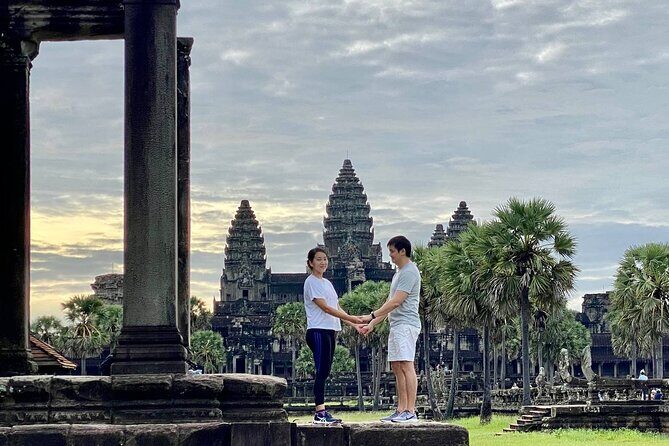
- Angkor Wat Sunrise: Seeing the Towers Wake Up
- Srah Srang Breakfast: Fuel Before the Heat
- Bayon Temple and the 200 Faces of Lokeśvara
- Ta Prohm: The Temple Where Trees Take Over
- Air-Conditioned Mini-Bus Transfers That Keep the Day Working
- Guides That Make the Stone Make Sense
- Practical Tips: Dress for Temples, Pace for Heat
- Should You Book This Angkor Wat Sunrise Tour?
- FAQ
- What time does the Angkor Wat sunrise tour start?
- How long is the tour?
- Is hotel pickup and drop-off included?
- Is breakfast included?
- Do I need to buy temple tickets separately?
- How many people are in the group?
- What is the dress code for the temples?
- What if the weather is bad?
- Can I cancel for a full refund?
- Who provides the guide?
Key highlights to look for
- Sunrise timing that lets you arrive before the busiest wave rolls in
- Air-conditioned mini-bus between temples to cut down on heat fatigue
- APSARA-authorised guide focused on meaning, not just directions
- Bayon’s 200 faces of Lokeśvara, explained so you know what you are seeing
- Breakfast included at Srah Srang, with a locally chosen restaurant
- Max 10 people, so questions and photo stops feel more manageable
Why Angkor Wat Sunrise Starts So Early in Siem Reap
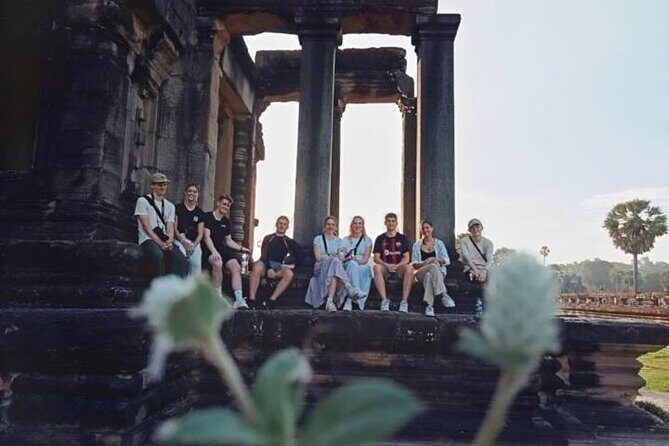
If you only have a few hours in Siem Reap, this is the kind of tour that makes time feel usable. The pickup window runs from 4:20am to 4:50am, and the tour starts at 4:30am. That early timing is the whole point: Angkor Wat is more pleasant when the sun is still low, and the air is usually less brutal before the day heats up.
The sunrise portion is listed as about 4 hours, which matters. You are not just sprinting to a viewpoint and back out. You get time to settle, watch light move across the towers, and still make it through the early temple experience without feeling like you are constantly late. There is also a special mention for March 20–23, when the tour notes an equinox celebration period. If you are traveling during those dates, it’s worth knowing the vibe is meant to feel extra ceremonial.
One reality check: “arrive early” does not mean “no people.” One common theme from guide-led sunrise tours is that crowds can still be heavy even at 5am. Expect lines near the major viewpoints and be patient. This is a world-famous site, and early entry is how you reduce the worst of it—not magic.
You can also read our reviews of more tours and experiences in Siem Reap
Price and Logistics: What the $15 Ticket Really Covers
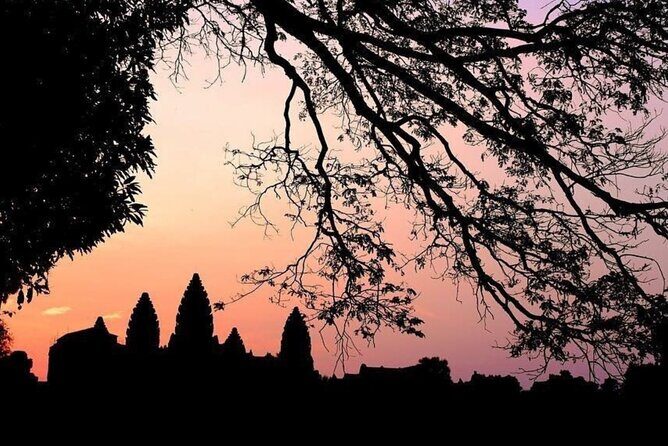
Let’s talk value honestly. The tour price is $15 per person, which is strikingly low. The catch is simple: temple admission and passes are not included. You will need a 1-day pass for USD37 or a 2-day pass for USD62.
So how does this pencil out? For the true cost of seeing the included temples with a guide, you should think in terms of:
- Your tour fee ($15) covers the early start, guide, transport, and breakfast setup.
- Your Angkor Archaeological Park admission is added on top (USD37 for 1-day or USD62 for 2-day).
Given that you also get hotel pickup, an air-conditioned minibus, cold towels and water, and breakfast at Srah Srang, the $15 portion is mostly paying for an efficient guided experience. If you were doing this independently, you would likely spend plenty of time coordinating rides, figuring out what to see first, and reading your way through details that a good guide can explain in minutes.
A small but important detail: the tour includes breakfast, but the breakfast drink is not included. Water is included during the tour, and cold towels help, but you should still plan to cover any extra drink costs at breakfast.
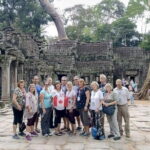
Finally, this is a maximum of 10 travelers. That smaller size changes the feel. You are more likely to get your guide’s attention, ask a question, and keep a smoother flow between stops than you would on big bus tours.
Angkor Wat Sunrise: Seeing the Towers Wake Up
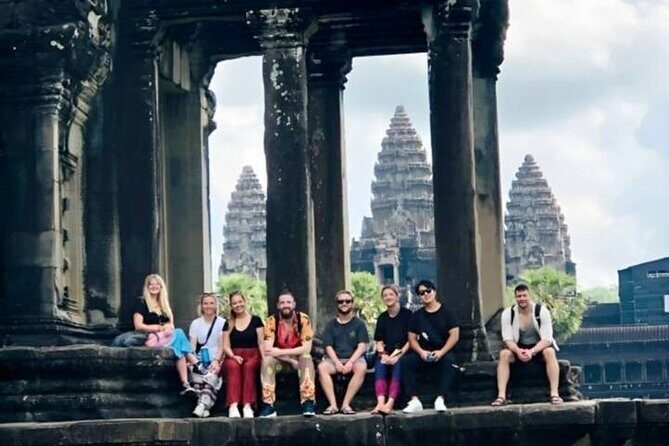
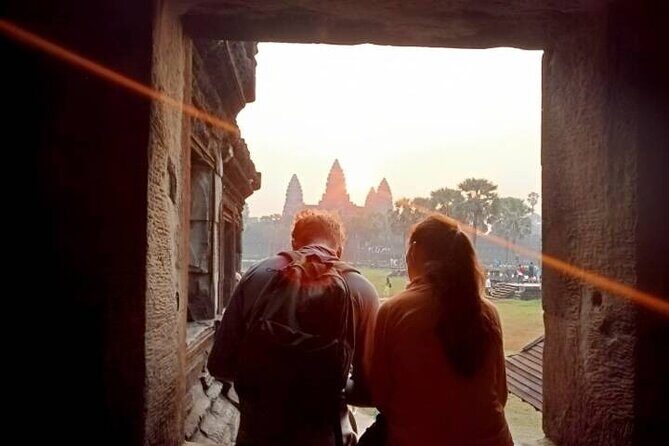
Your day begins at Angkor Wat, where the tour focuses on sunrise over the temple complex. This is the most iconic visual moment at Angkor, and it is also where the choreography matters: you want to be in position early, before the light hits the right angle and before the crowd surge makes it harder to move.
The itinerary places this first stop as a 4-hour block, with temple admission not included. That means you should budget extra time and energy for the ticket requirement. Even with early arrival, the sunrise experience can involve some waiting. The practical strategy is to treat it like a long “sit and watch” morning with built-in temple time—bring your patience, and let the guide handle the pacing.
What makes sunrise worth the effort here is not only the view. It is how the carvings and geometry change with light. Your guide’s job is to connect what you see—layers, gates, and symbolic structure—to the reasons it was built and how it was used over time. Many guides on this route are especially good at pointing out religious symbolism and the story behind the site’s artistic program, including references to transitions between Hinduism and Buddhism that show up in the area’s carvings.
If you want the “best photo” outcome, small-group structure helps. You are less likely to be stuck in a crush with zero room to reposition. You will still have plenty of people around, though, so focus on finding your moment rather than expecting empty steps.
Srah Srang Breakfast: Fuel Before the Heat
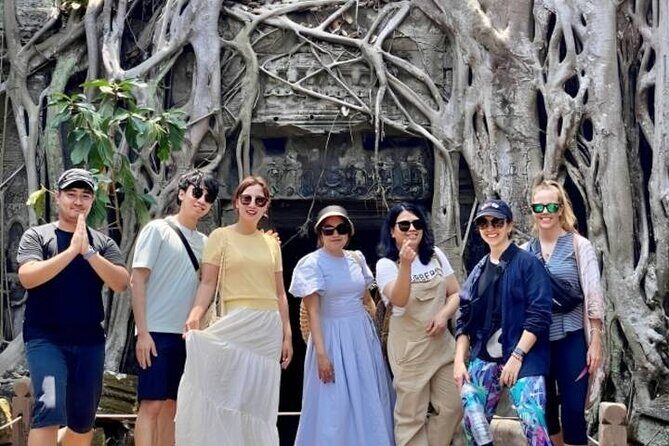
After the early temple start, you get a break that actually matters: breakfast at Srah Srang, scheduled for about 1 hour. Breakfast is included, and this is a genuinely useful design choice. Angkor is often hot and dusty later in the morning, so refueling before the next temple stops keeps your energy up.
You also get a practical perk: the breakfast stop is not random. The tour describes that your guide chooses the local restaurant based on food quality, hygiene, and prices within the area. That kind of decision-making sounds minor, but it can save you from spending your only morning meal on something overpriced or less reliable.
One detail to watch: the plan notes breakfast is included, but the breakfast drink is not included. That’s not a deal-breaker, but it does mean you may want to budget for a tea, coffee, juice, or water upgrade at the table.
This stop also buys you time psychologically. After sunrise, your brain is still running on early-morning adrenaline. Breakfast gives you a clean reset before you tackle Bayon and Ta Prohm, where you will be walking, scanning carvings, and taking photos in full daylight.
Bayon Temple and the 200 Faces of Lokeśvara

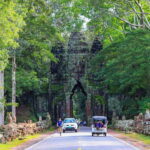
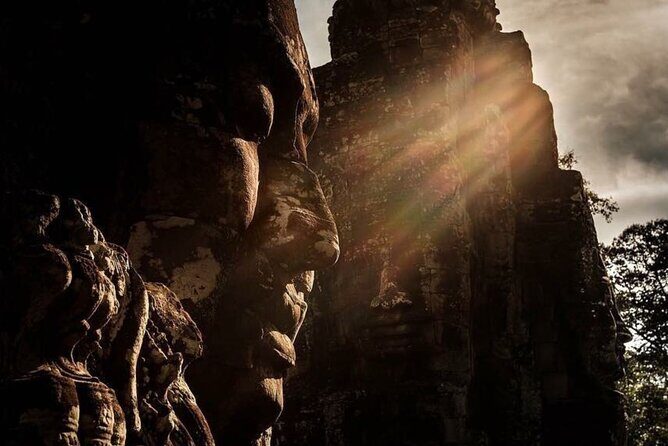
Next up is Bayon Temple, also a highlight stop, with about 1 hour scheduled. This is the place most visitors remember not because it is the biggest, but because it feels human. The tour specifically calls out the 200 faces of Lokeśvara carved into the stone, and that detail is exactly why Bayon hits.
If you have never seen Bayon before, here is the key: the faces are not just decoration. The guide’s explanations help you understand what the imagery signaled and how people would have read the architecture and art. A strong guide will point out placement, repetition, and symbolism so you do not just pass by carvings like museum wallpaper.
From the guide styles you will likely encounter on this route, many focus on helping you connect the art to larger religious changes and storytelling. One guide example from the same circuit describes explaining the transition from Hinduism to Buddhism, which fits the way Bayon’s iconography can be discussed. Even if you are not a hardcore history person, the difference is huge: you come away feeling like you learned something, not just that you walked around.
Time is short here. One hour is enough if you keep moving with purpose and let your guide handle the “what to look for” parts. If you tend to get slower at ruins (totally normal), you may want to ask your guide where to spend extra moments early so you are not rushed at the end.

Ta Prohm: The Temple Where Trees Take Over
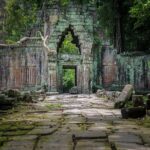
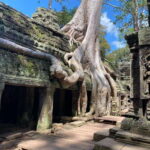
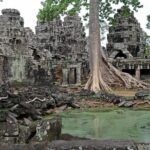
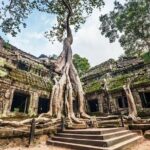
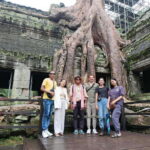
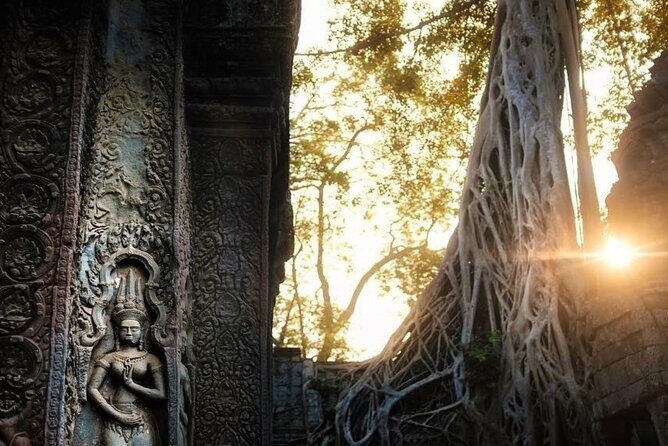
The last temple stop is Ta Prohm, again with about 1 hour on site. This is where you get that movie-like look: roots, stone, and a feeling of nature pushing back. It is also a photo stop without turning into a frantic free-for-all.
The tour frames Ta Prohm as a place to capture photos of its charm, and that matches what you will actually feel once you are there. The main challenge is not knowing where to look. It is managing the light and the crowd movement. If sunrise made you wait, Ta Prohm will make you move—there is always something to photograph from different angles.
Because the tour is structured as a small group, you should have a better chance of getting a moment to step back and think rather than constantly being pushed along. Also, having a guide can help you avoid wandering too broadly. You can focus on the most visually important areas first, then linger on the smaller details if time allows.
As with Bayon, this stop’s admission is not included. So make sure your pass is already sorted before you arrive. Nothing kills the mood like realizing you still need to buy the ticket while the group is waiting.
Air-Conditioned Mini-Bus Transfers That Keep the Day Working
One reason this tour is worth the money is the pacing. Angkor days can be punishing if every move is done on foot or in uncomfortable transport. This experience uses an air-conditioned mini-bus to move guests between temples, which helps you conserve energy for the walking parts.
That matters because the schedule is basically: sunrise, breakfast, two major temples, then you head back. You do not have time to waste. The mini-bus transfers are part of the design so you do not arrive at the next site already exhausted from heat.
It also helps the rhythm. You get cold towels and water, then you go into each temple block. It is a repeatable pattern that keeps the tour from feeling chaotic.
You will still feel hot on an Angkor morning once the sun rises higher. That’s normal. The “saved energy” here is not magic air cooling the world. It’s reducing time spent overheated between the meaningful parts of the day.
Guides That Make the Stone Make Sense
The biggest difference in this type of tour is not the stones. It is the guide. And the guide talent on this route seems to be a major strength.
In the guide names that show up repeatedly, I see the same themes: clear explanations, good humor, and a knack for keeping the morning from dragging. Examples include King Kong, Lok, Chenda, Phleap, Sopheap, Yib Phana, and YOUK. Each name comes with a consistent vibe: they explain what you see, answer questions patiently, and help you feel like the time is moving for a reason.
A few practical advantages you will feel if your guide is strong:
- You understand the “why” behind the carvings faster.
- You spend less time guessing where to look.
- You get help shifting between photo stops and walking stops without losing the flow.
One small caution: guides have different styles. Some talk a lot, others aim more for Q&A. If you prefer a quiet, slower pace, tell your guide early. A good guide will adjust. If you want history and symbolism explained, ask questions during the quiet moments. The tour format gives you opportunities because the group stays small and the timing is tight.
Practical Tips: Dress for Temples, Pace for Heat
This tour gives you a straightforward dress code: smart casual, with shoulders covered, plus trousers or knee-length pants or skirts. That is not just a rule on paper. It helps you move through religious areas comfortably without getting stopped or turned away.
Wear comfortable walking shoes. You will be standing, walking, and repositioning for views and photos, especially at Angkor Wat during sunrise and at Ta Prohm in open areas.
The tour also notes it runs in all weather conditions, so dress appropriately. That usually means planning for sun glare, humidity, or rain risk based on what the day looks like.
Finally, the tour includes cold towels and water, which is a real help for a long morning. Still, treat water as part of the routine, not the whole solution. Keep your pace steady and use the bus transfers to reset.
Should You Book This Angkor Wat Sunrise Tour?
Book it if you want an efficient, small-group Angkor day with a plan. This is a great fit when you have limited time in Siem Reap and want to hit the major highlights without spending hours figuring out order, timing, and what the carvings mean.
You should also book it if you like structured mornings. The early pickup, sunrise focus, and the way breakfast and temple stops are arranged make the day feel doable.
Hold off or at least go in with open eyes if crowds stress you out. Even with a sunrise start, Angkor Wat can still feel busy. And if you hate waiting before you get full access to areas, plan for some standstill time.
If you are comfortable paying the temple pass on top of the $15 tour fee, this is strong value: you get transport, a real guide, and key stops packed into about 7 to 8 hours, with hotel drop-off around 12:30pm.
FAQ
What time does the Angkor Wat sunrise tour start?
Pickup is scheduled between 4:20am and 4:50am, and the tour starts at 4:30am.
How long is the tour?
The total duration is about 7 to 8 hours.
Is hotel pickup and drop-off included?
Yes. Hotel pickup is included, and hotel drop-off is included around 12:30pm.
Is breakfast included?
Yes. Breakfast is included at Srah Srang. A breakfast drink is not included.
Do I need to buy temple tickets separately?
Yes. Temple admission and passes are not included in the tour price. The listed options are USD37 for a 1-day pass or USD62 for a 2-day pass.
How many people are in the group?
This tour has a maximum of 10 travelers.
What is the dress code for the temples?
Dress smart casual and respect the religious grounds. You should wear a shirt that can cover your shoulders, plus trousers or knee-length pants or skirts, and comfortable walking shoes.
What if the weather is bad?
The tour operates in all weather conditions, so dress appropriately for the conditions.
Can I cancel for a full refund?
Yes. You can cancel up to 24 hours in advance for a full refund.
Who provides the guide?
The tour includes a professional English-spoken tour guide, and the guide is APSARA authorised.