REVIEW · SIEM REAP
Kompong Phluk Floating Village Half-Day Tour ( Morning / Sunset )
Book on Viator →Operated by Siem Reap Shuttle · Bookable on Viator
Tonle Sap changes everything in half a day.
This half-day tour is interesting because you’re not just looking at a village on stilts. You’re riding out onto Tonle Sap, seeing how daily life works with the water levels, and timing your trip for either the quieter morning or the sunset glow. I also like that the tour builds in a rowboat option through the flooded forest when conditions allow, so the day can feel more than sightseeing. One thing to think about: the best-floating scenery depends heavily on the season and water level.
If you’re lucky with water levels, Kompong Phluk feels like a living ecosystem. The optional rowing is typically available only during the rainy season, and in drier months you may see more stilted village than full-floating forest.
In This Review
- Key things worth knowing before you go
- Kompong Phluk Floating Village: why it feels so different on Tonle Sap
- Choosing the morning or sunset departure (and the lake swim option)
- Getting there smoothly: pickup, AC van, and boat time
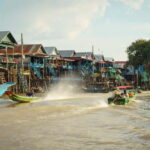
- Stop 1: Kompong Phluk stilt houses, shops, and the real rhythm of daily life
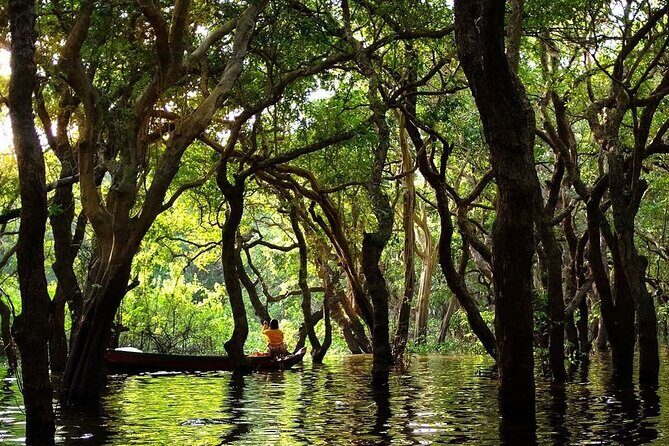
- The optional rowing boat through flooded forest (the big seasonal swing)
- Seasonal reality check: what you’ll see in dry months
- Stop 2: Rolous market (near the school) where you see everyday trade
- Stop 3: Roka Pagoda (Wat Roga) and the village’s spiritual side
- Optional adds and small costs: rowing price, food, and extra purchases
- Price and value: is $24 a smart deal for a half-day on the lake?
- What could annoy you: pacing, time on the village, and the “poverty tourism” worry
- Tips to make your Kompong Phluk day smoother
- Should you book the Kompong Phluk Floating Village Half-Day Tour?
- FAQ
- How long is the Kompong Phluk Floating Village tour?
- Is hotel pickup included?
- What does the tour price include?
- Do you visit a floating village and also get to walk around?
- What stops are included besides Kompong Phluk?
- Is the rowing boat ride included?
- Is swimming included?
- How big are the groups?
- What should I wear or bring?
- What happens if weather is bad?
- Can I cancel for a full refund?
Key things worth knowing before you go
- Morning or sunset timing lets you match the mood of Tonle Sap and your other Siem Reap plans
- Small groups (max 10) keep the pacing calmer on busy days
- AC transport plus life-jackets make the water time more comfortable and safer
- Rolous market and Roka pagoda add culture beyond the boat ride
- Rowing through flooded forests is seasonal and costs extra when water is high
- Guides like Ran, Ry, and Tola have consistently impressed people with clear explanations and good energy
Kompong Phluk Floating Village: why it feels so different on Tonle Sap
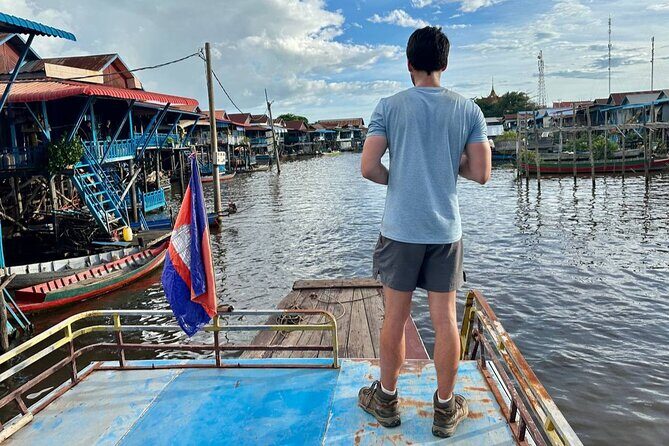
Kompong Phluk is one of those places where the setting is the main character. Tonle Sap rises and falls, and the community adapts with it, so the village looks and feels different depending on when you visit.
The tour’s format helps you understand that rhythm. You’re moving by boat, walking within the community, and hearing how people manage daily life around a dramatic wet-and-dry cycle. It’s not just a quick photo stop. It’s a guided look at how a lakeside livelihood actually functions.
One practical bonus: the tour is set up as a half-day. That means you can pair it with Angkor temple time without blowing a whole day.
You can also read our reviews of more evening experiences in Siem Reap
Choosing the morning or sunset departure (and the lake swim option)
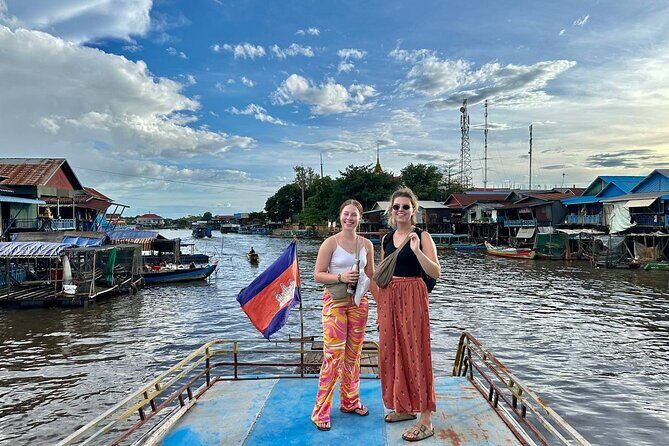
You choose your departure based on what you want most: calm or golden hour.
Morning tours are a great fit when you want a smoother start. You’ll have daylight for walking around and better visibility if you want photos of stilted homes, shops, and everyday routines.
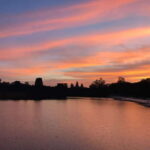
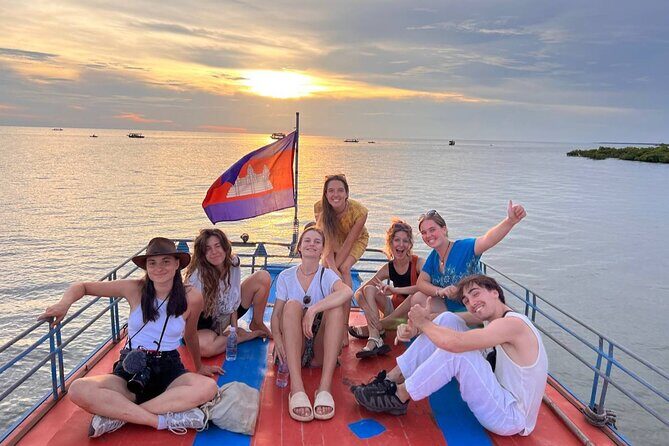
Afternoon tours are the obvious pick if you care about the lake view. The tour is designed for sunset views, so you’ll end with Tonle Sap looking its best. The afternoon option also includes a chance to swim in the lake, which can be a fun break from temple days—just be sensible with water conditions and follow your guide’s cues.
If your schedule is tight, this split is useful. You can still do temples early, float in the afternoon, then relax when the heat softens.
Getting there smoothly: pickup, AC van, and boat time
This tour includes pickup, and you’ll travel in an air-conditioned vehicle. That matters in Siem Reap, where timing and heat can turn a day trip into a slog fast.
Once you’re at the water area, you ride in a motorized boat for the main floating sections. Life-jackets are provided, and the tour also includes a bottle of water and a cold towel. Those small comforts add up when you’re out on the lake for hours.
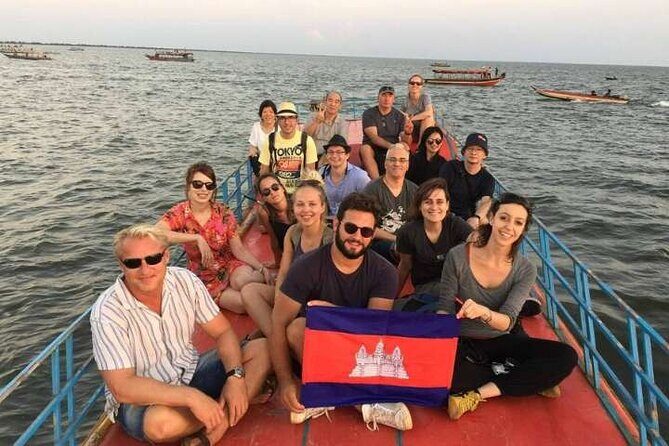
Group size stays limited to a maximum of 10 people per booking. In practice, that usually means fewer delays at each stop and less time waiting around.
One timing note: the tour runs about 5 hours. People who don’t like long waits can still enjoy it, but it’s wise to expect a couple of transitions between boat, walking, and photo moments.
Stop 1: Kompong Phluk stilt houses, shops, and the real rhythm of daily life
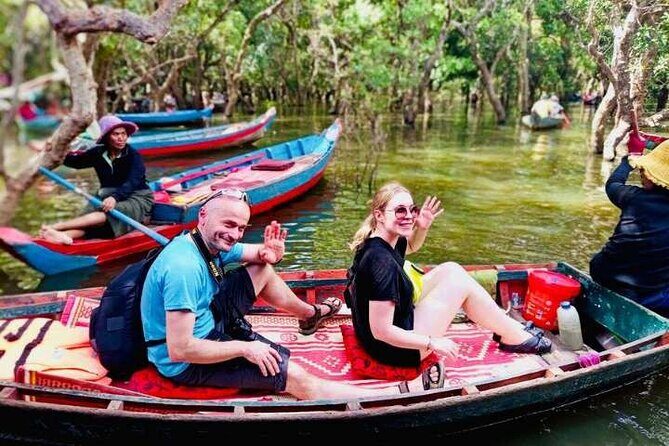
Your first and main stop is Kompong Phluk, with about 3 hours allocated. This is where you see the floating village from the water and on foot, so you get both the wide view and the up-close feel.
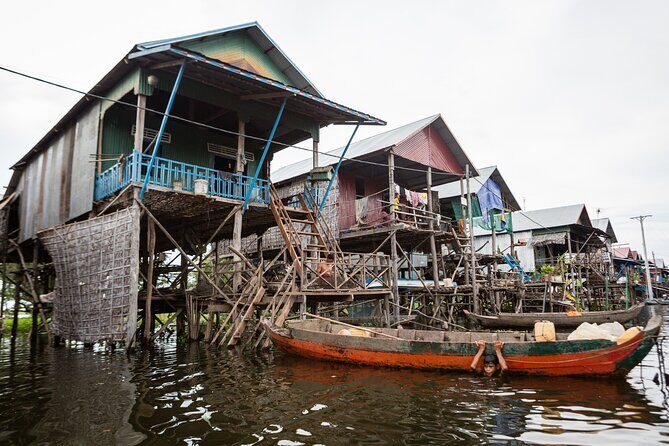
You’ll float alongside homes, small businesses, and community spaces. The point is to help you connect the village to the lake’s changing water level, not just admire construction on stilts.
The optional rowing boat through flooded forest (the big seasonal swing)
During certain seasons, you can add a rowing boat ride through the flooded forest. This is not included in the base price, and it’s only available when water levels are high—typically in the rainy season.
In the reviews, people often call the rowboat experience the highlight. It’s the part that turns the day from a village visit into a look at how the ecosystem moves around you. If you can’t do it in your season, the main Kompong Phluk walking and floating still make sense—just expect less “forest tunnel” feeling.
If you do have the rowboat option, you’ll be on a smaller craft than the main boat ride. You’ll want the life-jacket on, stay seated where instructed, and be ready for a slower, more intimate pace.
You can also read our reviews of more tours and experiences in Siem Reap

Seasonal reality check: what you’ll see in dry months
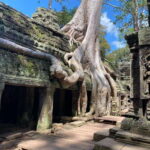
Water levels change everything here. In drier periods, the village may look more like a stilt community beside a lake rather than surrounded by flooded forest. That can still be interesting, but the “floating forest” effect is reduced, and the optional rowing may not be available.
If you’re visiting in the low-water months, go in expecting stilt life and lake life, not a fully flooded woodland maze.
Stop 2: Rolous market (near the school) where you see everyday trade
Your second stop is a market visit connected with the Rolous area. The tour doesn’t focus on the primary school itself, but it takes you to the Rolous market next door.
This part works well because it grounds the day in practical details: what people grow, what they sell, and how community commerce operates around the village and the lake. It’s also a quick, low-effort stop—about 30 minutes—so it doesn’t drag.
You don’t need special interests here. Even if you only watch for a bit, it helps you understand that this isn’t a staged “floating village” set. It’s tied to real local produce and daily needs.
Stop 3: Roka Pagoda (Wat Roga) and the village’s spiritual side
The final main stop is Roka Pagoda, also referred to as Wat Roga. You’ll spend about 30 minutes there, and it’s focused on learning about Buddhism and how monks and villagers rely on each other.
This is the part where the tour becomes more than scenery. It gives you a sense of what holds the community together besides work and water.
A simple practical tip: dress comfortably, but be respectful at religious sites. If your outfit exposes shoulders or knees, consider covering up for the pagoda visit.
Optional adds and small costs: rowing price, food, and extra purchases
The base tour includes the boat tour fee and the relevant admission ticket for Kompong Phluk. It also includes life-jackets, a guide with English support, local tax, travel insurance, and the water/cold towel.
The main extra cost you may encounter is the rowing boat through the flooded forest. That’s USD 5 per person and is only available during rainy season when water levels are high.
Food is not included. There is a restaurant where you can purchase drinks and snacks. In the hot season, it’s worth planning ahead by eating before you go or setting aside time during the tour to buy something simple if you need it.
Price and value: is $24 a smart deal for a half-day on the lake?

At $24 per person, this tour is priced like a solid value option for Siem Reap day trips. The reason: you’re getting transport (including pickup), guided interpretation, life-jackets, and the major boat component, not just a ticket to walk around.
Where the value story can shift is seasonality and extras. In high water periods, you may get the optional rowing through the flooded forest, which many people rate as the standout. In dry months, you may still enjoy Kompong Phluk, but the scenery changes and the rowing option may be off the table.
Also consider what kind of traveler you are. If you love being out on water and want a guided cultural context, $24 goes a long way. If you’re extremely price-sensitive about small “extras,” you’ll want to be clear with yourself about what you’re paying for versus what’s optional.
What could annoy you: pacing, time on the village, and the “poverty tourism” worry
Let’s be honest: a floating village tour can land differently depending on expectations.
Some people felt there wasn’t quite enough time to wander freely once they got to the village. Others said the tour felt a bit stretched with breaks, or wished the boat experience felt more premium.
More seriously, one critical review described discomfort with the feel of an attraction-like atmosphere and heavy tourist boat presence. That’s not something you can fully control, but you can control your mindset. If you go to learn how people live—through the guide’s explanations—rather than to “consume” poverty visuals, the day tends to feel more respectful and meaningful.
Another practical point: if you’re someone who hates sales pressure, keep your guard up. One review mentioned a perception of selling during the day. That might not happen every time, but it’s worth knowing that it can be part of the experience depending on how the day runs.
Tips to make your Kompong Phluk day smoother
Here’s how to stack the odds in your favor.
Bring:
- a hat and sunscreen
- insect repellent
- comfortable casual clothing (and something modest for the pagoda)
Wear:
- sturdy sandals or shoes you don’t mind getting a little wet
- plan to use the life-jacket unless your guide tells you otherwise
Think ahead:
- afternoon tours are hotter later in the day, so hydration matters
- expect seasonal changes in what the floating forest looks like
Also, if you care about timing, ask your guide about the flow of the day early on. People praised guides for managing time well and sticking to the schedule, including toilet breaks. That kind of planning makes a half-day trip feel easier.
Should you book the Kompong Phluk Floating Village Half-Day Tour?
If you want one memorable, human-scale day on the water without committing to a full day, I’d book it.
Book it if:
- you want sunset Tonle Sap views (especially on the afternoon option)
- you like guided interpretation that connects the community to the changing water cycle
- you’re visiting during or near rainy-season timing and want the optional flooded forest rowboat chance
Maybe skip or adjust expectations if:
- you’re visiting in a low-water month and really want “floating forest” scenery
- you dislike any sense of tourism-driven atmosphere and would rather choose a different type of community visit
My bottom line: this is one of the most direct ways to understand life around Tonle Sap from Siem Reap. At $24, the combination of transport, guide, boat time, and cultural stops is hard to beat—just respect the seasonal reality and plan for what might be optional.
FAQ
How long is the Kompong Phluk Floating Village tour?
It’s about 5 hours total (half-day). Kompong Phluk itself gets about 3 hours, with two additional stops of about 30 minutes each.
Is hotel pickup included?
Yes. The tour includes hotel pickup in Siem Reap.
What does the tour price include?
The price includes an air-conditioned vehicle, an English-speaking guide, life-jackets, local tax, boat tour fee, travel insurance, and a bottle of water plus a cold towel.
Do you visit a floating village and also get to walk around?
Yes. The tour takes you by boat to see the village from the water, and it also includes time walking around within the community.
What stops are included besides Kompong Phluk?
You’ll also visit the Rolous market near the school and stop at Roka Pagoda (Wat Roga).
Is the rowing boat ride included?
No. The rowing boat through the flooded forest is not included. It costs USD 5 per person and is available only during the rainy season when water levels are high.
Is swimming included?
On the afternoon option, the tour includes a chance to swim in the lake.
How big are the groups?
A maximum of 10 people per booking.
What should I wear or bring?
Wear comfortable casual clothes and respect religious areas at the pagoda. Bring a hat, sun cream, and insect repellent. The tour recommends a life-jacket for safety.
What happens if weather is bad?
The experience is said to operate in all weather conditions, but it also states that if it’s canceled due to poor weather, you’ll be offered a different date or a full refund.
Can I cancel for a full refund?
Yes. You can cancel up to 24 hours in advance for a full refund. If you cancel less than 24 hours before the start time, the amount paid is not refunded.