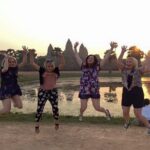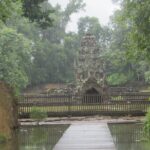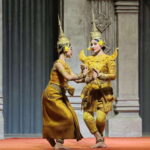
Three days, and Angkor finally clicks. This private tour strings together major Khmer highlights and smaller, less-fossilized stops across Siem Reap’s Angkor Archaeological Park. You get hotel pickup, A/C transport, a private English-speaking guide, and mobile tickets so you spend more time looking up and less time sorting out logistics.
I really like the way the route mixes the famous must-sees (Bayon, Ta Prohm, Angkor Wat) with the temples that make you say, Wait, that’s why this place matters. One consideration: the $110 tour price doesn’t include the temple ticket ($62 per person), the Tonle Sap boat fee ($15 per person), or meals, so your real total is a bit higher.
You’ll also get a guide who can explain what you’re seeing in human terms. In one recent group, the standout guide was Mr. Buth Chansip, praised for deep temple insight thanks to his educational background and for making a long day feel organized rather than exhausting.
In This Review
- Key highlights you’ll actually feel
- How the private format makes Angkor easier to love
- Day 1: Banteay Srei, Ta Som, Neak Pean, and Preah Khan
- Day 2: Angkor Thom South Gate, Bayon faces, Ta Prohm’s roots, and Angkor Wat
- Day 3: Chong Kneas on Tonle Sap and Artisans Angkor craft education
- Price and value: what the $110 really covers
- Your guide matters: lessons in reading Khmer stone
- Practical tips for the heat, the walking, and the timing
- Should you book this private ancient-temple tour?
- FAQ
- What’s the duration of the private tour?
- Is pickup included?
- What language is the guide?
- Are temple tickets included in the price?
- How much is the boat fee for Tonle Sap?
- Is the tour private?
Key highlights you’ll actually feel
- Private A/C pickup with an English-speaking guide that keeps the pace sane across hot temple days
- A strong Angkor mix: Banteay Srei, Neak Pean, Preah Khan, Bayon, Ta Prohm, and Angkor Wat
- Big icons plus lesser-visited sites, so you get variety instead of only the postcard views
- Tonle Sap by boat to Chong Kneas, for a real look at lake life (with a separate boat fee)
- Artisans Angkor visit to see craft education and techniques like wood/stone carving, lacquer, silver plating, and silk painting
How the private format makes Angkor easier to love
Angkor can feel like a lot, fast. This tour helps because it’s private, not a bus shuffle, and you’re not trying to figure out routes while also decoding stone carvings. Hotel pickup and drop-off matter here, especially if you’re tired from arriving in Siem Reap or you just want the day to start cleanly.
The other win is your guide’s “why.” Angkor isn’t just temples; it’s a timeline of rulers, beliefs, and styles. When someone can connect the Hindu-to-Buddhist shifts, or explain why certain layouts look the way they do, the stones stop being decoration and start becoming a story. One review called out Mr. Buth Chansip’s education and his ability to give deep insight over multiple temple stops, and that matches how this kind of itinerary works best.
There’s still walking, sun, and heat, but private touring usually means smarter pacing. Your schedule is set for you, and your guide can help you decide what to linger on so you don’t feel like you’re racing.
You can also read our reviews of more private tours in Siem Reap
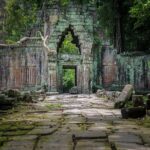
Day 1: Banteay Srei, Ta Som, Neak Pean, and Preah Khan
Day 1 is a strong opener because it starts with detail before the mega-monuments steal your attention.
Banteay Srei (10th century) is often described as a jewel of classical Khmer art, and you’ll see why from the craftsmanship emphasis. This stop is about close-looking: carved surfaces, fine work, and that distinctive pinkish sandstone feel the temple is known for. Expect about an hour on-site, and use that time to notice motifs instead of just scanning ruins.
Next is Ta Som, built in the late 12th century in a classic Bayon-style and associated with Jayavarman VII as Buddhist. With its shorter time slot, it’s a good palate cleanser after Banteay Srei. You get the sense of how styles evolved while still staying within the day’s rhythm.
Then comes Neak Pean, a small island temple located in the middle of a baray (a large water reservoir) constructed in the Angkor area. This is one of those “smaller stop, big meaning” locations. You’ll likely spend around 30 minutes here, and it’s worth it because the setting helps you understand the temple’s relationship to water and ritual.
After lunch, you visit Preah Khan, a huge and highly explorable monastic complex built by Jayavarman VII in the late 12th century. This is where the day stretches into exploration time (about an hour). If you like getting lost in ruins without feeling rushed, this stop is built for you.
Practical note: temple admissions are not included, and the itinerary lists admission not included for each stop. So plan on arranging the main temple ticket before you expect to enter.
Day 2: Angkor Thom South Gate, Bayon faces, Ta Prohm’s roots, and Angkor Wat
Day 2 is the one most people remember, because it stacks landmark temples with distinct moods. You’ll start early enough to get into Angkor Thom’s atmosphere.
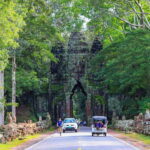
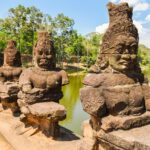
At Angkor Thom South Gate, look for the dramatic mythic scene: guardian gods (devas) and demon gods (asuras) pulling the snake Shesha from opposite sides. Even if you’re not a mythology expert, your guide can help you read what you’re looking at. This is a short stop (about 15 minutes), but it sets the emotional tone for the rest of the day.
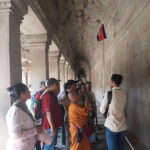
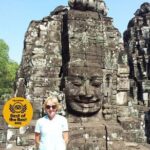
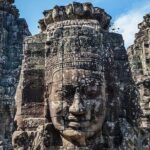
Then it’s Bayon, famous for over 2,000 large faces carved on towers. The bas-reliefs also get attention here, with scenes of everyday life like markets, fishing, festivals including cockfights, and jugglers. You’ll likely spend about an hour, which is just enough time to see the scale and then focus on a few carving details instead of trying to absorb everything at once.
After that, Baphuon (late 11th century, dedicated to Siva) gives you another religious and architectural angle. It’s shorter (about 30 minutes), but it helps show how Angkor mixed belief systems across centuries. Phimeanakas, from the late 10th to early 11th century and dedicated to Hindu worship, follows with another short stop (about 30 minutes).
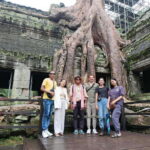
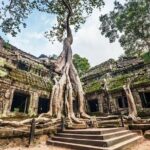
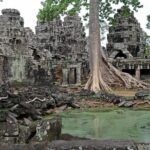
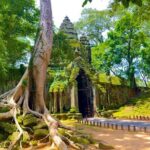
Now for the stop with the movie-poster feel: Ta Prohm (the Jungle Temple). You’ll spend about an hour here, and the point isn’t just the big trees. It’s the way roots spread over stones, creating that eerie, lived-in feeling of ruins under living growth. Your guide’s commentary is especially useful at Ta Prohm because it helps you understand what you’re seeing without turning it into a simple photo op.
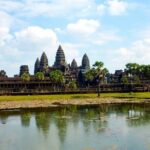
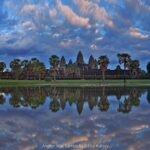
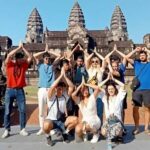
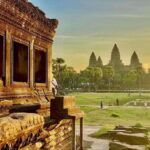
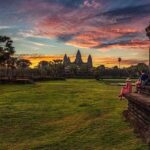
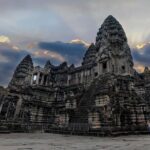
The day finishes with the big one: Angkor Wat. You’ll have about 3 hours here, and it’s described as the largest religious monument in the world, originally Hindu and later Buddhist. This is the stop where your guide’s sequencing matters. If you go in already knowing what you’re looking for—axes, levels, symbolism—you’ll get more meaning instead of just “wow, tall towers.”
Tip for this day: wear shoes you can walk in for hours, and don’t underestimate sun. Water is included, but your comfort comes from smart clothing and breaks.
Day 3: Chong Kneas on Tonle Sap and Artisans Angkor craft education
Day 3 shifts away from the temple stones and onto the water and crafts that make Siem Reap feel like a living place.
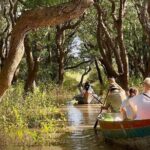
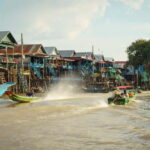
You’ll head to Tonle Sap lake for Chong Kneas floating village, taking a boat to see day-to-day life on the water. The tour describes it as a look at the lifestyle of three communities linked to Cambodia, the Cham, and Vietnam. Expect about 2 hours for this part, and you’ll want your camera ready but also your manners in check. This isn’t a theme park; it’s homes and routines.
Next is Artisans Angkor, where you visit Les Artisan D’Angkor, a fine art school and workshop space for wood and stone carving, lacquer work, silver plated crafts, and silk painting. This stop is listed at about 1 hour, and it’s a nice counterbalance after three days of ancient stone. You’ll leave with a sense of how skills survive and adapt locally, not just how ruins sit in the past.
Temple tickets and the boat fee are separate costs, but the overall flow of Day 3 is what makes the whole trip feel complete. You’re connecting ancient Khmer culture to modern Cambodian creativity and livelihood.
Price and value: what the $110 really covers
Here’s the simple math so you don’t get surprised. The tour price is $110 for the private 3-day experience. That includes private A/C transportation, a private English-speaking tour guide, drinking water, hotel pickup and drop-off, and travel insurance.
Not included:
- Temple ticket: $62 per person
- Boat fee to Tonle Sap: $15 per person
- Meals and beverages
So, using only the fees you’re told about, a rough per-person total becomes $110 + $62 + $15 = $187, before meals. If you’re traveling with someone you trust to share a private vehicle and want the guide’s attention at every stop, that cost can start to look very fair. If you’re on a strict budget and you’d rather self-guide, this type of private, multi-day structure will feel pricier.
Still, the value is in the time saved and the explanations you get. Angkor is too big to do well without help if you care about understanding more than just taking photos.
You can also read our reviews of more tours and experiences in Siem Reap
Your guide matters: lessons in reading Khmer stone
This is the part I’d prioritize. On a three-day plan, the quality of the guide changes the experience more than you’d think. A review highlighted Mr. Buth Chansip as the best guide for the job, praising his educational background and his deep temple insight across about 14 temple stops over the three days.
That’s exactly what you want here: a guide who can connect what you see to what it meant. For example, your route moves between Hindu-dedicated spaces and Buddhist-linked ones, between massive ceremonial complexes and quieter carved-detail temples. If you get a guide who can explain that shift while you’re standing in front of the carvings, your brain makes patterns—and Angkor starts to feel coherent.
What you can do: ask simple questions when you reach each site, like what the temple was used for or what to notice first. Even without a long conversation, your guide will steer you toward the details that matter.
Practical tips for the heat, the walking, and the timing
You’ll be outdoors a lot. Since the itinerary runs across big areas of Angkor and then includes a boat ride, comfort is the difference between enjoying it and grumbling through it.
- Bring a hat and use sunscreen. Temple stone doesn’t shade you, and Ta Prohm can be muggy.
- Plan on modest clothing. You’ll be in religious spaces, and you’ll feel better if you can cover shoulders and knees.
- Use good walking shoes. Your stops range from formal temple grounds to more uneven paths.
- Have cash ready for anything you haven’t pre-paid. Temple tickets and the boat fee are separate costs.
- Take a break when your guide suggests it. Private tours still require pacing, not endurance challenges.
Since drinking water is included, you’re set for the tour portion, but it’s still smart to sip regularly rather than chug once you feel thirsty.
Should you book this private ancient-temple tour?
I’d book this if you want a structured private Angkor experience with an English-speaking guide, especially if it’s your first time in Siem Reap and you don’t want to spend your days solving transportation and ticket timing. The itinerary makes room for variety: Banteay Srei’s detail, Bayon’s faces, Ta Prohm’s jungle mood, and Angkor Wat’s grand scale—then it finishes with Chong Kneas and Artisans Angkor to ground the trip in modern life.
I might skip it if you only care about one or two “top hits” and you’re confident self-navigating. In that case, a shorter tour could fit better and cost less.
One more helpful thing: the experience includes free cancellation, with full refund if you cancel at least 24 hours before the start time. That’s worth something when you’re juggling flight changes or Siem Reap weather.
If you want your Angkor days to feel planned, guided, and actually understandable, this private 3-day route is a solid choice.
FAQ
What’s the duration of the private tour?
The tour runs for 3 days (approx.).
Is pickup included?
Yes. The tour includes hotel pickup and drop-off, plus private transportation with A/C.
What language is the guide?
You get a private English-speaking tour guide.
Are temple tickets included in the price?
No. Temple tickets are not included and cost $62 per person.
How much is the boat fee for Tonle Sap?
The boat fee to Tonle Sap is $15 per person.
Is the tour private?
Yes. This is a private tour/activity, so only your group participates.