REVIEW · SIEM REAP
3-Day Angkor Wat & All Interesting Major Temples & Kulen Mount Waterfall
Book on Viator →Operated by Happy Angkor Tour · Bookable on Viator
Early mornings and big ruins. That’s the deal.
This 3-day Angkor Wat and Kulen tour is built for people who want the major temples without guessing logistics. I like the private A/C vehicle + hotel pickup/drop-off, and I especially like how the schedule mixes star attractions with less-crowded detours like Ta Nei. One thing to consider: it’s a heavy full-day pace, and Day 1 ends with Phnom Bakheng sunset time if you choose to wait, which can be long in the heat.
The best part is the people. Guides in past groups, including names like Mr Chhay and Pal Saruon, are praised for being passionate and for guiding you to strong photo spots while explaining what you’re looking at. The drawback is that admissions are extra (Angkor pass + Kulen), so the headline price doesn’t tell the whole cost.
In This Review
- Quick hits before you go
- First Day in Angkor: From Angkor Wat to the Phnom Bakheng Hill
- Ta Nei and the crowd-evasion rhythm
- Angkor Thom’s big hitters: Victory Gate, Bayon, and Royal Enclosure views
- Phnom Bakheng sunset: choose your comfort level
- Angkor Thom Stops: What You’re Really Learning While You Walk
- Day 2 at Phnom Kulen: Lingas, Reclining Buddha, and Time to Swim
- The waterfall swim is the big ticket item
- Banteay Srei and Banteay Samre: Pink sandstone and tighter ruins
- Pre Rup: where the temple links to ritual ideas
- Day 3: Sunrise at Angkor Wat, Preah Khan, and the Rolous Temples Loop
- Preah Khan and King Jayavarman VII’s influence
- Neak Pean and Ta Som: calm temple moments
- Eastern Mebon, Rolous, and Bakong: temples that feel like a system
- Artisans Angkor and Psar Chaa: craft work and a local market stop
- Price and Logistics: Is $248.50 a good deal for this much ground?
- What you’re really buying
- Who should book this 3-day Angkor + Kulen plan
- Should you book this tour or plan a different approach?
- FAQ
- What time do you get picked up for Angkor Wat sunrise?
- Are meals included in the $248.50 price?
- How much are the entrance fees for Angkor and Phnom Kulen?
- Does the tour include hotel pickup and private transport?
- Is there time to swim at Phnom Kulen?
- Can I cancel and get a full refund?
Quick hits before you go
- Angkor Wat sunrise timing starts very early, so you’re not roasting waiting for first light
- Phnom Kulen includes a waterfall swim, not just a photo stop
- Angkor Thom circuit + Victory Gate + Bayon faces keeps you oriented fast
- Ta Prohm’s Tomb Raider trees give you that famous, instantly recognizable look
- Artisans Angkor gives you a craft-and-product break you can skip if you want
- Phnom Bakheng sunset is optional, but the hill climb is real
First Day in Angkor: From Angkor Wat to the Phnom Bakheng Hill
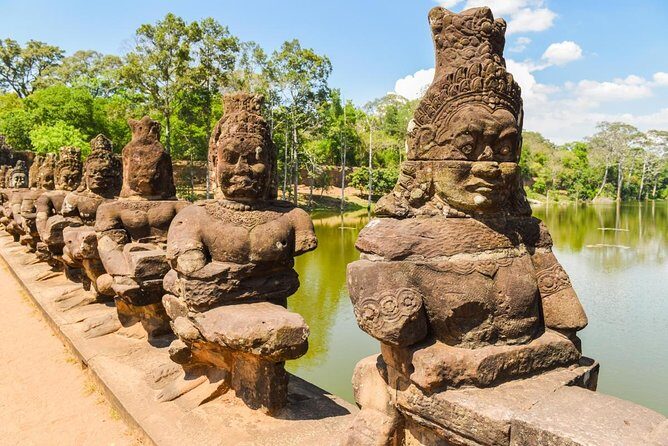
Day 1 is the classic “Angkor opener,” starting with a morning visit to Angkor Wat and then continuing through Ta Prohm and the heart of Angkor Thom. You’re collected from your hotel around 8:00am, then you’ll stop along the way to pick up the temples pass before you enter the main complexes. This matters because Angkor day one can otherwise get messy fast if you’re trying to manage tickets and queues on your own.
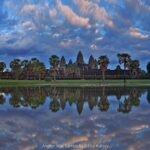
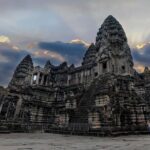
Angkor Wat first is a smart move. The temple is the flagship, so it’s best to see it with fresh energy and good morning light. The tour allots about 2.5 hours, which usually gives you time to walk the key areas without feeling like you’re rushing like a checklist robot.
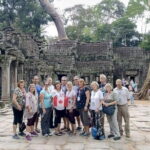
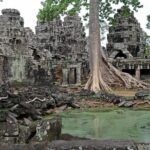
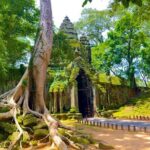
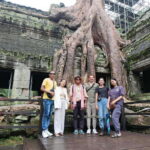
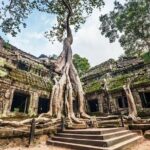
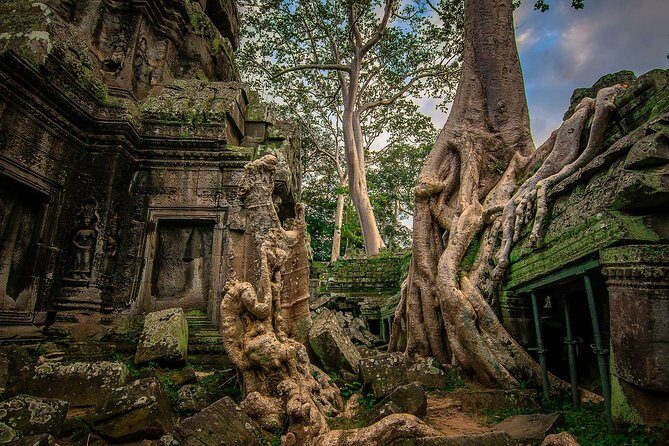
Then you head to Ta Prohm, the famous one with giant roots wrapping around the stones. The tour leans into the pop-culture connection—Ta Prohm is where Hollywood filmed Tomb Raider—but the real value here is visual. The roots make the stones look like they’re fighting the jungle, and the guide’s job is to help you understand what that “ruin-meets-nature” feeling means historically, not just aesthetically.
You can also read our reviews of more tours and experiences in Siem Reap
Ta Nei and the crowd-evasion rhythm
After Ta Prohm, you stop at Ta Nei, a smaller temple that’s described as a good option if you want to avoid the busiest areas. It’s also less restored, and the trees around it help create a quieter, more “wandering” feeling. The tour gives it about 45 minutes, which is about right—you’ll feel like you’ve seen something distinct, without burning time that you need later.
Angkor Thom’s big hitters: Victory Gate, Bayon, and Royal Enclosure views
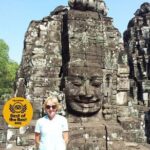
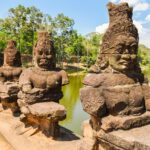
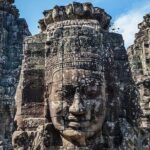
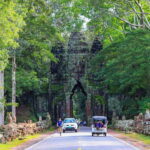
Next comes the Victory Gate on the eastern side of Angkor Thom. It’s a quick stop—about 10 minutes—but it’s useful because it gives you orientation. From there, you move to Bayon, the temple in the center with 49 towers and four faces on each tower. The tour includes about 45 minutes here, and that’s enough time to slow down, walk around, and actually notice the repeating face patterns instead of just snapping a few pics and leaving.
You then continue to Baphuon, Phimeanakas, and two terraces: Terrace of the Elephants and Terrace of the Leper King. Each stop is short—often 10 to 30 minutes—but that’s the point. You get a broad sweep of royal-era landmarks in one day, and your guide can connect them so they don’t blur together.
Phnom Bakheng sunset: choose your comfort level
The day ends with Phnom Bakheng, a hilltop viewpoint meant for sunset. The schedule allows about 2 hours here. There’s a note that the climb and top areas have limited number of tourists, so you’ll want to treat this as timing-sensitive. The good news: sunset time is optional. If you’d rather conserve energy, you can skip waiting and save your legs for Day 2 and Day 3.
Practical takeaway: Day 1 is long and walking-heavy, so I’d pack like it’s a whole-season day—water, sun protection, and shoes you trust on uneven ground. The tour includes cool drinking water and wet towels, which is a big deal for comfort.
Angkor Thom Stops: What You’re Really Learning While You Walk
Angkor Thom can feel like a maze if you go in cold. This itinerary helps you because it threads the story in a logical order: ceremonial entry (Victory Gate), central state religion symbolism (Bayon), then royal enclosure and major reference temples (Baphuon, Phimeanakas, terraces). When the guide keeps you moving in that sequence, you start recognizing visual cues rather than relying on memory later.
Bayon’s faces are the signature. The tour’s description focuses on four faces per tower, and that’s exactly what you should look for as you walk. Don’t just aim your camera—turn your head and notice how the faces shift relative to your position. It’s one of those architectural tricks that works better at a slow pace.
For Phimeanakas, the tour highlights it as a Hindu pyramid temple built around the 10th century, located in the old royal palace area. That matters because it’s not only “a temple”—it’s part of the Angkor Thom royal layout. Short stop or not, it helps you connect the dots between what kings built and what people practiced.
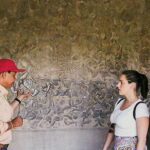
The terraces are quick, but they add a human scale. Terrace of the Elephants was used by kings to watch victorious returning armies, and the walls are carved with elephant imagery. Terrace of the Leper King is another nearby platform, and even if you don’t spend long here, it gives you that sense that Angkor’s temples weren’t isolated—they were part of governance and daily ceremony.
Day 2 at Phnom Kulen: Lingas, Reclining Buddha, and Time to Swim
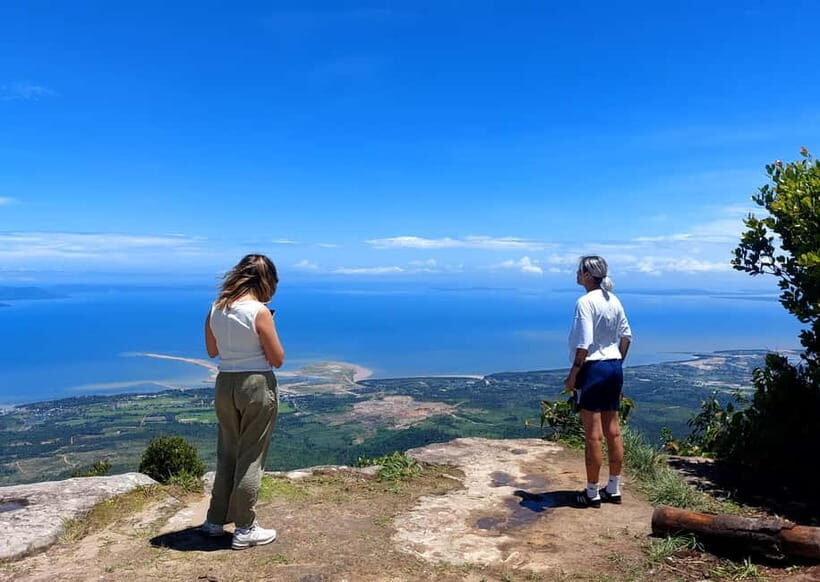
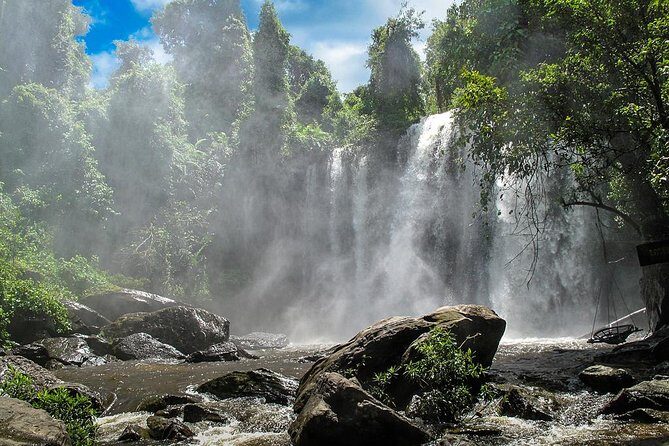
Day 2 is the nature shift, and it’s a welcome one. You drive to Phnom Kulen National Park, which is more than 60 km from the Angkor area. The schedule sets aside about 5 hours, so you’re not just “dropping by.” This matters because Kulen feels different from the stone-heavy temple days—more open, more river-bed details, and more time spent outside.
Here’s the signature stop: a riverbed area covered with carved stones called “1000 Lingas,” linked with the Shiva symbol of divine essence. The tour also mentions the Reclining Buddha, which is another big reason many people make this trip beyond the temples alone. If you only cared about Angkor, you’d miss the contrast: stone empire meets sacred rock landscape.
The waterfall swim is the big ticket item
The tour summary says you’ll swim in the waterfall at Phnom Kulen. That changes the vibe immediately. Instead of another “look and walk away” temple stop, you get an actual break from heat and walking. Plan to bring what you need for water time—at least a swimsuit and a way to change afterward—because you’ll want to actually use that moment, not just watch others do it.
Banteay Srei and Banteay Samre: Pink sandstone and tighter ruins
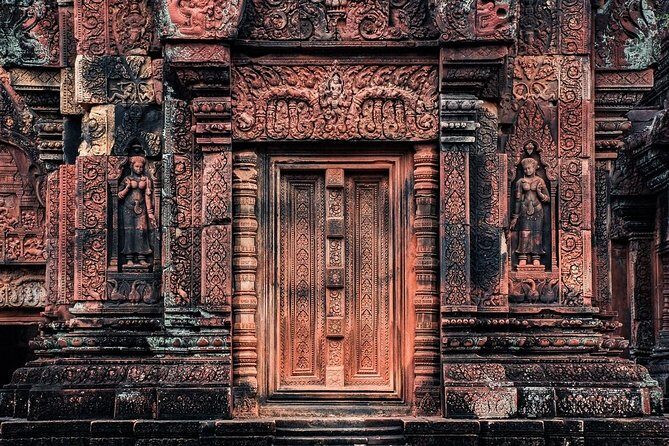
After Kulen, you head to Banteay Srei (often called the Ladies temple). It’s described as pink sandstone, built in the 10th century, dedicated to the Hindu trinity gods, with a commissioning king named Rajendravarman II. This stop takes about 1 hour. It’s short enough to stay sharp and not drag, but long enough to appreciate the stone color and the feeling of a more intimate temple complex than the huge Angkor giants.
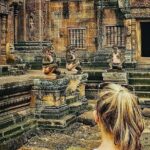
Then you go to Banteay Samre for about 45 minutes. It’s described as Hindu and built in the 12th century, with architecture that has less obvious evidence for identification. Even if you’re not a stone-nerd, this kind of stop can be a relief after the big-busy complexes. It gives you room to slow down and notice smaller details.
Pre Rup: where the temple links to ritual ideas
The day ends at Pre Rup, a Hindu temple constructed in the late 10th century. The tour description notes beliefs about funeral conduct connected to temples, and it frames Pre Rup with that ritual context. It’s a 30-minute stop, which means it’s mainly about understanding the story and seeing the key forms without turning it into a second all-day project.
Practical takeaway: Day 2 is the day you’ll feel the distance. Don’t plan anything after the tour that requires energy. You’ll likely sleep well—Kulens air and water time do that.
Day 3: Sunrise at Angkor Wat, Preah Khan, and the Rolous Temples Loop
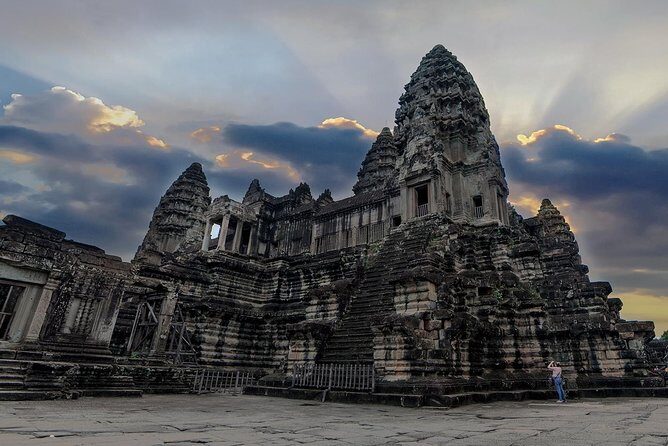
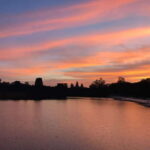
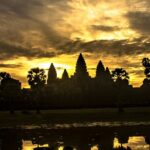
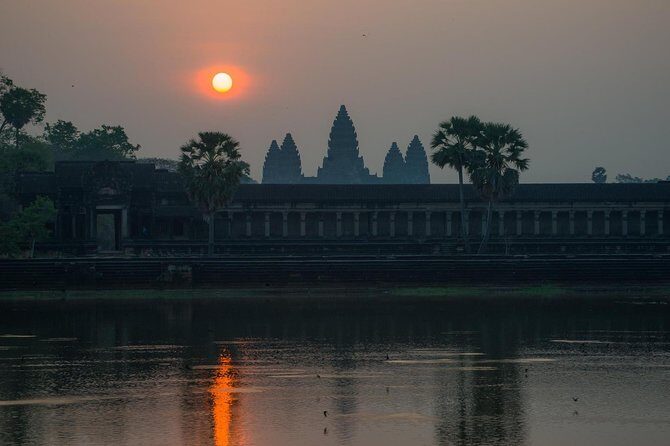
Day 3 starts with a serious early push. The tour pickup is around 5:00am for Angkor Wat sunrise. The schedule gives about 1 hour 45 minutes, which typically works out to enough time to arrive, find your bearings, watch the light change, and still get back for breakfast and the rest of the day.
Preah Khan and King Jayavarman VII’s influence
After sunrise, you visit Preah Khan, a Buddhist temple built by King Jayavarman VII dedicated to his father. The tour gives about 1 hour here. This is a great stop for anyone who likes seeing how Angkor’s religious identity shifted over time. The text emphasizes the king’s influence, and the temple’s scale helps make that idea feel real instead of abstract.
Neak Pean and Ta Som: calm temple moments
Next is Neak Pean, described as a small island temple built in Angkor by a Khmer king. It’s about 30 minutes. Then you go to Ta Som, a small Buddhist temple on the east side of Neak Pean, also about 30 minutes. These stops are brief, but that’s a feature. They act like breathing space between bigger complexes.
Eastern Mebon, Rolous, and Bakong: temples that feel like a system
You continue to Eastern Mebon, a temple-mountain ruin with three levels and five towers, plus elephant statue corners. The stop is about 1 hour, and then you drive to the Rolous group.
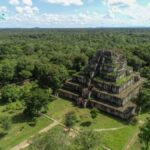
Rolous adds variety: Lolei (small Hindu temple built in the 9th century, about 15 minutes), Preah Ko (first temple built in the older city of Hariharalaya, about 30 minutes), and Bakong (described as the first temple mountain of sandstone and the biggest in the Rolous group, about 45 minutes). You’ll also get a lunch break, with the tour noting you’ll break for lunch at a good restaurant along the way.
This Rolous cluster is worth taking seriously. It helps you see Angkor not as one temple, but as a whole network of sites that developed over time. If you like connecting eras, these stops do the job.
Artisans Angkor and Psar Chaa: craft work and a local market stop
Late in the day, the tour shifts gears from temples to culture and commerce.
At Artisans Angkor, the focus is on traditional craft skills and product categories like stone carving, wood carving, lacquering, gilding, and silk processing. The tour gives about 30 minutes, and it even says you can skip it if you don’t want to see it. I like having a short craft stop because it helps you leave with something concrete besides photos.
Then there’s Psar Chaa (Old Market) for about 30 minutes. Again, it’s optional if you don’t want to see it. Even if you just walk, you get a sense of where locals pick up everyday items and snacks.
Practical note: These last stops can feel “faster” than temples. That’s okay. Treat them like a reset so you don’t end the trip temple-fatigued.
Price and Logistics: Is $248.50 a good deal for this much ground?
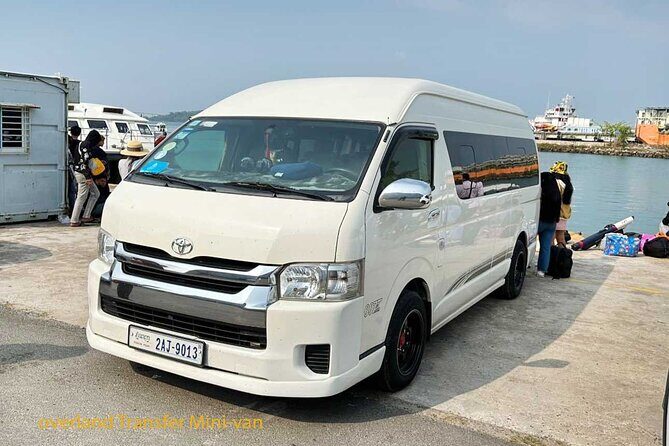
The headline price is $248.50 per person for roughly 3 days, and the tour includes a lot that usually costs extra if you try to DIY. You get a private A/C vehicle with driver, an English-speaking guide with licensed status, cool drinking waters and wet towels, parking fees and road tolls, plus pickup from your hotel and drop-off back at your hotel.
Admissions are not included, and that’s where you need to do the math up front. The tour lists:
- Angkor Wat + all temples: $62 per person
- Kulen mountain: $20 per person
So expect $82 in entrance fees on top of the $248.50 base price, before meals. Meals also aren’t included. The tour notes lunch options with a stated $5 per person cost depending on the menu, but it doesn’t spell out every meal, so budget extra for food and drinks beyond the included water.
What you’re really buying
You’re paying for three main things:
1) Time efficiency across huge sites (Angkor + Kulen plus Rolous)
2) A guide who can explain what you’re seeing in a way that sticks
3) Comfort in the form of A/C transport and provided cooling items
The reviews back up the guide-and-driver focus. Past groups mention guides such as Mr Chhay, Pal Saruon, Em Somuch, Chandri, and Small Mony, along with drivers like San and Sriang. The praise is consistent: solid temple explanations, good pacing, and help with photo timing and practical shortcuts—one group mentions a bush walk shortcut under trees in hot weather.
Who should book this 3-day Angkor + Kulen plan
This tour is best for you if:
- You want the big Angkor highlights without piecing together tickets and routes
- You like having your day structured, especially for sunrise and sunset-style timing
- You’re interested in both temple history and nature time, since Kulen includes waterfall water time
- You prefer a private tour setup where you can move with your group’s pace
It may not be ideal if:
- You want a slow, minimal schedule with lots of free time
- You’re sensitive to long days on your feet, including possible hill climbing at Phnom Bakheng
- You’d rather handle admissions yourself and build your own route
Should you book this tour or plan a different approach?
I’d book it if your top priority is seeing Angkor’s major complexes across three days with a guide who can connect the dots, plus adding Phnom Kulen as more than a roadside stop. The inclusion of hotel pickup/drop-off, A/C transport, and cooling support makes a noticeable difference in comfort when you’re moving through multiple temple areas back-to-back.
I’d rethink if you dislike early mornings. Day 3’s 5:00am sunrise is a commitment, and Day 1’s sunset climb at Phnom Bakheng is also time-heavy if you choose to do it. Also, if you’re trying to keep costs as low as possible, remember the base price plus $82 in entrance fees, plus meals.
If you’re an “I want to see the essentials, but I don’t want the hassle” traveler, this is a strong match.
FAQ
What time do you get picked up for Angkor Wat sunrise?
The tour lists pickup at about 5:00am on Day 3 so you can watch Angkor Wat sunrise.
Are meals included in the $248.50 price?
No. Meals are not included. The tour notes lunch may cost about $5 per person depending on the menu.
How much are the entrance fees for Angkor and Phnom Kulen?
Entrance fees are extra: $62 per person for Angkor Wat + all temples, and $20 per person for Kulen mountain.
Does the tour include hotel pickup and private transport?
Yes. It includes start pickup at your hotel and finish drop you at your hotel, plus a private A/C vehicle with driver.
Is there time to swim at Phnom Kulen?
Yes. The tour overview states you will swim in the waterfall in Phnom Kulen National Park.
Can I cancel and get a full refund?
Yes. The policy says free cancellation is available up to 24 hours before the experience start time for a full refund.