REVIEW · SIEM REAP
2-Day Angkor Wat with Temples On Small Circle & Kulen Waterfall
Book on Viator →Operated by Happy Angkor Tour · Bookable on Viator
Angkor hits hardest when the light is right. This 2-day plan is built around early starts: you’ll see sunrise at Angkor Wat and finish Day 1 with the climb for Phnom Bakheng sunset. I like that the route covers the major must-sees without feeling like a frantic checklist, and I also like the way your licensed English guide works the day.
One possible consideration: the long temple days include lots of walking and the Phnom Bakheng climb can be slow if you’re not used to uneven steps.
In This Review
- What this tour feels like in practice
- Key points you’ll care about
- Entering the Angkor rhythm: sunrise and sunset timing
- Day 1, 8:00am start: Angkor Wat then the Small Circuit temples
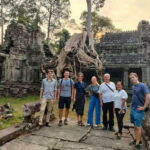
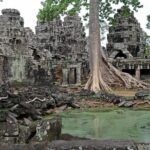
- Ta Prohm: roots, faces, and a movie set vibe
- Ta Nei: a calmer temple pause
- Angkor Thom on Day 1: Victory Gate through Bayon
- The royal enclosure stops: Baphuon, Phimeanakas, and the terraces
- Phnom Bakheng sunset: the payoff climb (and a practical option)
- Day 2 starts at 5:00am: sunrise at Angkor Wat
- Phnom Kulen National Park: 1000 Lingas, reclining Buddha, and waterfall
- Back to town after lunch: Banteay Srei and the quieter temple set
- Price and value: what $181.75 includes, plus the real add-ons
- A private, guide-led day: how Chhay-style guidance helps
- Getting the most out of your two days
- Who this tour suits best
- Should you book this Angkor Wat and Kulen 2-day tour?
- FAQ
- What is included in the $181.75 per person tour price?
- Are admission fees included for Angkor temples and Phnom Kulen?
- What are the pickup times for each day?
- What temples and ruins are included on Day 1?
- What will you see at Phnom Kulen National Park on Day 2?
- Do you visit Banteay Srei and other pink or smaller temples on Day 2?
- Is this tour private?
- Is there a mobile ticket?
- What is the cancellation policy?
What this tour feels like in practice
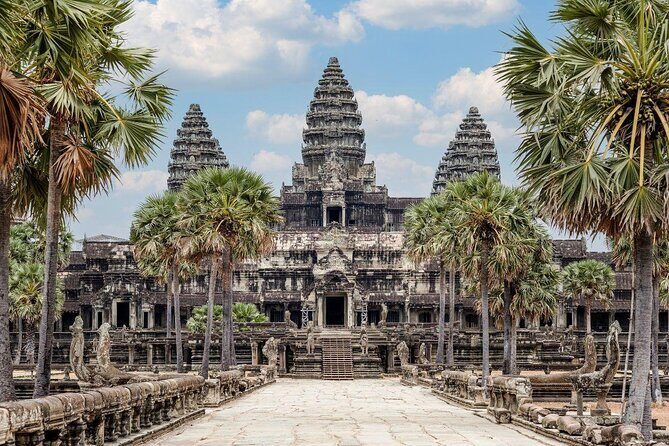
Day 1 is the classic temple sweep on the Small Circuit style route around Angkor Thom, with Ta Prohm’s famous roots and the face-filled Bayon in the middle of it. Day 2 starts before dawn, then shifts from temple stone to nature at Phnom Kulen National Park, where you’ll see the 1000 Lingas carving area, a big reclining Buddha, and a waterfall. If you want the Angkor highlights plus an escape into the Kulen mountains, this tour has a good balance.
Key points you’ll care about
- Sunrise-first routing on Day 2 (pickup at 5:00am) to catch Angkor Wat before the busiest crowds
- Small Circuit mix that includes Ta Prohm and Bayon, plus quieter stops like Ta Nei
- Phnom Bakheng at sunset as a payoff climb on Day 1 (and you can skip the waiting part if you want)
- Phnom Kulen National Park with the 1000 Lingas riverbed carvings, reclining Buddha, and a waterfall
- Pink sandstone stop at Banteay Srei after lunch, plus Pre Rup and Banteay Samre
You can also read our reviews of more tours and experiences in Siem Reap
Entering the Angkor rhythm: sunrise and sunset timing
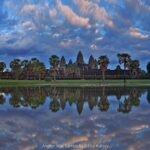
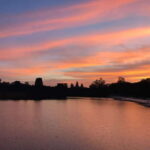
Angkor is not one place. It’s dozens of temples spread over a huge area, and the difference between seeing ruins in daylight and seeing them in golden hour is massive. This tour builds your day around that, with a sunrise session on Day 2 at Angkor Wat and a sunset session on Day 1 at Phnom Bakheng.
Day 1 starts more normally, with pickup at 8:00am, giving you time to get into the temples while the morning is still manageable. Day 2 is the real early one: pickup at 5:00am so you can reach Angkor Wat and watch sunrise. That means fewer harsh shadows for photos and a calmer feeling before the bulk of day visitors arrive.
If you’re thinking about comfort, the tour includes cool drinking water and wet towels, and you move by a private A/C vehicle with a driver. That matters because the distances in the Angkor area add up fast.
Day 1, 8:00am start: Angkor Wat then the Small Circuit temples
The Day 1 sequence begins with Angkor Wat, and you’ll be picked up at 8:00am from your hotel or guest house. The tour also helps you handle the temple pass early, since you’ll buy the pass along the way before you start sightseeing.
Angkor Wat is the anchor. Even if you’ve seen photos, it’s the scale that gets you. You also get a proper start of the day, which helps because the later you go, the more time you spend waiting and swatting off heat.
From there, the tour moves into the Small Circuit zone and builds a strong visual story: you go from Angkor Wat into Ta Prohm, then to other nearby temples around Angkor Thom. This is where the tour feels efficient because the stops are clustered, and you’re not constantly crossing the entire park.
Ta Prohm: roots, faces, and a movie set vibe
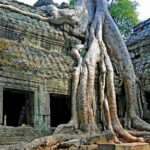
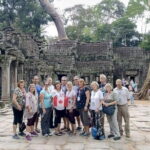
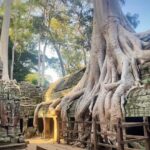
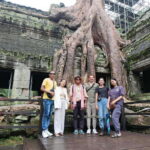
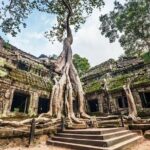
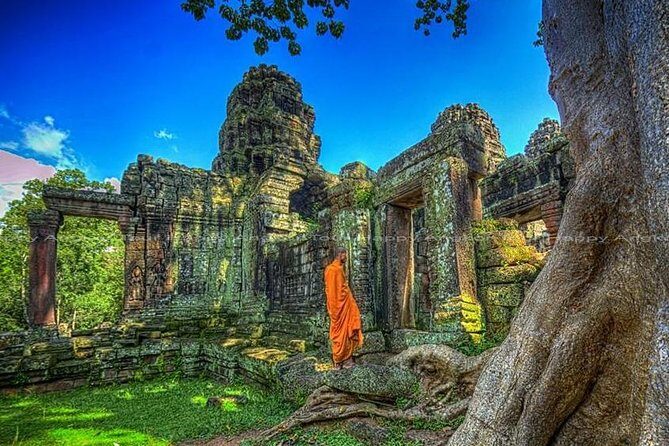
Ta Prohm is famous for its giant tree roots gripping the temple structures. It’s also the temple that gets tied to the movie set look from Tomb Raider, and you can see exactly why. This is one of those places where you’ll want to slow down, not just photograph. Look up and around to understand how the roots and walls interact.
Ta Nei: a calmer temple pause
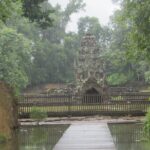
Next comes Ta Nei, a smaller temple with less restoration than some of the other stops. It’s also described as a good choice if you want to avoid the strongest crowd pockets. The surroundings matter here: many big trees give it a more shaded, quiet feel.
If you like temples you can take your time with, Ta Nei is a smart mid-day reset. You’re not just speed-walking through ruins; you’re catching different “moods” of Angkor stone.
Angkor Thom on Day 1: Victory Gate through Bayon
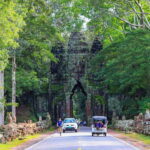
After the Ta Nei stop, the route shifts into Angkor Thom territory, starting with the Victory Gate on the east side. It’s a quick photo stop, but it’s also helpful because it gives you a reference point for what’s ahead. When you enter the heart of Angkor Thom, that context makes the next temples easier to read.
Bayon is the centerpiece in this section. It has 49 towers, and each tower features four faces—so you’ll see a lot of repeating expressions from different angles. The tour includes walking through the complex so you can experience those faces from multiple viewpoints.
This is also a “learning with your eyes” stop. Even if you don’t memorize every symbol, you start noticing how the design guides your movement and where you should pause for the best angles. It’s a temple that rewards careful looking more than quick snapping.
The royal enclosure stops: Baphuon, Phimeanakas, and the terraces
After Bayon, the route continues to Baphuon, then Phimeanakas, and a couple of terraces that help you understand how royal space worked at Angkor Thom.
Baphuon is a Hindu temple built earlier than Angkor Wat, and the big reclining Buddha behind it was built later. That mix of time layers is exactly what makes Angkor compelling: you’re not just looking at one “moment,” you’re seeing modifications and additions across centuries.
Phimeanakas is a pyramid temple located in the center of the old royal palace area. Since it sits inside a key royal enclosure, the timing works well: you’re already in the royal zone mindset from the Victory Gate and Bayon, so it feels cohesive.
Then you get two terraces with their own stories:
- Terrace of the Elephants: a platform where kings could view victorious returning armies, with elephant carvings across the walls.
- Terrace of the Leper King: another nearby platform, named for carvings and stories tied to that area.
These terraces are short stops, but they give you a different layer than the main temple towers. They show how power and ceremonial life played out on carved stone platforms.
Phnom Bakheng sunset: the payoff climb (and a practical option)
Day 1 ends with Phnom Bakheng, where you climb the hill for sunset views. The route includes a major time investment here, since the climb and waiting can take a while.
The tour note is useful: if you don’t want to wait for sunset, you can skip that portion. That’s smart if you’re tired, sensitive to crowds, or you know you’re going to struggle with the steps. You still get the moment of being up there, but you don’t have to force the full sunset ritual.
Practically, this is where good shoes matter. You’ll be on uneven ground, and in Cambodia heat you’ll feel the climb more than you expect. The included water and wet towels help, but pacing is still on you.
Day 2 starts at 5:00am: sunrise at Angkor Wat
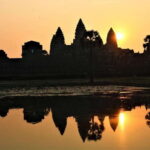
Day 2 starts early, with pickup at 5:00am so you can watch sunrise over Angkor Wat. This timing is the whole point of a second day: Angkor looks different when the sky is still cool and the ruins glow in soft light. You also get a more orderly experience when you arrive early.
After sunrise, the plan continues after breakfast, and then you leave the Angkor park area for Phnom Kulen National Park. That shift matters because it breaks up temple fatigue. If Angkor is all you do, your brain starts treating stone like stone. Kulen brings you back to nature.
Phnom Kulen National Park: 1000 Lingas, reclining Buddha, and waterfall
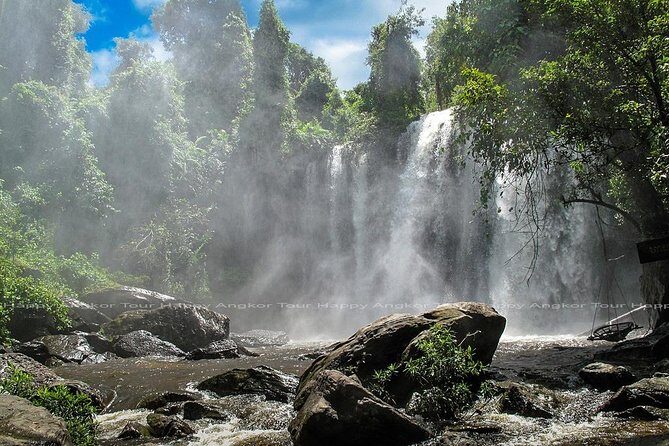
Phnom Kulen is more than a quick stop. It’s described as a National Park more than 60km from Angkor, and the experience focuses on spiritual carvings and water features. You’re not just touring buildings; you’re moving through a carved riverbed area tied to Shiva symbolism.
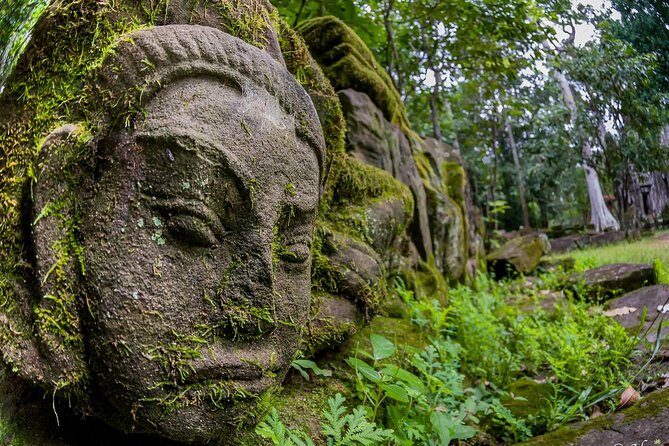
One of the big highlights is the 1000 Lingas, described as carvings under the riverbed area. Lingas are symbols of Shiva’s supreme essence, so this is a moment where the meaning behind Angkor’s Hindu roots becomes more concrete. Even if you’ve never studied Cambodian religious symbolism, the physical repetition of carved forms makes it easy to grasp what people saw and why it mattered.
You’ll also see a big reclining Buddha built from the big stone. That’s a change in tone from the earlier Shiva-linked stops, and it helps you understand the layered spiritual shifts across Khmer culture.
And then there’s the waterfall. The tour includes it as part of the Kulen experience, which makes the day feel less like a dry museum run and more like a real place with sound and mist. If you’re traveling during hotter months, the water feature can feel like a reset.
Back to town after lunch: Banteay Srei and the quieter temple set
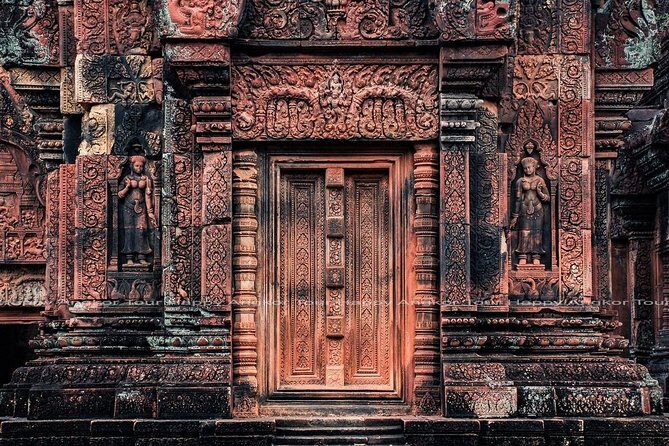
In the afternoon, after lunch, the tour continues with pink sandstone temple sights. The standout name here is Banteay Srei, often called Lady temple, built from pink sandstone in the half of the 10th century by Hindu King Rajendravarman II.
The “why” behind this stop is in the materials. Pink sandstone gives a different visual texture than most gray Angkor structures, and it can look especially good under varied light. This is one of those temples where you benefit from not rushing, since details show up as you move.
From there, you visit Banteay Samre, a Hindu temple built in the 12th century. The key note is that its architecture may not look as obvious or showy for a first-time visitor, but the similarity to Angkor Wat’s model is part of the value. This is where your guide’s commentary can help you see what you might otherwise miss.
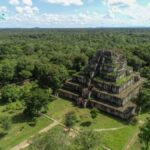
Finally, you end with Pre Rup, built in the late 10th century and dedicated to Hindu gods. Even though the stop is shorter, it adds another layer to how temples functioned for funerary beliefs in the Khmer world.
Price and value: what $181.75 includes, plus the real add-ons
The tour price is listed at $181.75 per person for two days. What’s included is meaningful for comfort and time: private A/C vehicle with a driver, an English-speaking licensed guide, parking fees and road tolls, cool drinking water and wet towels, and hotel pickup and drop-off.
What’s not included is the part that surprises people if they only look at the base price:
- Admission fee for Angkor + all temples: $62.00 per person
- Admission fee for Phnom Kulen National Park: $20.00 per person
- Meals: lunch is listed at about $5.00 per person, depending on the menu
So you should plan on a rough total around $263.75 per person, before any extra drinks or personal spending. For most people, that total is the real “value math,” and it still makes sense if you want a two-day route with sunrise timing and a guide who handles the day smoothly.
Also consider that Angkor passes can be confusing if you’re doing it yourself. Having your guide handle buying the pass early is practical, and it reduces friction on a day that already starts early.
A private, guide-led day: how Chhay-style guidance helps
This tour is a private tour/activity, so it’s your group only. That’s a real advantage in Angkor because you can move at a pace that fits your comfort level, and your guide can adjust when you want photo breaks or slower temple viewing.
The guide experience matters, and one name that comes up is Chhay. He’s described as friendly and informative, and specifically helpful with photos, which is a big deal if you’re traveling alone or trying to avoid spending your whole day asking strangers to take pictures. If you care about getting real photos without stress, that kind of guide support adds genuine value.
Because the itinerary includes lots of different temple types—big towers, intimate carved terraces, and then Kulen’s riverbed carvings—an English-speaking guide who can explain what you’re seeing will improve your experience more than any extra stop.
Getting the most out of your two days
I recommend planning for early mornings with a simple routine: quick breakfast prep, sunscreen, and a hat. Both sunrise days start early (5:00am pickup on Day 2, and the sunset climb on Day 1), so you’ll want to keep your morning logistics low-stress.
Wear shoes that handle stone steps. Phnom Bakheng is the obvious one, but you’ll walk at most stops. Bring your own small power bank if you rely on photos, since you’ll likely spend the day taking lots of images in low-light sunrise conditions and then again at sunset.
Also, expect a lot of visuals in a short time. Two days is enough to hit the core, but it’s still intense. If you’re the type who likes to learn, take short breaks during the terrace stops and let the meaning sink in.
Who this tour suits best
This is a good match if you want:
- A sunrise experience at Angkor Wat without guessing where to be
- Major Angkor highlights on the day 1 temple sweep, including Ta Prohm and Bayon
- A change of pace on Day 2 with Phnom Kulen National Park and its carvings and waterfall
- Private comfort through hotel pickup and an A/C vehicle
If you hate early starts or you want a super slow, no-pressure pace, you might find the schedule intense. But if you like the idea of seeing Angkor at its best light, the early timing is a strength, not a bug.
Should you book this Angkor Wat and Kulen 2-day tour?
I’d book it if sunrise and sunset matter to you and you want an efficient, guided route that covers both Angkor Park temples and Phnom Kulen in just two days. The included guide, vehicle, water, and wet towels help you focus on the sights instead of logistics.
I’d think twice if you’re on a very tight budget and don’t want to add temple and park admission fees on top of the base price. Also consider your comfort with the Phnom Bakheng climb—there’s an option to skip some sunset waiting, but you’ll still be going up.
If you’re aiming for a balanced Angkor experience with real early-morning payoff and a nature stop that breaks up temple overload, this tour fits the bill.
FAQ
What is included in the $181.75 per person tour price?
It includes hotel pickup and drop-off, a private A/C vehicle with a driver, an English-speaking licensed guide, parking fees and road tolls, cool drinking water, and wet towels. Temple and park admission fees and meals are not included.
Are admission fees included for Angkor temples and Phnom Kulen?
No. Angkor + all temples admission is listed at $62.00 per person, and Phnom Kulen National Park admission is listed at $20.00 per person.
What are the pickup times for each day?
Day 1 pickup is at 8:00am. Day 2 pickup is at 5:00am for sunrise.
What temples and ruins are included on Day 1?
Day 1 includes Angkor Wat, Ta Prohm, Ta Nei, the Victory Gate, Bayon, Baphuon, Phimeanakas, Terrace of the Elephants, Terrace of the Leper King, and Phnom Bakheng for sunset.
What will you see at Phnom Kulen National Park on Day 2?
The tour includes the Phnom Kulen National Park area, including the 1000 Lingas carvings under the riverbed, a big reclining Buddha built from big stone, and a waterfall.
Do you visit Banteay Srei and other pink or smaller temples on Day 2?
Yes. The afternoon includes Banteay Srei (Lady temple), Banteay Samre, and Pre Rup.
Is this tour private?
Yes. It’s listed as a private tour/activity, meaning only your group participates.
Is there a mobile ticket?
Yes, the tour includes a mobile ticket.
What is the cancellation policy?
Free cancellation is available up to 24 hours in advance for a full refund. If you cancel less than 24 hours before the experience starts, you won’t get a refund.