REVIEW · SIEM REAP
5 Must-See Temples With Private Guided Tour
Book on Viator →Operated by Around Cambodia Travel · Bookable on Viator
Five temples, one well-run Angkor day. This 5–6 hour tour is truly private SUV transportation with a licensed English-speaking guide, so you set the rhythm instead of syncing with strangers. I love the focused route on major sites (not the park’s 70+ ruins) and I also love how the guide ties together the Hindu and Buddhist themes you’ll see across the day. One drawback: the temple pass is separate, currently $37 per person.
This works well when you want a big-picture Angkor overview without burning your legs and your patience. You’ll have bottled water, towels, and air-conditioned comfort, plus pickup is offered, and the walking is best for a moderate fitness level.
In This Review
- Key Highlights If You Care About Getting It Right
- What This Tour Really Gives You (And Why It Matters)
- Cost Breakdown: $75 for the Day, $37 for Temple Entry
- The 5 Stops That Give You a Real Angkor Snapshot
- Stop 1: Angkor Wat First, So Everything Else Makes Sense
- Stop 2: Ta Prohm and the Tomb Raider Factor (About 1 Hour)
- Stop 3: Ta Nei for a Break from the Main-Temple Energy (About 45 Minutes)
- Stop 4: Bayon and Its Khmer Power (About 1 Hour)
- Stop 5: Pre Rup to End With Meaning (About 30 Minutes)
- How the Private Format Changes the Temple Experience
- Timing, Heat, and What to Wear (So You Enjoy It)
- Who Should Book This Private Major-Temples Tour
- Should You Book This Tour or Pick a Different Angkor Day?
- FAQ
- Is this tour fully private?
- How long does the tour take?
- What temples are included in the day?
- What is included in the $75 price?
- Are temple entrance fees included?
- Is pickup included?
- What should I do if I need to cancel?
Key Highlights If You Care About Getting It Right
- Private SUV, not a group shuffle: just you, your guide, and the driver.
- Major temples only: a smart response to the Angkor Archaeological Park’s 70+ ruins.
- Comfort included: air-conditioned vehicle, bottled water, towels.
- English guide who can explain what you’re seeing: architecture and symbolism are part of the point.
- Built for a single-day loop: around Angkor Complex in about 5 to 6 hours.
What This Tour Really Gives You (And Why It Matters)
Angkor Archaeological Park is huge. The problem isn’t that the temples are far apart; it’s that trying to “see everything” in one day turns into a blur. This tour avoids that trap by aiming at the major temples you’ll want for context: you get multiple styles and eras, and you still finish the day feeling like you understood Angkor rather than just collecting photos.
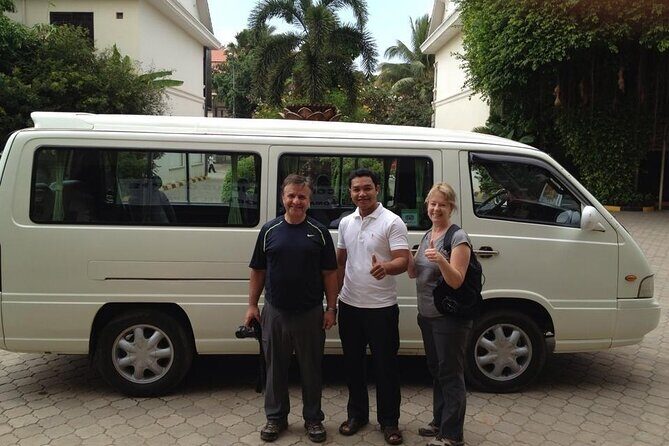
The biggest practical win is that it’s 100% private. You’re not stuck waiting for slow walkers in front of you, and you’re not constantly relocating every time someone has a phone issue or bathroom emergency. With your own SUV, your guide can also manage the tempo—stopping when it’s useful, moving when it saves time, and shaping the day around your interests.
There’s also a quieter value hidden in the wording: it’s designed to keep you away from the worst crowd crush as much as possible. Nobody can control crowds completely at Angkor, but a well-planned route can reduce the “why are we here with 600 people” moments.
Finally, this is built for real sightseeing. You’ll be walking on temple grounds, dealing with uneven surfaces, and climbing stairs at a few points. The tour notes a moderate physical fitness level, which is a polite way of saying you should be comfortable with daily temple walking.
You can also read our reviews of more guided tours in Siem Reap
Cost Breakdown: $75 for the Day, $37 for Temple Entry
The tour price is $75 per person, and that covers your private vehicle, pickup (offered), and an English-speaking guide. It also includes bottled water, towels, and air-conditioning—small comforts that matter when you’re doing temple circuits in Cambodia’s heat.
Temple entry is separate. The temple pass is $37 per person, and it’s not included in the tour price. That means your day’s budget is essentially:
- $75 for the private guided tour
- + $37 for the temple pass
So yes, you pay extra at the gate. But you also aren’t paying extra for chaos. If you’re coming in from out of town, traveling with a parent, or you just hate being herded, the private setup can make the total feel reasonable.
If you have a group, ask about group discounts. Even though it’s private, discounts can affect how good the deal feels per person when there’s more than one traveler.
The 5 Stops That Give You a Real Angkor Snapshot
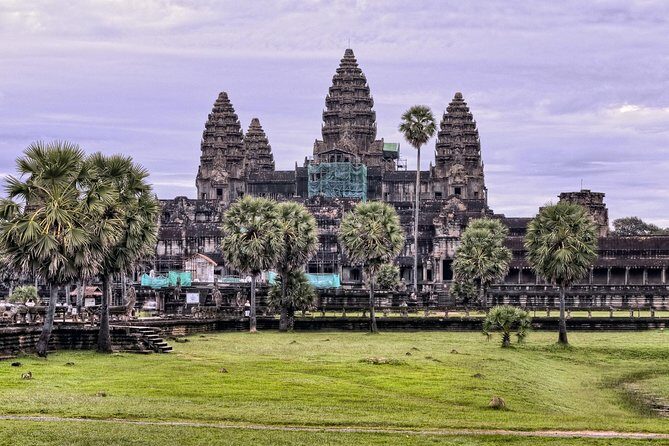
This day is structured like a guided storyline, not a random list of temples. You start with the big-name anchor site, then you work through a mix of famous and lesser-visited structures, ending on a temple that fits the mood of late-day viewing.
Here’s what to expect at each stop, including the “why it’s here” angle and what you should watch for.
Stop 1: Angkor Wat First, So Everything Else Makes Sense
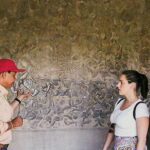
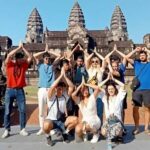
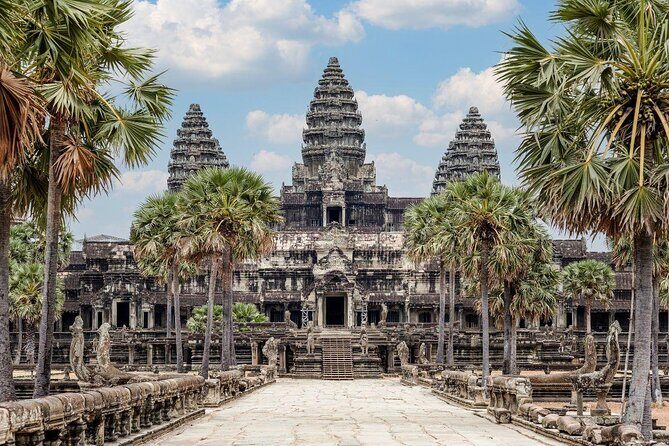
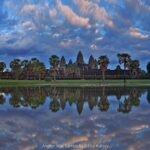
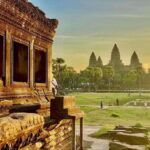
Your day begins at Angkor Wat. You’ll have about 45 minutes there, and the key value is orientation. Even if you’ve seen pictures before, Angkor Wat changes when it’s explained in context—where your eye should land first, how the temple’s layout guides you, and how it connects to the rest of Angkor’s religious history.
Because this is the first stop, your guide can also set expectations for the rest of the day. That helps you avoid that common feeling where later temples look similar and you can’t tell them apart.
A practical consideration: 45 minutes is enough for highlights, but not enough to “slow-walk” every corner. If Angkor Wat is your #1, plan to be ready for a quick but meaningful visit rather than a long, meandering one.
Stop 2: Ta Prohm and the Tomb Raider Factor (About 1 Hour)
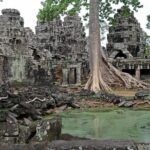
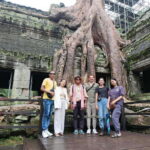
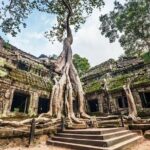
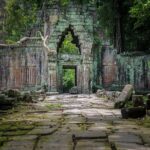
Next is Ta Prohm, famous from the film Tomb Raider. You’ll spend about 1 hour, which is a solid amount of time for a temple that many people experience as an icon first and an archaeological site second.
What makes Ta Prohm special on a private guided day is the balance. You’re not just photographing roots and stones. You’re getting help noticing how the temple’s stonework and structure interact with the surrounding growth patterns. That helps the place feel alive and physical, not just cinematic.
If you’re a photographer, this stop is often where you’ll want guidance on timing and angles. In fact, in the way guides have been described for this route, photography skills come up as a strong point—so expect helpful instruction on where to stand and how to frame shots without blocking anyone.
You can also read our reviews of more private tours in Siem Reap
Stop 3: Ta Nei for a Break from the Main-Temple Energy (About 45 Minutes)
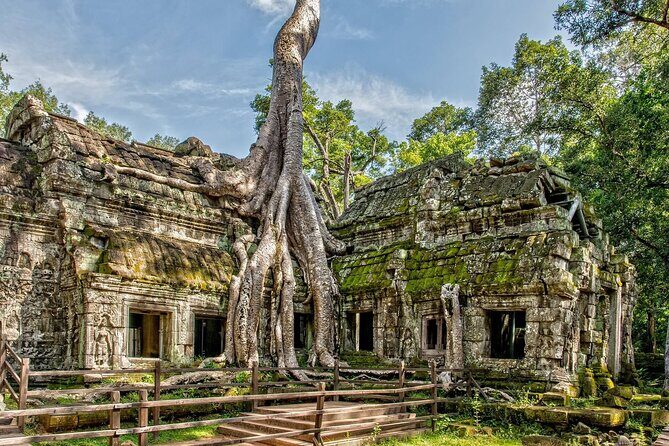
After the famous stop, you shift to Ta Nei, which is described as one of the more hidden or less immediately obvious temples in the park. You’ll have about 45 minutes.
This stop is a smart pacing move. When your day includes very recognizable temples, it can become tiring to keep “performing” for photos. Ta Nei gives your brain a chance to reset. The guide can point out what makes it distinct, and you get the feeling of Angkor as a complex archaeological park rather than a theme-park checklist.
What I like about including a less prominent site: it tends to make the bigger temples land harder. You’ll notice how different parts of Angkor were built for different purposes and how the park’s variety tells the real story.
Stop 4: Bayon and Its Khmer Power (About 1 Hour)
Then comes Bayon, which is described as a richly decorated Khmer temple at Angkor. You’ll spend about 1 hour.
Bayon’s importance is that it was built as the state temple of the Mahayana Buddhist King Jayavarman VII, and it’s said to stand at the centre of the complex. That means your guide can connect what you see with what it was built to represent, instead of leaving you with only visual impressions.
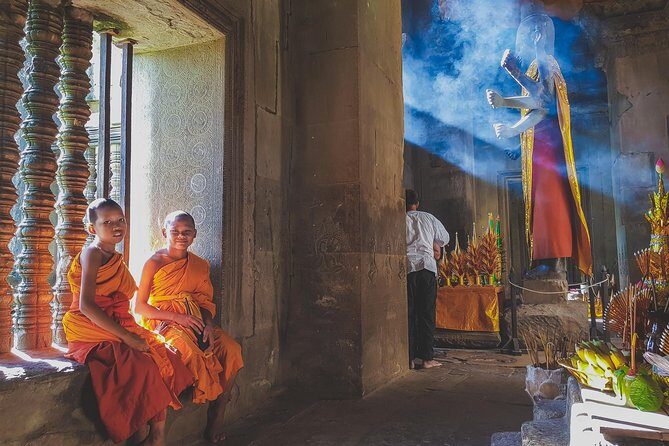
This is also a good stop for understanding the blend of spiritual themes across the day. With Hindu and Buddhist elements appearing in different places, your guide’s explanations help you stop treating every temple as a separate “random ruin.”
A quick practical note: Bayon is a high-attention stop. If you’re prone to waiting until the last minute to take photos, Bayon is where you’ll feel it. Use the hour wisely and let the guide set your pace.
Stop 5: Pre Rup to End With Meaning (About 30 Minutes)
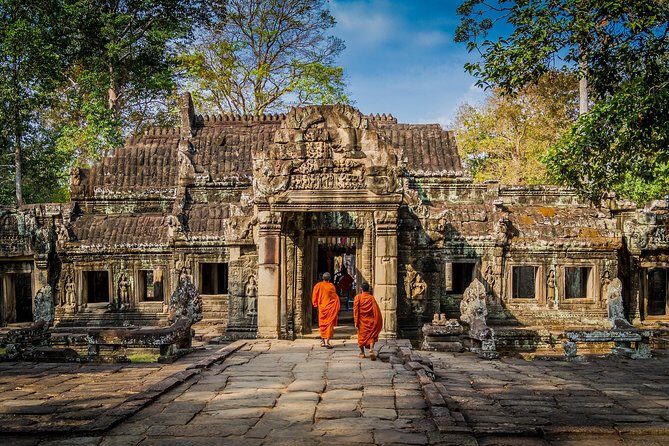
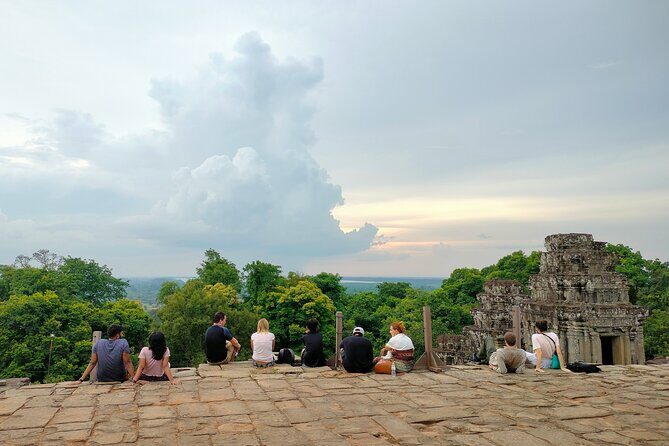
The day finishes at Pre Rup, about 30 minutes on the clock. Pre Rup is described as being dedicated to the Hindu god Shiva, built by Yasovarman I, and possibly located on a former Shiva ashram.
Ending here works because it gives you a clear religious anchor after a more visually intense sequence. Even with limited time, your guide can translate the symbolism and layout so it doesn’t feel like you rushed through the last stop.
Thirty minutes can feel short, but it’s enough for a focused visit if you’re already in temple mode. If you want extra time here, ask your guide early in the day what’s feasible—your private SUV setup is what makes adjustments easier.
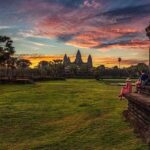
Some guides have even helped build in better light at the end when the schedule allows, so if your timing lines up, you might get a nicer finishing vibe than a strict “checklist only” approach.
How the Private Format Changes the Temple Experience
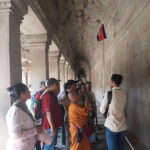
Angkor temples can be overwhelming even when you love history. The difference with this tour is that your guide is your filter. You don’t have to figure out what matters, which carvings are telling you something, or how to pace yourself so you don’t hit a wall halfway through.
I also like the included comforts because they protect your energy:
- Bottled water and towels mean fewer stops for basic needs.
- Air-conditioned transport helps you reset between temples.
- A private setup keeps your breaks from turning into wasted time.
The “less crowded as much as possible” line is a promise you should take seriously. Crowds happen at Angkor, but the best tours treat routing like an ingredient, not an afterthought. A good guide can also help you avoid the most painful bottlenecks by knowing where people bunch up.
And since the tour uses a mobile ticket, you’re less likely to waste time on paperwork-style friction. That matters when your day is only 5 to 6 hours long.
Timing, Heat, and What to Wear (So You Enjoy It)
This is a daytime temple loop, so plan like it’s a hot-weather, walking-heavy day. Keep it practical:
- Wear breathable clothes and comfortable shoes with grip.
- Bring sunglasses and sunscreen if you use them daily.
- Keep water in mind even though bottled water is included; you’ll still drink more than usual.
Physical level is listed as moderate. That means: you can do it, but you should not show up expecting zero stairs or perfectly flat ground. If you’re traveling with someone who has mobility limitations, it’s worth asking how your guide can adapt the pace. Guides working this route have handled special needs in past cases, including arranging options for limited-mobility situations and adjusting an agenda for an 82-year-old family member.
Who Should Book This Private Major-Temples Tour
This is a strong fit if:
- You’re visiting Siem Reap for the first time and want major temples plus context in one day.
- You don’t want the stress of group timing.
- You value an English guide who can explain what you’re looking at.
- You want a “big picture” day without trying to see all 70+ ruins.
It’s also a good option for return visitors who want Angkor to feel different. A familiar temple can still feel fresh when your guide changes how you experience it—where you look first, what you notice, and what it means.
If you only care about spending hours in one temple and doing almost nothing else, then this might feel fast-paced. This tour is for seeing a set of major stops in an organized day, not for doing one site at a slow, meditative pace.
Should You Book This Tour or Pick a Different Angkor Day?
Book it if you want a day that feels efficient, guided, and well organized. For many people, the private SUV + licensed English guide combination is the best way to turn a long Angkor visit into something that actually makes sense.
Skip it or consider another format if:
- You hate adding temple entry fees on top of your tour price.
- You want to spend far more than 30–45 minutes at a single temple.
- You’re not comfortable with moderate walking and stairs.
If you’re deciding between a cheaper group option and this private setup, I’d pick this one when you care about comfort, pace, and having the guide’s attention. When the total cost includes the $37 temple pass, you’re still paying for a structured day with less friction and more clarity.
FAQ
Is this tour fully private?
Yes. It’s a private tour with just your group, your licensed English-speaking guide, and a private SUV car driver.
How long does the tour take?
The duration is approximately 5 to 6 hours.
What temples are included in the day?
You’ll visit Angkor Wat, Ta Prohm, Ta Nei, Bayon, and Pre Rup.
What is included in the $75 price?
The tour includes bottled water, cool drinking water and towels, an air-conditioned vehicle, private transportation, and an English-speaking guide.
Are temple entrance fees included?
No. Temple entrance is not included. The temples pass is listed as $37.00 per person.
Is pickup included?
Pickup is offered.
What should I do if I need to cancel?
You can cancel for a full refund if you cancel up to 24 hours in advance of the experience start time.