REVIEW · SIEM REAP
Private Cambodia 5 Days Tour from Siem Reap to Phnom Penh
Book on Viator →Operated by About Cambodia Travel & Tours · Bookable on Viator
Cambodia moves fast, in a good way. This 5-day private route links Angkor’s sacred stone cities with Phnom Penh’s modern history, all with a licensed English-speaking guide and door-to-door transfers.
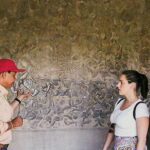
I especially like that the tour is structured for real comprehension, not just photo stops. You’ll spend time at major Angkor landmarks like Angkor Wat and Ta Prohm, while still getting the context that makes those carvings and towers click.
One thing to consider: this is a full-on pace across days, and Phnom Penh includes heavy sites like Tuol Sleng and Choeung Ek. If you’re sensitive to dark history, plan for slower moments and expect emotions, not just sightseeing.
In This Review
- Key highlights you can count on
- What you’re really buying: private guiding and hotel comfort
- Day 1 arrival in Siem Reap: easy start, no stress
- Day 2 Angkor temples: South Gate, Bayon, Ta Prohm, and Angkor Wat sunset timing
- Angkor Thom South Gate: the drama of the restored faces
- Bayon Temple: smiling stone faces and political symbolism
- Baphuon and the royal-palace zone: changing levels, changing emphasis
- Terrace of the Elephants and Terrace of the Leper King: power shown through carving
- Ta Nei: a quieter temple in the jungle
- Ta Prohm: the famous trees and the feeling of time
- Angkor Wat: the masterpiece closer
- A road day with Spean Praptos, Prasat Kuha Nokor, and Skun Spider Sanctuary
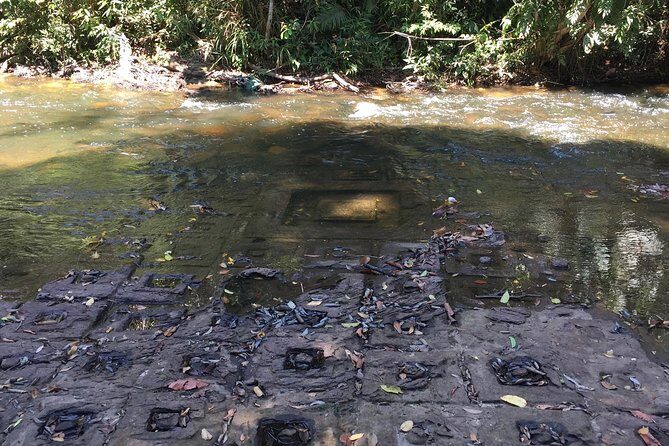
- Spean Praptos (Kampong Kdei Bridge): Dragon Bridge and laterite age
- Prasat Kuha Nokor: a small temple with a strong base
- Skun Spider Sanctuary: a market built around one famous product
- Moving to Phnom Penh: a full change of pace, same guide care
- Phnom Penh sights that connect the dots: Palace, pagodas, markets, and monuments
- Royal Palace: from 1886 beginnings to early-20th-century completion
- Silver Pagoda: next door calm
- Wat Phnom: the city’s only hill and a local legend
- Independence Monument and Norodom Sihanouk memorial
- Wat Ounalom: one of the original monasteries
- Central Market: 1937 dome design and real shopping energy
- Tuol Sleng and Choeung Ek: how to handle the hardest stops with respect
- Tuol Sleng Genocide Museum (S-21): a former school turned prison
- Choeung Ek: mass graves and the orchard site
- Price and value: what $616.55 covers (and why it can be worth it)
- How the transfers work: from Siem Reap Airport to Phnom Penh and then KTI
- Who should book this private Siem Reap to Phnom Penh tour
- Should you book it?
- FAQ
- Is this tour private or shared?
- How long is the tour?
- What’s included in the price?
- Are pickups and airport transfers included?
- Which Angkor sites are part of the tour?
- Does the tour include Phnom Penh museums and memorial sites?
- Are tips included?
Key highlights you can count on
- Private, just-your-group touring with an English-speaking guide and driver
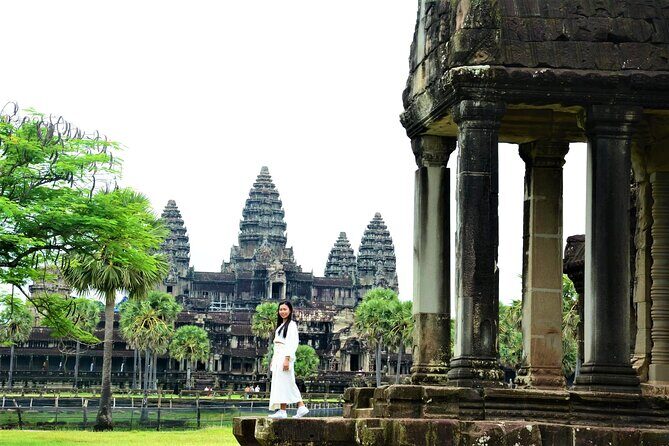
- Angkor Wat plus the best contrast temples: Bayon, Ta Prohm, and the royal terraces
- A memorable road day through central Cambodia, including Spean Praptos (Dragon Bridge)
- Phnom Penh essentials like the Royal Palace, Silver Pagoda, and Wat Phnom
- Two major genocide sites: Tuol Sleng Genocide Museum and Choeung Ek
- Breakfast included every day at 3-star to 5-star hotel options
What you’re really buying: private guiding and hotel comfort
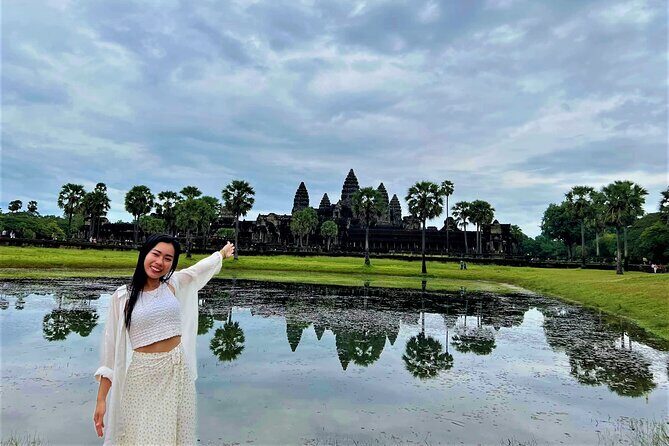
This tour is priced at $616.55 per person and is built around one core promise: you don’t have to figure out logistics while learning Cambodia at the same time. A licensed English-speaking guide, transport, and entrance fees are included, and you’ll also get daily breakfast at your hotel.
Hotel options are split between Siem Reap and Phnom Penh, so you get to sleep in the right place without constantly checking in and out. In Siem Reap, options include Royal Crown Hotel & Spa (3-star), Regency Angkor Hotel (4-star), or Angkor Paradise Hotel (5-star) or similar. In Phnom Penh, options include King Grand Boutique Hotel (3-star), Sun & Moon Urban Hotel (4-star), or Sun & Moon Riverside (5-star) or similar.
Another value detail: the tour provides water and fresh tissue along the way. In Cambodia’s heat, that small comfort adds up fast—especially on long temple days.
You can also read our reviews of more private tours in Siem Reap
Day 1 arrival in Siem Reap: easy start, no stress
Day 1 is all about landing and getting settled. You meet your guide and driver at Siem Reap Angkor International Airport, then transfer into the city with some helpful early context about local life and culture.
This matters because Angkor can hit you like a wall of wonder if you rush. Having an arrival day keeps you from turning Day 2 into a sprint.
If you’re the type who likes to get oriented, this is a good setup: you’ll start the tour already knowing the basics of what you’re about to see.
Day 2 Angkor temples: South Gate, Bayon, Ta Prohm, and Angkor Wat sunset timing
Day 2 is the big Angkor day, and it’s designed as a sequence that makes sense. You start at Angkor Thom’s South Gate, then work through the city’s main temple core before closing at Angkor Wat with a chance to catch sunset views over the ruins.
Here’s how each stop helps you understand Angkor instead of just walking through it.
Angkor Thom South Gate: the drama of the restored faces
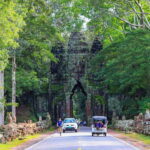
The South Gate of Angkor Thom is a smart first stop. It’s popular because it’s been restored, and many of the heads remain in place, so you can actually see what you’re supposed to be looking at right away.
I like starting here because it gives you a visual anchor. When you move deeper into the complex later, you’ll recognize the style and mood.
Bayon Temple: smiling stone faces and political symbolism
Bayon is where Angkor’s iconography becomes unforgettable. It was built about a century after Angkor Wat, and it sits at the center of the royal city. The point isn’t just the size—it’s how the temple reinforces the idea of kingship and power.
If you love architecture details, Bayon rewards you. Even if you don’t, you’ll still feel the scale and the attention to design.
You can also read our reviews of more tours and experiences in Siem Reap
Baphuon and the royal-palace zone: changing levels, changing emphasis
Baphuon is a great middle stop. It sits on a rectangular sandstone base with five levels, a structure different from the usual pattern of shrinking steps.
Then you head to Phimeanakas, located near the center of the palace area enclosed by city walls. It’s especially interesting because sources describe it as once crowned with a golden pinnacle. You’re seeing how the royal area was meant to look and feel.
Terrace of the Elephants and Terrace of the Leper King: power shown through carving
The Terrace of the Elephants is tied to royal processions—elephants ridden by servants and princes, and servants’ steps meant to stay even and quiet. It’s an odd detail in the best way, because it makes the past feel more human.
A short walk later is the Terrace of the Leper King, famous for grand bas-reliefs. Even if you don’t read every figure, the scale and seriousness of the work comes through.
Ta Nei: a quieter temple in the jungle
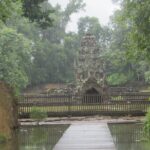
Ta Nei is deliberately less touristy. It’s described as being about 200 meters west of the East Baray, and because it’s harder to find and not as common on standard routes, you get a calmer feel.
I like including a stop like this because it breaks the day’s intensity. It gives your eyes a rest before the wow-factor temples.
Ta Prohm: the famous trees and the feeling of time
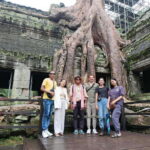
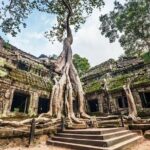
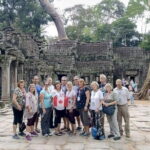
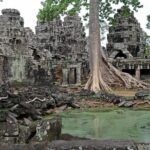
Ta Prohm is often called the kingdom of the Trees, and it’s easy to understand why. It was left mostly untouched by archaeologists, except for paths for visitors and structural support, so the temple still feels like it’s in a slow, ongoing negotiation with nature.
This is where photos are almost unfair. The real effect is how the ruins seem to grow around the stones.
Angkor Wat: the masterpiece closer
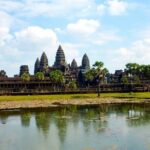
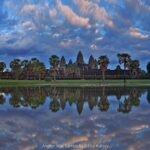
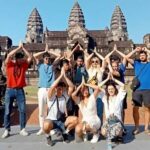
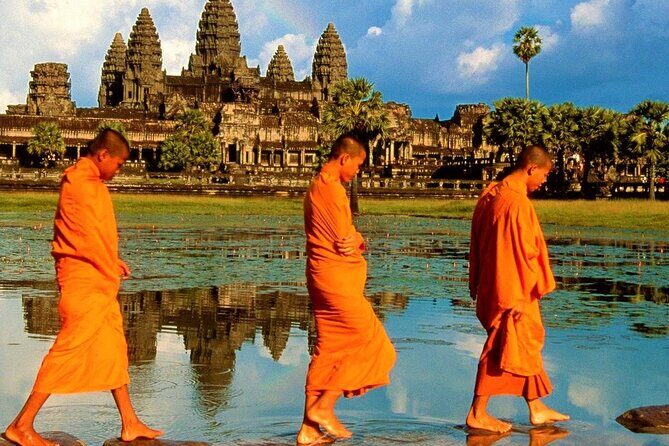
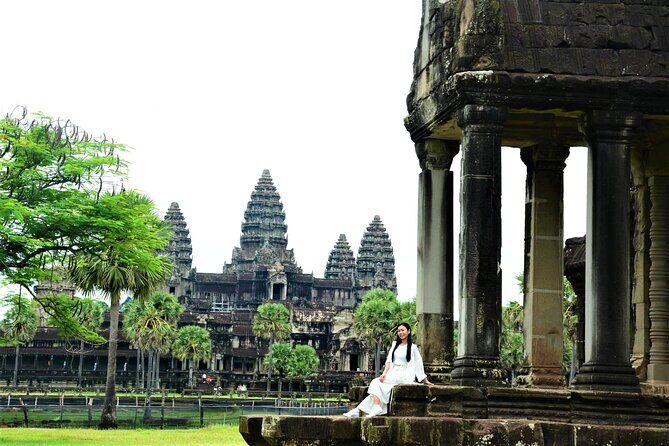
Angkor Wat ends the day, and it’s the right finish. It’s the largest monument in the Angkor group and one of the best preserved. What stands out is the attention to composition, balance, proportions, and relief sculpture.
By the time you reach Angkor Wat, you’ll have enough context from Bayon and the royal terraces to read the place differently. And yes, that sunset timing—built into the day—adds extra magic.
A road day with Spean Praptos, Prasat Kuha Nokor, and Skun Spider Sanctuary
After Angkor, the tour shifts gears. Day 3 is a road-style day through central Cambodia, mixing heritage with something unusual.
Spean Praptos (Kampong Kdei Bridge): Dragon Bridge and laterite age
Spean Praptos is also known as Kampong Kdei Bridge, the Dragon Bridge. It’s said to be one of the oldest laterite bridges in Southeast Asia, and the age claim is part of its appeal.
You’re not just stopping for a photo—you’re seeing how old infrastructure connected places long before tourism existed.
Prasat Kuha Nokor: a small temple with a strong base
Prasat Kuhak Nokor sits in the village of Trodork Poung in Kampong Thom province. It’s built on a flat square terrace made of sandstone and laterite.
This stop gives you variety from the big Angkor-style complexes. Sometimes the smaller temples make more sense, especially when you’re trying to learn patterns across eras.
Skun Spider Sanctuary: a market built around one famous product
Skun is known for an unusual market that focuses on a product you don’t see in most other parts of Asia. Since this stop is tied to Skun Spider Sanctuary, the whole experience revolves around spiders.
If you’re the kind of person who likes learning how people make local livelihoods, it’s a fascinating culture moment. If you’d rather avoid animal-product markets, you might want to treat this stop as optional for your personal comfort level—because it’s one of the most distinctive places on the route.
Moving to Phnom Penh: a full change of pace, same guide care
By the time you reach Phnom Penh, the vibe shifts from temple paths to city streets. Your hotel options there—King Grand Boutique Hotel, Sun & Moon Urban Hotel, or Sun & Moon Riverside (or similar)—help you stay close enough to get a good day of sightseeing without excessive backtracking.
The practical win here is simple: you’re not juggling transport decisions on your own. With a driver and guide handling the route, you can focus on the sights that matter most.
Phnom Penh sights that connect the dots: Palace, pagodas, markets, and monuments
Day 4 packs a lot, but it’s organized around big themes: royalty and colonial-era landmarks, spiritual sites, and public spaces.
Royal Palace: from 1886 beginnings to early-20th-century completion
The Royal Palace is one of Phnom Penh’s most iconic landmarks. Construction began in 1886 after King Norodom relocated the royal capital to Phnom Penh, and it was completed before World War I.
This is a strong starting point because it frames Cambodia’s monarchy and state power under changing circumstances. Even if you only have a short attention span for walls and roofs, you’ll feel the authority of the design.
Silver Pagoda: next door calm
The Silver Pagoda sits right next to the Royal Palace. It’s described as having a beautiful garden and being a getaway from busy streets. The pagoda interior is also highlighted as equally striking.
I like this stop because it’s a quick reset. You can go from ornate royal architecture to a more reflective space without losing your momentum.
Wat Phnom: the city’s only hill and a local legend
Wat Phnom sits on top of a tree-covered knoll 27 meters high. It’s described as the only hill in town, and a legend says the first pagoda was erected in 1373 to house four Buddha statues.
This is a good reminder that Phnom Penh isn’t only about royal buildings and museums. It has local spiritual anchors too.
Independence Monument and Norodom Sihanouk memorial
The Independence Monument was built in 1958 to memorialize independence from France in 1953. It’s a specific, date-driven stop that helps you anchor modern Cambodia in a timeline.
The route also includes a statue/memorial for Norodom Sihanouk (also called the King Father Norodom Sihanouk Memorial). It’s a quick but meaningful stop that connects politics to place.
Wat Ounalom: one of the original monasteries
Wat Ounalom is listed as one of Phnom Penh’s five original monasteries (1422). It previously housed the Institute Bouddhique and library, and it faces the Tonlé Sap River.
Even with limited time, that river-facing orientation helps you picture why monasteries were not just religious spaces, but also centers of learning and community life.
Central Market: 1937 dome design and real shopping energy
The tour includes the Central Market, constructed in 1937 in a dome shape with four arms branching into hallways filled with stalls. You’ll have time for a quick look, and it’s one of the easiest places to browse without needing a plan.
If you like practical souvenirs—snacks, small crafts, everyday items—this is the place.
Tuol Sleng and Choeung Ek: how to handle the hardest stops with respect
Day 4 doesn’t shy away from modern tragedy. It includes both Tuol Sleng Genocide Museum and Choeung Ek Genocidal Center, which is exactly what you want if you’re trying to understand Cambodia’s recent history with honesty.
Tuol Sleng Genocide Museum (S-21): a former school turned prison
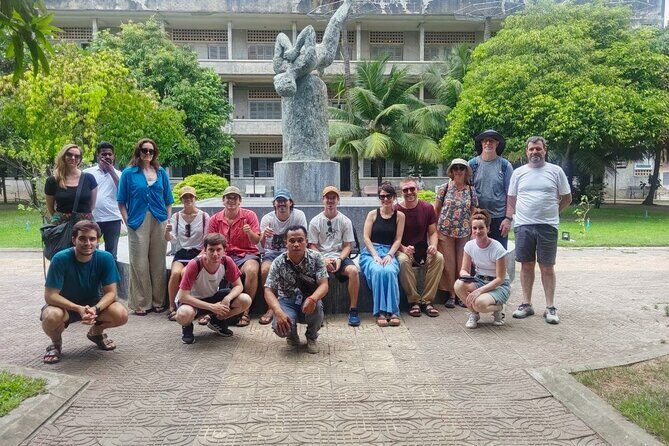
Tuol Sleng is described as a museum chronicling the Cambodian genocide. The site was a former secondary school used as Security Prison 21 (S-21) by the Khmer Rouge.
This is not a museum you rush. I’d treat this stop as a full mental reset moment. You’ll learn details through displays, and you might need time to process what you’re seeing.
Choeung Ek: mass graves and the orchard site
Choeung Ek is about 17 kilometers south of Phnom Penh and is described as a former orchard and mass grave of victims of the Khmer Rouge killed between 1975 and 1979.
It’s the kind of place where the physical setting matters. You’re not only reading history; you’re standing in the environment tied to it.
Tip for your comfort: if you feel yourself getting numb, stop and take a breath before moving to the next area. It’s okay to go slower here.
Price and value: what $616.55 covers (and why it can be worth it)
At $616.55 per person, the real question is value, not just cost. This tour includes:
- Hotel with daily breakfast (double/twin/triple sharing)
- Professional English-speaking licensed tour guide
- Transport
- All entrance fees
- Drinks water and fresh tissue
- Breakfast on 4 days
That bundled structure matters when you’re crossing major areas like Angkor and Phnom Penh. You’re paying for planning, local driving, and admission fees without extra work on your part.
Not included: tips for the guide and driver, and any other accounts not mentioned. So if you’re budgeting, plan for gratuities and personal spending.
Also note: the tour offers group discounts and mobile ticket use. For some people, those details reduce hassle right when you want things to feel smooth.
How the transfers work: from Siem Reap Airport to Phnom Penh and then KTI
You’ll start at Siem Reap Angkor International Airport with pickup and a transfer into Siem Reap city. On the last day, you’ll have free time after breakfast, then be transferred from your hotel to Techo International Airport (KTI) without a guide.
That flow is practical: you’re not stuck in meetings before your flight. If you like a little breathing room on departure day, this setup is friendly.
Who should book this private Siem Reap to Phnom Penh tour
This tour is a strong match if you:
- Want a guide-led Angkor day that connects temples to context
- Prefer a structured route from Siem Reap to Phnom Penh without planning every turn
- Like a mix of monuments (Royal Palace, pagodas, markets) and major museums
- Can handle a day that includes heavy history sites
It might not be ideal if you want lots of free time in each location or you’re hoping for a very light, low-effort schedule. This is built to move.
Should you book it?
If you want a single, private plan that covers Angkor highlights and Phnom Penh’s core sights—including Tuol Sleng and Choeung Ek—this is a sensible choice. The guides named in past experiences, like Leap, Tokk, Rain, Sara, Leng, Pheap, Ching, and Barang, point to a consistent strength: clear English commentary and calm driving.
I’d book this when you want both wonder and understanding, and when you’re comfortable with a full schedule. If you’d rather spread Angkor over more than one temple-focused day or skip the genocide sites, you may want a different pace or a shorter route.
FAQ
Is this tour private or shared?
This is a private tour/activity. Only your group will participate.
How long is the tour?
The tour lasts about 5 days.
What’s included in the price?
The tour includes hotel with daily breakfast, a professional English-speaking licensed tour guide, transport, entrance fees, drinks water and fresh tissue, and breakfast on 4 days.
Are pickups and airport transfers included?
Pickup is offered, and you start with a welcome at Siem Reap Angkor International Airport. On the last day, you transfer from your hotel to Techo International Airport (KTI) without a guide.
Which Angkor sites are part of the tour?
The tour includes Angkor Thom South Gate, Bayon, Baphuon, Phimeanakas, Terrace of the Elephants, Terrace of the Leper King, Ta Nei, Ta Prohm, and Angkor Wat.
Does the tour include Phnom Penh museums and memorial sites?
Yes. It includes Tuol Sleng Genocide Museum and Choeung Ek Genocidal Center, along with Royal Palace, Silver Pagoda, Wat Phnom, and other central highlights.
Are tips included?
Tips for the guide and driver are not included.