REVIEW · SIEM REAP
Angkor Wat Sunrise and Tonle Sap Lake 1.5 Days
Book on Viator →Operated by Journey Cambodia · Bookable on Viator
Two days in Angkor, timed to perfection.
This tour is built for short stays in Siem Reap, with an ultra-early start for Angkor Wat sunrise and a second day focused on the real-life rhythm of the Tonle Sap. You’ll travel by air-conditioned vehicle, skip the stress of navigation, and still hit the big-name sights that make most first-time visits tick. Plus, you get a guide to help you read what you’re seeing, not just walk past it.
I love two things here: the pre-dawn Angkor Wat timing and the fact the guide brings context beyond the stones. One guide name that comes up in feedback is Mr Sokpee, and that extra storytelling turns the temples into something you understand, not just something you photograph. The plan also keeps you moving without feeling like you’re sprinting every minute.
One consideration: the temple pass isn’t included. At $37 per person extra, you’ll want to budget for it up front, along with early mornings, temple dress rules, and a fair amount of walking at several major sites.
In This Review
- Key highlights at a glance
- Why this 2-day Angkor Wat plan works when time is short
- Sunrise at Angkor Wat: the best kind of early alarm
- Angkor Thom South Gate and Bayon: read the city, not just the blocks
- Terrace of the Elephants and the nearby scenes you’ll miss without a plan
- Ta Prohm: the temple that still feels half in the jungle
- Day 2: Tonle Sap and Kampong Phluk boat cruise, for a very different kind of Cambodia
- Kampong Phluk fishing village (with boat cruise)
- Rolous Market: a short stop that helps you reset your eyes
- Price and value: what $59 really means once you add the pass
- Getting ready: dress code, shoes, and the early-morning reality check
- Temple dress rules
- Footwear and comfort
- Hydration
- Small group size: why max 10 matters on crowded days
- Who this tour fits best (and who should rethink it)
- Should you book this Angkor Wat sunrise and Tonle Sap tour?
- FAQ
- What time does the sunrise departure start?
- Is the Angkor temple pass included in the tour price?
- What’s included for the Tonle Sap part of the tour?
- Do I need to wear specific clothes for temples?
- Are meals included?
- How many people are in the group?
- Can I cancel for a full refund?
Key highlights at a glance
- Early Angkor Wat sunrise entry with a pre-dawn departure timed by season
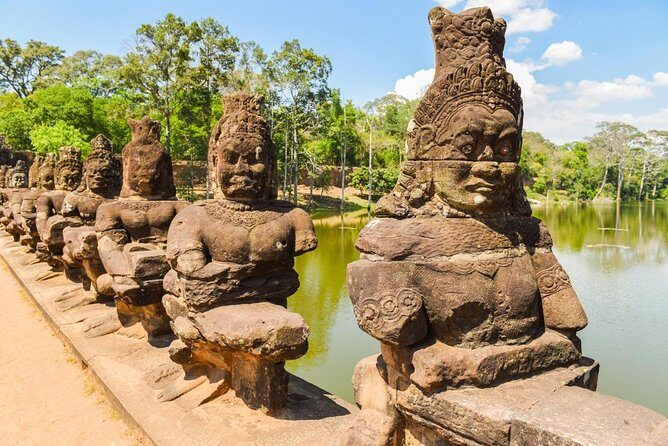
- Angkor Thom circuit including South Gate and Bayon
- Ta Prohm’s signature atmosphere with temple details you’ll actually understand
- Tonle Sap + Kampong Phluk boat cruise as a practical change of pace
- Small group size (max 10) and licensed English-speaking guiding
Why this 2-day Angkor Wat plan works when time is short
If you only have a couple of days, you’re usually stuck with a trade-off: either you see the headline temples and feel rushed, or you slow down and miss the key sights. This tour tries to do both at once by batching the must-sees into one efficient loop on Day 1 and then swapping to Tonle Sap life on Day 2.
The structure is smart. Angkor Wat is the obvious first stop, and sunrise matters because it changes the feel of everything—light, shadows, and crowd flow. Then Day 1 continues with Angkor Thom and Ta Prohm, which are different in mood: one is grand-and-city-like, the other is tangled-with-nature and dramatic. Day 2 is where you get a breather, swapping carved stone for water villages and daily routines on the lake.
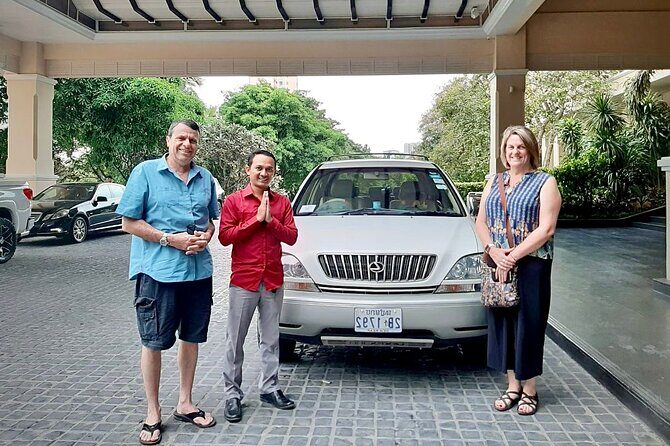
You also avoid the common hassle: you’re not coordinating rides, parking, or finding your way across a huge site area at odd hours. The tour uses an air-conditioned vehicle and includes hotel pickup and drop-off, which is a big deal when your day starts around 4:20 am.
You can also read our reviews of more tours and experiences in Siem Reap
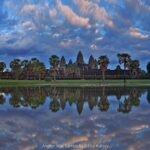
Sunrise at Angkor Wat: the best kind of early alarm
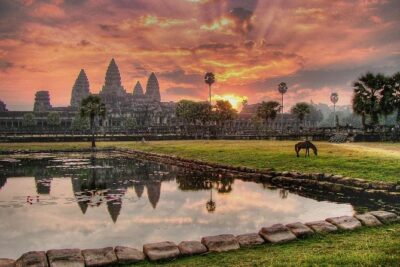
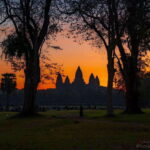
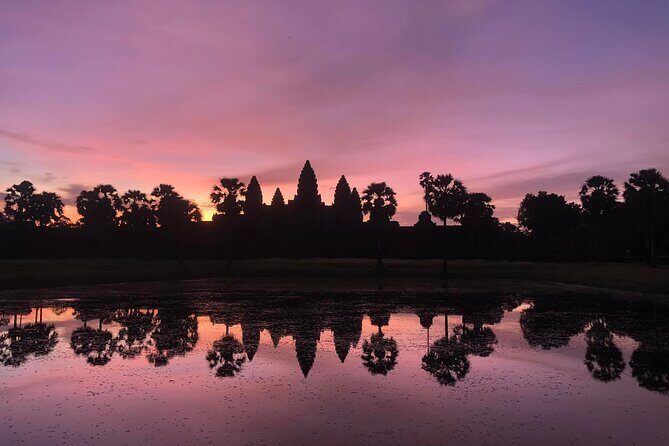
Day 1 starts before sunrise, with pickup roughly between 4:10 and 4:30 am depending on the season, and the official start time listed at 4:20 am. The whole point is to arrive while it’s still dark enough that the first views feel like a reveal instead of a checklist.
Here’s what you’ll do:
- You go to Angkor Wat for sunrise outside the temple.
- You enter the complex in the dark from the eastern side, described as a little-visited approach.
That eastern-side entry detail is more than trivia. It helps you start the visit with a different rhythm than the main flows, and it can mean calmer early moments before the busiest areas fill up.
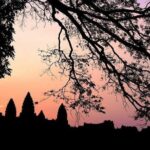
What you’ll love about this stop: sunrise at Angkor Wat is special because the light makes the architecture look different every few minutes. When the sun rises, the carvings and causeways start reading clearly instead of blending into shadows.
What to watch for: going in darkness means you’ll want comfortable shoes and steady footing. Also, you’ll be awake early—this is the one day where your body will remember it.
Angkor Thom South Gate and Bayon: read the city, not just the blocks
After Angkor Wat, the tour shifts to Angkor Thom, the former Khmer Empire capital space. This is where the scale starts to feel less like a single temple and more like a whole world.
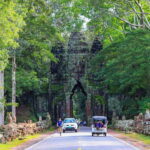
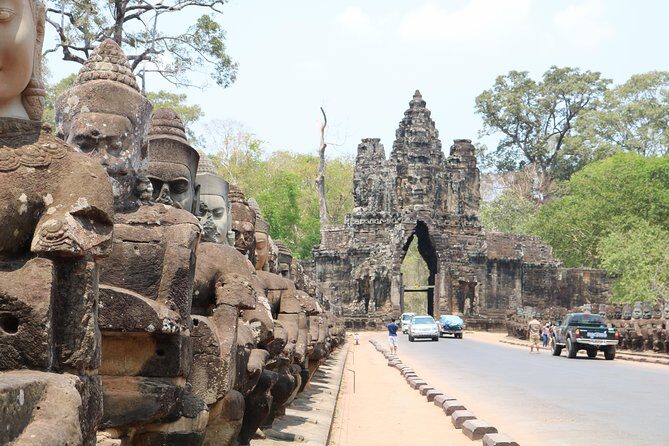
You’ll stop first at the South Gate, where you can take a moment to absorb the grand layout before walking inside. Then you move into Angkor Thom, with time at Bayon.
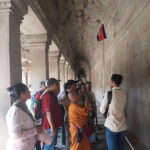
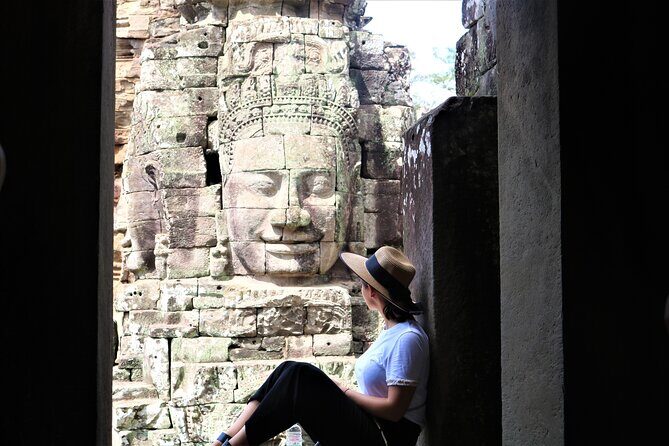
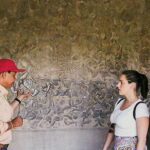
Bayon is the kind of place where a guide helps a lot. Without any context, it’s easy to see faces and move on. With context, you start noticing how the space is organized and how the different carvings and viewing angles change what you think you’re seeing.
Time allocation matters here. The tour gives you a bit over an hour at Angkor Thom with Bayon, plus additional time to pass by other highlights. That’s enough to enjoy it without turning it into a speedrun.
Possible drawback: you’ll still be in temple walking mode. Angkor Thom covers ground, and the sites can feel busy even early in the day. If you’re the type who needs long, slow stops, this day may feel structured rather than relaxed.
Terrace of the Elephants and the nearby scenes you’ll miss without a plan
From Angkor Thom, you pass by the Terrace of the Elephants, and the schedule notes you’ll also pass by the Terrace of the Leper King. Even if you don’t stop for long at every carved surface, having these stops on your route helps you see more of what makes Angkor not just famous, but layered.
This is a good spot for a quick “pause and look up” moment. Terraces at Angkor are like big storyboards: you can see figures, patterns, and details more clearly when you stop doing the walking thing for a minute.
Value of a guided pass: without a guide, you might notice a terrace but not know what you’re looking at. With guidance, you can connect the name to the visual story and get more satisfaction from the time spent.
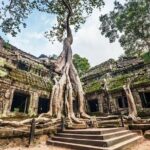
Ta Prohm: the temple that still feels half in the jungle
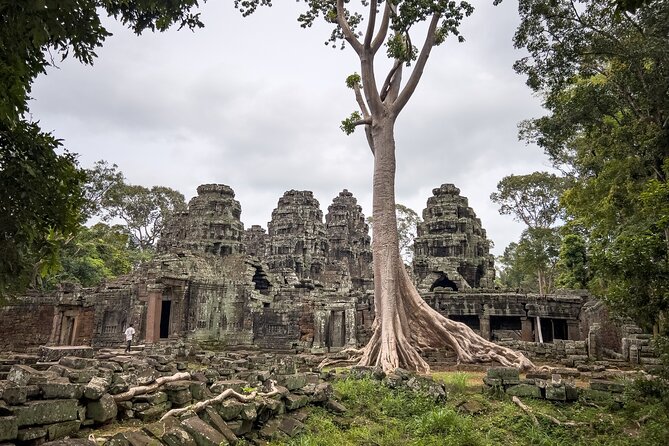
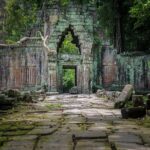
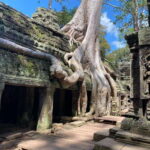
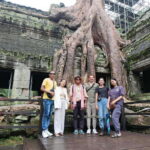
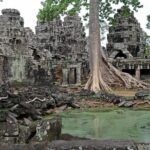
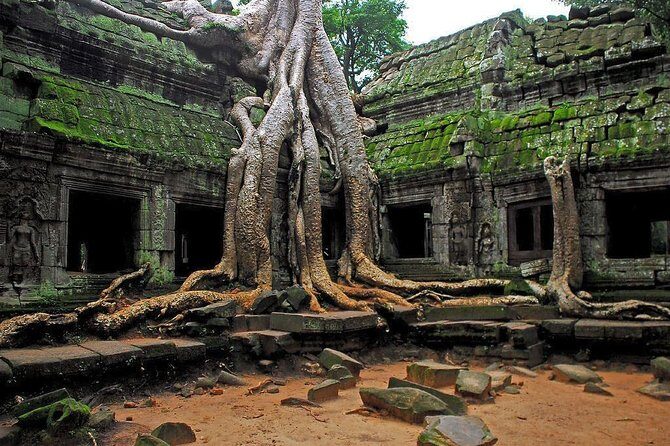
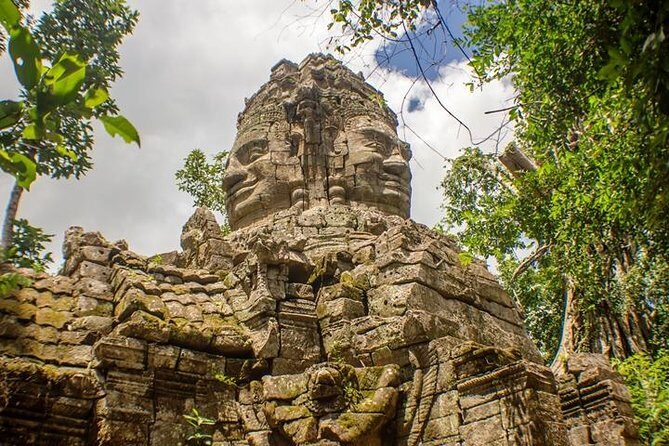
Ta Prohm is one of those temples people talk about for a reason. The schedule gives you a focused stop—about an hour—and describes it as one of the most atmospheric temples in the region.
This temple is tied to a specific story:
- It was once home to 2,740 monks.
- It looks much as it did in the early 1850s, when French explorer Henri Mouhot is described as rediscovering the site.
That mix—religious purpose, then later re-discovery and preservation-by-survival—explains why Ta Prohm feels different. It’s not just the look of the trees and stones. It’s the sense that the place has a long timeline, not a single moment in time.
What you’ll love here: Ta Prohm is perfect for photos, but you’ll get more out of it if you slow your eye down and notice the way the structures frame the vegetation.
What to watch for: the day is already full. If you want to spend extra time at Ta Prohm, you may wish you had a longer stay in the Angkor area overall. This tour does what it can in limited time.
You can also read our reviews of more tours and experiences in Siem Reap
Day 2: Tonle Sap and Kampong Phluk boat cruise, for a very different kind of Cambodia
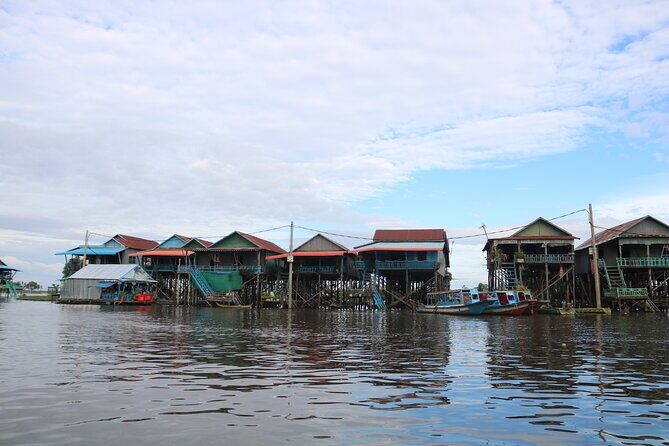
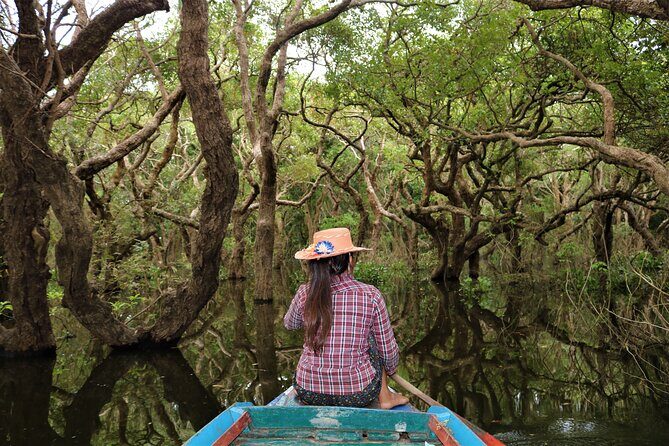
After a heavy Day 1, Day 2 is the palate cleanser. Instead of temple walls, you get water, boats, and the changing size of the Tonle Sap.
The lake facts alone help the experience make sense:
- In the wet season, Tonle Sap swells to 12,000 km².
- In the dry season, it shrinks to as small as 2,500 km².
That kind of size change isn’t a minor detail. It explains why floating and lake-edge life works the way it does. You’re not just visiting a village; you’re seeing a community shaped by a seasonal machine.
Kampong Phluk fishing village (with boat cruise)
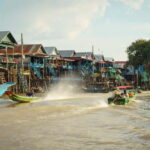
The main stop is Kampong Phluk, described as a fishing village on Tonle Sap. The tour includes:
- Tonle Sap entrance fee
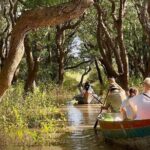
- A boat cruise
You get about 3 hours for this side of the day, which is enough time to move from viewpoints to water-level perspectives.
What makes this stop valuable: you leave the Angkor bubble and get a real sense of how Cambodians live around the lake. It also turns the whole trip into more than ancient monuments, which is important if you’re trying to understand the country beyond famous ruins.
Possible drawback: you’ll be outside. Even with good timing, weather matters. The tour notes this experience needs good weather, and if it’s canceled for poor conditions, you’ll be offered a different date or a full refund.
Rolous Market: a short stop that helps you reset your eyes
Before you head deeper into the lake experience, you’ll start Day 2 with pickup from your hotel and a journey that goes through small communities. Then you stop at Rolous Market for about 20 minutes.
This isn’t a long market wander, but it’s a useful reset. Markets give you human scale fast: everyday goods, simple routines, and a chance to grab photos that aren’t temple-only.
How to make the most of a short stop: keep your shopping mindset light. The time window is small, so focus on photos and observations rather than turning it into a big browsing session.
Price and value: what $59 really means once you add the pass
The listed price is $59 per person, and the tour is positioned as a time-saver for Siem Reap. A big part of that value is practical:
- hotel pickup and drop-off
- air-conditioned vehicle transport
- a licensed English-speaking guide
- mineral water
- Tonle Sap entrance fee and boat cruise on Day 2
Now here’s the part you should plan for: the temple pass is extra, $37 per person, paid directly on the day of the activity. So your realistic Angkor-focused total is closer to $96 per person before meals.
Meals aren’t included, either, though you have freedom to pick your own option during the day. That flexibility can be a plus if you like controlling what and where you eat.
Is this good value? For a short stay, yes—because the tour removes the two biggest headaches: timing (sunrise logistics) and navigation across Angkor and out to the lake. If you were doing it on your own, you’d still pay for temple access, transport, and a guide’s time if you want the same level of understanding.
Getting ready: dress code, shoes, and the early-morning reality check
You’ll want to prepare for two different environments: temple grounds and the open air around Tonle Sap.
Temple dress rules
For the temples portion, a dress code is required: cover your knees and shoulders. This matters because it’s a hard rule at these sites, not a suggestion. Plan a lightweight layer and wear comfortable long pants or a skirt that covers your knees.
Footwear and comfort
The tour recommends comfortable walking shoes. Take that seriously. Angkor involves lots of walking over uneven surfaces. If you’re wearing flimsy sandals, you’ll feel it by midday.
Hydration
Mineral water is included. Still, sunrise starts early and Day 1 can run long, so treat water as something you’ll drink throughout, not just at stops.
Small group size: why max 10 matters on crowded days
This tour keeps groups small, with a maximum of 10 travelers and a minimum of 2 people per booking. That limit is a quiet quality-of-life upgrade at Angkor, where big groups can mean long lines and constant stop-and-go.
Small groups also help the guide adjust explanations as you move. If you want your questions answered without waiting your turn for ten minutes, that’s where a small cap pays off.
Who this tour fits best (and who should rethink it)
This experience is a strong match if:
- you want the big Angkor sights without spending days planning transport and routes
- you care about understanding what you’re seeing, not just clicking photos
- you like a sunrise start as long as someone else handles timing
You might want to rethink it if:
- you hate early mornings and long temple walks
- you’re traveling with young kids (the tour states children must be accompanied, and younger than 5 years old are not allowed)
- you’re hoping for a slow, lingering style at each site. This is efficient.
Should you book this Angkor Wat sunrise and Tonle Sap tour?
If your priority is hitting the essentials—Angkor Wat sunrise, Angkor Thom, Ta Prohm, plus the lake life at Kampong Phluk—in just 2 days, I think this is a smart booking. The price is reasonable for what’s included, and the extra context from a guide like Mr Sokpee can turn your temple time into something you actually remember.
Just go in with eyes open: budget the $37 temple pass, pack for the dress code, wear good shoes, and be ready for a very early start. Do that, and you’ll end up with a trip that feels balanced—ancient stone in the morning, real water-and-community life the next day.
FAQ
What time does the sunrise departure start?
The start time is listed as 4:20 am, and the departure for sunrise is typically between 4:10 and 4:30 am depending on the season.
Is the Angkor temple pass included in the tour price?
No. The temple pass costs $37.00 per person and is payable directly to the site on the day of your activity.
What’s included for the Tonle Sap part of the tour?
Tonle Sap includes the entrance fee and a boat cruise, plus hotel pickup and drop-off and mineral water.
Do I need to wear specific clothes for temples?
Yes. You need to cover your knees and shoulders for the temples portion.
Are meals included?
Meals are not included. The tour notes that meals are available at your own choice.
How many people are in the group?
The tour has a maximum of 10 travelers.
Can I cancel for a full refund?
Yes, there is free cancellation. You can cancel up to 24 hours in advance for a full refund.