REVIEW · SIEM REAP
2-Day: Angkor Temple Treasures and Unique Floating Lifestyle
Book on GetYourGuide →Operated by Individual professional guide · Bookable on GetYourGuide
Two days in Cambodia can feel like a whole lifetime. This tour strings together Angkor Thom temple highlights, classic favorites like Ta Prohm, and then swaps stone carvings for daily life on Tonle Sap. I especially like the small-group feel and the way the guide storytelling keeps each stop understandable, not just impressive. I also like the practical comfort touches: pickup and drop-off plus cool water and fresh towels, which matter fast in the heat.
The main thing to plan for is what is not included. You’ll need to budget for Angkor Archaeological Park entry and for the floating village boat visit (and lunch), so the final cost can be higher than the headline price.
In This Review
- Key things I’d watch for before you go
- Why this 2-day Angkor Thom and Tonle Sap combo makes sense
- Pickup, small-group touring, and that heat-smart comfort
- Day 1 in Angkor Thom: South Gate, Bayon faces, and the Terrace of the Elephants
- Ta Prohm and Ta Keo: the Lara Croft moment and the quieter temple contrast
- Bakheng Mountain sunset: why the view is worth the effort
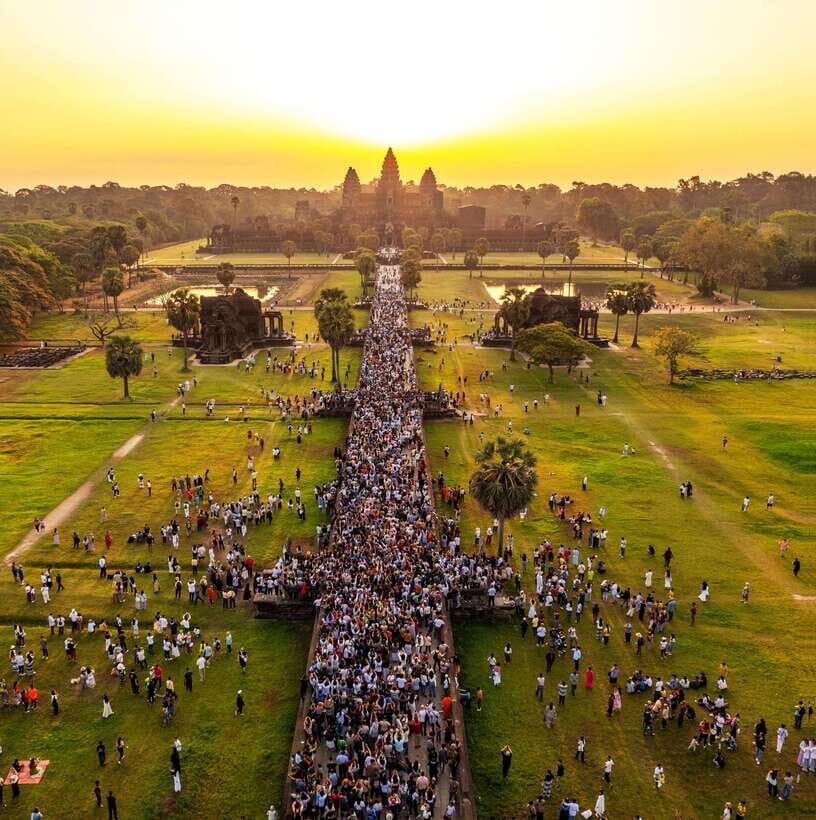
- Day 2: Angkor Wat main temple galleries and the Grand Circuit feel
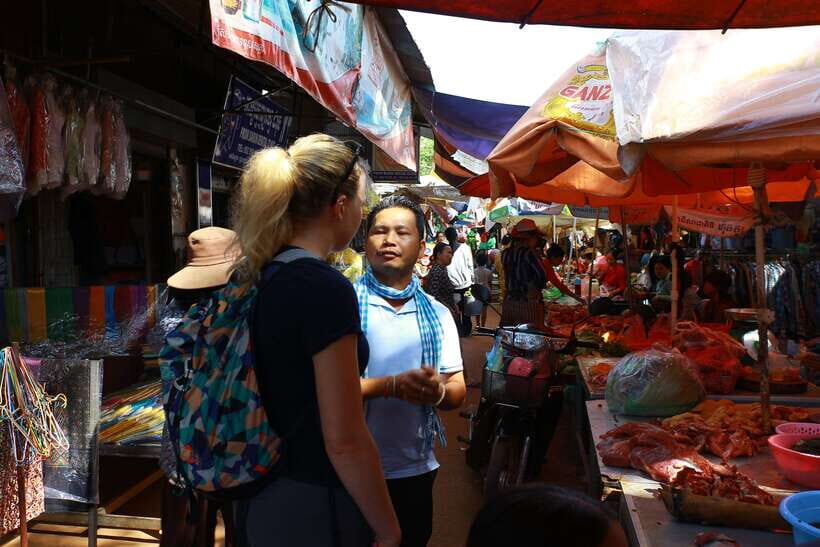
- Beyond Angkor stones: Tonle Sap floating school, stilt houses, and water markets
- Lara Croft fame vs. temple reality: how to enjoy Ta Prohm without rushing
- Price and value: what $75 includes and what to budget for
- Who this tour fits best (and who should skip it)
- The small details that made the experience feel smooth
- Should you book this 2-day Angkor + Tonle Sap tour?
- FAQ
- What is included in the $75 price for the 2-day tour?
- What is not included?
- Do I need an Angkor Archaeological Park entry ticket?
- Is the floating village boat visit included?
- How big is the group?
- What is the cancellation policy?
- FAQ
- Is there a pay-later option?
- When does the tour start?
Key things I’d watch for before you go
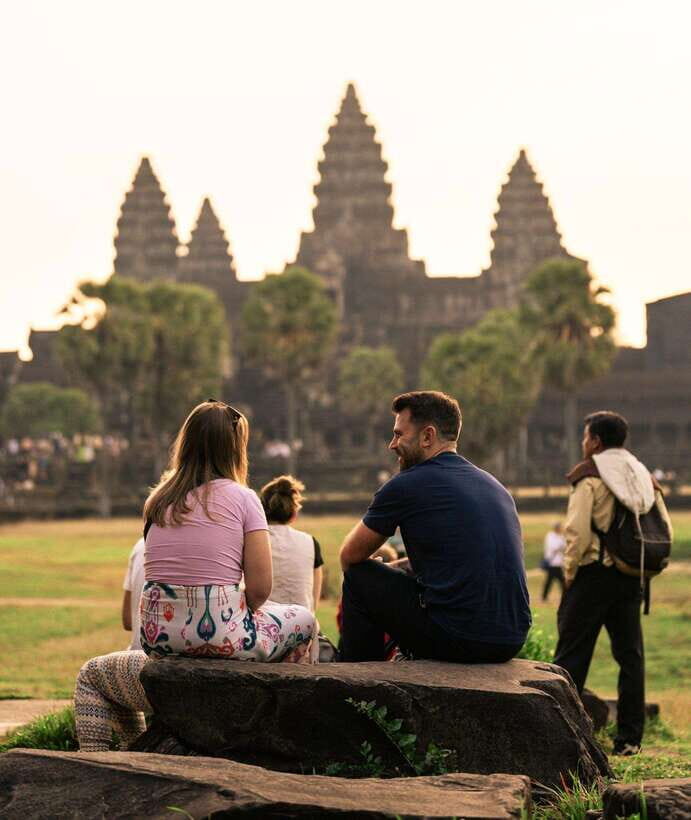
- Small-group pace (limited to 10, often under 6): fewer people means you spend more time looking and asking questions, less time herding.
- Guide-led temple connections: Angkor is easier when someone ties each site to the Khmer story and the layout of the complex.
- Ta Prohm in the Lara Croft spotlight: you get the movie-famous setting, but explained as a real temple, not a set.
- Sunset payoff from Bakheng Mountain: a classic viewpoint moment that helps you see Angkor Wat and the wider complex as a system.
- Tonle Sap floating school and water markets: the floating lifestyle part isn’t just a photo stop.
- Cooling basics built in: cool water and fresh towels, plus a driver who stays ready with the tuk-tuk.
Why this 2-day Angkor Thom and Tonle Sap combo makes sense
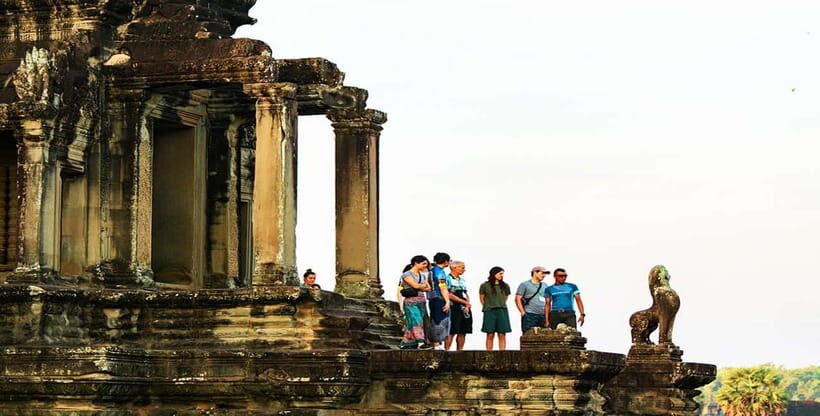
If you only have two days, Angkor can turn into a blur of entrances, photos, and sprinting. This plan helps you avoid that. You start with Angkor Thom’s core sites, then you shift to Angkor Wat and a set of surrounding temples, and you end with Tonle Sap life on the water.
You’ll also appreciate the contrast. One day is about the Khmer capital and its grand structures: gates, faces, terraces, and jungle-temple texture. The next day is about the famous centerpiece at Angkor Wat, then temples that feel a bit more exploratory, before you wrap up with stilt houses, a floating school, and markets where the water is part of daily routine.
That mix is the value: it keeps the trip from feeling like a single long temple line.
You can also read our reviews of more tours and experiences in Siem Reap


Pickup, small-group touring, and that heat-smart comfort
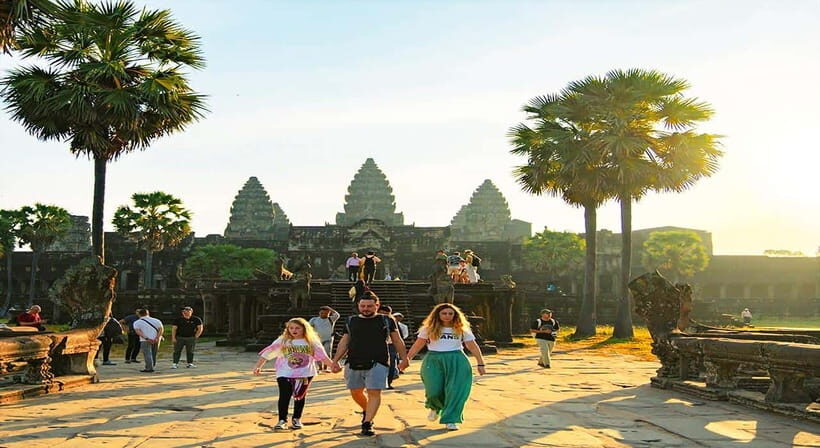
Logistics are not glamorous, but they make or break an Angkor visit. This tour includes pickup and drop-off, and you’re traveling with a professional English-speaking guide and a driver. That matters because Angkor isn’t just a walk-through museum. You need context, plus you need someone who knows where to stand, when to cross, and how to sequence the stops.
The group size is also important. The tour is capped at 10 participants, and the operator notes a smaller private setup of fewer than 6. In practice, that usually means you can ask questions without shouting and get a bit more flexibility when a viewpoint is busy or when you want a slower moment for carvings.
And then there’s the stuff you’ll feel immediately: cool water and fresh towels. Even if you’re in great shape, the combination of walking + sun + humidity can knock the energy out of you. The included cooling basics are the difference between forcing through and actually enjoying the details.
Day 1 in Angkor Thom: South Gate, Bayon faces, and the Terrace of the Elephants
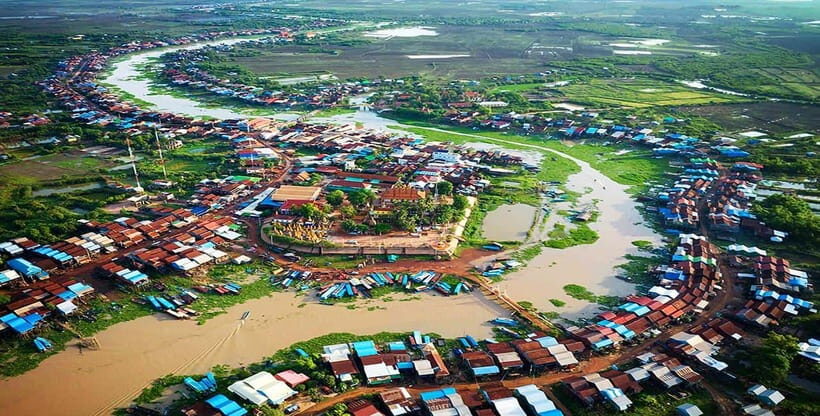
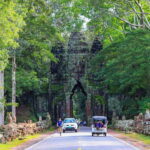
Day 1 is built around Angkor Thom, the former capital of the Khmer Empire. You start at the South Gate, which is more than just an entrance. It helps you understand how the city was planned—how movement into the capital was ceremonial, and how much effort went into making these structures feel monumental.
Next comes the Bayon Temple, famous for its hundreds of smiling faces. What I like about seeing Bayon in a guided setup is that you can look past the famous image and start noticing how the temple reads as a whole. The faces aren’t just decoration. They give the temple a sense of presence, like the city is watching you back.
Then you visit the Terrace of the Elephants. Your guide’s explanations help here, because terraces like this can feel confusing at first glance. It becomes clearer when someone connects it to royal life and the kinds of ceremonies that took place in the capital.
From there, the day transitions from the most iconic Angkor Thom moments into the temples that add texture and atmosphere. This is where the tour becomes more than checklist travel.
Ta Prohm and Ta Keo: the Lara Croft moment and the quieter temple contrast
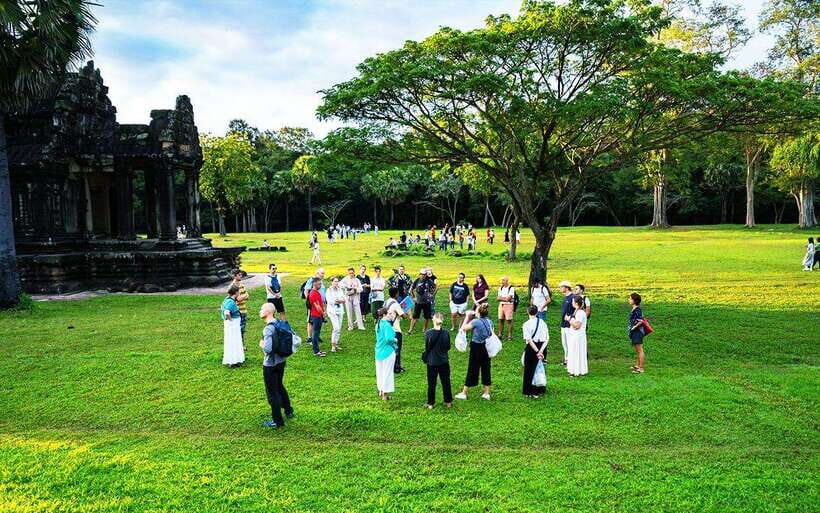
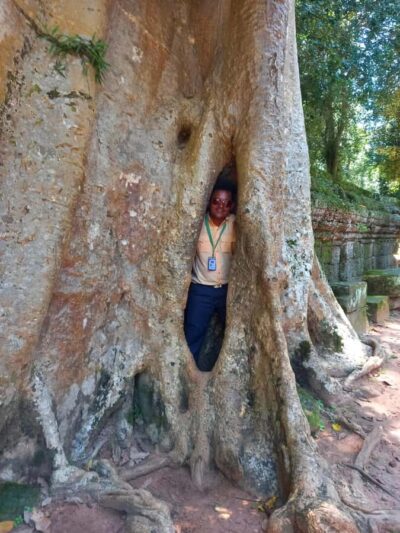
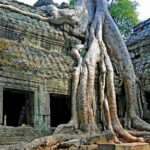
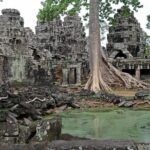
Ta Prohm is the temple you probably recognize from Lara Croft: Tomb Raider. The “jungle temple” look is real, and it’s one of the reasons Angkor feels like a living landscape even after centuries.
But don’t stop at the scene. On a guided day, Ta Prohm is more interesting when you understand what you’re actually seeing: how stone structures were built and then reworked by time. You’ll still get the magic of those roots and broken towers, but you’ll also get a better sense of why this temple looks the way it does.
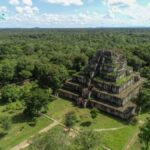
After that, you go to Ta Keo. This is a useful contrast. Ta Keo can feel more solid and structured than the jungle-heavy impression of Ta Prohm. That shift is good for your brain. It stops Angkor from becoming only one type of visual mood.
So by the end of Day 1, you’ve seen a range of Angkor Thom character: ceremonial city design, famous face symbolism, a terrace tied to royal use, and then two temples with noticeably different vibes.
Bakheng Mountain sunset: why the view is worth the effort
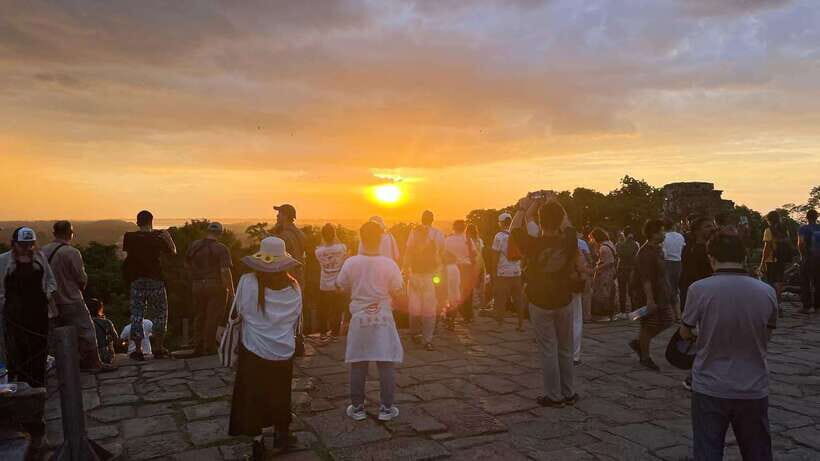
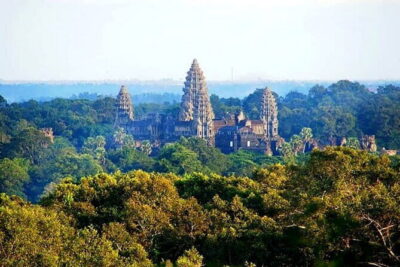
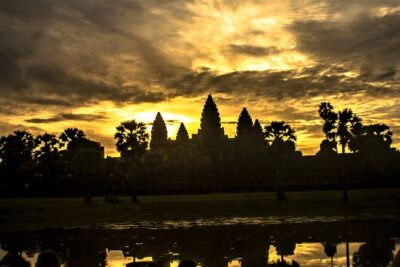
The day ends at Bakheng Mountain for a sunset viewpoint over Angkor Wat and the surrounding temple complex. Sunset viewpoints are common in Siem Reap, but this one earns its place because it helps you see Angkor as a whole.
From above, the temples stop being isolated “places to visit.” They become parts of a larger plan. You get a sense of scale—how far different temple groups spread—and you start recognizing patterns in the layout.
One practical note: this is a warm, active end to an already long day. The cooling water and towels help, and you’ll want to stay loose with your energy. If you’re sensitive to heat, plan to drink often and take short pauses during the climb and waiting time.



Day 2: Angkor Wat main temple galleries and the Grand Circuit feel
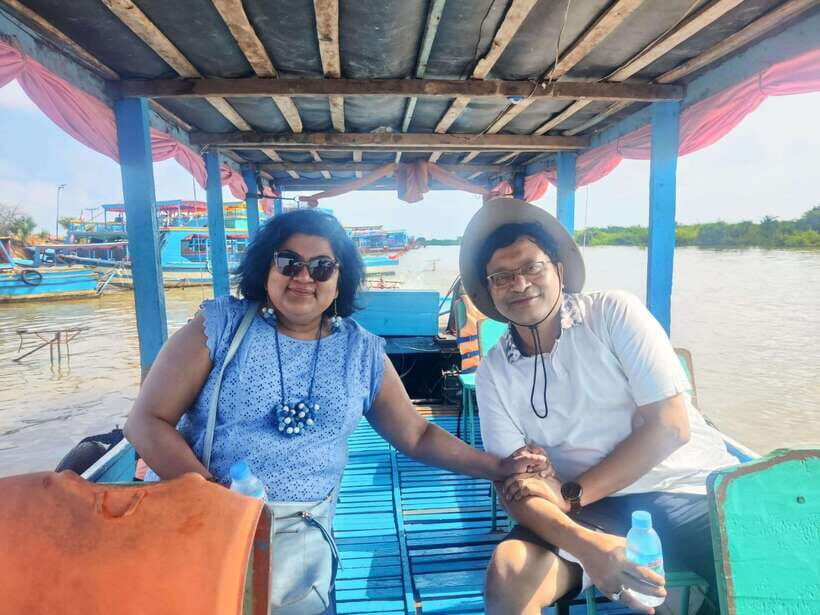
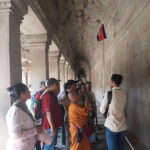
Day 2 is where Angkor Wat takes center stage. You spend time exploring the main temple complex at a leisurely pace, including the outer galleries and bas-reliefs.
This is the part where guidance really pays off. Angkor Wat’s carvings can look like endless stone detail. With a good explanation, you start seeing scenes and motifs that connect through the temple spaces. You also get help with where to focus first so you’re not just walking while looking.
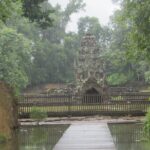
Then the tour continues with other temples tied to the broader circuit. Your included stops can include Ta Som, Preah Khan, and Neak Pean—temples that feel more like discoveries than repeats once you’ve handled the big centerpiece.
Each temple has its own “read.” Some offer more quiet atmosphere. Others show different styles of stone work and layout. The guided sequencing matters because it keeps your attention fresh instead of making you feel like you’re repeating the same kind of view.
Beyond Angkor stones: Tonle Sap floating school, stilt houses, and water markets
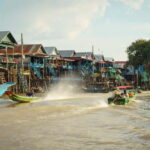
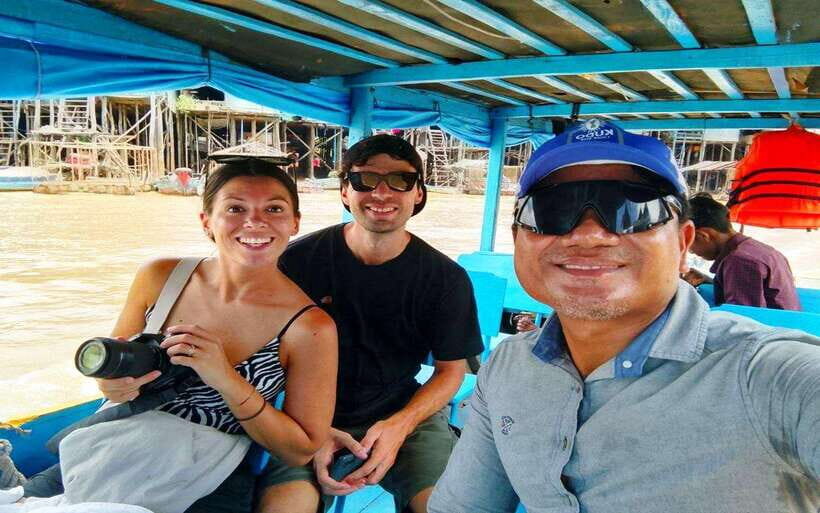
The closing act is Tonle Sap Lake and the floating lifestyle. This part shifts from ancient temple architecture to something immediate and human: the daily rhythms of wooden stilt houses and life built on the water.
The tour highlights include a floating school, wooden stilt houses, and bustling markets on the water. I like ending here because your day stops being about stone and switches to people and place. You leave Angkor with that “wow, how did they build this?” feeling, then you get a second kind of awe: how communities adapt and thrive in a watery environment.
There is one important budgeting detail to understand: the tour lists the boat visit to the floating village of Tonle Sap as not included. So while you’ll get the floating village experience and see the school and water markets as part of the plan, you should expect extra costs if a boat ride is part of how they take you through the area.
If you want photos, bring patience. Water village stops can involve waiting for small boats, moving through crowds, and working around changing conditions. The more relaxed you stay, the more you’ll actually enjoy watching daily life.
Lara Croft fame vs. temple reality: how to enjoy Ta Prohm without rushing
Ta Prohm draws people in with movie recognition, and that’s fine. But the best experience comes when you treat the fame as a doorway, not the whole story.
In a temple like Ta Prohm, the roots and stone breaks are the first thing you notice. After that, you’ll enjoy it more when your guide explains what’s happening around you: the temple layout, the surviving structures, and how the jungle effect reshaped the look without erasing what makes the site significant.
If you’re short on time (and most people are), don’t try to see everything at maximum speed. Slow down in a few key spots for 2–3 minutes each. Pick a corner, then pick another. That’s how you’ll capture the real shapes and the texture, not just random photos.
Price and value: what $75 includes and what to budget for
The price is $75 per person for the 2-day experience. For Angkor, that’s relatively strong value when the tour includes pickup/drop-off, an English-speaking guide, a driver, and basic comfort items like cool waters and fresh towels.
But it’s crucial to see what is not included so you’re not surprised later. You’ll still need to budget for:
- Angkor Archaeological Park entry ticket
- Boat visit for the Tonle Sap floating village
- Lunch
- Personal expenses
That’s the real “value math.” If you already know you’ll pay for entry and you want the boat ride, the tour still looks like a good deal because you’re paying for planning, guiding, and transport—not just access to gates.
Who this tour fits best (and who should skip it)
This is a strong choice if you:
- Want a small-group Angkor visit instead of a big bus tour.
- Like having someone explain what you’re seeing, especially for Bayon and Angkor Wat’s carvings.
- Want both Angkor temples and the Tonle Sap floating lifestyle in one compact schedule.
- Appreciate comfort support in hot weather (cool water and towels help a lot).
It may not be a great fit if:
- You want pure independent wandering with zero structure.
- You’re extremely sensitive to heat and walking pace. You can still plan for it, but you’ll be outside for multiple temple stops.
The tour is also noted as not suitable for people over 95 years, so check age guidance before you book.
The small details that made the experience feel smooth
One of the biggest advantages here is how the day runs. A guide who stays organized helps you get through temple transitions without losing momentum.
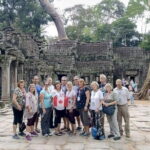
A standout detail from experience reports is the teamwork between the guide Rathan and the driver Mr. Toi. The two of them helped keep the timing right, and there was always fresh water and ice-cold towels waiting during hot breaks. That sounds small until you’re standing in sun for long stretches.
Also, the tour is set up to cover a lot without feeling like pure speed running. One report credits the plan with seeing 15 temples in two days, plus an Angkor Wat sunrise moment that makes the day feel extra special.
Should you book this 2-day Angkor + Tonle Sap tour?
I’d book it if you want a balanced two-day plan that hits the classics, adds a few deeper temple stops, and ends with real Cambodian floating life on Tonle Sap. The combination of small-group structure, an English guide, and heat-smart comfort items makes it feel worth the money—especially since the plan already handles the hard part: sequencing Angkor in a way that makes sense.
If you prefer total independence, you might find the schedule a bit structured. Also, if you want the floating village boat experience, be ready to add that cost since it’s not included.
FAQ
What is included in the $75 price for the 2-day tour?
It includes pickup and drop-off, a professional English-speaking guide and driver, hygiene local transport, and cool waters and fresh towels.
What is not included?
Entry ticket for the Angkor Archaeological Park, the boat visit to the Tonle Sap floating village, lunch, and personal expenses are not included.
Do I need an Angkor Archaeological Park entry ticket?
Yes. The Angkor Archaeological Park entry ticket is not included, so you should plan to purchase it separately.
Is the floating village boat visit included?
No. The boat visit for the Tonle Sap floating village is listed as not included.
How big is the group?
The tour is described as a small group limited to 10 participants, and it also notes a smaller private group of fewer than 6 people.
What is the cancellation policy?
You can cancel up to 24 hours in advance for a full refund.
FAQ
Is there a pay-later option?
Yes. The tour offers reserve now & pay later, so you can book your spot and pay nothing today.
When does the tour start?
Starting times can vary because you’ll need to check availability to see the specific start times for the 2-day schedule.