REVIEW · SIEM REAP
Private Angkor Wat Sunrise Tour
Book on Viator →Operated by Angkor Focus Travel · Bookable on Viator
Angkor at dawn feels different.
This private sunrise outing is built around the early light and calmer walkways around the temples, including quieter-side entry in darkness so your first big moments happen before the crowds. I also love that you get an experienced, licensed English-speaking guide, not just a driver, which makes the Khmer-era details and temple layout click fast. One thing to plan for: the $23 tour price doesn’t include official temple admissions, and you’ll still need to budget for the separate $37 entrance fee and ticket costs.
You’ll start pre-dawn, watch the sky shift, then move through the Angkor complex at a steady pace. Highlights include a dawn pause near the edge of an ancient library pool at Angkor Wat and a later stop at Ta Prohm, tied to the story of French explorer Henri Mouhot and the fact it once housed 2,740 monks. The day runs about 6–8 hours, so it’s long enough to feel like a real temple day without turning into a marathon.
Finally, this experience is rated extremely well, with a 5-star average and a 100% recommendation rate. It’s also typically booked in advance (on average about 43 days out), so if you’re traveling around peak dates, locking it in early is smart.
In This Review
- Key things I’d bank on before you book
- Angkor Wat Sunrise Runs Early, and That Matters
- Quieter-Side Entry: How the First Moments at Angkor Wat Feel
- Bayon Temple at Angkor Thom: Marble Smiles Before the Heat
- Ta Prohm’s Roots and Henri Mouhot’s 1850s Connection
- Comfort, a Licensed Guide, and a Private Rhythm
- What the $23 Tour Covers, and What You Still Pay at the Temples
- How This Route Helps You See More Without Rushing
- When to Go, What to Expect in 6–8 Hours
- Who This Private Sunrise Plan Is Best For
- Should You Book Angkor Wat Sunrise with Angkor Focus Travel?
- FAQ
- What time does pickup happen for the Angkor Wat sunrise tour?
- Which temples are included in the tour?
- Are temple admission tickets included in the price?
- How long is the tour?
- Is this tour private?
- What happens if weather is poor?
Key things I’d bank on before you book
- Pre-dawn hotel pickup (around 4:30–4:45am) so you’re at Angkor before sunrise crowds build.
- Angkor Wat entry in darkness from a less crowded approach, designed for maximum atmosphere.
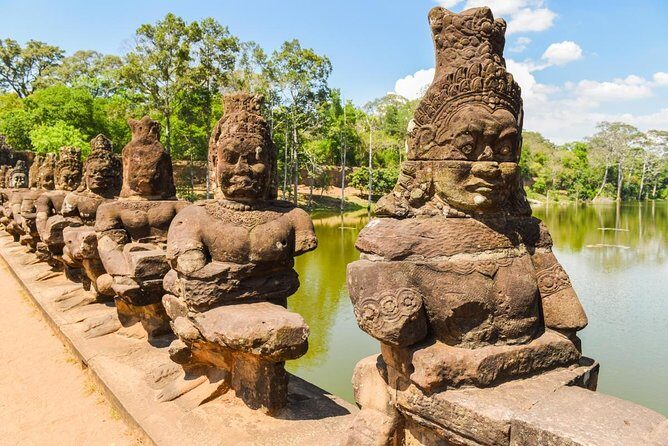
- Bayon at Angkor Thom with time to appreciate the scale before heading inside.
- Ta Prohm with specific context including Henri Mouhot’s 1850s rediscovery and 2,740 monks.
- Private, only-your-group format with air-conditioned transport, plus bottled water and a cold towel.
Angkor Wat Sunrise Runs Early, and That Matters
The hardest part of this tour is also the best part: you’ll be moving before dawn. Departure is timed to the season, usually around 4.30 to 4.45am from your hotel, which means you trade late-morning crowds for that slow, shifting light at Angkor.
That early start affects everything. It changes the feel of the temples, it gives your photos better timing, and it keeps the day from becoming a rush-and-juke scramble in the busiest hours. If you hate getting up early, this may feel like a lot; if you love atmosphere, it’s exactly the point.
Also, it’s not just “watch sunrise and leave.” The plan includes time both outside and inside, so you’re not stuck waiting around for a single moment.
You can also read our reviews of more private tours in Siem Reap
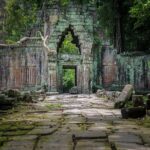

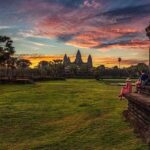
Quieter-Side Entry: How the First Moments at Angkor Wat Feel
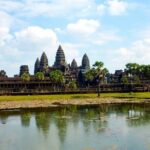
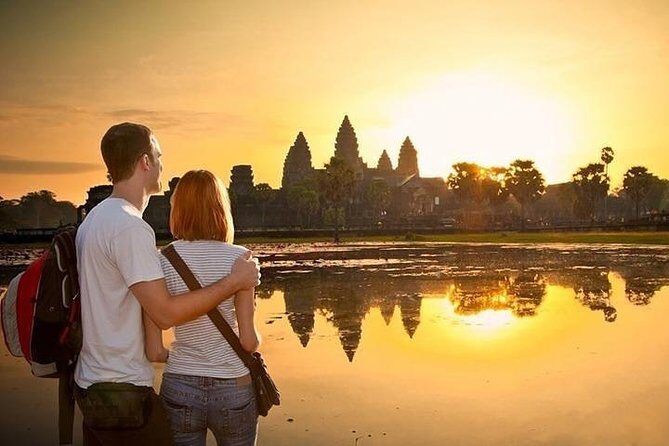
Your first stop centers on Angkor Wat at sunrise, with the special twist that you enter in the dark from a quieter approach rather than charging in with full daylight momentum. That detail matters, because the first views of the temple feel almost cinematic when you’re still adjusting to the dark and then the sky starts to brighten.
You’ll also get a dawn moment described as soaking in the atmosphere from the edge of one of the ancient library pools at Angkor Wat. That kind of pause is practical for two reasons. It gives you a calm viewing spot when your brain is already awake from the early start, and it helps you understand the layout instead of just walking past stones.
One more angle I like: the tour doesn’t position Angkor Wat as a quick photo checkpoint. It’s scheduled for about 3 hours at this first stop, which gives room for you to take in details at a human pace before you move on.
Bayon Temple at Angkor Thom: Marble Smiles Before the Heat
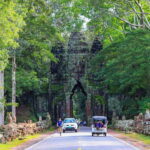
After Angkor Wat, the route shifts to Bayon Temple, part of Angkor Thom—the Khmer Empire’s former glistening capital. This stop is designed to make you slow down and look at the grand scale before you head inside.
You’ll spend about 2 hours at Bayon. That time window is usually the sweet spot: long enough to notice repeated faces and symmetrical structures, and short enough that you’re still fresh for the next temple without feeling steamrolled by the day’s schedule.
A practical benefit of the way the day is ordered is that Bayon hits before you reach a heavy peak of fatigue. By the time you’re at the last part of the complex, your eyes will already know what to look for—so Ta Prohm doesn’t feel like a completely different planet.
If you’re the type who enjoys explanations while you walk—symbolism, layout, why people built places like this—this is also where the value of the guide really shows.
Ta Prohm’s Roots and Henri Mouhot’s 1850s Connection
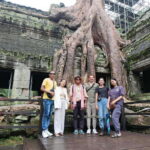
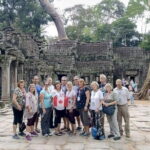
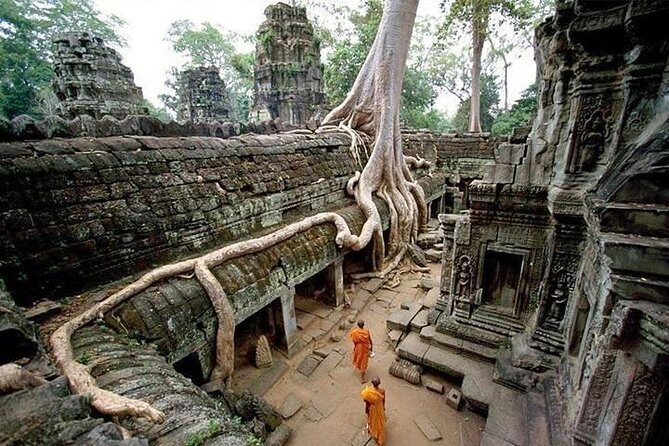
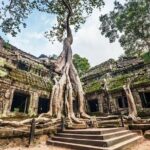
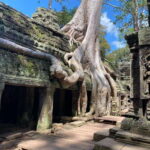
Ta Prohm is the stop people remember, and not only because it’s photogenic. It’s scheduled as a full 2-hour temple visit with time to take in the atmosphere of a crumbling site shaped by vegetation and time.
What makes Ta Prohm hit harder on a guided tour is the context tied to its past. This temple was once home to 2,740 monks, and it’s also linked to French explorer Henri Mouhot, who is associated with the site’s early 1850s rediscovery. The effect is that the ruins feel less like scenery and more like a place that people lived in.
The tour’s pacing helps here too. If you just sprint through Ta Prohm on your own, it can feel like a blur of stones. With a plan that includes a calm time window, you’re more likely to notice how the temple feels like it’s holding two eras at once: the Khmer-era structure and the later wear-and-growth that took hold after it was no longer fully in use.
One caution: Ta Prohm can be visually busy. If you’re someone who likes detailed photos, bring a little patience—this stop rewards slow looking more than rapid snapping.
Comfort, a Licensed Guide, and a Private Rhythm
The tour is private, meaning only your group participates. That makes a difference at Angkor because the experience is sensory and time-sensitive. You can ask questions without feeling like you’re disrupting a larger crowd, and you can keep moving at a pace that fits your group.
Transport is also handled for you: you get an air-conditioned vehicle, plus hotel pickup and drop-off. After a pre-dawn start, that comfort is not a luxury—it’s what keeps your energy steady for the walking and waiting time inside the complex.
The small inclusions are the kind you’ll feel later in the day. Bottled water and a cold towel are provided, which helps when the morning has you tired and the temples have you walking in sun or humidity depending on the day.
Your guide is listed as experienced and licensed, and the emphasis is on English speaking. In one highlighted example from a guide name that shows up in people’s recommendations, Davannsuon, the praise centered on clear English and strong Cambodian cultural context. If you’re paired with a guide with that style, you’ll likely get more than facts—you’ll get a way to connect what you’re seeing to how the Khmer empire shaped the region between the 9th and 13th centuries.
You can also read our reviews of more tours and experiences in Siem Reap


What the $23 Tour Covers, and What You Still Pay at the Temples
Here’s the honest math: the tour itself is priced at $23.00 per person, but temple admissions are not included. The tour specifically lists entry/admission for Bayon, Angkor Wat, and Ta Prohm as not included, and it also calls out a temples entrance fee of $37 per person.
So you should budget for two layers:
- the tour fee ($23) that covers guide, vehicle, and the structured day plan
- the official temple costs you pay separately on the ground (including the $37 entrance fee, plus admission needs for the specific temples)
That might sound like a hassle, but it’s also normal for Angkor. The value here is that the low tour price buys you coordination, a guide to make the experience make sense, and logistics that prevent wasted time at the busiest moments.
If you’re cost-sensitive, I’d treat this as a “cheap for the service” tour rather than a “cheap all-in” deal. Once you factor in entrance fees, the price picture becomes clearer—and the private sunrise timing starts to look like money well spent.
How This Route Helps You See More Without Rushing
This route is built for a flow: start with Angkor Wat at sunrise, move to Bayon at Angkor Thom, then finish at Ta Prohm. That order matters because it spreads the day across different temple moods instead of stacking similar ruins back-to-back.
Angkor Wat opens the day with spectacle and structure. Bayon shifts the perspective to the capital city feel and gives you time for the big-picture moment. Ta Prohm ends on atmosphere—stone, roots, and the story connection to Henri Mouhot and its monk-era life.
The “6 to 8 hours” duration window also helps. You get a full temple-hopping day, but it’s not so long that your group stops caring. The schedule includes enough time at each stop to feel intentional rather than purely checkbox tourism.
And because this is a private plan, you’re less likely to lose time waiting for a larger group to regroup. You’re still walking and still early, but the rhythm stays yours.
When to Go, What to Expect in 6–8 Hours
The start time shifts with the season. Departures are listed as 4.30 to 4.45am depending on the time of year, so don’t assume the exact hour will match your travel date without confirmation.
A key detail: good weather is required for this experience. If weather is poor and the tour can’t run as planned, you’ll be offered a different date or a full refund. That matters for sunrise, because cloud cover can change the look and feel of the morning, even if temples are still open.
In terms of how the day feels, expect a long morning. You’ll be awake early, you’ll spend multiple hours inside and around the Angkor complex, and you’ll still have enough energy to appreciate the final stop. If your group dislikes early starts, you might prefer a later temple tour instead.
Who This Private Sunrise Plan Is Best For
This is a strong fit for:
- couples and small groups who want a calm, coordinated sunrise experience
- people who care about context, not just photos (the guide-led explanations are a big part of the value)
- early birds who want sunrise light and prefer fewer crowds
It may be less ideal if:
- you don’t like pre-dawn starts and long mornings
- you want a fully all-in price with no temple payment on top of the tour fee
Since the tour is private and includes pickup and drop-off, it also suits groups that want convenience more than they want to piece together transport and tickets on their own.
Should You Book Angkor Wat Sunrise with Angkor Focus Travel?
If you want the Angkor Wat sunrise experience without turning your day into a logistics puzzle, I think this is a smart booking. The core strengths are the early timing, the structured temple order, and the fact that the tour guides you through the sites with enough time to actually notice what makes each one different.
I’d book it if you’re excited by atmosphere and you’re okay paying separate temple admissions. The math is straightforward: the tour fee is low, but you still need that separate entrance budget. If you’re okay with that, you’re basically buying comfort, coordination, and a guide to help the temples click into place.
Before you commit, I’d check your travel dates early since the tour is commonly booked about 43 days in advance on average. If sunrise is a must-do for you, treating this like a priority purchase is usually the right move.
FAQ
What time does pickup happen for the Angkor Wat sunrise tour?
Pickup is pre-dawn, usually between 4.30 and 4.45am depending on the time of year.
Which temples are included in the tour?
The tour includes Angkor Wat, Bayon Temple (at Angkor Thom), and Ta Prohm.
Are temple admission tickets included in the price?
No. Temple entry/admission for Bayon Temple, Angkor Wat, and Ta Prohm is not included, and there is a listed temples entrance fee of $37 per person.
How long is the tour?
It runs about 6 to 8 hours.
Is this tour private?
Yes. It’s a private tour, and only your group participates.
What happens if weather is poor?
The experience requires good weather. If it’s canceled due to poor weather, you’ll be offered a different date or a full refund.