REVIEW · ANGKOR WAT TOURS
Angkor Wat: Guided Vespa Tour / Tuk Tuk or Car
Book on GetYourGuide →Bookable on GetYourGuide
Angkor by Vespa keeps the day moving. You get a guided historian talking meaning and symbolism, plus the freedom to hop between temple spots on a scooter so you spend less time stuck with the biggest lines. I especially like the off-the-beaten-track routes that help you see Angkor’s stone details without feeling trapped in crowds. One thing to note: you’ll still need your own Angkor temple pass, since it’s not included.
This 8-hour setup also means a long day in warm weather, and you’re mostly riding passenger-style (the driver handles the scooter). The trade-off is comfort and safety, and you can focus on photos and listening instead of traffic.
In This Review
- Key things I’d watch for on this Angkor Vespa day
- Why this Vespa-style Angkor tour feels practical (and not just scenic)
- Pickup in Krong Siem Reap: how to start the day without chaos
- Bayon in the morning: focus on faces, not just photos
- Angkor Wat guided time: when the bigger temple gets personal
- Ta Prohm: ruined-by-time temple time, with better photo control
- Srah Srang lunch break: the heat reset you’ll be glad you planned
- Off-the-beaten-path trails: the Angkor “breathing room” part
- Community-based tourism center stop: what you’re actually supporting
- Angkor Wat again, or Angkor Wat as the closer: why the finale matters
- Price and value: $29 for a full day of guide time (not just transport)
- Who this tour suits best (and who should look twice)
- Quick practical tips so your day runs smoother
- Should you book this Angkor Vespa guided tour?
- FAQ
- How long is the Angkor Wat guided Vespa tour?
- Where does the tour start and where do you return?
- How much does it cost?
- What’s included in the tour price?
- Are Angkor temple passes included?
- What temples and sights are visited?
- Do I need to pay for lunch separately?
- Is the tour language English?
- What’s the cancellation policy?
Key things I’d watch for on this Angkor Vespa day
- English historian guide who explains what you’re looking at, not just where to stand
- Vespa transport that keeps you moving between temples at a relaxed pace
- Cropped crowds time via lesser-known trails and photo spots
- Lunch included at a local place with a break from the heat
- Community-based tourism center stop for a glimpse into everyday life
- Main temples plus extras like Bayon, Ta Prohm, and angles around Angkor Wat
Why this Vespa-style Angkor tour feels practical (and not just scenic)
Angkor can be overwhelming fast. Even if you love temples, the main circuits can feel like a conveyor belt—walk, pose, shuffle, repeat. What I like about this tour format is that it treats your day like a plan, not a marathon. You still hit the stars—Bayon, Ta Prohm, Angkor Wat—but you’re also given time and pacing to actually understand what you’re seeing.
The Vespa matters here. You’re not spending the day waiting around. You glide between spots, and that changes the feel of the temples: less crowd stress, more moments to look at carvings, doorways, terraces, and face towers. In the past, the experience has been powered by guides such as Sotin, Son, Sarak, and Ngov (with drivers including people like Peng), which is a good sign that you’re likely to get clear explanations and solid logistics rather than a rushed “walk faster” style.
The other practical win: lunch is included, plus drinks. In Siem Reap heat, that’s not a small detail. It buys you energy for the afternoon walking and keeps the day from turning into a snack-and-sweat scramble.
Pickup in Krong Siem Reap: how to start the day without chaos
The day begins with pickup in Krong Siem Reap. That’s the smart way to start, because Angkor logistics can be confusing when you’re trying to figure it out on your own. With pickup handled, you’re more likely to arrive at the temples when the flow is still settling.
Timing is also part of the value. Some tours in the area push very early starts. Feedback tied to this itinerary points to 8:00 AM being a workable start time, which tends to feel easier than the extreme early-departure options. You’ll still want to come ready for sun and humidity, but you won’t be wrecked before the first temple lesson.
What to bring is simple: hat, sunscreen, a small bottle of water if you like having backups (drinks are included), and comfortable shoes for temple paths that can be uneven.
Bayon in the morning: focus on faces, not just photos
Bayon is a great place to start (and on this kind of schedule, it often functions as your mental warm-up). The tour is designed around guided time here—about 3 hours—so you’re not just doing a quick loop.
This is where the historian guide really earns their keep. Bayon’s faces and towers can look “cool” from a distance, but the meaning becomes clearer when someone explains the symbolism and how the temple fits into Angkor’s broader religious and political story. The value for you is simple: you’ll know what you’re looking at, so your photos feel less random and more intentional.
Also, starting earlier tends to help. Even when crowds exist, you get more breathing room for walking, pauses, and questions before the day tightens up.
Angkor Wat guided time: when the bigger temple gets personal
Angkor Wat is the obvious headline. But the benefit of this tour isn’t that you go—it’s that you get guided time and you’re not only stuck on the most obvious viewpoints.
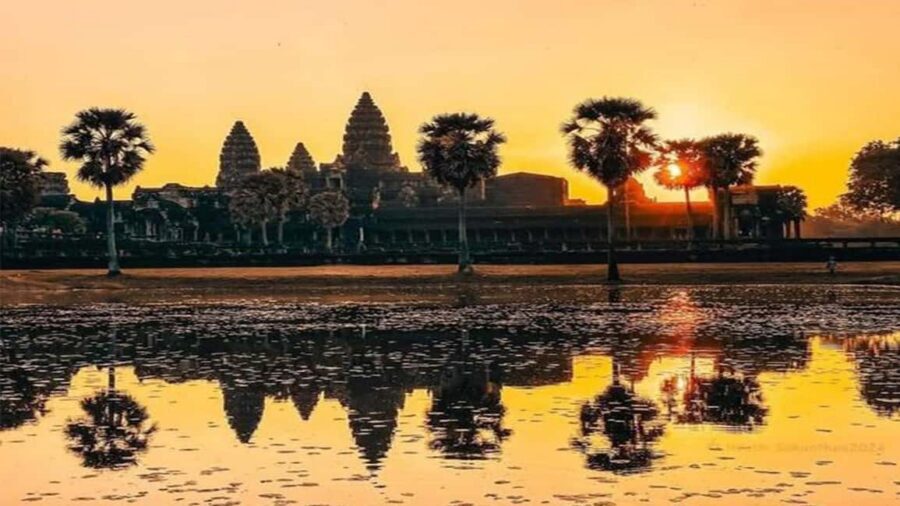
The schedule includes around 2 hours at Angkor Wat with a temple guide focused on meaning and symbolism. You’ll also have a chance to see temple features connected to the broader Angkor complex—like the Elephant Terrace—and those details are where “I saw it” turns into “I understand it.”
One practical note: Angkor Wat is big, and your energy matters. The Vespa transport and guided pacing help you avoid the worst parts of getting over-tired too early. You can also ask questions on the spot, which is one reason history becomes more fun here than in a lecture hall.
Ta Prohm: ruined-by-time temple time, with better photo control
Ta Prohm is famous for the way trees and roots take over the stone. The tour gives you a photo stop plus a guided visit, about 2 hours, which is a nice balance. You get enough time to find angles and then get deeper context from the guide.
This stop is also where you’ll feel the advantage of having a driver and a plan. Without transport help, you can lose time bouncing around the area or arriving at the wrong moment for lighting. With this tour format, you’re more likely to land in Ta Prohm with enough momentum to enjoy the details rather than just chasing the perfect shot.
If you want those iconic jungle-root photos, arrive with patience and eye-level curiosity. Don’t just aim for the most famous wide view—look for the smaller carvings and the way the structure holds up around the roots. The guide can point out what to notice so you don’t spend your whole time guessing.
Srah Srang lunch break: the heat reset you’ll be glad you planned
At Srah Srang, you get the included lunch (about 1 hour). The best practical takeaway from the experience design is that lunch isn’t a vague “somewhere nearby.” It’s a real break, and the provided notes point to lunch sometimes happening in an air-conditioned local restaurant—exactly what you want when the sun is doing its job too well.
Also, this is when you can slow down and ask questions. A good historian guide doesn’t just explain temples; they can also help you make sense of what you’re seeing across the day: why certain areas look different, what the symbols are doing, and how to read the layout.
If you get motion-sick easily on scooters, tell your guide early. They can often help manage pace and stop timing so you stay comfortable.
Off-the-beaten-path trails: the Angkor “breathing room” part
The tour explicitly builds in quieter time on lesser-known trails. This is the part you’ll remember most if you don’t love crowds. Instead of only following the main temple flows, you’re guided through areas that tend to feel more local and less like a theme-park checkpoint.
Expect your guide to point out details you might miss on your own. That could mean small carvings, unusual viewpoints, or temple features that don’t get the same attention as the headline monuments. The point isn’t that these places are “less important.” It’s that they let you see Angkor as a living site with textures, changes over time, and patterns of design.
And because the Vespa transport keeps you moving, you’re less likely to feel like you’re giving up comfort for exploration. The day stays balanced: a bit of “big famous temple,” then a bit of “how did they build this, and what does it mean?” That combination makes the tour feel worth the time.
Community-based tourism center stop: what you’re actually supporting
After the off-the-beaten path portion, the itinerary includes a stop at a community-based tourism center. The goal is hands-on context for everyday life of Cambodians—less spectacle, more human scale.
This is a good place to have your questions ready. If the guide is the type to explain beyond the monuments (and the tour’s design suggests they will), you’ll get a clearer picture of how tourism fits into the neighborhood reality, not just the temple grounds.
Just keep expectations grounded: this isn’t a museum replacement. It’s more like a chance to meet the community side of the region you’re visiting.
Angkor Wat again, or Angkor Wat as the closer: why the finale matters
Some versions of the flow place Angkor Wat toward the end after the community stop and quieter trails. Even if your exact order shifts slightly, the tour’s structure aims for a final stretch that feels satisfying rather than rushed.
If Angkor Wat happens late in the day for you, it can work in your favor. You’ll have already seen Bayon and Ta Prohm, so Angkor Wat lands with more meaning. You start to recognize design choices, themes, and the way different temples express beliefs and power through stone.
If it happens earlier, that can also be good—you lock in the biggest monument when you have the freshest energy, then build toward the quieter exploration and the lunch reset.
Either way, the guided temple focus on symbolism helps you avoid the common problem of leaving without understanding what you saw.
Price and value: $29 for a full day of guide time (not just transport)
At $29 per person for an 8-hour day, the value comes from what’s included:
- round-trip by scooter/Vespa
- an experienced driver
- a professional English-speaking historian guide
- drinks
- lunch
The cost becomes more reasonable when you factor in guide time. In Angkor, a lot of the real value is interpretation—someone helping you read the site. If you were doing this solo, you’d pay for entry logistics, transport, and likely end up spending extra time figuring things out while you’re already tired.
The main “missing” piece is the temple pass. That’s a cost you must plan for, and it can change the total depending on your ticket type and length of stay. The tour also doesn’t include travel insurance, so make sure that’s covered by your own plan.
As always: if $29 sounds too low, check what’s included and what’s not. Here, the big included items are the guide and transport, and that’s where a low price can actually make sense.
Who this tour suits best (and who should look twice)
This is a strong match if you want:
- a guided Angkor day with real explanations
- a scooter format that reduces crowd stress
- a mix of main temples and quieter trails
- an included lunch break in heat
It might not be your best fit if you:
- want to drive yourself (this format uses an experienced driver)
- hate long days in warm weather
- are trying to avoid all guided structure and prefer total free time
If you’re a photographer, this setup tends to work well because it’s built around photo stops and the ability to move without losing the day.
Quick practical tips so your day runs smoother
- Wear breathable clothes and bring sun protection. Angkor punishes poor planning.
- Ask your guide questions as you go. The value is in the explanations tied to what’s in front of you.
- Keep a little patience for temple paths. Even with scooter transport, you’ll walk.
- Plan for a temple-pass budget. The tour doesn’t include it.
Should you book this Angkor Vespa guided tour?
I’d book it if you want the best balance between icons and quiet time. The combo of Vespa transport, an English historian guide, and the built-in lunch break makes it feel like a managed, sensible Angkor day. You’ll get the big names—Bayon, Ta Prohm, Angkor Wat—then you’ll also be taken to calmer corners and a community stop that adds more than just stone photos.
Skip it (or compare options) if you already know you’ll want to drive yourself, or if you’re the type who prefers full independence and flexible pacing with no set itinerary.
If you want Angkor that feels human-sized—without skipping the essentials—this is one of the cleaner ways to do it.
FAQ
How long is the Angkor Wat guided Vespa tour?
The tour lasts 8 hours.
Where does the tour start and where do you return?
Pickup and return are both in Krong Siem Reap.
How much does it cost?
The price is $29 per person.
What’s included in the tour price?
It includes round-trip scooter (Vespa) transport, an experienced driver, a professional English-speaking guide, drinks, and lunch.
Are Angkor temple passes included?
No. The Angkor temple pass is not included.
What temples and sights are visited?
The tour includes Bayon and Ta Prohm, plus Angkor Wat. You may also see the Elephant Terrace, and you’ll stop at Srah Srang for lunch, along with off-the-beaten-path areas and a community-based tourism center.
Do I need to pay for lunch separately?
No. Lunch is included.
Is the tour language English?
Yes. The tour guide provides English.
What’s the cancellation policy?
You can cancel up to 24 hours in advance for a full refund.