REVIEW · SIEM REAP
Full Day Temples Explorer – Small Group
Book on Viator →Operated by Tourme ANGKOR · Bookable on Viator
Angkor looks better on a human scale. This Full Day Temples Explorer focuses on the morning classics—starting with Angkor Wat—while keeping the group small enough for questions and real pacing. You’ll be moving through major Angkor highlights in about 8 hours, with a licensed English-speaking guide and an air-conditioned minivan.
What I like most is the way the tour balances “big sights” with actual interpretation. In particular, past groups have praised guides like Noy and Sok for adding Cambodia context and answering more than just temple trivia. That kind of guidance helps you understand what you’re looking at, not only where it is.
One thing to plan for: the $19 price does not include the Angkor entry/temple pass. The tour lists a $37 per person temple pass you pay directly to the site, so your day budget is closer to the tour fee plus admissions.
In This Review
- Key things to know before you go
- The core idea: a compact Angkor morning circuit
- Small-group comfort: what the day feels like in practice
- Angkor Wat: three hours with the biggest starting point
- Angkor Thom South Gate: gods on one side, demons on the other
- Bayon Temple: the face towers and the heart of Angkor Thom
- Srah Srang + lunch break: the reset you actually need
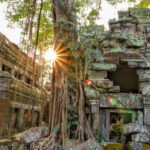
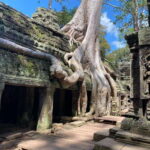
- Ta Prohm: jungle atmosphere and a slower kind of awe
- Price and value: $19 tour fee plus the $37 pass
- Timing, pacing, and small practical tips that matter
- Who should book this Angkor day tour?
- Should you book the Full Day Temples Explorer?
- FAQ
- FAQ
- How long is the Full Day Temples Explorer tour?
- What time does the tour start?
- Where do they pick you up?
- Is the $19 price enough to enter the temples?
- Which temples are included in the itinerary?
- Is lunch included?
- Can I cancel for free?
Key things to know before you go
- Small-group feel (max 10 promised, cap listed up to 15): easier conversations, less waiting around.
- Hotel pickup + air-conditioned minivan: you save time and avoid the heat shuffle between stops.
- Angkor Wat as a full 3-hour anchor: enough time to see it without rushing off immediately.
- Bayon’s “200+ faces” moment: you’ll spend about 1.5 hours at the centerpieces of Angkor Thom.
- Ta Prohm’s jungle atmosphere and monk history: guided time at a temple known for its dramatic setting.
- Lunch stop + bottled water: the day includes a break so you’re not running on fumes.
The core idea: a compact Angkor morning circuit
This is a full-day temple tour built around the most famous Angkor stops, but run on a schedule that tries to keep you from feeling trapped in a long, slow day. The start time is 8:00am, and the total duration is about 8 hours. That matters because Angkor can feel overwhelming fast—so getting the day laid out for you is a real advantage.
The other “why this works” piece is the small-group size. The overview talks about a maximum of 10 people, while the additional info lists a maximum of 15 travelers. Either way, it’s not a huge bus situation. You should expect an easier flow between temples: less time drifting, fewer people crowding in the same tight moments, and more chance to hear what your guide is actually saying.
You also get an air-conditioned minivan and mineral water, which sounds basic until you’re sitting in the Siem Reap heat with a long temple day ahead. It’s one of those “small comforts” that make the whole experience feel smoother.
You can also read our reviews of more tours and experiences in Siem Reap
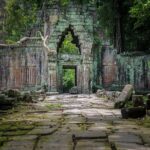
Small-group comfort: what the day feels like in practice
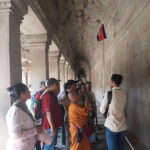
When a tour is truly small, it shows up in the details. You’ll have pickup and drop-off from Siem Reap city hotels, so you’re not negotiating transport on your own. Your guide is licensed and speaks English, and the group size helps the guide keep track of people—who’s ready, who needs a moment, who wants a better viewpoint.
One of the strongest points from guide feedback is the way the best guides manage the human side of the day. In the reviews, you see people mention that they had time to connect with everyone and that the guide shared not only temple facts but also insight into Cambodia’s history and culture. That’s a big deal in Angkor, because it’s easy to treat the temples like a checklist. A guide who can explain context helps you slow down and look up.
Another practical win: the tour includes a mobile ticket. That can reduce friction at the meeting point and help the day start smoothly.
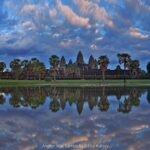
Angkor Wat: three hours with the biggest starting point
Angkor Wat is the first and main stop, with a planned 3-hour visit. The tour frames it as the world’s largest religious monument, which is a useful anchor for your attention. When you know the scale and significance going in, it’s easier to appreciate why this site sits at the center of most Angkor itineraries.
Because the admission ticket is not included, you’ll want to budget for the temple pass. Once you’re inside, your guide’s role becomes your shortcut. Instead of guessing what matters most, you’ll follow a route designed for the time you have. Three hours is also long enough for a slower pace than the “quick photo and go” crowd many people experience.
A possible drawback here: three hours at Angkor Wat can feel long if you dislike crowds at iconic sites. The tour’s promise is to help you avoid that as much as possible by focusing on an efficient morning plan and keeping the group compact. Still, this is Angkor’s headline—so expect at least some busyness.
Angkor Thom South Gate: gods on one side, demons on the other
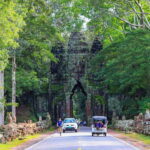
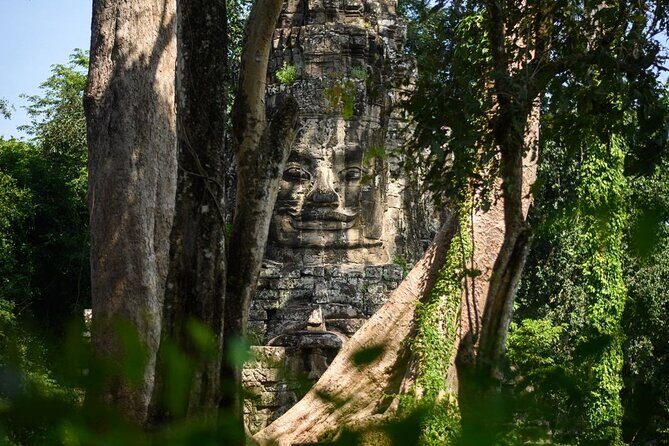
Next up is the South Gate of Angkor Thom, scheduled for about 30 minutes. This is one of those stops where the guide makes the difference. The tour describes the gate as flanked by rows of 54 stone figures on each side—with gods on the left and demons on the right. That’s an instantly memorable detail, and it gives you something to look for as you approach.
From a pacing standpoint, the short stop length can be a feature. Thirty minutes keeps the day moving toward the bigger interior moments later. If you enjoy photographing architectural details, the gate is a good place to grab that “I’m here” shot without losing half your morning.
If you hate rushed transitions, you should still be fine here since the group is small. But do note the time is limited—so if you want extra wandering around the gate area, you may feel a pinch. This tour is built for compact coverage rather than free-roaming.
Bayon Temple: the face towers and the heart of Angkor Thom
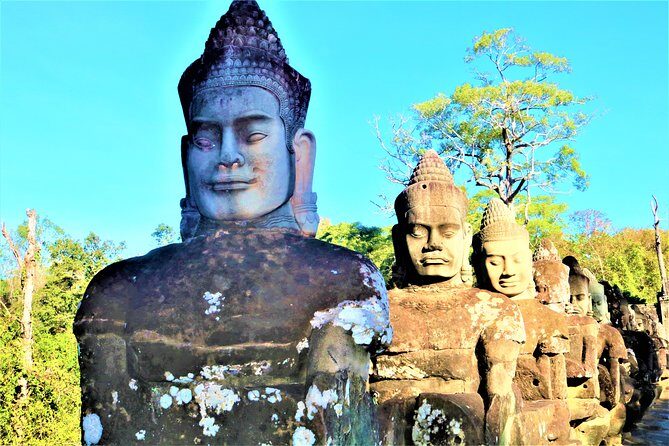
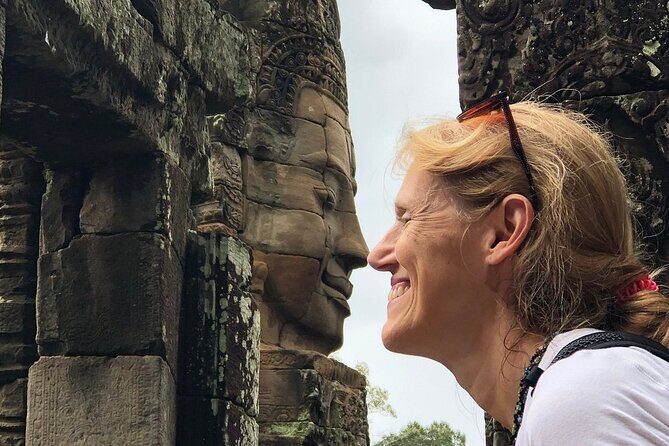
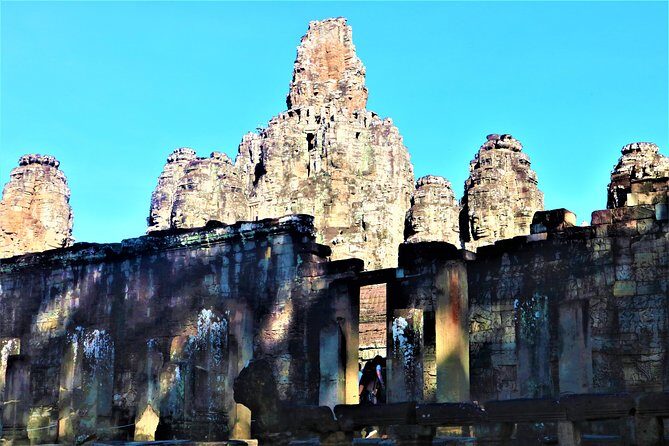
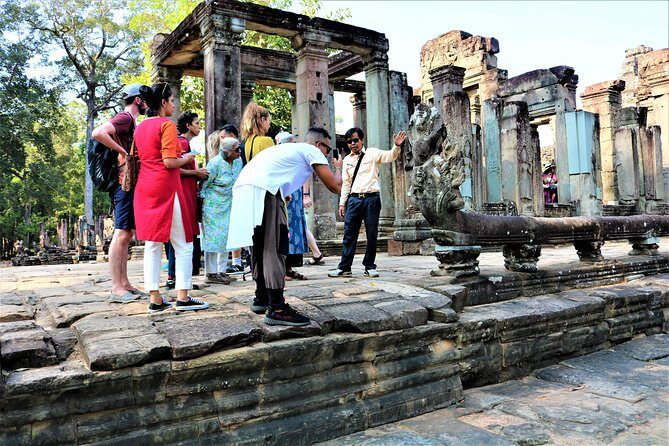
Your next major temple is Bayon Temple, with a planned 1.5 hours. The standout visual described in the tour info is the central towers covered in more than 200 enormous faces. That image is why Bayon is often the most “wow” moment for people who love symmetry and monumental scale.
Bayon also connects to a key theme of the day: Angkor wasn’t just one temple, it was a functioning city. The tour notes that Bayon once served as the Khmer Empire’s glistening capital city. That context matters. Without it, Bayon can feel like an impressive pile of stones. With it, you start to see why this place has a different energy than temples you treat as isolated ruins.
Because the tour time is set, you’ll likely balance outer viewpoints with at least some guided time inside. If you’re the type who likes to read every carved symbol, you might want more time than 90 minutes. But for most people, Bayon fits perfectly into an 8-hour “main highlights” day.
Between Bayon and the next scheduled stop, the route includes a pass by the Terrace of the Leper King and the Terrace of Elephant. That means you’ll see them, but you shouldn’t expect a long, slow exploration here.


Srah Srang + lunch break: the reset you actually need
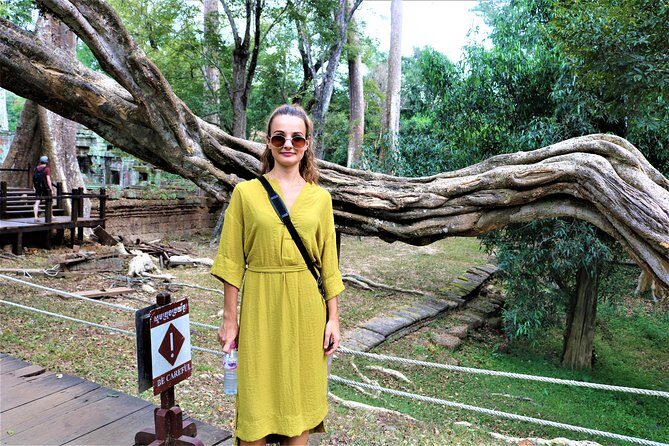
After the bigger temples, the itinerary shifts to a calmer rhythm. You’ll stop at Srah Srang (scheduled with a break time of about 1 hour), and the tour lists entry as free for this stop.
Just as important, this is where the tour includes a lunch break at a local Khmer restaurant. The itinerary says lunch is included, but the tour notes also mention lunch meals available at your own choice. Since those two statements conflict, I’d treat this as a “confirm when booking” moment so you know exactly what’s covered.
Either way, having a set lunch break is a plus. It keeps the day from becoming a two-temple sprint. It also gives you time to rehydrate before you head to one of the most visually intense sites on the list.
If you’re the planning type, you’ll appreciate that Srah Srang is on the route as a buffer stop—something different from the big face towers and jungle-rooted walls. It’s also nice to have a break where you’re not constantly scanning for the next viewing angle.
Ta Prohm: jungle atmosphere and a slower kind of awe
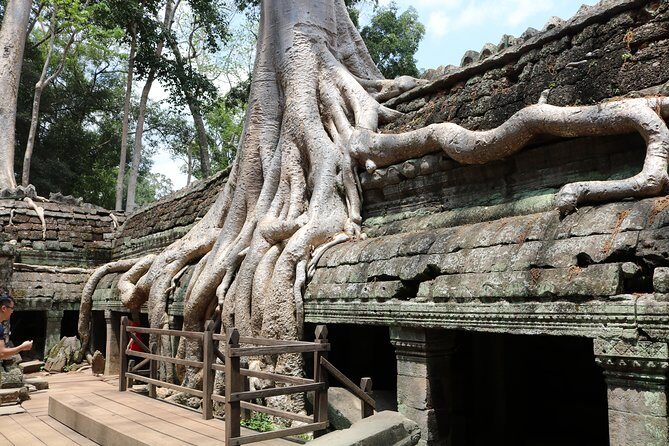
The last major stop is Ta Prohm, with about 1.5 hours scheduled. This is the temple that many people picture as soon as they hear “Angkor”—and the tour leans into why.
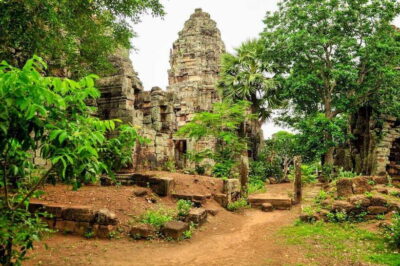
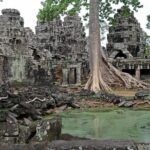
The description calls it one of the most atmospheric temples in the Angkor complex, and it also mentions a striking historical detail: Ta Prohm was once home to 2,740 monks. That monk number gives the site a human scale. You’re not just looking at plants attacking stone—you’re looking at a place that once held a community.
The overview also references a maze-like interior, and the tour time should give you a chance to follow the guided route without feeling like you’re only getting a glance. Still, note that Ta Prohm can be physically demanding. Paths can be uneven and you’ll be moving between viewpoints. Comfortable shoes are not optional on this one.
If you’re sensitive to humidity and heat, plan to take it slow at Ta Prohm. This is a great “linger” temple, but the best approach is controlled curiosity: pause when something catches your eye, then keep moving so you don’t feel trapped in the thick middle.
Price and value: $19 tour fee plus the $37 pass
Let’s do the math clearly. The tour costs $19 per person, but the temple pass is not included. The temple pass is listed as $37 per person, paid directly to the site.
So the base cost you should expect is roughly:
- $19 for the guided small-group tour
- $37 for the temple pass
That puts the day closer to $56 per person, before any extras you choose. Whether that feels like a good deal depends on what you value.
Here’s what your $19 is buying:
- an experienced licensed English-speaking guide
- hotel pickup and drop-off in Siem Reap city
- air-conditioned transport
- mineral water
- local tax
- a mobile ticket
For me, the value case is strongest if you want the best-known temples in a single day and you don’t want to manage transport and timing on your own. If you’re comfortable hiring a driver and building your own itinerary, you might be able to lower costs. But if you want fewer decisions and better context, the guided format can be worth every dollar.
One more value note: if lunch is truly included (and it appears in the itinerary as included), that makes the day even easier to budget. Still, because the tour notes also mention lunch as available at your own choice, confirm what’s covered.
Timing, pacing, and small practical tips that matter
This is an 8:00am start, and that early start helps more than people think. You get better momentum before the day gets too hot, and you’re more likely to feel in control of the schedule. The tour is built with distinct blocks:
- 3 hours at Angkor Wat
- 30 minutes at South Gate
- 1.5 hours at Bayon
- a break around Srah Srang plus lunch
- 1.5 hours at Ta Prohm
To get the most out of it, I’d show up ready for walking and changing temperatures. Wear comfortable shoes you can trust. Bring sun protection even if you’re not told to. And since you’ll be out for most of the day, keep an eye on your water intake even though mineral water is provided.
Also, because the temple pass is paid directly to the site, plan to have it ready on the day. Don’t wait until you reach the entrance. This is exactly the kind of moment where stress kills your enjoyment.
If you care about photos, remember that Bayon and Ta Prohm are visually intense, but they also involve moving through crowds and narrow spaces. A small-group tour helps, but you still want to expect people.
Who should book this Angkor day tour?
This tour fits best if you:
- want a guided, compact Angkor highlights day
- prefer the comfort of pickup, transport, and timing handled
- like learning context, not just collecting pictures
- want a group size small enough to ask questions and stay engaged
It’s less ideal if you:
- want to spend extra time at one temple without moving on
- dislike any crowds at all at iconic sites
- travel with someone who needs a very slow pace
One more detail from the tour info: children under 5 are not allowed on this small group tour. If you’re traveling as a family, that matters for planning.
Should you book the Full Day Temples Explorer?
If your goal is to see the headline Angkor sites in one well-paced day—with a small-group feel, hotel pickup, and a guide who can explain what you’re seeing—this is a strong booking choice. The tour’s big strength is the balance: enough time for key stops like Angkor Wat and Bayon, plus a finish at Ta Prohm when the “atmosphere” temples are most memorable.
I’d book especially if you’re okay with paying for the $37 temple pass on your own, because that’s the one cost that changes the math. If you hate paying separately for admissions or you want totally flexible timing, you might prefer a different style of tour.
Either way, if you’re aiming for a smooth, guided Angkor day without spending your morning plotting routes, this one is designed for that exact need.
FAQ
FAQ
How long is the Full Day Temples Explorer tour?
It’s listed as about 8 hours.
What time does the tour start?
The start time is 8:00am.
Where do they pick you up?
They offer pickup and drop-off from hotels in Siem Reap City.
Is the $19 price enough to enter the temples?
No. The temple pass is not included. The listed temple pass price is $37 per person, paid directly to the site.
Which temples are included in the itinerary?
The itinerary includes Angkor Wat, the South Gate of Angkor Thom, Bayon Temple, Srah Srang, and Ta Prohm. It also includes passing by the Terrace of the Leper King and the Terrace of Elephant.
Is lunch included?
The itinerary includes a lunch break at a local Khmer restaurant. However, the tour notes also state lunch meals are available at your own choice, so you should confirm the exact lunch arrangement when booking.
Can I cancel for free?
Yes. The policy allows free cancellation up to 24 hours in advance for a full refund.