REVIEW · GUIDED
Learn about a dark period of Cambodian history by expert guide
Book on Viator →Bookable on Viator
One day in Phnom Penh can feel like a time machine. This tour strings together royal sights and the Khmer Rouge killing sites, so you understand how quickly power, faith, and daily life were twisted into something unbearable. It also moves at a smart pace with small group size and hotel pickup, which makes the day feel manageable instead of rushed.
I especially like how the guide experience brings the past down to earth. When the person leading you is a real professional, like An, the stories land with clarity instead of turning into dates you forget. You’ll also get thoughtful pacing that adjusts to what you want to focus on.
One possible drawback: this is a heavy-history day. You’re visiting places tied to torture and mass killing, so if you prefer lighter sightseeing or you’re sensitive to graphic context, you might want to think carefully about the order and your energy level.
In This Review
- Quick hits before you go
- Royal Palace and Silver Pagoda: Phnom Penh’s power center, in real space
- Tuol Sleng Genocide Museum (S-21): a school turned into a machine for fear
- Choeung Ek Killing Fields: how mass murder looks at the ground level
- Tuk-tuk + air-con logistics: how the 5 hours 15 minutes actually feels
- Price and value: what $29 covers, plus the real ticket total
- Who should book this Khmer Rouge history route
- My booking advice: should you go with Phnom Penh Tours?
- FAQ
- What is the tour duration?
- Where does the tour take place?
- Is hotel pickup and drop-off included?
- What time does the tour start?
- What’s included in the tour price?
- What entrance fees are not included?
- How many people are in the group?
- Do I need to worry about weather?
- Can I get a full refund if I cancel?
- Is confirmation provided at booking?
Quick hits before you go
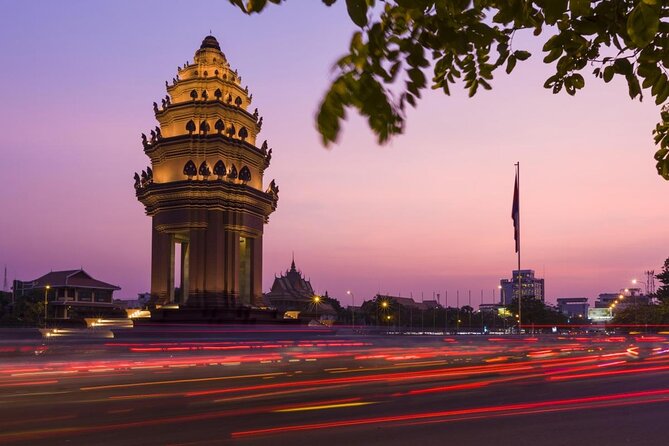
- Royal Palace + Silver Pagoda first so you start with Khmer royal power and symbolism before the tragedy
- Small group limit (max 15) for easier questions and a calmer feel at crowded monuments
- An English-speaking licensed guide who can keep the day dynamic and tailored to your interests
- Tuk-tuk ride plus air-con transport so you get the fun of local travel without frying in Phnom Penh traffic
- Two major Khmer Rouge sites: Tuol Sleng (S-21) and Choeung Ek Killing Fields
Royal Palace and Silver Pagoda: Phnom Penh’s power center, in real space
The day starts with pickup around 8:15am, so you’re already positioned for a smooth morning run. You’ll spend time at two key monuments right after that, and the contrast is part of the point.
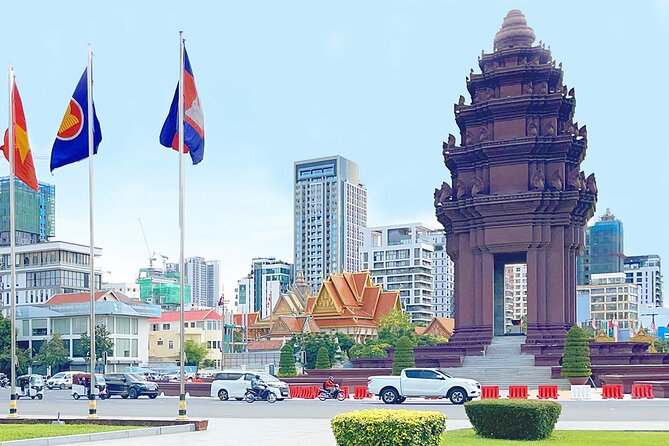
At the Royal Palace, you’ll see why this place mattered to Cambodia’s kings. The current complex was built between 1866 and 1870, after King Norodom moved the royal capital from Oudong to Phnom Penh. It sits on top of an older citadel known as Banteay Keo, and its location is tied to geography and rivers: it faces about east and sits near Chaktomuk, where the Tonle Sap and Mekong meet and split.
Even if you’re not into architecture, I think the real value here is orientation. The palace gives you a visual map of what authority looked like before it was shattered. Your guide can connect the layout to the history, rather than just reciting facts.
Next door is the Silver Pagoda, officially Wat Ubaosoth Ratanaram and also known as Wat Preah Keo Morakot. It’s closely associated with the Emerald-Crystal Buddha, and you may hear the shorter name Wat Preah Keo used for the area.
One thing I like about starting with these temples is tone. You go from symbolic royal space to a regime where symbolism was weaponized. It helps you understand what Khmer Rouge policies attacked: not just bodies, but identity, religion, and social order.
Practical note: palace-and-temple time is subject to how you feel. If you want more photos and less listening, you can still do that. Just remember you’re on a timed circuit, and the day’s mood gets heavier fast.
Tuol Sleng Genocide Museum (S-21): a school turned into a machine for fear
After the royal sites, the tour shifts to the place many people can’t forget: Tuol Sleng Genocide Museum. It’s widely known as S-21, and it was housed in a former school.
Here’s the key context you should carry with you before you walk in: among the 189 known interrogation centers in Cambodia, S-21 became one of the most notorious. You’re looking at the kind of system that detained people, tortured them, and forced a level of terror that was designed to break families and community ties.
The numbers are grim. Estimates put the total detained at 14,000 to 17,000 prisoners, and your visit explains how many were held in primitive brick cells built within former classrooms. When you stand in those spaces, it doesn’t feel theoretical. It feels engineered.
Why this stop is valuable on a guided tour: the guide can connect the physical layout to what it was meant to do. Left on your own, it’s easy to see the rooms as a set of exhibits. With an expert guide, you get the human story behind how a schoolyard became a place of forced suffering.
A consideration: the emotional weight here is real. If you need short breaks, it’s smart to plan them before you arrive. Also, don’t try to do this stop like a normal museum visit. Slow down. Read what you can. If something hits too hard, pause and let your body catch up.
Choeung Ek Killing Fields: how mass murder looks at the ground level
Next comes Choeung Ek Genocidal Center, about 9 miles south of Phnom Penh. This is the killing fields area tied to the Khmer Rouge period.
Before the Khmer Rouge took over, the location was reportedly an orchard and a Chinese cemetery. Under the Khmer Rouge leadership of Pol Pot, it was turned into what became known as the killing fields. According to the figures shared for this site, about 20,000 victims were executed there.
Your guide also connects Choeung Ek to the wider pattern across the country. You’ll hear about how the Khmer Rouge massacred and buried around 2.5 million people over roughly three years. And you’ll learn that an estimated three million people ended up buried at killing fields like this across Cambodia.
What makes this stop hit differently than Tuol Sleng is scale and setting. Tuol Sleng is an interior world of captivity. Choeung Ek is the landscape where killing became routine. The ground-level reality is why guides matter here: they help you interpret what you’re seeing without turning it into sensational sightseeing.
Still, I’ll be practical: bring your emotional filters. This is not the kind of place where you can treat the visit as a quick photo stop. Plan to spend the full time thoughtfully, and don’t rush the explanations just to get through faster.
Tuk-tuk + air-con logistics: how the 5 hours 15 minutes actually feels
The whole experience runs about 5 hours 15 minutes, built around four major stops. That’s a lot to pack in, but it’s also why the route works well if you like “see and understand” days.
You’ll ride a tuk-tuk, and that matters for two reasons. First, it’s fun and unmistakably local. Second, it helps break up long stretches of waiting and walking. Phnom Penh traffic can drain you, so the tuk-tuk gives you movement without feeling stuck.
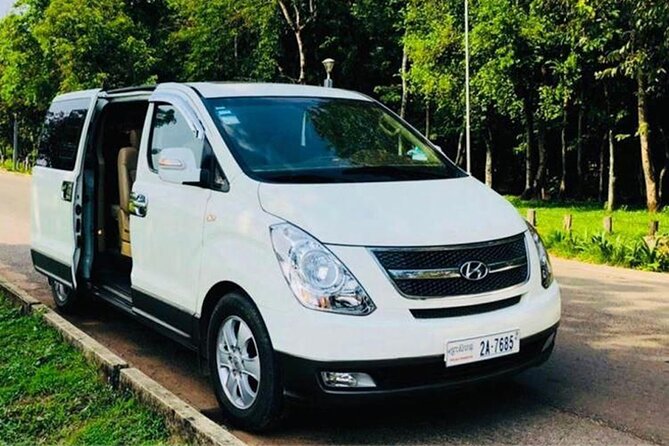
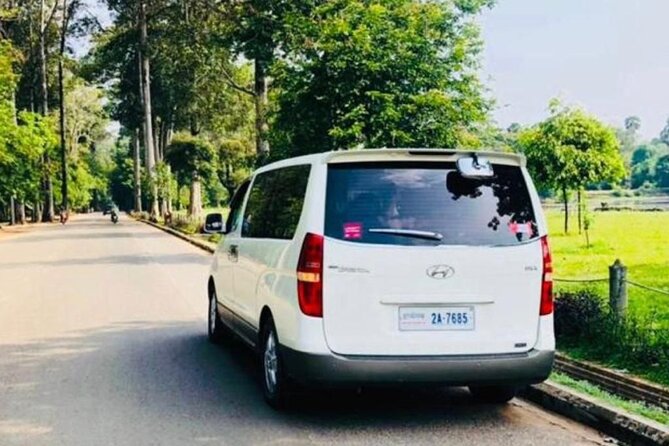
The tour also uses min van with air-con, plus hotel pickup and drop-off and cold water. That combination is a big deal in Cambodia’s heat. It means you can focus on the sites, not on logistics.
A small-group cap of 15 is another big quality marker. Smaller groups tend to mean better pacing. You’re less likely to get separated, and questions land better when the guide can actually respond instead of managing crowd flow.
Timing is important too. The day starts at 8:15am, which usually helps because you’ll hit the royal sites and museums before the hottest part of the afternoon. If you’re prone to fatigue, an earlier start can make the heavy stops more bearable.
Price and value: what $29 covers, plus the real ticket total
The tour price is listed at $29 per person. That sounds like it might be only transportation and a guide, but the included items matter a lot for value.
What you’re paying for beyond the route:
- Hotel pickup & drop-off
- Tuk-tuk and min van (air-con)
- An English-speaking licensed guide
- Cold water
On top of that, you still have three paid entrance fees you should plan for:
- Royal Palace: $10 per person
- Tuol Sleng: $5 per person
- Choeung Ek: $3 per person
So your practical total comes out to about $47 per person before any optional extras. For this mix of guided context, transport, and entry to major sites, that’s a pretty straightforward value equation. You’re also not spending your mental energy piecing everything together alone.
One more value angle: a guide who can keep the day dynamic matters. In the experiences tied to this tour, An is described as making the time feel active and responsive to what people want to focus on. That’s important when the subject matter is heavy. A static lecture won’t help you process what you’re seeing.
Who should book this Khmer Rouge history route
This tour is a strong match if you want a guided, structured day that covers both the royal monuments and the Khmer Rouge sites without long gaps between locations.
It’s especially good for:
- First-timers who want context, not just photos
- People who prefer a planned route with pickup and transport
- Anyone who values a professional guide and clear explanations
It may be less ideal if:
- You’re extremely sensitive to topics connected to genocide and torture
- You prefer a lighter day and think you’ll struggle emotionally with back-to-back heavy sites
- You don’t want a full 5+ hour commitment
If safety is a big concern for you, the way the transport and guide relationship is described can be reassuring. Service like a respectful, attentive driver approach tends to help you feel at ease in a new city, especially when you’re out early and moving between sites.
My booking advice: should you go with Phnom Penh Tours?
I’d book this tour if you want a guided day that connects the dots between power, culture, and the Khmer Rouge years. Starting with the Royal Palace and Silver Pagoda first gives you context that makes the later stops more understandable. Then Tuol Sleng and Choeung Ek provide the reality check that history alone can’t deliver.
I’d hesitate only if you know you’re not ready for intense, emotionally heavy visits. This day is not about comfort. It’s about understanding, and it expects you to handle difficult material with care.
One final practical tip: plan your mindset before you go. Hydrate (the cold water helps), wear comfortable shoes, and give yourself permission to step away for a minute if you need it.
FAQ
What is the tour duration?
It runs for about 5 hours 15 minutes.
Where does the tour take place?
The tour is in Phnom Penh, Cambodia, including sites around Phnom Penh such as Choeung Ek Killing Fields.
Is hotel pickup and drop-off included?
Yes. Hotel pickup and drop-off are included.
What time does the tour start?
The start time is 8:15am.
What’s included in the tour price?
Included are hotel pickup & drop-off, tuk-tuk and min van air-con, an English-speaking licensed tour guide, and cold water.
What entrance fees are not included?
Royal Palace entrance is $10 per person, Tuol Sleng entrance is $5 per person, and Choeung Ek Killing Fields is $3 per person.
How many people are in the group?
The tour has a maximum of 15 travelers for a more intimate experience.
Do I need to worry about weather?
Yes. The experience requires good weather. If it’s canceled due to poor weather, you’ll be offered a different date or a full refund.
Can I get a full refund if I cancel?
Yes. Free cancellation is available up to 24 hours in advance for a full refund.
Is confirmation provided at booking?
Yes. You receive confirmation at the time of booking.