REVIEW · SIEM REAP
Kompong Phluk Village Tonle Sap Lake Half-Day Tour From Siem Reap
Book on Viator →Operated by Tara River Boat Company · Bookable on Viator
Tonle Sap changes the whole map.
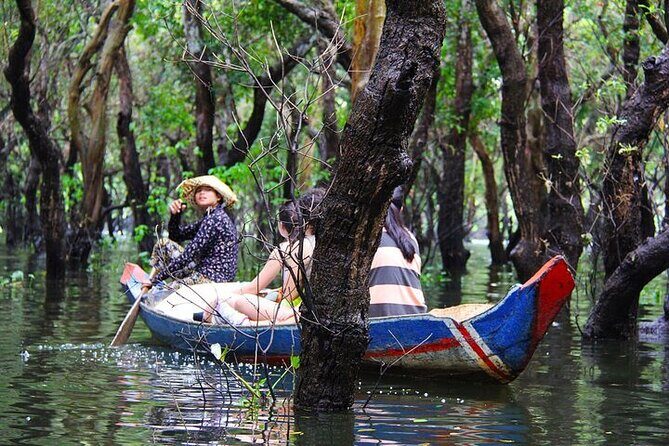
This half-day Kompong Phluk Village tour puts you on the water where the Tonle Sap flood cycle turns riverbanks into a floating world. You’ll ride in boats designed for shallow water, so you can move through flooded forest and around the lake’s wide, watery edges without the trip feeling like a stunt. I really like how the scale hits fast, with long stretches of water that feel endless and photographs that actually look like they belong in a travel book thanks to the flat-bottom boats.
Two things I like a lot: first, the tour is built around local, village-area guidance, with people such as Mr Sapon and Pitesh showing up in guide feedback for how they explain daily life on the water. Second, the value is strong because you get free hotel pickup and drop-off in Siem Reap plus snacks and drinks, not just a seat on a vehicle.
One thing to consider: the experience depends on the day. Some reviews mention guide communication varying from trip to trip, and boat comfort can vary too. If you’re expecting maximum time in the floating village plus lots of history, you might feel it’s lighter on details than you hoped.
In This Review
- Key points to know before you go
- Tonle Sap by flat-bottom boat: what you’ll actually see
- Kompong Phluk village and the monks training school area
- The river to the lake proper: what the half-day routing feels like
- Small-group comfort and transfers from Siem Reap
- What you’ll eat, what to bring, and how to dress
- Price and value: is $49 worth it for Kompong Phluk?
- Seasonal expectations: why some days feel bigger than others
- Who should book this Kompong Phluk half-day tour
- Should you book the Kompong Phluk half-day from Siem Reap?
- FAQ
- FAQ
- How long is the Kompong Phluk Village and Tonle Sap lake tour?
- Is hotel pickup and drop-off included?
- What is the group size limit?
- What food and drinks are included?
- What kind of boat do you use for Tonle Sap?
- Is the tour family friendly?
- What is the cancellation policy?
Key points to know before you go
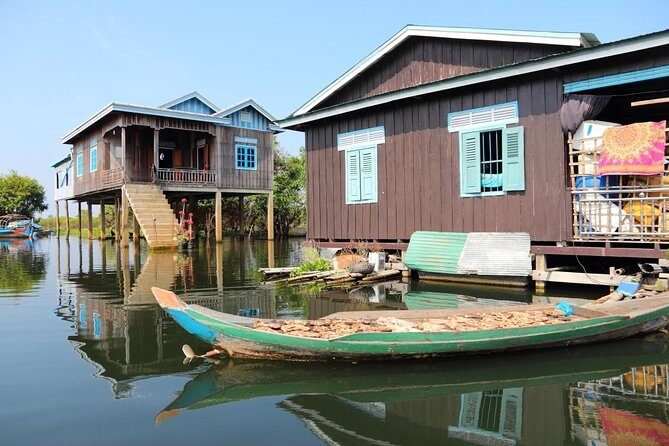
- Stilt village built for water levels: the village and river routes shift a lot as the lake rises and falls
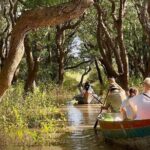
- Flooded forest by boat, not just from shore: the riding time is where the magic happens
- Flat-bottom vessels for safety and access: designed for the shallow, shifting water
- Monk school area with art on the pergola: a specific stop worth keeping your camera ready for
- Max 16 people: small enough to keep the day from feeling like a bus tour
Tonle Sap by flat-bottom boat: what you’ll actually see
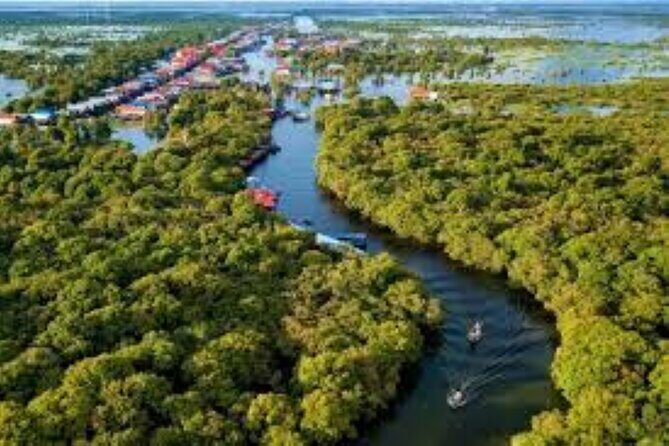
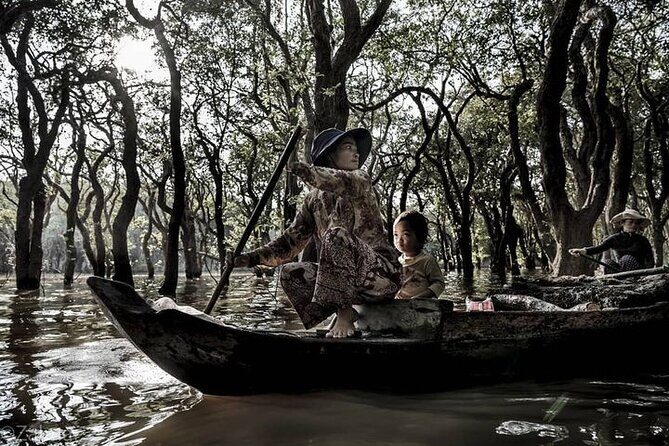
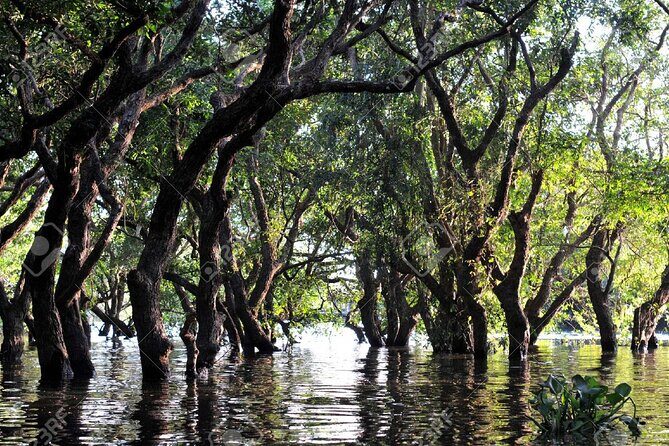
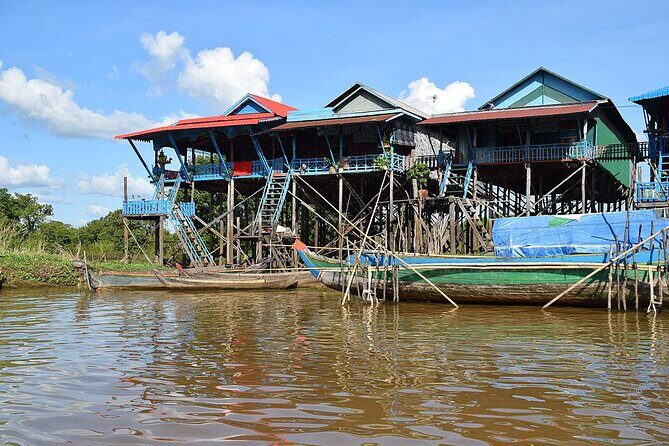
Kompong Phluk on Tonle Sap isn’t a quick drive-by. The experience starts to make sense once you’re out on the water and you see how the shoreline works like a season-controlled set of props. The lake’s water levels can swing from about half a meter to more than 10 meters, and that means the places you expect to stand on land can become part of the floating system.
Your boat is built for this reality. The flat-bottom design matters more than it sounds. Shallow water and muddy edges are normal here, so the plan is to keep the boats stable and able to travel across the wet parts of the river and lake system. That design is also why this tour can run through different times of year rather than only during a narrow window.
As you cruise, you pass a scenic mix of lake-world activity: floating village areas when the water is high enough, and lake-side views that hint at how people farm, fish, and live. You’ll also see panorama-style views that can include floating markets, fish farms, and rice paddies depending on the day and water conditions. It’s the kind of sight that looks different every time you glance left or right, so I’d come with the expectation that you’re watching a system, not just a single landmark.
Photography tip: keep your camera ready during the transit portions, not only during the stops. The best shots often happen when you’re moving through open water and the stilted structures line up with the banks.
You can also read our reviews of more tours and experiences in Siem Reap
Kompong Phluk village and the monks training school area
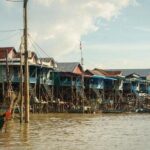
The Kompong Phluk stop is the heart of the tour, and it’s built around one big idea: the village is designed around the water level, not in spite of it. With seasonal changes that can shift by meters, many buildings sit on stilts—described as roughly 12 meters high—so homes, shops, and river access can still function when the lake expands.
As you explore, you’ll dock near the monks training school area. This is one of those practical stops that also gives you a visual hook: the large pergola with extensive, beautiful art on its walls and ceiling. Even if you’re not into religious sites, the art and the sheer scale of the structures help you understand what people invest in when life is built on water.
Expect a mix of village life and infrastructure: schooling and community areas show up, along with homes and everyday spaces that are adapted to the flooded environment. The stilt layout also changes how you move and where you get views. On days when the water is lower, the approach can feel tighter. On higher-water days, you may see more of the village spilling into the lake’s edge.
A small caution from how this area feels in person: gangplanks and access points can be uneven because everything is literally built to adjust. If you’re sensitive about footing, wear stable shoes and take your time when boarding.
The river to the lake proper: what the half-day routing feels like
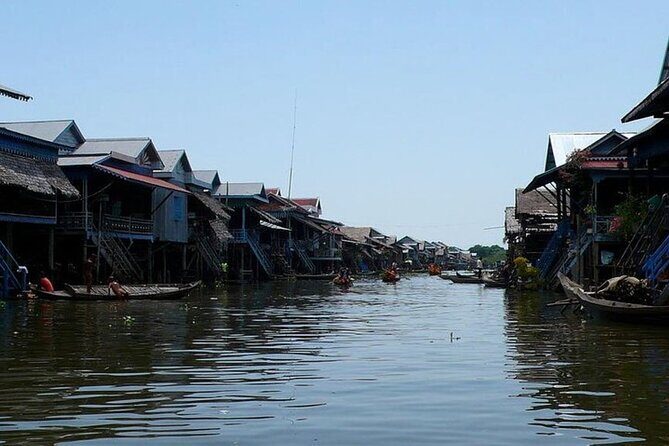
This tour doesn’t just park you at one point. You start after the flooded-forest exploration, then continue down the Kompong Phluk river and out toward Tonle Sap proper. At times, floating villages are on the lake itself. At other times, they’re more visible inside the river system. Either way, you’re watching the same water-world logic from two angles.
That routing is valuable because Tonle Sap isn’t small. It’s described as over 200 km long and, from the widest area mentioned, around 40 km wide. You don’t measure that with a ruler while you’re on the boat, but you feel it when the horizon stretches and the waterways don’t look like rivers anymore. They look like working space for an entire community.
One reason people enjoy this part of the day is that it’s scenic but also functional. You see fish-related activity, farm patterns, and the way settlements relate to water access. For me, it’s the difference between seeing a village and understanding where daily work happens.
Timing note: the Kompong Phluk portion is described as about three hours within a roughly four-and-a-half-hour overall tour. That keeps things from dragging, but it also means you’re not going to have an all-day, slow-walk version of the lake.
If your priority is deep, long boat time, you might find the half-day pacing a bit brisk. If your priority is a first taste of Tonle Sap from Siem Reap, this format works well.
Small-group comfort and transfers from Siem Reap
Logistics matter on water trips. You don’t want a long, stressful scramble before the boat. This tour includes free hotel pickup and drop-off, and transportation is by air-conditioned car or tuk-tuk. The small-group limit (maximum 16 travelers) is also a real factor in how the day feels. It’s easier to hear your guide, and it’s less chaotic when you’re moving between boarding points.
Guides can make or break this kind of tour because so much is visual. The best departures combine local explanations with practical context: how water height changes daily routines, why certain areas are positioned where they are, and how village life is organized around the lake’s rhythm.
In guide feedback tied to this experience, names like Mr Sapon, Va, and Pitesh come up. I’d take that as a sign that the tour often tries to staff locally and keep the story connected to real village knowledge. Still, keep expectations flexible. Some reviews also mention feeling short on spoken detail or communication. I’d advise you to ask a simple question early, like what the water height means for what you’ll see today. If the guide answers well, you’ll feel it right away.
If you get motion-sick easily, you might want to bring something just in case. The boat ride is part of the point, but the schedule is tight enough that you don’t want stomach troubles hijacking your photo time.
What you’ll eat, what to bring, and how to dress
Included in the day are light fruit lunch, water, and free snacks. That’s not just a nice extra. It means you can spend your money on things you actually want, not on survival food during the middle of an outdoor half-day.
What about what you bring? The tour operates in all weather conditions, so you should dress for sun and rain. Even in the dry season, you’re on open water and can get wind-chill during lake breezes. A light rain jacket helps. Sun protection helps more than you think, because glare bounces off water.
Practical add-ons:
- Shoes you don’t mind getting a bit muddy
- A hat or cap plus sunscreen
- A dry bag or waterproof phone pouch if you’re serious about photos
- A small towel or wet wipes if you hate wiping hands on your clothes
Camera strategy: you’ll be close to village structures and on waterways where you may need to shoot quickly—so charge your batteries fully before pickup. Also, consider a lens setting for both wide scenes and tighter stilt-house details.
Price and value: is $49 worth it for Kompong Phluk?
At $49 per person, this tour sits in a mid-range zone for Siem Reap excursions. The reason it can feel like good value is that more than sightseeing is included. Boats and operators are part of the package, along with transportation, free pickup/drop-off, water, snacks, and a light fruit lunch. It also includes checkpoint fees and taxes, so you should not get hit with a long list of add-ons during the day.
That said, value depends on what you wanted the day to do.
If you’re happy with a short-but-real taste of life around Tonle Sap—flooded forest visuals, stilt homes, and the monks training school area—this price can make sense. If you want long lake time, lots of interpretive depth, or you’re very sensitive to comfort issues, then the half-day format might feel too short for the cost.
Some guide-driven friction can also affect perceived value. There are reports of a tour feeling too focused on selling by the roadside during interactions with locals, and reports of guides providing less explanation than expected. There are also reports of a boat feeling old or not in great shape on one departure. I can’t predict what you’ll get on your day, so I suggest you treat the tour as a real water-village experience with some variability. That’s not a deal-breaker for me, but it is the difference between a trip that feels special and one that feels like a money-for-photos trade.
A simple way to protect your own value: ask your guide upfront how long you’ll have in the village and where you’ll be on the water most of the time. If the answer lines up with what you want, you’ll feel good about the spend.
Seasonal expectations: why some days feel bigger than others
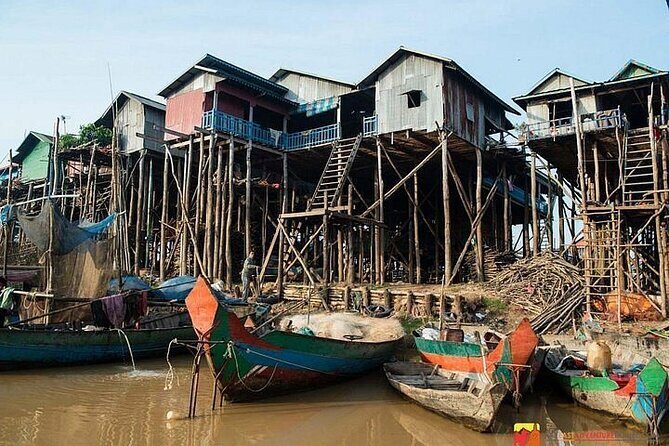
Tonle Sap is seasonal by design. The lake’s rising and falling water levels change where villages sit and how you access them. Your itinerary style is built around that reality, including the use of special flat-bottom boats that can travel across shallow conditions.
Still, your day can feel different depending on how high (or low) the lake is. One review mentioned coming at a time when the lake had not swollen yet with monsoon, which can reduce the flooded forest effect. When water is lower, some areas look less like a lake and more like a muddy version of itself. When water is higher, the floating effect becomes more obvious, and the stilted village views look more dramatic.
So for best vibes, I’d align your expectations with the season you’re traveling. If you’re visiting during a period when the lake is lower, treat this as a cultural village-and-river tour as much as a flooded-forest highlight. If the lake is higher, it tends to feel more like a floating world from start to finish.
Who should book this Kompong Phluk half-day tour
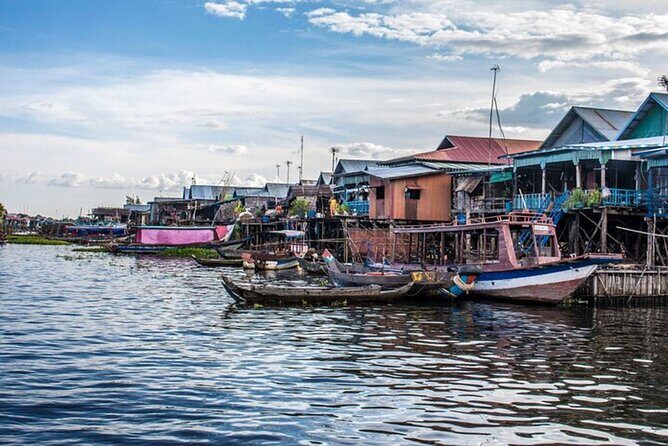
I think this tour fits best if you:
- Want a first look at Tonle Sap and Kompong Phluk without a full day commitment
- Like photography and want boat views of stilted village life
- Are traveling with family and want a child-friendly, guided outing
- Prefer small-group pacing instead of a large bus crowd
It might be less ideal if you:
- Want a long, in-depth exploration of multiple villages
- Get picky about boat comfort and want the smoothest ride possible
- Expect heavy, lecture-style history during the tour
One more point: this is built for adults and children traveling together. Children must be accompanied by an adult, and the day is outdoors with some walking over uneven access points.
Should you book the Kompong Phluk half-day from Siem Reap?
If you want a short, visually strong day that shows how the Tonle Sap water cycle shapes daily life, I’d book this. The mix of flooded forest views, stilt village structure, and the monks training school pergola makes it more than a drive to a viewpoint. The included snacks, water, and light fruit lunch also help it feel fair for the money.
If you’re the type who needs lots of spoken detail every minute, or you’re highly sensitive to uneven access and boat condition, then your safest move is to go into it with flexible expectations and ask early about timing and what you’ll see most. When the guide and conditions line up, this is exactly the kind of “I finally get it” Cambodia experience that stays with you.
FAQ
FAQ
How long is the Kompong Phluk Village and Tonle Sap lake tour?
It’s about 4 hours 30 minutes in total. The Kompong Phluk stop is listed as around 3 hours within that overall time.
Is hotel pickup and drop-off included?
Yes. Free hotel pickup and drop-off in Siem Reap are included.
What is the group size limit?
This experience has a maximum of 16 travelers.
What food and drinks are included?
Light fruit lunch, free snacks, and water are included.
What kind of boat do you use for Tonle Sap?
The tour uses special flat-bottomed vessels designed for the flooded conditions. Row boats and operators are also included.
Is the tour family friendly?
Yes, it’s family friendly. Children must be accompanied by an adult.
What is the cancellation policy?
Free cancellation is available up to 24 hours in advance for a full refund.