REVIEW · SIEM REAP
3-Day Exploring Angkor Wat & Siem Reap Highlights Tour.
Book on GetYourGuide →Operated by Angkor Visitor Tour · Bookable on GetYourGuide
Sunrise at Angkor Wat changes the pace. This 3-day private trip strings together the big classics and the quieter, more nature-heavy sides of Cambodia. I really like the Angkor Wat sunrise timing and the mix of jungle-and-lake adventures that go beyond the usual photo stops. The trade-off is simple: day 1 pickup is at 4:45AM, so you need an early-to-bed plan.
You’ll travel in a private group with an English-speaking guide, plus air-conditioned comfort and cold water to keep your energy steady. Guides I’ve seen work like Sok Guia bring a calm, prepared vibe, and others like Praim/Praiem are known for clear history and careful driving.
Just note: entrance fees and meals are not included, so you’ll budget for those. Also, this tour is not suitable for wheelchair users, and drones aren’t allowed.
In This Review
- Key highlights you’ll feel fast
- Why this Angkor + Siem Reap plan feels logical
- Day 1: 4:45AM pickup for Angkor Wat sunrise, Ta Prohm, Angkor Thom, Bayon
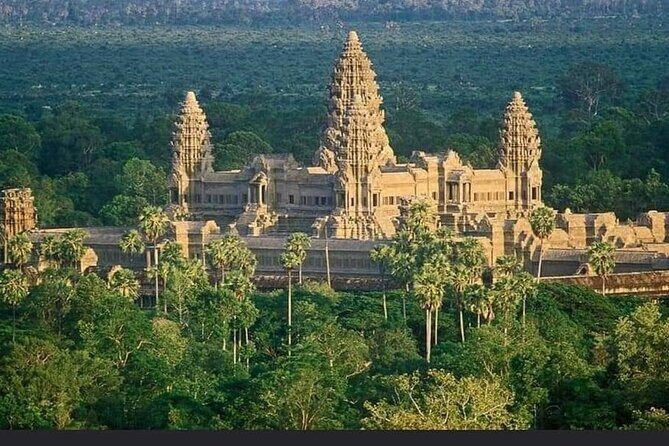
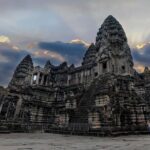
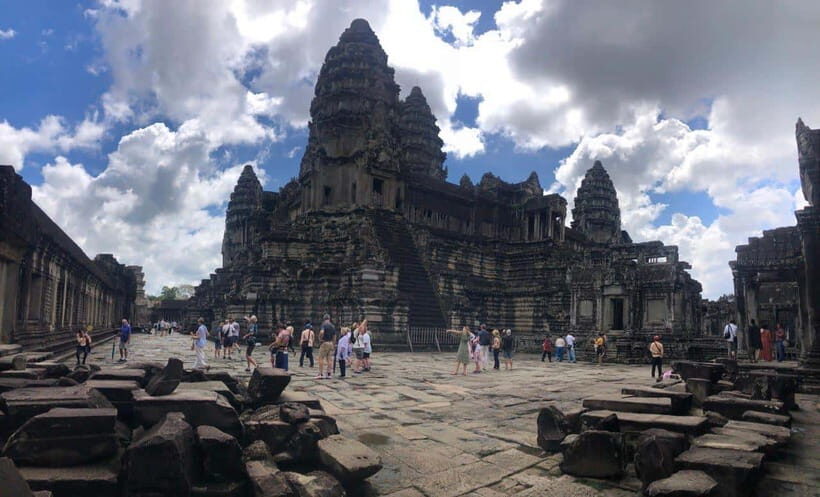
- Angkor Wat at sunrise
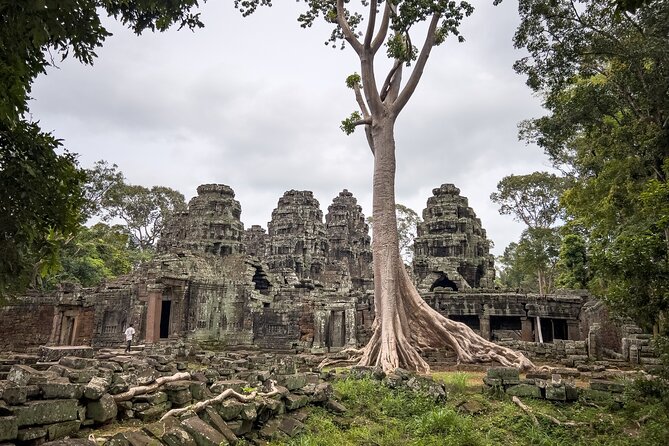
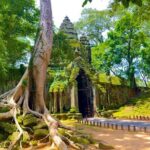
- Ta Prohm: the temple with roots in the frame
- Angkor Thom: Bayon faces and the Terrace of the Elephants
- Day 2: Banteay Srei, Phnom Kulen waterfall country, and Beng Mealea’s lost-city vibe
- Banteay Srei: pink sandstone carvings up close
- Phnom Kulen National Park: sacred sites plus a waterfall reset
- Beng Mealea: an unrestored temple lost in the jungle
- Day 3: Kompong Phluk on Tonle Sap + Wat Thmei’s Khmer Rouge history
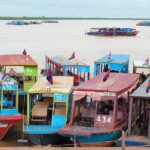
- Kompong Phluk floating village: boat ride through waterways
- Wat Thmei: the Khmer Rouge prison-killing field site
- Old market shopping and hotel drop-off
- Skip-the-line help, guide skills, and AC comfort that keep the day smooth
- Price and value: $325 per group up to 4
- What to pack (and what to watch for) on this 3-day circuit
- Should you book this tour?
- FAQ
- What time is hotel pickup on each day?
- Is this tour private?
- What’s included with the tour?
- Are temple entrance fees included?
- Are meals included?
- Do I need swimwear?
- Is the tour wheelchair accessible?
- Are drones allowed?
- Can I cancel and still get a full refund?
Key highlights you’ll feel fast
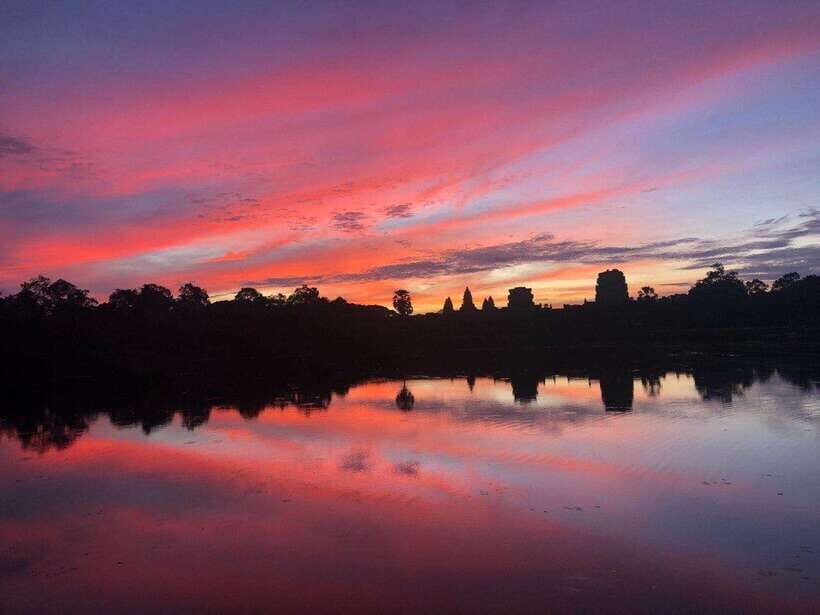
- Angkor Wat before the crowds with a separate entrance and plenty of time on site
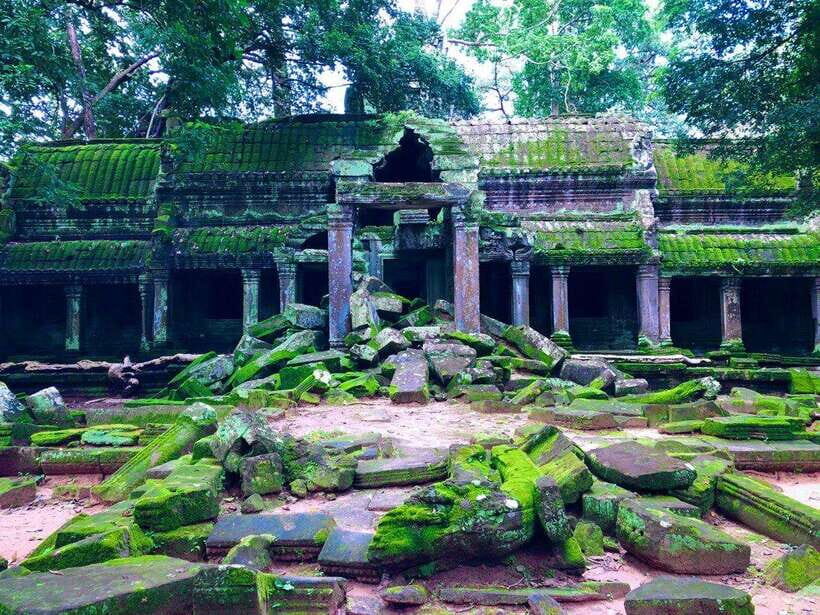
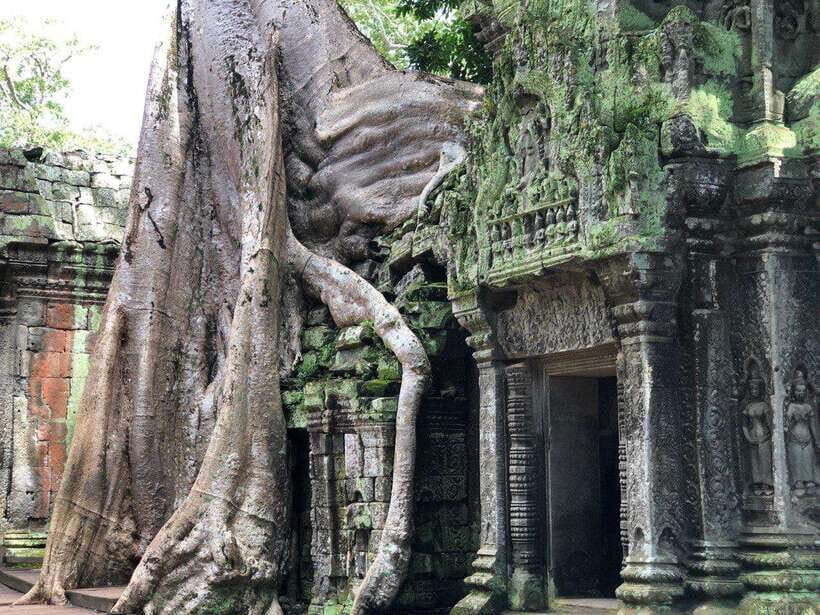
- Ta Prohm’s tree-temple mood where roots and stone play together
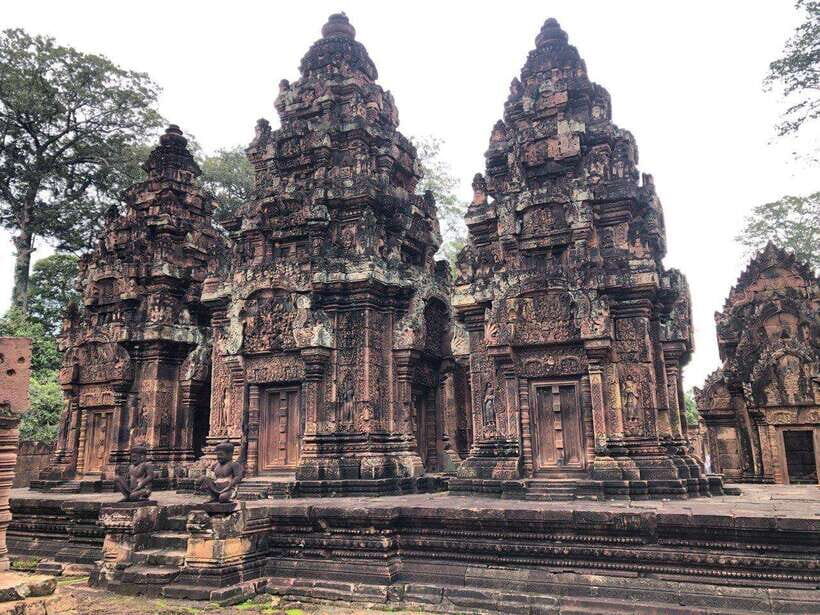
- Banteay Srei pink-carving detail that’s easy to miss if you rush
- Phnom Kulen nature breaks with the River of a Thousand Lingas, a reclining Buddha, and a 2-level waterfall
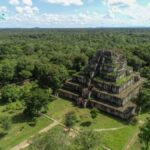
- Beng Mealea’s unrestored jungle ruins called the lost city for a reason
- Kompong Phluk lake life with a boat ride through stilted schools, markets, and fish farms
Why this Angkor + Siem Reap plan feels logical
This itinerary is built like a good day schedule in real life: start early when it matters, then gradually shift from temples to nature to local culture and history with weight. Day 1 is all about Angkor’s core sacred sites at the most atmospheric time—morning light. Day 2 pushes outward toward carved beauty and jungle ruins. Day 3 slows down on Tonle Sap lake life and then finishes with Wat Thmei’s Khmer Rouge history.
The value here is not just seeing places. It’s seeing them in a sequence that makes sense. Sunrise at Angkor Wat sets the tone, and later stops like Ta Prohm and Bayon add different textures—stone faces, tree shadows, and giant temple geometry. Then the tour doesn’t stop at temples. Phnom Kulen and Beng Mealea bring you into forests and rougher terrain. Finally, Kompong Phluk gives you daily-life context that makes Angkor feel less like a museum piece and more like part of an ongoing living region.
Because it’s a private group (up to 4), you can keep your pace. If you want extra time at carvings, you can ask. If you need a water break, the guide can manage it.
You can also read our reviews of more tours and experiences in Siem Reap
Day 1: 4:45AM pickup for Angkor Wat sunrise, Ta Prohm, Angkor Thom, Bayon
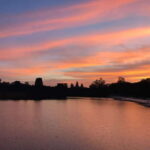
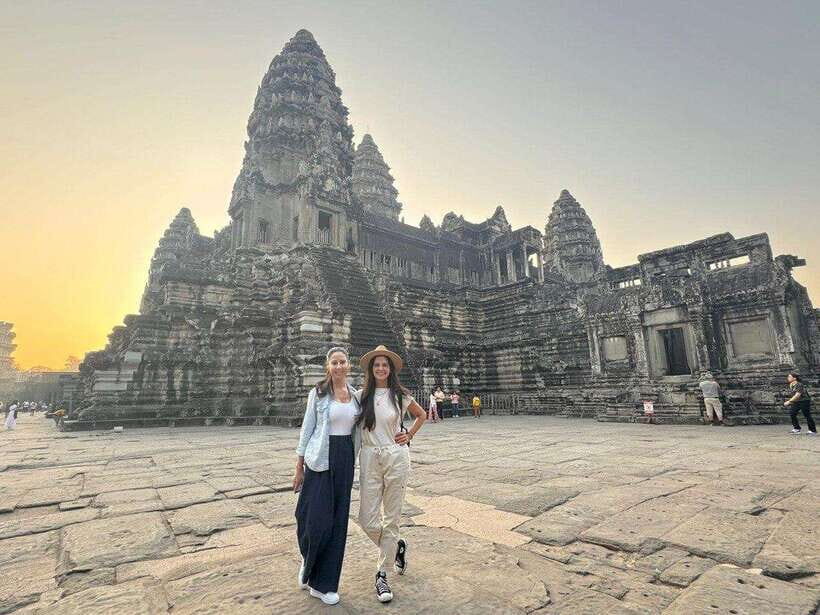
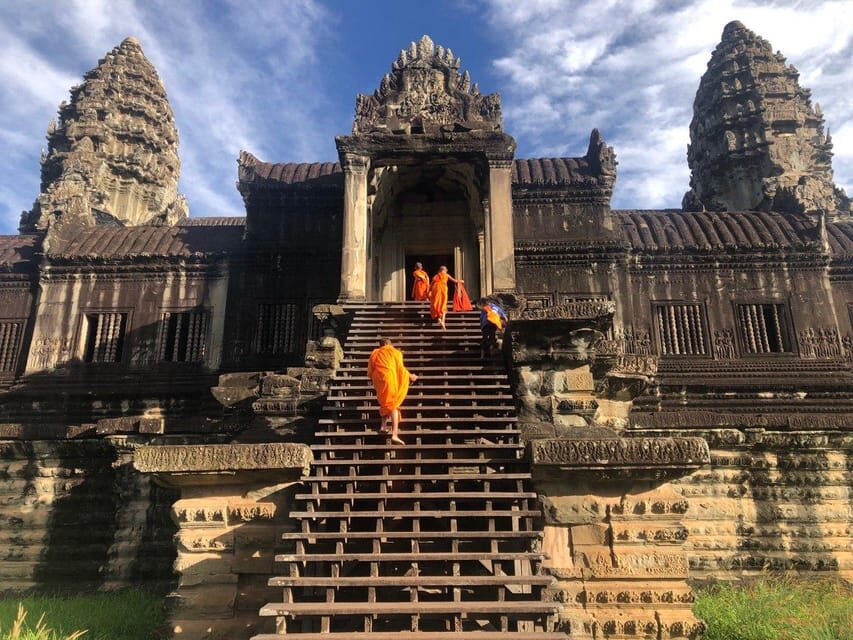
Your first day starts with a hotel pickup at 4:45AM. Yes, it’s early. But sunrise is where Angkor Wat stops feeling like an impressive building and starts feeling like a daily ritual in stone.
Angkor Wat at sunrise
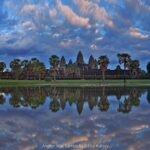
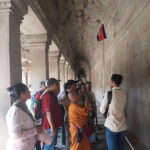
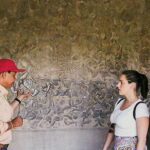
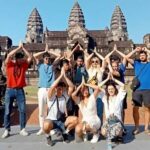
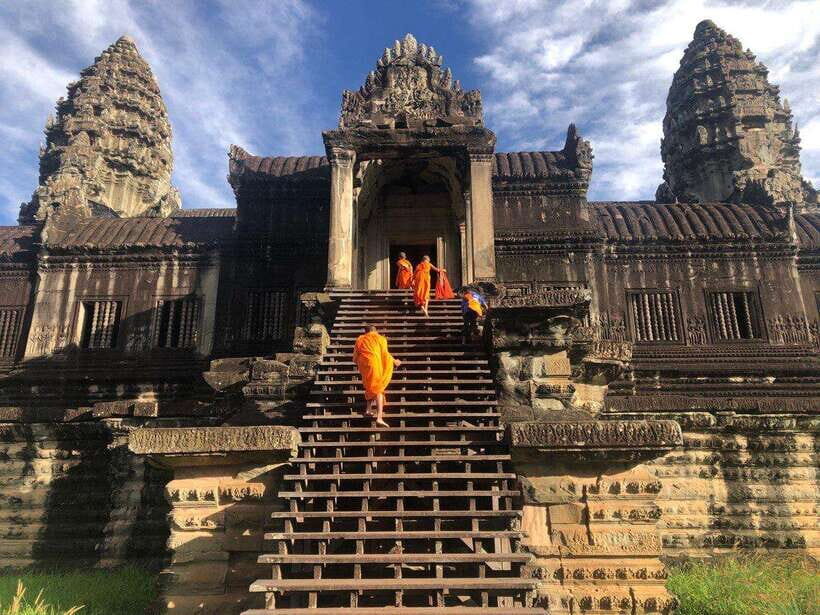
You’ll use a separate entrance to help you avoid long lines, then spend ample time inside the complex. Take your time with the carvings. Even if you’re not a “detail person,” the scale hits harder when you pause and look slowly at the relief work. Sunrise light also makes the surfaces look different from midday photos—more texture, more depth.
A practical tip: wear something comfortable and light layers you can shed fast. Mornings can feel cool, then it warms up quickly.
Ta Prohm: the temple with roots in the frame
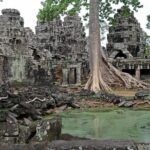
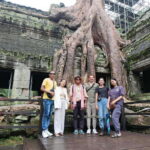
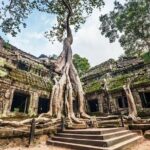
Next up is Ta Prohm. This is the one where the temple looks like it’s been half-swallowed by nature. Ancient trees twist through ruins, and the whole place has a slightly eerie, storybook feel without turning into a theme park. It’s a good contrast to Angkor Wat’s polished grandeur because Ta Prohm feels more chaotic and intimate at the same time.
Angkor Thom: Bayon faces and the Terrace of the Elephants
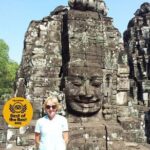
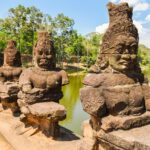
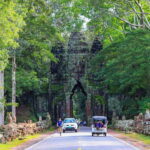
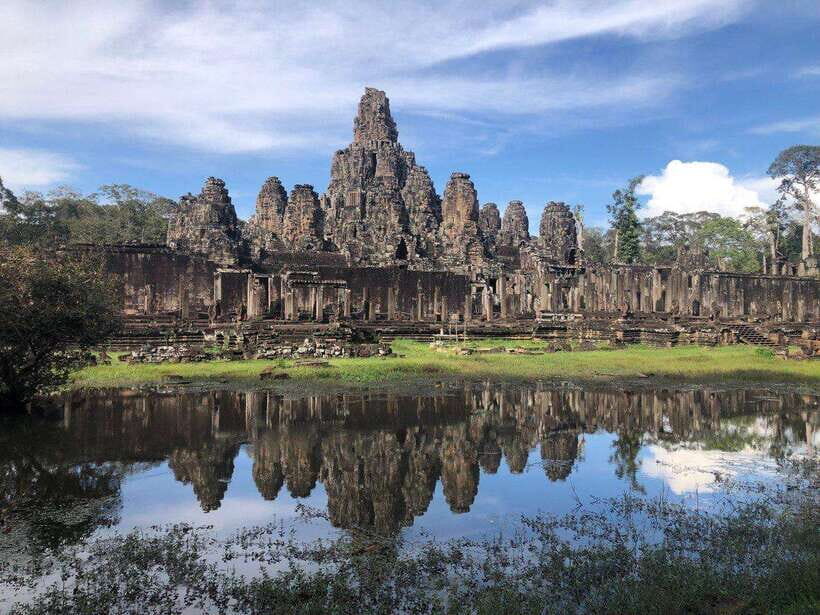
In the afternoon time block, you’ll visit Angkor Thom and Bayon Temple, famous for its enigmatic faces. It’s a great stop for people who like to understand symmetry and meaning. You’ll also see the Terrace of the Elephants, a reminder that these sites were designed for ceremony and power, not just sightseeing.
If you like your guide to explain the history clearly, pay attention here. Guides like Sok Guia have been praised for being kind, competent, and ready with explanations—exactly what you want when stone symbols can otherwise feel like a blur.
Day 2: Banteay Srei, Phnom Kulen waterfall country, and Beng Mealea’s lost-city vibe
Day 2 pickup is at 8:00AM, and it’s a real contrast day. You trade big-brow temples for pink sandstone precision, sacred-mountain scenery, and a jungle ruin that feels unfinished on purpose.
Banteay Srei: pink sandstone carvings up close
Banteay Srei is often described as the jewel of Khmer art, and the reason is simple: the carvings are delicate and detailed, and the pink sandstone makes them look almost crisp even as the details age. This is a great place to slow down and notice workmanship. If you only glance, you miss why people get genuinely excited about this stop.
Phnom Kulen National Park: sacred sites plus a waterfall reset
Phnom Kulen is a sacred mountain area, and the itinerary includes several highlights:
- the River of a Thousand Lingas
- a reclining Buddha
- time to refresh at the 2-level Phnom Kulen waterfall
Even if you’re not sure what a linga is, your guide can help connect the religious meaning to what you see on the ground. This is also where you get a break from temple walls. The environment matters. You’ll feel the switch from urban-ruin atmosphere to natural sacred space.
If you’ve got swimwear, bring it. The tour includes time to refresh at the waterfall, and having the option helps you make the most of that break.
Beng Mealea: an unrestored temple lost in the jungle
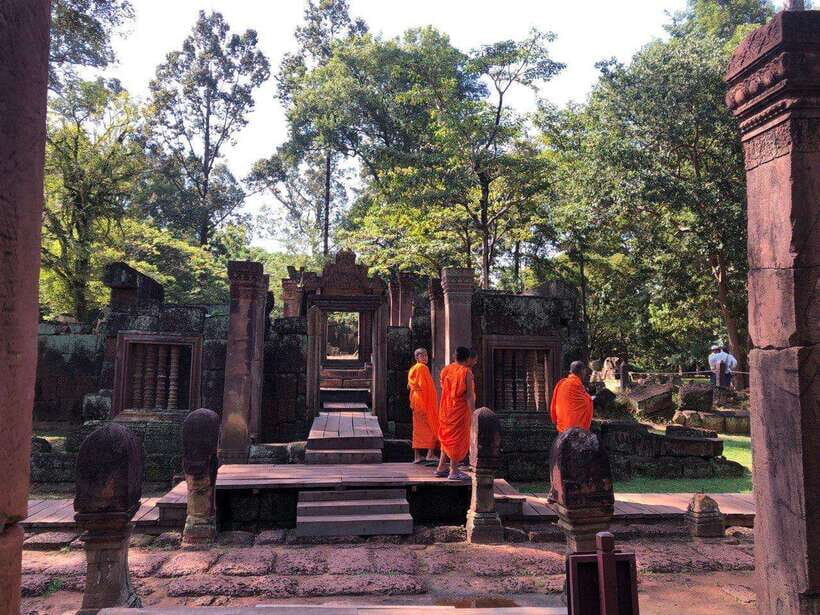
Then you end at Beng Mealea. This is often described as the lost city, and the word lost feels right. The site is known for being completely unrestored, which means it’s less tidy than the famous monuments you already visited. That also means it feels more adventurous—walking among broken stone with trees and plants working around it.
Drawback to know: unrestored ruins can mean uneven footing. Good shoes are not optional here.
Day 3: Kompong Phluk on Tonle Sap + Wat Thmei’s Khmer Rouge history
Day 3 pickup is at 8:30AM. It starts with lake life, then shifts to a heavy but important historical visit. This day has two moods, and both are worth your attention.
Kompong Phluk floating village: boat ride through waterways
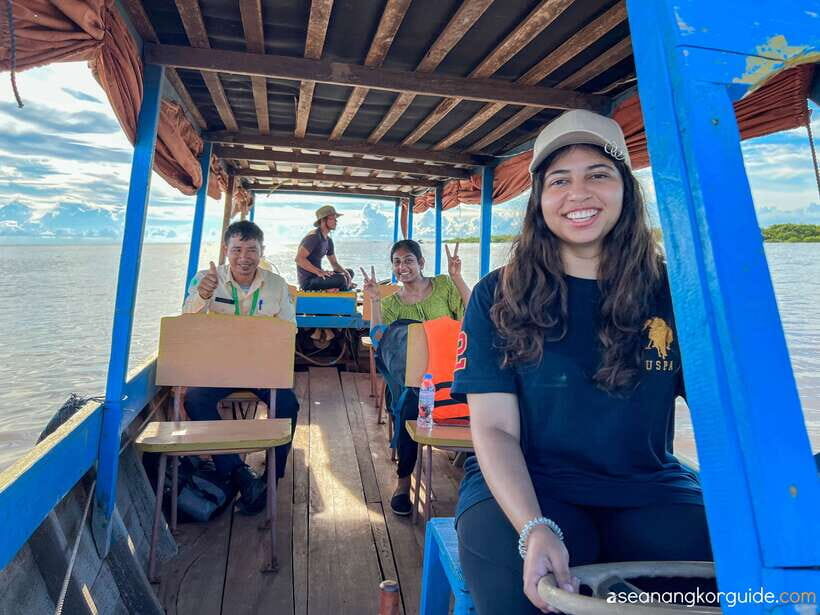
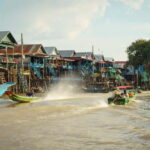
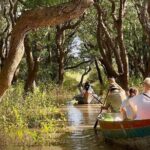
You’ll head about 27KM southeast of Siem Reap to Kompong Phluk, on Tonle Sap’s shores. The big idea: the village adapts to seasonal changes by building homes on stilts. You’ll get about a 1-hour boat ride around the village through a labyrinth of waterways. Along the way you pass stilted houses, schools, and markets—real daily infrastructure, not just scenery.
This stop is especially good if you want a human view of Cambodia, not only stone. You also have time for:
- visits to local homes to understand daily life and challenges
- a look at fish farms, where locals raise fish in floating enclosures
If you’re traveling in the rainy season, the tour includes the chance for a unique rainy-season experience: a canoe through the submerged forest. If you’re there in dry season, you’ll still get the core boat and village experience; just don’t expect the flooded-forest element to be guaranteed.
Wat Thmei: the Khmer Rouge prison-killing field site
After Kompong Phluk and Tonle Sap, you’ll visit Wat Thmei, also known as Khmer Rouge Prison. This is a former Buddhist temple turned killing field. The visit includes time to pay respects to the victims and learn about Cambodia’s tragic past.
This is not a “fun photos” stop. It’s a learning moment, and the emotional weight is real. I appreciate tours that don’t rush this part, because understanding history helps you read the present in a more honest way.
Old market shopping and hotel drop-off
Finally, you’ll do an old market city tour for shopping and then be dropped back at your hotel to end the trip.
Skip-the-line help, guide skills, and AC comfort that keep the day smooth
A lot of Angkor tours promise convenience. This one actually builds it into how the day runs. You’ll have:
- an English-speaking guide
- transportation by air-conditioned vehicle
- cold drinking water and wet, cold towels
- skip-the-line access through a separate entrance
- private group pacing (not a cattle schedule)
Guide quality is a major deciding factor in a place like this. In past experiences, Sok Guia has been highlighted as kind, competent, prepared, and responsive to requests. Other English guides like Praim/Praiem have been praised for punctuality, precise history explanations, and careful driving—plus planning the itinerary in a way that makes the long day feel organized.
Small comfort details matter at Angkor. Sun up top, heat later, walking on mixed surfaces, then car time again. Cold water and wet towels aren’t glamorous, but they help you stay upright and not get grumpy.
Price and value: $325 per group up to 4
The price is $325 per group for up to 4 people, for 3 days. Value depends on how full your group is.
- If you book as a group of 4, you’re effectively splitting the cost evenly and getting a lower per-person rate.
- If you book as 2 people, the per-person cost goes up, but you still get the big advantages of a private plan, a dedicated English guide, and hotel pickup/drop-off.
What’s not included is also important: entrance fees and meals are extra. That’s typical for temple-heavy routes, but you should plan for it so you don’t end the trip surprised.
For me, this tour feels like a good value when you want both Angkor highlights and real off-temple experiences. Many cheaper options focus only on the main ruins and call it a day. Here, Phnom Kulen, Beng Mealea, and Kompong Phluk are major parts of the itinerary, not leftovers.
What to pack (and what to watch for) on this 3-day circuit
You’ll be outdoors a lot, walking on temple stone and uneven paths, and riding between sites in an AC vehicle. Here’s what you should bring, based on the tour’s requirements list:
- comfortable shoes (non-negotiable for Beng Mealea)
- sunglasses and a hat
- sunscreen and insect repellent
- comfortable clothes
- swimwear (for refreshing at the Phnom Kulen waterfall)
- a plan to handle early mornings
A few rules you should know:
- drones are not allowed
- alcohol and drugs are not allowed
- electric wheelchairs aren’t allowed
- the tour isn’t suitable for wheelchair users
Also, you’ll want to be ready at your pickup time. The guide will look for you in the hotel lobby and you should wait about 5 minutes before pickup.
Should you book this tour?
If you want a private, English-guided route that covers Angkor Wat at sunrise plus the temple variety of Ta Prohm and Bayon, this is a strong fit. Add to that Phnom Kulen’s sacred nature, Beng Mealea’s unrestored jungle ruins, and Kompong Phluk’s Tonle Sap lake life, and you get a trip that feels more like Cambodia than just a list of monuments.
I’d book if:
- you’re okay with very early starts
- you want a guide who can explain, not just drive
- you care about seeing both cultural history and daily life
I’d look elsewhere if:
- you hate long walking days and uneven ground
- you need wheelchair accessibility
- you’re trying to keep the trip strictly “entrance fees included” and “meals included”
If you match those points, this itinerary gives you a solid balance: iconic Angkor, rugged off-the-beaten-path stops, and a thoughtful finish with Wat Thmei’s history.
FAQ
What time is hotel pickup on each day?
Pickup is at 4:45AM on Day 1, 8:00AM on Day 2, and 8:30AM on Day 3. Please wait in the hotel lobby about 5 minutes before pickup.
Is this tour private?
Yes. The tour is listed as a private group, with up to 4 people per group.
What’s included with the tour?
Included are hotel pick-up and drop-off, an English-speaking tour guide, transportation by air-conditioned vehicle, cold drinking water, and wet and cold towels.
Are temple entrance fees included?
No. All visiting entrance fees are not included.
Are meals included?
No. Meals are not included.
Do I need swimwear?
Swimwear is listed as something to bring. The itinerary includes a chance to refresh at the Phnom Kulen waterfall.
Is the tour wheelchair accessible?
No. It’s listed as not suitable for wheelchair users.
Are drones allowed?
No. Drones are not allowed on this tour.
Can I cancel and still get a full refund?
Yes. You can cancel up to 24 hours in advance for a full refund. There’s also a reserve now & pay later option where you pay nothing today.