REVIEW · SIEM REAP
Angkor Wat Sunrise Tour
Book on Viator →Operated by Journey Cambodia · Bookable on Viator
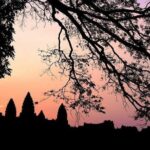
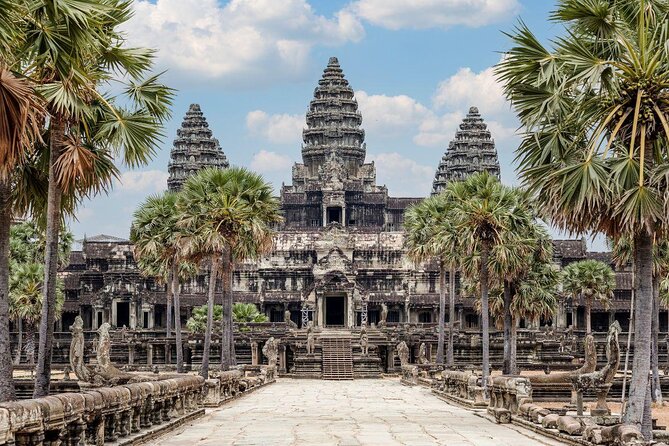
4:30 a.m. changes everything in Siem Reap. This tour strings together the park’s biggest names—Angkor Wat at sunrise, then Angkor Thom, Bayon, the Terrace of the Elephants, and Ta Prohm—so you get the wow moments in the right order, before the day gets loud. I love the pre-dawn entry plan (it gets you inside while it’s still dark), and I love how guides like Sol, Bun, and Sokpee tend to connect the stone details to real Khmer life and belief.
One catch: the temple pass is not included. You’ll pay $37 per person directly at the site, and you’ll be out for about 8 hours starting at 4:30 a.m. The good news is the tour covers pickup, an air-conditioned ride, and small refresh perks like bottled water and cool towels.
If you want your Angkor day to feel organized and human, this is a smart way to do it. The reviews also highlight guides who help with pacing and even photos, like Nimol, so you don’t spend the morning chasing the perfect shot while everyone else goes ahead.
In This Review
- Key Things I’d Plan Around
- Why a Sunrise Tour Beats a Daytime Temple Sprint
- The 4:30 a.m. Departure: Timing That Tests Your Alarm Clock
- Angkor Wat in the Dark: Eastern-Side Entry and First Light
- Angkor Thom and Bayon Faces: South Gate to City-Scale Stone
- Terrace of the Elephants: Where Ceremonies Became Architecture
- Ta Prohm at Human Pace: Roots, Carvings, and Long Shadows
- Price and What You’re Really Buying at $26 (Plus the $37 Pass)
- Guide Quality Changes the Whole Day
- What to Bring and How to Avoid the Usual Sunrise Mishaps
- Should You Book This Angkor Wat Sunrise Tour?
- FAQ
- What time does the Angkor Wat sunrise tour start?
- Is the Angkor entrance fee included?
- Can I buy the temple pass the day of the tour?
- What’s included in the tour price?
- Do I need to pay extra for food?
- What should I wear?
- Is this a group tour or private?
Key Things I’d Plan Around
- Sunrise timing: hotel pickup starts at 4:30 a.m., with a pre-dawn window that shifts by season
- Eastern-side approach at Angkor Wat: you enter while it’s still dark for the best lighting moment
- More than one temple: Bayon plus the Terrace of the Elephants and Ta Prohm, not just Angkor Wat
- Respectful dress matters: shoulders and knees need coverage, scarf works for shoulders
- Temple pass is extra: $37 per person paid directly at the site (Visa cards accepted)
- Guide impact: multiple reviews praise guides like Sol, Bun, Pi, Sokpee, and Setha for storytelling and clarity
Why a Sunrise Tour Beats a Daytime Temple Sprint
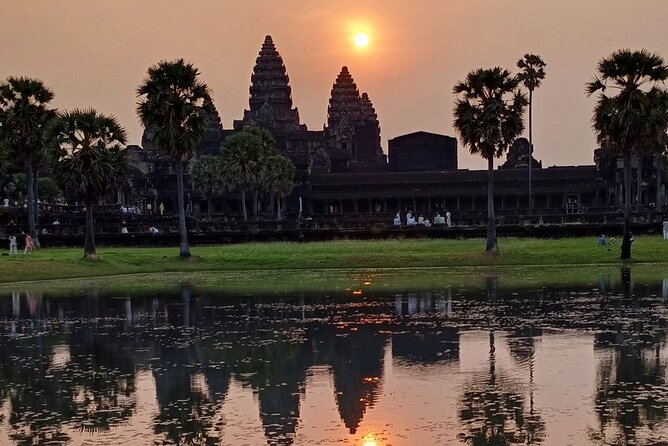
Angkor is one of those places where the order of things changes how it feels. Go too late and the temples turn into a photo queue with heat. Go early and the whole mood shifts. On this tour, you start with Angkor Wat before the crowds fully arrive, so the space feels quieter and more cinematic.
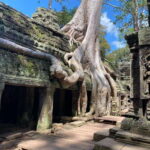
Then you keep moving through the major hits: Angkor Thom (with the famous faces at Bayon), the Terrace of the Elephants, and Ta Prohm with its dramatic tree roots. That’s the practical part. The emotional part is that you see different “moods” of the same civilization—imperial grandeur, sacred city layout, and the more haunting, crumbling romance of Ta Prohm—without wasting your day hopping randomly.
You can also read our reviews of more tours and experiences in Siem Reap
The 4:30 a.m. Departure: Timing That Tests Your Alarm Clock
Your tour start is 4:30 a.m. (pickup from your hotel), and the exact departure can shift between 4:30 and 4:45 depending on the season. That means you’ll want a calm start: pack water, wear shoes you can walk in for hours, and keep your outfit ready the night before.
If your hotel breakfast is part of your stay, you can request a breakfast pack and eat after sunrise at Angkor Wat. That’s useful because you won’t be stopping mid-temple day for food. It also keeps the experience on-track, since the schedule depends on sunrise.
Also, the tour is private in the sense that only your group participates. That matters at Angkor, where pacing is everything. A small, contained group style makes it easier to step out for photos, pause for explanations, or simply move without squeezing past a crowd.
Angkor Wat in the Dark: Eastern-Side Entry and First Light
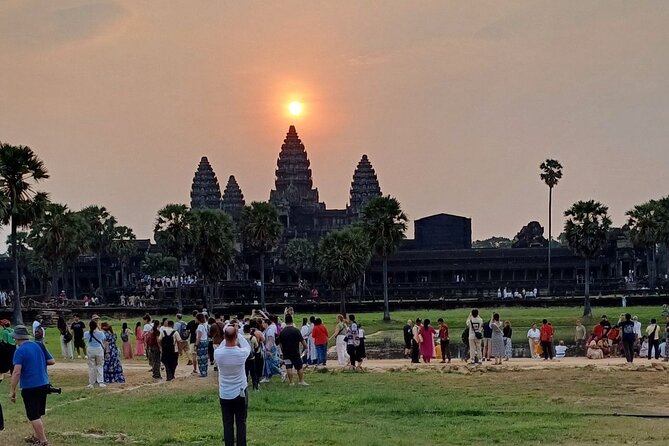
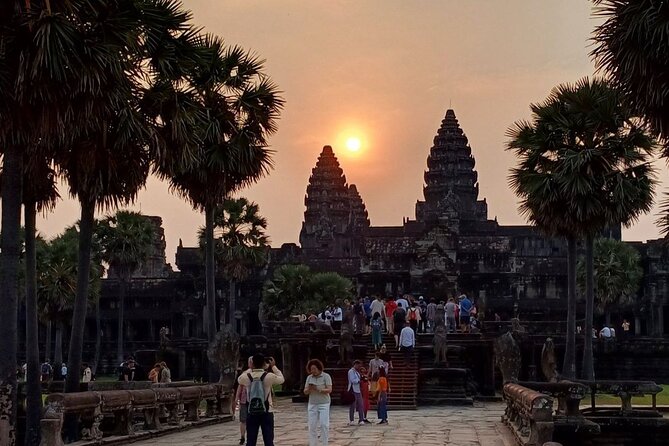
Angkor Wat is the headline, and this tour aims at the moment most people chase: first light. You begin at Angkor Wat with a pre-dawn start and enter from a lesser-used eastern side while it’s still dark. That single detail changes the experience. Instead of walking into a bright, already-busy scene, you get to watch the temple wake up around you.
The stop is about 3 hours, which gives time for more than one photo setup. You’re not just rushing from gate to gate. You get to walk the corridors and take in the symmetry and scale as the light shifts. Even if you know the basic story of Angkor Wat, the early atmosphere makes the carvings feel more intentional and less like background decoration.
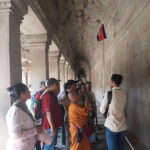
A big theme in the reviews is that the best guides help you see Angkor Wat as more than a landmark. For example, Sol’s explanations stood out because they connect Angkor Wat to Cambodia’s broader social, economic, political, and spiritual world. That kind of context helps you read the temple instead of only photographing it.
Practical tip: wear a layer you can lose after sunrise. It’s often cool early, and the pace plus sun warming up can make you feel overdressed if you go in with just one thin outfit.
Angkor Thom and Bayon Faces: South Gate to City-Scale Stone
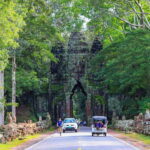
After Angkor Wat, you move into the Angkor Thom complex. This is where the tour shifts from one iconic temple to a whole royal-city experience. You’ll go to the south gate, which is famously well preserved, approached by a causeway that crosses the moat. It’s about 50 meters, and the railings have 54 stone figures on each side—small details like that are exactly why a guide helps.
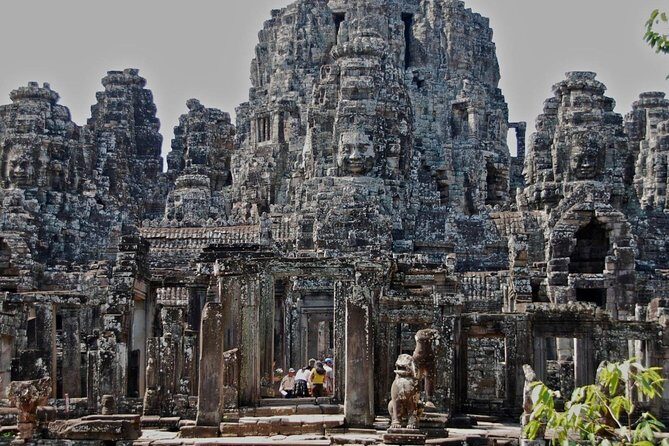
Then comes Bayon Temple. The stop is about 2 hours, and Bayon’s “face towers” do not disappoint. They feel strange at first—so many expressions staring out from every angle—but spending time there lets you appreciate the composition. You start noticing lines of sight, how the city layout funnels movement, and why this complex is considered the heart of a Khmer capital.
The best part here is how guides narrate what you’re seeing in plain terms. Reviews mention guides like Bun who shared Cambodian stories along with temple history, and Setha who also tied the temples to Cambodian culture beyond the stones. When the explanation fits what you can look at right then, it sticks.
Possible drawback to consider: Bayon and the surrounding structures involve lots of steps and uneven surfaces. The tour includes comfortable walking shoe advice, and you should actually listen. If your shoes are not broken in, Bayon is where you’ll feel it.
Terrace of the Elephants: Where Ceremonies Became Architecture
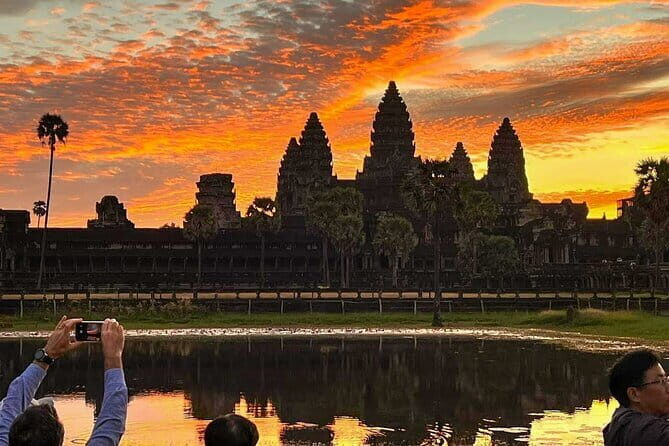
The tour includes the Terrace of the Elephants as part of the Angkor Thom highlights. The terrace is about 350 meters long and was used as a giant reviewing stand for public ceremonies—basically a massive public platform designed for royal visibility.
This stop is special because it helps you understand Angkor as an infrastructure of power, not only religious symbolism. The terrace’s size, positioning, and function all point toward a civilization that staged political and spiritual authority in the open.
If you like details, this is a good place to ask questions. In the reviews, I saw mentions of guides drawing attention to how different areas were used and even how specific structures create effects—like an echo you can hear by tapping in a certain spot at Ta Prohm. You can expect similar “pay attention to this” moments at the Terrace of the Elephants if your guide is vocal and curious.


Ta Prohm at Human Pace: Roots, Carvings, and Long Shadows

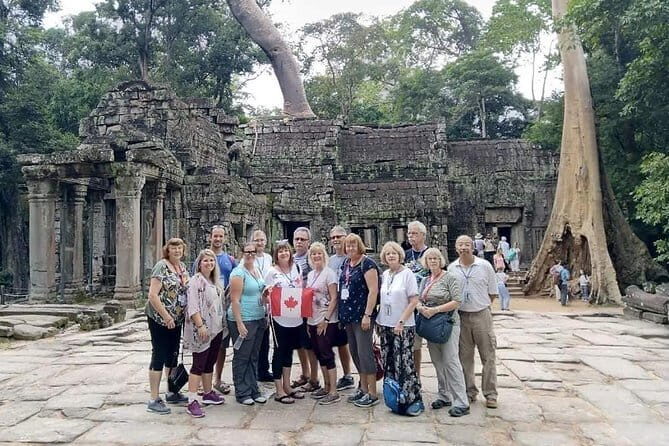
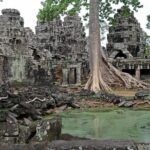
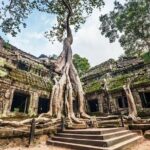
Ta Prohm is usually everyone’s favorite temple on the itinerary, and this tour gives it about 2 hours. The setting is atmospheric in a very specific way: you’re not looking at a fully restored, polished monument. You’re seeing a place where nature has taken the carvings back in slow motion.
You also get a sense of history beyond the scenery. Ta Prohm was once home to thousands of monks, and the tour’s framing emphasizes how the site looks like it did after explorers in the 1800s drew attention to it. That’s the value here: you’re not only seeing dramatic roots. You’re seeing why this temple became a lasting symbol of Angkor’s survival and transformation.
One review highlight: a guide named Sakrya pointed out an echo effect in one building at Ta Prohm by banging against your chest while leaning on the wall. It’s the kind of small, physical detail that makes a temple visit feel alive instead of academic.
Another repeated praise point was guides who help with photography. Nimol stood out for positioning people for photos and walking through the temple with an eye for angles. If you care about getting good shots without blocking others, this “guide as camera assistant” style is a real quality-of-life upgrade.
Price and What You’re Really Buying at $26 (Plus the $37 Pass)
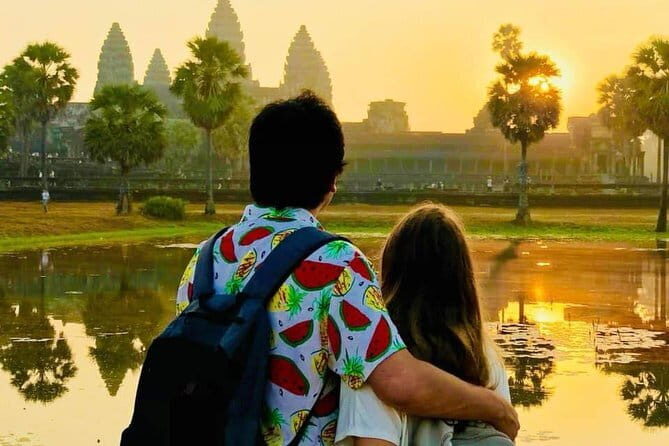
The tour price is $26 per person, but the temple pass is separate at $37 per person, paid directly to the site. So you should budget about $63 total per person for the core experience.
Is that good value? I think it is, if you want:
- the sunrise timing at Angkor Wat
- a full circuit of major temples in one day
- a licensed English-speaking guide who can translate stonework into meaning
You’re also getting practical extras included: pickup and drop-off, bottled water, cool towels, and an air-conditioned vehicle. In Siem Reap, those are not “free,” even if they don’t look dramatic on a brochure. Early starts make comfort and planning matter.
Also note the tour is frequently booked in advance (on average about 46 days). That’s a clue you should not leave it to the last minute, especially if you want specific start timing or you’re traveling during peak weeks.
Guide Quality Changes the Whole Day
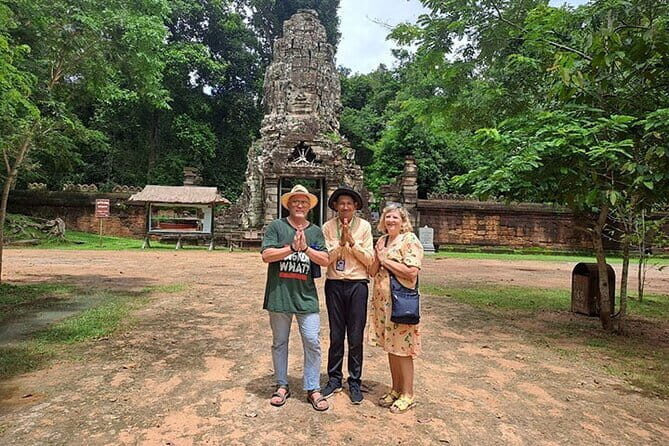
The most consistent theme in the reviews is that the guide matters a lot. Not just for “facts,” but for turning temple walking into a story you can follow.
Here are a few guide examples that came up repeatedly:
- Sok and Mao (and guides like Sol) impressed people with explanations of Angkor Wat’s social, economic, political, and spiritual layers.
- Bun was praised for blending temple history with lived stories about Cambodia.
- Pi stood out for using an iPad to show differences between past and present views, which can help your brain connect ruins to history.
- Sokpee stood out for strong English and for religious context after previously living as a monk, which gave Bayon and temple symbolism an extra level of understanding.
- Vantha, Setha, and Samnang were praised for keeping the day engaging and clear, not just reciting dates.
Even when you think you already know Angkor’s big facts, a guide can help you notice what you’d otherwise miss—like how a terrace functioned as a public stage, or why a gateway and causeway matter in a city plan.
What to Bring and How to Avoid the Usual Sunrise Mishaps
You have a long morning and early start, so pack for walking and for temperature changes.
What the tour data specifically points to:
- Dress code: shoulders and knees must be covered. A scarf can cover shoulders.
- Shoes: comfortable walking shoes are recommended.
- Weather reality: go in with layers you can handle during the cool pre-dawn hours and warmer daytime.
What’s included:
- bottled water and a cool towel, which helps a lot once the sun is up and you’re moving between sites.
If you’re the type who likes photos, treat this as a guided photo route. People praised guides who took photos and knew where to stand. That’s not magic; it’s just good timing and angles, and a guide can save you from doing it the hard way.
Should You Book This Angkor Wat Sunrise Tour?
Book it if you want one organized day that hits the top temples in the right order, starting with Angkor Wat when it feels most special. The sunrise timing plus a full circuit of Angkor Thom, Bayon, the Terrace of the Elephants, and Ta Prohm is a strong combo for first-timers who don’t want to guess their way through the park.
Don’t book it if you hate early wake-ups or you’re hoping for a relaxed, slow sightseeing day with lots of downtime. This is an 8-hour plan with serious early departure. Also, make sure you’re okay with paying the $37 temple pass separately.
If you can handle mornings early, this tour is a practical way to see why Angkor keeps pulling people back. With the right guide, you come away not only with photos, but with a clearer picture of what you were actually looking at.
FAQ
What time does the Angkor Wat sunrise tour start?
The tour starts at 4:30 a.m. for pickup, with departure time shifting between 4:30 and 4:45 a.m. depending on the season.
Is the Angkor entrance fee included?
No. The temple pass is not included and costs $37 per person. You pay directly to the site.
Can I buy the temple pass the day of the tour?
Yes. Temple entrance fees accept Visa cards and are available to purchase on the day of the tour just before sunrise.
What’s included in the tour price?
Included are an experienced licensed English-speaking guide, an air-conditioned vehicle, bottled water, cool towels, and hotel pickup and drop-off.
Do I need to pay extra for food?
Food and beverages are not included.
What should I wear?
You need respectful dress with shoulders and knees covered. Shoulders must be covered (a scarf is used for this). Comfortable walking shoes are recommended.
Is this a group tour or private?
This is set up as a private tour/activity, so only your group will participate. The operator also notes group discounts.