REVIEW · SIEM REAP
Private Tour: (Avoid Crowds & Heat) 2-Day Angkor Temples
Book on Viator →Operated by Affinity Angkor · Bookable on Viator
Two days, fewer crowds, lots of temples. This private 2-day Angkor tour is built for first-timers who want to see a lot without burning through the day. I love the early 7:30 am start and the way the schedule mixes major sites with calmer, more remote temples. I also like that it’s truly private, so your guide can adjust pacing and stop times. One thing to consider: the Angkor area involves stairs and uneven temple surfaces, so it’s not ideal if you hate climbing.
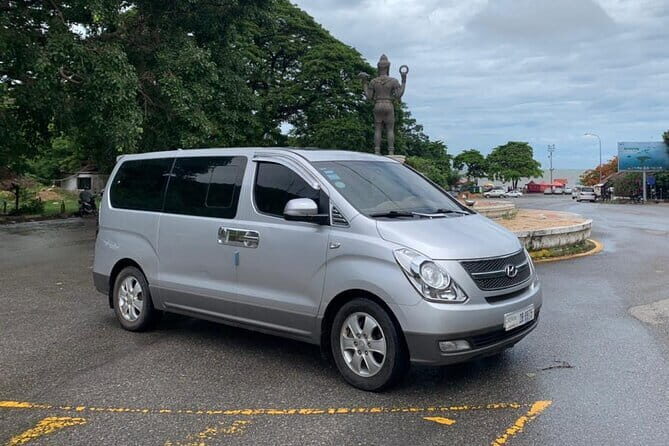
You’ll ride in an air-conditioned private vehicle with snacks, refreshment, and hotel pickup and drop-off in Siem Reap. Guides like Tay, Viet, Kim, and Sopheara come up again and again in feedback for explaining what you’re seeing in a way that makes the stones feel less random and more meaningful.
The big catch is cost math: the tour price is $62, but the Angkor Archaeological Park entrance pass is not included. Plan for another $62 per person for the 2- or 3-day pass, and you’ll be happier when you arrive at the ticket point.
In This Review
- Key things to know before you go
- Why this 2-day Angkor plan works when you want fewer crowds and less heat
- Price math: $62 tour fee plus the $62 Angkor entrance pass
- Your Day 1 “outer temples” route: Banteay Srei to Neak Pean
- Banteay Srei (about 1 hour)
- Banteay Samre (about 45 minutes)
- Pre Rup (about 30 minutes)
- Preah Khan (about 1 hour)
- Neak Pean (about 30 minutes)
- Day 2 inside Angkor: Angkor Wat, Angkor Thom, Ta Prohm, and Ta Nei
- Angkor Wat (about 2 hours)
- Angkor Thom (about 2 hours)
- Ta Prohm (about 1 hour)
- Ta Nei (about 30 minutes)
- Timing and route tips: the 7:30 am start and smart sequencing
- The licensed guide factor: Tay, Viet, Kim, and Sopheara
- Comfort in motion: air-con rides, snacks, and cooling touches
- Physical reality check: stairs, climbing, and how to prep
- Who should book this private tour?
- Should you book this 2-day Angkor temples tour?
- FAQ
- What time does the tour start?
- Is hotel pickup and drop-off included?
- Is the Angkor Archaeological Park entrance ticket included?
- Is this tour private?
- What’s included in the tour besides the guide?
- Do I need cash for the ticket, or can I use a mobile ticket?
- Can I add sunrise or sunset viewing?
- What temples are visited on day 1?
- What are the main stops on day 2?
- Is there free cancellation?
Key things to know before you go
- Private and flexible pacing: Only your group rides and explores at your speed, with a licensed guide.
- Early start helps with heat: The day begins at 7:30 am, and the plan works to keep you away from the worst midday crush.
- Day 1 is the “outer temples” warm-up: You start with Banteay Srei, Banteay Samre, Pre Rup, Preah Khan, and Neak Pean.
- Day 2 hits the classics: Angkor Wat, Angkor Thom (with Bayon and other major stops), Ta Prohm, plus Ta Nei to reduce crowd time.
- Comfort is part of the deal: Air-con transport, snacks and refreshment, and cooling touches show up in the experience.
- Entrance pass is separate: Budget for the Angkor Archaeological Park ticket in addition to the tour fee.
Why this 2-day Angkor plan works when you want fewer crowds and less heat
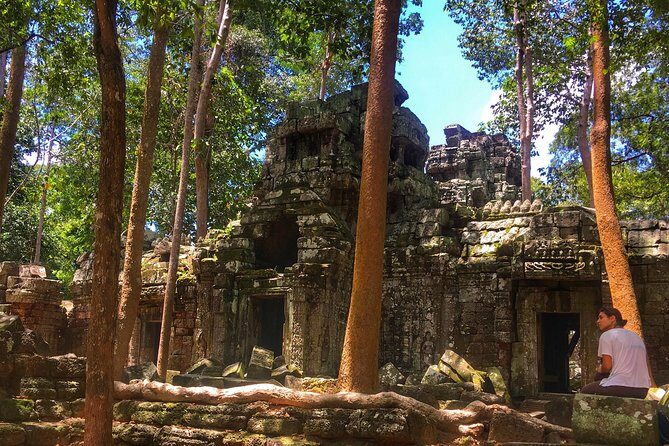
Angkor can feel like a theme park if you arrive late and follow the same paths as everyone else. This tour’s structure helps you avoid that. Starting at 7:30 am matters. In the Khmer sun, those first morning hours are when you’ll walk longer and sweat less, and you’re more likely to get nicer light on carvings and stonework.
The other smart choice is how the days are split. Day 1 leans into temples outside the main Angkor core—places like Banteay Srei and Neak Pean—so you get a sense of the broader Khmer kingdom without spending your whole first day boxed into the busiest zone. Day 2 then transitions to the heavy hitters: Angkor Wat, Angkor Thom, Bayon, Ta Prohm, and more.
If you’re a first-time visitor, this sequence is a gift. You’re not trying to “do everything” on day one. Instead, you build context first, then you hit the famous center with better understanding (and usually better photos, because you’re not sprinting the whole time).
You can also read our reviews of more private tours in Siem Reap
Price math: $62 tour fee plus the $62 Angkor entrance pass
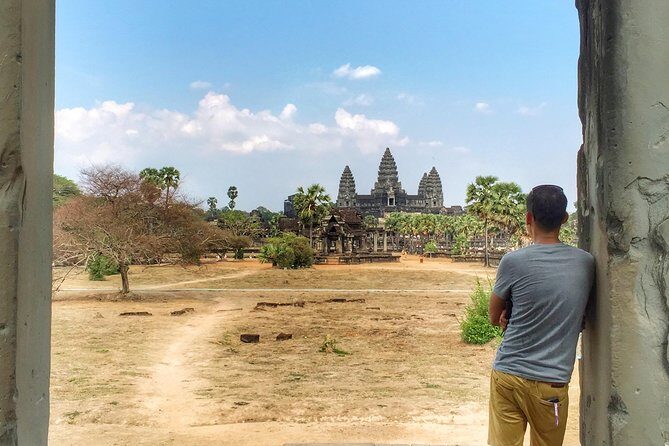
The tour itself lists at $62 per person and runs about 2 days. But the tour description is clear: the Angkor Archaeological Park entrance pass is not included.
That entrance pass is $62 per person for a 2- or 3-day visit. So in practical terms, you should expect your total cost to land around $124 per person when you add the pass to the tour fee.
Is that worth it? For many visitors, yes—because the ticket gets you access to the ruins, and the tour fee buys you the human part: a licensed guide, hotel pickup/drop-off, a private air-conditioned vehicle, snacks and refreshment, and a schedule that aims to reduce time in crowds and heat. If you try to stitch this together yourself with a guideless taxi plan, you’ll often spend more time figuring things out than actually seeing temples.
Your Day 1 “outer temples” route: Banteay Srei to Neak Pean
Day 1 is where this tour quietly earns points. You start with smaller, more atmospheric stops before you reach the biggest names. It’s the kind of pacing that helps your brain connect details: the stone color, the layout choices, the shifts in religious style over time, and why Jayavarman VII appears repeatedly across the landscape.
Banteay Srei (about 1 hour)
Banteay Srei is famous for delicate carving in pink sandstone, nicknamed the Citadel of Beauty. It’s about 20 km north of Angkor, which also helps with the “cooler, calmer” feel compared with the main complex.
This stop is worth slowing down for. If you’re the type who looks at gate lintels, faces, and the way artisans filled every surface, you’ll probably want more time than the hour. On a private schedule, you can usually stretch a bit, as long as your group keeps moving reasonably.
Banteay Samre (about 45 minutes)
Banteay Samre is more isolated and peaceful. It’s a shorter stop, and that’s okay. The value here is that you’re not only stacking famous sites—you’re also seeing temples in quieter settings, where you can actually hear your own footsteps and concentrate on the architecture.
The tower style also offers a visual comparison point with Angkor Wat, so this stop helps you “read” later buildings faster.
You can also read our reviews of more tours and experiences in Siem Reap


Pre Rup (about 30 minutes)
Pre Rup—literally meaning turning the body—was built in the middle of the 10th century. What stands out is how laterite, brick, and sandstone blend together.
This is a smaller time block, so you’ll want to pay attention right away. Even in 30 minutes, you can learn a lot if your guide points out how the materials change the look of the structure as the light moves.
Preah Khan (about 1 hour)
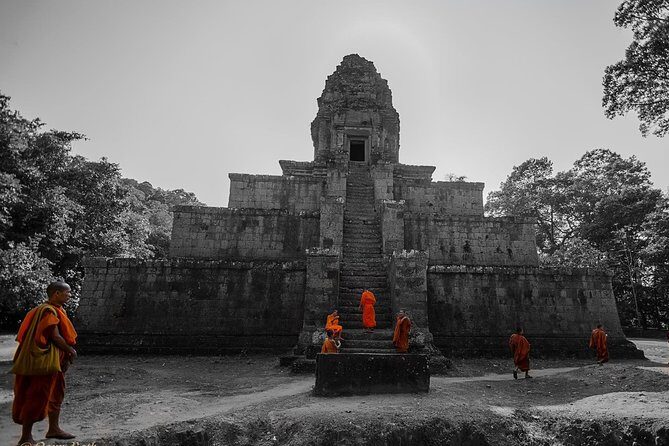
Preah Khan is a bigger stop and a more animated one. Built in the late 12th century by Jayavarman VII, it’s remembered as a Buddhist university and city. The atmosphere can feel similar to Ta Prohm in the sense that it has that “temple-in-the-forest” mood, with unique round-columned, two-storied structures.
This is a stop where a good guide makes a real difference. The guide can connect the layout to how the site functioned, not just what it looks like.
Neak Pean (about 30 minutes)
Neak Pean was also built under Jayavarman VII, and it’s associated with miraculous healing. The centerpiece is the unusual monument in the middle of the pond.
Even if you’re not a symbolism person, you’ll probably appreciate the setting—water, reflection, and a different pace than the stone corridors. It also acts like a mental cool-down before Day 2.
Day 2 inside Angkor: Angkor Wat, Angkor Thom, Ta Prohm, and Ta Nei
Day 2 is the “wow” day. It’s where you’ll understand why Angkor is on every bucket list. It’s also the day with the most walking, the most stairs, and the most people. The trick is not to fight the crowd; it’s to plan your time so you’re not always stuck in it.
Angkor Wat (about 2 hours)
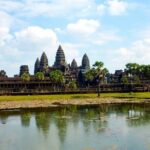
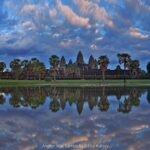
Angkor Wat is the world’s largest religious monument. You’ll typically spend around two hours here, which can feel like both plenty and not enough at the same time.
The best use of that time is to take breaks for views, then circle back to details. If you only rush through the main elements, you’ll miss why the place feels so “designed”—symmetry, causeways, and carved surfaces that reward a slower look.
Angkor Thom (about 2 hours)
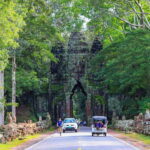
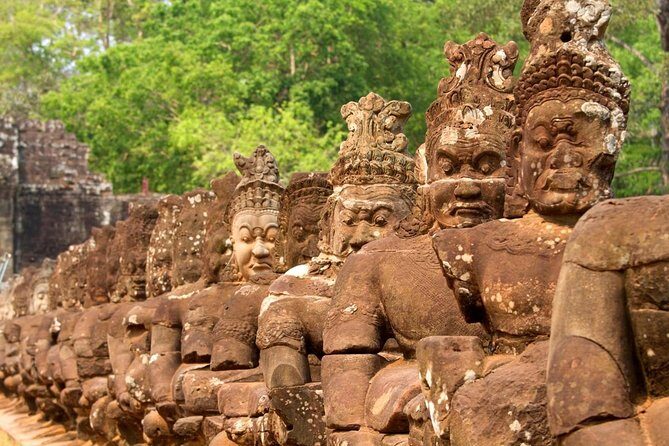
Angkor Thom is the walled capital area, packed with temples within its walls. Expect major stops like Bayon and Baphuon, plus features such as the Terrace of the Elephants and the Terrace of the Leper King.
Two hours can be enough, but only if you don’t try to photograph everything in a single frantic sprint. With a private guide, you can choose the order that matches your interests—faces first, terraces first, or views first.
Ta Prohm (about 1 hour)
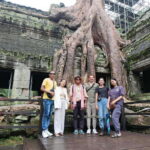
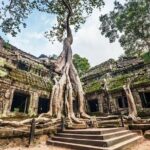
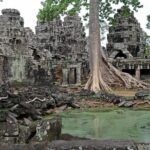
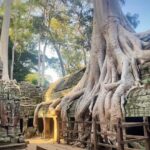
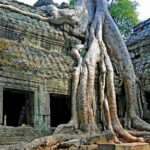
Ta Prohm is famous for the strangler figs and silk-cotton trees intertwined among the ruins. It has that cinematic, grown-over feeling that makes people stop mid-walk and look up.
This hour flies if you’re curious about how nature and stone share the same space. The guide’s explanations can also help you understand what you’re seeing beyond the obvious “trees through buildings” visual.
Ta Nei (about 30 minutes)
Ta Nei is a Buddhist temple built in the late 12th century under Jayavarman VII. The practical reason it’s included: it’s a good place to avoid the biggest crowd pockets.
That half hour can feel like a reward. You’ll get temple time with a calmer vibe, which makes the whole day more enjoyable.
Timing and route tips: the 7:30 am start and smart sequencing
The tour starts in Siem Reap at 7:30 am. That early start isn’t a marketing trick—it’s your best defense against heat stress and packed walkways.
Here’s what I suggest for your own mindset: treat Day 2 like a series of sprints with rest breaks, not one continuous march. Your guide and driver can help you keep moving between temples, but you’ll still feel the sun and the stairs.
If you’re given a chance to adjust timing, think strategically:
- Prioritize the temples you care about most first (usually Angkor Wat and Bayon).
- Use the shorter stops (like Pre Rup or Neak Pean) to catch your breath and reset your energy.
- Save your “extra photo time” for the places where the carvings and light are best, not when you’re stuck in a wall of people.
Also note that the guide can offer a sunrise or sunset option the next day as a complimentary add-on. If you’ve never watched the temple light change in Cambodia, this is the kind of detail that can turn a good trip into a memorable one.
The licensed guide factor: Tay, Viet, Kim, and Sopheara
With Angkor, you can do it without a guide—and many people do. But you’ll get more from the stones with an expert who can explain the shifts in style, the purpose of different temple layouts, and what to look for as you walk.
The names Tay, Viet, Kim, and Sopheara come up in feedback for a reason: they’re able to manage the day, keep you oriented, and talk in a way that doesn’t turn into a lecture.
One practical benefit I care about: good guides help you move like you have a plan. That means you spend time at the right places and you don’t waste effort trying to figure out what’s worth seeing next.
Comfort in motion: air-con rides, snacks, and cooling touches
This is a private tour, so you’re not stuck riding around with strangers while your guide tries to herd the group. You’ll use a private air-conditioned vehicle, and the tour includes snacks and refreshment.
In feedback, people also note cold water and cooling towels (including lemongrass-scented ones). That matters more than it sounds. Angkor days can turn into dehydration days if you wait too long to drink.
What to bring anyway (so you’re not forced to buy mid-ride):
- A hat and sunscreen
- Comfortable shoes with grip for laterite and stone steps
- A small bottle of water as backup (even with refreshments provided)
Physical reality check: stairs, climbing, and how to prep
Many people focus on the “big names” and forget the body part. This tour is doable for most visitors, but plan for movement. One comment that kept showing up is that there are lots of stairs and climbing.
So if you’re choosing between this tour and a gentler day, be honest about your limits. The temples are uneven. Steps can be steep. Some paths are more worn than polished.
You can prepare with:
- Comfortable, supportive footwear
- An easy pace on the first morning so your legs aren’t cooked before Day 2
- Short “sit and breathe” moments at viewpoints or shaded corners when your guide allows it
If you’re physically able and you want a “see a lot” plan, this tour fits well.
Who should book this private tour?
This is a great fit if you:
- Are visiting Angkor for the first time and want a structured 2-day plan
- Like history and want explanations that connect the sites, not just a list of stops
- Prefer avoidance of crowds and heat as a real goal, not a slogan
- Want hotel pickup/drop-off and air-conditioned transport so the trip feels efficient
It may not be ideal if you:
- Have limited mobility or struggle with stairs
- Want long, unstructured lounging time between ruins
- Haven’t budgeted for the separate Angkor Archaeological Park entrance pass
Should you book this 2-day Angkor temples tour?
If you want a smart, well-run Angkor experience without spending your vacation solving logistics, I’d book it. The value is strongest when you price it correctly: tour fee plus the entrance pass. Once you do that, you’re paying for a licensed guide, private transport, pickup/drop-off, snacks, and a routing approach that helps with heat and crowd pressure.
My main deciding factor would be your comfort with stairs. If you’re okay with climbing and walking a lot, this is the kind of private tour that makes Angkor feel like a story instead of a checklist.
If you want me to tailor advice, tell me your fitness level and travel month, and I’ll suggest how to prioritize Angkor Wat vs. Bayon vs. Ta Prohm on your personal schedule.
FAQ
What time does the tour start?
The tour start time is listed as 7:30 am in Siem Reap.
Is hotel pickup and drop-off included?
Yes. Hotel pickup and drop-off in Siem Reap are included.
Is the Angkor Archaeological Park entrance ticket included?
No. The entrance pass is not included in the tour price, and the ticket is $62 per person for a 2- or 3-day visit.
Is this tour private?
Yes. It’s a private tour/activity, and only your group participates.
What’s included in the tour besides the guide?
The tour includes a professional licensed guide, transport by air-conditioned private vehicle, snacks and refreshment, and hotel pickup/drop-off.
Do I need cash for the ticket, or can I use a mobile ticket?
The tour features a mobile ticket, but the entrance pass itself is not included in the tour price.
Can I add sunrise or sunset viewing?
Yes. You can let the guide know on day 1 if you want sunrise or sunset on the following day, and it’s complimentary.
What temples are visited on day 1?
Day 1 includes Banteay Srei, Banteay Samre, Pre Rup, Preah Khan, and Neak Pean.
What are the main stops on day 2?
Day 2 includes Angkor Wat, Angkor Thom, Ta Prohm, and Ta Nei.
Is there free cancellation?
Yes. Free cancellation is available up to 24 hours in advance for a full refund.