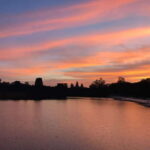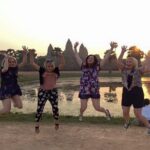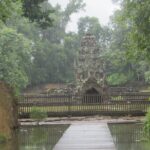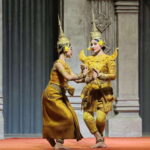
Sunset at Pre Rup ends the day right. I like this Angkor tour because it’s built around smart temple order and easy transport: you start with hotel pickup and ride in a tuk-tuk all day, with mineral water in your bag.
What I really like is the guide quality and pacing. A licensed English-speaking guide (Sokha is one example I heard about) keeps you moving with clear context, and he’s the kind of person who can turn a quick stop into real understanding without slowing you down.
One consideration: temple entrance fees aren’t included, so you’ll need to budget for tickets before you go in. If you’re trying to keep the day to one fixed price, factor that cost in early so it doesn’t surprise you later.
In This Review
- Key things to know before you go
- Why a tuk-tuk full-day beats trying to DIY
- Getting started at 8:00 in Siem Reap (and why it matters)
- Angkor Wat first: how to enjoy the most famous temple without feeling rushed
- Angkor Thom and Bayon: faces, motion, and a stronger sense of the empire
- Ta Prohm: the jungle ruins stop that changes the whole mood
- Banteay Kdei: the “citadel of monks” stop for people who like fewer crowds
- Pre Rup sunset: the finish that makes the day feel complete
- Price and value: is $39 really a good deal?
- Group size, privacy, and how the day feels
- Hot weather reality check (and the comfort perks that matter)
- What to pack for a 7-hour temple circuit
- Who should book this Angkor Wat with sunset tour
- Should you book the Tuk-Tuk Angkor Wat with Sunset?
- FAQ
- Are temple entrance fees included in this tour price?
- How long is the tour and what time does it start?
- What’s included besides the tuk-tuk ride?
- Is this tour private?
- Do I need to bring lunch or pay for meals during the day?
- What happens if weather is bad or I need to cancel?
Key things to know before you go
- Hotel pickup and drop-off mean no early-morning scramble in Siem Reap.
- Tuk-tuk transport keeps the day flowing between big temple sites.
- English-speaking guide support helps you make sense of what you’re seeing.
- Sunset at Pre Rup gives you a natural finish to plan around daylight and photos.
- Comfort touches on hot days can include chilled water and even ice-cold flannels from the driver (when offered).
Why a tuk-tuk full-day beats trying to DIY
Angkor is huge. Even if you’re an energetic walker, you’ll burn time just figuring out routes, parking, and how to hop between temples without backtracking. This is the main reason I’d choose a tuk-tuk day tour: you’re not guessing. You’re scheduled.
Another big win is the guide. Angkor Wat and Angkor Thom can feel like they’re all the same set of stone corridors if you don’t have context. With an English-speaking guide, you get a map in your head—what you’re looking at, why it matters, and what’s worth your time inside each complex.
Finally, it’s a good fit for first-timers who still want variety. The day isn’t only the headline temple. You’ll also get a jungle-temple stop and a quieter site before the sunset finish.
You can also read our reviews of more evening experiences in Siem Reap
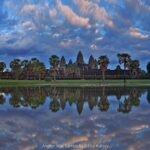
Getting started at 8:00 in Siem Reap (and why it matters)
The day begins with departure from your hotel at 8:00am. That timing matters more than you’d think. Later in the day, heat and crowds can make even your favorite carvings feel like a chore. Starting early helps you see the most famous structures while the light and energy are still on your side.
Pickup and drop-off are included, so you don’t need to coordinate transport on your own. If you’re staying out of the central area, this is especially helpful. You also get mineral water included, which is a small thing until you’re standing in open sun for an hour.
One more practical upside: you can often adjust your start time and pickup location. That means the tour can fit your day plan, like if you want to align with where you’re staying or what time you’re ready to go.
Angkor Wat first: how to enjoy the most famous temple without feeling rushed
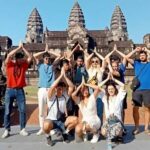
You’ll spend about 2 hours at Angkor Wat. This is the grand one—largest, most famous, and absolutely worth prioritizing first. Going early helps you enjoy the scale without the kind of pressure that makes people hurry through details.
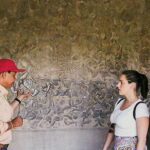
What you’re looking at here isn’t just big towers. It’s a temple layout you can actually read if someone gives you a quick framework. Your guide can help you spot key areas and understand what you’re seeing as you move. Even if you love photography, I like that the time block is long enough to do more than take a few postcard shots and sprint.
The only catch: admission tickets aren’t included in the tour price. So you’ll need to purchase temple entry separately. If you prefer to handle this in advance, you’ll save time once you arrive.
Angkor Thom and Bayon: faces, motion, and a stronger sense of the empire
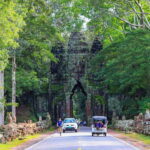
Next you’ll head toward Bayon Temple, also known as part of the grand Angkor Thom complex area. Expect about 2 hours here, and go in with the mindset that this is a “look and re-look” stop.
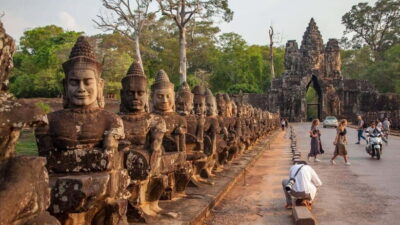
Bayon’s most striking feature is the repeating face motif. Up close, it’s easy to miss small details while you’re trying to keep track of the overall composition. The tour’s pacing helps: you get enough time to stand back and then come in closer without feeling like you have to choose one or the other.
A guide is useful here because the history and symbolism can be hard to piece together when you’re only scanning from signage. With the right explanations, you’ll notice the temple’s layout and purpose more clearly, and it becomes more than a collection of stone faces.
Drawback to consider: because this is a major site, it can feel busy depending on the day. With 2 hours, you can still slow down, but plan for a few moments where you’ll need to work around other visitors.
Ta Prohm: the jungle ruins stop that changes the whole mood
Then comes the stop that most people remember even if they forget everything else: Ta Prohm. You’ll get about 2 hours here, and the atmosphere is totally different from the tighter, more formal temple spaces.
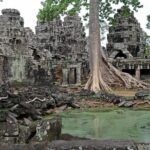
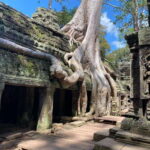
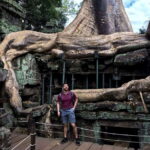
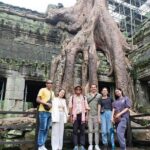
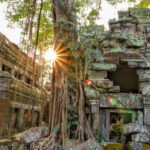
This is the temple surrounded by trees—fig trees and roots that push into old stone. It’s dramatic, and it can look almost staged in photos. Up close, it’s more unsettling and fascinating at the same time because you’re seeing nature reclaim architecture in real time.
This is also a great place to slow down and use your senses. The contrast is what makes it work: shadowy corridors, rough surfaces, and the feeling that the jungle is part of the structure’s identity. The tour setup makes it easy to enjoy this without worrying about transport logistics in the middle of it.
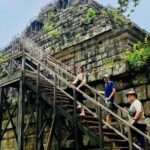
Practical tip: go prepared for uneven walking surfaces and steps. Ta Prohm is not a flat stroll. Comfortable footwear matters more than you’d expect.
You can also read our reviews of more tours and experiences in Siem Reap
Banteay Kdei: the “citadel of monks” stop for people who like fewer crowds
After the big, eye-catching sites, you’ll continue to Banteay Kdei, about 1 hour. This stop is partly overgrown with tall trees and has those famous cotton-tree roots threading through stones.
I like this kind of add-on because it balances the day. After Angkor Wat, Bayon, and Ta Prohm, Banteay Kdei gives you a different texture: slightly quieter, more broken-in, and often less chaotic.
The “citadel of monks” vibe is the idea here, and even if you don’t catch every detail, you’ll notice the smaller scale feel and the way the area’s ruin condition shapes your route. You get enough time to walk through and absorb without feeling you’re losing the day.
Pre Rup sunset: the finish that makes the day feel complete
The day is designed around sunset at Pre Rup. The exact timing shifts with the time of year, but you can plan for a classic scenario: late afternoon light, shorter shadows, and the kind of view that makes everyone pause and take photos.
Pre Rup is worth saving for the end because you’ll be tired by then. That’s not a bad thing—it means your brain is ready to just appreciate the view and the mood. Sunset helps the whole day click together. The temples shift from being “places you visited” into “a day you remember.”
If your goal is photos, give yourself a little patience. People will step around for angles, and the best sight lines can be crowded briefly. A guide helps you time your move so you aren’t hunting for the perfect viewpoint while the sky is already changing.
Price and value: is $39 really a good deal?
At $39 per person, this tour can be strong value—especially if you’re factoring in what’s included.
Here’s what your money covers:
- A licensed English-speaking guide
- Tuk-tuk transport
- Hotel pickup and drop-off
- Mineral water
- Group discount potential (if you’re booking with others)
What’s not included:
- Temple entrance fees
- Food and drinks
- Lunch
So the real question is not just the $39. It’s whether you can handle the extra day costs calmly: tickets plus meals. If you were to hire a driver and guide separately for a full day, you’d likely pay more or end up with worse structure. This option gives you a planned route and transport, which is the biggest hassle to solve on your own.
Also, the tour’s schedule is built for a full-day experience with multiple major temples and a sunset finish. That tight packing is exactly where a guided, pre-organized day tends to pay off.
Group size, privacy, and how the day feels
This is listed as a private tour/activity, meaning only your group participates. That’s a practical difference. In a group tour, you can get stuck waiting while others buy things, stop for extra photos, or move slower on uneven steps. With a private setup, your pace tends to be more flexible.
That said, you’ll still be sharing temple spaces with other visitors at each stop. Angkor doesn’t turn into your own theme park just because you have a tuk-tuk. The benefit is that the tour timing and navigation are controlled by your guide and driver, not by the slowest or fastest person in another group.
Hot weather reality check (and the comfort perks that matter)
Angkor days can be brutal in heat. One review I heard was very specific: on a very hot day, the tuk-tuk worked well, and the driver stayed attentive with lots of chilled water and ice-cold flannels.
Not every day will be identical, but this is a useful clue about what to expect from the driver’s attitude. You’ll want hydration and cooling. Mineral water is included, and it’s smart to bring more if you’re the type who drinks steadily all day.
For comfort, think practical:
- Wear light clothes you can move in
- Use sunscreen and a hat
- Plan for water breaks between stops
It’s not fancy, but it makes a huge difference when you’re doing multiple temple sites back to back.
What to pack for a 7-hour temple circuit
You’ll be out from around 8:00am for roughly 7 hours, with a sunset finish. That’s long enough that you should plan like it’s a full outing, not just a quick sightseeing loop.
I recommend you bring:
- Comfortable walking shoes (temple steps and uneven ground are common)
- A hat and sunscreen
- Sunglasses if you use them
- A small day bag for water and essentials
- Cash for temple entrance fees (since those aren’t included)
- Basic sun protection (light long sleeves help some people)
If you’re sensitive to heat, consider adding your own extra water. You can rely on included mineral water, but you’ll feel better if you’re not rationing.
Who should book this Angkor Wat with sunset tour
This is a great match if:
- You want a structured, full-day route without planning transport between sites
- You care about having an English guide explain what you’re seeing
- You want both the headline temple and the jungle-temple mood shift
- You’d rather do a sunset finish at Pre Rup than rush out early
It’s also ideal if you’re traveling in a group and you want private attention. For couples and small groups, the tour format is usually easier and more satisfying than coordinating multiple tuk-tuk rides on your own.
If you’re a hardcore DIY planner who already has tickets, a route map, and transport sorted, you might be able to do something cheaper. But for many first-timers, the value is in not wasting the day trying to figure out logistics.
Should you book the Tuk-Tuk Angkor Wat with Sunset?
If you want the simplest way to do a top Angkor itinerary in one day, I think it’s a smart booking. You get hotel pickup, tuk-tuk transport, an English-speaking guide, multiple major temples, and the payoff of sunset at Pre Rup.
The main reason to pause is the extra budget for temple entrance fees, plus food and drinks. If your plan is strict one-price budgeting, you’ll need to do a quick math check.
Otherwise, this tour’s strength is clear: it’s built for a smooth, full temple day with enough time at each stop to actually enjoy the place—not just pass through.
FAQ
Are temple entrance fees included in this tour price?
No. Temple entrance fees aren’t included, so you’ll need to purchase tickets separately.
How long is the tour and what time does it start?
You’ll depart your hotel at 8:00am, and the tour runs about 7 hours (approx.), ending with sunset at Pre Rup.
What’s included besides the tuk-tuk ride?
The tour includes a licensed and experienced English-speaking guide, travel by tuk-tuk, mineral water, and hotel pickup and drop-off.
Is this tour private?
Yes. Only your group will participate.
Do I need to bring lunch or pay for meals during the day?
Food and drinks aren’t included, and lunch isn’t included, so you’ll need to plan for your own meals.
What happens if weather is bad or I need to cancel?
You can cancel for free up to 24 hours in advance for a full refund. If the experience is canceled due to poor weather, you’ll be offered a different date or a full refund.