REVIEW · SIEM REAP
Full Day Angkor Park with Sunset by Tuk Tuk
Book on Viator →Operated by Journey Cambodia · Bookable on Viator
Sunset at Angkor feels unreal. This full-day tour strings together Angkor Thom, Bayon, Ta Prohm, and Angkor Wat on a tuk-tuk ride, then finishes at Pre Rup for sunset. I love the way the motorised trolley keeps the day feeling “real Cambodia,” not just another checklist.
I also like the English-speaking tour guide quality, with past groups praising guides such as Sok Chea, Sak, and Phal for clear explanations. One drawback to plan for: the temple pass is not included, so you’ll need to budget $37 per person paid directly at the sites, plus follow the dress code (shoulders and knees covered).
In This Review
- Key points before you go
- A 9-Hour Angkor Day That Starts at 9:00 and Ends at Sunset
- Motorised Trolley Tuk-Tuk: Comfortable, Local, and Built for Temple Loops
- Price and Temple Pass Reality: What You’re Really Paying
- Angkor Thom City Area: The Village Approach Sets the Tone
- Bayon Temple: Big Capital Energy in 2 Hours
- Ta Prohm’s Jungle Ruins: Fig Trees and Stroll-Ready Time
- Angkor Wat Lunch Stop: Where the Day’s Scale Peaks
- Terrace of the Elephants and Banteay Kdei: Quick Passes That Add Variety
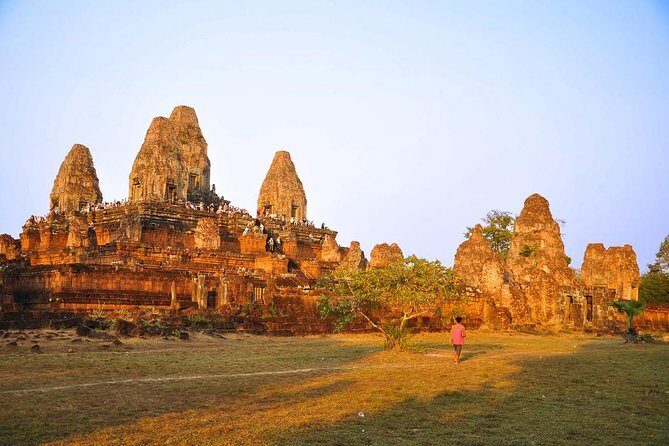
- Pre Rup Sunset: The Finish That Changes Everything
- Dress Code, Packing, and the Small Things That Save the Day
- The Real Value: English Guidance and a Professional Driver Setup
- Who This Tour Is Best For (and Who Might Want a Different Fit)
- Should You Book This Full Day Angkor Park With Sunset?
- FAQ
- What time does the tour start?
- Is hotel pickup and drop-off included?
- Is the temple entrance fee included in the $41 price?
- How long is the full-day tour?
- What should I wear to visit the temples?
- What should I bring for the day?
Key points before you go
- Trolley-style tuk-tuk for moving around the Angkor temple circuit in a more old-school way
- Sunset at Pre Rup as your finish line, not an afterthought
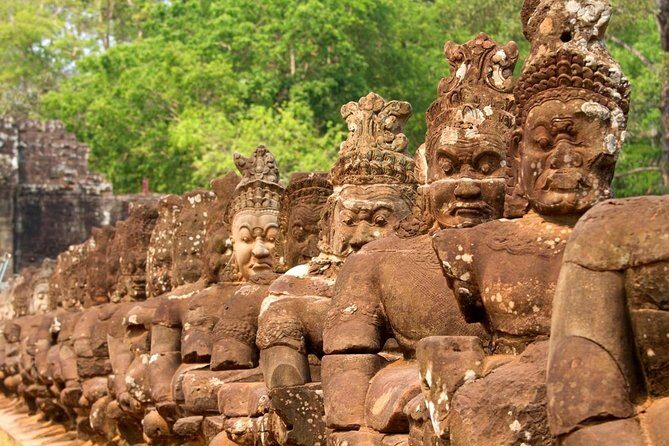
- Angkor Thom + Bayon early for the big-city feel of the Khmer capital area
- Ta Prohm fig trees for that “ruins fighting back” visual
- Temple pass not included so your real total starts at the $41 rate plus $37
A 9-Hour Angkor Day That Starts at 9:00 and Ends at Sunset
This is a full day in Siem Reap’s Angkor Park, about 9 hours from a 9:00 am start. You’ll be up for a real sightseeing day—multiple temples, a lunch break, and a sunset finish—so the pacing matters more than you might expect.
What I like about the structure is that you start with the “grand and crowded-in-your-mind” places (Angkor Thom and Bayon), then move into the jungle-and-stones feeling of Ta Prohm, and finally close with sunset at Pre Rup. That last stop changes the emotional tone of the day. It helps you remember Angkor as something you watched change through the light, not just something you photographed.
If you hate long temple days, this may feel like a lot. But if you’re the type who likes to see different sides of the same complex—city scale, jungle scale, and sunset scale—you’ll probably have a great time.
You can also read our reviews of more evening experiences in Siem Reap
Motorised Trolley Tuk-Tuk: Comfortable, Local, and Built for Temple Loops
You travel by a traditional motorised tuk-tuk (trolley) rather than a big van the whole time. For many people, that’s the main “value” of this tour: you get an authentic ride around the temple range without making every transfer a big logistical chore.
The trolley format also helps with what I’d call mental fatigue. When you’re hopping between sites, a comfortable ride between each one keeps your energy for walking, climbing steps, and standing still for views. You also get hotel pickup and drop-off, so you’re not spending your morning figuring out transport.
One small practical note: you still need comfortable walking shoes. Tuk-tuk time is for moving; temple time is for walking. Bring insect repellent too—repellent is listed for a reason in this area.
Price and Temple Pass Reality: What You’re Really Paying
The tour price is $41 per person, and it includes things that matter on a day like this: an English-speaking guide, hotel pickup/drop-off, mineral water, and the trolley transport. The big catch is the temple pass.
You’ll need to pay the entrance fee directly to the sites: $37 per person for the temple pass (not included). So your total should be thought of as roughly $78 per person before any personal snacks or lunch purchases.
That’s why I treat this as a “budget + convenience” choice. You’re paying for a guided route and transport, not just access. If you want maximum independence and you already know how you’ll handle tickets and routing, the math might push you toward other options. If you’d rather let someone organize the flow and timing, this price can feel fair.
Angkor Thom City Area: The Village Approach Sets the Tone
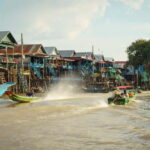
Angkor Thom is where the day gains momentum. You start after breakfast with your guide and then ride by motorised trolley tuk-tuk toward an untouched village near Angkor Thom city. You also learn about day-to-day local life, which is a smart early move.
This matters because it breaks the day out of “temples-only” mode. Before you get surrounded by stone and scale, you get a human-size context for how people live in the Angkor area today. Even if you’ve seen temple photos before, this village approach helps you see the complex as part of an inhabited region, not a museum set.
The stop also gives you time to take the main Angkor Thom area in at a slower pace. Plan for heat, shade changes, and walking surfaces that can be uneven.
Bayon Temple: Big Capital Energy in 2 Hours
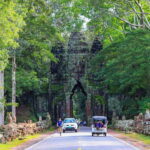
After Angkor Thom, you continue toward Bayon Temple. This site once served as the Khmer Empire’s glistening capital city—meaning you’re not just looking at one temple, you’re stepping into the feel of a powerful center.
You’ll have about 2 hours here, which is enough to get your bearings without rushing every viewpoint. Bayon is one of those places where a guide’s explanation can make a huge difference. The value isn’t just knowing the name—it’s understanding why the place feels so grand and how the architecture reflects the capital idea.
A practical tip: use this stop to slow down. If you rush, you’ll miss how the temple’s layout creates changing perspectives as you move around.
You can also read our reviews of more tours and experiences in Siem Reap
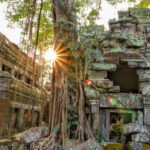
Ta Prohm’s Jungle Ruins: Fig Trees and Stroll-Ready Time
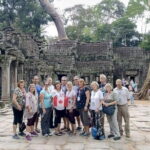
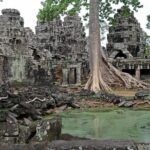
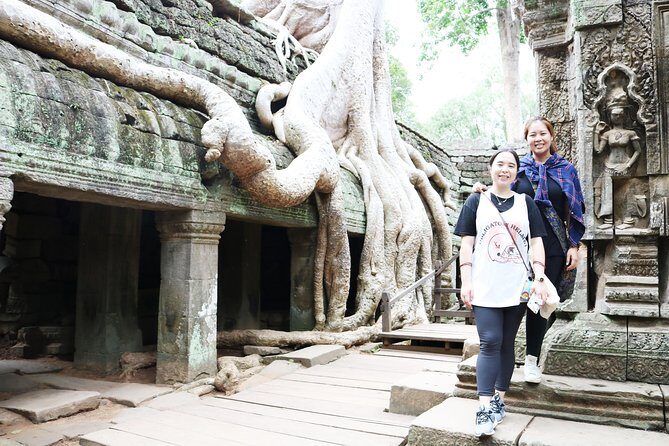
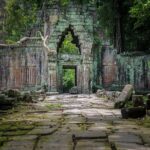
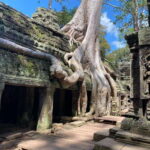
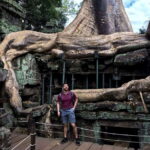
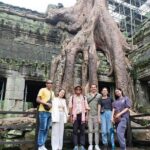
Ta Prohm is the “cinema look” stop, and the tour sets it up well. It’s a temple set in the midst of the jungle, where you can wander the maze-like ruins and see fig trees that threaten to overtake the edifice.
That mix—manmade stone and living roots—makes Ta Prohm different from the more formal feeling of other temple areas. It’s less about strict symmetry and more about textures, angles, and the way nature grabs space.
You’ll have around 2 hours at Ta Prohm, so it’s long enough to do a calm circuit rather than a sprint. It’s also a good moment to slow your photos down and actually look at details: tree trunks, broken stones, and how people’s paths flow around the ruins.
One thing to watch: jungle-temple areas can feel hotter and more buggy. You’ve got insect repellent on your packing list for a reason, so use it.
Angkor Wat Lunch Stop: Where the Day’s Scale Peaks
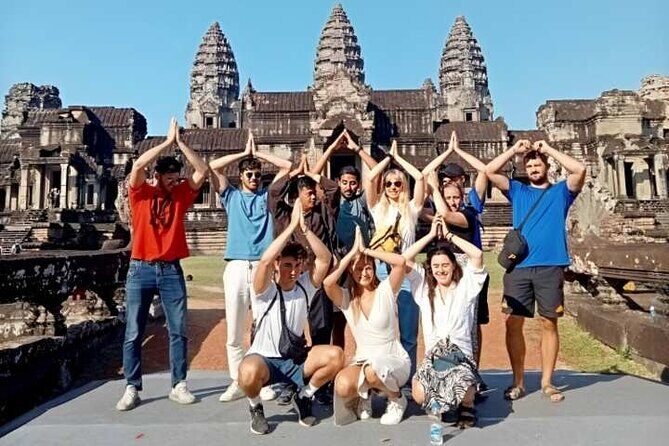
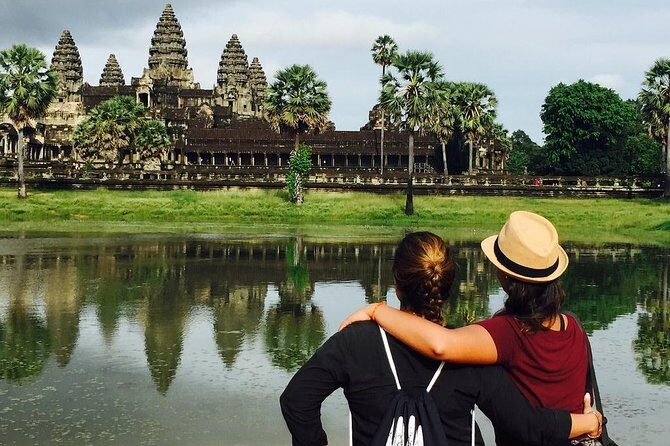
After Ta Prohm, the tour moves you on to Angkor Wat for lunch and temple time. Angkor Wat is described as the world’s largest sacred building and an architectural masterpiece. It was built in the 12th century and took 30 years to build, which gives you a strong anchor for how much effort went into the place.
You also visit from the eastern side, which can change the vibe of your first views. It’s often easier to appreciate a massive site if you start on a side that gives you a sense of the grounds first, then work toward the focal structures.
About lunch: the tour specifically frames Angkor Wat as the place you enjoy lunch, but the provided inclusions don’t list a lunch ticket. So I recommend treating lunch as an on-site plan rather than assuming it’s fully covered. If your guide confirms lunch is arranged, great. If not, you’ll still have time to eat and reset.
The best use of the Angkor Wat time is to combine big-picture moments with one or two “micro” observations. Pick one area to study, then walk out to compare the view from farther back. That’s how a place this large stays memorable.
Terrace of the Elephants and Banteay Kdei: Quick Passes That Add Variety
Along the way, you’ll pass by major stops including the Terrace of the Elephants and Banteay Kdei. You won’t necessarily get long dwell time at these spots like you do at Angkor Thom, Ta Prohm, or Angkor Wat, but the quick look is still valuable.
Here’s why: Angkor can feel like one giant blur if you only hit the headline names. Adding even short passes lets you break up the day with different architectural moods. Terrace of the Elephants is named in the tour as a highlight to see along your route, and Banteay Kdei is another anchor that helps round out the picture beyond the biggest icons.
Treat these as “bonus chapters.” You’re not trying to master them in minutes. You’re giving yourself enough sight to say, yes, I saw that too, and now the larger Angkor story makes more sense.
Pre Rup Sunset: The Finish That Changes Everything
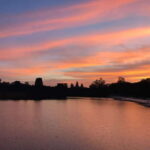
The day ends with a relaxing sunset at Pre Rup. This is the kind of finale that turns temple walking into an evening event. Instead of rushing out after your last major sight, you get a natural closing time when the light shifts and the crowds (if any) tend to thin into people waiting for the sky.
Sunset spots reward simple planning. Arrive with your camera ready, but also take a moment with your eyes first. The best photos usually happen after you’ve registered the space: the angle, the distance, and where the light hits.
Because you’re finishing the day this way, you also get a built-in emotional payoff. You’re not only accumulating sights; you’re ending on a sensory memory.
Dress Code, Packing, and the Small Things That Save the Day
This tour requires respectful dress: shoulders and knees covered. Shoulders are meant to be covered with a scarf, not left bare, and knees should be covered too. In practice, I’d bring a light scarf even if you think you won’t need it. Temple dress rules are strict enough that “almost right” won’t cut it.
You’ll also want:
- sunglasses and a hat for sun glare
- a camera (obviously)
- comfortable walking shoes for uneven temple ground
- mosquito or insect repellent
Also, bring water awareness. Mineral water is included, which helps, but you’ll still want to pace yourself during hot stretches.
The Real Value: English Guidance and a Professional Driver Setup
What makes this tour feel worth your time is the human team behind it. It’s a private tour restricted to your group, and it includes a licensed and experienced English-speaking guide plus a driver to manage the trolley transfers.
The tour reviews highlight a consistent pattern: guide explanations in clear English, and drivers who handle the route and timing well. Names that show up in positive feedback include guide Sok Chea, Sak, Phal, and Chhay, with drivers mentioned such as Pa and Samnang/Lucky. Even if you don’t get the same exact team, the key point for you is the skill level: people are praising both the storytelling and the practical handling of the day.
That’s a big deal at Angkor. Stone doesn’t explain itself. When the guide can connect what you’re seeing to why it was built and how the sites relate, the temples stop being random. They become a route with meaning.
Who This Tour Is Best For (and Who Might Want a Different Fit)
This tour is a strong match if you want:
- a full Angkor day without planning tickets and routing yourself
- guided time at major sites like Angkor Thom, Bayon, Ta Prohm, and Angkor Wat
- a sunset payoff at Pre Rup
- hotel pickup and drop-off to make the day easier
It’s also a good choice if you prefer a private-group feel rather than a chaotic crowd experience. Even though the tour can include group discount structure, it’s described as private and restricted to your group, which tends to make the day feel more manageable.
If you’re traveling with very young kids, have mobility limits, or want an ultra-relaxed day with minimal walking, you might find it tiring. The day is built around moving through several temple areas and spending real time at each stop.
Should You Book This Full Day Angkor Park With Sunset?
I think you should book it if you want an efficient, guide-led Angkor day with authentic trolley transport and a sunset ending that feels like a real event. The price is reasonable for a guided route, and the included basics—pickup/drop-off, mineral water, and licensed English guidance—add real value once you’re in the heat and walking shoes come out.
I’d hesitate only if the $37 temple pass would stretch your budget, or if you want fewer stops. This tour is designed for people who are ready to see multiple Angkor highlights in one day.
If you’re on the fence, make your decision based on one question: do you want the temples organized for you, with a proper guide explanation and a sunset finish? If the answer is yes, this tour is a solid pick.
FAQ
What time does the tour start?
It starts at 9:00 am.
Is hotel pickup and drop-off included?
Yes. Hotel pickup and drop-off are included.
Is the temple entrance fee included in the $41 price?
No. The temple pass is not included and costs $37 per person, paid directly at the sites.
How long is the full-day tour?
It lasts about 9 hours.
What should I wear to visit the temples?
You’ll need respectful clothing that covers shoulders and knees. Shoulders should be covered with a scarf, and bare shoulders aren’t allowed.
What should I bring for the day?
Bring sunglasses, a hat, a camera, comfortable walking shoes, and mosquito or insect repellent.