REVIEW · SIEM REAP
1-Day private Angkor Temple Tour by Tuk Tuk from Siem Reap
Book on Viator →Operated by Journey2 Angkor · Bookable on Viator
Angkor in one long, smart day. This private 8-hour tuk tuk tour is built for flexibility, so you can slow down for photos or speed up when paths are clear. I really like the agility of a real tuk tuk day plan in a place that’s huge, plus the comfort touches like bottled water and cold towels in a clean ride.
One thing to plan for: the Angkor Wat entrance fee isn’t included, and you’ll need to handle the e-ticket (your guide sends the link in advance). For a smooth day, that’s the only extra step that can catch people off guard.
In This Review
- Key things I’d prioritize on this tour
- Why a private tuk tuk day works so well in Angkor
- Before you go: tickets, dress rules, and walking comfort
- The Angkor Wat approach: eastern entry and the bas-relief story walk
- Angkor Thom South Gate to Bayon: the face towers of Jayavarman VII
- Baphuon, Phimeanakas, and the Royal Palace enclosure maze
- Terrace of the Leper King and Terrace of the Elephants: two classic walk-throughs
- The brief Angkor Thom stops: a guide-led less-crowded pace
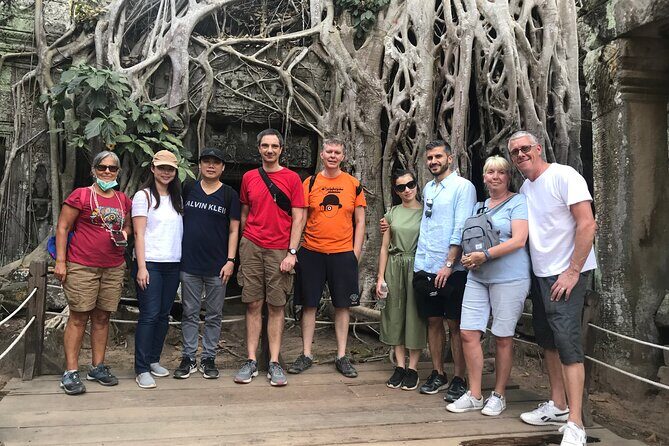
- Ta Prohm: the Tomb Raider temple in the late-day light
- Lunch time inside the temple area and staying cool for the next walk
- Price and what $30 really buys you in a private tuk tuk day
- Who this tour suits best
- Should you book this 1-Day private Angkor tour?
- FAQ
- How long is the private Angkor Temple Tour?
- Is this tour private or shared?
- What’s included in the $30 per person price?
- Is the Angkor Wat entrance fee included?
- Are there tickets needed for the other temples?
- Do I need to buy tickets in advance?
- What should I wear to enter the temples?
- What is the cancellation window for a full refund?
Key things I’d prioritize on this tour
- Eastern-side entry at Angkor Wat: fewer people, more time to get oriented, and a guided route that feels less obvious.
- A full Angkor Thom loop with face towers: you move through the South Gate and Bayon with the kind of rhythm that helps everything sink in.
- Terraces you can actually picture: Elephant Terrace as a giant viewing stand, plus the Terrace of the Leper King.
- Ta Prohm with trees growing through ruins: the Tomb Raider temple is the atmospheric payoff later in the day.
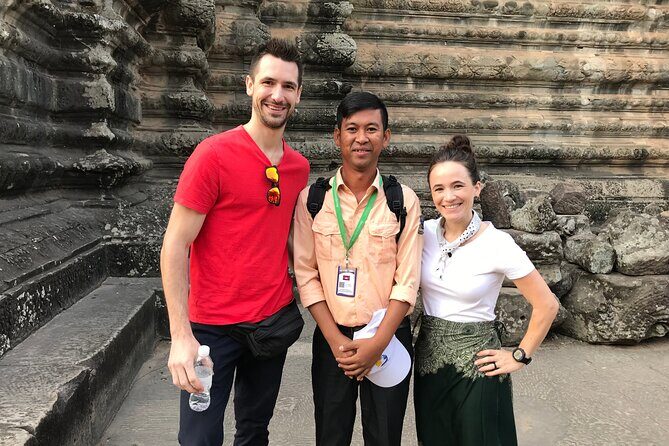
- Private pacing with a guide who explains: you’re not just passing stops; you get the stories behind what you’re seeing (hello, Sim).
Why a private tuk tuk day works so well in Angkor
Angkor is not a place you “power through.” It’s a place that rewards good timing and a guide who helps you read what you’re looking at. With a private tuk tuk, you can choose when to take the next stretch on foot and when to catch your breath, especially when heat and crowds start to build.
The big win is pacing. Many temple days feel like a checklist. This one feels more like a guided walk where the tuk tuk takes the strain between key areas, then you spend real time inside the temples where details matter.
And if you value comfort, this is one of the more practical options: the ride is described as clean and set up for sightseeing, with bottled water and cold towels during the day. That’s not luxury for show. In Siem Reap heat, it helps you stay focused instead of wiped out.
You can also read our reviews of more private tours in Siem Reap
Before you go: tickets, dress rules, and walking comfort
You’ll want to think about two practical things before you arrive.
First, Angkor Wat admission is not included. Your guide sends a link to purchase the Angkor Wat e-ticket a few days in advance. For other stops on the day, admission is listed as free, but you still need the Angkor Wat ticket.
Second, bring the right clothes. To enter some temples, you’ll need outfits that cover knees and shoulders. The good news is that the guidance is simple: casual clothing works as long as it meets the rule.
Finally, wear flat, comfortable shoes. You’ll do walking on uneven paths and inside temple compounds, and you don’t want sore feet to ruin the photos.
The Angkor Wat approach: eastern entry and the bas-relief story walk
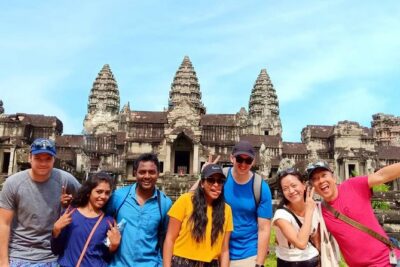
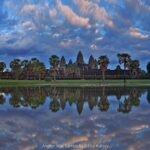
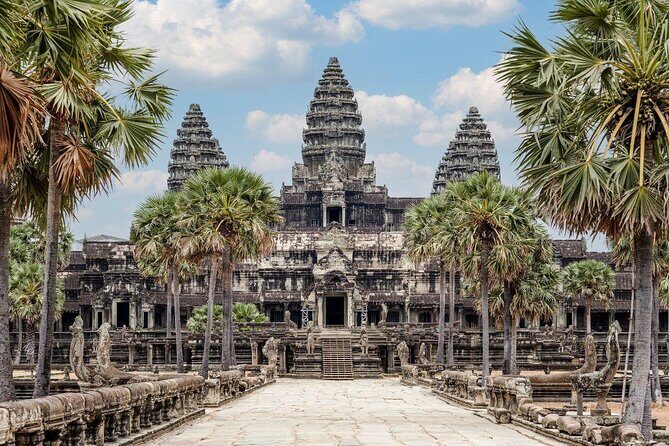
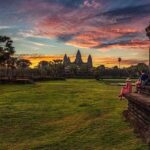
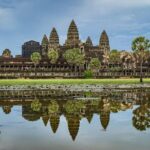
Angkor Wat is the main event, and this tour starts with a smart twist: you enter from the eastern side, described as the little-visited route. That matters because Angkor can feel overwhelming. A less common entry helps you get your bearings before you’re swallowed by the busiest viewing circuits.
From there, you continue on foot through a jungle path toward the North ancient library pool. That short “transition” walk does two things for you: it cools your brain a bit before the big stone reveals, and it gives your guide a place to explain what you’re seeing before you hit the busiest zones.
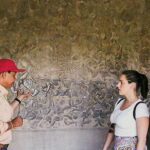
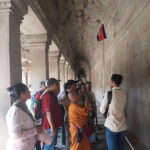
When you reach the temple’s central chambers, the focus turns to the stone carvings. The day is framed around the bas-reliefs, including the note that this is the longest stretch of bas-relief carvings in the world. Practically, that means you’re not just photographing stone walls. You’ll get the history, myths, and stories shown in the carvings, so your photos come with context.
Time on this stop: about 2 hours.
What to watch for: the way your guide points out details that are easy to miss when you’re rushing.
Angkor Thom South Gate to Bayon: the face towers of Jayavarman VII
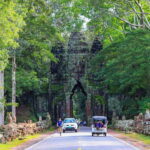
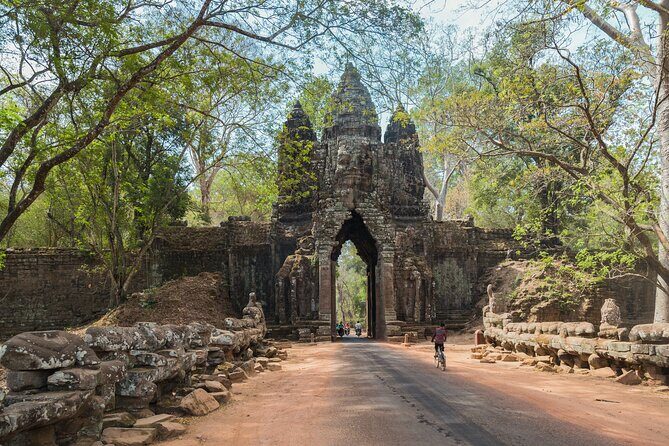
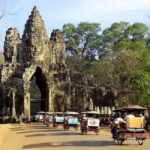
After Angkor Wat, you shift into Angkor Thom territory. The South Gate of Angkor Thom is where the fortified city’s entrance starts to feel real: rows of stone figures line both sides. The scale is part of the story too, since Angkor Thom at its height held more than one million people and was described as larger than the city of London.
This stop is brief at about 20 minutes, and that’s exactly why it works. It gives you a dramatic entry point into the next zone without eating the whole morning.
Then comes Bayon, built in the 13th century as the state temple of King Jayavarman VII. Bayon’s star feature is the multitude of serene smiling stone faces on the towers, with more than 200 enormous faces noted across the complex. This is one of those sights where your brain keeps trying to understand geometry from every angle. A guide helps you see where the faces sit relative to the layout.
You’ll also spend time with the temple galleries where two sets of bas-reliefs show mythological, historical, and everyday scenes. That combination is important. It keeps Bayon from feeling like a single style of decoration. It’s more like a visual book.
Time on this stop: about 50 minutes.
Practical tip: keep your camera ready, but let your guide finish an explanation before you start snapping. Bayon rewards a second look.
Baphuon, Phimeanakas, and the Royal Palace enclosure maze
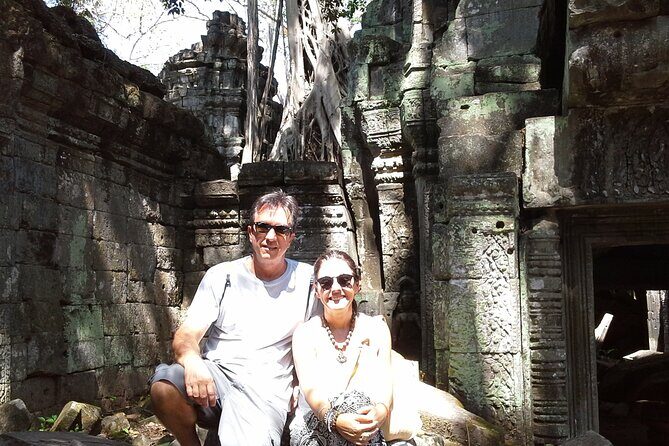
Once you’re inside the Angkor Thom area, the day gets more layered.
Baphuon sits northwest of Bayon and is described as a three-tiered temple mountain. It’s dated to the mid-11th century, and it adjoins the southern enclosure of the Royal Palace. The tour ties Baphuon to how it might have impressed later visitors, including a record of an envoy describing Bayon as the Tower of Gold and Baphuon as the Tower of Bronze. It’s the kind of detail that makes a pile of stones feel connected to people and time.
Time on this stop: about 40 minutes.
What you’ll likely notice: the temple-mountain shape, plus the way it fits into the larger Royal Palace setting.
Next is Phimeanakas, also spelled in the tour as Phimeanakas or Vimeanakas. This is the celestial temple built toward the end of the 10th century, then completed under Suryavarman I. You’re told it sits inside the walled enclosure of the Royal Palace of Angkor Thom, built as a Hindu temple with a three-tier pyramid form and a tower on top. The tour also mentions galleries along the top platform.
Time on this stop: about 35 minutes.
Even if you’re not a Khmer history expert, this stop is valuable because it shows how the royal palace area functioned as a religious and symbolic center, not just a residence.
You can also read our reviews of more tours and experiences in Siem Reap
Terrace of the Leper King and Terrace of the Elephants: two classic walk-throughs
Two of the most memorable stops come as you move along the ceremonial spaces.
Terrace of the Leper King is U-shaped, built in the 13th century under Jayavarman VII. The tour notes that the modern name comes from a 15th-century sculpture found there, depicting the Hindu god Yama (god of death). Even if the nickname comes from later interpretation, the site itself is clearly royal and ceremonial, and your guide’s explanation helps you see why it was worth building into a statement space.
Time on this stop: about 30 minutes.
Then there’s Terrace of the Elephants, a long (about 350 m) reviewing stand used for public ceremonies and described as serving as a base for the king’s grand audience. The tour adds a locally used nickname: the Ancient Khmer Stadium. That comparison isn’t official, but it helps you imagine people gathering and watching from the same built-in line of sight.
Time on this stop: about 30 minutes.
These two terraces work well in sequence because they feel like different “roles” of royal power. One is tied to a named religious figure, the other to public ceremony and spectacle.
The brief Angkor Thom stops: a guide-led less-crowded pace
Not every part of Angkor is about hitting the biggest postcard angles. This day includes a couple of short stops inside Angkor Thom that are described as places most tourists don’t often see, plus another “secret” stop that exists to set the tone for the adventure.
Even though the time is short (about 10 minutes each), these micro-stops can be meaningful. They give you a break from the heaviest foot traffic and the brightest scramble-for-views energy. They also let you reset your eyes and camera settings before Ta Prohm later on.
What I like about this approach is that it respects the reality that Angkor days can turn into stress if you’re constantly chasing the next crowd line. Tiny pockets of quieter space make the big moments feel bigger.
Ta Prohm: the Tomb Raider temple in the late-day light
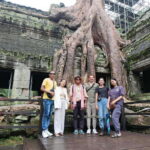
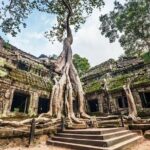
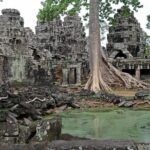
If Angkor Wat is the formal masterpiece, Ta Prohm is the atmospheric payoff. This is the jungle-enveloped temple where trees grow into the ruins, making it one of the most photogenic temple complexes in Cambodia’s Angkor region.
The tour frames it clearly: Ta Prohm was built in the 13th century, and it’s known for remaining in much the same condition it was found. That’s why it feels more like a living ruin than a restored monument. UNESCO inscribed it on the World Heritage List in 1992, and your guide will steer you through what to look for so you don’t just photograph the same tree-and-stone angles everyone already knows.
Time on this stop: about 1 hour.
Photo strategy: plan on walking a little slower here than you think. The best frames often come after you’ve seen the structure from two different paths.
This stop is also timed as part of the afternoon. In practical terms, late-day pacing usually helps your experience feel less rushed than a full-morning sprint. You can watch the compound change as shadows shift across stones and roots.
Lunch time inside the temple area and staying cool for the next walk
Angkor can turn into a dehydration contest if you don’t plan breaks. This tour includes lunch with cold drinks at a local restaurant in the temple complex area. That’s a useful inclusion because it reduces the need to leave the circuit entirely and scramble for food in traffic.
The “cold drinks” detail matters more than it sounds. When you’ve been walking and standing in heat, that little pause is what keeps you sharp for Ta Prohm.
Also, since your transport is private, lunch doesn’t have to become a major time sink. You can eat, cool down, and then continue without turning the afternoon into a long transit shuffle.
Price and what $30 really buys you in a private tuk tuk day
At $30 per person, this tour looks like good value if you want a real private day with a guide rather than a crowded group circuit. The included items are the core cost drivers for most temple tours:
- English-speaking guide
- Private vehicle in a tuk tuk
- Hotel pickup and drop-off
- Bottled water
Then there’s the most important caveat: Angkor Wat’s entrance fee isn’t included. So think of the $30 as covering the guided day and transportation, with Angkor Wat entry as the separate add-on you’ll pay via e-ticket.
There’s also mention of group discounts, which can be useful if you’re traveling with friends or family and want to keep the tour private without paying a premium for everyone.
One more value angle: this itinerary is built around multiple major stops in one day, including Angkor Wat, Angkor Thom South Gate, Bayon, Baphuon, Phimeanakas, two terraces, and Ta Prohm. When you spread the cost across the number of meaningful temple visits, the price feels more sensible than it would for a short “drive-by” tour.
Who this tour suits best
This is a strong fit if:
- you want a guided, story-led day and not just photos
- you’re short on time and want to cover the key Angkor sights in one go
- you’d rather avoid the stress of crowd bottlenecks through private pacing
- you care about comfort details like cold towels and a clean ride
It may be less ideal if you want a totally DIY day with no guide, or if you hate the idea of handling Angkor Wat’s separate e-ticket in advance.
Should you book this 1-Day private Angkor tour?
I’d book it if you want the classic temples with an actual plan and a guide who helps you see what matters. The private tuk tuk setup plus the time allocation for Angkor Wat, Bayon, and Ta Prohm makes it feel like a complete day rather than a rushed highlights reel.
Before you click confirm, just make sure you’re ready for the one extra step: Angkor Wat entry is separate and you’ll need to get that e-ticket through your guide. If that’s no big deal for you, this tour looks like a smart way to enjoy Angkor without losing your day to confusion, heat, or crowded chaos.
FAQ
How long is the private Angkor Temple Tour?
The tour lasts about 8 hours.
Is this tour private or shared?
It’s private. Only your group participates.
What’s included in the $30 per person price?
Included are an English-speaking guide, a private vehicle in a tuk tuk, hotel pickup and drop-off, and bottled water.
Is the Angkor Wat entrance fee included?
No. The Angkor Wat entrance ticket is not included.
Are there tickets needed for the other temples?
For the other listed stops, the admission ticket is marked as free.
Do I need to buy tickets in advance?
Yes. Your tour guide sends a link to purchase the temple entrance e-ticket days in advance.
What should I wear to enter the temples?
You may need clothes that cover your knees and shoulders for some temples. Flat shoes are recommended for walking.
What is the cancellation window for a full refund?
You can cancel up to 24 hours in advance for a full refund.