REVIEW · SIEM REAP
The Ultimate Angkor Wat Temple Private Day Trip
Book on Viator →Operated by Withlocals · Bookable on Viator
Angkor feels different when it’s private. This is a private day trip that trades the bus crowd and one-size-fits-all audio for a local guide, a tuk-tuk ride, and a temple route that keeps you moving at human speed. You’ll hit the big names—Angkor Wat, Bayon, and Ta Prohm—plus get context for what you’re actually seeing, not just where to stand.
Two things I like right away: the local tuk-tuk transport keeps the day comfortable and flexible, and the guides (including names like Long and Leap) are clearly good at pacing and explaining in a way that works even if your group includes teens. One thing to watch: it’s a 7-hour temple day, so you’ll want to plan for heat, walking, and no lunch being included.
In This Review
- Key highlights you’ll actually feel
- Why This Angkor Wat Private Day Trip Feels Less Like a Factory
- Tuk-tuk Pickup and the Role Your Guide Plays
- Stop 1: Angkor Wat With Bas-Reliefs That Actually Make Sense
- Stop 2: Bayon Temple’s South Gate and the Causeway of Stone Faces
- Stop 3: Ta Prohm, Where Trees Take Over the Stone
- Time, Comfort, and What to Pack for a 7-Hour Temple Day
- Price and What $64.03 Really Buys You
- Booking Notes That Affect Your Day (Without the Paperwork Headache)
- Should You Book This Angkor Wat Private Day Trip?
- FAQ
- How long is the Ultimate Angkor Wat Temple Private Day Trip?
- How much does the tour cost?
- Is pickup and drop-off included?
- Is this tour private?
- What temples do you visit?
- Is lunch included?
- Are entrance fees included?
- What form of ticket do I get?
- Is the tour carbon neutral?
- Is free cancellation available?
Key highlights you’ll actually feel
- Small-group experience: only your group participates, so you get fewer delays and more room to ask questions.
- Tuk-tuk touring: you get around the Angkor area by local vehicle, with pickup and drop-off handled.
- Three top temples in one day: Angkor Wat (2 hours), Bayon (3 hours), Ta Prohm (2 hours).
- Bas-relief and symbol focus: you’ll get pointed interpretations while you look up at the carvings.
- Carbon-neutral tour option: the tour is listed as carbon neutral.
- Mobile ticket + group discounts: handy for planning, especially if you’re booking for more than one person.
Why This Angkor Wat Private Day Trip Feels Less Like a Factory

Angkor can be loud. Tour groups show up in waves, everyone lines up at the same spots, and the whole day starts to feel like moving through rooms rather than understanding them. This private format flips that. You’re not waiting on a bus schedule, and you’re not stuck listening to generic explanations that don’t match your pace.
The big value here is the combination of private guiding and tuk-tuk transport. A guide can answer the questions you actually have in the moment, like what those repeating patterns mean or why certain spaces are arranged the way they are. And the vehicle makes it easier to shift timing if the light or crowd level changes—something that matters a lot at Angkor.
You also get a route that makes sense for a single day. You start with Angkor Wat, move on to Bayon, then finish at Ta Prohm, which is the most atmospheric stop and often the one people want to linger at.
You can also read our reviews of more tours and experiences in Siem Reap.


Tuk-tuk Pickup and the Role Your Guide Plays
A good Angkor day needs three things: timing, clarity, and comfort. The pickup and drop-off remove the stress of getting organized at the start, and the tuk-tuk keeps the day from turning into a long, exhausting scramble between gates and parking areas.
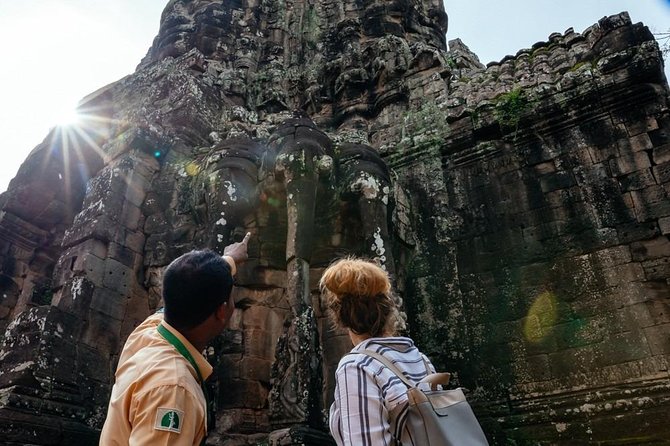
Then there’s the guide—this is where the day either feels like a check-list or like an actual experience. With a private guide, you can slow down when something grabs you. You can also speed up if your group is ready to keep moving. In particular, the guides associated with this tour style are often praised for communicating well and making the ride portion feel like part of the day instead of dead time.
If you’re traveling with mixed ages, this setup helps more than you’d think. One guide name that came up is Leap (pronounced with two syllables), described as friendly and effective at keeping attention. That matters because Angkor can be visually overwhelming at first. A guide can help your group go from overwhelmed to oriented fast.
Stop 1: Angkor Wat With Bas-Reliefs That Actually Make Sense
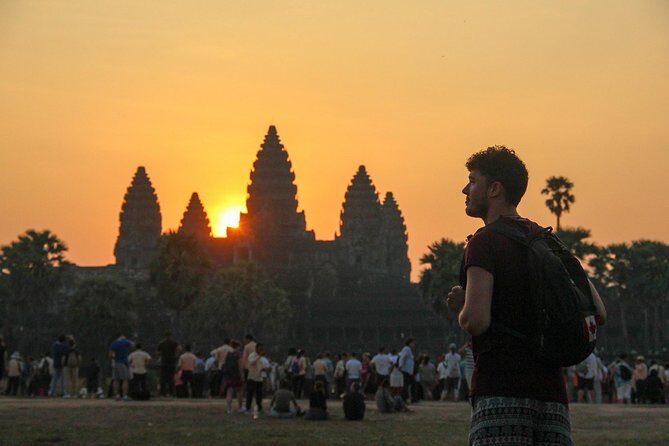
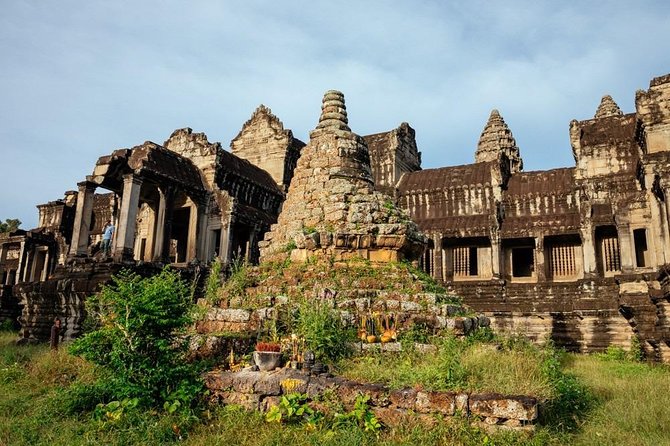
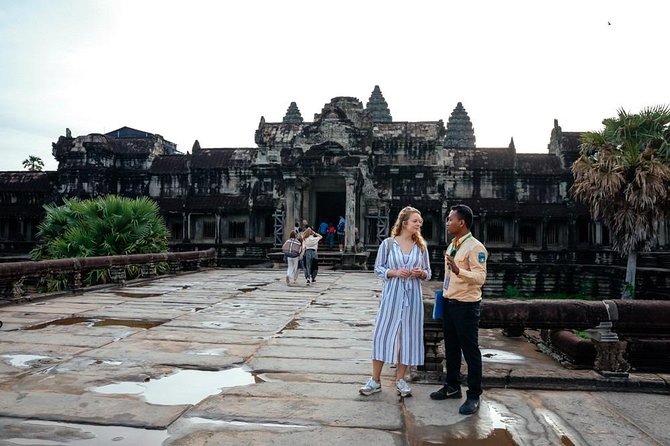
Angkor Wat is the headliner for a reason. The moment you arrive, your eyes keep grabbing for details—carvings, layers, symmetry, and the way the whole complex feels engineered to guide your gaze.
This stop gives you about 2 hours, which is a solid window for understanding the key ideas without rushing. The focus isn’t just looking at the structure. You also get help interpreting the intricate bas-relief carvings and the symbols used across the temple spaces. That’s the difference between seeing decoration and understanding messaging.
Practical takeaway: don’t treat your time here like a photo hunt only. Use the guide’s interpretation to pick a few themes—symbol shapes, repeated motifs, and the logic of how scenes are laid out. When you know what to look for, the carvings start to feel like a story you can read instead of random patterns.
One consideration: Angkor Wat is a high-demand site. Even with a private format, you’ll still be in a popular place. So bring the right mindset—go for meaning over speed. You’ll likely enjoy it more.
Stop 2: Bayon Temple’s South Gate and the Causeway of Stone Faces
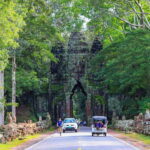
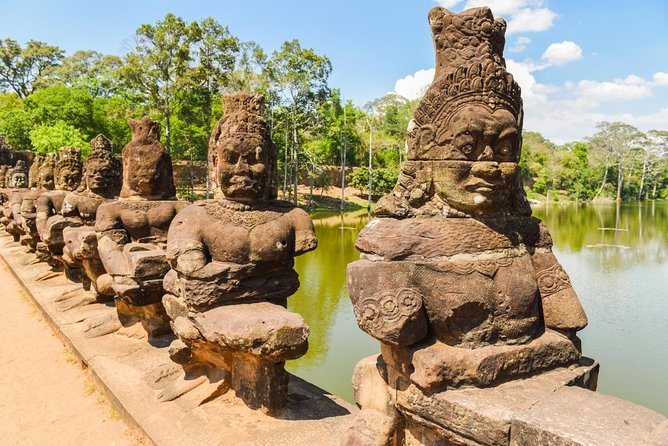
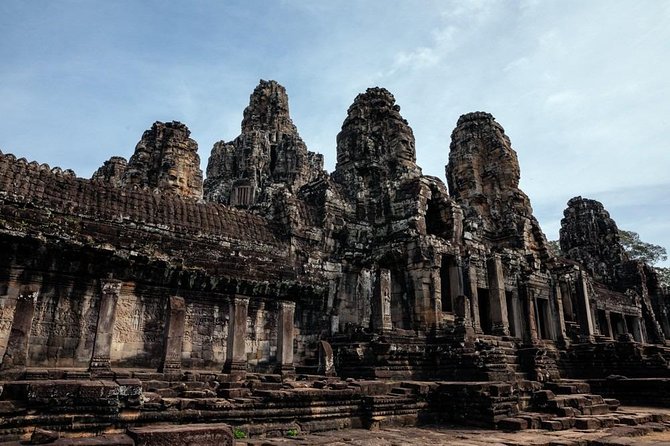
Bayon is where Angkor gets its face—literally. The south gate of Angkor Thom city frames huge statues, and the approach builds anticipation with a long causeway.
You’ll spend around 3 hours here, which is generous compared to many quick itineraries. That extra time matters because Bayon is visually dense. The famous stone faces are the draw, but the structure around them—the towers, the layout, and how the causeway feeds you into the experience—also deserves attention.
A standout feature at this stop is the causeway flanked by rows of 54 stone figures on each side. That kind of detail is exactly what a guide can point out in a way you’d likely miss on your own. When you know that there are specific figures lining the route, your walk becomes part of the temple’s meaning instead of just a path between viewpoints.
Another plus: Bayon often feels like a balance between iconic and readable. It has the drama people come for, but it’s also a great place to understand how the temple complex functions as a designed environment.
What to watch: 3 hours can sound like a lot, but it’s the right amount if your group wants to slow down. If your group has very limited patience for walking, you may need to pace yourselves inside. That’s where private guiding helps—you can manage energy, rather than being dragged along at the same tempo as everyone else.
Stop 3: Ta Prohm, Where Trees Take Over the Stone
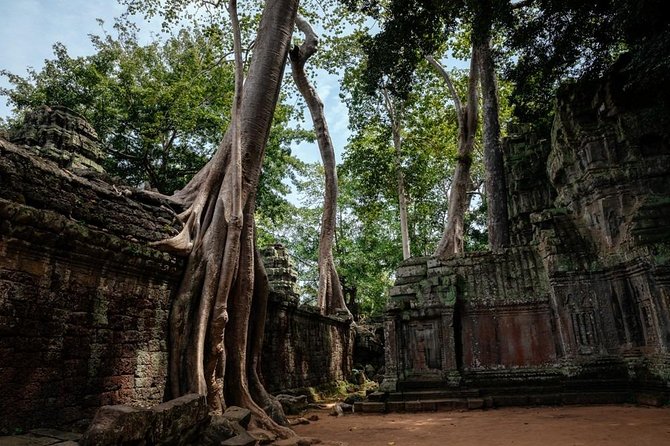
Ta Prohm is the temple most people recognize, even if they can’t name it. The “jungle temple” feel comes from the way trees grow around and through the ruins, giving the whole place a sense of time folding onto itself.
This stop is about 2 hours, and it’s a good length for soaking in the scene without burning out. Ta Prohm is atmospheric in a way that doesn’t require a lot of explanation to appreciate. But with a guide, you can go beyond the wow-factor and understand how the space works—the contrast between carved stone and living growth, and why this site reads so differently than Angkor Wat and Bayon.
Practical takeaway: aim to move slower here. Ta Prohm tends to be where you’ll want to stop more often, look up more often, and take in small moments—roots, stone edges, and the way the trees shape your viewpoint. A guide’s role becomes less about facts you memorize and more about helping you notice what matters.
One small consideration: because it’s a more atmospheric setting, it can feel hotter or more humid in the moment than you expect. Plan for water and comfortable shoes. Even if you’re not sprinting, you’ll still be on your feet.




Time, Comfort, and What to Pack for a 7-Hour Temple Day

A 7-hour day in Angkor is doable, but it’s not a sit-and-see activity. You’re visiting three sites, with tuk-tuk rides between them, and you’ll spend real time walking and standing.
The tour lists a moderate physical fitness level for travelers. Translation: you don’t need to be an athlete, but you should be comfortable with uneven terrain, steps, and steady movement under sun. If your group includes anyone with mobility limits, you’ll want to think ahead and decide if the pacing will work.
What helps most:
- Wear shoes you don’t mind getting dusty or scuffed.
- Bring water and plan to sip often.
- Use sun protection, even if the morning starts cool.
- Pack a small layer. Early in the day can feel different from mid-afternoon.
Also, because lunch isn’t included, you’ll want to handle that decision yourself. You can either grab something before you start, or plan a simple stop that fits your day. The key is not to assume you’ll be fed during the tour.
Price and What $64.03 Really Buys You
At $64.03 per person, this isn’t an ultra-low-cost tour, but it’s also not overpriced for what’s included. You’re paying for a private guide, local tuk-tuk transportation, and pickup and drop-off in Siem Reap. That’s a lot more than the basic tickets and a generic route.
Where the value gets interesting is how the time is structured. Two hours at Angkor Wat, three at Bayon, two at Ta Prohm. That adds up to an itinerary that doesn’t feel rushed, assuming you’re comfortable with the walking. Many bargain options try to squeeze too much into too little time, which usually turns into stress and missed details.
One potential snag is admission fees. The details you’re given show admission ticket free for each stop, but the separate “not included” note says entrance to attractions isn’t included. Since that’s inconsistent, I’d treat it as a prompt to confirm directly before you go—so you don’t arrive thinking it’s fully covered when it’s not.
Overall, the price makes more sense if you value guidance. If you’re the type who enjoys asking questions and getting pointed interpretations, a private guide is where you get your money’s worth quickly. If you only want a quick stamp-and-snap schedule, you may not feel the same payoff.
Booking Notes That Affect Your Day (Without the Paperwork Headache)
This is a private tour/activity, so only your group will participate. That can be a big deal in Angkor, where crowds can otherwise force you into someone else’s pace.
It’s also offered with a mobile ticket, which tends to simplify day-of logistics. You’ll also see features like group discounts, which helps if you’re traveling with friends or family and want everyone on the same schedule.
The pickup and drop-off are included, which matters because Siem Reap traffic and timing can make an “easy day” feel chaotic if you have to manage transport yourself.
Should You Book This Angkor Wat Private Day Trip?
Book it if you want a calmer, clearer Angkor day. This is a strong choice for couples, small families, and anyone who hates feeling herded. The private format plus tuk-tuk transport usually means less waiting and more flexibility—exactly what you want when you’re dealing with heat, crowds, and temples that reward slow looking.
Skip or reconsider if your group only wants the fastest route and you’re comfortable self-guiding with minimal interpretation. Also double-check the entrance fee situation before you lock it in, since the information provided is a bit mixed about whether admission is covered.
If your goal is to see Angkor and also understand what you’re seeing, this is one of the more sensible ways to do it in a single day.
FAQ
How long is the Ultimate Angkor Wat Temple Private Day Trip?
It’s listed at about 7 hours total.
How much does the tour cost?
The price is $64.03 per person.
Is pickup and drop-off included?
Yes. Guest pickup and drop-off are included.
Is this tour private?
Yes. It’s a private tour, and only your group will participate.
What temples do you visit?
You visit Angkor Wat, Bayon Temple, and Ta Prohm.
Is lunch included?
No. Lunch is not included.
Are entrance fees included?
The details mention admission ticket free for stops, but the not-included list says entrance to attractions isn’t included. I recommend confirming directly with the provider when you book.
What form of ticket do I get?
The tour offers a mobile ticket.
Is the tour carbon neutral?
Yes. The tour is listed as carbon neutral.
Is free cancellation available?
Yes. You can cancel up to 24 hours in advance for a full refund.