Siem Reap has a quieter face. This walking tour is a smart way to see the city between temple days, mixing local markets, Buddhist pagodas, the river area, and the Royal Residence gardens in one smooth loop. You’ll also get stories and context from a local guide, so what you’re looking at makes sense fast.
Two things I like a lot: the stops are practical and close together, and you get to spend real time in everyday places like Psar Chaa (Old Market) and active worship sites rather than only photo spots. I also appreciate that it’s small-group (max 15), which keeps questions from turning into a shuffle.
One thing to consider: this experience depends on good weather. If rain shows up, the tour may be moved or refunded, so plan your schedule with a little flexibility.
In This Review
- Key Things to Know Before You Go
- A City-Walk That Shows Siem Reap Between Temple Days
- Meeting at Hard Rock Cafe Angkor, Then Sliding Into Old Market Life
- Stop 1: Psar Chaa (Old Market) for Fruits, Street Food Energy, and Pub Street at Daytime
- Watch for
- Stop 2: Wat Preah Prom Rath for an Active Pagoda and Everyday Spiritual Life
- What to focus on
- Stop 3: Siem Reap Riverside Park for Shade, River Meaning, and Bridges You Can Actually See
- Practical note
- Stop 4: Preah Ang Chek Preah Ang Chom for a Sacred Shrine and a Story Tied to Two Princesses
- Watch for
- Stop 5: Royal Residence Gardens for Photos, Final Notes, and an Easy Ending Point
- Price and Value: Why $15 Can Make Sense for a 2.5-Hour Local Walk
- Group Size, Personal Attention, and Why It Matters for Learning
- How This Tour Fits Your Schedule (and Who It’s Best For)
- A Quick Decision Guide: Should You Book This Walk?
- FAQ
- FAQ
- How long is the Siem Reap walking tour?
- What does the $15 price include?
- Where does the tour start and where does it end?
- Is food included during the tour?
- Are entry fees included for the stops?
- Is this tour a small group?
- Do I need a paper ticket?
- What happens if weather is poor?
Key Things to Know Before You Go
- Small-group size (max 15) keeps it personal enough for questions
- Five focused stops cover markets, pagodas, the river, and royal grounds
- Free admission at each listed stop helps keep the total cost down
- Local English-speaking guide provides stories and insider recommendations
- Ends near the Royal Independence Gardens, handy for lunch and easy transport onward
- Mobile ticket makes check-in straightforward
A City-Walk That Shows Siem Reap Between Temple Days
Angkor temples are the headline. But Siem Reap is also streets, stalls, prayers, and riverside paths—stuff you miss if you only do day tours out of town. This walk leans into that in a very doable way: it’s 2 hours 30 minutes, it’s on foot, and it’s built around places locals actually use.
The route is also designed to keep you moving without feeling rushed. You’re not bouncing from monument to monument all day. Instead, you’ll pause at several meaningful stops—starting in the Old Market area and ending at the Royal Residence gardens—so you leave with a better sense of how the city works.
And since it’s a small-group format, the guide can adjust their pacing a bit. That matters in a place like Siem Reap, where the atmosphere changes by time of day and street corners can surprise you.
You can also read our reviews of more walking tours in Siem Reap
Meeting at Hard Rock Cafe Angkor, Then Sliding Into Old Market Life
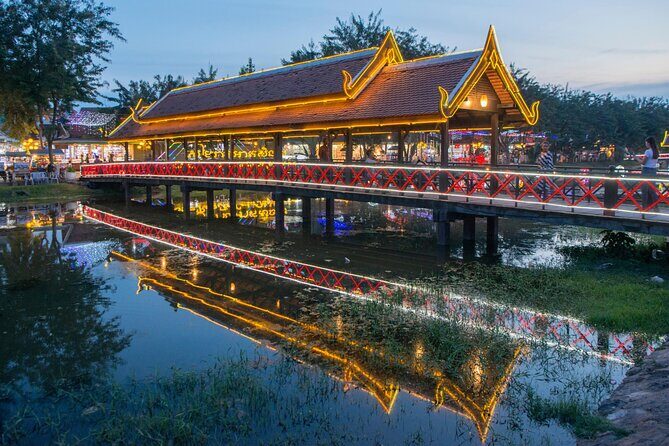
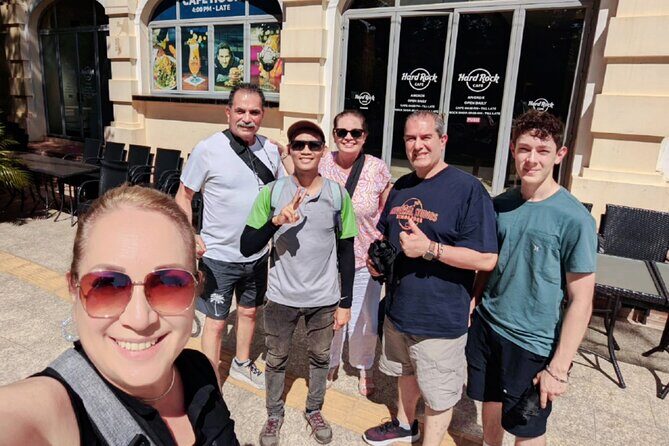
You start at Hard Rock Cafe Angkor on King’s Road Angkor, Street 7 Makara, at/near the Old Market Bridge. That’s a useful meeting spot because it’s central in the area where many visitors naturally wander. There’s no hotel pickup, so you’ll want to meet there under your own steam or via whatever public transport you’re already using.
The tour ends at the Royal Independence Gardens near the Royal Residence. This is a smart finish point because it gives you options right away: you can continue exploring around the palace area, head for lunch in the central zone, or grab a tuk-tuk without having to backtrack.
One practical bonus: you’ll use a mobile ticket, so you’re not digging through paper while you’re trying to find your group.
Stop 1: Psar Chaa (Old Market) for Fruits, Street Food Energy, and Pub Street at Daytime
Your first stop is Psar Chaa, the Old Market area. This is the commercial heart of the city, and it’s the kind of place where you start seeing daily life clearly. You’ll wander through the market streets and the guide points out things like local fruits and street food stalls.
What I like about opening here is the way it sets your mindset for the rest of the tour. Markets aren’t just shopping. They’re information. They show what people eat, how they talk to each other, and what’s traded regularly. Even if you don’t buy anything, the atmosphere gives you a baseline for understanding the city.
You’ll also see the Pub Street area. The key detail is that during the day it’s quieter than people expect. That contrast is useful: it helps you separate the daytime city from the night reputation, and it’s a good way to orient yourself for later.
Watch for
Market streets can be busy and uneven. If you’re sensitive to crowds or want photos, go a little slow and let the guide set the pace.
Stop 2: Wat Preah Prom Rath for an Active Pagoda and Everyday Spiritual Life
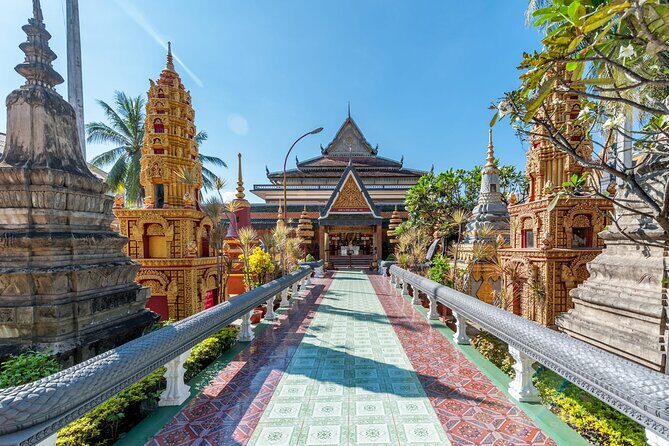
Next up is Wat Preah Prom Rath, one of Siem Reap’s beautiful and active Buddhist pagodas. You’ll take a short walk and then spend about 25 minutes exploring the colorful grounds.
This stop works because it’s not just a look-and-leave viewpoint. Your guide explains the daily spiritual life of Cambodian people, which changes the way you read the scene. Instead of seeing it as scenery, you start understanding it as routine practice—something woven into normal life.
Because it’s an active pagoda, you may notice how worship happens in real time. The guide’s context helps you avoid treating it like a museum exhibit. That respect makes the experience more meaningful, and honestly it makes the atmosphere feel warmer, not more distant.



What to focus on
Pay attention to what’s happening in the grounds while you’re there—then listen to the guide’s explanation. The story is what turns details into understanding.
Stop 3: Siem Reap Riverside Park for Shade, River Meaning, and Bridges You Can Actually See
After the pagoda, the pace shifts with Siem Reap Riverside Park. This is a shorter 5-minute segment, but it’s placed well because it gives you a break after religious-site walking.
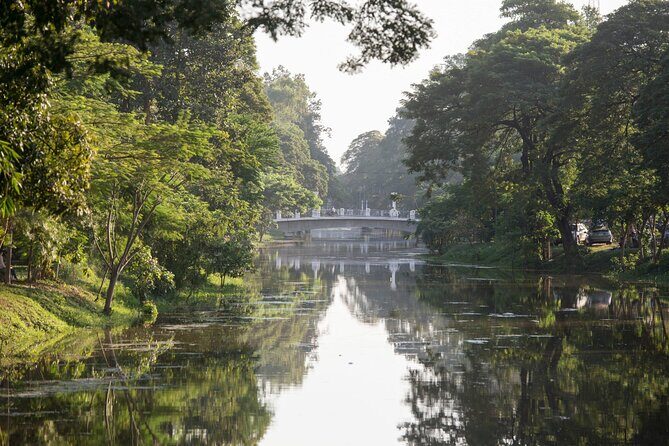
You’ll stroll along the shaded banks of the Siem Reap River. The guide shares insights into the river’s importance to the city and points out historic bridges that connect the two sides of town.
I love these “short reset” stops on walking tours. They keep your energy steady, and they help you mentally map the city. Once you see the river and understand how crossings link neighborhoods, your future wandering gets easier.
Practical note
This is the point in the tour where you’ll likely notice the weather more. Riverside parks can feel hot or humid depending on the day, which ties back to the tour’s good-weather requirement.
Stop 4: Preah Ang Chek Preah Ang Chom for a Sacred Shrine and a Story Tied to Two Princesses

Then you move to Preah Ang Chek Preah Ang Chom Temple, the tour’s most sacred local shrine stop. You’ll spend about 25 minutes here, and this is where the guide’s storytelling really matters.
The explanation you get focuses on the shrine’s powerful history and its connection to two princesses. That detail gives the stop real emotional weight. You’re not just looking at a structure; you’re learning why it matters to people living nearby.
This is the kind of place where context changes everything. Without it, you might treat it as another temple stop. With the guide’s explanation, it becomes a living point of meaning for the community.
Watch for
If you’re the type who likes to ask questions, this is a great time. The story behind the shrine is specific enough that you can follow up rather than guessing what to ask.
Stop 5: Royal Residence Gardens for Photos, Final Notes, and an Easy Ending Point
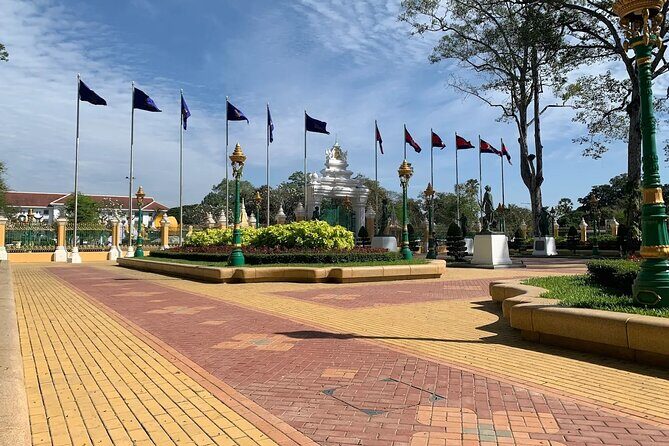
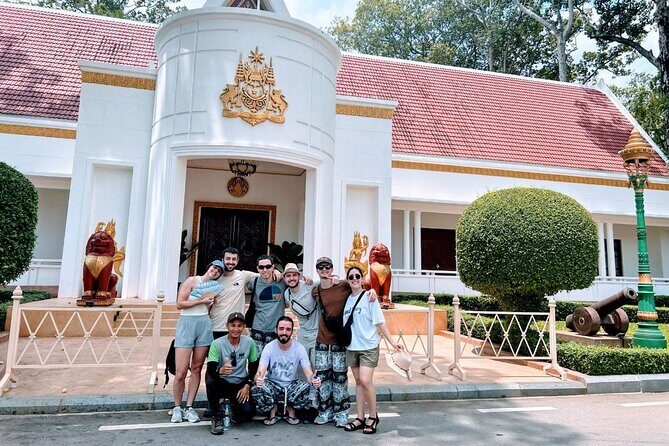
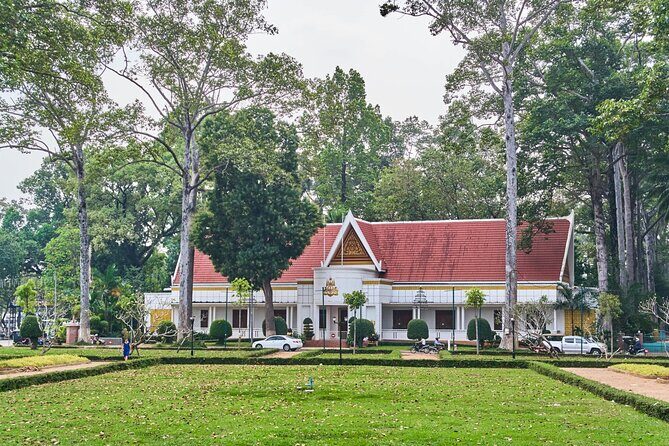
The tour ends at the Royal Residence area, in the gardens in front of the King of Cambodia’s official home in Siem Reap. You’ll have about 15 minutes here, with time for photos and final stories from the guide.
This stop gives the walk a “capstone” feeling. You’ve seen markets and daily worship. You’ve mapped the river. Now you see the ceremonial and official side of Siem Reap, framed through the perspective your guide brings.
And the ending location is useful: Royal Independence Gardens near the Royal Residence is central and easy to continue from. It’s also a better finish than ending back in the same street maze you started from.
Price and Value: Why $15 Can Make Sense for a 2.5-Hour Local Walk
At $15 per person for about 2.5 hours, this is priced like a budget-friendly way to get orientation and cultural context without stacking extra costs. What makes the value work is the mix of things you get for the price:
- A local English-speaking guide who shares history, culture, and city life context (not just directions)
- A structured route with multiple stops, not a random wander
- Small-group size (max 15), which helps you actually talk to the guide
- Free admission at the listed stops, so you’re not paying entry fees for each component
- An ending point that’s easy to use for lunch or further exploring
One more value point: the tour is often booked about 32 days in advance on average. That doesn’t automatically mean it’s better, but it usually suggests this route fits what many people want when they arrive in town and want something practical.
Group Size, Personal Attention, and Why It Matters for Learning
The maximum group size is 15, and the tour experience is clearly built around that. In real terms, it means you’re less likely to feel like you’re stuck behind the group or stuck watching the guide talk to everyone from a distance.
The best sign of quality here is what people described: the guide stays attentive, and even when the group ends up smaller, effort doesn’t drop off. One review highlighted that it turned into a private experience and the guide kept things informative and easy to follow. Another liked the relaxed pace and clear answers while getting their bearings quickly.
If you’re someone who likes to ask why something is important—rather than only what it is—this format is a good match.
How This Tour Fits Your Schedule (and Who It’s Best For)
This walk is a strong option if you want:
- A break from temple-heavy days
- A way to understand Siem Reap beyond the big ticket attractions
- A low-stress, guided loop that builds mental maps
- A cultural and city-life overview you can build on later
It also fits people who are okay doing a focused walking route with multiple stops. It’s not a long ride tour, and it’s not a slow museum shuffle. It’s a practical city walk with story stops.
If you’re traveling in a small group or solo, you’ll still get the same structure, and the guide can put more energy into you. That’s where small-group walking tours often feel better than large-bus tours.
A Quick Decision Guide: Should You Book This Walk?
Yes, if you want to understand Siem Reap in a way that’s more than souvenir streets. This tour gives you a sensible city orientation: Old Market at the start, then working pagoda life, river and bridges, a sacred shrine story, and finally the Royal Residence gardens to close.
You might skip it if you only want major sights that require longer time on site, or if your schedule can’t handle a walk that depends on good weather. But if you have a free morning or afternoon and want a guided sense of place, this is a solid use of a half-day.
FAQ
FAQ
How long is the Siem Reap walking tour?
The tour lasts about 2 hours 30 minutes.
What does the $15 price include?
It includes a friendly local English-speaking guide, a 2.5-hour small-group walking tour (max 15 people), insights into local history and culture, and insider tips and recommendations.
Where does the tour start and where does it end?
It starts at Hard Rock Cafe Angkor near the Old Market Bridge. It ends at the Royal Independence Gardens near the Royal Residence.
Is food included during the tour?
Food and drinks are not included, though you may have optional chances to buy or eat during stops.
Are entry fees included for the stops?
Admission tickets are listed as free for each stop.
Is this tour a small group?
Yes. The tour has a maximum of 15 travelers.
Do I need a paper ticket?
No. You’ll use a mobile ticket.
What happens if weather is poor?
The experience requires good weather. If it’s canceled due to poor weather, you’ll be offered a different date or a full refund.