REVIEW · SIEM REAP
Siem Reap: Angkor Wat Private Tour by Tuk Tuk
Book on GetYourGuide →Operated by Tour Guide Team in Siem Reap · Bookable on GetYourGuide
Angkor feels huge. This tour keeps it human. A private tuk tuk day means you’re not stuck waiting for other groups, and you can take the short walks at your own pace. The route is built around Cambodia’s biggest names: Angkor Wat, the wall-town of Angkor Thom, and the photo-famous Ta Prohm.
What I love most is that it’s genuinely private from hotel pickup to drop-off, with a friendly licensed driver (people have been happy with drivers like Rachou, Sona, Vannak, and Pholla in recent days). The second big plus is the practical stuff: skip-the-line entry via a separate entrance and cold drinking water to help you manage the long, warm day.
One thing to consider: the temple ticket isn’t included, and most stops are time-boxed. You’ll see a lot, but you’re not getting a slow, all-day wander through every corner.
In This Review
- Key highlights you’ll feel immediately
- A private tuk-tuk day that actually matches how you travel
- Pickup in Krong Siem Reap and what the driver setup really means
- Angkor Wat: Vishnu’s state temple and the most intact monument
- Tonle Om (South Gate): the quick photo stop that sets the whole mood
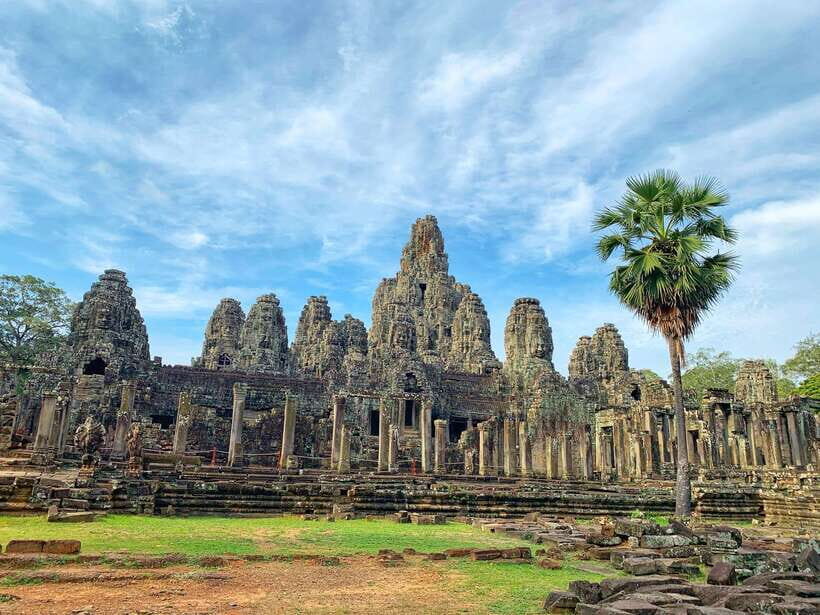
- Bayon: the 216 faces at the center of Angkor Thom
- Baphuon and the reclining Buddha: a story you can see
- Phimeanakas: steep steps, shaded jungle, and a view gamble
- Royal Terrace circuit: Preah Palilay, Leper King Terrace, and Elephants
- Preah Palilay
- Terrace of the Leper King
- Terrace of the Elephants
- Thommanon and Chau Say Tevoda: Hindu temples with names that hint at belief shifts
- Thommanon
- Chau Say Tevoda
- Ta Prohm: the roots, the moss, and the pop-culture shortcut to wonder
- Price value: $13 for private transport, but tickets are on you
- Who should book this tour, and who might want a different plan
- Should you book? My practical take
- FAQ
- How long is the Angkor Wat private tour by tuk tuk?
- Where does the tour pick you up?
- Is this tour private or shared?
- Which temples and main areas are included?
- Are temple tickets included in the price?
- Does the tour include meals?
- Does the tour offer skip-the-line entry?
- What language does the driver speak?
- Is drinking water provided?
- Is free cancellation available?
Key highlights you’ll feel immediately
- 100% private tuk tuk with a licensed driver and hotel pickup/drop-off
- Skip-the-line temple entry using a separate entrance
- Cold drinking water provided all day, right when you need it
- Three major temple “anchors”: Angkor Wat, Bayon (Angkor Thom), and Ta Prohm
- A Khmer architecture hit list from Suryavarman II temples to the Terrace of the Elephants
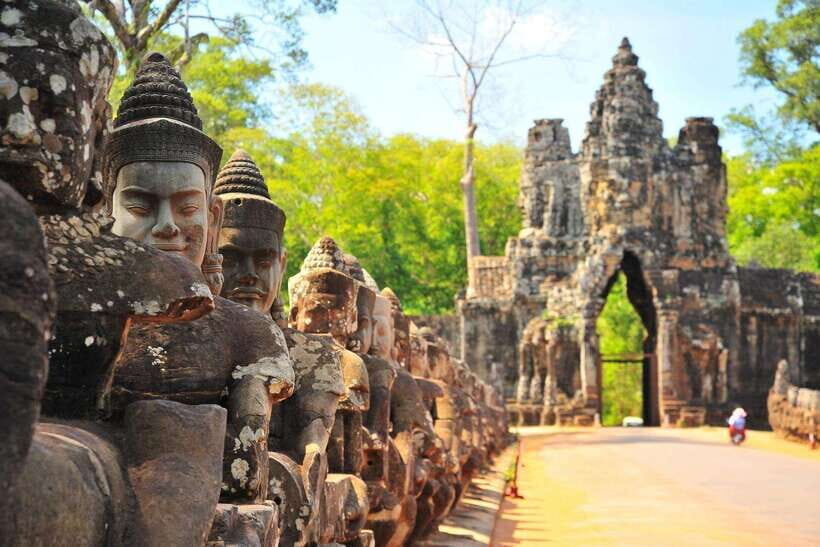
- Photo-friendly moments built into the route, including a classic South Gate stop
A private tuk-tuk day that actually matches how you travel
Angkor can turn into a big logistics puzzle if you’re on a bus schedule. This format fixes that. You’re not sharing the tuk tuk, and you’re not negotiating meeting points with strangers. You get one licensed driver, one plan, and the flexibility to breathe between stops.
The best part is the tone of the day: it’s temple-focused, but it doesn’t feel rushed like a checklist sprint. Your driver helps you move efficiently between the key zones—then you’re left to enjoy the ruins at ground level, with short walks and photo pauses.
And yes, you’ll still be walking. Angkor is Angkor. But you’ll at least be walking with the right setup: private transport, cold water, and no awkward “we’ll wait for you” moments with other people.
You can also read our reviews of more private tours in Siem Reap
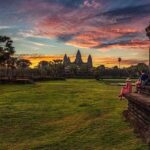
Pickup in Krong Siem Reap and what the driver setup really means
You’ll start from your hotel lobby in Krong Siem Reap, then head out by tuk tuk with a private driver who has a license. The tour includes toll roads, parking, and gasoline, so you aren’t stuck with little add-ons that slow the day down.
The tour also runs with an English-speaking driver, which matters more than it sounds. When you can ask quick questions—like where to pause for photos or how to structure your time—you spend less mental energy figuring things out and more energy seeing.
In recent experiences, drivers have been described as patient and attentive, and some have even helped make the day smoother in small ways like having cold water ready right away. If you’re traveling solo, you may also appreciate drivers who are willing to help with photos along the way.
Angkor Wat: Vishnu’s state temple and the most intact monument

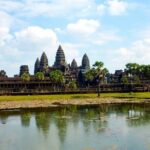
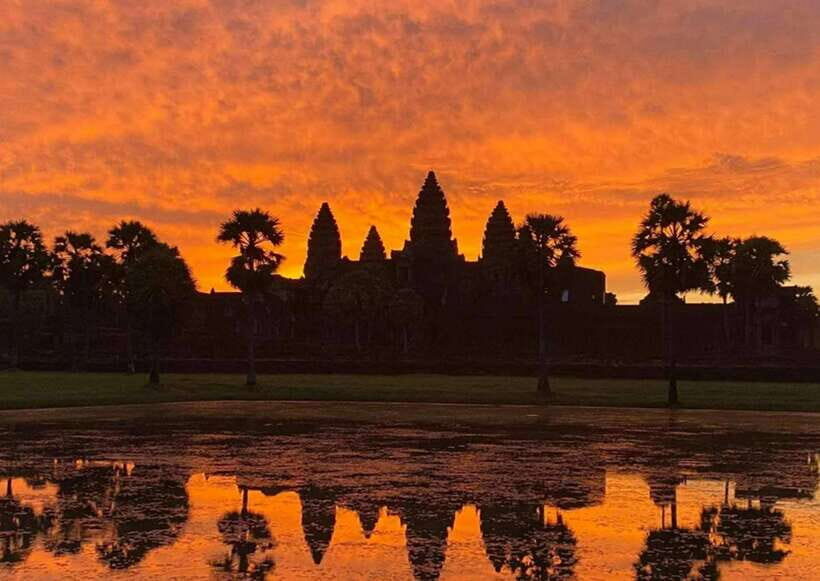
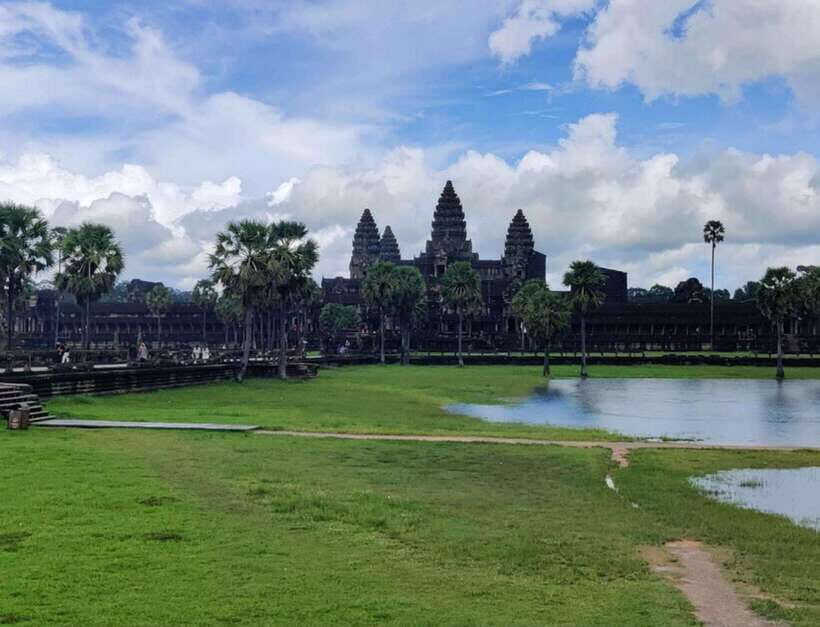
Angkor Wat is the headline for a reason. You’ll spend about 3 hours here, and that time is the difference between a blur and a real experience.
This temple was built by King Suryavarman II in the early 12th century in Yasodharapura, the Khmer Empire capital (present-day Angkor). The dedication is a key detail: it was designed as the king’s state temple and eventual mausoleum, and it breaks with the Shaivism tradition of earlier rulers. Angkor Wat was dedicated to Vishnu.
There’s a reason this is the best-preserved Angkor site on your route. It’s also the only major temple that has remained a significant religious center since its foundation. That continuity gives you a different feeling than ruins you treat only as archaeology. You’re looking at a place that still matters.
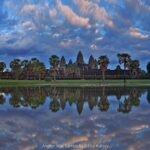
If you like architecture, this is classic Khmer at its best. Angkor Wat is described as the top of the “high classical” Khmer style, and it’s also a national symbol—so big it appears on Cambodia’s flag. Standing in the complex, you get why that’s not just branding. It’s a spiritual and cultural anchor.
Practical note: because you’re spending the longest chunk of your day here, it’s the place where you can reset—rest your legs a bit between walks, take your time with viewpoints, and get oriented for the rest of the route.
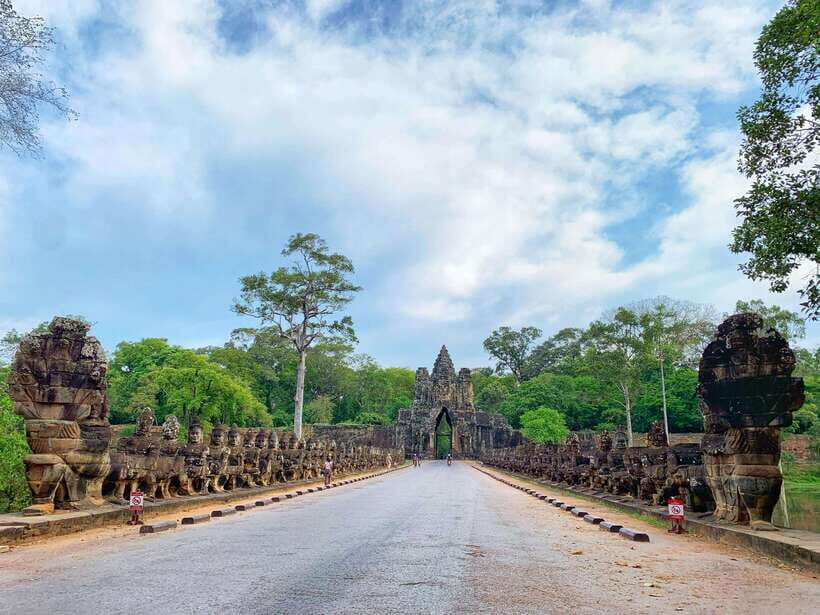
Tonle Om (South Gate): the quick photo stop that sets the whole mood
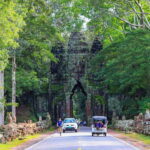
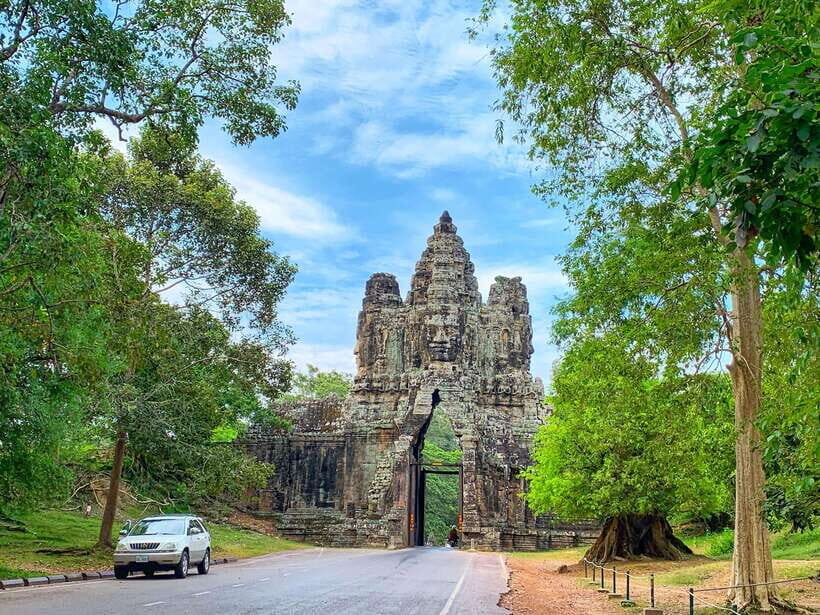
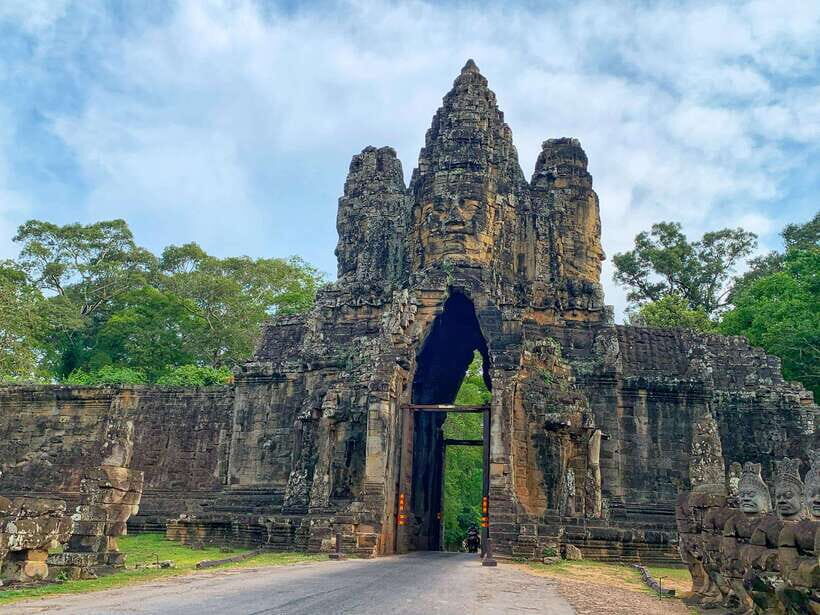
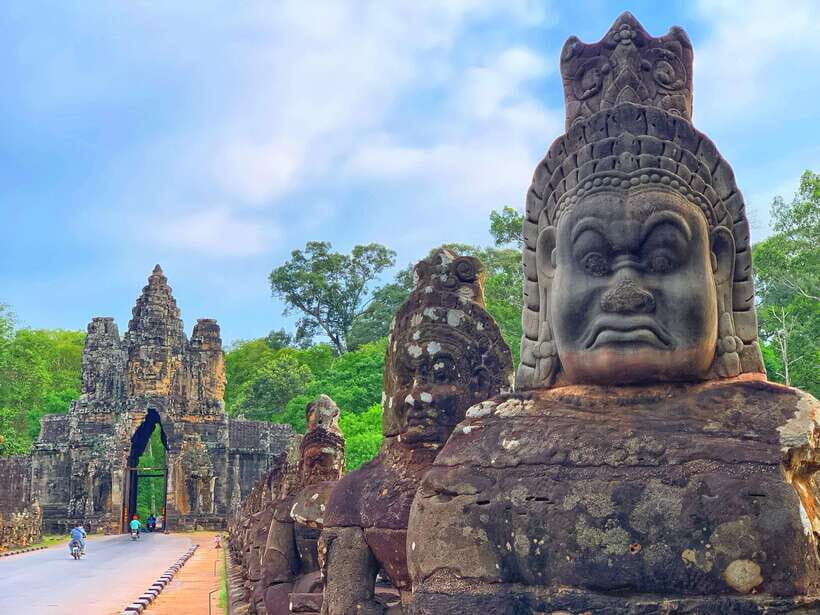
After Angkor Wat, the tour heads to the Tonle Om Gate, also known as the South Gate, with a brief 15-minute photo stop plus walking time. This isn’t long, but it’s purposeful.
The reason the South Gate matters is that it’s the entry point into Angkor Thom, the walled city. The walls are described as rising eight meters high, with a laterite wall measuring 3 by 3 kilometers. A moat still surrounds the city area and is still flooded, which helps you understand why Angkor Thom feels so enclosed and protective.
Even if you only spend a short moment here, the gate acts like a transition: from Angkor Wat’s grand temple complex into the fortress-city mindset of the laterite walls and the inner sanctums.
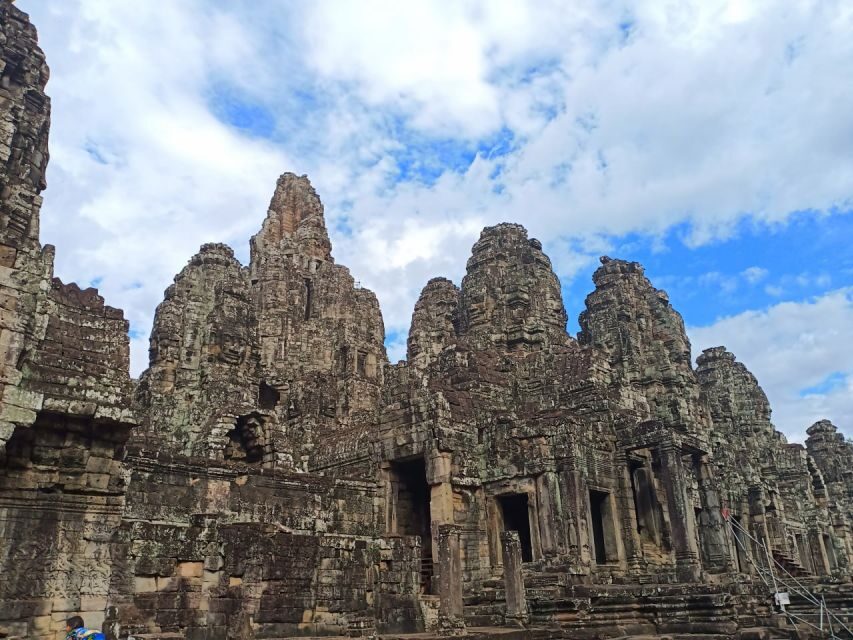
Bayon: the 216 faces at the center of Angkor Thom
Bayon sits in the middle of Angkor Thom, and the scale of it hits differently when you’re not just rushing through. The tour allots about 1.5 hours here, which feels right for what Bayon offers.
The key image is the 216 enigmatic faces that gaze over the horizon. That number isn’t just trivia—it’s the emotional hook of the place. You’re looking for details, patterns, and expressions, and you start noticing how the faces repeat and reframe your movement through the complex.
Bayon is essentially described as silent witnesses of time—so your best strategy is simple: pause, look up, then take a slow walk and look again. The faces are designed to confront you from different angles as you move, so if you rush, you miss the effect.
Also, being in the center gives you momentum for the rest of the Angkor Thom circuit. You’ve got a focal point now, and it makes the next temples feel connected rather than random stops.
Baphuon and the reclining Buddha: a story you can see
From Bayon, the tour moves to Baphuon with about 30 minutes. This stop includes a long causeway and an impressive giant reclining Buddha.
The detail that makes Baphuon stand out on your day is the reconstruction story. The Buddha and the temple were disrupted for a very long stretch due to war, and the piece was put back together in 2011 following a 37-year-long disruption. When you know that, you don’t just see a monument—you see survival, repair, and continuity.
If you like meaningful context, this is one of the best moments in the day for it. You can treat Baphuon like a visual puzzle, because that’s literally how it’s described: a broken structure that was later reassembled.
And while it’s not the biggest time block, it’s a satisfying one. You get the causeway feel, the scale of the reclining Buddha, and a tangible sense of the temple’s long history.
Phimeanakas: steep steps, shaded jungle, and a view gamble
Next up is Phimeanakas, again about 30 minutes. This is the “effort stop,” and you’ll feel that because the temple is reached via steep steps.
The description emphasizes that Phimeanakas is hiding in the shaded jungle and offers a decent over-the-tree-tops view to anyone who makes it up. So the payoff is practical and visual: you’re getting an outlook, not just a ground-level ruin.
If you’re traveling with people who dislike stairs, this might be the stop where you adjust expectations. It’s not optional because it’s the point, but you can pace it and take your time. The good news is that the day’s structure keeps it reasonable—you’re not climbing nonstop all day.
Royal Terrace circuit: Preah Palilay, Leper King Terrace, and Elephants
After the inner core stops, the tour shifts into the “royal-city” feeling through several terrace and garden-adjacent areas.
Preah Palilay
You’ll visit Prasat Preah Palilay, described as being in a shaded area. It’s another about-30-minute block and works as a breather between the heavier architectural sites. Think of it like a pause point where you can step back and let the ruins register instead of constantly absorbing new structures.
Terrace of the Leper King
Then comes Preah Ponlea Sdach Komlong, also known as the Terrace of the Leper King. This is a photo stop plus walking, again around 30 minutes. The name alone is memorable, and the terrace setting helps keep this part of the day from feeling like a straight line of temples. You’re moving through a complex made for display, processions, and public space, not just worship.
Terrace of the Elephants
Finally in this stretch is the Terrace of the Elephants, described as the “Esplanade of the Royal Palace,” with the elephant association making it one of the most recognizable Angkor Thom terrace names.
Even without getting lost in symbolism, terraces like this matter because they show how the royal city worked in daily movement. It’s not only about sacred structures. It’s about spaces that shaped flow—how people would approach, gather, and move through the royal zone.
The tour keeps these stops short enough to keep the day moving, but the terrace cluster helps you understand Angkor Thom as an environment, not just a sequence of monuments.
Thommanon and Chau Say Tevoda: Hindu temples with names that hint at belief shifts
In the afternoon, the tour adds two more temple stops that help explain the Khmer world beyond the single famous icon of Angkor Wat.
Thommanon
You’ll visit Thommanon Temple, one of a pair of Hindu temples built during the reign of Suryavarman II at Angkor. The temple’s name is derived from Pali words: Dhamma (Buddhist Teachings) and Nanda (supreme wisdom).
That naming detail is a clue to how overlapping ideas could show up in Khmer sacred space over time. Even when a temple is classified as Hindu in dedication, the language around it points toward cultural layers and how meanings could shift across eras.
Chau Say Tevoda
Next is Chau Say Tevoda, just east of Angkor Thom and directly south of Thommanon across the Victory Way. Built in the mid-12th century, it’s a Hindu temple in the Angkor Wat period, dedicated to Shiva and Vishnu.
The standout detail here is art: the temple is noted for unique types of female sculptures of devatas. If you’re the kind of traveler who likes to slow down for carvings instead of only walking through big rooms, this is your chance. These smaller, more specific elements can be the most memorable parts of an all-temple day.
Both of these stops support a key reason Angkor is worth your time. It’s not one religion, one style, and one moment in history. It’s a layered site where dedication, language, and iconography keep shifting.
Ta Prohm: the roots, the moss, and the pop-culture shortcut to wonder
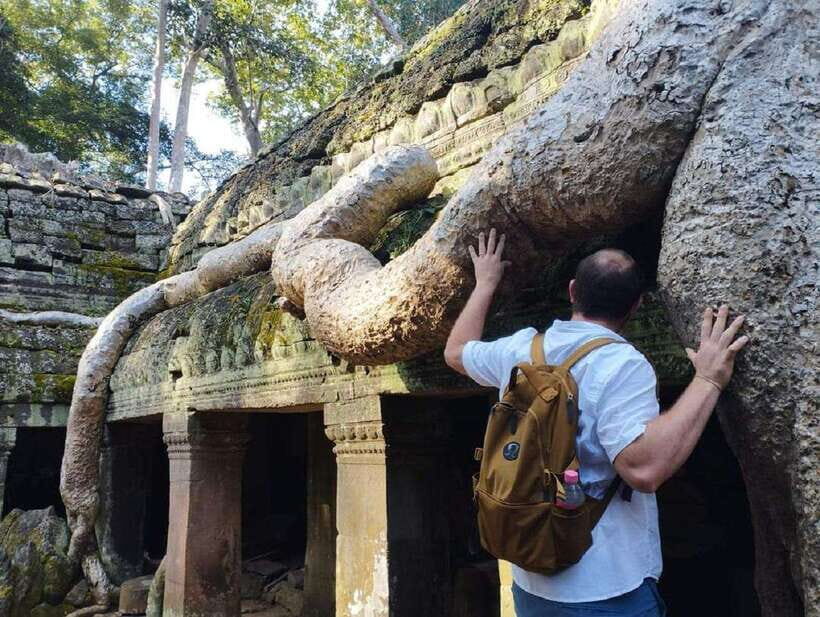
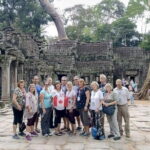
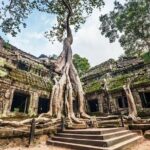
You finish at Ta Prohm, with about 1 hour to explore. This is the temple that became famous in the Tomb Raider movie with Angelina Jolie as Lara Croft. That pop-culture connection is useful, because it helps many people see the temple instantly as more than just ruins.
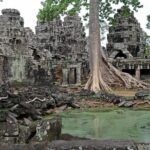
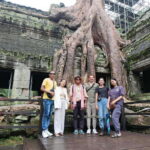
But the real reason you’ll still care after the movie memories fade is what the architecture is doing to the nature around it. The description highlights the way roots of the spung tree (Tetrameles nudiflora) entwine with ancient stones, with moss covering corners and surfaces.
This is why Ta Prohm feels alive even though it’s clearly broken and historical. The mix of stone and growing roots gives you a built-in “what if I look closely here?” moment. If you enjoy photography, this is arguably your best stop for that explorer feeling—framing shots the way you’d frame a secret passage in a game, but in real life.
After Ta Prohm, you’ll drive back to your hotel and be dropped off.
Price value: $13 for private transport, but tickets are on you
At $13 per person for a full day, this tour is strong value—mostly because you’re not paying for shared transport. You’re paying for a private tuk tuk, a licensed driver, hotel pickup and drop-off, and operational pieces like tolls, parking, and gasoline.
In places like Angkor, the biggest “hidden” costs usually come from logistics: transport, waiting, and entry management. This tour includes the practical parts you’d otherwise try to coordinate yourself.
What’s not included is equally important: temple tickets and meals. The day is still designed as one continuous experience, but you’ll need to plan for eating on your own during the lunch break. The bright side is that the route keeps lunch as a built-in break, rather than forcing you to guess when to stop.
Who should book this tour, and who might want a different plan
This works best if you want:
- A private day that starts and ends at your hotel
- The key Angkor anchors in one go: Angkor Wat, Bayon, and Ta Prohm
- An English-speaking driver who can explain what you’re seeing in plain terms
- Cold water included, so you don’t have to manage dehydration logistics
It might be less ideal if:
- You want a very slow, deep, hours-long wander at every temple without time limits
- You don’t want to handle separate payment for the temple ticket
- You dislike steps, since Phimeanakas includes steep stair access
That said, the tour balances big-ticket sites with smaller stops, so you still get a sense of Angkor Thom as a lived-in sacred city, not only a couple of photo points.
Should you book? My practical take
If you’re trying to choose between DIY chaos and a rushed group tour, this sits in the sweet spot. The private tuk tuk format keeps you flexible, and the skip-the-line entrance helps your day start faster once you’re at the temples.
Book this if your goal is a full Angkor day with the essentials—plus the supporting temples that fill in the story: Baphuon’s reassembled reclining Buddha, the face-filled Bayon, and Ta Prohm’s roots and moss. Plan on paying for temple tickets separately, and use the tour’s structure to pace yourself.
If that sounds like your style, you’ll likely leave with more than photos. You’ll understand how the site fits together.
FAQ
How long is the Angkor Wat private tour by tuk tuk?
It’s a 1-day tour. The main Angkor Wat visit is listed as about 3 hours, with other stops adding up through the day.
Where does the tour pick you up?
You’re picked up at the lobby of your hotel in Krong Siem Reap.
Is this tour private or shared?
It’s a private tour. It’s 100% private for the number of people you book, not a join tour.
Which temples and main areas are included?
The tour includes Angkor Wat, Angkor Thom highlights such as Bayon and the South Gate entry area, plus stops like Baphuon, Phimeanakas, Preah Palilay, the Terrace of the Elephants, and Ta Prohm. It also includes Thommanon and Chau Say Tevoda in the afternoon.
Are temple tickets included in the price?
No. Temple tickets are not included.
Does the tour include meals?
No. Meals are not included. There is a break for lunch during the day.
Does the tour offer skip-the-line entry?
Yes. The tour includes skip-the-line access through a separate entrance.
What language does the driver speak?
The driver is listed as English.
Is drinking water provided?
Yes. Cold water is included.
Is free cancellation available?
Yes. You can cancel up to 24 hours in advance for a full refund.