REVIEW · PHNOM PENH
Remnants of a Khmer Rouge Era
Book on Viator →Operated by Asian Trails LTD · Bookable on Viator
Some history hits like a weight.
This 4-hour outing takes you through Tuol Sleng and Cheung Ek, two of Phnom Penh’s most important sites tied to the Khmer Rouge era. You’ll walk the places where people were imprisoned, forced to confess, and then taken to mass killing fields, with time to read the displays and memorials at a human pace.
I especially like two things here. First, the tour is built around a professional English-speaking guide, not just a self-guided pass—so the story behind the rooms actually makes sense. Second, you’re not left doing logistics math: hotel pickup, round-trip transport, and entrance/donation fees are included in the price. The main drawback is obvious but important: this is emotionally heavy, and the museum has a strict dress code, plus it’s not recommended for kids under 12.
In This Review
- Key highlights worth your attention
- How this 4-hour Phnom Penh visit runs
- Tuol Sleng (S-21): what you’ll see in the cells
- Dress code matters here
- Cheung Ek Killing Fields: memorial stupa and mass graves
- Price and value with hotel pickup and entry fees
- Practical tips: dress code, cameras, and emotional readiness
- Should you book this Khmer Rouge remembrance tour?
- FAQ
- What’s included in the tour price?
- How long is the experience?
- Is pickup from my hotel included?
- Is this tour private?
- What are the dress requirements for Tuol Sleng?
- Are tickets provided or do I need to buy them?
- Is the tour suitable for children?
- Is the guide available in English?
- Are there any places where pickup/drop-off is not included?
Key highlights worth your attention
- Dedicated English-speaking guide adds context while you’re staring at the evidence.
- Hotel pickup and round-trip transport mean you can just show up and go.
- Tuol Sleng time (about 2 hours) lets you see cells, photos, and interrogation details without rushing.
- Cheung Ek memorial stupa displays remains, including thousands of skulls and bones.
- Included admission and donation fees keep the cost straightforward at the gate.
How this 4-hour Phnom Penh visit runs
This is a half-day plan designed to be efficient without feeling like a drive-by. You’ll get picked up from your Phnom Penh hotel by a guide and driver and transferred to the sites by car/mini-van/coach. The visit is paced as two focused blocks: roughly 2 hours at Tuol Sleng, then about 2 hours at Cheung Ek.
Because this is a private tour/activity, only your group participates. That matters here. When you’re dealing with atrocity, you don’t want to get stuck listening to your guide talk to 30 people while you’re trying to take in what’s in front of you. You can also ask questions as you go, which helps turn the facts into something you understand, not just something you read.
One more practical note: pickup and drop-off are included only for accommodations within Phnom Penh. If you’re staying outside the city center area (or near places listed as excluded), you may need a supplement or might have to meet at a nearby hotel instead of true door-to-door service.
You can also read our reviews of more tours and experiences in Phnom Penh.

Tuol Sleng (S-21): what you’ll see in the cells
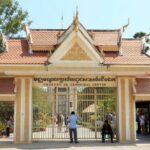
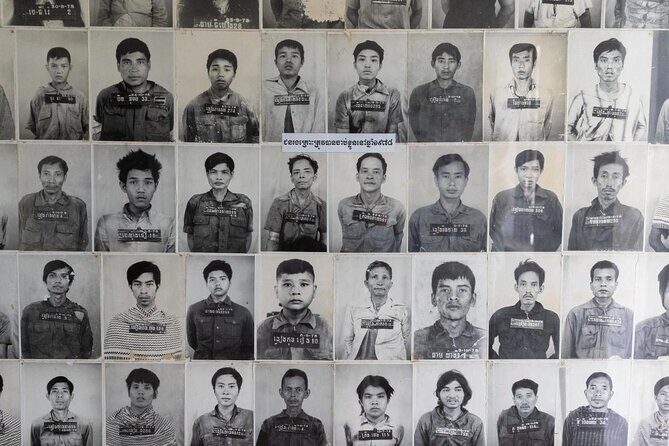
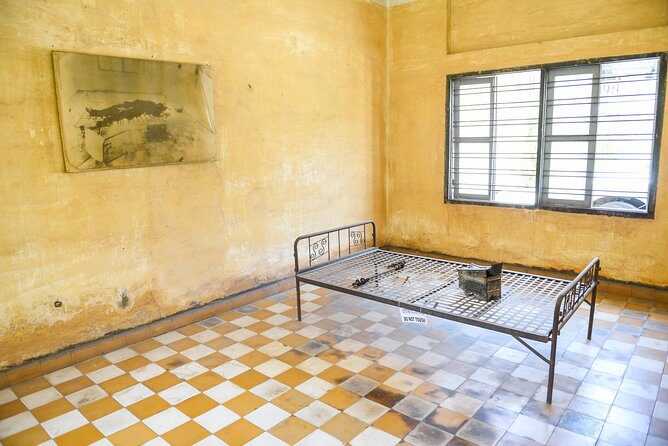
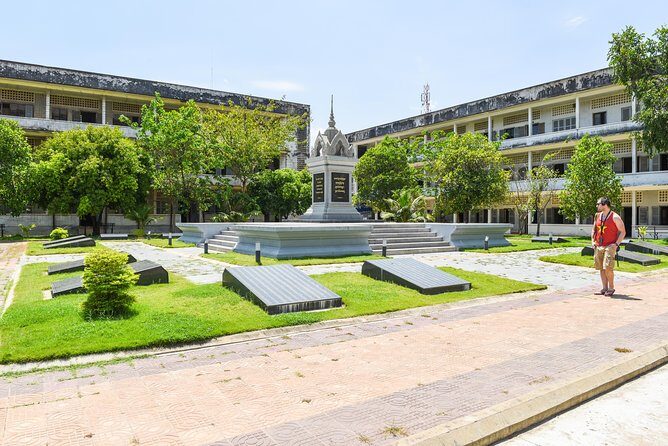
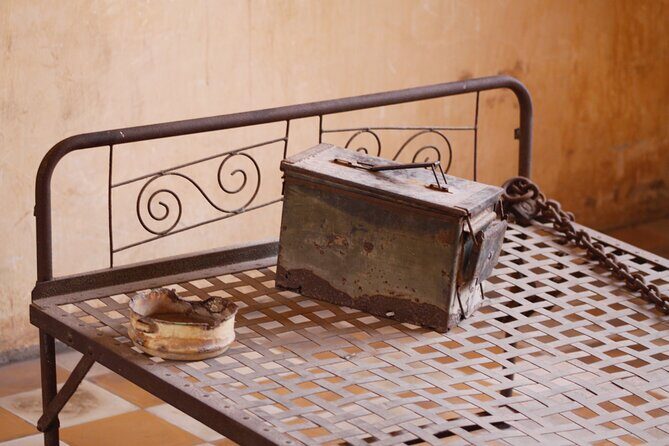
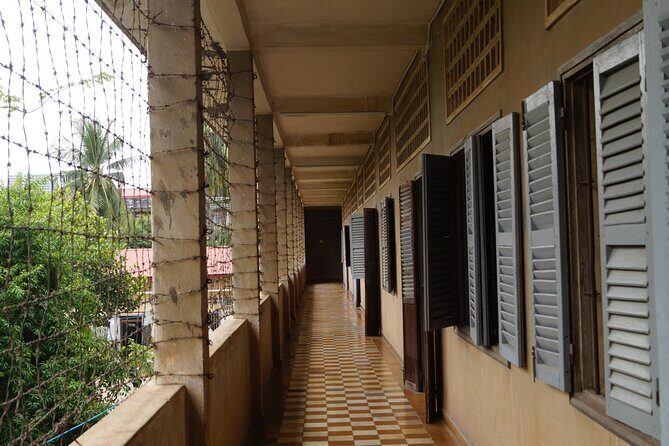
Tuol Sleng is now the Tuol Sleng Genocide Museum, but in the Pol Pot regime it functioned as a detention center called S-21. The site started life as a high school (Tuol Svay Pre School), then was converted into a place for interrogation, forced confessions, and the processing of prisoners.
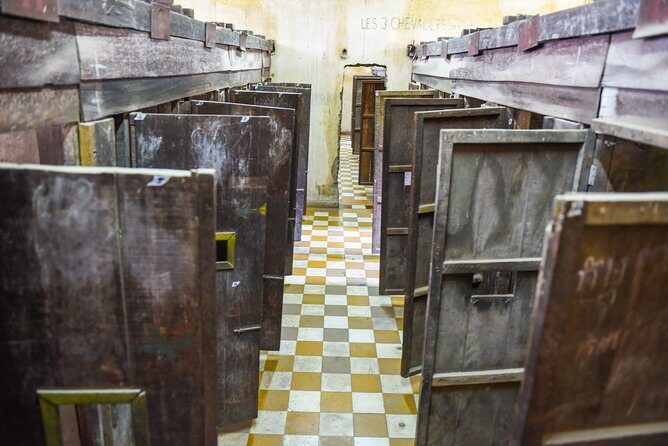
When you walk the building, you’re not just looking at exhibits. You’re seeing the setting where people were held after interrogation—then later transferred to the Killing Fields. The museum includes crude cells built in classrooms and displays torture devices used to extract confessions. It’s direct. No soft focus.
What makes the visit especially affecting is the way the museum preserves identity through documents. The building houses exhibit paintings and photographs of victims, and you’ll notice how much of what you’re seeing is tied to records of real people. That’s why a guide helps: they can connect what you’re looking at to the broader Khmer Rouge system, including how Pol Pot’s regime operated.
Dress code matters here
Plan your outfit with the museum’s rules in mind. You need modest clothing: shoulders covered and clothes falling below the knees. Shirts with obscene or disrespectful prints and brightly colored clothing can get you refused entry. Pack something simple if you’re unsure—this is not the place for a last-minute wardrobe gamble.
Cheung Ek Killing Fields: memorial stupa and mass graves
After Tuol Sleng, you’ll travel outside the city center to Cheung Ek, one of the best-known Killing Fields. This site is sobering in a different way than the prison. At Tuol Sleng, you’re inside the machinery of detention. At Cheung Ek, you’re confronted with the end result—built into the ground, and then into the memorials.
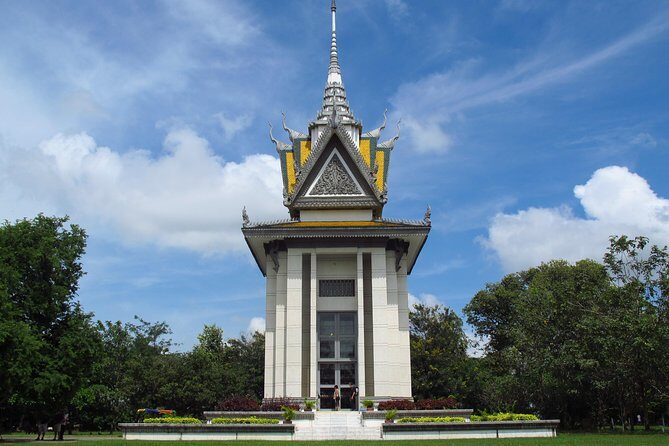
Cheung Ek is described as a Chinese Cemetery that became a Khmer Rouge Killing Field. During the Khmer Rouge years, thousands of Cambodians were tortured and imprisoned in detention centers around the country, then brought here. The remains of almost 9,000 bodies have been excavated from mass graves in this area.
The memorial stupa is the centerpiece. It displays over 5,000 skulls, along with bones and clothing of victims. Seeing that number isn’t just statistic-level. It’s a physical reminder that the deaths were not an abstract idea; they were people, with effects that still linger in what’s preserved and what’s remembered.
This stop is also where the tour’s emotional pacing matters most. You’ll have time to walk around the memorials and take in what you’re seeing. I like that the experience gives you room to absorb, rather than forcing a quick, checkbox pace.
Price and value with hotel pickup and entry fees
At $80.77 per person for about 4 hours, you’re paying for more than admission tickets. What you’re really buying is a guided route that bundles together the expensive bits: hotel pickup, round-trip transport, and entrance/donation fees for both places.
If you were to piece this together yourself, you’d likely spend time coordinating transport and paying entry fees separately. Here, the cost is framed as a “half-day package” with taxes and service charges included. That makes it easier to decide, especially if you’re juggling other Phnom Penh plans.
There’s also an added convenience factor. The tour includes a mobile ticket, and the operator is set up to confirm details around pickup time (with efforts to lock it in, and a fallback of notifying you the day before if exact timing can’t be confirmed in advance). For a trip where you’ll likely be emotionally drained, reducing the number of decisions is a real value.
One last value thought: this tour is not positioned as a casual sightseeing stop. It’s designed for understanding and respect. The included guide time is part of what makes it worth the money, because context helps you process what you’re seeing without turning it into trivia.


Practical tips: dress code, cameras, and emotional readiness
Before you go, think practical and respectful.
1) Dress for entry, not comfort fashion. Shoulders covered, and below the knees. Bring something you can move in, because you’ll walk through memorial spaces.
2) Cameras and phones need protection. Electronics can be damaged by natural elements. If it’s humid or rainy, keep your device wrapped and protected. The tour notes they can’t take responsibility for damage linked to not protecting equipment.
3) Decide if this is right for your group. Most travelers can participate, but it’s not recommended for families with children under 12. If you’re traveling with teenagers, that still doesn’t make it “easy”—just more manageable for some families.
4) Plan your pickup area. Transfers are inclusive only if you’re staying in and inside Phnom Penh. Outside those areas—examples listed include Koh Dach, Tonle Bati, Oudong, river/cruise ferry terminals, and Phnom Penh International Airport—supplements apply or pickup may not be available as packaged.
5) Go in expecting emotions. This isn’t a “see the museum and move on” experience. Tuol Sleng shows cells, interrogation/torture details, and victim documentation. Cheung Ek shows mass grave excavations and a stupa with thousands of skulls and bones. You’ll likely feel shaken, and that’s normal.
Should you book this Khmer Rouge remembrance tour?
I think you should book it if you want a guided, respectful way to understand Cambodia’s recent past—specifically how the Khmer Rouge system worked from detention to killing. The combination of Tuol Sleng and Cheung Ek in one half-day plan is efficient, and the included guide makes it easier to connect evidence to the historical story.
I would skip or reconsider if you’re traveling with a child under 12, or if you know you’ll be unable to handle an intense, disturbing setting. This tour is powerful, but it’s not soothing.
If you do book, choose the right day in your schedule. Give yourself breathing room afterward. Eat first. Drink water. And wear clothing that passes the museum rules the first time.
FAQ
What’s included in the tour price?
The tour includes a half-day visit with a professional English-speaking guide, transportation by car/mini-van/coach with a professional driver, all entrance and donation fees for the sites, and all applicable taxes and service charges.
How long is the experience?
It’s about 4 hours total, with roughly 2 hours at Tuol Sleng and roughly 2 hours at Cheung Ek.
Is pickup from my hotel included?
Pickup is offered for customers staying in and inside Phnom Penh. If you’re staying outside the included pickup area, supplements may apply, and you may be asked to meet at a nearby hotel.
Is this tour private?
Yes. It’s described as a private tour/activity, so only your group participates.
What are the dress requirements for Tuol Sleng?
You must dress modestly: cover shoulders and wear clothes that fall below the knees. Brightly colored clothing and shirts with obscene or disrespectful prints/pictures may lead to refusal of entry.
Are tickets provided or do I need to buy them?
Admission tickets are included, and you receive a mobile ticket.
Is the tour suitable for children?
It’s not recommended for families with children under 12 years old.
Is the guide available in English?
The tour includes an English-speaking guide. Other languages are available on request subject to availability and may have supplementary charges.
Are there any places where pickup/drop-off is not included?
Return transfers are not included for certain areas outside Phnom Penh, including examples listed such as Koh Dach, Tonle Bati, Oudong, river and cruise ferry terminals, and Phnom Penh International Airport. Supplements apply for joining from those areas.