REVIEW · SIEM REAP
Explore Angkor Wat Sunrise Small Tour Private VIP Car
Book on Viator →Operated by SiemReap Perfect Driver · Bookable on Viator
Sleep now; sunrise wins here.
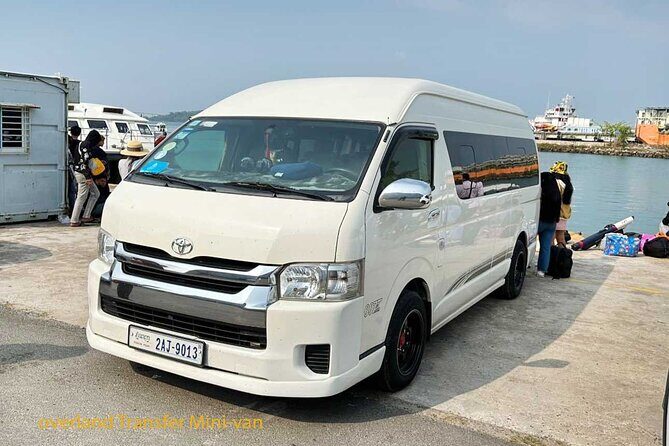
This private Angkor Wat sunrise small tour is built around the early start, so you’re already at the gates before the day gets loud. The big win is the 4:30am pickup and the private VIP car setup, which means you can focus on the temples instead of haggling, waiting, or sweating your way through town. I like that it’s structured like a real circuit: sunrise at Angkor Wat, then straight into Angkor Thom and the best follow-up sites.
What I really like is the comfort details that matter at Angkor. You’ll have an air-conditioned vehicle, plus cold water and towels between temple stops, and an English-speaking driver to keep the day moving. In past bookings, the driver has been called Sam (and Sam Long), and people also note excellent coordination with a local guide for the temple explanations, with names like Kim and Bratna coming up.
One consideration: the temple and admission fees aren’t included. So your headline $55 is for the transportation and tour service, while official entry costs come on top. Also, this is a long early day (about 8 to 10 hours), so plan for a fast start and some walking on uneven stone.
In This Review
- Key points worth knowing before you go
- Why an Angkor Wat sunrise start at 4:30am is worth it
- VIP car comfort: what you’re actually paying for
- Angkor Wat at first light: what to expect and how to enjoy it
- Angkor Thom: South Gate to Bayon’s four faces
- Phimeanakas and the royal center: 20 minutes that connect the dots
- Baphuon and the reclining Buddha: built in layers
- Terrace of the Elephants and the Terrace of the Leper King
- Terrace of the Elephants
- Terrace of the Leper King
- Ta Prohm: where the jungle feel still hits
- Banteay Kdei: Buddhist temple with a similar feel
- Srah Srang: the royal swimming pool moment
- Price and value: what $55 really covers
- Who should book this private VIP sunrise tour
- Should you book this? My honest decision guide
- FAQ
- What time does pickup happen for the Angkor Wat sunrise?
- Are temple and admission fees included?
- How long is the private VIP tour?
- Is this tour private, or shared with other groups?
- Does the tour include pickup and drop-off?
- What if weather is bad?
- Can I cancel for a full refund?
Key points worth knowing before you go
- 4:30am hotel pickup to catch the sunrise at Angkor Wat
- Private VIP car with AC, plus cold water and towels during the day
- A full Angkor circuit: Angkor Wat → Angkor Thom → Ta Prohm → Banteay Kdei and more
- Time is allocated on purpose, with longer focus at Ta Prohm and the Angkor Wat sunrise segment
- Temple entry fees are extra, so budget for admission when you plan your total
Why an Angkor Wat sunrise start at 4:30am is worth it
Angkor is the kind of place where timing changes the whole mood. Starting early means you arrive while the temple grounds are still waking up, not when everyone else is already thinking about breakfast, selfies, and heat. With pickup at 4:30am from your hotel lobby, the tour doesn’t waste time. You’ll head out, get the needed temple pass early, and settle in before the sun climb.
You’ll also avoid one of the most common mistakes in Siem Reap: treating the day like a casual sightseeing stroll. Here, the schedule is built around the “big” moment first. Sunrise at Angkor Wat is the anchor, and then the rest of the stops flow naturally afterward instead of feeling like a scramble.
The early start is also practical for comfort. Even with an itinerary full of stops, having AC in the car and water/towels between sites makes the day feel manageable instead of punishing. You’re not just buying a ride; you’re buying the rhythm.
You can also read our reviews of more private tours in Siem Reap
VIP car comfort: what you’re actually paying for
This tour is private, so you’re not packed into a crowded van where you’re fighting for space and trying to hear instructions over engine noise. The included air-conditioned vehicle is the obvious benefit, but the less glamorous pieces matter too: parking fees are included, and you’ll get pickup and drop-off to your hotel.
In several write-ups, people praised drivers like Sam (including Sam Long) for being reliable, friendly, and attentive. That shows up in the details: keeping you hydrated, helping you connect with any needed local guiding, and making sure collection and drop-off happen at the right places. At Angkor, a “small mistake” costs time. A driver who keeps things organized protects your day.
Tip for you: if you want the calmest experience, pack light and keep your essentials easy to grab. When your morning begins before sunrise, it helps if you don’t spend the car ride hunting for a bottle, hat, or camera strap.
Angkor Wat at first light: what to expect and how to enjoy it
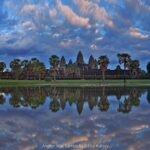
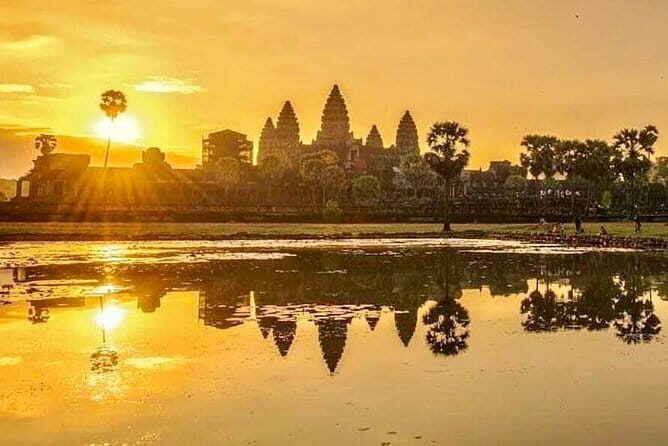
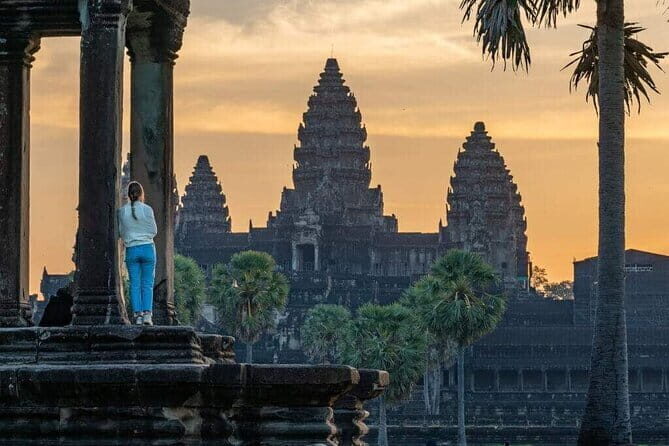
Stop 1 is Angkor Wat, with about 3 hours allocated. The day starts with you being picked up around 4:30am, then going to purchase the temple pass before you head in for the sunrise.
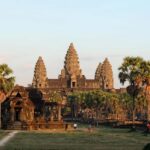
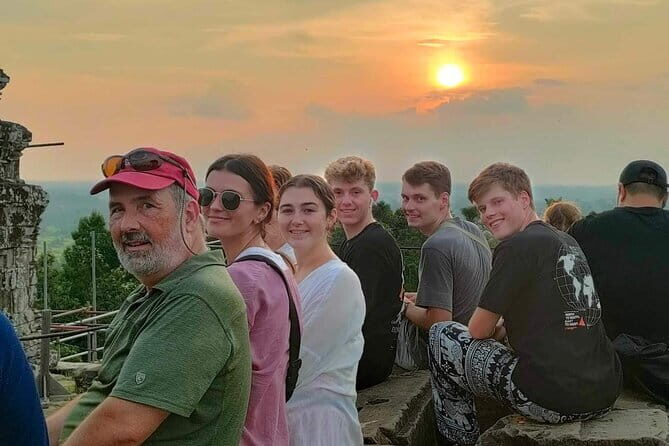
Once the sun starts lifting, Angkor Wat’s long views and symmetrical lines shift from “cool ruins” to “this is why people come.” It’s not just a pretty photo spot. The sunrise timing makes the stone look different—warmer, more dimensional—and it’s easier to enjoy the temple without the midday glare and fatigue.
What to do during this portion:
- Focus on getting your bearings first, then move slowly.
- Pick one or two vantage points rather than chasing every corner.
- Keep water breaks short but regular, because the full circuit keeps coming.
A drawback to consider: even with AC and support, you still have a long walking day ahead. This isn’t a “sit and admire” tour. Plan on stepping on uneven surfaces and climbing some temple steps.
Angkor Thom: South Gate to Bayon’s four faces
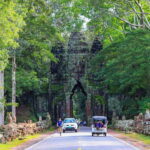
After Angkor Wat, you’ll head to Angkor Thom. This section is about 1 hour, and the route starts at the South Gate. Angkor Thom is big, and it’s easy to feel like you’re just getting transported from one pile of stones to another. The value here is that the itinerary hits the most iconic anchor points quickly and efficiently.
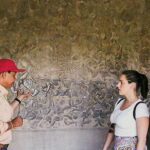
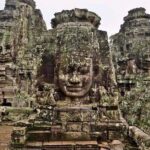
Inside, the main highlight is the Bayon Temple and its famous 49 towers with the smiling four faces. This is one of those moments where a guide (or even a great driver’s explanation) makes a difference. The carvings can look repetitive until someone explains what you’re seeing and why it mattered to the city’s royal power.
Practical note: with only about an hour here, you’ll want to decide what matters most to you. If you’re into iconography and facial towers, spend more time looking up and less time wandering toward every side passage.
Phimeanakas and the royal center: 20 minutes that connect the dots
Stop 3 is Phimeanakas, about 20 minutes. This is a pyramid Hindu temple built in the 10th century, located at the center of the old Royal Palace of Angkor Thom. You’ll also visit the ancient Royal Enclosure Wall alongside it.
This is a short stop, but it helps you understand how the Angkor complex functioned. A lot of visitors only see individual temples as separate sights. Here, that royal layout comes through: Phimeanakas isn’t just another ruin; it’s the idea of the center of authority, pressed into stone.
Because time is tight, use the moment to look for structure and placement. Don’t try to memorize every detail. Instead, connect it to what you saw right before: South Gate, city layout, and the Bayon faces that defined the skyline.
You can also read our reviews of more tours and experiences in Siem Reap
Baphuon and the reclining Buddha: built in layers
Next is Baphuon Temple, about 30 minutes. It’s described as a Hindu temple built before Angkor Wat in the 11th century. The big feature people remember is the large reclining Buddha behind it, built in the 16th century.
That mixing of eras is one reason Baphuon is a good stop in a sunrise-heavy itinerary. You’ve already absorbed early power (Angkor Thom) and then you get a shift—religion and function changing across centuries. Even if you’re not a “temple nerd,” the idea is easy to grasp: these sites weren’t frozen in time when they were built; they evolved.
Consideration: the stop is only about half an hour. If you love lingering, keep a note to yourself about which temple you’ll return to later on your own.
Terrace of the Elephants and the Terrace of the Leper King
Two short platform stops follow, both around 20 minutes each.
Terrace of the Elephants
You’ll see a platform once used by kings to watch victorious returning armies. The walls are decorated with elephant carvings, which turn a viewing platform into something more than just an open viewpoint.
This is a good moment to slow down, because the details are easier to spot at shorter durations than at longer ones. Look for how the carvings repeat. That repetition is part of what made the platform feel “official,” not casual.
Terrace of the Leper King
The Terrace of the Leper King sits nearby on the north side of the Terrace of Elephants. The itinerary gives it about 20 minutes, which is enough for a careful look without turning it into “mandatory 45-minute standing still.”
The practical angle: when the day moves fast, these short platforms are perfect. They’re where you get context and texture between the bigger-name temples.
Ta Prohm: where the jungle feel still hits
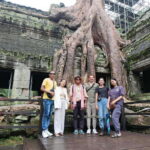
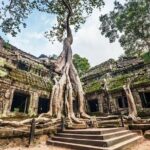
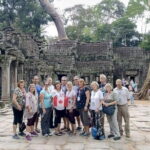
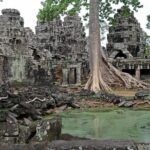
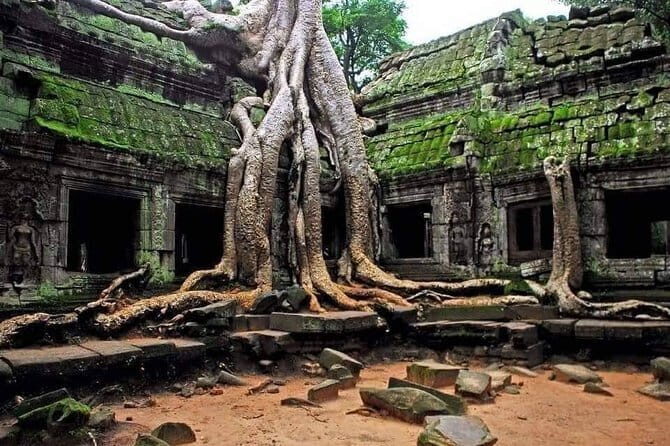
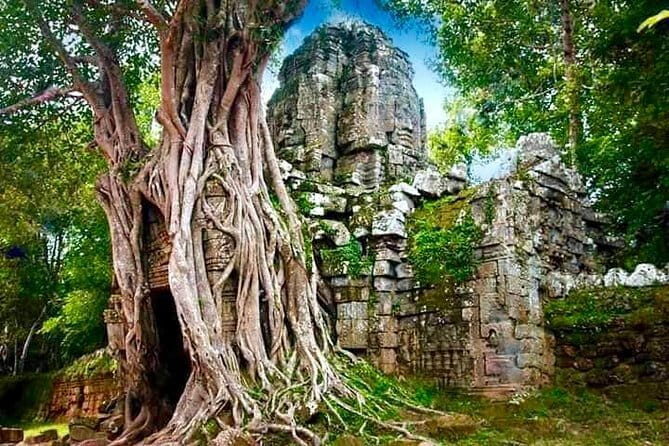
Stop 7 is Ta Prohm Temple, with about 2 hours allocated. This is the longest stop after Angkor Wat, and that’s smart. Ta Prohm isn’t just “another Angkor temple.” It’s the one people recognize even if they don’t know all the official names, thanks to its film fame—Ta Prohm is noted as a filming location for Tomb Raider.
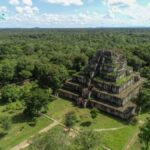
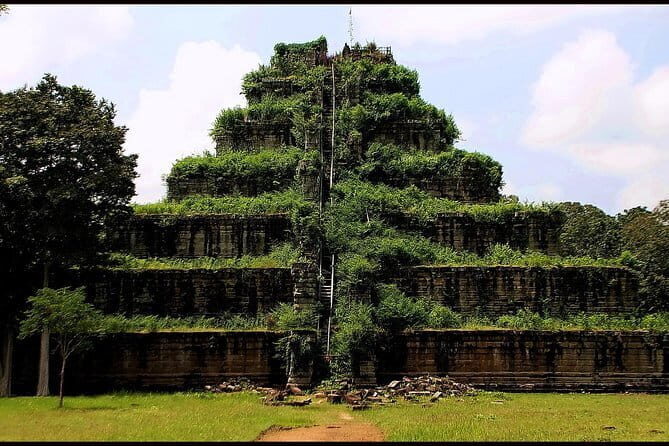
Before Ta Prohm itself, the route includes smaller temples: Chau Say Tevoda, Thommanon, and Ta Keo. Then you arrive at the jungle temple and spend real time there.
Here’s what makes this portion special for your day:
- The longer time helps you appreciate why Ta Prohm feels different from the more “clean-lined” temples.
- The film association helps orient you fast. You may recognize angles, even if you didn’t study before you arrived.
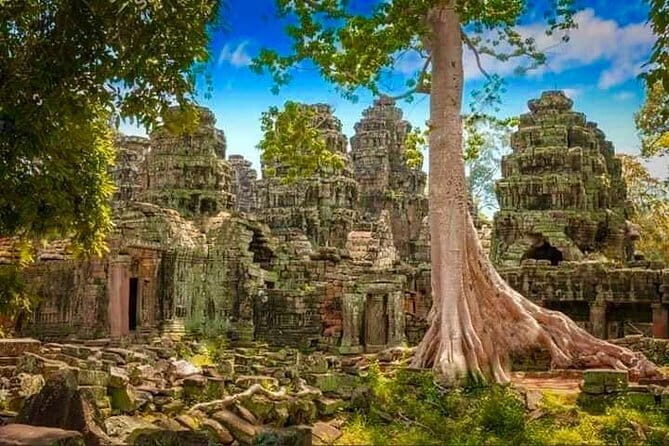
A balanced caution: Ta Prohm is a popular stop. That’s exactly why you’ll want your eyes to focus on the scene—not just the most obvious framing. Use your time to watch how the stone and roots interact, and try to step back for wider compositions instead of only crowd-level shots.
Banteay Kdei: Buddhist temple with a similar feel
Stop 8 is Banteay Kdei, about 1 hour. It’s described as a Buddhist temple built in the 12th century, with a style that’s similar to Ta Prohm and Bayon.
This is a good “bridge” stop: you get more temple atmosphere without repeating the same exact features. If you loved Bayon’s stone identity and you also liked Ta Prohm’s dramatic presence, Banteay Kdei can feel like a satisfying middle chapter.
Because the stop is about an hour, you can do it properly: look up once for structure, look around for carvings, and then take a few minutes just to reset so the day doesn’t blur.
Srah Srang: the royal swimming pool moment
The last stop is Srah Srang, about 20 minutes. It’s a large royal swimming pool for the king and family in ancient times.
This final segment is more than a break. After hours of stone towers and religious symbolism, a water feature gives your brain a breather. You’ll likely notice how the space feels more open than the tightly packed temple areas. It’s a nice way to end the day without needing extra energy for climbing.
If you’re tired, this is the perfect stop to keep it simple: take a few photos, enjoy the quiet, then let the tour’s return logistics handle the rest.
Price and value: what $55 really covers
At $55 and roughly 8 to 10 hours, this is one of those deals that can work well if you want a private experience but don’t want to pay “all inclusive” pricing for entry fees. What’s included is meaningful: air-conditioned private transport, pickup and drop-off, parking fees, tour information, and the practical extras like cold water and towel. Plus, the sunrise portion is included as part of the core plan.
What’s not included is the big variable: temple and admission fees. That means your final all-in cost will depend on the official entry costs required for the temples that day.
So here’s the way to think about value for you:
- If you’d otherwise pay for a driver, deal with logistics, and buy water yourself, this package is likely more efficient.
- If you’re visiting many temples, entry fees will add up anyway, so factor those in early rather than hoping they’re included.
Who should book this private VIP sunrise tour
This tour fits best if you want:
- A private car experience without the stress of planning a full Angkor circuit on your own
- A sunrise-focused start, with enough time to actually see Angkor Wat rather than rushing through the gates
- Comfort support for a long day, especially AC and hydration
It’s also a strong choice if you’re traveling with people who don’t want to split up or negotiate transport after sunrise. The itinerary is structured as one continuous route, which helps keep everyone together.
If you’re the type who loves lingering for hours on one temple, you may find some stops short. But if you prefer a well-paced overview with a big emphasis on Angkor Wat and Ta Prohm, this is a practical fit.
Should you book this? My honest decision guide
Book it if:
- You’re serious about Angkor Wat sunrise and want a driver to handle the early schedule.
- You care about comfort details like AC, cold water, and towels.
- You want a private VIP car setup and a smooth hotel pickup/drop-off day.
Skip it or adjust expectations if:
- You want guaranteed, fully included temple entry fees in the price. They’re not included here.
- You’re not comfortable with an early start and a full day of walking.
If you can handle the early pickup and you budget for admission, this tour is a solid way to see the key Angkor highlights in one long, well-run morning-to-afternoon stretch.
FAQ
What time does pickup happen for the Angkor Wat sunrise?
Pickup is scheduled for 4:30am at the lobby of your accommodation, followed by purchasing the temple pass before heading to see the sunrise.
Are temple and admission fees included?
No. Temple and admission fees are not included, and the itinerary notes that admission tickets are not included for the listed stops.
How long is the private VIP tour?
The duration is about 8 to 10 hours.
Is this tour private, or shared with other groups?
This is a private tour/activity, meaning only your group participates.
Does the tour include pickup and drop-off?
Yes. Pick up and drop off to your hotel are included.
What if weather is bad?
This experience requires good weather. If it’s canceled due to poor weather, you’ll be offered a different date or a full refund.
Can I cancel for a full refund?
Yes. Free cancellation is available, as long as you cancel at least 24 hours before the experience’s start time for a full refund.