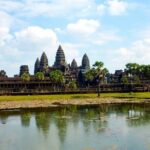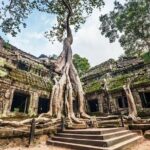
Angkor Wat meets real lake life. This private day tour ties together two sides of Cambodia: the grand Khmer temple art at Angkor and the ongoing rhythm of daily life on Tonlé Sap at Kompong Phluk. You start with UNESCO-listed Angkor Archaeological Park highlights, then trade stone bas-reliefs for views of flooded forests and lakeside communities.
I especially like the pacing, with time set aside at Angkor Wat for the main sight and then a focused stop at Angkor Thom’s South Gate and Bayon. I also like that this isn’t just a temple circuit: the private boat tour on Tonlé Sap is built into the day, so you get out on the water instead of only looking at maps.
One thing to consider: you’ll handle temple tickets and the required Angkor Pass at the start, and the Kompong Phluk area isn’t a single perfect postcard-style floating village. Expect a mix of structures and water levels, plus a lunchtime window that’s on your own.
In This Review
- Key highlights at a glance
- From hotel pickup to your Angkor Pass: the day’s practical start
- Angkor Wat: your two-hour window for the main show
- Angkor Thom’s South Gate and Bayon: faces, walls, and scale
- Kompong Phluk on Tonlé Sap: boat time and what you should expect
- Lunch break: how to handle the on-your-own window
- What you actually pay: price, pass, and taxes
- Included comfort: small things that make a long day easier
- Who this tour fits best (and who may want something else)
- Should you book this Angkor Wat & Tonlé Sap private day tour?
- FAQ
- What is the total duration of the Angkor Wat & Tonlé Sap private day tour?
- Where does pickup start, and where do I get dropped off?
- Is the tour private or shared?
- How long is the boat ride on Tonlé Sap?
- Do I need to buy an Angkor Pass?
- What’s not included in the price?
- Is lunch included?
Key highlights at a glance
- Private boat time on Tonlé Sap to see flooded areas and lakeside communities up close
- Angkor Wat + Angkor Thom + Bayon in one efficient route
- Air-conditioned hotel pickup and drop-off so you’re not wrestling with the heat
- Cool towels during touring—small comfort that matters in Cambodia
- Flexible lunch break on your own while the rest of the day stays scheduled
From hotel pickup to your Angkor Pass: the day’s practical start
The day begins with pickup from your Siem Reap hotel between about 7:30–8:30am in an air-conditioned vehicle. That first hour is the difference between enjoying temples and just surviving the morning heat. You’ll head straight to the Angkor Wat Ticket Office where you pay for and pick up your Angkor Pass, which is required for the site.
This is a key detail for budgeting and timing. Temple entry and specific admissions are not included in the tour pricing you see upfront, so you should plan on paying separately for the pass and the on-site tickets. If you’re the type who hates surprise costs, take a moment before you go and confirm what you’ll pay at the office the morning of.
You’ll also be on a private schedule for your group, so the stops are guided and timed rather than hop-on hop-off. That makes it easier to see a lot without feeling rushed every minute.
You can also read our reviews of more private tours in Siem Reap

Angkor Wat: your two-hour window for the main show
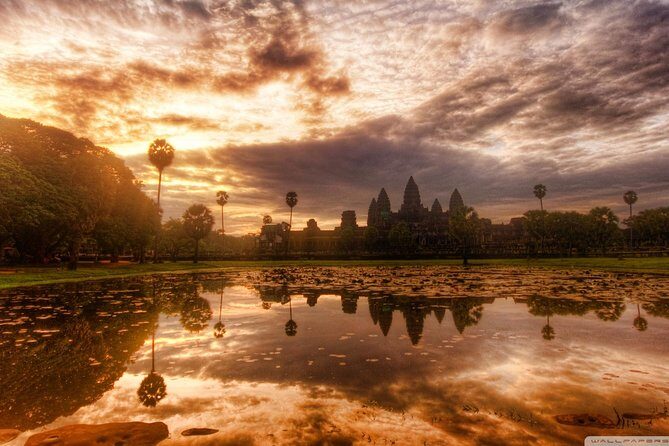
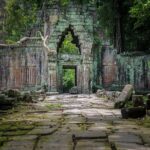
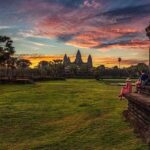
Angkor Wat is the star, and this tour gives it real time—about two hours. The complex is associated with King Suryavarman II in the early 12th century, and it’s known as the best-preserved temple at the Angkor site. In other words: this is where you go to understand why Angkor became a global benchmark.
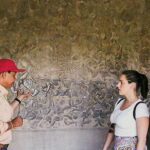
In that time, the biggest value is not just checking boxes. Angkor Wat rewards you for noticing how the temple tells stories through carvings on the walls and how the layout guides your movement. With a guide, you’ll get context for what you’re seeing—especially the link between temple art and the way Khmer culture shaped its visual language.
The possible drawback is simple: two hours is great for the essentials, but it won’t cover every corner like a multi-day deep itinerary. If you want to linger, take fewer photos, and sketch details, you may find the pace a touch firm. Still, it’s a strong length for a single-day plan when you also want Tonlé Sap later.
Angkor Thom’s South Gate and Bayon: faces, walls, and scale
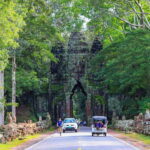
After Angkor Wat, you’ll move to Angkor Thom South Gate, then continue to Bayon Temple. The South Gate stop is shorter—about 20 minutes—but it’s worth it. The approach over the causeway gives you a quick sense of the fortified city’s scale. Angkor Thom covers around 6 square miles, so even a brief moment at the gate helps you mentally place what you’re about to enter.
Then you get to Bayon, with about one hour there. Bayon is known for its richly decorated Khmer temple style and for being the state temple associated with Jayavarman VII at the end of the 12th or early 13th century. The center of attention is the temple’s face imagery, which is one reason Bayon feels different from Angkor Wat even when you’re still in the same ancient zone.
This part of the day works well because it changes the vibe. Angkor Wat can feel formal and symmetrical. Bayon feels more alive and crowded visually, even when you’re standing in lines. If you’re tired from the morning walking, the guide’s timing and route choices make a difference here.
Kompong Phluk on Tonlé Sap: boat time and what you should expect
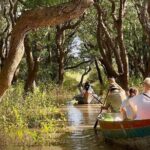
The day shifts from stone to water. After a drive of about 45 minutes into the countryside, you’ll reach the quay and board a local boat for about 1.5 hours on Tonlé Sap. This is the heart of the Tonlé Sap experience in the schedule.
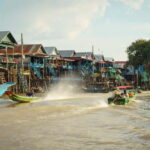
The tour includes time exploring the floating villages and flooded forests, guided by your driver guide. But here’s the honest expectation-setting: Kompong Phluk is influenced by seasonal water levels, and the “floating village” idea can look different depending on conditions. You may see lots of houses and community areas on stilts, with water around them, plus boats and parts of the settlement that feel more seasonal than constantly floating.
That matters because the experience is still impressive even if it’s not a single uninterrupted scene of everything floating. The value is in seeing how people adapt to the floodplain—using the lake as a working landscape rather than just a scenic backdrop.
This is also the moment where the tour’s pacing helps. You’re not only watching from the roadside. You get out on the water and see distances, tree lines, and how the settlement fits into the floodplain.
Lunch break: how to handle the on-your-own window
Lunch is on your own account after the temple sequence and before the lake portion continues. The tour structure gives you a break, but it doesn’t guarantee a restaurant stop or a pre-selected meal.
I’d treat this as a simple logistics moment. Bring a bottle of water with you, keep a little cash handy, and eat early enough that you still feel good during the boat ride. If you go for a late lunch, the heat and timing can make the rest of the day feel longer than it needs to.
Comfort tip: wear shoes that handle uneven ground around temple paths and quays. You’ll likely be walking more than you expect, even if you’re in a private car between stops.
What you actually pay: price, pass, and taxes
The headline price listed is $40 per person, but this tour has additional costs you should budget for. A required Angkor Pass and temple admissions are not included in the tour price. You’ll pay for the pass at the Angkor Wat Ticket Office during Stop 1, and the specific admissions for Angkor Wat, Angkor Thom South Gate, and Bayon are not included.
On top of that, there’s a government tax and community development fee of $20 per person that is not included. Tips are also not included, and travel insurance is not included.
So what does the pricing really mean for value? The tour’s worth comes from packaging a full day: air-conditioned pickup and drop-off, an English-speaking driver guide, plus a private boat tour on Tonlé Sap rather than a quick roadside glance. If you were hiring transport and boat time separately, you’d spend similar money in pieces. The key is planning for the pass and fees so your total is predictable.
Included comfort: small things that make a long day easier
This is a comfort-forward private tour. You’ll have an air-conditioned vehicle, pickup and drop-off back to your starting point in Siem Reap, and cool towels during touring.
That might sound minor, but in a day with temple sun and a boat ride in heat, it changes your experience. It also helps your guide or driver stay focused on the route instead of stopping for basic comfort needs.
The tour is private, too—meaning only your group participates. That matters when you want to move at a pace that fits your questions and photo habits.
Who this tour fits best (and who may want something else)
This one-day mix is perfect if you want a strong Angkor sampler plus a real Tonlé Sap component. It suits you if:
- you want private transport rather than shared minibus stress
- you like structured time at major sights (Angkor Wat, South Gate, Bayon)
- you care about seeing lake life, not just temples
It might not fit as well if:
- you want to spend extra time at every temple detail (this is more of a highlights plan)
- you’re expecting a single, always-identical floating village scene with everything literally on rafts or platforms
- you hate paying multiple separate items on the day (pass + temple admissions + the community fee)
Should you book this Angkor Wat & Tonlé Sap private day tour?
If you want one day that links Angkor Wat to Tonlé Sap with real boat time, this is a solid choice. Plan for the required Angkor Pass and the extra fees, wear good walking shoes, and keep lunch flexible. With that mindset, you’ll get a day that feels like Cambodia on two very different canvases—temples and floodplain life—without needing multiple tours.
If you’re the kind of person who hates any uncertainty about what Kompong Phluk looks like, consider confirming what you expect to see in terms of water levels before you go. Otherwise, book it for the combination: major Angkor stops plus a guided Tonlé Sap boat ride that actually takes you into the lake world.
FAQ
What is the total duration of the Angkor Wat & Tonlé Sap private day tour?
It runs for about 9 hours.
Where does pickup start, and where do I get dropped off?
Pickup is from your hotel in Siem Reap, and you’re dropped off back at the meeting point at the end.
Is the tour private or shared?
This is a private tour/activity. Only your group participates.
How long is the boat ride on Tonlé Sap?
You board a local boat for about 1.5 hours on Tonlé Sap.
Do I need to buy an Angkor Pass?
Yes. You’ll go to the Angkor Wat Ticket Office during the tour and pay for and get your Angkor Pass, which is required.
What’s not included in the price?
Not included: tips, travel insurance, and a government tax and community development fee of $20 per person. Temple admissions are also not included.
Is lunch included?
Lunch break is on your own account.