REVIEW · SIEM REAP
Angkor Wat Sunrise Tour Half-Day (Join-In-Tour)
Book on GetYourGuide →Operated by Angkor Temple Tour · Bookable on GetYourGuide
Sunrise at Angkor feels like time travel. A join-in tour like this pairs an early sunrise push with a guided temple circuit, so you’re not just walking around—you’re making sense of what you see, from the carvings to the layout. I love the timing at Angkor Wat and the way the guide turns the biggest sights into a clear story.
I also really liked the human side of the experience: a personal chauffeur-guide (Samath is one example of the kind of upbeat, good-spirited guide you may get) helps keep the day moving without feeling rushed. One thing to plan for: the tour price does not include the temple pass, and food and drinks are not included either.
In This Review
- Key things I’d prioritize on this Angkor sunrise join-in tour
- What the Angkor Wat Sunrise Half-Day Tour Actually Does for You
- Pickup Timing from Siem Reap: How You Avoid the Biggest Headache
- Angkor Wat at Sunrise: The World’s Biggest Religious Monument, Up Close
- Angkor Thom and Bayon: From the Khmer Empire Capital to the Smiling Faces
- The Terrace Stops at Angkor Thom: Elephants and the Leper King
- Ta Prohm: When Tree Roots Take Over the Scene
- Transport, Group Size, and Why It Feels More Personal Than You’d Expect
- Guide Quality: What Makes the Difference at Angkor
- Price and Value: The $10 Ticket vs. the Temple Pass Reality
- Food, Water, and Timing: A Simple Plan That Works
- Who This Tour Suits Best (And Who Might Prefer Something Else)
- Should You Book This Angkor Wat Sunrise Tour?
- FAQ
- How long is the Angkor Wat sunrise join-in tour?
- Is the temple pass included in the price?
- Which temples are visited during the tour?
- What’s included in the tour price?
- What isn’t included?
- How big is the group?
- What language is the tour guide?
- Where does pickup happen?
- What is the cancellation policy?
Key things I’d prioritize on this Angkor sunrise join-in tour
- Sunrise at Angkor Wat when the monument and grounds feel calmer and more cinematic
- English guide explanations that help you connect names like Bayon and Ta Prohm to what you’re seeing
- A tight classic circuit across Angkor Wat, Angkor Thom, Bayon, and Ta Prohm in one day
- Bayon’s 54 towers and 216 faces as a specific must-see detail you can look for
- Ta Prohm’s tree roots where stone and nature overlap in a very photo-friendly way
What the Angkor Wat Sunrise Half-Day Tour Actually Does for You
This is a smart, value-focused way to see several top temples without having to coordinate everything yourself. You get hotel pickup in Siem Reap, a car ride that’s kept comfortable in an air-conditioned minivan, and a guide who stays with you through the main stops.
The main idea is simple: start at dawn, then move through the Angkor Archaeological Park on a classic route. That route hits Angkor Wat first, then sweeps into Angkor Thom and Bayon, and finishes with Ta Prohm, the one temple where nature has clearly taken its time.
You can also read our reviews of more tours and experiences in Siem Reap
Pickup Timing from Siem Reap: How You Avoid the Biggest Headache
Your morning starts with pickup from Krong Siem Reap, and you’ll want to be ready about 30 minutes before the driver comes by. That small detail matters because sunrise tours work on a schedule, and Angkor rewards punctuality.
The ride also helps. Even if you’re comfortable hiring tuk-tuk transport, an air-conditioned minivan makes a long morning feel easier, especially when the heat builds. You’ll spend your energy on temples and photos, not on figuring out logistics.
Angkor Wat at Sunrise: The World’s Biggest Religious Monument, Up Close
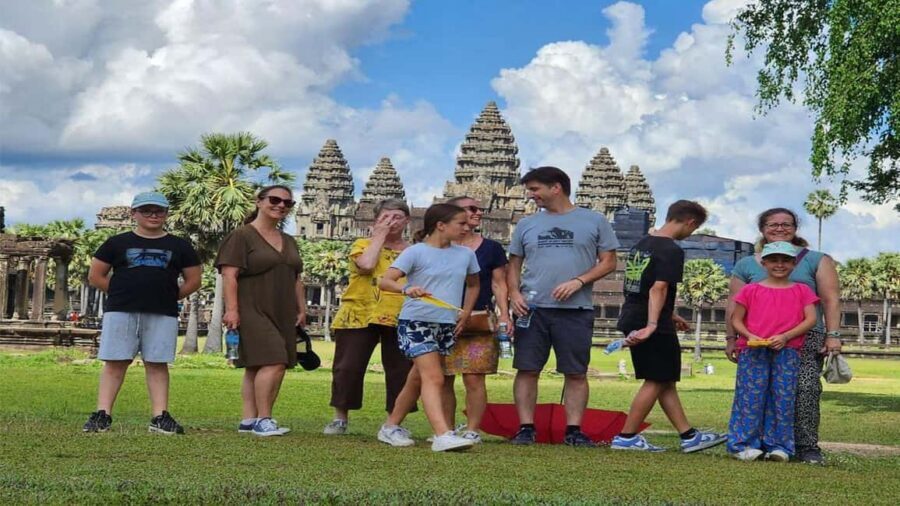
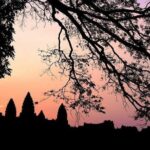
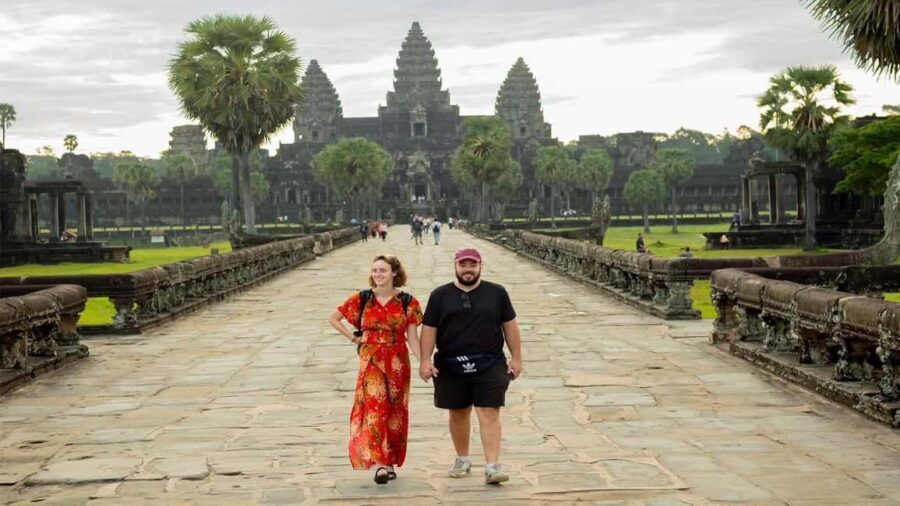
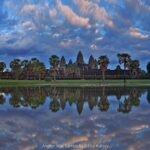
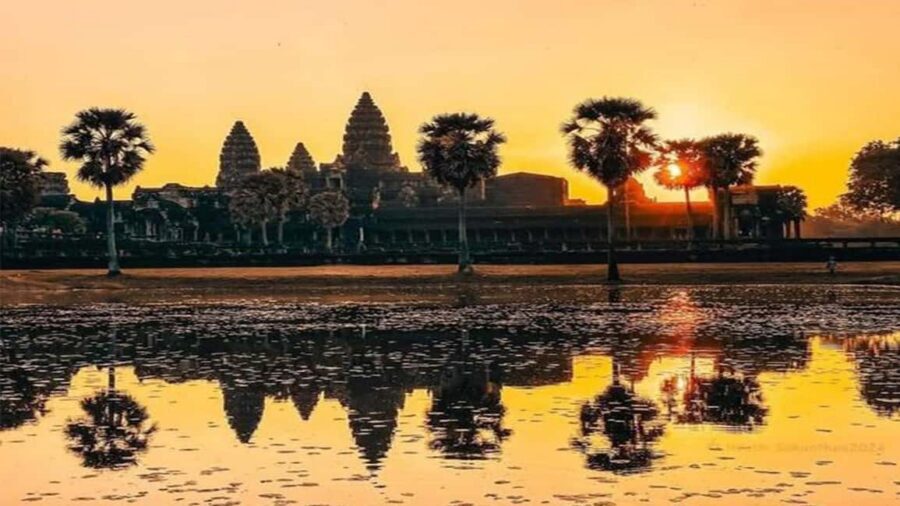
Angkor Wat is the centerpiece, and sunrise is when it’s easiest to take it all in. You’ll watch the sunrise over the temple, which is widely described as the largest religious monument in the world, then get a guided tour of the site.
What I like most here is that you’re not only looking for iconic angles. You’re also learning what you’re looking at while you’re still fresh and the crowds are more manageable than later in the day.
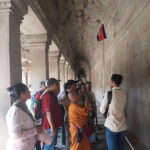
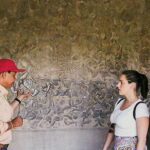
During your guided time, your English-speaking guide will walk you through the temple’s history and what makes it significant. That guidance turns a “wow, it’s big” moment into something more satisfying—like you can actually track the place’s meaning while you’re standing there.
Practical tip: go in with a simple photo plan. Pick a couple of angles you care about (the main front views are the obvious choices), then let the guide do the rest of the explaining so you don’t miss key details.
Angkor Thom and Bayon: From the Khmer Empire Capital to the Smiling Faces
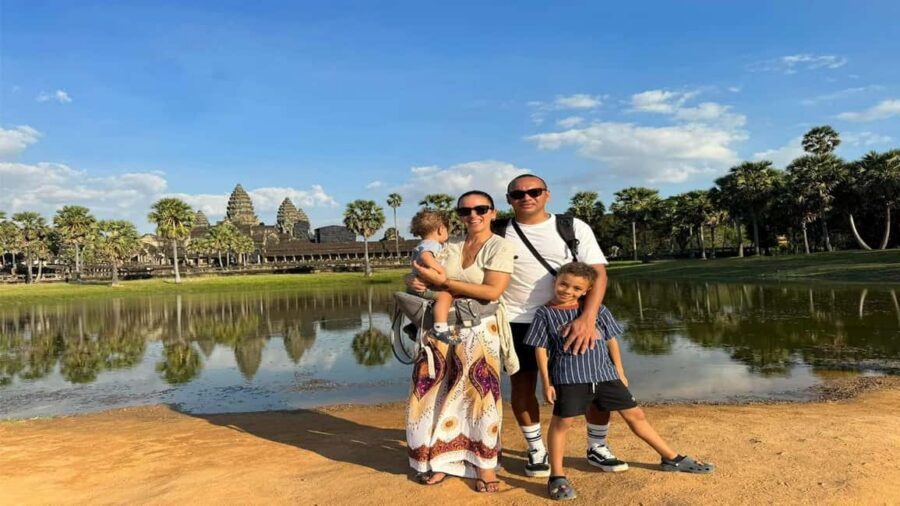
After Angkor Wat, the tour shifts to Angkor Thom, described as the last capital of the Khmer Empire. That context matters because Angkor Thom isn’t just another temple stop—it’s a statement of power, city planning, and royal symbolism.
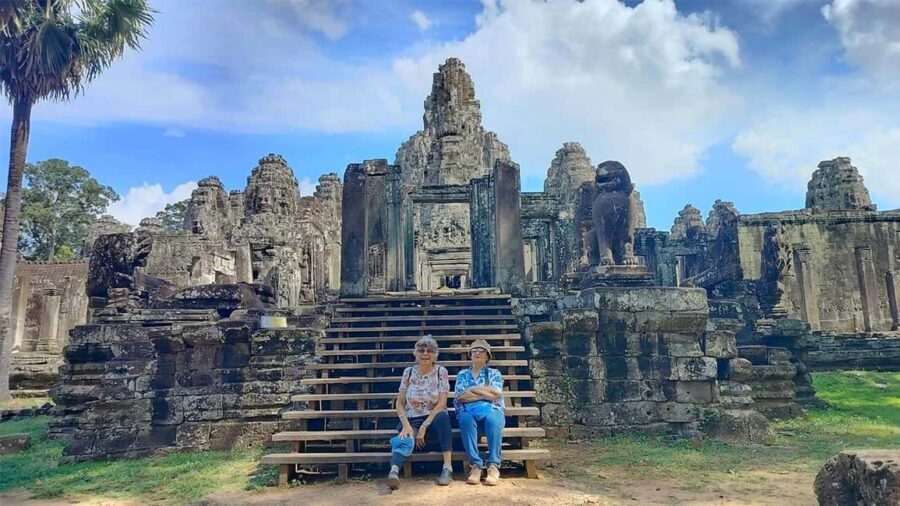
Next up is Bayon Temple, and here the specifics are so clear you can use them while you’re there. Bayon is known for 54 towers decorated with 216 smiling faces of Avalokiteshvara. When your guide points these out, it becomes much easier to look beyond the overall “cool carvings” effect and actually see the repeating design.
You’ll spend about an hour with Bayon as part of the route. That’s a good amount of time for a first visit: long enough to notice the faces and towers, not so long that you feel trapped in one spot while you bake in the sun.
Possible drawback to consider: the day is structured. If you’re the type who likes to wander for an extra hour with no plan, this route may feel like it has too many stops. The upside is you’ll cover the essentials efficiently.
The Terrace Stops at Angkor Thom: Elephants and the Leper King
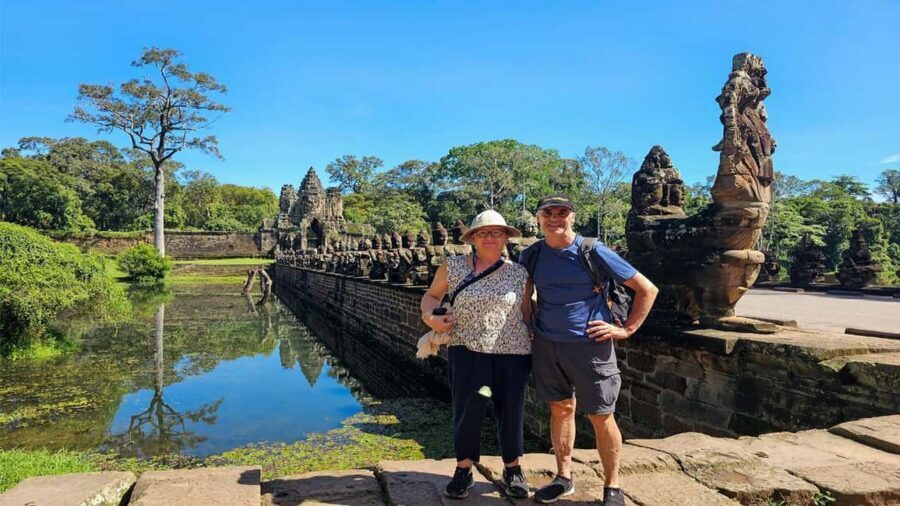
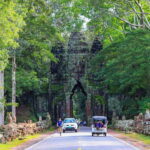
You’ll also see the Terrace of the Elephants and the Terrace of the Leper King during the Angkor Thom portion. These terraces add texture and human-scale detail to the bigger temple views.
Why these work well on a half-day style schedule is that they’re visually strong even if you’re not an architecture specialist. You get carvings and story elements that are easy to spot and remember later, which helps if you’re trying to keep several temples straight in your head.
Also, having a guide here is especially helpful. When someone explains what you’re looking at, the terraces stop being random decorative stops and become part of the larger Khmer capital picture.
You can also read our reviews of more tours and experiences in Siem Reap





Ta Prohm: When Tree Roots Take Over the Scene
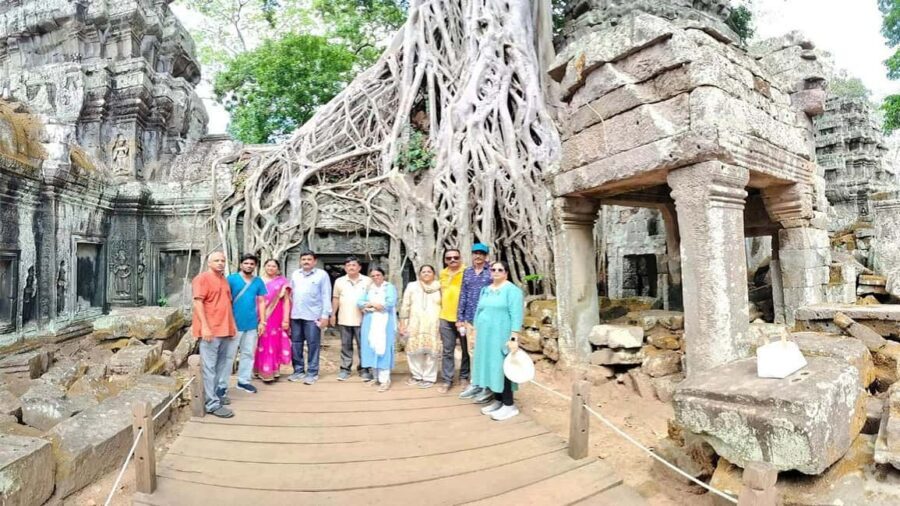
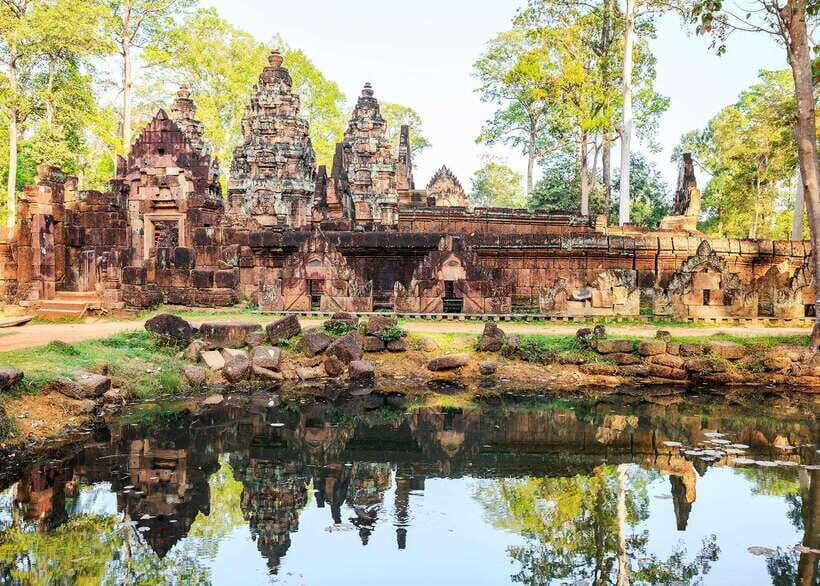
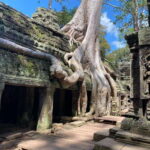
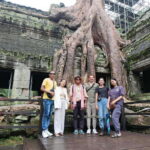
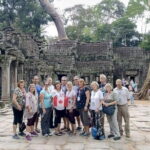
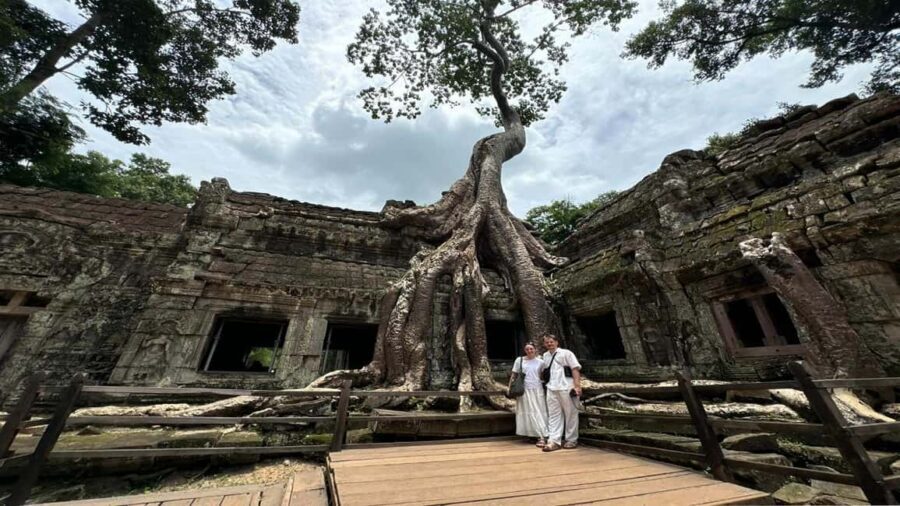
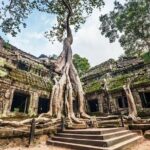
Ta Prohm is the finale, and it’s the reason many people book this tour in the first place. The temple is known for being left in much the same condition as it was found, so you get that signature look: stone and tree roots tangled together.
You’ll see the temple and its tree roots on a guided visit, with about an hour allotted. This is the part of the circuit where photos feel extra rewarding because the visuals are dramatic even without perfect lighting.
What I like about scheduling Ta Prohm after Bayon is that it gives the day a natural payoff. Bayon focuses on meaning through repeated faces. Ta Prohm flips that—meaning through the way time and nature have physically changed the stone.
Practical tip: keep your camera ready but stay flexible. The best angles sometimes depend on where other people are standing, and this is one of those temples where you’ll want more than one shot.
Transport, Group Size, and Why It Feels More Personal Than You’d Expect
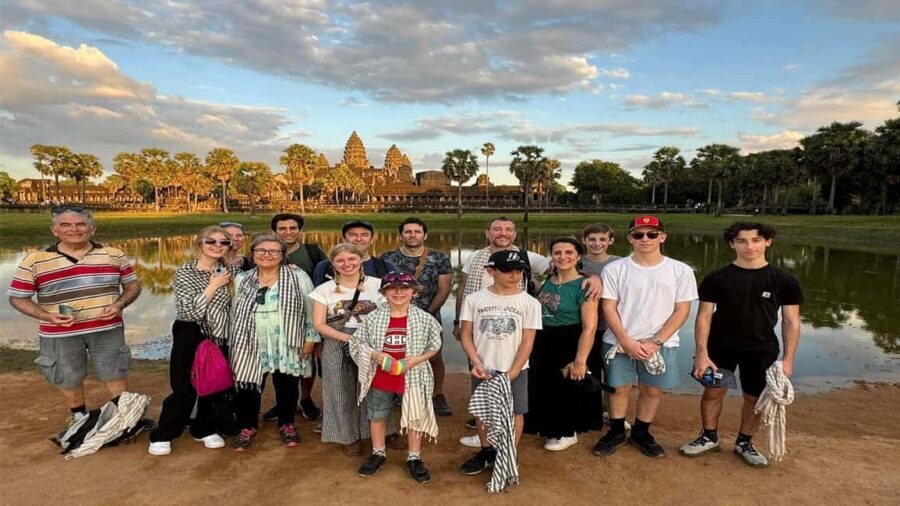
This is a small group join-in tour, limited to 15 participants. That matters because it keeps the experience from turning into a long queue of strangers. You’ll still be in a group, but the guide can usually manage timing and questions more easily.
You also have hotel pickup and drop-off included, which removes a lot of stress in Siem Reap. Sunrise tours are already demanding. Knowing your ride is handled is worth something, especially if you’re doing other activities later in the day.
In terms of comfort, the air-conditioned minivan is doing real work here. Angkor days can start cool and then quickly warm up. You’ll feel the difference between getting stuck in hot transport versus having a proper vehicle.
Guide Quality: What Makes the Difference at Angkor
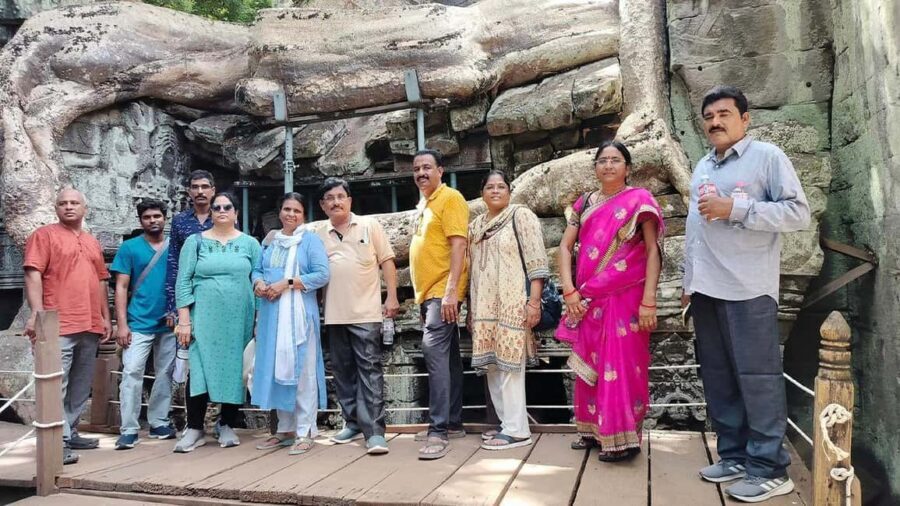
The guide is where this tour can feel either like a checklist or like a real experience. The big advantage here is that your guide is professional and English-speaking, and you get historical context while you’re moving through the temples.
From past experiences with guides on tours like this, I’d put energy and patience near the top of the list. Samath, for example, is described as fun, with good spirits, and a very strong guide presence. Another guiding style people appreciate is being kind and patient while you ask questions or wait for the group to catch up.
What you can do as a visitor: ask one or two simple questions early, like what detail you should look for at Bayon or why Ta Prohm looks the way it does. When you know what to scan for, your brain stays engaged instead of running on autopilot.
Price and Value: The $10 Ticket vs. the Temple Pass Reality
The tour price is listed at $10 per person, and the duration is about 7 hours. That sounds like a bargain, and it can be—with one key condition.
The temple pass is not included. You’ll need to budget $37 per person for the Angkor temple pass, and you can buy it through the official site: https://www.angkorenterprise.gov.kh/. Food and drinks aren’t included either.
So what’s the real value? You’re paying a low amount for guided routing plus hotel pickup and air-conditioned transport. Then you pay the temple pass for access to the park. In practical terms, the guide and transport are where the tour saves you effort, while the pass is the unavoidable cost of admission.
If you’re comparing options, treat it like this: you’re really buying convenience and interpretation. If you already know you want a guided sunrise-plus-temples morning, this pricing can make a lot of sense.
Food, Water, and Timing: A Simple Plan That Works
Since food and drinks aren’t included, plan to bring or buy what you need before your day starts. Sunrise tours can stretch long enough that hunger and thirst sneak up fast.
Because your day includes several guided stops, it’s smart to eat earlier rather than later. Don’t count on having a relaxed sit-down meal in the middle, even if you might find time between stops. Think of it as a morning that stays in motion, then plan a proper meal after you’re back in Siem Reap.
Who This Tour Suits Best (And Who Might Prefer Something Else)
This join-in tour fits best if you want:
- A structured path through the big temples: Angkor Wat, Angkor Thom, Bayon, and Ta Prohm
- Sunrise timing without the hassle of organizing transport and ticket access on your own
- A guide who can explain what the sights mean, not just where they are
It may be less ideal if:
- You’re hoping for hours of free time at one single temple
- You want a slow travel day where you can linger without thinking about the next stop
- You don’t want to handle budgeting for the temple pass separately
Should You Book This Angkor Wat Sunrise Tour?
If you’re doing Angkor for the first time, I’d lean yes. This tour hits the temple names you almost certainly want to see, keeps group size small (so you’re not lost in the crowd), and starts early enough to make sunrise the main event.
Book it if you like clear guidance and you want your morning to feel productive. Skip it if you’re the type who needs lots of unscheduled time to roam at your own pace. Either way, plan for the temple pass cost and remember that food isn’t included.
In short: this is a practical, well-structured way to get the most important Angkor sights into one guided day, with sunrise as the emotional high point.
FAQ
How long is the Angkor Wat sunrise join-in tour?
The duration is 7 hours.
Is the temple pass included in the price?
No. The temple pass is not included and costs $37 per person.
Which temples are visited during the tour?
You’ll visit Angkor Wat, Angkor Thom, Bayon Temple, and Ta Prohm, plus you’ll see the Terrace of the Elephants and the Terrace of the Leper King.
What’s included in the tour price?
Included are a professional English-speaking tour guide, hotel pickup and drop-off, and transport by air-conditioned minivan.
What isn’t included?
Food and drinks are not included.
How big is the group?
The group is limited to 15 participants.
What language is the tour guide?
The guide is English-speaking.
Where does pickup happen?
Pickup is from Krong Siem Reap, and you should be ready about 30 minutes before pickup.
What is the cancellation policy?
Free cancellation is available up to 24 hours in advance for a full refund.