REVIEW · SIEM REAP
Angkor Wat Sunrise Shared Tours: Bayon-Ta Prohm-Banteay Srei
Book on GetYourGuide →Operated by Siem Reap Tour Guide · Bookable on GetYourGuide
Early mornings pay off here. This Angkor Wat sunrise shared tour is built around the big four temples: Angkor Wat, Ta Prohm, Bayon, and Banteay Srei. You get a schedule that’s ambitious but not chaotic, with a professional guide who adjusts the story to your level.
I love the way the day is timed for the sunrise light at Angkor Wat, plus the included human touch: your guide handles the meaning, not just the photos. A second win is the small-group pace (up to 12 people), so questions don’t get lost. The one real drawback to plan for is the extra cost of the temple pass (listed at $37 per person), and the fact that the early start plus temple rules means this isn’t for everyone.
If you’re visiting Siem Reap and want the essentials done in one long day, this is a solid way to go. You’ll also get more than temples: the drive includes Cambodian countryside and villages, which helps the day feel grounded, not just like a photo checklist.
In This Review
- Key highlights in plain terms
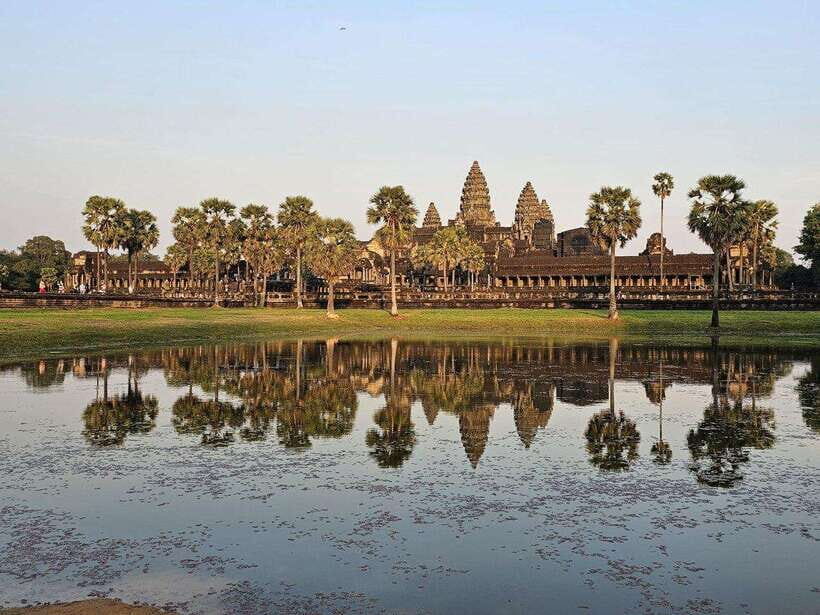
- Sunrise at Angkor Wat: the moat reflection moment
- Angkor Thom and Bayon Temple’s 200 faces
- Ta Prohm: tree roots, big drama, and careful footing
- Banteay Srei: pink carvings, break time, and a slower rhythm
- The shared small-group setup (and why it feels smoother)
- Price and value: $27 plus the temple pass
- What you’ll need to follow temple rules (it’s not picky, it’s practical)
- How the countryside drive changes the day
- Guide quality: when interpretation makes the temples click
- Should you book this Angkor Wat sunrise shared tour?
- FAQ
- How long is the Angkor Wat sunrise shared tour?
- What temples are included on this day plan?
- Is the temple admission pass included in the tour price?
- Does the tour include breakfast and lunch?
- What’s included in the tour fee?
- Do you skip the line at the temples?
- What size is the group?
- Where does pickup and drop-off happen?
- What should I wear or bring for temple visits?
Key highlights in plain terms
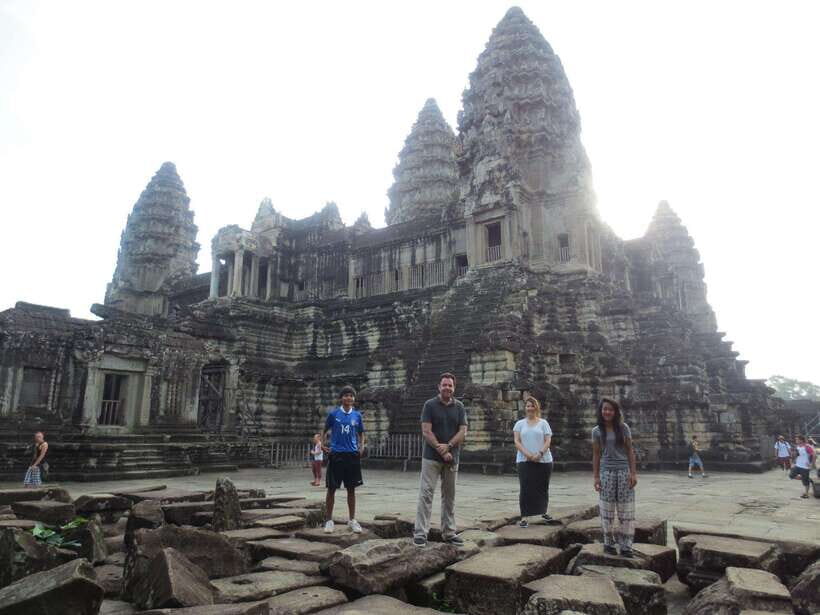
- Angkor Wat sunrise with the light reflecting in the moat of the temple complex
- Skip-the-line entrance to keep the morning moving
- Up to 12 people so you’re in a real group, not a crowd
- Four major temples in one day: Angkor Wat, Ta Prohm, Bayon, Banteay Srei
- AC minivan/minibus with cold water and cold towels during transfers
- Hotel pickup and drop-off anywhere in Siem Reap town
Sunrise at Angkor Wat: the moat reflection moment
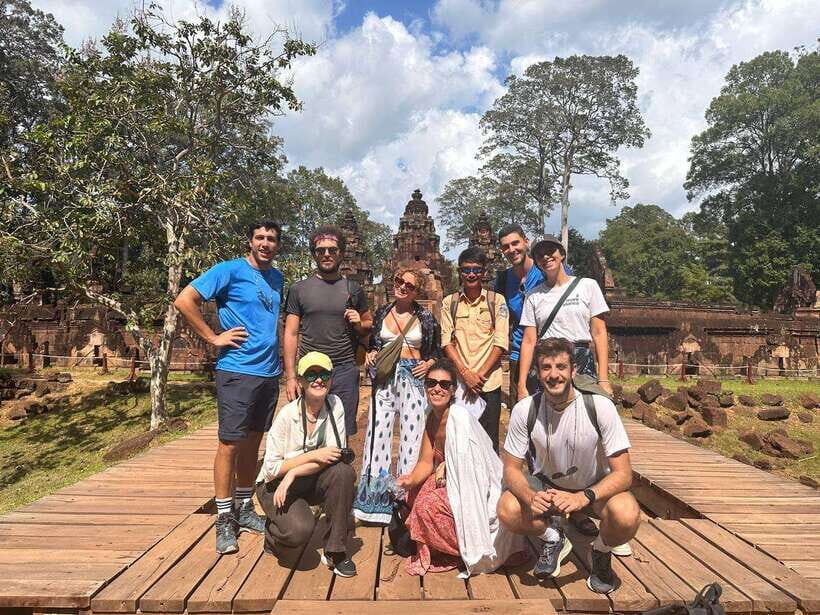
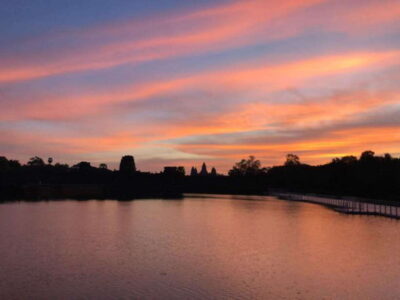
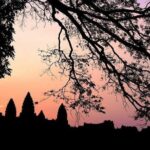
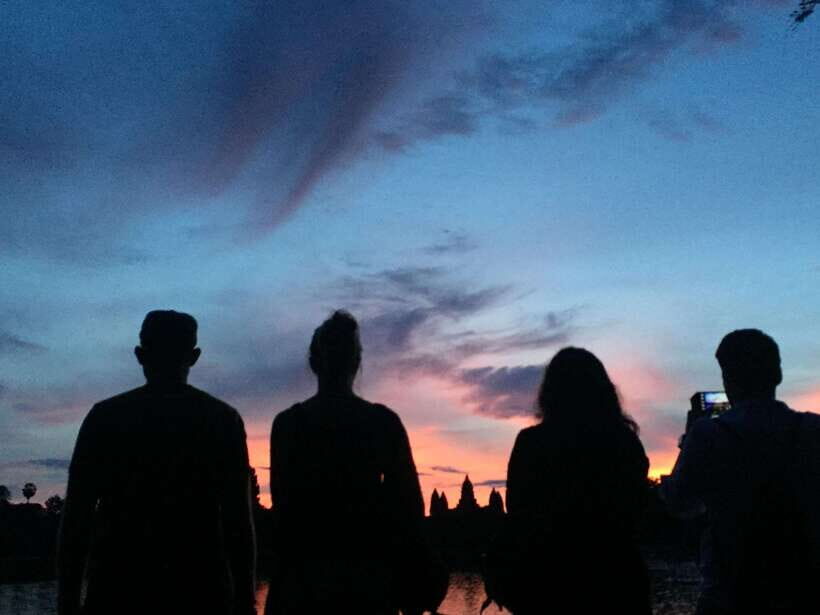
The heart of this tour is the sunrise session at Angkor Wat, scheduled for about 3.5 hours. That’s the time slot you want because the whole complex changes character when the light hits. Morning also tends to feel calmer, and you’ll have time for the photo stops and guided walk without rushing straight into midday heat.
You’ll also start with breakfast during the Angkor Wat portion. I like this because it removes one more decision from your early morning. You can focus on where to stand, how to frame the spires, and what you’re seeing rather than trying to find food first.
One practical point: Angkor Wat is not a “walk for 10 minutes and leave” place. Even with a guided plan, expect plenty of walking. Comfortable sneakers matter. Also bring a hat and sunscreen; even early sun can be strong once you’re out in open areas.
You can also read our reviews of more tours and experiences in Siem Reap
Angkor Thom and Bayon Temple’s 200 faces
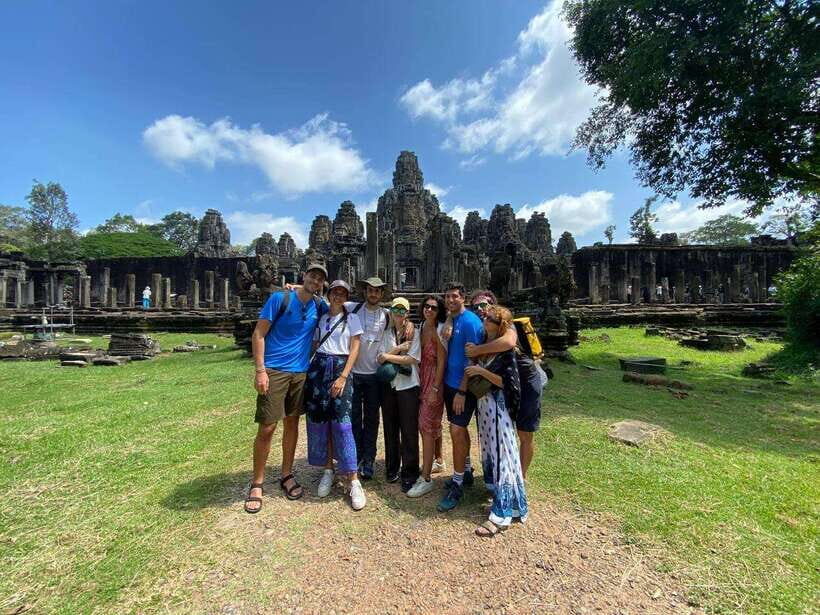
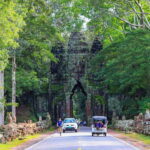
After Angkor Wat, the tour shifts to Bayon Temple, linked to the walls and spirit of Angkor Thom. You’ll have about 1 hour here, including a photo stop, guided visit, and walking time.
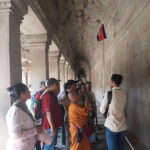
What makes Bayon special is what you see front and center: the temple is decorated with over 200 faces. Your guide’s job is to explain what you’re looking at and why it mattered, and that’s a real value because face carvings can look similar from a distance. With context, you notice differences in expression, placement, and the way the structure is built.
Because the time here is shorter than Angkor Wat, you’ll want to stay present and not spend the whole hour scanning for one perfect angle. Let your guide get you oriented first, then take your photos second. That order tends to make the place click.
Ta Prohm: tree roots, big drama, and careful footing
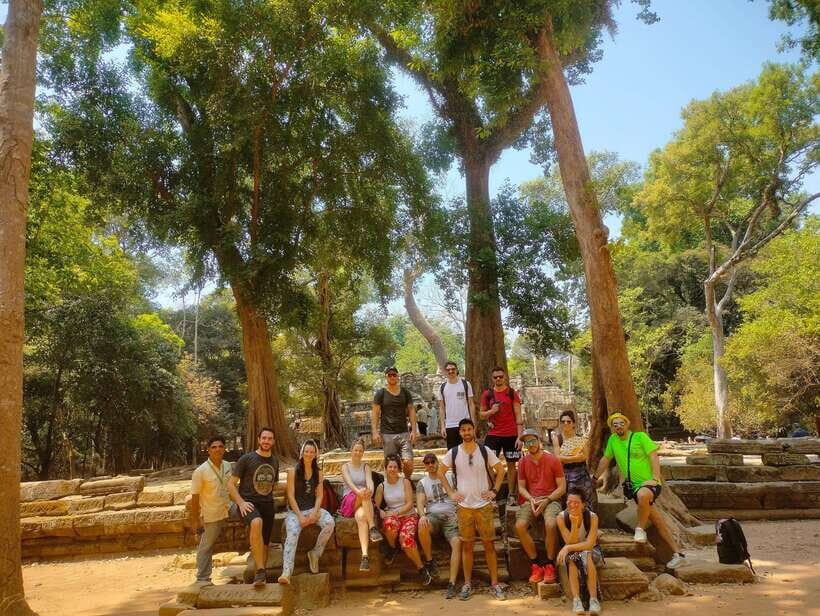
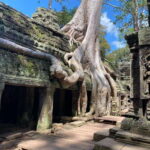
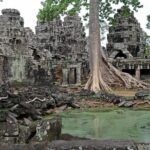
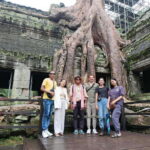
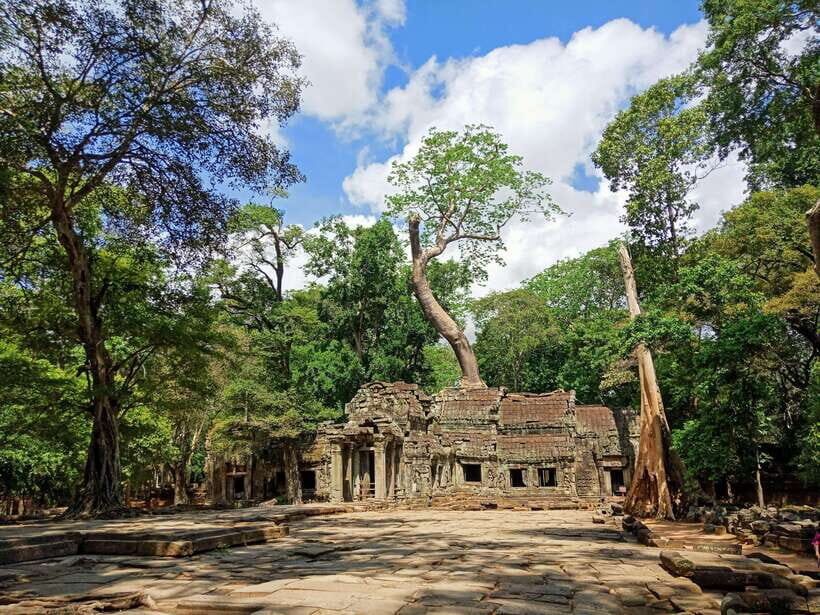
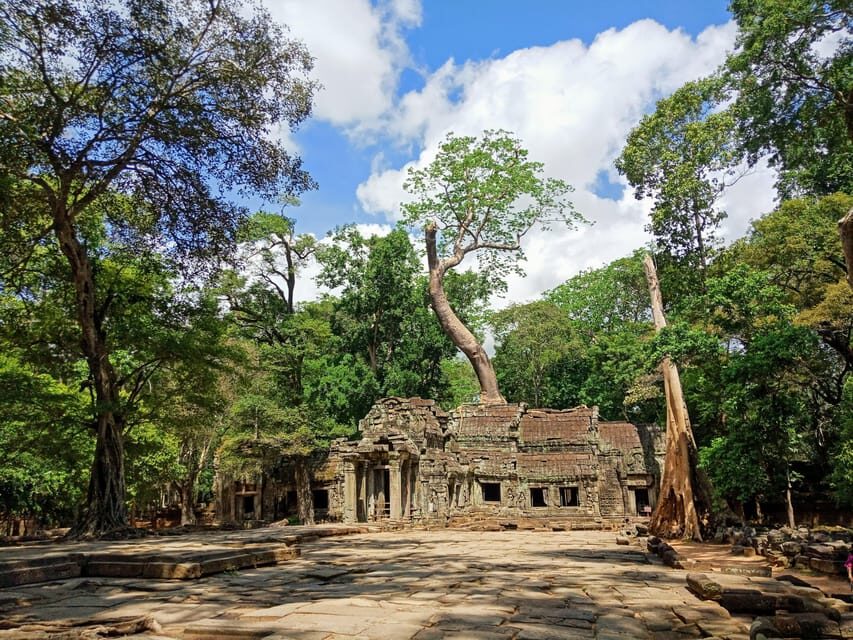
Next is Ta Prohm, the temple famous for the massive tree roots that climb through the ruins. The tour gives about 1.5 hours total, including time for photos, a guided visit, and walking.
Yes, Ta Prohm is the one many people recognize from Hollywood imagery. But the real experience is less about the pop-culture reference and more about scale: the way the roots grab onto stone makes the ruins feel alive. Your guide will help you read the temple as a set of choices made long ago, not just an “old building with plants on it.”
This portion includes a lot of moving through uneven areas. The tour description lists walk and safety briefing steps, which is good because you’ll likely be on surfaces that are not smooth. I’d treat Ta Prohm as your “watch your step” stop. If your shoes have good grip, you’ll enjoy it more.
Banteay Srei: pink carvings, break time, and a slower rhythm
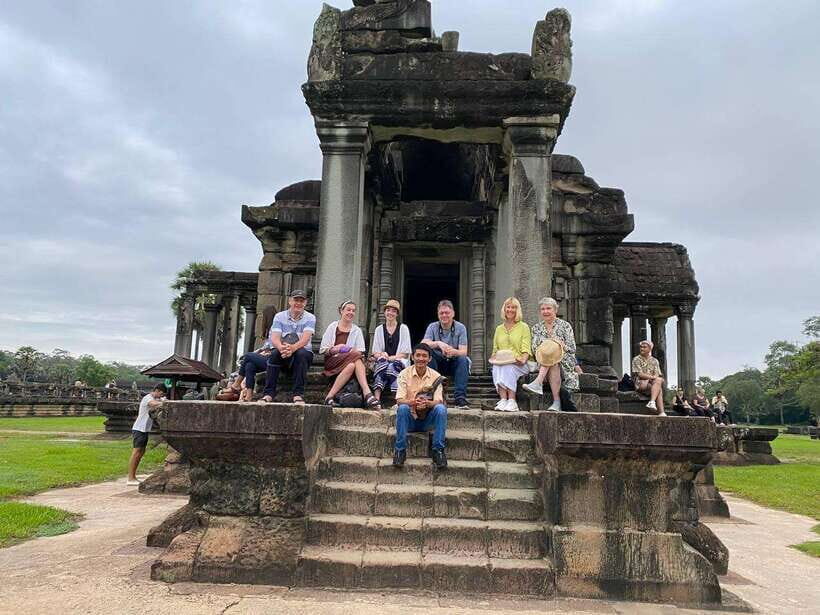
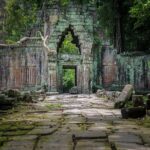
Then comes Banteay Srei, usually the crowd favorite for its carvings. You’ll have around 3.5 hours here, and the schedule includes a break, photo stop, guided tour, lunch, and even local snacks.
Banteay Srei is where you’ll spend time looking close. The carvings are detailed and often smaller than what people expect from Angkor. That’s why guided attention helps: you learn what motifs mean and where to look so you’re not just staring at stone without a guide’s “map.”
The break and lunch matter too. After a morning of early sunrise and two major temples, it’s smart to have a reset built into the day. It also helps energy levels. If you go too hard at Angkor Wat and Bayon without a food pause, the back half can feel like a blur.
The shared small-group setup (and why it feels smoother)
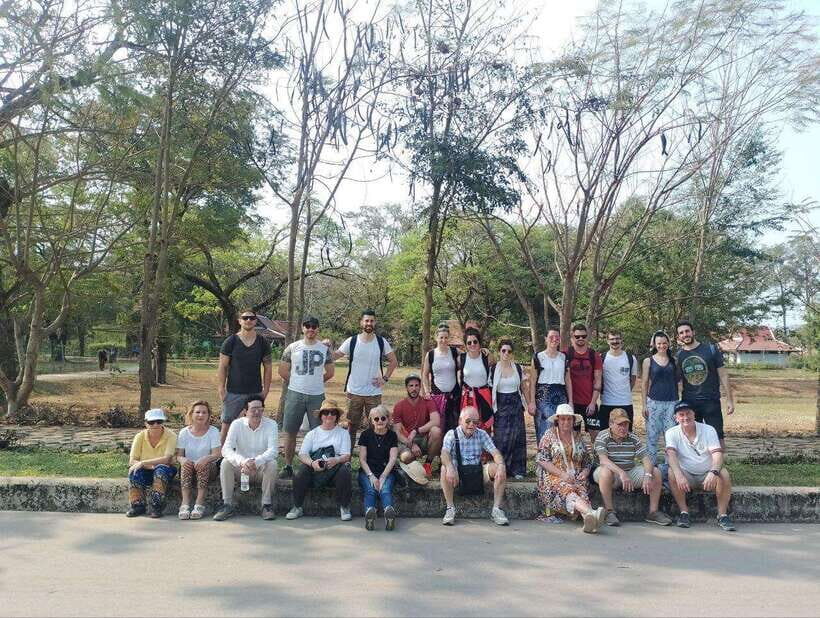
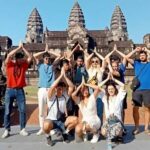
This is a shared tour, but it caps at 12 participants. That small-group number is not just a comfort detail; it changes how the day runs. In a bigger group, you lose time to logistics and people getting separated. In a group this size, you’re more likely to keep your pace with your guide and driver.
Your driver and guide work in one tight unit: an AC minivan/minibus plus a safe driver handling the roads and parking logistics. The tour also includes cold drinking water and cold towels, which you’ll really appreciate once you’re in full sun between temple segments.
Pickup is flexible within Siem Reap town, with multiple hotel-lobby options listed (including places like Old Market, Lub d Cambodia Siem Reap, Mad Monkey Hostel Siem Reap, and others). Drop-off also returns you to select locations across town, which saves you time once the day ends.
One more practical detail: the tour notes a skip-the-line entrance using a separate entrance. That can mean less waiting at the busiest points, especially in the morning.
Price and value: $27 plus the temple pass
The tour price is $27 per person for the day, lasting about 9 hours. The temple admission pass is not included, and it’s listed at $37 per person, covering all temples in the agenda.
So your realistic total for the temple experience is basically tour fee plus the pass fee. The value question is whether what you’re buying is more than transport and entry tickets. In this case, you are also buying:
- hotel pickup and drop-off around Siem Reap town
- guide interpretation at the “right level,” aimed at what you want to understand
- sunrise timing at Angkor Wat
- included cold water and cold towels
- a day plan that hits four major temples without making you manage everything alone
If you’re the type who likes to know what you’re looking at—religion, symbolism, and how the temples fit together—this format often feels worth it. If you’re only chasing photos and you already know the basics, you might feel the extra cost more strongly. But for most first-timers, the guide time is the difference between seeing temples and actually understanding them.
What you’ll need to follow temple rules (it’s not picky, it’s practical)
Angkor temple rules are real. This tour lists several “not allowed” items and dress expectations that you should treat as part of the day, not a last-minute surprise.
From the guidance provided:
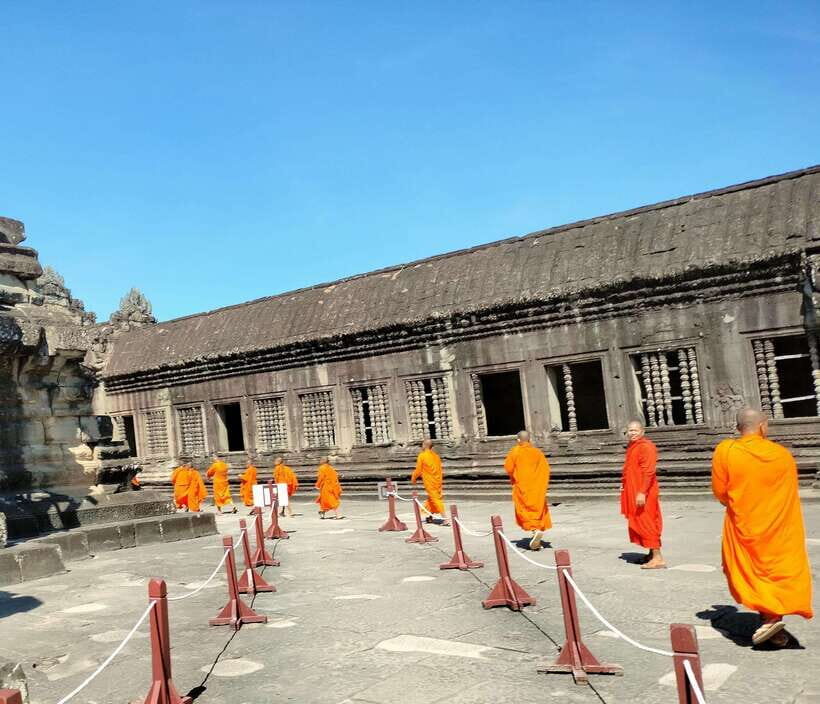
- No shorts (you’ll want light clothing that covers your knees and shoulders)
- Bring hats and sunblock
- Use mosquito repellent
- Wear sneakers
- Avoid drones and keep your day camera-friendly setup simple
- Drinks and food inside the vehicle are not part of the allowed setup
Also note the tour is not suitable for certain visitors. It’s listed as not suitable for people with back problems, mobility impairments, and people over 70. It’s also not for children under 10. If any of that applies, don’t force it—your experience will suffer, and so will your guide’s ability to keep you moving safely.
How the countryside drive changes the day
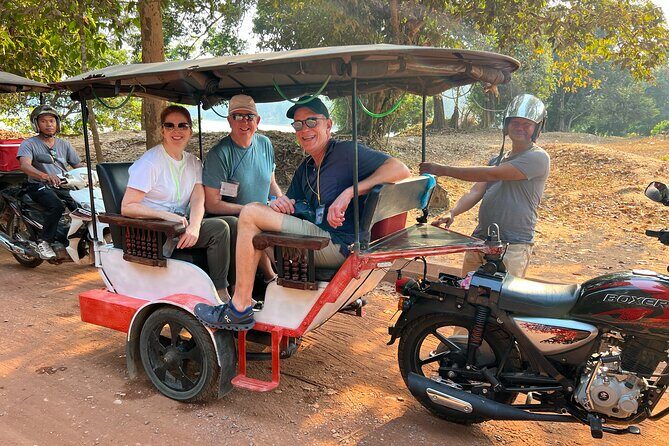
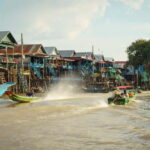
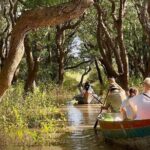
One detail I appreciate is that the day isn’t only temple gates. The tour includes rides through countryside, daily life, and old villages in Cambodia. That matters because it breaks up the intensity of archaeology with real-world context.
Even just seeing villages and how people live while you travel helps Angkor feel less like an isolated attraction. It’s one reason people remember the whole day, not just the best photo.
Guide quality: when interpretation makes the temples click
The guide is a big part of why this tour earns strong marks. In recent bookings, names like Mr. Changra, John, and Sam have shown up as the guides on this kind of itinerary. The common thread is clear: they’re described as helpful, professional, and willing to answer questions.
I also love the idea of a guide who can scale the explanation to your level. Some people want the quick story. Others want more detail. A good guide adapts, so the day stays fun instead of turning into a lecture.
And if photography is important to you, some guides have been noted for helping take photos well, not just pointing at monuments. That’s a practical kindness when you’re traveling with friends or family.
Should you book this Angkor Wat sunrise shared tour?
Book it if you want:
- the sunrise light at Angkor Wat without handling logistics
- a guided plan that hits four top temples in one day
- a manageable small group size
- hotel pickup/drop-off and AC transport
Skip or reconsider if you:
- hate early mornings (sunrise means you’ll get up early)
- don’t want to pay an extra $37 temple pass
- need mobility-friendly pacing (the day includes walking/hiking elements)
- are traveling with kids under 10, or if you’re over 70
If you’re a first-timer and you want the Angkor essentials handled in one efficient day, this is a strong choice. Add good shoes, follow the temple dress rules, and let the guide do the heavy lifting on meaning—and you’ll leave with more than a memory reel.
FAQ
How long is the Angkor Wat sunrise shared tour?
The duration is 9 hours.
What temples are included on this day plan?
The agenda includes Angkor Wat, Bayon Temple, Ta Prohm, and Banteay Srei.
Is the temple admission pass included in the tour price?
No. The temple day pass is an additional cost of $37 per person, and it covers all temples in the agenda.
Does the tour include breakfast and lunch?
The schedule includes breakfast during the Angkor Wat portion and lunch during the Banteay Srei portion, but breakfast/lunch are also listed as not included. So plan on paying for meals based on what’s offered or listed for your exact booking.
What’s included in the tour fee?
Included are hotel pick up and drop off, an English live tour guide and safe driver in an AC vehicle, cold drinking waters and cold towels, gasoline, and toll roads/parking lots.
Do you skip the line at the temples?
Yes. The tour notes a skip-the-line option via a separate entrance.
What size is the group?
It’s limited to a maximum of 12 participants.
Where does pickup and drop-off happen?
Pickup and drop-off are available at multiple hotel lobby locations across Siem Reap town.
What should I wear or bring for temple visits?
Bring hats, sunblock, and mosquito repellent. Wear sneakers and light clothing that covers your knees and shoulders.