Cambodia in one week feels intense, in the best way. This 7-day, door-to-hotel style tour stitches together Angkor’s biggest names with less-visited stops across the countryside, then finishes with Phnom Penh’s museums and memorial sites. I like that the format pairs a private English-speaking guide with private transport, and the reviews I read repeatedly name guides such as Mr Sara and drivers such as Mr Art for smooth, careful days.
Two things I especially like: you get daily breakfasts plus entrance fees, so the trip stays predictable, and you’ll spend real time at standouts like Angkor’s temple circuit and the Tonle Sap floating village area rather than doing a quick drive-by. One thing to consider: this itinerary is packed, so you’ll be moving between regions most days, and some temple walking is part of the deal.
In This Review
- Key highlights I’d plan around
- Angkor Wat day: temples, heat, and how the route keeps you moving
- Tonle Sap and Kampong Phluk: the Cambodia that feels alive
- A real contrast day: Siem Reap’s craft and the quieter temple mood
- Battambang by bamboo train: slow travel with big memories
- How the tour uses countryside stops (and why it matters)
- Toward Phnom Penh: Udong Mountain and a Vipassana-style stop
- Phnom Penh on two tracks: monuments and the memory of the Khmer Rouge
- Packing, timing, and comfort: small things that decide the week
- Price and what you’re actually paying for
- Who this tour fits best (and who should rethink it)
- Should you book this Siem Reap to Phnom Penh 7-day Cambodia tour?
- FAQ
- Where does the tour start and end?
- How long is the tour?
- What’s included in the price?
- Are admission tickets included?
- Is pickup offered?
- Is this a private tour?
- What if I want a single room?
- Can I cancel for a refund?
- Are tips included?
Key highlights I’d plan around
- Angkor Wat and the full Angkor circuit with an early start feel, including South Gate, Bayon, and Ta Prohm
- Tonle Sap Lake + Kampong Phluk for life on the water and a mangrove setting nearby
- Battambang by bamboo train (called the norry) plus bat caves at Phnom Sampeou
- Jungle temple vibes at Banteay Chhmar as a calmer contrast to the busiest Angkor sites
- Phnom Penh history stops: Royal Palace, Tuol Sleng, and Choeung Ek in one concentrated day
Angkor Wat day: temples, heat, and how the route keeps you moving
Your tour starts in Siem Reap with an airport arrival pickup and a transfer into town. After that, the real work begins: the next morning you’ll head into the Angkor area for a full temple day that starts at the South Gate of Angkor Thom. This matters because it sets your day up like a loop—then you keep feeding into the bigger icons as the hours go on.
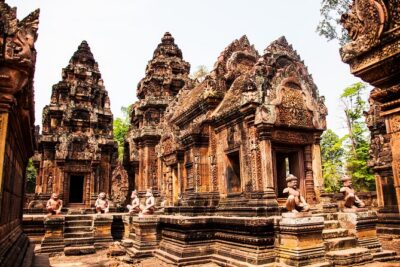
You’ll visit Angkor Thom highlights in sequence: Bayon Temple, Baphuon, Phimeanakas, and both the Terrace of the Elephants and Terrace of the Leper King. The terraces are worth your attention because they’re not just decorations; they help you read the scale of the royal city. And even if you’re not a temple scholar, the sheer density of carvings and the different viewpoints make it feel like you’re watching one huge story unfold.
Then comes Ta Prohm, famous for the way trees have grown into the ruins. This is one of those places where you’ll see the same structure from several angles, and each view gives you a different sense of what’s original and what’s been stabilized for visitors. After that you go to Angkor Wat, the best-preserved centerpiece of the whole complex. If you only had time for one Angkor stop, this would be the one—but the route also gives you the supporting cast so the monument doesn’t feel lonely.
You’ll finish with Phnom Bakheng Temple. This is where timing and footing matter. The temple sits on a hill (a real climb), so bring water and wear shoes you trust on uneven surfaces. Also, keep your plan for photos simple: pick a couple of moments and don’t let the crowd tempo steal your energy.
What I think this day gets right: it gives you a full Angkor experience without making you bounce randomly between sites. You’re guided through the set-piece temples in a way that makes the layout feel understandable.
What to watch: it’s long and outdoors-heavy. Even with an efficient route, you’ll want to manage sun and hydration.
Tonle Sap and Kampong Phluk: the Cambodia that feels alive
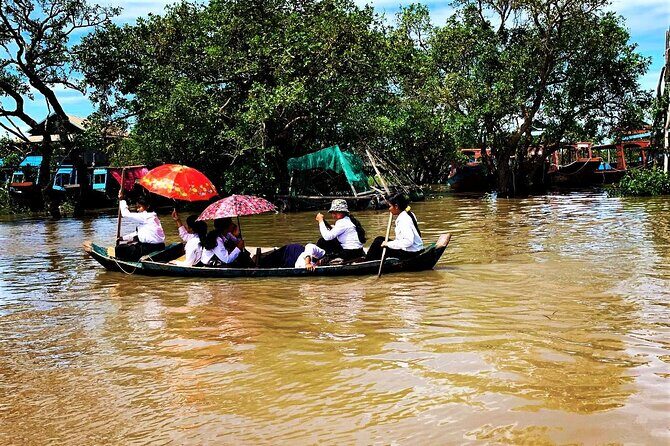
Day 3 shifts gears from carved stone to living water. You’ll visit Tonle Sap Lake, described as the largest freshwater body in Southeast Asia, tied to carp breeding and harvesting. This is not a museum stop; it’s about how people work with the lake. You’ll see floating life that changes with the seasons, and that context makes the rest of the day click.
Then you go to Kampong Phluk Floating Village. The setting includes a mangrove forest nearby, so it’s not just houses on stilts. It’s a landscape of water, roots, and movement—and it gives you a sense of why this area matters to local livelihoods. If you’re the type who likes “how do people actually live?” rather than just what famous buildings exist, this is the day for you.
After that you’ll add two cultural stops that feel like they connect the trip’s dots. Artisans Angkor is a social business focused on job opportunities for young people and reviving Khmer craftsmanship. You get more than a quick shop visit here; it’s framed as supporting traditional skill and training. Next comes Wat Bo Temple, one of Siem Reap’s older pagodas, noted for well-preserved wall paintings from the 19th century.
If you have any energy left, you’ll also stop at Royal Residence, described as a royal villa used when the King visits Siem Reap. Even though it’s a shorter stop, it helps you understand how the modern world sits next to the old one.
Why this day is good value: you get lake scenery, community context, and craftsmanship support, and you’re not paying extra for entrances because fees are included.
Practical note: bring something that can dry fast. Weather can change quickly around water.
A real contrast day: Siem Reap’s craft and the quieter temple mood
One of the strengths of this tour is the rhythm. After the high-impact Angkor day, you’re not thrown back into temples immediately. Instead, you get a balance of nature + culture.
What I like about the pacing is that it helps you avoid the common mistake of spending an entire week only on the biggest ruins. You’re still in Cambodia’s iconic sights, but you’re also seeing the systems around them—water livelihoods at Tonle Sap and the craft workflow behind what you might buy as a souvenir.
If you’re traveling with someone who gets temple fatigue, this is also the day where they’ll feel less trapped. You’ll still be learning, but it’s a different kind of learning.
Battambang by bamboo train: slow travel with big memories
Day 4 takes you to Battambang, Cambodia’s second largest city, with colonial-style streets and traditional wooden houses mentioned as a visual anchor. But the headline activity is the bamboo train, also called the norry. It’s described as simple but essential transport, and the fun part is that it’s fast and reliably on time compared with the once-a-week passenger train.
This stop is pure value for your time. You’re not just buying a ticket; you’re getting a firsthand sense of how people move. And because it’s a ride, it’s easier than another long walk in the heat.
After the train, you’ll explore Battambang Central Market, followed by White Elephant Pagoda (Wat Tahm-rai-saw). Then you’ll visit the Cambodia Peace Gallery (Cambodia Peace Museum), described as focusing on recovery and Cambodians’ peace efforts. I appreciate how this is placed in the middle of a normal sightseeing day. It doesn’t feel like an abrupt “history lecture.” It reads like part of understanding how the country rebuilds.
You’ll also head to Ek Phnom Pagoda, described as atmospheric and partly collapsed, and then on to Phnom Sampeau and the Battambang Bat Caves. The bat caves part is timed around sunset in the description, with millions of bats pouring from caves. If that’s on your wishlist, plan to arrive with calm expectations: you’ll feel the spectacle, but you’ll also want to keep your phone ready and your shoulders relaxed. The route is tight here—don’t get stuck arguing about the best viewing spot.
Finally, there’s Ta Dumbong Kro Aung Statue. Even if you don’t know the legend behind the town name, it adds a local thread so Battambang doesn’t feel like just a stopover between Siem Reap and Phnom Penh.
What to consider: Day 4 is full. You may want to pace yourself at each location—take short breaks, not long ones.
How the tour uses countryside stops (and why it matters)
One thing this itinerary does well is it doesn’t treat the route like a checklist. Between Battambang sites, you’re also getting a sense of what the region feels like away from the most famous temple zone.
That matters because it changes how you understand Cambodia’s history. You can’t fully grasp Khmer culture as only stone temples. You also need the countryside: markets, pagodas, and the real rhythm of daily life.
Toward Phnom Penh: Udong Mountain and a Vipassana-style stop
Day 5 heads toward Phnom Penh. On the way, there’s a brief stop in Pursat used as an itinerary briefing moment, then a visit to Udong Mountain. Udong is described as the site of the royal capital from the 17th to the 19th centuries, with a view of two mounds connected by a causeway. This stop works because it gives you elevation and a sense of long-term political importance without demanding the same pace as a mega-temple complex.
You’ll then visit a center described as teaching Vipassana meditation techniques. The location is described as a place where you can wander the gardens and grounds and enter the main temple. I’d treat this stop as a chance to reset. After a week of big sights, a quieter, slower moment helps you digest what you’ve already seen.
Then you arrive in Phnom Penh and check into your hotel option (for this day, the tour lists Mahasakor Inn Phnom Penh, Sun & Moon Urban Hotel, or Sun & Moon Riverside depending on your chosen level).
Phnom Penh on two tracks: monuments and the memory of the Khmer Rouge
Day 6 is where Phnom Penh becomes both beautiful and heavy. Your day begins at Cheung Ek killing field, and even though the description notes it as a free admission stop, it’s still the most emotionally intense part of the morning. You’re dealing with history here, and you should go in prepared to move through it carefully.
Then you visit the classic postcard side: Royal Palace and the Silver Pagoda. The Silver Pagoda stop is described as next to the Royal Palace, with a garden and a pagoda interior equally worth your time. After that you’ll visit Wat Phnom, described as the only hill in town with a legend of Buddha statues deposited there in 1373.
You’ll also do a quick civic mix: Independence Monument and the memorial area for King Norodom Sihanouk. Those stops help anchor the city in post-independence identity rather than only in the 1970s.
But the day doesn’t stop at monuments. You’ll then visit both Tuol Sleng Genocide Museum and Choeung Ek Genocidal Center. Tuol Sleng is described as a former secondary school used as Security Prison 21, while Choeung Ek is described as a former orchard and mass grave of victims of the Khmer Rouge killed between 1975 and 1979. That two-stop structure matters: one focuses on imprisonment and the system, the other on mass killing and aftermath.
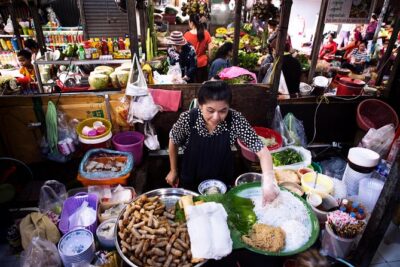
Finally, you’ll end with a practical wander at Central Market, a dome-shaped market described as built in 1937 with countless stalls and branching hallways. This is a good finisher because it’s active and normal—food, fabric, souvenirs, and everyday Phnom Penh energy.
My advice for this day: keep the rest of your evening low-key. You’ll likely feel the emotional weight even if you’re not a history buff.
Packing, timing, and comfort: small things that decide the week
This kind of Cambodia itinerary can go two ways: either you feel in control, or you feel like you’re constantly catching up. This tour’s included private transport and guided admissions make it easier to stay in control because you’re not building your own day plan.
Still, you’ll want to plan for:
- Heat and walking at temple sites like Angkor’s hills and the larger complexes
- Long transitions between regions (Siem Reap to Battambang to Phnom Penh isn’t a short hop)
- Sudden changes in outdoor conditions, especially around water and caves
The tour includes drinking water and breakfast (6 days), which helps keep mornings functional. It’s also listed as offering pickup and using mobile tickets, which usually reduces hassle at entrances.
Price and what you’re actually paying for
At $1,025.05 per person, the key question is whether you’re buying coordination or just sightseeing.
Here, you’re paying for:
- Accommodation for the tour nights (double or twin room; single room costs extra)
- Private transport across the main legs (Siem Reap → Battambang → Phnom Penh)
- An English-speaking tour guide throughout
- Entrance fees and drinks water
- Daily breakfasts (6)
So even if you only compare against the cost of hotels plus one or two admission-heavy days, it starts to make sense. The real value is that you’re not spending your time managing tickets, routes, or day-by-day logistics—especially useful when you want a route that includes both major temples and heavier history stops.
The one cost you should expect outside the listed price is tipping for guide and driver, which is specifically noted as not included.
Who this tour fits best (and who should rethink it)
This tour fits you best if you want:
- A tight route that covers Siem Reap, Battambang, and Phnom Penh in 7 days
- Both big-name temples and quieter history moments
- A guide-led pace that keeps you from wasting time figuring stuff out
You might rethink it if you prefer:
- Slow travel with fewer stops
- Lots of downtime between sights
- A mostly non-walking itinerary
Should you book this Siem Reap to Phnom Penh 7-day Cambodia tour?
I think this is a strong booking if your priority is a well-organized, guide-led route that hits the major highlights and also respects Cambodia’s painful 20th-century story. The combination of Angkor’s big temples, Tonle Sap’s real-life scenery, Battambang’s bamboo train and bat caves, and Phnom Penh’s paired memorial museums gives you a week that feels varied, not repetitive.
One last practical tip: treat your planning as if you’ll be outside most days. If you come prepared with comfortable shoes and a hydration mindset, this tour will feel efficient and rewarding rather than exhausting.
If you want a one-week “Cambodia greatest hits” path with real context and low logistics stress, this tour is an easy yes.
FAQ
Where does the tour start and end?
It starts with pickup at Siem Reap Airport and ends with transfer (without guide) to Techo International Airport (KTI).
How long is the tour?
The duration is 7 days (approximately), with 6 nights of accommodation.
What’s included in the price?
The tour includes accommodation (double or twin), private transport, an English-speaking tour guide, entrance fees, drinking water, and breakfast for 6 days.
Are admission tickets included?
Yes. The tour lists entrance fees as included, and the itinerary shows admission tickets included for the paid sights.
Is pickup offered?
Yes. Pickup is offered, and the tour meeting point is Siem Reap Airport.
Is this a private tour?
Yes. It’s described as private, with only your group participating.
What if I want a single room?
A single room stay has an added 40% extra charge per person.
Can I cancel for a refund?
Yes. You can cancel up to 6 days in advance for a full refund, 2–6 days for a 50% refund, and less than 2 days before the start time is not refunded.
Are tips included?
No. Tipping for the guide and driver is not included.