REVIEW · SIEM REAP
From Siem Reap: Banteay Srei Temple & Grand 5 Temple Tour
Book on GetYourGuide →Bookable on GetYourGuide
That first pink temple hits fast.
This day trip takes you through the Khmer Empire’s older, quieter side of Angkor, starting with Banteay Srei (the Citadel of Women) and rolling into the Grand Circuit staples on a tightly planned route. I love that you get both the art details (those fine carvings in pink sandstone) and the bigger spiritual picture behind the rituals and Hindu symbolism. I also like the practical touches: hotel pickup, an English guide, bottled water and cold towels during a long, hot day. The main drawback is simple: it is a lot of walking in the sun, and it is not recommended if you have mobility limitations or use a wheelchair.
You’ll also get a rare bonus that most temple-only days skip. Outside the sites, there’s time at Preah Dak Village to watch local life up close, so the day feels less like a stone museum and more like a living region. One thing to keep in mind: lunch and the Angkor Temple Pass are not included, so you’ll want cash ready.
In This Review
- Key takeaways before you go
- Getting to Angkor starts early: pickup, pass stop, and timing
- Pre Rup and Banteay Srei: why the Citadel of Women is the star
- East Mebon and Neak Poan: water temples and the healing myth
- Ta Som and Preah Khan: tree roots, then carvings everywhere
- Preah Dak Village: Khmer everyday life beyond the ticket gates
- Price and value: what $20 includes and what you must budget
- Heat-day survival kit: shoes, dress rules, and the small things that matter
- Guide quality: what you should expect from the English narration
- Who should book this Banteay Srei and Grand Circuit day trip
- Should you book this tour or choose something else?
- FAQ
- Is the Angkor Temple Pass included?
- What’s included in the tour price?
- Is lunch included?
- What time do I need to be ready for pickup?
- What should I wear or bring for the temples?
- Is the tour wheelchair accessible?
Key takeaways before you go
- Banteay Srei’s pink sandstone carvings: smaller scale, sharper detail, and a strong reason it’s often called one of Angkor’s best works.
- Six major temple stops in one day: Pre Rup plus Banteay Srei, East Mebon, Neak Poan, Ta Som, and Preah Khan.
- Grand Circuit spiritual context: your guide connects what you see to Hindu/Buddhist belief, statues, and rituals.
- Cold towels and water on the route: a real quality-of-day difference in Siem Reap heat.
- Preah Dak Village time: a look at everyday life beyond the temple gates.
- Dress code matters: shoulders and knees covered, or you can be turned away.
Getting to Angkor starts early: pickup, pass stop, and timing
Your day is built around morning light and fewer crowds, with hotel pickup starting around 7:50 AM. From there, you travel in a comfortable vehicle to the Angkor temple area, and you’ll have an English-speaking guide who helps the whole day make sense instead of feeling like a checklist.
Before you start temple entry, there’s a stop at the Apsara Authority Ticket Office to buy your Angkor entrance pass. This matters because it turns a trip that could feel rushed into one with a planned rhythm: you’re not scrambling at each gate.
This tour runs in all weather. That sounds routine, but here it’s useful advice—bring the gear you need and expect the itinerary to keep moving. In practice, it means you should dress for heat first (sun protection, breathable clothes you can cover at temples), and only then think about rain layers.
If you’re hoping for an easy stroll day, manage expectations. This is a classic Angkor day: temples, uneven ground, and long gaps of sun between them.
Pre Rup and Banteay Srei: why the Citadel of Women is the star
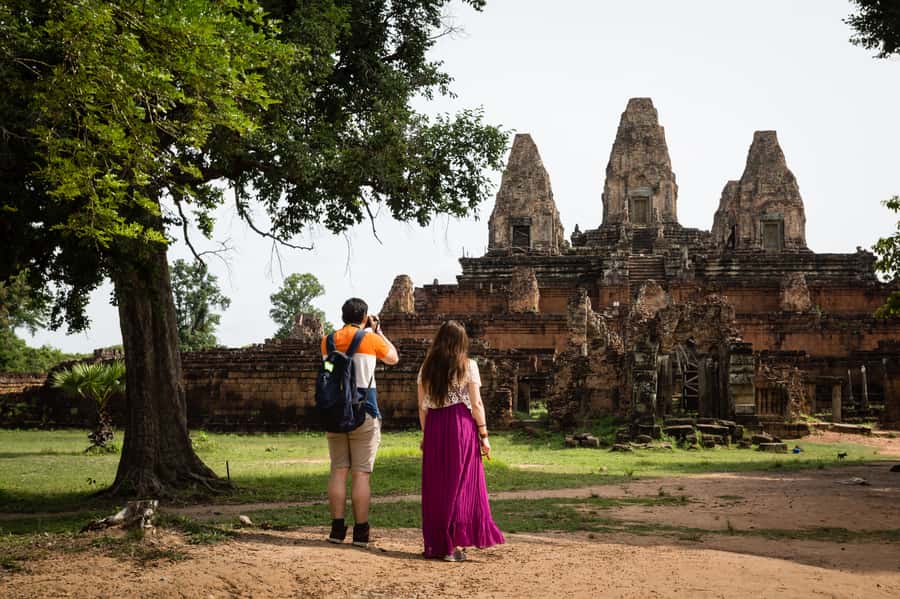
The day often begins at Pre Rup Temple, one of the few remaining complete-feeling structures in the complex. It’s not the most famous name on the postcard, but that is part of its value: you get a sense of how Angkor’s sacred architecture was meant to be experienced, not just photographed.
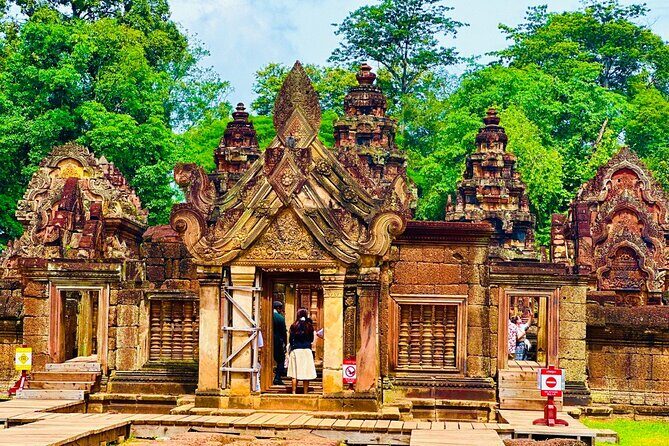
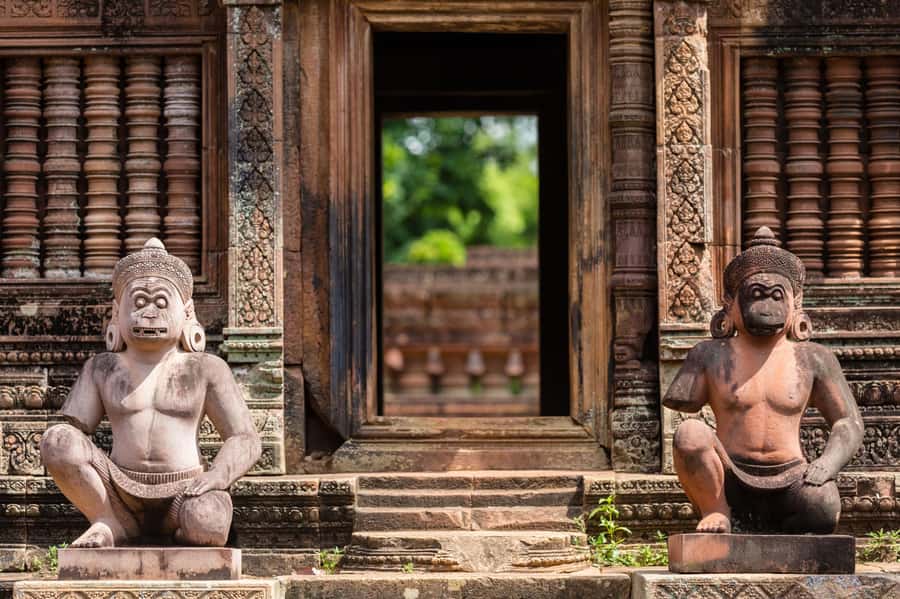
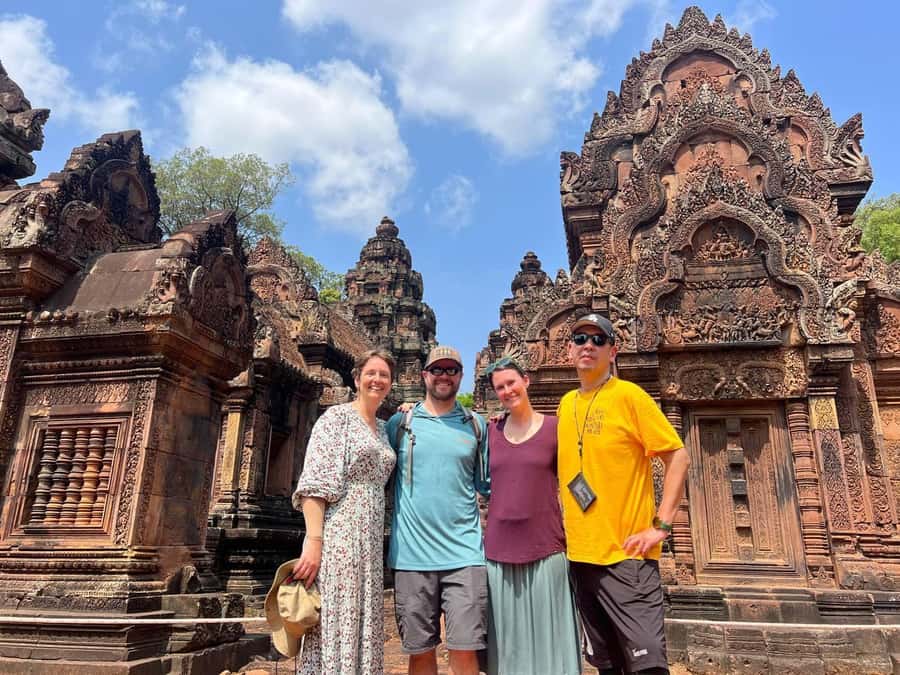
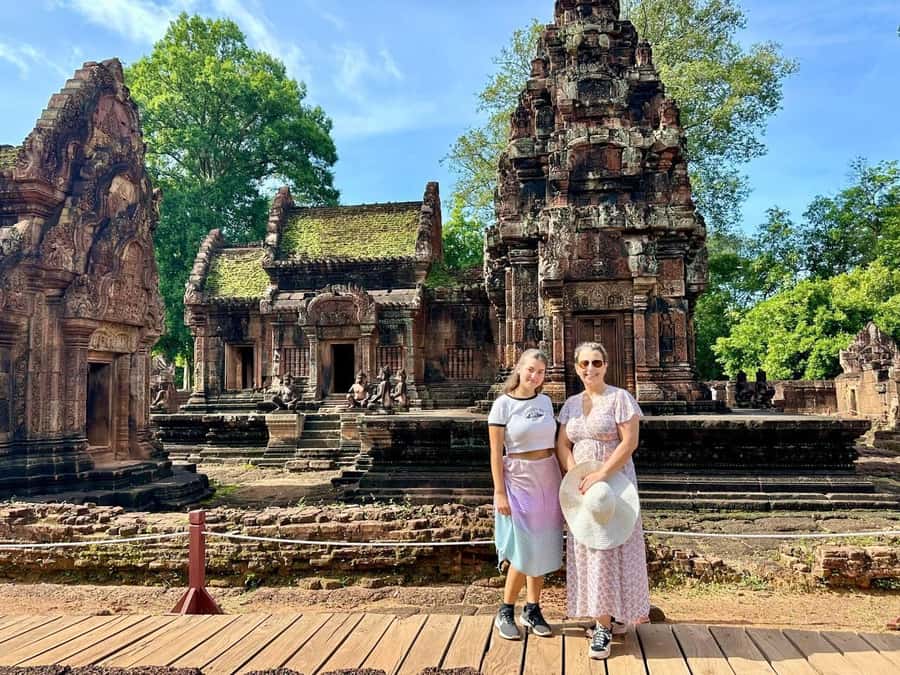
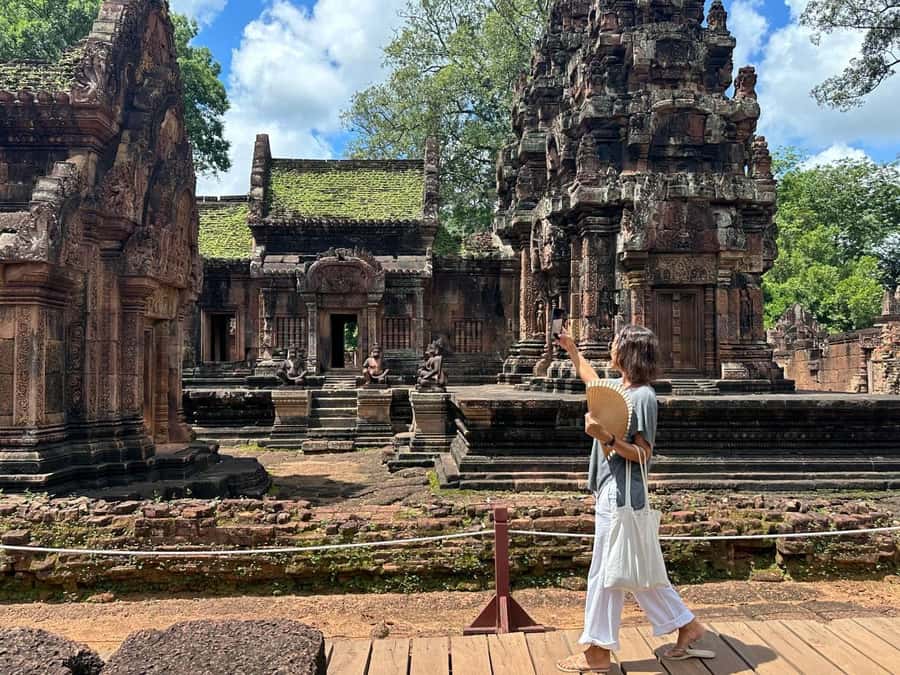
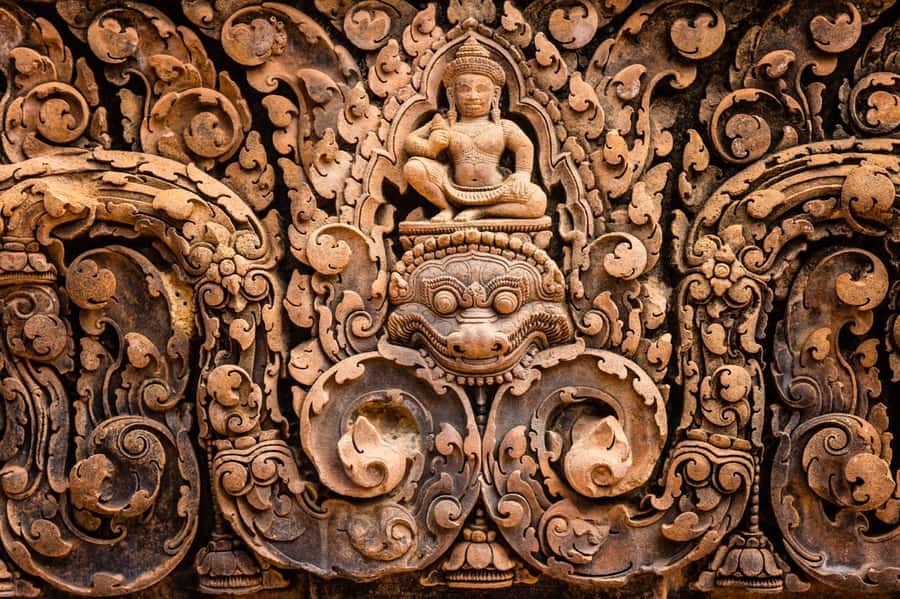
Then you arrive at Banteay Srei, the celebrated Citadel of Women. The standout feature here is scale and detail. The pink sandstone looks delicate up close, and the carvings are famously intricate—much more “readable” than you might expect from a distance. It’s also near Phnom Dei, and that location helps explain why this site feels like a jewel tucked into the landscape rather than something dropped into a flat parking lot.
A good guide makes this stop click. Many guides on this route use their Khmer architecture and symbolism skills to explain why the carvings matter and how Hindu rituals shaped what you see. Some also connect stories to the later Buddhist layer of Angkor’s religious life, so statues and doorways stop being random decorations.
Practical note: expect sun. Even if the temple itself is shaded in spots, you’ll still be moving between viewpoints.
East Mebon and Neak Poan: water temples and the healing myth
After Banteay Srei, the route keeps moving through the Grand Circuit, and the next two stops bring a different mood: water, reservoirs, and myth.
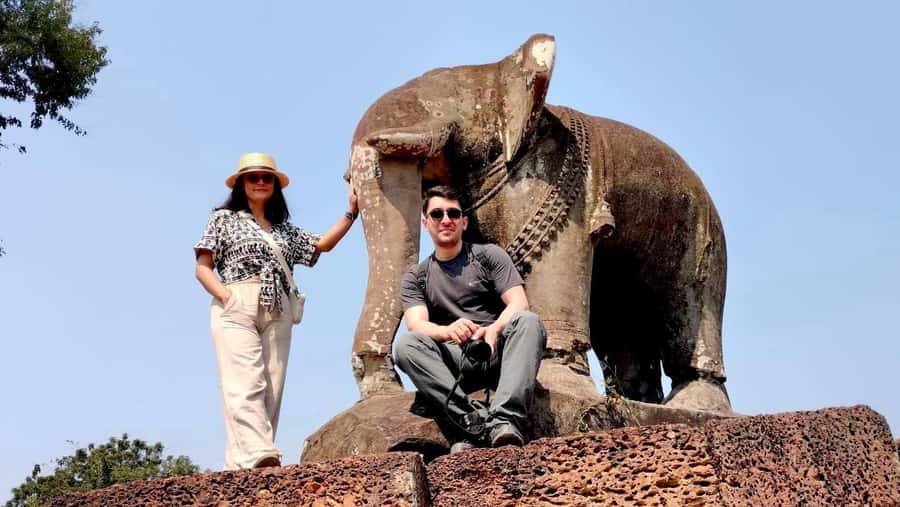
At East Mebon, you’re looking at a temple that once stood on an island in a reservoir. That original setting is a big part of the design logic. When you understand it, the architecture stops feeling like a ruin sitting there and starts feeling like a message built around reflection and distance.
Then comes Neak Poan, a smaller temple set on an island in Jayatataka Baray. The belief attached to Neak Poan is what makes it memorable: it’s connected to a mythical Himalayan lake and healing waters. Even if you approach the story as legend, it’s still useful because it gives the whole site a purpose. You’ll see why people traveled to places like this, and why sacred water shows up again and again in Khmer religious thinking.
This is also the part of the day where your guide’s pace really matters. Some guides slow down here so you can look at the carvings and layout instead of rushing to the next photo spot.
Ta Som and Preah Khan: tree roots, then carvings everywhere
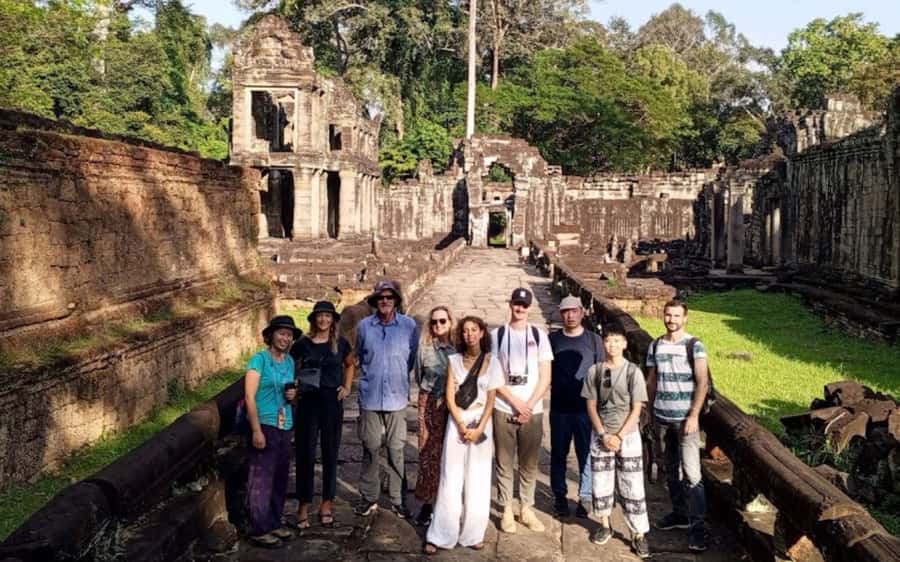
If Banteay Srei is about fine detail, Ta Som is about spectacle—especially its iconic stone gate swallowed by huge tree roots. The result is a kind of visual collision: engineered temple stone and unstoppable nature growth. This contrast is one reason the Grand Circuit stays worth it even after you’ve already done the big names like Angkor Wat and Bayon.
Ta Som also works well for first-time visitors because it gives you a quick hit of emotional atmosphere. Even if you’re tired, you’ll still feel something looking at those roots bending around the architecture.
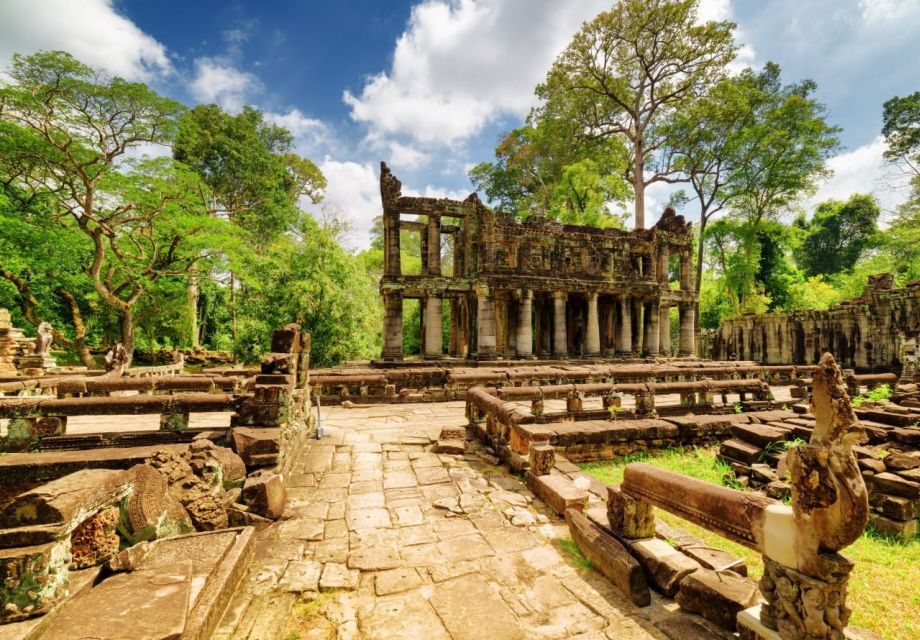
Then the day closes at Preah Khan, a much larger monastic complex filled with carvings and history. This is the stop that tests your stamina, because there’s more ground to cover and more surfaces to look at. Still, it’s exactly the place where an English guide helps you not get overwhelmed. A strong guide can tie together the motifs, the temple function, and the way Khmer builders repeated certain design ideas across centuries.
One more practical angle: Preah Khan often feels better if you take short breaks to hydrate between sections. Your guide will typically keep you moving, but you’ll get more out of it if you slow down for a minute when you find a doorway or wall with good detail.
Preah Dak Village: Khmer everyday life beyond the ticket gates
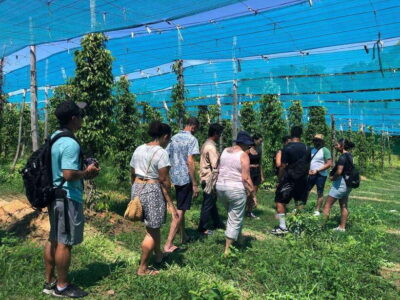
Most Angkor days feel like only stone. This one adds time at Preah Dak Village, giving you a chance to watch daily life outside the temple zone.
What you’ll likely notice is how the rhythm of the region continues while the world focuses on ruins. You may see families at work, local habits, and everyday routine that contrasts with temple visitors’ camera-first energy. It doesn’t replace the spiritual stops—it reframes the day. The temples become part of a real living geography, not something disconnected from modern Khmer life.
This stop also gives you a break from continuous walking inside temple grounds. Even a short period of “different scenery” can keep your mood steady for the later sites.
Price and value: what $20 includes and what you must budget
At $20 per person, this tour is priced as an efficient way to see a lot of Angkor without renting your own driver for the whole day. What makes the value feel real is what’s included:
- Hotel pickup and drop-off
- Transportation in a high-quality vehicle
- English-speaking guide
- Bottled water
- Cold towels
- Local taxes
What’s not included is the part that can surprise people who assume everything is bundled:
- Angkor Temple Pass (you buy it at the Apsara Authority Ticket Office)
- Lunch (eat at a nearby restaurant)
So the value equation is pretty clear: you’re paying for guided movement and comfort, not for the temple entry itself and not for your midday meal.
My advice: budget for lunch and plan your temple pass purchase so you’re not doing math on the drive. Also carry cash, since it’s explicitly recommended.
Heat-day survival kit: shoes, dress rules, and the small things that matter
This is the part you should take seriously, because temple rules are strict and the day can be hot.
Bring:
- Hiking shoes (temple paths can be uneven)
- Sunscreen
- Insect repellent
- Cash
Dress code:
- No shorts or sleeveless tops
- Knees and shoulders covered for both men and women
If you show up without the right coverage, you can be refused entry. That’s not a minor inconvenience; it can break your whole day.
Also note: pets are not allowed, and large luggage or extra-bulky bags are not allowed. Pack light for comfort and speed at entrances.
The tour’s comfort perks are not flashy, but they work: multiple guide reports highlight the value of iced water and cold towels at the right moments. On days when the temperature is high, that kind of reset can make the difference between enjoying the carvings and feeling like you’re just surviving to the car.
Guide quality: what you should expect from the English narration
The biggest differentiator on Angkor isn’t the stone. It’s the explanation.
On this route, guide styles in the feedback range from careful and calm to funny and upbeat, but the common thread is clear: guides explain architecture and history in a way you can hold in your head. Names that come up often include Ry-Cheng, Narath, Tole, Phyrom, Ra, Lok, Pip, Chenda, Dara Try, Kim, and John Long. Each seems to focus on practical meaning—how the buildings worked, what the carvings represent, and how Hindu and Buddhist symbolism connect across the sites.
If you care about seeing Angkor as more than a photo stop, your guide matters. Here, many guides also help with photos (people mention being taken to good spots) and keep a steady pace so you don’t feel rushed.
One optional extra that appears in some cases: a guide may be able to help add a stop such as the Landmine Museum if it fits your plan. If you’re interested, ask early and don’t assume it’s automatic.
Who should book this Banteay Srei and Grand Circuit day trip
This tour is a strong fit if you:
- Want Banteay Srei plus multiple Grand Circuit temples in one day
- Enjoy learning how Khmer ritual and symbolism connect to the art
- Like the balance of major ruins and a local village visit
- Prefer a guided route over driving yourself
It’s less ideal if you:
- Have walking disabilities or use a wheelchair (the tour is not recommended)
- Have infants or young kids under 12 for the shared option (not suitable for those ages)
If you’ve already done the big icons like Angkor Wat and Bayon, this is a smart way to broaden your Angkor view without spending more days hopping between distant sites.
Should you book this tour or choose something else?
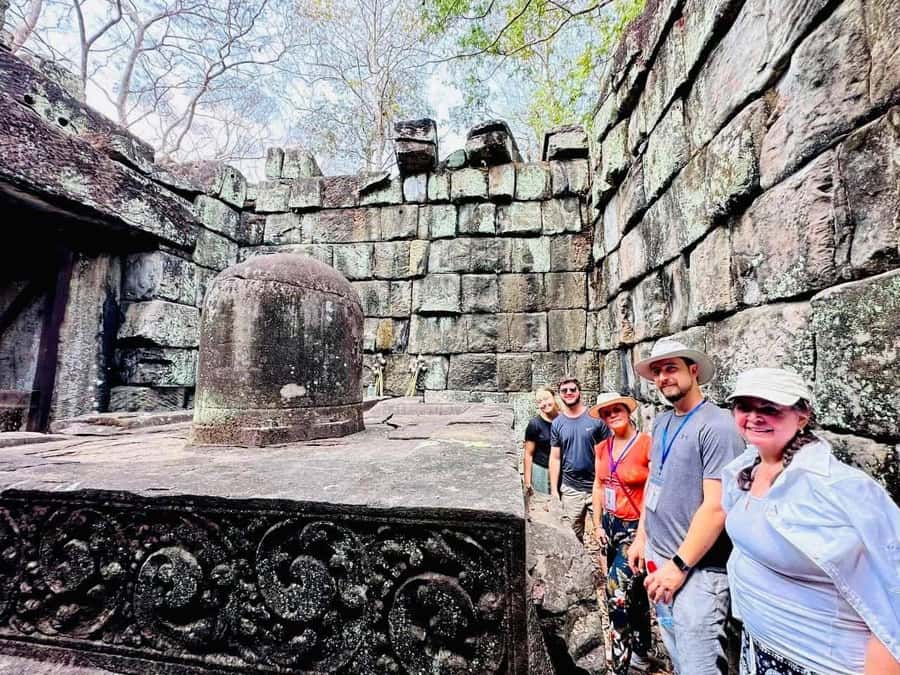
Book it if you want value plus context: Banteay Srei, four other Grand Circuit temples, and a village stop, all with pickup, an English guide, water, and cold towels. For many people, this becomes the “more interesting than expected” day because it shifts your attention from crowds to detail and meaning.
Skip or reconsider if you know you’ll struggle with long walks or temple dress rules. This day rewards preparation. If you show up with covered clothing, good shoes, sunscreen, and a pass in hand, it’s one of the most efficient ways to understand how Angkor’s older temples carry their beliefs in stone.
If you want to see Khmer architecture beyond the headline sites, this one-day route is a very practical way to do it.
FAQ
Is the Angkor Temple Pass included?
No. You’ll stop at the Apsara Authority Ticket Office to purchase your Angkor entrance pass.
What’s included in the tour price?
The tour includes hotel pickup and drop-off, transportation by vehicle, an English-speaking guide, cold towels, bottled water, and local taxes.
Is lunch included?
No. Lunch is not included, and you’ll have a break to eat at your own expense.
What time do I need to be ready for pickup?
You should be ready in your hotel lobby at 7:50 AM.
What should I wear or bring for the temples?
You need to cover your knees and shoulders (no shorts or sleeveless tops). Bring hiking shoes, sunscreen, insect repellent, and cash.
Is the tour wheelchair accessible?
No. The tour is not recommended for people with walking disabilities or those in a wheelchair.