REVIEW · BATTAMBANG
Morning Tour,Ak Phnom temple,Rice wine,Rice Paper, killing Field
Book on Viator →Operated by Mr. Pov Battambang Amazing Tour · Bookable on Viator
Temple ruins meet rice villages.
This is a morning-focused trip around north Battambang’s rice country, mixing a quieter Ek Phnom Buddhist temple stop with hands-on local food moments (including a shot of rice wine). You also get a serious historical visit at Wat Samrong killing field, so it’s not just scenery.
I especially like two parts. First, the guides—often people like Pao, Mr. Pov, or Mr. Yi Yong—bring Buddhism and local life into the conversation with clear, practical explanations. Second, you don’t only look at food; you see how items like rice paper and bamboo sticky rice fit into daily routines.
One consideration: the tour lists ticket and fee as not included, even while one stop is marked free admission. Before you go, I’d ask your guide what costs you might still cover, so there are no surprises later—especially if you’re counting dollars.
In This Review
- Key Highlights You’ll Care About
- Battambang Morning Pickup: Tuk-Tuk Pace and Small-Group Comfort
- Ek Phnom Temple: An Angkor-Type Stop With a Village-Scale Feel
- Rice Fields and Village Product Stops: Seeing Daily Life (Not Just Photos)
- Rice Paper and Sticky Rice: A Hands-On Way to Understand Ingredients
- Rice Wine Tasting: A Small Pour With Real Local Meaning
- Wat Samrong Killing Field: Keeping the Mood Respectful and Understood
- Price and Logistics: Is $20 Really Good Value?
- Who This Tour Fits Best (and Who Might Skip It)
- Should You Book This Battambang Morning Tour?
- FAQ
- How long is the tour?
- How much does the tour cost?
- Is hotel pickup included?
- What’s included in the price?
- What’s not included?
- Is the temple admission included?
- How many people are in the group?
- Is the tour suitable for most people?
- Is the tour affected by weather?
- Are service animals allowed?
Key Highlights You’ll Care About

- Ek Phnom (11th-century Buddhist temple) is about 15 km northwest of Battambang and feels like an Angkor-type cousin without the same crowds.
- Bamboo sticky rice and rice paper are part of the village food learning stops, not just photo opportunities.
- Rice wine tasting comes from a local rice winery factory experience, with a small pour/shot included in the route.
- Wat Samrong killing field adds a sobering moment, with guidance that helps you keep it respectful and meaningful.
- Small sharing group (max 10) keeps the day flexible and easier to manage in rural areas.
- Strong English + humor shows up in guide praise, especially for Pao and Mr. Pov.
Battambang Morning Pickup: Tuk-Tuk Pace and Small-Group Comfort
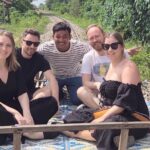
The tour runs from Battambang with pickup offered and a tuk-tuk ride, which matters more than people think. In rural Cambodia, a tuk-tuk gets you where cars struggle, and it keeps the day moving at a human pace—especially if you’re balancing temple time with food stops.
This is also a sharing tour capped at 10 travelers, so you’re not fighting a crowd at every stop. In practice, that means you’re more likely to ask a question, hear the guide’s explanation without yelling, and actually notice what’s happening around you—like how families work in rice areas and markets.
Also, plan for morning heat. Some guides are good at timing the day, but the vibe is still “get started early.” If you’re sensitive to sun and humidity, I’d treat morning as the best time to do this route.
One more thing: the tour uses a mobile ticket, and you’ll receive confirmation at booking time. That helps you travel light—less paper, fewer moving parts.
You can also read our reviews of more tours and experiences in Battambang.

Ek Phnom Temple: An Angkor-Type Stop With a Village-Scale Feel
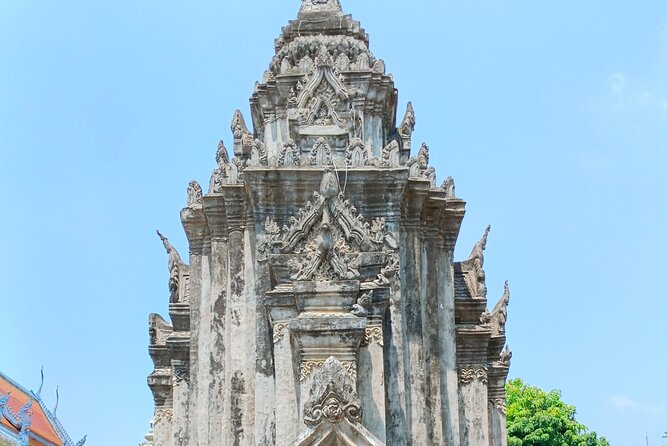
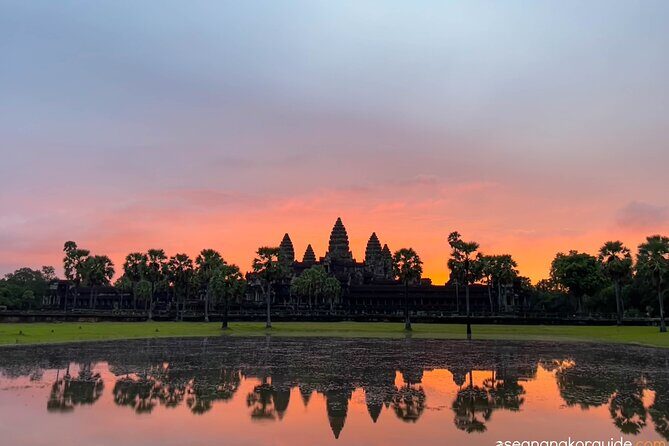
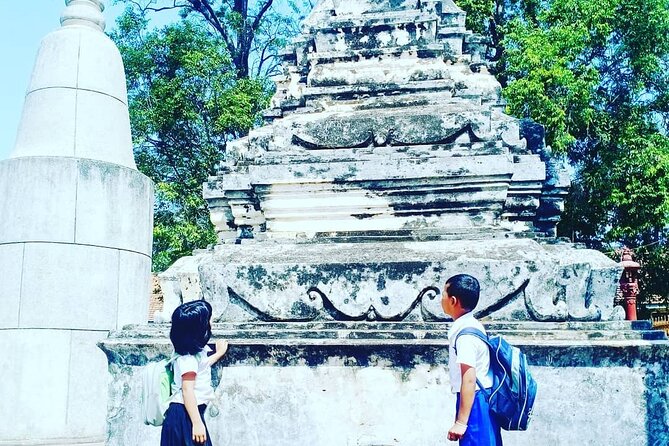
Ek Phnom is an 11th-century Buddhist temple ruin and is about 15 km northwest of Battambang. That combination—ancient temple, but with a rural setting—often hits the sweet spot for people who want “temple wow” without spending the whole day on major circuits.
What I’d watch for here is the way your guide connects religion, architecture, and what you see on the ground. Several guides in this experience are praised for explaining how Buddhism and Hinduism are related in the local context. That’s the kind of information that turns old stone into something you can actually understand while you’re standing there, not just a list of facts.
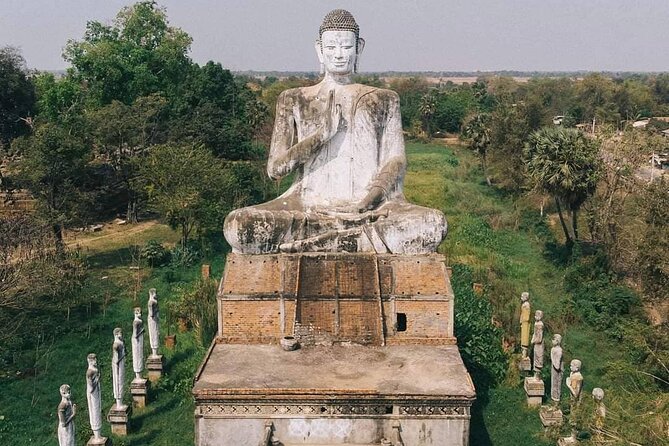
You might also encounter a giant Buddha statue as part of the broader temple area experience. Even if you’re not the type who memorizes dates, that kind of focal point gives your brain an easy anchor: you can orient yourself, then follow the guide’s story from there.
Good to know: the temple stop is listed as having free admission ticket in the provided info. But because the overall tour package says tickets and fees are not included, I’d still verify whether anything else costs money on your specific day.
Rice Fields and Village Product Stops: Seeing Daily Life (Not Just Photos)
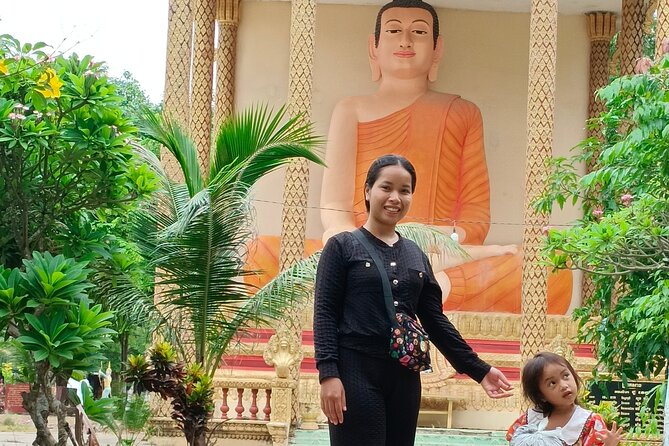
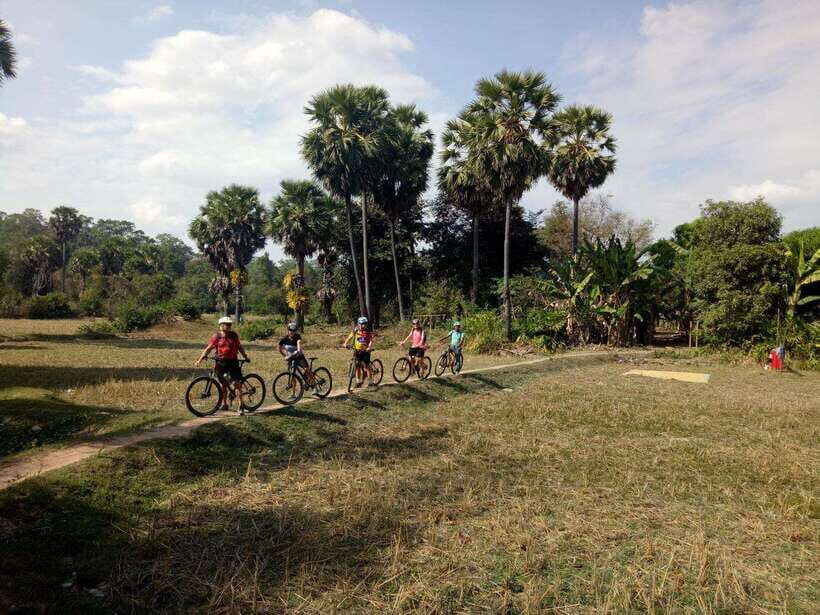
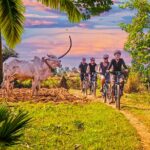
This tour is built around north Battambang’s rice-and-village rhythm. You’re not only visiting one monument; you’re moving through the “in-between” places where food products become real goods you can buy and eat later.
Two food-related themes show up again and again:
1) Rice field life as context, so you understand why the next stops make sense.
2) Village production stops where you learn how items get made or processed, like rice paper and related products.
In the experience description, you’ll see mention of visiting villages to learn how to make bamboo sticky rice and make rice paper. That matters because those foods aren’t “just snacks” in Cambodia. They’re tied to harvest cycles, household routines, and local selling.
You may also stop at places tied to dried banana and banana chips, plus a fish market. Those sound small on paper, but together they paint a complete picture of the local food economy: crops, processing, and distribution in one run.
If you love practical travel—watching how people do things—you’ll get more out of this day than someone who expects only big monuments.
Rice Paper and Sticky Rice: A Hands-On Way to Understand Ingredients
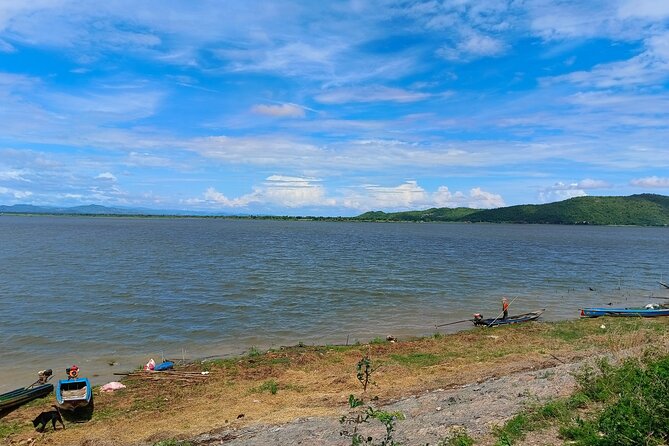
The highlight for many people is the chance to learn rice paper production and bamboo sticky rice methods. The benefit isn’t only that it’s fun—it’s that it gives you a “taste map” for what you’ll order later.
When you understand the basics, you stop seeing rice paper as just a texture and start recognizing it as a process. Same with sticky rice: it’s easier to appreciate why it’s shaped, wrapped, and served the way it is.
Even if you don’t do every step yourself, the learning component matters. You’ll come away with mental notes like:
- what rice-based products rely on,
- how village processing fits into daily life,
- and how many “snacks” are actually engineered for storage, travel, and local markets.
This is also a good tour format if you prefer active learning over sitting in a classroom. You move, you watch, you ask questions, and the food lesson stays attached to real people working nearby.
Rice Wine Tasting: A Small Pour With Real Local Meaning
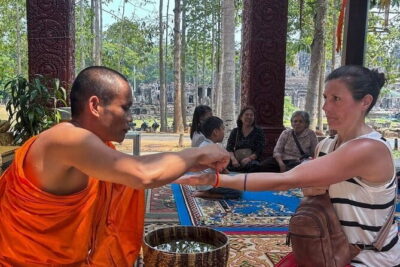
The day includes a stop for a local rice winery factory and a shot of rice wine. For me, this is where the tour turns from “cultural sightseeing” into something more human: a taste linked to ingredients you just learned about.
Rice wine can be a polarizing choice back home, but in Cambodia it often comes from familiar raw materials and a local production chain. You don’t need to become a connoisseur here. The goal is to experience how locals talk about and handle the product, then decide if it’s your thing.
Practical tip: keep expectations realistic. A shot is exactly that—small. The value is context, not heavy drinking.

Wat Samrong Killing Field: Keeping the Mood Respectful and Understood
Not every stop in this kind of tour is upbeat, and Wat Samrong killing field is the “serious” part of the route. The name alone tells you this will be sombre. That’s important: treat it as a place for reflection, not a photo op you sprint through.
What helps most is having a guide who can explain in plain language what you’re seeing and why it matters. In guides praised for this experience, English clarity and enthusiastic delivery come up a lot. In a memorial-type stop, that skill becomes even more valuable, because you want facts and context without feeling lost or rushed.
If you’re sensitive to heavy historical topics, plan your mental pace. You don’t have to “force” yourself to feel a certain way. Just go in prepared for the emotional tone shift, and let the guide set the pace.
Price and Logistics: Is $20 Really Good Value?

The stated price is $20 and it includes waters, a sharing guide, and tuk-tuk transport. For a rural route with temple time plus multiple production stops, that’s solid value—especially if you don’t want to self-organize transportation and timing.
Here’s how I’d judge the value honestly:
- Included: guide time, tuk-tuk ride, and waters.
- Not included: ticket & fee, and breakfast.
- Reality check: one temple stop is labeled free admission ticket, so not every component is paid. Still, you can’t assume everything is free.
So the “best value” version of this tour happens when you’re prepared for small extra costs and you confirm details beforehand. One review snippet even calls out that extra costs weren’t clearly laid out in the tour description—so ask. You’ll enjoy the day more if you’re not doing math in your head every time you arrive somewhere new.
Timing-wise, the tour is labeled as a morning tour and also shows duration “approx. 2 days.” I’d treat this as a scheduling label rather than expecting two full sightseeing days. In other words: check the confirmation for the exact pickup time and how long your activities will take on the morning. That’s what will matter once you’re in Battambang.
Who This Tour Fits Best (and Who Might Skip It)
This tour is a great fit if you want:
- a temple ruin visit in the Battambang area,
- local food learning (rice paper, bamboo sticky rice),
- a rice wine tasting moment tied to real production,
- and a respectful historical stop.
It’s also good if you like guide interaction. Multiple named guides in this experience—like Pao and Mr. Pov—show up in strong feedback for English and humor, which can make a full run feel lighter.
I’d be more careful if:
- you’re not comfortable with heavy subject matter at a killing field site, or
- you hate surprises on costs and would rather have a detailed fee breakdown before you go.
If neither applies, this is one of the more “complete” half-day style options in Battambang because it combines food + culture + context, all in one drive.
Should You Book This Battambang Morning Tour?
I’d book it if you want a small-group route that mixes temple time, hands-on food learning, and a sobering historical stop—without feeling like you’re trapped in a big, noisy bus day.
The biggest reason to trust the experience is the repeat praise for guide quality. Names like Pao, Mr. Pov, and Mr. Yi Yong come up with the same theme: clear explanations, good English, and a style that keeps the day moving. Add in the convenience of pickup and the included waters and tuk-tuk, and the $20 price starts to feel like it’s doing real work.
Before you go, do two quick things:
- Ask what costs might still appear on-site (since ticket & fee aren’t included, but one stop is listed as free).
- Make sure you’re emotionally ready for Wat Samrong killing field.
If those check out, this is the kind of tour that gives Battambang more than one “view.” It gives you a sense of how people eat, worship, remember, and live—up close.
FAQ
How long is the tour?
The duration is listed as approximately 2 days, but it’s described as a morning tour. Check your booking confirmation for the exact timing for your pickup and stops.
How much does the tour cost?
The price is listed as $20.
Is hotel pickup included?
Yes. Pickup is offered, and the tour uses a tuk-tuk.
What’s included in the price?
Included items are waters, a sharing tour, a guide, and tuk-tuk transport. A mobile ticket is used.
What’s not included?
Ticket & fee and breakfast are not included.
Is the temple admission included?
One stop is listed as having free admission ticket (for the Battambang/Ak Phnom temple stop). Because the tour package also says ticket & fee are not included, it’s smart to confirm the full cost details with your provider.
How many people are in the group?
This experience has a maximum of 10 travelers.
Is the tour suitable for most people?
Yes, it states that most travelers can participate.
Is the tour affected by weather?
Yes. The experience requires good weather. If canceled due to poor weather, you’ll be offered a different date or a full refund.
Are service animals allowed?
Yes, service animals are allowed.
—
If you want, tell me your travel month and whether you prefer more temples or more food stops, and I’ll suggest the best time-of-day to tackle this route in Battambang.