REVIEW · SIEM REAP
Angkor Wat Sunrise Experience – Ultimate 1-Day Guided Temple Tour
Book on Viator →Operated by Yoeun Serakyuth · Bookable on Viator
Angkor Wat at first light can turn your brain off and your camera on. This one-day guided circuit is built around that moment, then keeps going through Ta Prohm and the big-hitter city of Angkor Thom so you see more than just the obvious photo spots. I especially like that the tour runs with a 4:30am start, so you’re there before the crowds thicken. I also like the guide focus on meaning—history, religion shifts, and the details carved into towers and galleries, with guides like Yoeun Serakyuth known for reading inscriptions and explaining what you’re actually looking at.
One thing to plan for: temple tickets and meals are not included, so your final day cost will be higher than the headline price, and you’ll need to budget for breakfast and lunch on the day.
In This Review
- Key highlights you’ll feel right away
- Why a 4:30am Angkor Wat sunrise tour makes sense
- Price and what you actually pay for at Angkor
- Pickup, small group flow, and how the day stays manageable
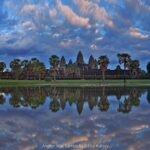
- Stop 1: Angkor Wat sunrise and the guide-led walkthrough
- Stop 2: Ta Prohm with a Tomb Raider-famous view (and more than that)
- Stop 3: Angkor Thom in one focused hour
- Stop 4: Bayon Temple and those face towers
- Siem Reap wrap-up: getting your energy back
- What this tour is best at (and who should pick it)
- Booking decision: should you go?
Key highlights you’ll feel right away
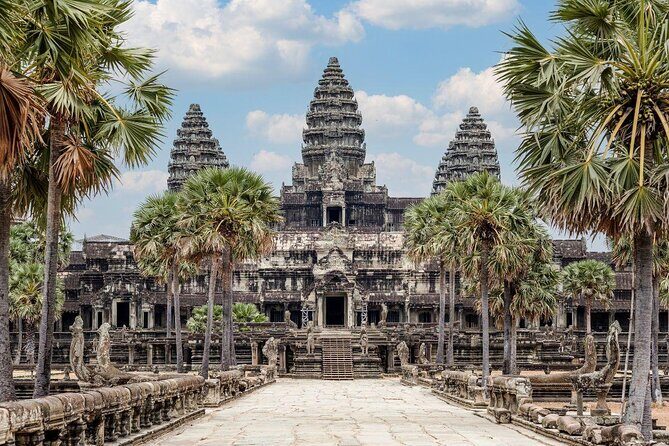
- 4:30am sunrise timing means cooler air and better light for Angkor Wat
- Small group size (max 16) keeps the experience moving without feeling rushed
- Guided focus on carvings and inscriptions helps you understand what you’re seeing
- Ta Prohm after Angkor Wat gives you a smooth flow into that giant-root, film-famous look
- Angkor Thom + Bayon’s four faces delivers the biggest emotional payoff in the shortest time
- Cold water and a driver cut down on the daily friction of temple touring
Why a 4:30am Angkor Wat sunrise tour makes sense
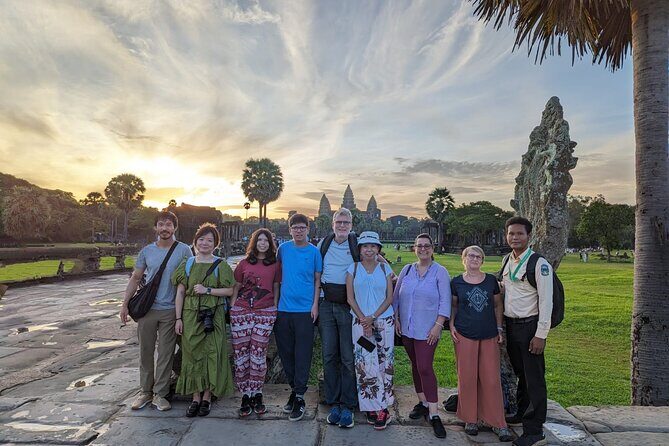
This tour is designed around one smart idea: start early, stay efficient, and let the temples do their job. The pickup + drive gets you to Angkor Wat in time to catch the sunrise calmly, not sprinting across grounds with sleepy eyes and bad footwear.
Starting at 4:30am is not just a romantic detail—it’s practical. Sunrise light at Angkor Wat is often the best mix of dramatic sky and readable stone. Also, the earlier you arrive, the easier it is to move to good viewing points before walkways and lanes get crowded. You’ll spend the first chunk of the day at Angkor Wat with a guide, so you’re not just waiting for the sun—you’re learning how the site was shaped, how beliefs changed over time, and what the carvings are trying to say.
If you hate early mornings, consider this your choice. If you can handle an alarm clock, you’ll get a day that feels fuller than the price suggests.
You can also read our reviews of more guided tours in Siem Reap
Price and what you actually pay for at Angkor
At $24.03 per person, this is positioned as a value-focused day: guide, driver, and cold water are included. But temple entry is not included, and breakfast and lunch aren’t included either. That’s the key trade-off: you’re paying for service and timing, and you pay separately for access.
Here’s how I’d think about it:
- You’re not paying extra for complex logistics because pickup and driving are handled.
- You’re paying for a guide who can explain the temples in a way that makes the stones less confusing.
- Your overall cost depends on temple tickets and what you choose to eat.
Also, the tour mentions a mobile ticket, which usually helps you avoid some last-minute paper chaos. Still, you’ll want to keep a little buffer in your day for where ticket purchase or ticket validation happens.
Bottom line: this can be a strong deal if you’re happy to budget for tickets and meals. If you want a fully packaged, one-price day where everything is covered, this might feel a bit too hands-on.
Pickup, small group flow, and how the day stays manageable
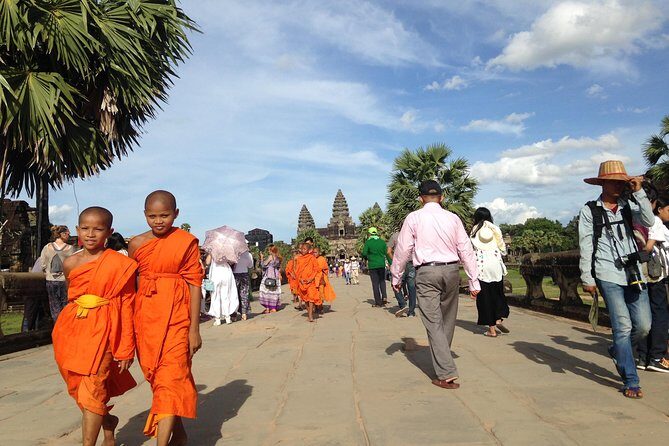
The tour runs for about 8 hours and caps at 16 travelers, which is a sweet spot for Angkor. Big groups can turn the day into a line-management exercise. Smaller groups tend to move with fewer gaps and fewer people constantly stopping for photos in the middle of the walkway.
You also get practical support:
- Cold water during the day
- A driver handling the road time
- A tour guide coordinating the temple order and the best spots to stand
In one day, that matters. Angkor roads can be bumpy and slow, and temple paths are not designed for stress. A guide helps you keep your bearings quickly and prevents you from wasting energy chasing the wrong viewpoint.
One small detail that shows good operations: in past outings, guides have also provided cooling items like cold flannels in addition to bottled water. Even if you don’t plan on it, it’s the kind of thoughtful comfort you hope to see on a sunrise day.
Stop 1: Angkor Wat sunrise and the guide-led walkthrough
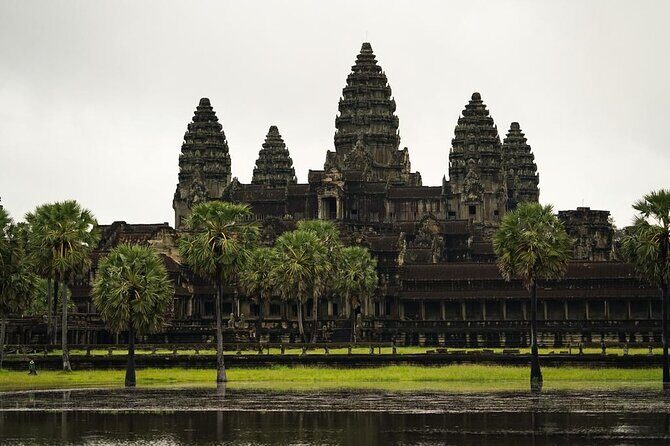
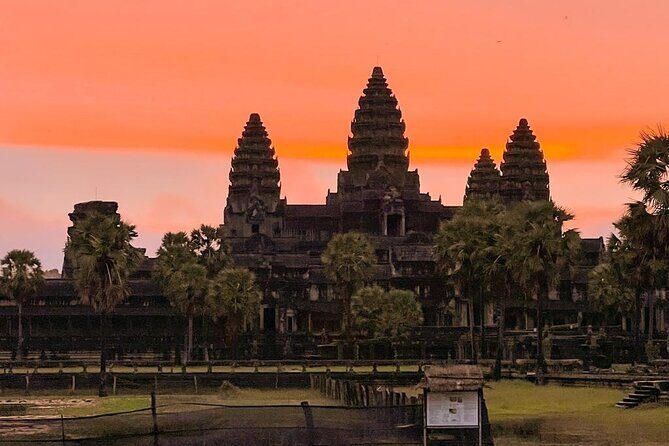
Angkor Wat is the reason most people come to Siem Reap, so the sunrise part has to deliver. Here, it does—because you’re not just watching the sun and wandering. After pickup and getting the temple ticket, you depart to explore the sunrise at Angkor Wat, then the tour continues with guided time at Angkor Wat itself.
What makes this stop work:
- Sunrise first means you get the site at its most emotional—quiet, cool, and otherworldly.
- The guide then helps you visit the best spots rather than turning it into a random scavenger hunt.
- You’ll get context for what you see: the way Angkor Wat’s religious life shifted over time, and how that shows up in the art.
A standout benefit from guides like Yoeun Serakyuth (often referred to as Yuth in tour discussions) is that he doesn’t treat the carvings like decoration. He’s known for interpreting inscriptions and explaining meanings behind motifs, including the transitions between Hinduism and Buddhism as the predominant religion. That kind of explanation can turn a temple from a huge pile of stone into something you can actually read.
Practical notes for your body: wear layers. Sunrise can feel cool, then quickly heat up. Bring water, and don’t overdo the breakfast before you start walking.
Stop 2: Ta Prohm with a Tomb Raider-famous view (and more than that)
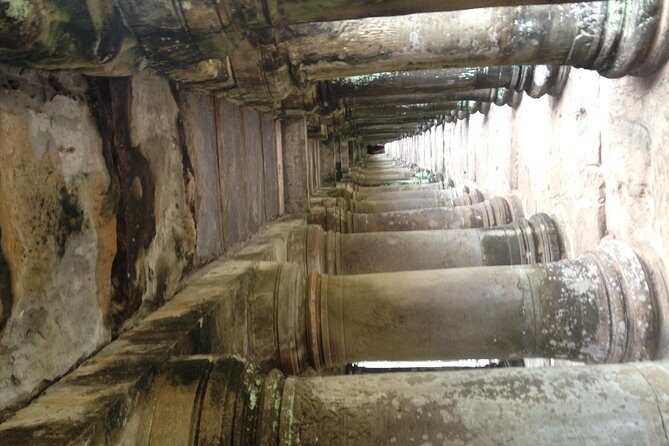
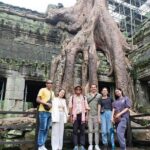
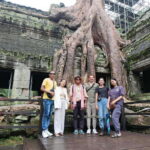
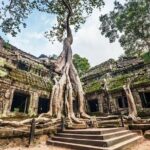
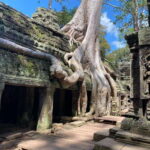
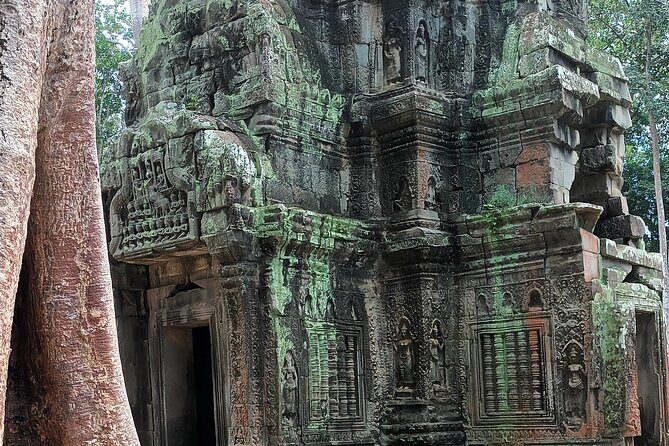
After Angkor Wat, the schedule includes a break for breakfast nearby, then you head to Ta Prohm. This is the temple people recognize instantly—the one with giant tree roots gripping the stone, the look made famous by movies.
Time here is about 2 hours, which feels right. Ta Prohm can swallow your time if you let it—there’s so much detail in the crumbling stonework and root patterns. With a guide, you get structure: you’ll know where to go for the most dramatic angles and how to connect the visual chaos to the site’s real history.
The benefit of doing Ta Prohm after sunrise at Angkor Wat is that the day still feels like a journey, not a rushed checklist. You also get a natural pace change. Angkor Wat is formal and monumental. Ta Prohm is dramatic and wild-looking. Switching styles keeps the day from feeling monotonous.
The only catch: breakfast is not included. Plan to grab something that won’t slow you down too much—think easy-to-digest and not too heavy before a walking stretch.
You can also read our reviews of more tours and experiences in Siem Reap

Stop 3: Angkor Thom in one focused hour
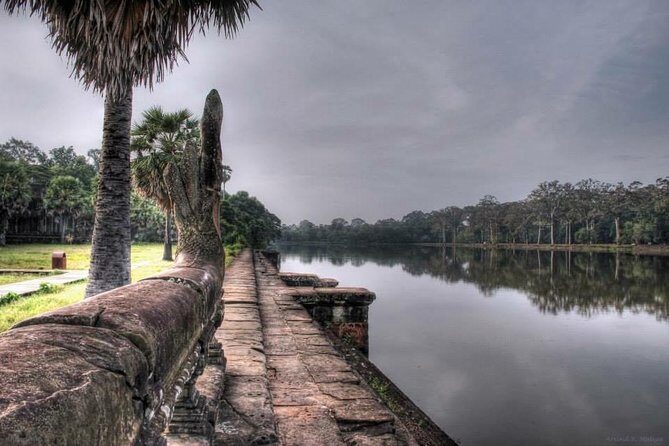
Next comes Angkor Thom, the ancient capital city associated with King Jayavarman VII. You have about 1 hour here, which is short—but Angkor Thom is huge, so the guided limit can be a feature rather than a bug.
What you should expect in that hour:
- An overview of the capital city’s scale, including the idea that it covers roughly 9 km²
- Time at major highlights like the royal palace ruins area and the sacred terraces
- A look at the Terrace of the Elephants, a classic stop for the carved scene-setting it offers
In a perfect world, you’d walk Angkor Thom all day. But in real life, you’re also going to Bayon, and you only have a single-day window. A good guide uses that hour to help you see what connects the city layout and the major monuments, so you leave with understanding, not just locations.
If you’re the type who loves to linger, use your spare moments at the most photogenic points and let the guide handle the routing.
Stop 4: Bayon Temple and those face towers
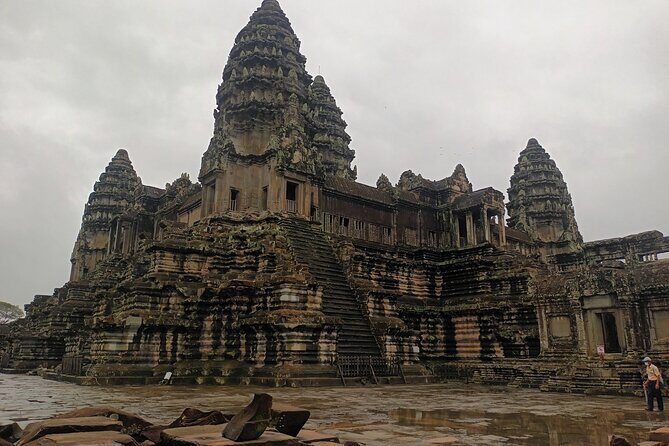
Bayon is your final temple stop, about 1 hour, and it’s usually the emotional climax of the day. The standout feature is the design: multiple towers with four faces. It’s the kind of imagery that makes you pause even if you’re tired.
Bayon also has meaningful art details. The tour description notes that you can enjoy carvings from the first gallery, including scenes depicting daily life. That matters because it reminds you these monuments weren’t only built for gods and kings in abstract. The stone shows how people lived, worked, and imagined the world around them.
Why this stop works well at the end:
- Morning temples can feel similar if you’re not paying attention. Bayon shifts the mood with a tighter, more expressive visual style.
- By now, your eyes have adjusted. You can actually see carvings and face proportions instead of only thinking about the next photo.
If you’re carrying a camera, this is a good place to slow down. Stand in one spot longer and let the light change on the stone.
Siem Reap wrap-up: getting your energy back
After Bayon, you drive back to Siem Reap, with about 30 minutes for the return and then your own leisure time.
That’s important. One of the traps in Angkor is turning your day into nonstop movement, then having nothing left for dinner or a quick walk around town. Here, the schedule ends with you released back to your accommodation, so you can recover without needing to plan the final leg from scratch.
Use that time to do something simple: shower, eat, and then decide if you want to browse night markets or just call it an early night.
What this tour is best at (and who should pick it)
This is a good fit if you want:
- A guided day where someone else handles the order and pacing
- Early access to Angkor Wat sunrise
- A compact circuit that still includes Ta Prohm, Angkor Thom, and Bayon
- Less group chaos, thanks to a max 16 group size
It’s also a good match if you love explanations. Multiple guide-focused comments around Angkor tours tend to highlight English skill, story skills, and the ability to interpret inscriptions and symbolism. In this case, the tour provider and guides—like Yoeun Serakyuth—are known for reading ancient Khmer language and connecting what’s carved to what it means.
Who might skip this?
- If you want meals fully included and zero extra spending, you’ll have extra costs for tickets and food.
- If you’re deeply sensitive to early mornings, the 4:30am start will be tough.
Booking decision: should you go?
I’d book this tour if you’re visiting Siem Reap for the first time and want the biggest highlights without turning your day into logistics homework. The combination of sunrise timing, a small group, and a guide who explains carvings and inscriptions is exactly how you get more from fewer hours.
I wouldn’t book it if you’re trying to keep your day perfectly all-inclusive and all-in-one-price. The missing temple tickets and meals means you’ll still need to manage money and food choices.
If you can handle an early start and you like understanding what you’re seeing, this is a smart way to experience Angkor at full intensity in a single day.