REVIEW · SIEM REAP
Banteay Srei & Angkor Big Circuit Tour
Book on Viator →Operated by Asia Voyage Travel · Bookable on Viator
Five temples, one Khmer story. This big circuit packs a pyramid, a pink-stone jewel, a temple sitting in the middle of a dry reservoir, a tree-choked gate, and one of the biggest Holy Sword complexes in a single day. I really like the hotel pickup and drop-off because it removes the stress of timing and getting around, and I also love how the route leans into detailed temple carvings and religious meaning, not just big viewpoints.
The main thing to watch is cost creep: the Angkor Park entrance tickets are not included (USD37 for a 1-day pass), so your day budget will be higher than the headline price.
In This Review
- Key takeaways
- Entering the Big Circuit at Pre Rup
- Banteay Srei’s pink stone carvings (and why they’re worth the time)
- Eastern Mebon: a temple in the middle of a dry reservoir
- Ta Som’s strangler fig: when the jungle takes over the gate
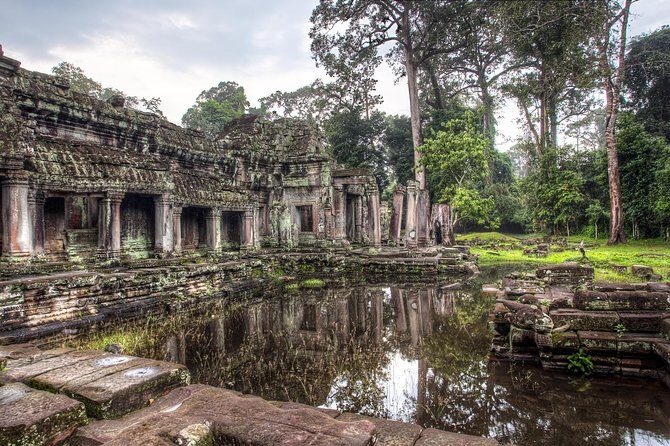
- Preah Khan: the Holy Sword temple built for a victory
- Price and tickets: what $57.50 really means for your day
- Pickup comfort and a guide who turns stone into meaning
- Stop-by-stop pacing: how an 8-hour day adds up
- Who should book this big circuit tour
- Should you book the Banteay Srei & Angkor Big Circuit Tour?
- FAQ
- What time does the tour start?
- How long is the tour?
- What is included in the tour price?
- Are Angkor Park entrance tickets included?
- Is the tour private?
- What language is the guide?
- Do you provide a mobile ticket?
- How much does the tour cost?
- What is the cancellation policy?
Key takeaways
- Pickup that actually helps: Hotel transfer plus a clean vehicle and simple start at 8:00am.
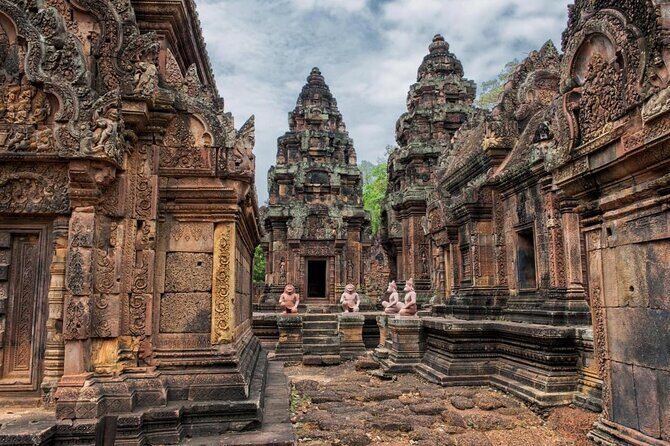
- Pink Banteay Srei: “Citadel of Women” is known for rare pink stone and very fine carving.
- A temple in the middle of nowhere: Eastern Mebon sits at the center of the now-dry East Baray reservoir.
- Ta Som’s strangler fig drama: The huge tree engulfing the eastern gate gives instant wow.
- Preah Khan’s scale: One of Angkor’s biggest sites, tied to Jayavarman VII and a victory narrative.
- You handle admission tickets: Angkor Park tickets are extra, so add USD37 to plan properly.
Entering the Big Circuit at Pre Rup
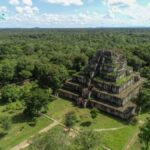
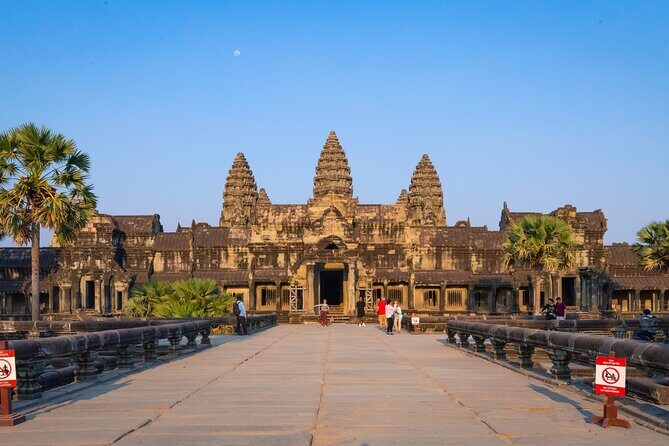
Your day starts at 8:00am, and it’s designed for an all-in, get-it-done pace without feeling like a sprint. You’ll begin at Pre Rup, a pyramid-shape temple that sets the tone with its steep, temple-mountain feel. Expect the group day to move through multiple sites, so the value is less about lingering and more about seeing the right mix, explained clearly.
I like this opening stop because Pre Rup gives you an easy first “reading” of Khmer temple design. From there, the route keeps changing texture and mood: stone color, layout, and even what the surrounding landscape looks like. If you’re trying to understand how Angkor-period builders thought, starting here helps you build context fast.
You can also read our reviews of more tours and experiences in Siem Reap.
Banteay Srei’s pink stone carvings (and why they’re worth the time)
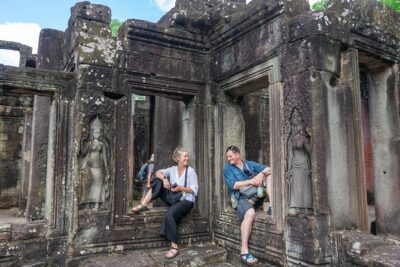
Then comes the star: Banteay Srei, often called the Citadel of Women. This temple is famous for rare pink stone and for the kind of detail you only notice when someone points it out. It’s also smaller than some bigger-name sites, which means you’ll spend a focused block of time soaking up wall carving and the overall craft.
The best part of Banteay Srei is how “small but exact” it feels. You get a sense of scale that’s different from the huge complexes, and the stonework becomes the main event. It’s the kind of stop where your attention shifts from walking to looking—statues, patterns, and carvings that reward a slower gaze even if the schedule keeps you moving.
A big win here is your guide’s role. The tour is set up so your guide can explain what you’re about to see and how it connects to Cambodian culture and religious life, past and today. When you’re staring at carved stone, that context turns it from decoration into a message.
Eastern Mebon: a temple in the middle of a dry reservoir
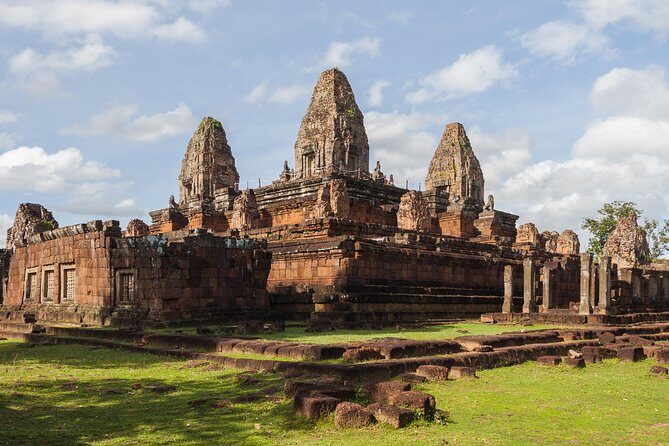
After lunch hours, the day shifts to Eastern Mebon. This temple sits at the center of the now-dry East Baray reservoir, which changes the feel of the visit. You’re not surrounded by water, but the setting still hints at the earlier landscape engineering and how the Khmer built around water systems.
Eastern Mebon is in good condition and is described as very gorgeous, so it’s a strong mid-afternoon stop when you want something visually calm after the finer details of Banteay Srei. You’ll have about one hour here, which is usually enough to walk the key areas and take in how the temple sits in its unusual location.
The timing matters: you’ll be moving from earlier carving detail to a more open, setting-and-structure kind of appreciation. If you like understanding how a site’s layout affects the experience, Eastern Mebon does that.
Ta Som’s strangler fig: when the jungle takes over the gate
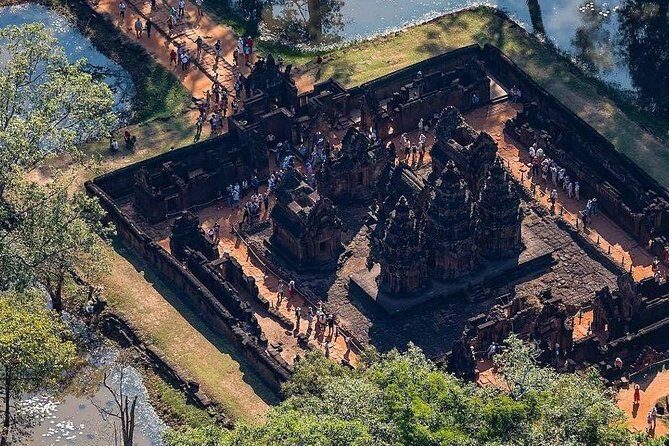
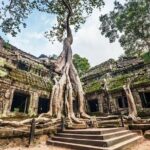
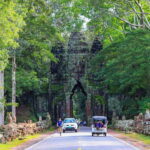
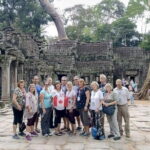
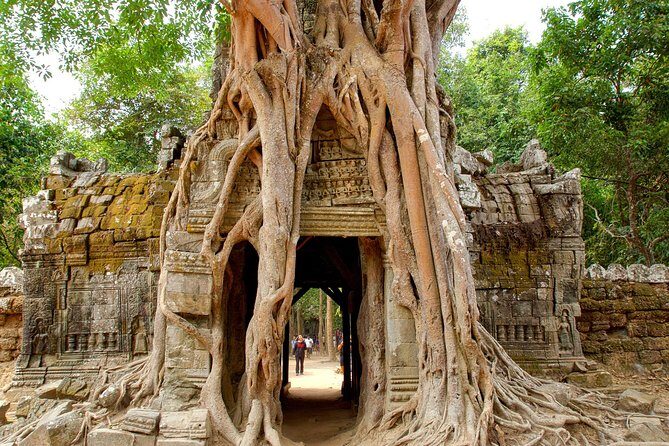
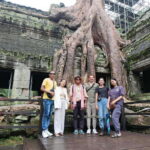
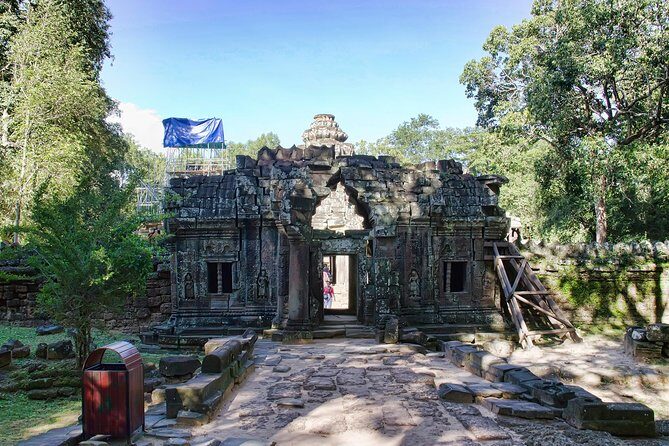
Next is Ta Som, a small Angkor temple with one of the most memorable “tree plus architecture” scenes on the circuit. The headline feature is a huge strangler fig tree that has engulfed the eastern gate. It has that same dramatic vibe people associate with Ta Prohm-style visuals, but Ta Som is still its own stop—smaller and more direct.
You’ll get about one hour here, and that’s perfect for catching the moment from a few angles. The trick with a site like this is not to rush past the structure just because the tree is grabbing attention. If you look for how the gate and passageways relate to the growth, you’ll notice how the temple’s geometry still controls the scene even as the jungle crowds in.
This is also where the guide can help. When you understand what you’re looking at—how old stone and living roots interact—it stops feeling like just a photo backdrop. It becomes a story about time, weather, and survival.
Preah Khan: the Holy Sword temple built for a victory
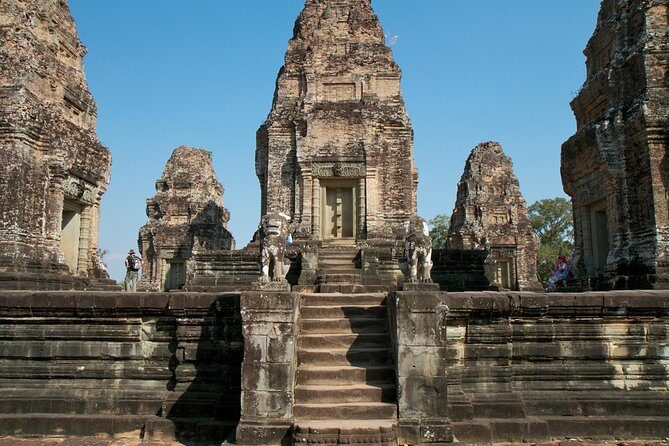
The final major stop is Preah Khan, known as the Holy Sword temple. It’s one of the biggest temple complexes at the Angkor ruins, so you’ll feel the scale right away. The tour frames it around Jayavarman VII, who built Preah Khan to dedicate his victory over the Cham invasion, which gives the site more meaning than “wow, big stones.”
You’ll spend about two hours at Preah Khan, and that extra time pays off because bigger sites are harder to read quickly. Without context, a large complex can blur into “more of the same.” With the guide’s explanation, you can start sorting out layout, purpose, and what makes this place different within the Angkor world.
Preah Khan tends to land well if you like when a temple’s size connects to a historical narrative. Even if you’re not a walking encyclopedia, a clear explanation helps you remember what you saw: a major Jayavarman VII monument tied to a specific victory story, not just a generic ruin.
Price and tickets: what $57.50 really means for your day
The tour price is $57.50 per person, and that number is the part that can feel deceptively simple. In practice, you’re also paying for Angkor Park admission tickets separately. The Angkor Park entrance tickets are USD37 for a 1-day pass, so plan on adding that to your total.
What you do get for the tour price is the stuff that usually costs you time or headaches on your own: hotel pick-up and drop-off, a professional English-speaking guide, transport in your chosen vehicle, plus bottled water and cold towels. That matters because the Angkor area can eat hours just getting from place to place if you’re not set up well.
Also keep in mind gratuities are recommended, and food isn’t included. The tour includes bottled water and cold towels, but cafes and soft drinks are your own call during the day.
So is it good value? For me, it’s value if you want a guide-led day across multiple sites without driving logistics. If you already know the history and you prefer to move at your own pace with no structure, you might decide against paying for the guide. But if you’re trying to understand what you’re seeing as you go, this price-to-effort ratio is hard to ignore.
Pickup comfort and a guide who turns stone into meaning
This tour is built around convenience and clarity. You get hotel pickup and drop-off, and the transport is handled for you, which makes a big circuit day feel manageable. The vehicle is described as clean with plenty of space, and cold towels plus bottled water help you stay functional in the middle of temple time.
Your guide is professional and English-speaking, and the tour is flexible enough for most people to participate. One guide name comes up strongly: Mr Seng, who’s praised for deep knowledge of Khmer peoples’ history and for making the day enjoyable. Another key theme is that the guide was funny in addition to being helpful, which matters because temple days can otherwise turn into a quiet shuffle of staring.
Here’s the practical payoff: instead of looking at stonework and guessing what it means, you’re hearing explanations of history, culture, and religion—past and present. That’s the difference between collecting photos and actually remembering the places.
Stop-by-stop pacing: how an 8-hour day adds up
The site time adds up neatly: Pre Rup (2 hours), Banteay Srei (2 hours), Eastern Mebon (1 hour), Ta Som (1 hour), and Preah Khan (2 hours). That totals about 8 hours of temple time, and the overall duration is listed as roughly 8 hours, so you’re clearly in a “lots of ground covered” rhythm.
The smartest way to handle this pace is mental, not physical. Go in expecting to see five sites and learn something at each one. If you try to treat every temple like a two-hour sit-down visit, you’ll feel rushed. If you treat each stop as a focused chapter, you’ll leave the day with a connected sense of Angkor’s variety.
Also, the order is useful. Starting at Pre Rup lets you warm up with a classic form, then Banteay Srei shifts you into pink-stone craftsmanship, followed by Eastern Mebon’s setting, then Ta Som’s tree drama, and finally Preah Khan’s big-complex scale and historical narrative.
Who should book this big circuit tour
This one fits best if you want a day that covers multiple outer-temple highlights without worrying about transport or ticket timing. It’s also a good choice if you care about understanding Khmer religious and cultural meaning, because the guide’s explanations are part of the core value.
You’ll also like it if you’re the type who enjoys variety in temple “feel.” Pink carving at Banteay Srei. A dry-reservoir temple at Eastern Mebon. A strangler fig swallowing a gate at Ta Som. A large Holy Sword complex with a named historical frame at Preah Khan. This route is designed for people who want more than one kind of wow.
The one caution is budget. The ticket add-on is real, and gratuities and meals are extra. If you want the lowest-cost option, this might not be your best bet. If you want the easiest organized way to see a meaningful chunk of Angkor ruins in a day, it’s a strong plan.
Should you book the Banteay Srei & Angkor Big Circuit Tour?
My take: book it if you want a structured, guide-led day with pickup convenience and a temple mix that ranges from pink carving to massive complexes. The standout reasons are the comfort factors (transport, water, cold towels) and the guide style, especially with someone like Mr Seng who can explain context while keeping the day fun.
Skip or reconsider if you’re chasing the cheapest possible Angkor-day entry, since the Angkor Park ticket is separate and meals plus tips will add up. Also, if you strongly prefer wandering with no schedule, a multi-stop big circuit can feel like a lot.
If you’re the kind of person who wants your “one day in Siem Reap” to actually connect the dots, this tour is built for that.
FAQ
What time does the tour start?
It starts at 8:00am.
How long is the tour?
The duration is about 8 hours.
What is included in the tour price?
Hotel pick-up and drop-off, a professional English-speaking guide, transport by your chosen vehicle, and bottled water with cold towels are included.
Are Angkor Park entrance tickets included?
No. Angkor Park entrance tickets are not included. A 1-day ticket is listed as USD37.
Is the tour private?
Yes. It’s listed as a private tour/activity, so only your group will participate.
What language is the guide?
The guide is professional English-speaking. The guide options are described as limited.
Do you provide a mobile ticket?
Yes. Mobile ticket is listed as a feature of the experience.
How much does the tour cost?
The price is $57.50 per person.
What is the cancellation policy?
You can cancel for free up to 24 hours in advance for a full refund.